

P1440 on 2006-2014 Audi TT 2.0L TFSI: Understanding the Conflicting Definitions and Fixes
P1440 on a 2.0L TFSI Audi TT is highly ambiguous. It can mean an 'EGR Valve Power Stage Open Circuit' or an EVAP system fault like a stuck purge valve. The EGR definition is the official VAG definition found in many code lists. However, for the TFSI gasoline engine, EVAP issues (specifically the N80 purge valve) are a very common failure and a more likely cause. Accurate diagnosis with a high-quality scanner is essential before buying parts, paying close attention to any accompanying codes like
- **Definition is Uncertain:** P1440 on your TFSI engine could be an EGR electrical fault OR an EVAP system problem. Do not buy parts without further diagnosis.
- **Check for Other Codes:** If you have code P0441 alongside P1440, the problem is almost certainly your EVAP purge valve (N80).
- **Start with EVAP:** Given the high failure rate of the N80 purge valve on this engine, it's a logical first place to inspect.
- **Diagnosis is Key:** A proper diagnosis, potentially including a smoke test or electrical testing, is required to avoid replacing the wrong parts.
- **DIY Potential:** Replacing the N80 purge valve is a simple DIY job. Replacing the EGR valve is more involved but still possible for an experienced DIYer.
What's Unique About the 2006-2014 Audi TT
The confusion arises because Audi, like many manufacturers, reuses P1xxx codes with different meanings across its diverse engine lineup. While official documentation consistently points to an EGR electrical fault for P1440, the 2.0L TFSI engine family (including the EA113 and EA888) is widely known for EVAP system problems, particularly with the N80 purge valve. This creates a scenario where a technician or owner might see a P1440 code and be faced with two entirely different potential problems: an electrical issue with the EGR system as defined by Audi, or a more common mechanical/electrical issue in the EVAP system. The presence of codes like P0441 (Incorrect Purge Flow) alongside P1440 strongly suggests the problem lies with the EVAP system, not the EGR.
Generation note: The 2006-2014 range covers the entire second generation (Mk2 or 8J) of the Audi TT. This generation used different versions of the 2.0L TFSI engine, primarily the belt-driven EA113 (engine codes BWA, BPY) in earlier models (approx. 2006-2010) and the chain-driven EA888 (engine code CCTA/CESA) in later models. Both are susceptible to the same types of EVAP and emissions component failures, particularly the N80 purge valve. The official EGR definition of P1440 is more relevant to the earlier EA113 engines which use a specific external EGR valve (PN 06F131503B).
Symptoms You May Notice
- Check Engine Light is on
- Possible rough or unstable idle
- Difficulty starting the engine, especially after refueling (points towards EVAP issue)
- Noticeable fuel odor (points towards EVAP issue)
- Reduced fuel efficiency
- Hesitation or lack of power
- Flashing glow plug light (if the definition is for a TDI, not applicable here but often cited)
- Replacing the gas cap. While a bad gas cap can cause other EVAP codes (like P0455 or P0456), it's less likely to be the primary cause for a code specifically pointing to a purge valve or EGR circuit fault.
- Assuming it's an EVAP problem when it's an EGR problem (or vice-versa). Due to the code's ambiguity on this engine, one must diagnose both possibilities instead of focusing only on the most common forum suggestions. The presence of other codes is the best guide.
- Cleaning the EGR valve. Since P1440 points to an 'Open Circuit', this is an electrical fault, not a flow or blockage problem. Cleaning a carbon-fouled EGR valve will not fix an electrical issue.
Most Likely Causes
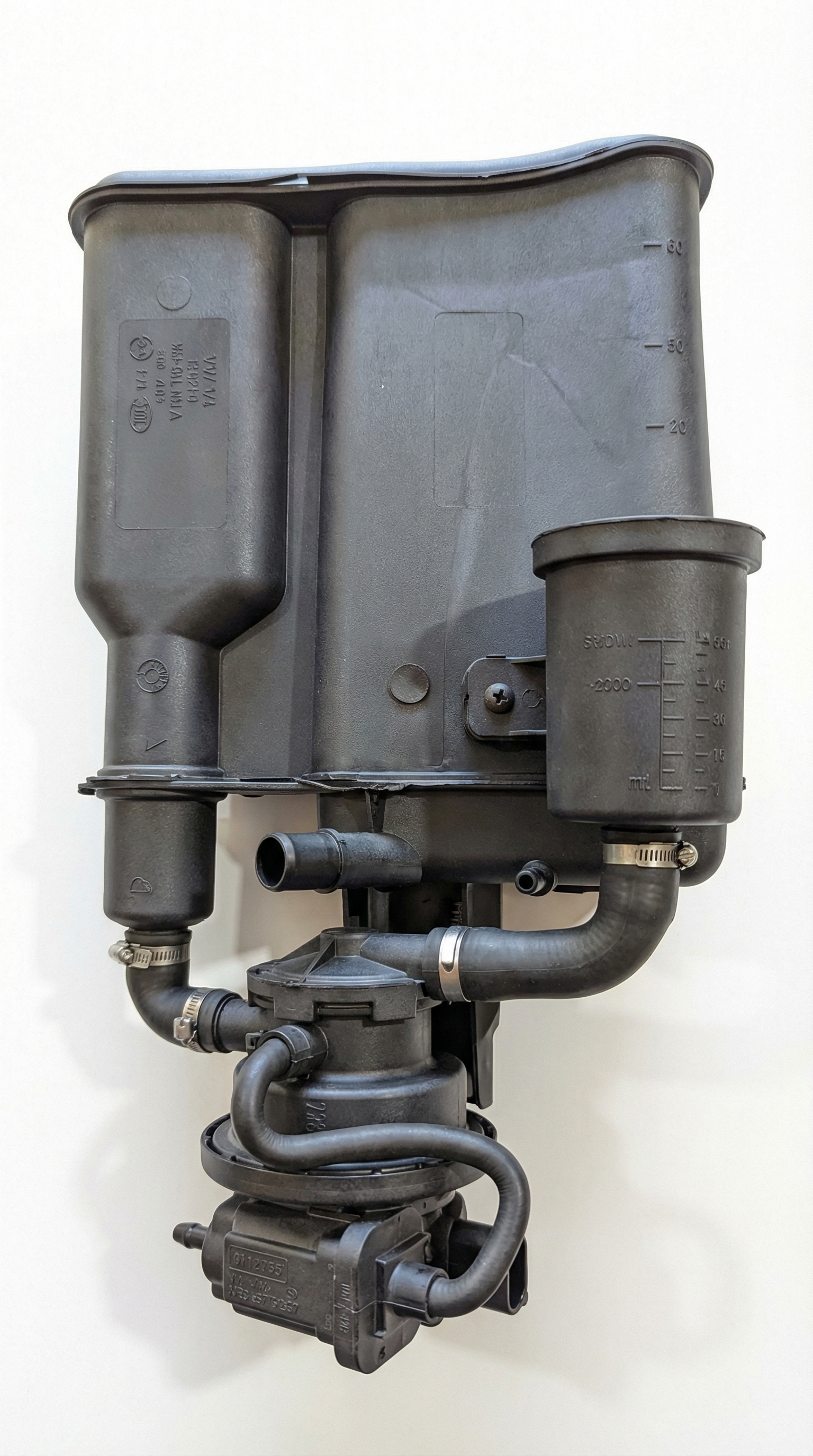
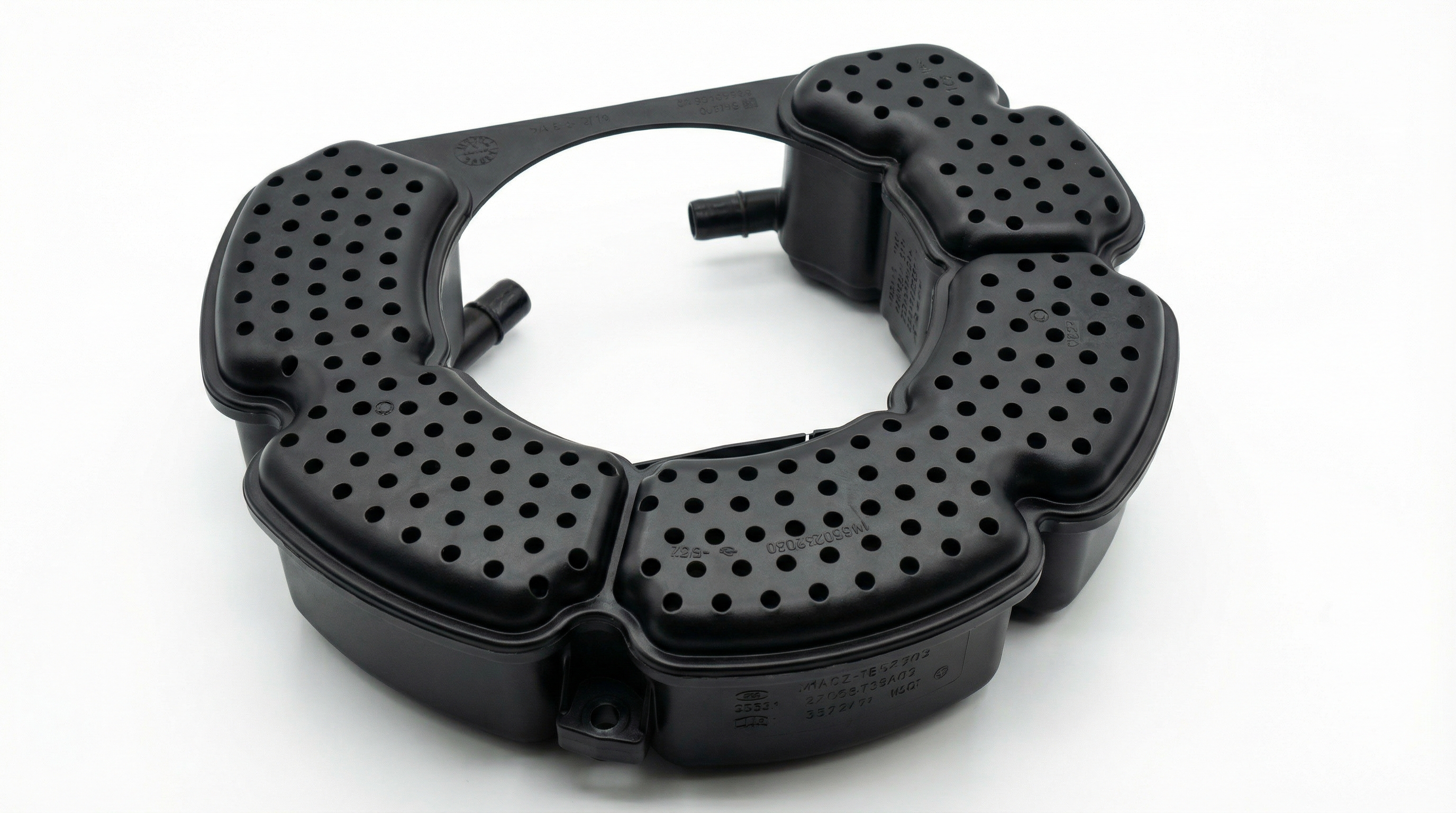
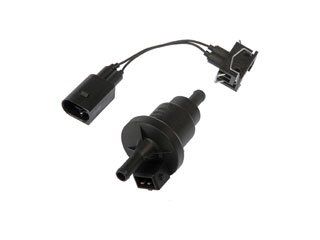
- Faulty EVAP Purge Valve (N80 Valve) 🔴 High Probability → Shop Vapor Canister The N80 purge valve is a notoriously common failure point on this engine platform, often getting stuck open or closed. It is shared across many VW and Audi models.
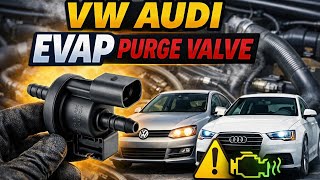
How to confirm: Use a capable scan tool to command the purge valve to open and close while monitoring EVAP system pressure. A smoke test of the EVAP system can also reveal a stuck-open valve. A simple, less definitive test is to remove the valve and try to blow through it; if air passes, it's stuck open. The presence of code P0441 alongside P1440 is a strong indicator of a faulty N80 valve. 🎬 Watch: Understanding and fixing the N80 purge valve.
Typical fix: Replace the N80 purge valve and its associated hose clamps. This is a simple DIY job that often takes less than 15 minutes.
Est. part cost: $25-$60 - EGR Valve Electrical Failure 🟡 Medium Probability → Shop Exhaust Gas Recirculation (EGR) Valve This is the official VAG definition for P1440, pointing to an 'Open Circuit'. The fault could be internal to the EGR valve's solenoid or within the wiring harness leading to it. While less discussed in forums for the TFSI engine compared to EVAP issues, it remains a possibility based on manufacturer data, especially on earlier EA113 engines.
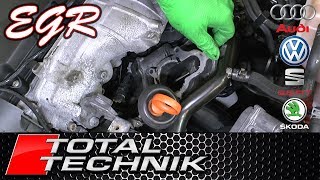
How to confirm: Check the wiring and connector at the EGR valve for damage or corrosion. Use a multimeter to test for continuity and voltage at the connector pins. A VAG-specific scan tool may be able to perform an output test on the EGR valve. 🎬 Watch: How to test the EGR valve using VCDS.
Typical fix: Repair the wiring harness or replace the EGR valve assembly.
Est. part cost: $150-$350 - Cracked or Disconnected EVAP Hoses 🟡 Medium Probability Plastic and rubber hoses in the engine bay become brittle over time with exposure to heat and age, leading to cracks and vacuum leaks that can trigger various EVAP codes.
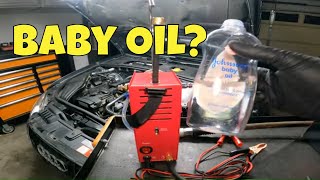
How to confirm: Perform a visual inspection of all accessible EVAP lines between the charcoal canister, purge valve, and intake manifold. A smoke test is the most effective way to find small, hard-to-see leaks. 🎬 See how to use a smoke tester for EVAP leaks.
Typical fix: Replace the cracked or broken hose section.
Est. part cost: $15-$50
Rare But Worth Checking
- Faulty Engine Control Module (ECM): Extremely rare, but if all wiring and components for both the EGR and EVAP systems test perfectly, the driver circuit within the ECM could be at fault. This should be the absolute last consideration.
Diagnosis Steps
- Scan for Codes: Use a high-quality VAG-specific scan tool (like VCDS) if possible. Note all codes present and their exact descriptions. Look for the VAG-specific code '17848'.
- Analyze Codes: If P0441 or other EVAP-specific codes are present with P1440, prioritize diagnosing the EVAP system. If only P1440/17848 is present, the EGR circuit is a strong possibility.
- EVAP System Diagnosis (High Probability): Locate the N80 purge valve on the intake manifold area. Visually inspect it and its hoses for cracks. Use the scan tool to actuate the N80 valve and listen for a clicking sound. If it doesn't click, test for power at its connector. If it does click, it may be stuck internally. Remove the valve and try blowing through it; if air passes freely, it is stuck open and must be replaced.
- Perform Smoke Test: If the N80 valve seems to function but EVAP codes persist, perform a smoke test to check for leaks in the EVAP lines, charcoal canister, and gas cap seal.
- EGR System Diagnosis: If EVAP diagnosis reveals no issues, locate the EGR valve. Inspect the electrical connector and wiring harness for any signs of damage, melting, or corrosion. Pay attention to wiring under the battery tray and below the engine bay fuse box, a known chafe point on related platforms.
- Electrical Testing (EGR): Disconnect the EGR valve and use a multimeter to check for 12V power and a good ground at the connector with the key on. Check for continuity on the signal wire back to the ECM (requires a wiring diagram).
- Component Replacement: Based on your findings, replace the faulty component (e.g., N80 purge valve or EGR valve).
- Clear Codes and Verify: After replacement, clear the DTCs and perform a drive cycle to ensure the code does not return. If the EGR valve was replaced, an adaptation procedure using a scan tool may be required.
Parts You'll Likely Need
- EVAP Canister Purge Valve (N80)
(OEM #06E906517A)— This is the most likely culprit if the fault is within the EVAP system. It's a very common failure item on 2.0T TFSI engines and is often the fix even when the code definition points to EGR.
Trusted brands: Bosch (OEM), URO Parts
OEM price range: $25-$50
Aftermarket price range: $15-$35 - EGR Valve
(OEM #06F131503B (example, verify by VIN))— If diagnosis confirms an 'Open Circuit' in the EGR power stage, the valve assembly itself is the most common cause of the electrical failure. This part is primarily for the earlier EA113 FSI engines.
Trusted brands: Pierburg, Wahler, ERA
OEM price range: $250-$400
Aftermarket price range: $150-$250
Related Codes That Often Appear With This One
- P0441 — P0441 (EVAP System Incorrect Purge Flow) is very commonly associated with a failing N80 purge valve. If you see P0441 with P1440, the problem is almost certainly in the EVAP system.
- 17848 — This is the VAG-specific equivalent fault code for P1440. A VCDS or other advanced scanner will often show '17848 - EGR Valve (N18): Open Circuit'.
- P0403 — P0403 is a general 'EGR Circuit Malfunction' code. It could appear alongside P1440 as both point to an electrical problem within the EGR control system.
Platform-Specific Known Issues
- Real World Fix - N80 Valve: A YouTube video by 'David Dobbie' titled 'CHANGING THE CAM FOLLOWER ON THE MK2 THE AUDI TT!' shows the user replacing the PCV and N80 purge valve to resolve a lean code and an EVAP system page flow error, demonstrating the commonality of this part's failure on the Mk2 TT.
Mechanic-Grade Diagnostic Values
- N80 EVAP Purge Valve Solenoid Resistance — expected: 15-30 Ohms. Some specifications are tighter, like 22-30 Ohms.. Failure: Infinite resistance (Open/OL), near-zero resistance (short), or a value outside the specified range. A reading of 17.8 Ohms has been identified on a failed valve when the spec was 22-30 Ohms.
- N80 EVAP Purge Valve Connector Voltage — expected: ~12V (Battery Voltage) on the power pin with Key On, Engine Off.. Failure: Low or no voltage indicates a wiring, fuse, or ECU driver issue, not a faulty valve.
- EGR Valve (N18) Solenoid Resistance (on similar VAG engines) — expected: ~8.3 Ohms between pins 1 and 5.. Failure: Infinite resistance (Open/OL) confirms an open circuit fault as described by the code.
- EGR Valve Position Potentiometer Resistance (on similar VAG engines) — expected: Between pins 2&4: ~3.64 kOhms. Between pins 2&6: ~3.87 kOhms. Between pins 4&6: ~1.43 kOhms.. Failure: Significantly different readings or an open circuit (OL) indicates a failure in the position sensor part of the valve.
Hidden / Shadow Codes Worth Checking
- 17848: This is the VAG-specific (VW/Audi) DTC that corresponds to the generic P1440 code. It is explicitly defined as 'EGR Valve (N18): Open Circuit'. (see via A VAG-specific scan tool like VCDS (VAG-COM) or ODIS will display this code. Generic OBD-II scanners may only show P1440.)
Scan Tool Commands That Help
- VCDS (VAG-COM): Engine -> Output Tests -> EVAP Purge Valve (N80) — To command the N80 valve to cycle on and off. You should hear an audible clicking. If it clicks, the solenoid is activating, but the valve could still be mechanically stuck. If it doesn't click, it points to an electrical failure of the valve or its wiring.
- VCDS (VAG-COM): Engine -> Output Tests -> EGR Valve (N18) — To command the EGR valve to cycle, verifying if the solenoid responds to ECU commands. A lack of response when P1440/17848 is present strongly suggests an internal open circuit in the valve itself, assuming wiring is good.
- VCDS (VAG-COM): Engine -> Basic Settings -> Group 074 — This is the EGR adaptation procedure. It must be run after replacing the EGR valve to allow the ECU to learn the new valve's end-stop positions.
- VCDS (VAG-COM): Engine -> Basic Settings -> Group 070 / 071 — These are used to run the EVAP system self-test (readiness). This can help confirm if an EVAP system repair was successful, but the test has specific preconditions (fuel level, etc.) and can be tricky to complete.
Wiring & Ground Locations
- Engine Harness Chafe Point — In the wiring loom below the engine bay fuse box and near the air intake.. This is a known chafe point on related VAG platforms that can cause wires for the EGR or other components to break, leading to an 'Open Circuit' fault like P1440/17848.
- Main Engine/Chassis Ground — On the chassis frame rail underneath the battery tray.. Corrosion at this primary ground point is common and can cause a wide range of intermittent electrical faults, including issues with sensor and actuator circuits like the EGR and EVAP systems.
- EGR Valve Connector (6-pin example) — At the EGR valve itself.. Knowing the pinout is critical for testing. On a similar VAG engine: Pin 1 is +12V from a fuse, Pin 5 is the modulated ground from the ECU, and Pins 2, 4, and 6 are for the position sensor. Testing continuity and voltage here can pinpoint if the fault is in the wiring or the valve.
- Ground Point 44 — On the left lower A-pillar.. This is a key interior ground point. While less likely to be the cause than engine bay grounds, a fault here could affect ECU or sensor ground references.
Real Owner Repair Stories
- BRISKODA forum user 'jverdicchio' (Skoda Fabia 1.4 16V (similar VAG EGR system)) — Car turns over but will not start. Fault code 17848 / P1440 - Open Circuit.
❌ Tried (didn't work) Initial diagnosis and searching for wiring diagrams.
✅ What actually fixed it The user confirmed an open circuit on the wire from Pin 6 of the EGR connector to Pin 100 of the ECU connector using a multimeter. The fix was to run a new wire between the two points, bypassing the break in the original harness. - CADDY2K.com forum user 'Doc' (VW Caddy (VAG platform)) — Persistent 17848 / P1440 fault code after replacing EGR valve and solenoid.
❌ Tried (didn't work) Replacing the EGR valve, Replacing the EGR solenoid
✅ What actually fixed it The confirmed fix was to inspect and repair chafed/broken wires in the main wiring loom located below the engine bay fuse box and air intake. This was identified as a common failure point.
"I Checked Everything" — The Actual Cause
- Due to the dual-meaning of P1440, a common diagnostic trap occurs. A technician may suspect an EVAP leak, perform a smoke test, and find no leaks. If they stop there, they will miss the actual cause. The 'actual cause' in this scenario is that the P1440 code was referring to its alternate definition: an 'EGR Valve Power Stage Open Circuit'. The clean smoke test is a critical clue to pivot diagnosis away from the EVAP system and towards testing the EGR valve's electrical circuit.
OEM Part Supersession History
06F131503A→06F131503B— Standard part revision and update by the manufacturer.
Heads up: These are generally interchangeable, but using the latest revision (06F131503B) is recommended. This part is for the 2.0 FSI (EA113) engine.N/A→06E906517A (VW/Audi) / 0280142431 (Bosch)— This is the standard N80 valve for this platform. The Bosch part is the OEM equivalent.
Heads up: While this part fits a wide range of VAG engines, always verify by VIN. Later EA888 Gen3+ engines use a different design.
Model Year Variations Within This Range
- 2006-2010 (approx.): Earlier Mk2 TT models with the belt-driven EA113 engine (BPY, BWA) have an external EGR valve (PN 06F131503B). On these cars, the 'EGR Open Circuit' definition of P1440 is a direct possibility that must be investigated.
- 2009-2014 (approx.): Later Mk2 TT models with the chain-driven EA888 engine (CCTA, CESA) have a different emissions system design. While they still suffer from N80 valve failures, the P1440 code is less likely to refer to an external EGR valve fault and almost certainly points towards the more common EVAP system issue.
Diagnostic Flowchart
Other Known Issues on This Vehicle
Issues unrelated to this code that are worth knowing about as an owner of this generation:
- HPFP Cam Follower Wear (EA113 Engine) 🔴 High — Very common on the belt-driven EA113 engine. Recommended as a preventative replacement every 20,000-30,000 miles. Failure can destroy the high-pressure fuel pump and camshaft. (Ref: A 10-year/120,000-mile warranty extension was issued in the past, but is likely expired for most vehicles.)
- Timing Chain Tensioner Failure (EA888 Engine) 🔴 High — A critical issue on early (pre-2013) chain-driven EA888 engines. The original tensioner can fail without warning, causing the chain to jump timing, resulting in catastrophic engine damage. An updated tensioner part is available. (Ref: Subject of a class-action lawsuit, but no formal recall. An updated part (06K-109-467) was released.)
- Excessive Oil Consumption 🟠 Medium — Widespread on 2.0T engines, particularly the EA888. Caused by poor piston ring design. Audi considers consumption up to 1 quart per 1,200 miles 'normal', but owners report higher rates. (Ref: Class-action lawsuits led to a settlement for some models/years, but coverage for the TT may vary. The fix involves new pistons and rings.)
- Water Leaks into Cabin/Trunk 🟡 Low — Common issue where water enters the trunk area near the battery or into the footwells due to clogged drains (under spoiler, fuel filler area, doors) or failed seals.
- DSG Mechatronic Unit Failure 🔴 High — The DQ250 6-speed DSG transmission can suffer from mechatronic (control unit) failure, leading to harsh shifting, false neutrals, and loss of drive. It is an expensive repair. (Ref: A recall was issued for some DSG models due to false temperature readings causing a loss of drive, which was addressed with a software update.)
- Instrument Cluster Failure 🟠 Medium — The instrument cluster (dash-pod) is known to fail, causing gauges to act erratically, pixels to die, or a complete failure. Replacement is costly.
Used vs. New Parts: Buying Guide for This Vehicle
When a used part is the smart pick: For the expensive EGR valve assembly, a used part can be a cost-effective option IF its electrical integrity can be verified. Since P1440 is an electrical code, a used valve that tests with correct resistance values can be a viable fix. It is not recommended for the N80 valve.
Donor-vehicle mileage cap: roughly under 80000 miles for the part to have meaningful remaining life.
What to inspect on the donor part:
- For a used EGR valve, ask the seller if they can test resistance across the solenoid pins (should be ~8.3 Ohms) before purchase.
- Visually inspect the electrical connector for any bent, corroded, or broken pins.
- Avoid parts from vehicles with known flood or fire damage.
- Check for excessive carbon buildup, as it may indicate the valve was already failing mechanically.
OEM-only on this vehicle (don't cheap out):
- Engine Control Module (ECM) - Due to programming and security requirements, an ECM should always be sourced new or from a specialist who can properly virginize and code a used unit.
Aftermarket brands forum-validated for this vehicle:
- N80 Purge Valve: Bosch (is the OEM supplier).
- EGR Valve: Pierburg, Wahler.
Brands owners have reported issues with on this vehicle:
- Unnamed, no-brand 'cheapest available' electronic parts from online marketplaces. For critical emissions components like the EGR valve, forum users often report that buying the cheapest option leads to premature failure and having to do the job twice.
Real Owner Stories
Aggregated from forums and TSBs cited above. Mileages and costs reflect what owners reported in those sources.
2008 Audi TT Mk2 2.0T TFSI
Symptoms: The owner observed a lean code and an EVAP system page flow error.
What fixed it: Replacement of the PCV valve and the N80 purge valve.
Source hint: YouTube video by 'David Dobbie' titled 'CHANGING THE CAM FOLLOWER ON THE MK2 THE AUDI TT!'
Related OBD-II Codes
Frequently Asked Questions
Is there a VAG-specific code I should look for on my Audi TT when diagnosing P1440?
My 2009 Audi TT has the EA888 engine; is it prone to the same N80 valve issues as the earlier models?
I'm seeing P1440 and P0441 together on my TT. Which part is most likely at fault?
Is there a specific part number for the updated timing chain tensioner on the EA888 engine?
Could the wiring under the battery tray be causing my P1440 code?
Does Audi consider the high oil consumption on my 2.0T TFSI to be a defect?
Helpful Videos
Used OEM Parts in Stock
New Aftermarket Parts Available


The information in this article is provided for general reference and educational purposes only. Vehicle specifications, procedures, and part compatibility can vary by production date, trim level, and region. Always consult your vehicle's factory service manual and verify part numbers before purchasing or performing repairs. Safety-critical components such as airbags, seat belts, and braking systems should be installed by a qualified professional.
- Audi TT:
- 🧭 Diagnostic Flowchart
- 🎬 Helpful Videos
- 🛍️ Shop This Part
- What's Unique About the 2006-2014 Audi TT
- Symptoms You May Notice
- Most Likely Causes
- Rare But Worth Checking
- Diagnosis Steps
- Parts You'll Likely Need
- Related Codes That Often Appear With This One
- Platform-Specific Known Issues
- Mechanic-Grade Diagnostic Values
- Hidden / Shadow Codes Worth Checking
- Scan Tool Commands That Help
- Wiring & Ground Locations
- Real Owner Repair Stories
- "I Checked Everything" — The Actual Cause
- OEM Part Supersession History
- Model Year Variations Within This Range
- Other Known Issues on This Vehicle
- Used vs. New Parts: Buying Guide for This Vehicle
- Real Owner Stories
- 2008 Audi TT Mk2 2.0T TFSI
- Related OBD-II Codes
- Frequently Asked Questions
- 🎟️ Get 5% Off