

P1440 on 2010-2015 Chevrolet Camaro: Why It's Likely the Wrong Code and How to Fix the Real Problem (P1441)
If your scanner shows P1440 on a 2010-2015 Camaro, it is almost certainly a misreading of the real code: P1441 or P0496. The most common cause for these codes is a faulty EVAP Purge Valve, which gets stuck open. Replacing this valve is a simple, 15-minute DIY job with a part cost of approximately $35-$70.
- The code P1440 on your scanner is an error; the real code is P1441 or P0496.
- The most likely cause is a bad EVAP purge valve on top of the engine, not other components.
- Symptoms like rough idle and hard starting after fueling strongly point to the purge valve.
- The correct OEM part number for the 6.2L V8 is GM 12597567, which corresponds to ACDelco 214-1680 and has been superseded by GM 12735397.
- This is a very simple and inexpensive DIY repair that can be done in under 30 minutes with basic tools.
What's Unique About the 2010-2015 Chevrolet Camaro
On many General Motors platforms, including the 5th Generation Camaro, a faulty or sticking EVAP purge valve is a very common failure item that directly causes the P1441 and P0496 codes. While other EVAP components can fail, the purge valve is the primary suspect by a wide margin. The key is recognizing that a P1440 reading is a 'phantom code' and that the true diagnosis begins with P1441 or P0496.
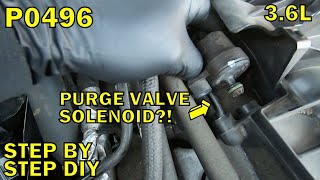
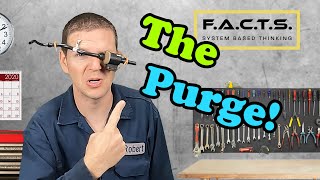
🎬 Watch this diagnosis and fix for Camaro P0496 codes.Symptoms You May Notice
- Check Engine Light is on
- Rough or unstable idle, especially when the engine is warm
- Difficulty starting the engine immediately after filling the gas tank 🎬 See why your GM vehicle struggles to start after refueling. (long crank time)
- Slight decrease in fuel economy
- Possible fuel smell near the engine
- Sluggish or poor engine performance
- Replacing the EVAP vent solenoid (located near the fuel tank) before testing the purge solenoid (on the engine).
- Replacing the charcoal canister without confirming it is clogged or has failed.
- Searching for a fix for P1440 instead of the correct P1441 or P0496 code.
Most Likely Causes
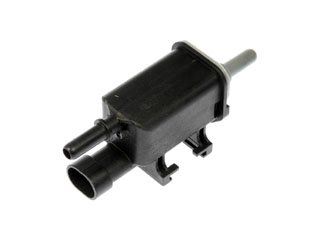
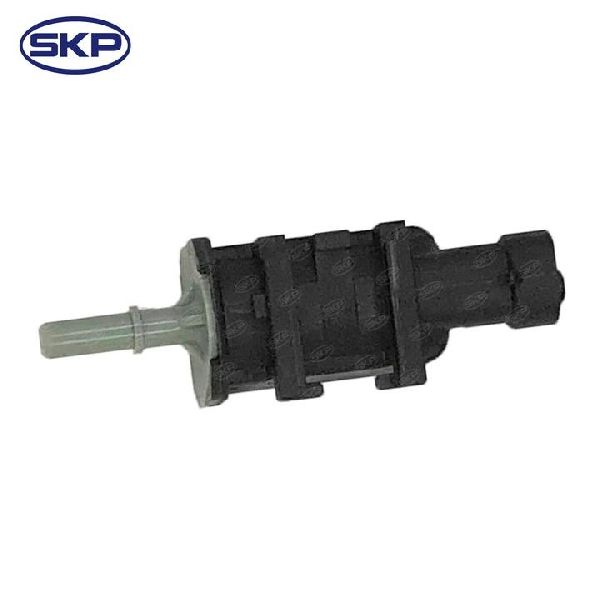
- Faulty EVAP Canister Purge Valve/Solenoid 🔴 High Probability → Shop Vapor Canister This specific valve is a known, widespread failure point on many GM vehicles from this era. It becomes stuck internally, often due to age or contamination from the charcoal canister, allowing un-commanded fuel vapor to enter the intake.
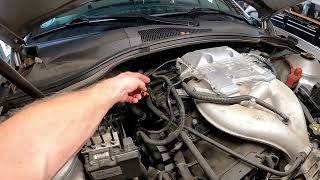
How to confirm: Remove the purge valve from the engine. With the valve disconnected from power, try to blow through it. If any air passes through, the valve is stuck open 🎬 Watch a mechanic demonstrate how to test a purge valve. and has failed. It should be completely sealed when de-energized. A more advanced method is to use a scan tool to monitor fuel tank pressure while the engine is running; if the pressure sensor shows a vacuum being pulled when the purge valve is commanded closed, the valve is leaking.
Typical fix: Replace the EVAP canister purge valve. It is located on top of the engine intake manifold, typically on the passenger side, and is held on by a single 10mm bolt, making for a quick replacement.
Est. part cost: $35-$70
Rare But Worth Checking
- Leaking EVAP Hoses: While less common than the purge valve, rubber hoses can crack with age and heat, creating a vacuum leak that could contribute to EVAP system faults. A visual inspection and/or smoke test can identify these leaks.
- Faulty Gas Cap: → Shop Fuel Tank Cap A gas cap that doesn't seal properly can cause various EVAP codes. While it's more commonly associated with small leak codes (like P0442), it's a simple and inexpensive item to check or replace.
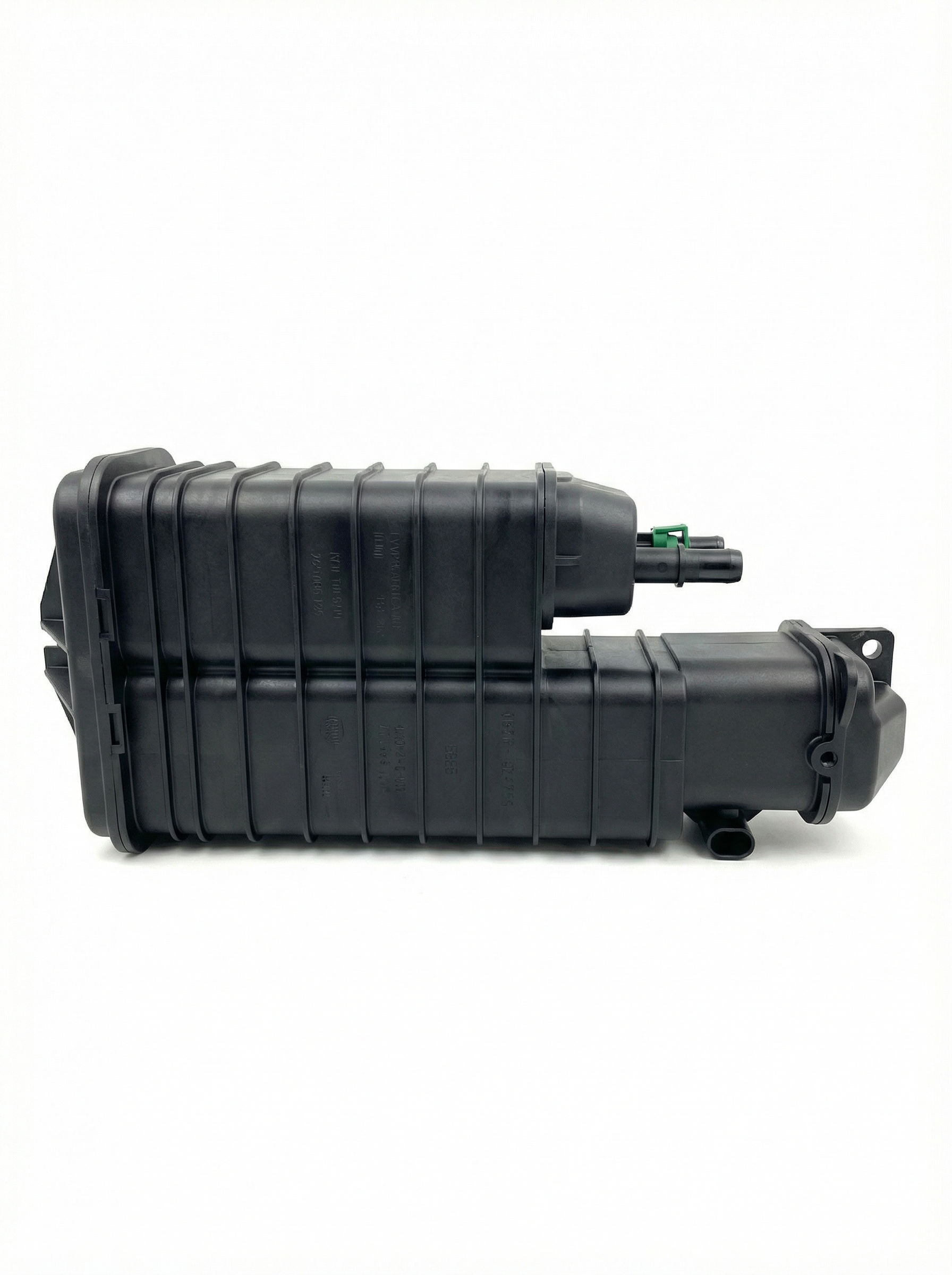
- Charcoal Canister Failure: → Shop Vapor Canister In some cases, the charcoal canister itself can fail, sending charcoal pellets through the EVAP lines and clogging the new purge valve, causing a repeat failure. If a purge valve fails a second time, it is wise to inspect the lines for charcoal debris and consider replacing the canister.
Diagnosis Steps
- Confirm the code with a high-quality scanner. If it shows P1440, assume the real code is P1441 or P0496.
- Locate the EVAP purge valve on the top of the engine intake manifold, on the passenger side.
- Visually inspect the connected hoses for cracks or damage.
- Disconnect the electrical connector and the two EVAP lines attached to the valve. The line connectors often have a plastic clip that needs to be pressed or slid.
- Remove the single bolt (typically 10mm) holding the valve's bracket to the manifold.
- With the valve removed, attempt to blow through either port. If air passes through, the valve is faulty and must be replaced.
- If the valve holds air, the problem may be in the wiring or, less likely, another part of the EVAP system. At this point, a smoke test of the EVAP system is the next logical step to check for leaks.
- Install the new purge valve, reconnect the lines and electrical connector, and clear the trouble codes with a scanner. The permanent code may take a few drive cycles to clear on its own.
Parts You'll Likely Need
- EVAP Canister Purge Valve
(OEM #12597567)— This is the direct cause of code P1441/P0496 in the vast majority of cases on this vehicle. It gets stuck open, causing the 'flow during non-purge' condition.
Trusted brands: ACDelco (GM Genuine Part 214-1680), Dorman
OEM price range: $50-$70
Aftermarket price range: $35-$55
Related Codes That Often Appear With This One
- P0441 — This is the generic SAE equivalent of the manufacturer-specific P1441 code. They mean the same thing: incorrect purge flow.
- P0496 — This is another GM-specific code for 'EVAP Flow During a Non-Purge Condition.' It is functionally identical to P1441 and is caused by the same faulty purge valve.
Mechanic-Grade Diagnostic Values
- EVAP Purge Solenoid Voltage (Power Pin) — expected: Battery voltage (typically >10.5V) with key on, engine off.. Failure: Voltage below 10.0V indicates an open or high resistance in the power feed circuit, possibly a blown fuse (check F63 in engine bay fuse block).
- EVAP Purge Solenoid Voltage (Control Pin) — expected: Battery voltage when the valve is commanded OFF by the ECM. Drops to near 0V when the ECM commands the valve ON (provides ground).. Failure: A reading of 0V when the valve should be OFF indicates a short to ground in the control wire. A constant battery voltage reading when the valve is commanded ON indicates an open control wire or faulty ECM driver.
- EVAP Purge Solenoid Coil Resistance — expected: Between 25 and 45 ohms across the two pins of the solenoid.. Failure: A reading of infinite resistance (OL) indicates an open coil. A reading near zero ohms indicates a shorted coil. In either case, the solenoid is bad.
Scan Tool Commands That Help
- GDS2 / Tech2: EVAP Purge/Seal — This function allows a technician to manually command the EVAP purge solenoid ON and OFF while monitoring the Fuel Tank Pressure (FTP) sensor. To confirm a stuck-open valve, command the valve closed (0% duty cycle) and run the engine; if the FTP sensor shows a vacuum developing, the valve is leaking.
- GDS2 / Tech2: EVAP Vent Solenoid Command — Used to command the vent solenoid (near the tank) closed to seal the system for leak testing. A technician can command the vent solenoid closed and the purge solenoid closed, then watch the FTP sensor for pressure decay to diagnose a system leak without a smoke machine.
Wiring & Ground Locations
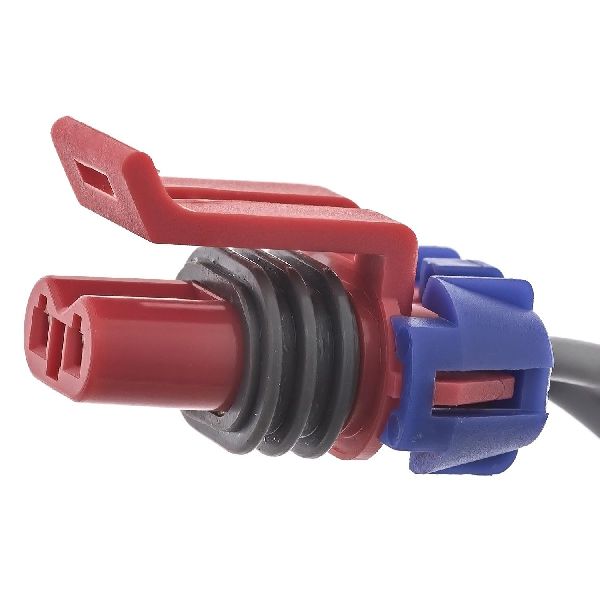
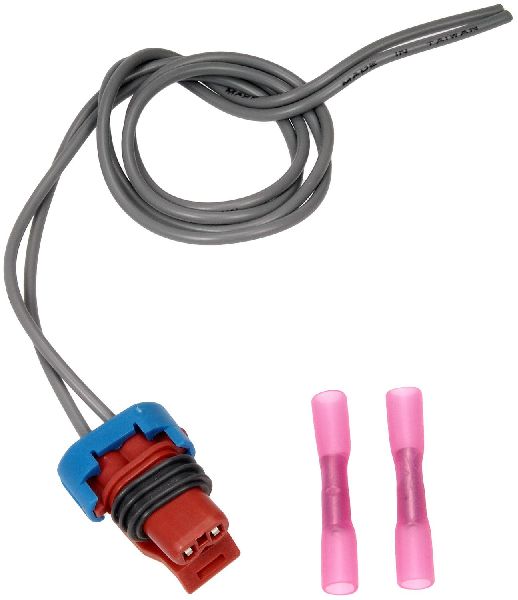
- EVAP Purge Solenoid Connector — On the passenger side of the intake manifold, connected to the purge solenoid.. This 2-pin connector provides power and control to the solenoid. Pin A (typically Pink/Black wire) is the ignition voltage supply. Pin B (wire color varies) is the control circuit that the ECM grounds to activate the valve. Corrosion or damage here will cause electrical faults.
- G106 / G107 (Engine Block Grounds) — Bolted to the engine block, typically on the cylinder heads at the front or rear. G106 is often on the front of the block.. The Engine Control Module (ECM) and its related sensors rely on a solid engine ground. A loose or corroded G106 or G107 can cause erratic behavior in various systems, including the EVAP controls, although it would likely be accompanied by other codes.
- G110 (Cylinder Head Ground) — Attached to the rear of the right-side cylinder head.. This specific ground point is critical as it serves the PCM, fuel pump relay, and MAF sensor. A fault here could cause a wide range of drivability and electrical issues, potentially including incorrect EVAP system operation.
Real Owner Repair Stories
- Camaro5 Forum user 'xfilterx' (2015 Chevrolet Camaro V6 (demonstrates same issue as V8)) — Check engine light came on. After refueling, the car had a very long crank time and struggled to start. Ran fine otherwise. Code read was P0496.
❌ Tried (didn't work) Initial concern about a major issue due to the hard starting after fill-up.
✅ What actually fixed it Forum members immediately identified the symptoms as a classic case of a failed EVAP Purge Valve. The user was directed to the location of the valve on the engine, and replacing this part resolved the P0496 code and the associated hard-starting symptom.
OEM Part Supersession History
12597567→12735397— Standard part revision and consolidation by GM.
Heads up: The newer part number 12735397 is a direct, backward-compatible replacement for 12597567. The ACDelco service part number is 214-1680, which corresponds to these GM numbers.
Diagnostic Flowchart
Other Known Issues on This Vehicle
Issues unrelated to this code that are worth knowing about as an owner of this generation:
- AFM Lifter Failure (L99 Engine) 🔴 High — Common on L99 engines (automatic transmission), especially at higher mileage. Can cause a ticking noise on startup, misfires (P0300), and eventually catastrophic engine damage if a lifter collapses. (Ref: GM has issued multiple service bulletins, such as 19-NA-236, advising on diagnosis and replacement with updated parts.)
- Leaking/Failed Heater Core 🟠 Medium — A well-documented issue where the heater core leaks coolant into the passenger footwell. The repair is labor-intensive, often requiring removal of the entire dashboard and sometimes the windshield. (Ref: TSB 09-01-37-001 was issued for a gurgling noise from the heater core, which can be a precursor to failure.)
- Rear Differential Failure/Leak 🟠 Medium — The stock rear differential can be a weak point, especially on cars that are driven hard or have increased horsepower. Failures range from leaking axle seals to complete internal failure (locked-up axle).
- Torque Converter Shudder (A6 Automatic) 🟡 Low — Some owners of the 6L80 6-speed automatic transmission (paired with the L99) report a shudder or vibration at highway speeds, often related to the torque converter clutch. A fluid flush with an updated fluid type often resolves the issue. (Ref: Multiple GM TSBs exist for this issue across different platforms using the 6L80 transmission.)
Used vs. New Parts: Buying Guide for This Vehicle
When a used part is the smart pick: Never. The EVAP purge valve is a low-cost, high-failure item. The risk of getting a used part that has already failed or is near the end of its service life is extremely high. The cost savings are negligible compared to the labor of replacing it again.
What to inspect on the donor part:
- Not applicable. Do not purchase this part used.
OEM-only on this vehicle (don't cheap out):
- While not strictly 'OEM-only', using the ACDelco (GM's OEM supplier) part is highly recommended for reliability. The price difference is minimal.
Aftermarket brands forum-validated for this vehicle:
- ACDelco (GM Original Equipment / Professional)
- Standard Motor Products (SMP) is generally considered a reliable alternative by some mechanics.
Brands owners have reported issues with on this vehicle:
- Dorman has a mixed reputation for electronic components like solenoids. Some users report premature failure of Dorman purge valves compared to ACDelco, making the small initial savings a poor value long-term.
Real Owner Stories
Aggregated from forums and TSBs cited above. Mileages and costs reflect what owners reported in those sources.
2010-2015 Chevrolet Camaro 6.2L V8
Symptoms: Difficulty starting the engine immediately after filling the gas tank (long crank time).
What fixed it: Replacement of the EVAP canister purge valve located on the passenger side of the intake manifold.
Source hint: camaro5.com - Absence of P1440 and presence of P1441/P0496 discussions
5th Gen Chevrolet Camaro V8
Symptoms: Check engine light on with symptoms of a stuck-open purge valve; repair took approximately 10 minutes.
What fixed it: Replacement of the purge valve.
Source hint: YouTube - Channels like 'BigDog50001 Automotive'
GM V8 Platform (LS3/L99)
Symptoms: DTC P1441 indicating the purge valve is flowing during non-purge conditions; potential for repeat failure due to charcoal bits.
What fixed it: Diagnosis via the 'blow-through' test and replacement of the faulty valve.
Source hint: LS1Tech.com - Multiple threads, such as 'DTC p1441' and 'p1441'
Related OBD-II Codes
Frequently Asked Questions
Is P1440 a valid code for my 2010-2015 Chevrolet Camaro?
Why does my Camaro have a long crank time only after I fill up the gas tank?
Where is the purge valve located on the 6.2L V8 engine?
Should I use an aftermarket brand like Dorman to fix this EVAP issue?
Can a bad charcoal canister cause my new purge valve to fail again?
My L99 Camaro has a ticking noise and a P0300 code; is this related to the EVAP system?
Helpful Videos
Used OEM Parts in Stock
New Aftermarket Parts Available


The information in this article is provided for general reference and educational purposes only. Vehicle specifications, procedures, and part compatibility can vary by production date, trim level, and region. Always consult your vehicle's factory service manual and verify part numbers before purchasing or performing repairs. Safety-critical components such as airbags, seat belts, and braking systems should be installed by a qualified professional.
- Chevrolet Camaro:
- 🧭 Diagnostic Flowchart
- 🎬 Helpful Videos
- 🛍️ Shop This Part
- What's Unique About the 2010-2015 Chevrolet Camaro
- Symptoms You May Notice
- Most Likely Causes
- Rare But Worth Checking
- Diagnosis Steps
- Parts You'll Likely Need
- Related Codes That Often Appear With This One
- Mechanic-Grade Diagnostic Values
- Scan Tool Commands That Help
- Wiring & Ground Locations
- Real Owner Repair Stories
- OEM Part Supersession History
- Other Known Issues on This Vehicle
- Used vs. New Parts: Buying Guide for This Vehicle
- Real Owner Stories
- 2010-2015 Chevrolet Camaro 6.2L V8
- 5th Gen Chevrolet Camaro V8
- GM V8 Platform (LS3/L99)
- Related OBD-II Codes
- Frequently Asked Questions
- 🎟️ Get 5% Off