

P1440 on 2016-2024 Chevrolet Camaro: Understanding Code Confusion with P1441
The code P1440 is not a valid or recognized code for a 2016-2024 Chevrolet Camaro. It almost always appears due to a generic scan tool misinterpreting the real GM code, P1441. The problem is almost certainly a faulty EVAP Purge Solenoid Valve, which is an inexpensive part ($25-$60) and easy to replace.
- Do not try to diagnose code P1440 on your Camaro; it is not a real code for your car.
- The actual problem is almost certainly code P1441, caused by a faulty EVAP Purge Solenoid Valve.
- The most common symptom is difficulty starting the car after refueling.
- You can confirm the failed part in minutes by removing the valve and trying to blow through it; if air passes, it's bad.
- This is a very easy and inexpensive DIY repair, typically taking less than 15 minutes with basic tools.
What's Unique About the 2016-2024 Chevrolet Camaro
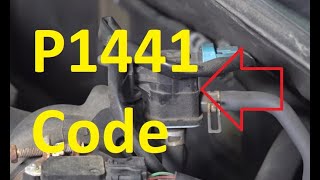
On modern GM V8 platforms like the LT1 in your Camaro, the EVAP system components are well-known. The P1440 code showing up is a classic case of 'phantom code' syndrome, where less sophisticated scanners can't correctly interpret manufacturer-specific codes and substitute an incorrect one. 🎬 See a breakdown of P1441 causes and common fixes The actual issue, P1441, points very directly to a specific type of failure—uncommanded flow—which on this engine is overwhelmingly caused by a stuck-open EVAP purge solenoid valve located on the intake manifold.
Symptoms You May Notice
- Check Engine Light is on
- Difficulty starting the engine right after getting gas
- Slightly rough or unstable idle
- Fuel smell near the vehicle
- Reduced fuel economy
- Engine may stall when warm if the vapor leak is significant.
- Replacing the gas cap. While a loose or faulty gas cap can cause other EVAP codes (like P0455 or P0457), it does not cause a 'flow during non-purge' condition and will not fix a P1441 code.
- Searching for a fix for P1440. Since the code is not valid for the vehicle, any information found for 'P1440' will be for other car brands (like Nissan) and will lead to incorrect diagnosis and parts replacement.
Most Likely Causes
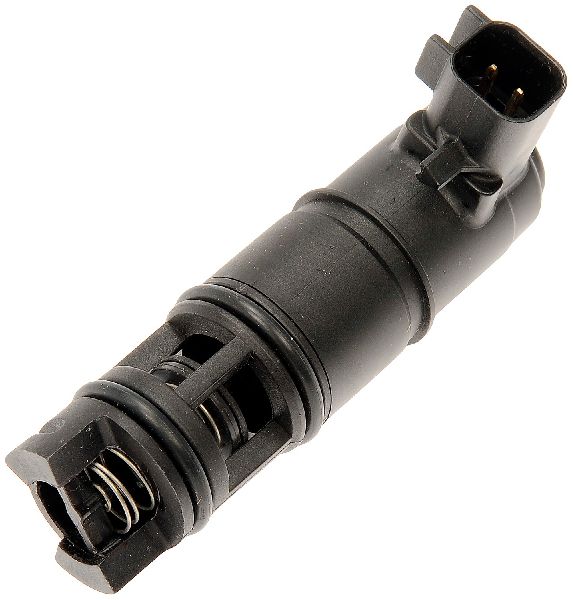
- Faulty EVAP Canister Purge Solenoid Valve 🔴 High Probability → Shop Vapor Canister The purge solenoid on modern GM V8 engines is a very common failure point. It tends to get stuck internally in the open position after many heat cycles, allowing un-commanded fuel vapor into the engine. This is the most frequent cause for a P1441 code.
How to confirm: With the engine off, disconnect the electrical connector and the two vacuum lines from the purge solenoid on the intake manifold. Try to blow through the valve from the port that goes to the EVAP canister. If any air passes through, the valve is stuck open and has failed. A good valve should be completely closed with no power applied. A hand vacuum pump can also be used; a bad valve will not hold a vacuum.
Typical fix: Replace the EVAP canister purge solenoid valve. It is typically held on by a single bolt and is easily accessible on top of the engine.
Est. part cost: $25 - $60
Rare But Worth Checking
- Leaking or disconnected EVAP vacuum lines: While less common than a failed solenoid, a cracked, brittle, or disconnected vacuum hose near the purge valve can also cause un-metered vapor flow and trigger the P1441 code.
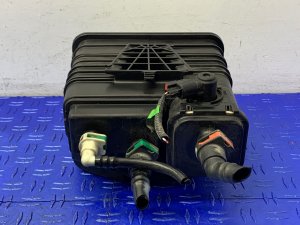
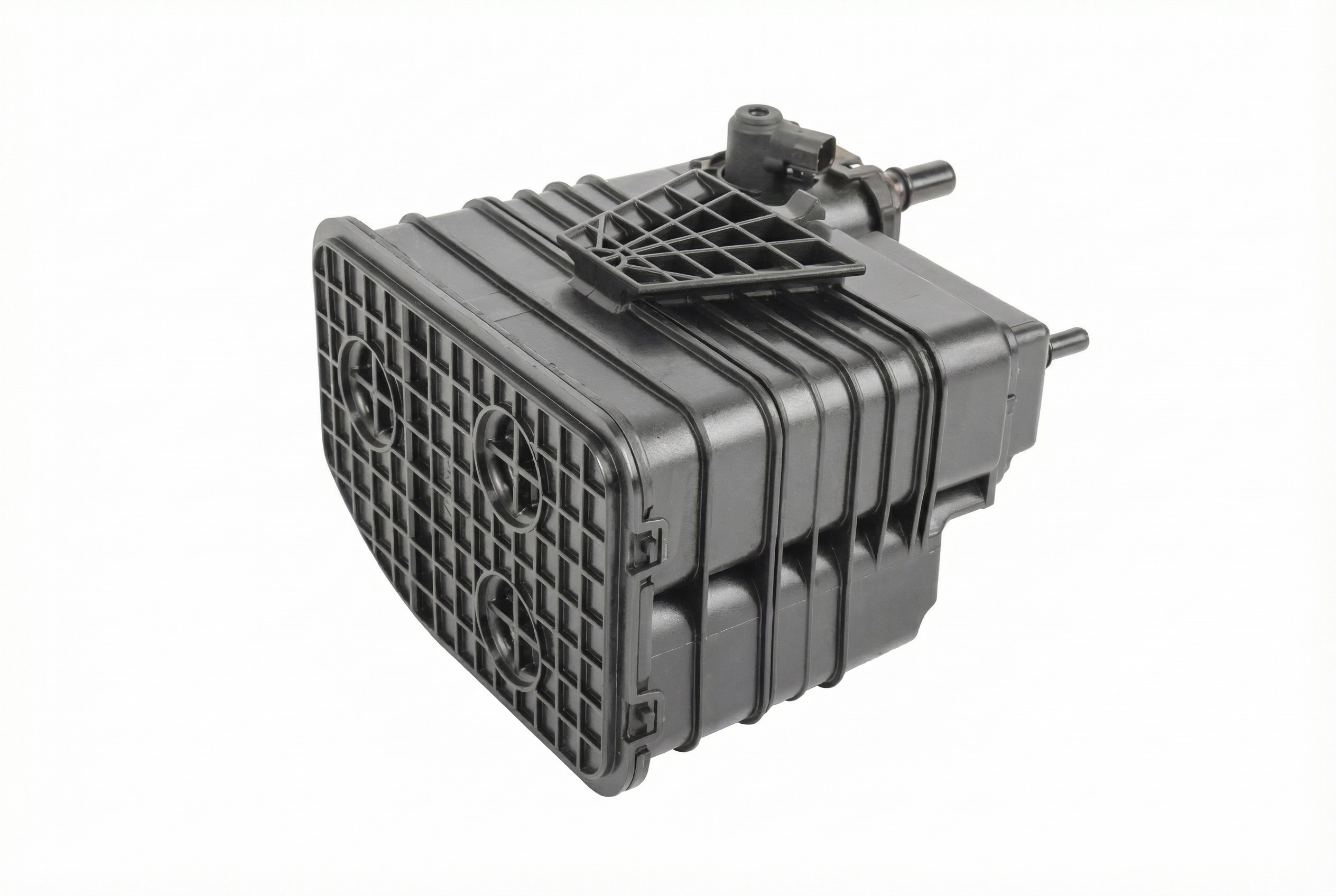
- Faulty EVAP Canister: → Shop Vapor Canister If the internal structure of the charcoal canister breaks down, charcoal pellets can travel up the EVAP lines and jam the purge solenoid open. Before replacing a failed solenoid, quickly check its inlet port for any black plastic debris. If found, the canister (located in the rear wheel well) and lines must also be replaced or cleaned to prevent repeat failure.
Diagnosis Steps
- Confirm the code with a high-quality scan tool. Verify if the code is indeed P1440 or the more likely P1441. If you see P1440, assume the actual fault is P1441.
- Locate the EVAP Canister Purge Solenoid Valve. On the LT1 V8, it is mounted on the driver's side of the intake manifold.
- Perform a functional test. With the engine off, disconnect the electrical connector and the two hoses from the valve.
- Attempt to blow air through the valve. If air passes through in either direction, the valve is stuck open and must be replaced. A new valve will not allow air to pass.
- Inspect the vacuum lines connected to the solenoid for cracks, brittleness, or loose connections.
- Before installing the new valve, inspect the port on the hose coming from the rear of the car for black charcoal pellets. If debris is present, the EVAP canister is breaking apart and must also be replaced to prevent the new valve from failing.
- If the valve is confirmed to be bad, replace it. Clear the trouble codes with the scan tool and perform a drive cycle to ensure the Check Engine Light does not return.
Parts You'll Likely Need
- EVAP Canister Purge Solenoid Valve
(OEM #12690512)— This is the component that almost always fails to cause the P1441 code on modern GM V8 engines by getting stuck open.
Trusted brands: ACDelco, Delphi, Bosch, Dorman
OEM price range: $40-$60
Aftermarket price range: $25-$45
Related Codes That Often Appear With This One
- P0171 / P0174 — A stuck-open purge solenoid creates a vacuum leak. This introduces un-metered air (and fuel vapor) into the intake manifold, which can make the engine run lean and trigger 'System Too Lean' codes for one or both banks.
- P0300 — A significant vacuum leak from a stuck purge valve can disrupt the air/fuel mixture enough to cause an unstable idle and random engine misfires.
Platform-Specific Known Issues
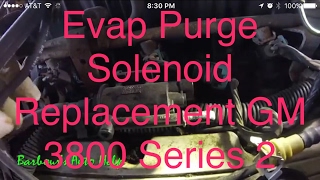
- Real Owner Experience on Camaro6 Forum: Multiple owners on the Camaro6 forums have confirmed that symptoms like a rough idle after fueling and a Check Engine Light were resolved by replacing the EVAP purge solenoid valve (part #12690512). The repair is described as being very simple, taking only a few minutes with minimal tools. 🎬 Watch: Step-by-step guide to replacing the GM purge solenoid
Mechanic-Grade Diagnostic Values
- EVAP Purge Solenoid Coil Resistance — expected: 15 to 30 Ohms. Failure: A reading of 0 Ohms indicates a short circuit. A reading of infinity (OL) indicates an open circuit. Both require replacement.
- EVAP Purge Solenoid Control Wire Voltage (Back-probed) — expected: Approx. 12V (Battery Voltage) with Key On, Engine Off.. Failure: A reading of 0V when it should be 12V could indicate an open in the solenoid coil or a wiring issue. The voltage should pulse or drop towards ground when the ECM commands the purge cycle (typically not at idle on a cold engine).
Scan Tool Commands That Help
- GM GDS2 / High-End Bidirectional Scanner: EVAP Purge Solenoid Output Control — This is a primary diagnostic step to confirm solenoid failure. With the engine running, a technician can command the valve to open and close. Commanding it ON should cause a change in engine idle speed and fuel trims. Commanding it OFF should result in no flow. Listening for an audible 'click' from the solenoid during this test confirms the coil is being energized.
Wiring & Ground Locations
- EVAP Purge Solenoid Wiring — At the solenoid connector on the driver's side of the intake manifold.. The solenoid has two wires. One is an ignition voltage feed (typically Pink/Black on GM vehicles). The other is the control wire (typically White on this platform) which the Engine Control Module (ECM) pulses to ground to open the valve. Verifying power and control signal is the definitive electrical test.
- G103 / G102 — G103 is in the engine compartment on the radiator support, near the underhood fuse block. G102 is on the RH side of the radiator support.. These are major engine and chassis grounds. While not specific to the EVAP circuit, a loose or corroded ground at these locations can cause erratic behavior from the ECM and other modules, leading to a wide range of phantom issues. A GM TSB specifically calls out checking G103 for looseness to solve intermittent electrical problems on the 2016-2018 Camaro.
Real Owner Repair Stories
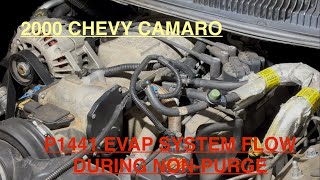
- YouTube channel 'Ogre's Speed Shop' (2000 Chevrolet Camaro 3.8L V6) — Check Engine Light with code P1441, engine stalls when warm (after sitting for 10-30 minutes), but starts fine cold or fully hot.
❌ Tried (didn't work) The owner had been chasing the warm stall issue, which was previously attributed to a bad catalytic converter that had since been fixed.
✅ What actually fixed it The mechanic diagnosed the P1441 by pulling the vacuum hose off the purge solenoid with the engine running and feeling suction, confirming the valve was stuck open. Replacing the EVAP purge solenoid fixed the P1441 code and was believed to have also fixed the long-standing warm stall issue by eliminating the un-commanded flow of fuel vapors causing a rich condition.
OEM Part Supersession History
12690512→12719855— Undocumented, likely a routine supplier change or minor revision. No functional difference or incompatibility has been noted by the community.
Heads up: None. The original part number 12690512 is still widely sold and used successfully on vehicles within this year range, indicating full compatibility.
Diagnostic Flowchart
Other Known Issues on This Vehicle
Issues unrelated to this code that are worth knowing about as an owner of this generation:
- 8-Speed (8L90/8L45) Automatic Transmission Shudder 🔴 High — Very common on 2016-2019 models. Feels like driving over rumble strips between 25-80 MPH. (Ref: TSB #18-NA-355 recommends a fluid flush with an updated Mobil 1 Synthetic LV ATF HP fluid. If shudder persists, torque converter replacement is often required.)
- AFM/DFM Lifter Failure 🔴 High — A known issue across the Gen V V8 family, though reported less on M6 Camaros than on automatic trucks/SUVs. Failure can occur at various mileages, often leading to a ticking noise, misfires, and potential camshaft damage. (Ref: Multiple TSBs exist for diagnosis, but no single recall. Repair involves replacing lifters and often the camshaft. Many owners perform an 'AFM delete' out of warranty to prevent recurrence.)
- Infotainment System Glitches/Failure 🟡 Low — Reported on 2016-2018 models. Issues include screen freezing, phantom touches, or complete blackouts.
- Direct Injection Carbon Buildup 🟠 Medium — Inherent to all direct-injection engines, including the LT1. Over 50,000-80,000 miles, carbon can accumulate on intake valves, potentially causing a gradual loss of performance.
Used vs. New Parts: Buying Guide for This Vehicle
When a used part is the smart pick: For this specific repair, a used part is almost never a smart choice. The part is a very common failure item, is inexpensive to buy new from the OEM, and is critical for passing emissions tests. The risk of a used part failing shortly after installation is high.
Donor-vehicle mileage cap: roughly under 15000 miles for the part to have meaningful remaining life.
What to inspect on the donor part:
- If forced to use one, source from a vehicle with verifiable, extremely low mileage.
- Ensure there is no physical damage to the housing or connector.
- Test the part before installation by attempting to blow through it; if any air passes, it is already faulty.
OEM-only on this vehicle (don't cheap out):
- EVAP Canister Purge Solenoid Valve
Aftermarket brands forum-validated for this vehicle:
- ACDelco (GM Original Equipment or Professional series)
Brands owners have reported issues with on this vehicle:
- Dorman: While Dorman makes some useful problem-solver parts, their electronic components, including EVAP solenoids, have a reputation in enthusiast forums for high premature failure rates. Multiple owners report Dorman purge valves failing within months, while the ACDelco part resolves the issue long-term.
Real Owner Stories
Aggregated from forums and TSBs cited above. Mileages and costs reflect what owners reported in those sources.
2016-2024 Chevrolet Camaro LT1 6.2L V8
Symptoms: Rough idle after fueling and a Check Engine Light.
What fixed it: Replacement of the EVAP purge solenoid valve (part #12690512). The repair took only a few minutes with minimal tools.
Source hint: Real Owner Experience on Camaro6 Forum
1996 Chevrolet Camaro
Symptoms: P1441 code and a rough idle.
What fixed it: Traced the issue to a faulty EVAP canister purge solenoid.
Source hint: CamaroForums.net
2014-2019 Chevrolet Corvette (C7) LT1
Symptoms: P1441 code, identical to the Camaro LT1 issue.
What fixed it: Replacing the purge solenoid valve (part #12690512).
Source hint: CorvetteForum.com
Related OBD-II Codes
Frequently Asked Questions
What specific part number do I need to fix the P1440/P1441 code on my LT1 Camaro?
Why does my Camaro LT1 struggle to start only after I fill up the gas tank?
Is the P1440 code common on other vehicles with the 6.2L V8?
Can a bad EVAP canister cause my new purge solenoid to fail again?
My 8-speed automatic Camaro has a shuddering feeling; is this related to the P1440 code?
Where is the purge solenoid located on the 6.2L LT1 engine for a DIY repair?
Helpful Videos
Used OEM Parts in Stock
New Aftermarket Parts Available

The information in this article is provided for general reference and educational purposes only. Vehicle specifications, procedures, and part compatibility can vary by production date, trim level, and region. Always consult your vehicle's factory service manual and verify part numbers before purchasing or performing repairs. Safety-critical components such as airbags, seat belts, and braking systems should be installed by a qualified professional.
- Chevrolet Camaro:
- 🧭 Diagnostic Flowchart
- 🎬 Helpful Videos
- 🛍️ Shop This Part
- What's Unique About the 2016-2024 Chevrolet Camaro
- Symptoms You May Notice
- Most Likely Causes
- Rare But Worth Checking
- Diagnosis Steps
- Parts You'll Likely Need
- Related Codes That Often Appear With This One
- Platform-Specific Known Issues
- Mechanic-Grade Diagnostic Values
- Scan Tool Commands That Help
- Wiring & Ground Locations
- Real Owner Repair Stories
- OEM Part Supersession History
- Other Known Issues on This Vehicle
- Used vs. New Parts: Buying Guide for This Vehicle
- Real Owner Stories
- 2016-2024 Chevrolet Camaro LT1 6.2L V8
- 1996 Chevrolet Camaro
- 2014-2019 Chevrolet Corvette (C7) LT1
- Related OBD-II Codes
- Frequently Asked Questions
- 🎟️ Get 5% Off