

P1440 on 2010-2017 Chevrolet Equinox: Why This Code is Likely a Mistake
For a 2010-2017 Chevy Equinox, code P1440 is almost always a misreading by a basic scanner. The actual code is likely P1441 (a bad EVAP purge valve) or B1440 (a failing ignition switch). Re-scan with a quality tool to confirm the real problem before buying parts.
- Code P1440 is not a valid code for a 2010-2017 Chevrolet Equinox.
- The code is almost certainly a misreading by a basic scanner. Do not buy any parts based on P1440.
- The actual code is likely P1441 (EVAP Purge Valve issue) or B1440 (Ignition Switch issue).
- Use a better scanner that can read manufacturer-specific and Body Control Module codes to find the true problem.
- The most common fix will be either a new EVAP purge valve (for P1441) or a new ignition switch (for B1440).
What's Unique About the 2010-2017 Chevrolet Equinox
On many GM vehicles, including platforms similar to the Equinox, basic OBD-II scanners can struggle to differentiate between powertrain 'P' codes and body 'B' codes, or they may misinterpret specific manufacturer codes. The P1440 code is a classic example of this issue, where the scanner shows a code that isn't actually used by the vehicle's manufacturer, leading to significant diagnostic confusion. The key to solving this 'ghost code' is to understand it's a symptom of a scanner limitation and to focus on finding the real code.
Symptoms You May Notice
- Check Engine Light is on
- If the underlying code is P1441 (EVAP): Slight decrease in fuel economy, faint fuel odor, difficulty starting immediately after refueling, or a rough idle.
- If the underlying code is B1440 (Ignition): Engine may continue to run for a few seconds after turning the key off, issues with starting, problems with electrical accessories, or smoke from the steering column in severe cases.
- Replacing any part based on the P1440 code alone, without verifying the true underlying code with a better scanner.
- Replacing the gas cap for an EVAP issue. While a bad gas cap can cause other EVAP codes (like P0442 or P0455), P1441 specifically points to an incorrect purge flow, which is almost always the purge valve itself.
Most Likely Causes
- Scanner Misreading Code P1441 🔴 High Probability This is the most common scenario. P1441 (EVAP System Flow During Non-Purge) is a valid and frequent code on GM vehicles, often caused by a common failure part.
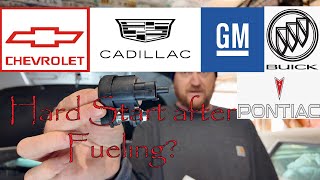
How to confirm: Re-scan the vehicle with a higher-quality OBD-II scanner that can properly interpret manufacturer-specific codes. The tool should confirm P1441. A key symptom is difficulty starting the car right after filling the gas tank.
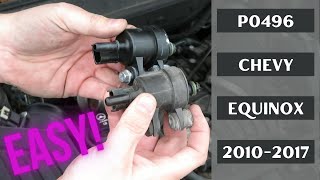
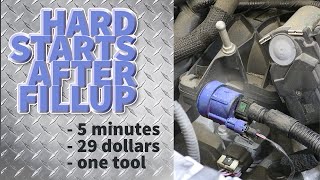
Typical fix: The most common fix for P1441 is replacing the EVAP Purge Solenoid Valve, which gets stuck open. It's located on top of the engine under the plastic cover and is a very common DIY repair. 🎬 Watch: Step-by-step EVAP purge valve replacement guide
Est. part cost: $25-$60 - Scanner Misreading Code B1440 🟡 Medium Probability Basic scanners often fail to distinguish Body ('B') codes from Powertrain ('P') codes.
How to confirm: Re-scan with a tool that can read Body Control Module (BCM) codes. The tool should confirm B1440 (Power Mode Master Input Circuits Mismatch). A classic symptom is the engine continuing to run for several seconds after you turn the key to the 'Off' position.
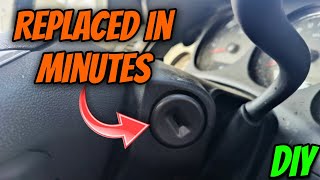
Typical fix: The most common fix for B1440 on GM vehicles is replacing the ignition switch, 🎬 See how to replace the ignition switch yourself which wears out and sends conflicting signals to the BCM.
Est. part cost: $30-$70
Diagnosis Steps
- STOP: Do not replace any parts based on the P1440 code.
- Obtain a higher-quality OBD-II scanner. Borrow one from a friend, use one at an auto parts store, or have a professional mechanic scan the vehicle.
- Re-scan the vehicle's computers, making sure the tool can read Powertrain (P), Body (B), and Chassis (C) codes.
- Identify the actual trouble code. It is most likely P1441 or B1440.
- If the code is P1441: Inspect the EVAP purge solenoid valve on the engine for being stuck open. This is the most common failure. A simple vacuum test can confirm if it's holding vacuum when de-energized; if it's not, it's bad. Also, check the gas cap for a tight seal as a secondary check.
- If the code is B1440: Test the ignition switch and its wiring. A common symptom is the engine running for 10-15 seconds after key-off. This almost always points to a faulty ignition switch. Check related fuses in the engine bay fuse box first (e.g., fuses 20, 42, 52, 53 and relays 66, 68).
- Proceed with the diagnosis and repair for the *actual* code found.
Parts You'll Likely Need
- EVAP Vapor Canister Purge Valve / Solenoid
(OEM #12611130)— This is the most common fix for the likely underlying code P1441 or P0496. The valve sticks open, causing a constant flow of fuel vapors when there shouldn't be one.
Trusted brands: ACDelco, Dorman, Standard Motor Products
OEM price range: $40-$60
Aftermarket price range: $25-$45 - Ignition Switch
(OEM #20965947)— This is the most common fix for the likely underlying code B1440. The internal contacts wear out, causing conflicting signals about the key's position.
Trusted brands: ACDelco, Standard Motor Products, TRQ
OEM price range: $50-$70
Aftermarket price range: $30-$50
Related Codes That Often Appear With This One
- P1441 — This is the most likely actual code if you are experiencing EVAP-related symptoms like a fuel smell or trouble starting after filling the gas tank.
- B1440 — This is a likely actual code if you are experiencing electrical or ignition-related symptoms, like the engine running on after the key is off.
- P0496 — This is another common EVAP code that points to the same failure: 'EVAP Flow During a Non-Purge Condition'. It is often caused by a stuck-open purge valve and may appear alongside or instead of P1441.
Platform-Specific Known Issues
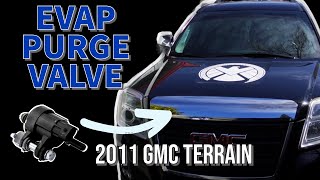
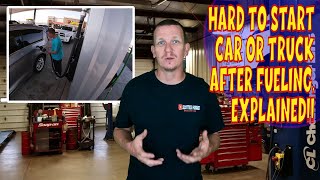
- Real Owner Experience with P1441 Symptoms: An owner of a 2011 GMC Terrain (platform mate) with the 3.0L V6 experienced code P0496, which has the same root cause as P1441. The primary symptom was difficulty starting after refueling. 🎬 Watch: How to diagnose a hard start after fueling The fix was replacing the EVAP purge valve solenoid, which is a straightforward DIY job shown in detail in a YouTube guide.
- Ignition Switch Failure Symptoms: → Shop Ignition Switch A video guide for replacing the ignition switch on a Saturn Vue, which shares its steering column design with the Equinox, shows a severe failure mode where the switch begins to smoke when the key is turned. This highlights the potential fire risk associated with a failing ignition switch, the likely cause of code B1440.
Mechanic-Grade Diagnostic Values
- EVAP Purge Solenoid Coil Resistance — expected: 20-30 Ohms. Failure: A reading of infinity (open circuit) or near-zero (short circuit) indicates a failed solenoid.
- Voltage at Purge Solenoid Connector (Power Side, KOEO) — expected: Battery Voltage (approx. 12V). Failure: No voltage points to a blown fuse (e.g., F21 under-hood), a bad relay, or a break in the power wire (typically Pink/Black).
- Voltage at Purge Solenoid Connector (Control Side, KOEO) — expected: This is a ground-side controlled circuit. A test light connected to B+ should flash when the valve is commanded ON by a scan tool.. Failure: A constant light or no light when commanded suggests a wiring problem (typically Dark Green/White wire) or a faulty PCM driver.
- Ignition Switch Circuit Test (for B1440) — expected: With the key cycled through OFF, ACC, RUN, and START, the live data PIDs on a scan tool for 'Ignition 1 Signal' must match the key's physical position.. Failure: Any mismatch between the scan tool data and the key position confirms a faulty ignition switch.
- BCM to Ignition Switch Resistance (for B1440) — expected: Less than 1.0 ohm of resistance between the BCM and the ignition switch on signal circuits.. Failure: High resistance indicates a wiring fault or corrosion in a connector.
Scan Tool Commands That Help
- GDS2 / Tech2 / Professional Bi-Directional Scanner: EVAP Purge/Seal or Purge Solenoid Command — This is the definitive test for the likely P1441 code. It allows you to manually command the purge valve open (e.g., to 50%) and see if the engine RPM changes or fuel trims are affected. It also allows you to seal the system and see if it holds vacuum, confirming if the valve is mechanically stuck open.
- Professional Bi-Directional Scanner (e.g., Autel, Foxwell): BCM Live Data - Power Mode Master — For the likely B1440 code, this allows you to view the status of all ignition switch input circuits ('Ignition 1 Signal', 'Accessory Voltage', etc.) in real-time to see the mismatch that sets the code as you turn the key.
Wiring & Ground Locations
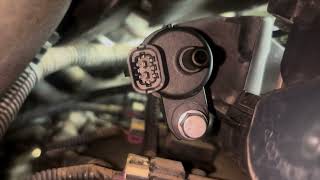
- EVAP Purge Solenoid Connector (2.4L Engine) — On the intake manifold.. This 2-pin connector is the primary test point for P1441/P0496. One wire (typically Pink/Black) is 12V power from the under-hood fuse block, and the other (typically Dark Green/White) is the ground control wire from the ECM (Pin 48 on some diagrams).
- Ignition Switch Connector — At the ignition switch, inside the steering column.. This is the main connector for testing B1440. It contains the B+ circuit, accessory, run, and start signal circuits that feed the Body Control Module (BCM).
- G112 Ground — Lower left front of the engine for the 2.4L; left rear of the engine for the 3.0L.. This is a key engine component ground. While not directly tied to the EVAP solenoid control, a poor engine ground can cause a variety of strange electrical issues and incorrect sensor readings.
- Body Control Module (BCM) — Located behind the left side of the dashboard.. The BCM is the 'Power Mode Master' that interprets the signals from the ignition switch. For code B1440, testing the signal wires at the BCM's X1 connector is a critical diagnostic step.
Real Owner Repair Stories
- Tahoe Yukon Forum (2009 GMC Yukon XL 5.3L (Similar GM EVAP system)) — Hard to start after getting gas, idles erratically then smooths out. Code P0496 was present.
✅ What actually fixed it The user was advised by another forum member that if the fuel tank pressure sensor voltage is over 1.7V after 90 seconds from startup, the canister purge solenoid valve needs replacement, and to use ACDelco or GM OE parts only. - YouTube - DC Auto Enhancement (2011 Chevrolet Equinox 3.0L V6) — Check Engine Light with code P0496, and a hard start/crank condition specifically after filling up with gas.
✅ What actually fixed it The EVAP purge solenoid valve (GM Part #12690512) was replaced. The owner noted the electrical connector clip was broken, likely from a previous repair (spark plugs), which may have contributed to the issue. After replacement and clearing the code, the issue was resolved.
OEM Part Supersession History
92184907→20965947— Standard part update/revision by GM.
Model Year Variations Within This Range
- 2010-2017: The 2.4L I4 and the 3.0L/3.6L V6 engines use different purge valves in different locations, though the failure mode and resulting codes (P1441/P0496) are common to all.
- 2017: Some aftermarket purge valve manufacturers note a minor bracket difference for the 2017 model year compared to 2010-2016, though the core valve remains the same. This suggests a potential minor mounting change in the last year of the generation.
- 2010-2012 vs 2013-2017: The optional V6 engine changed from the 3.0L LF1 to the 3.6L LFX in the 2013 model year. This affects the location and specific part number of the EVAP purge valve for V6 models.
Diagnostic Flowchart
Other Known Issues on This Vehicle
Issues unrelated to this code that are worth knowing about as an owner of this generation:
- Excessive Oil Consumption (2.4L Ecotec) 🔴 High — Very common, especially on 2010-2013 models. Caused by premature piston ring wear. Can lead to engine damage if oil level is not checked frequently. (Ref: Multiple TSBs (e.g., #15285C) and a class-action lawsuit settlement exist for this issue, primarily covering 2010-2013 models.)
- Stretched Timing Chains (V6 and 2.4L) 🔴 High — Common on both V6 and 2.4L engines, often due to extended oil change intervals or low oil levels. Leads to rattling noises, check engine light (cam/crank correlation codes), and potential catastrophic engine failure. (Ref: Special Coverage Adjustment #12313C was issued for the balance shaft chain on 2010-2011 2.4L engines.)
- Clogged PCV Orifice / Blown Rear Main Seal 🟠 Medium — The PCV orifice in the intake manifold can clog, especially in cold weather. This builds crankcase pressure and can blow out the rear main engine seal, causing a major oil leak. (Ref: GM bulletin #14882 addresses this issue. A preventative measure is to use a vented oil cap (e.g., ACDelco FC219).)
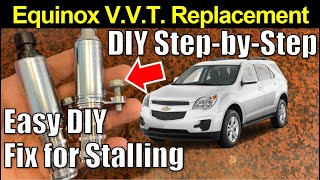
- Failing VVT Solenoids 🟡 Low — Intake and/or exhaust VVT solenoids can fail, causing rough idle, stalling, and codes like P0010, P0011, P0013, or P0014. Often caused by low oil levels or sludge.
- Cracked Exhaust Manifold (V6) 🟠 Medium — The exhaust manifold on V6 models is prone to cracking, causing a loud ticking or exhaust leak noise, especially when cold.
Used vs. New Parts: Buying Guide for This Vehicle
When a used part is the smart pick: For these specific, low-cost electronic parts (EVAP solenoid, ignition switch), buying new is strongly recommended. The cost savings of a used part are minimal and not worth the risk of getting a part that is already near the end of its service life. A used part could fail quickly or be non-functional from the start.
Donor-vehicle mileage cap: roughly under 50000 miles for the part to have meaningful remaining life.
What to inspect on the donor part:
- For an EVAP solenoid, ensure the plastic housing is not cracked and the connector pins are clean and straight.
- For an ignition switch, check for smooth, non-binding operation when turning. Avoid any switch that feels loose or gritty.
- Visually inspect the electrical connectors on both parts for any signs of corrosion, melting, or broken locking tabs.
OEM-only on this vehicle (don't cheap out):
- While not strictly 'OEM-only', forum users consistently report better long-term reliability with ACDelco or genuine GM parts for both the EVAP purge valve and the ignition switch compared to store-brand or no-name online parts.
Aftermarket brands forum-validated for this vehicle:
- ACDelco (Considered OEM)
- Standard Motor Products (Often cited as a reliable alternative)
Brands owners have reported issues with on this vehicle:
- Dorman: While they offer a wide range of parts, many professional technicians and forum users report a high failure rate and poor reliability for their electronic components and sensors.
- Store brands (e.g., Duralast): Experiences can be hit-or-miss, with some owners reporting very short service life on electronic parts like solenoids.
Real Owner Stories
Aggregated from forums and TSBs cited above. Mileages and costs reflect what owners reported in those sources.
2011 GMC Terrain 3.0L V6
Symptoms: The primary symptom was difficulty starting after refueling.
What fixed it: Replacing the EVAP purge valve solenoid.
Source hint: vehicle_specific_issues: Real Owner Experience with P1441 Symptoms
2011 Chevrolet Equinox 2.4L
Symptoms: Catastrophic timing chain failure on an interference engine.
What fixed it: The thread discusses that a broken chain almost guarantees bent valves and severe engine damage, referencing well-known oil consumption issues.
Source hint: Reddit - Timing Chain Failure Discussion
2010-2017 Chevrolet Equinox
Symptoms: Resolving codes P0013 and P0014; rough idle and stalling.
What fixed it: Replacing both intake and exhaust VVT solenoids.
Source hint: Chevy Equinox Forum - VVT Solenoid Discussion
Related OBD-II Codes
Frequently Asked Questions
My 2011 Equinox 2.4L is using a lot of oil; is there a TSB for this?
I'm seeing P1440 on my scanner, but I've heard it's often a misread. What part should I actually check on my Equinox?
My engine keeps running for a few seconds after I turn the key off. Is this related to a specific code?
Is there a way to prevent the rear main seal from blowing out on my 2.4L engine?
Does the 2010-2011 Equinox have any special coverage for timing chain issues?
Can a faulty EVAP component make my Equinox hard to start after I get gas?
Helpful Videos

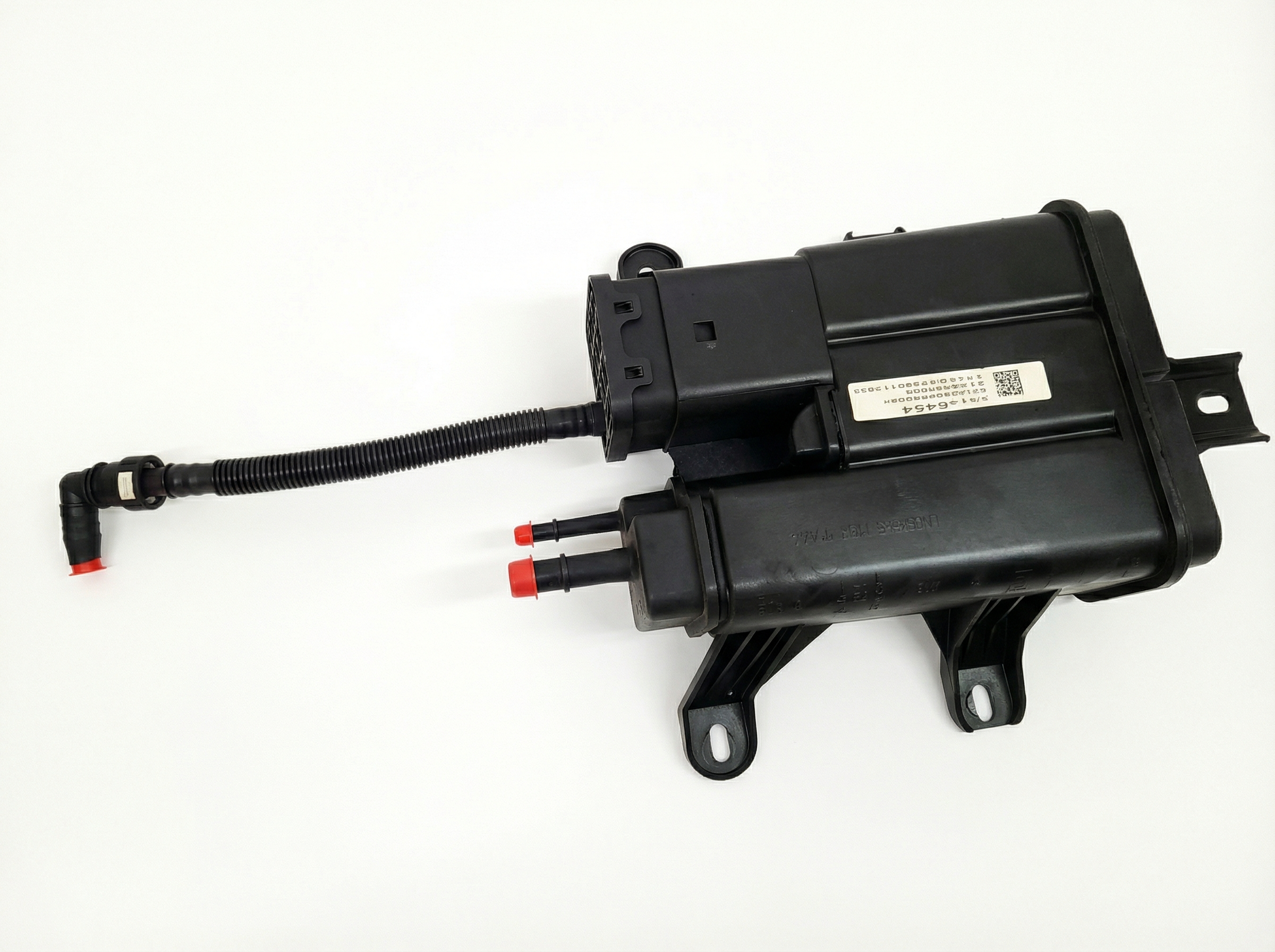
Used OEM Parts in Stock

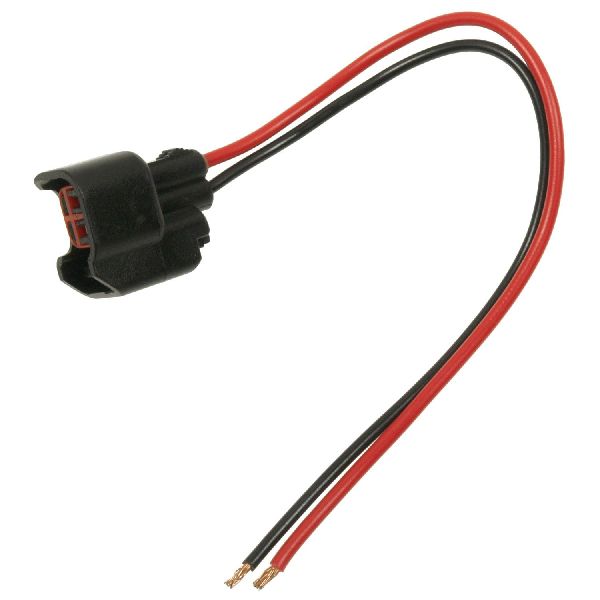
New Aftermarket Parts Available


The information in this article is provided for general reference and educational purposes only. Vehicle specifications, procedures, and part compatibility can vary by production date, trim level, and region. Always consult your vehicle's factory service manual and verify part numbers before purchasing or performing repairs. Safety-critical components such as airbags, seat belts, and braking systems should be installed by a qualified professional.
- Chevrolet Equinox:
- 🧭 Diagnostic Flowchart
- 🎬 Helpful Videos
- 🛍️ Shop This Part
- What's Unique About the 2010-2017 Chevrolet Equinox
- Symptoms You May Notice
- Most Likely Causes
- Diagnosis Steps
- Parts You'll Likely Need
- Related Codes That Often Appear With This One
- Platform-Specific Known Issues
- Mechanic-Grade Diagnostic Values
- Scan Tool Commands That Help
- Wiring & Ground Locations
- Real Owner Repair Stories
- OEM Part Supersession History
- Model Year Variations Within This Range
- Other Known Issues on This Vehicle
- Used vs. New Parts: Buying Guide for This Vehicle
- Real Owner Stories
- 2011 GMC Terrain 3.0L V6
- 2011 Chevrolet Equinox 2.4L
- 2010-2017 Chevrolet Equinox
- Related OBD-II Codes
- Frequently Asked Questions
- 🎟️ Get 5% Off