

P1440 on 2000-2005 Chevrolet Impala: EVAP Purge Flow Causes and Fixes
This code is almost always a misreading for P1441, caused by a stuck-open EVAP purge valve solenoid on the engine. It's a very common, inexpensive fix, typically costing $20-$50 for the part and taking less than 20 minutes to replace with basic tools.
- The code you see as P1440 is almost certainly P1441 on your Impala, pointing to a stuck-open EVAP purge valve on the engine.
- This is a very common, easy, and inexpensive DIY repair, often taking less than 20 minutes.
- Before replacing the valve, always check the vacuum line from the rear of the car for black charcoal bits, which indicates a failed charcoal canister that must also be replaced.
- The correct OEM part for both 3.4L and 3.8L engines is ACDelco 214-641.
- The definitive test is to remove the valve and try to blow through it; if air passes, it is faulty.
What's Unique About the 2000-2005 Chevrolet Impala
On GM vehicles from this era, including the Impala with the 3.4L and 3.8L V6 engines, it's extremely common for basic OBD-II scanners to incorrectly display P1440 when the real code is P1441. The root cause is a well-documented, high-failure-rate part: the EVAP canister purge valve solenoid. This valve's internal diaphragm fails with age, causing it to stick open and create the exact 'flow during non-purge' condition that P1441 describes. The issue is so prevalent on these engines that the purge valve is the first and most likely component to check.
Symptoms You May Notice
- Check Engine Light is on
- Rough idle, especially after refueling or when the engine is hot
- Slightly reduced fuel economy
- Difficulty starting the engine after it's been warmed up
- A faint fuel odor may be noticeable
- Engine may stumble or hesitate on acceleration
- Replacing the EVAP Vent Solenoid. The vent solenoid is located near the fuel tank and typically causes different codes (like P0446 or P0449). P1441 points specifically to uncommanded flow, which is almost always the purge solenoid on the engine.
- Assuming a generic EVAP leak. While a leak can exist, the definition of P1441 ('Flow During Non-Purge') is a functional problem, not a static leak test failure. The diagnostic path should focus on the stuck purge valve first.
- Confusing P1440 with B1440. On some GM vehicles, a cheap scanner might confuse the powertrain code P1440/P1441 with the body code B1440, which relates to an ignition switch mismatch and causes different symptoms like the engine running after the key is off.
Most Likely Causes
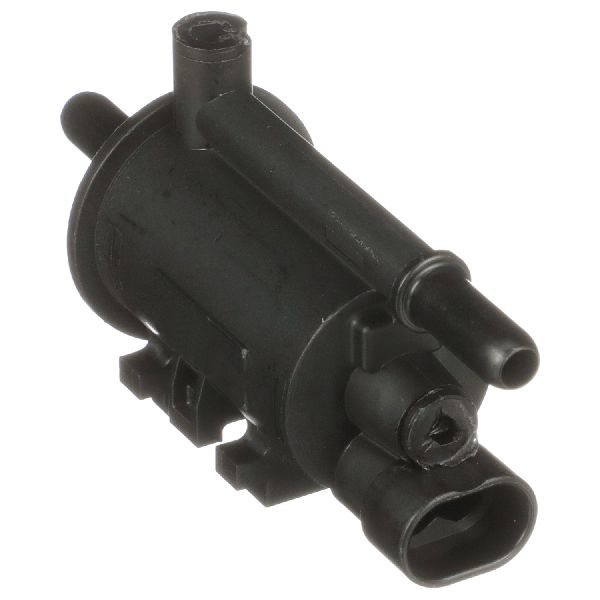
- Stuck-Open EVAP Canister Purge Valve/Solenoid 🔴 High Probability → Shop Vapor Canister This specific part is a known common failure item on GM 3.4L and 3.8L V6 engines of this period due to internal valve failure with age and heat cycles. The valve is normally closed, but when it fails, it remains partially or fully open.
How to confirm: With the engine off, locate the valve on top of the engine. Disconnect the vacuum lines. Try to blow through the valve; if any air passes, it is bad and must be replaced. For a more definitive test, connect a hand-held vacuum pump to the port that goes to the intake manifold. The valve should hold vacuum indefinitely when de-energized. If the gauge bleeds down, the valve is faulty. In many cases, tapping on the valve can temporarily cause it to seat, which also indicates it is failing.
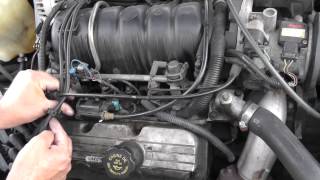
Typical fix: Replace the EVAP canister purge valve solenoid. This is a simple repair involving one or two bolts and two connections 🎬 See this step-by-step Impala purge valve replacement walkthrough (one electrical, one vacuum hose).
Est. part cost: $20-$60
Rare But Worth Checking
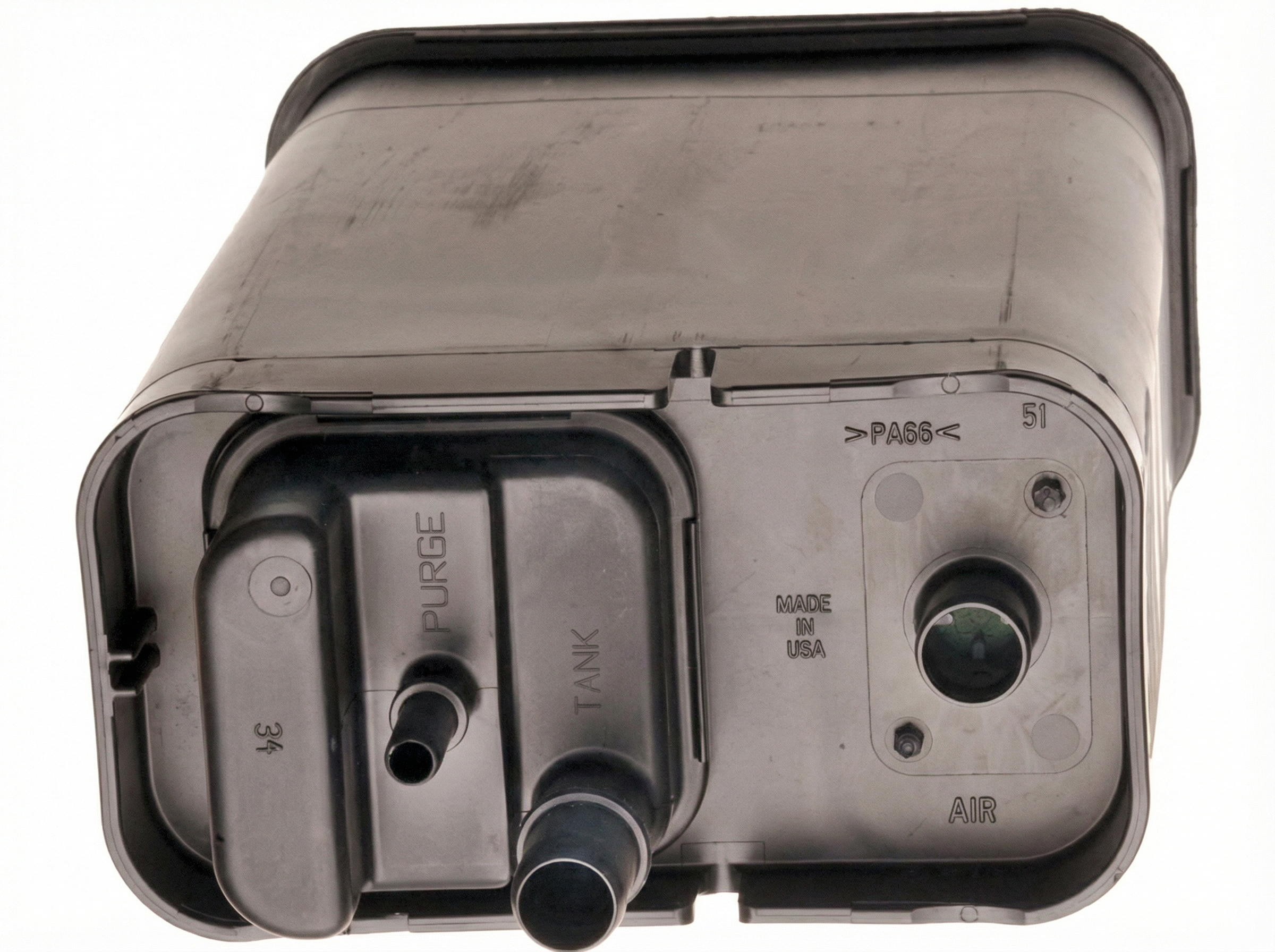
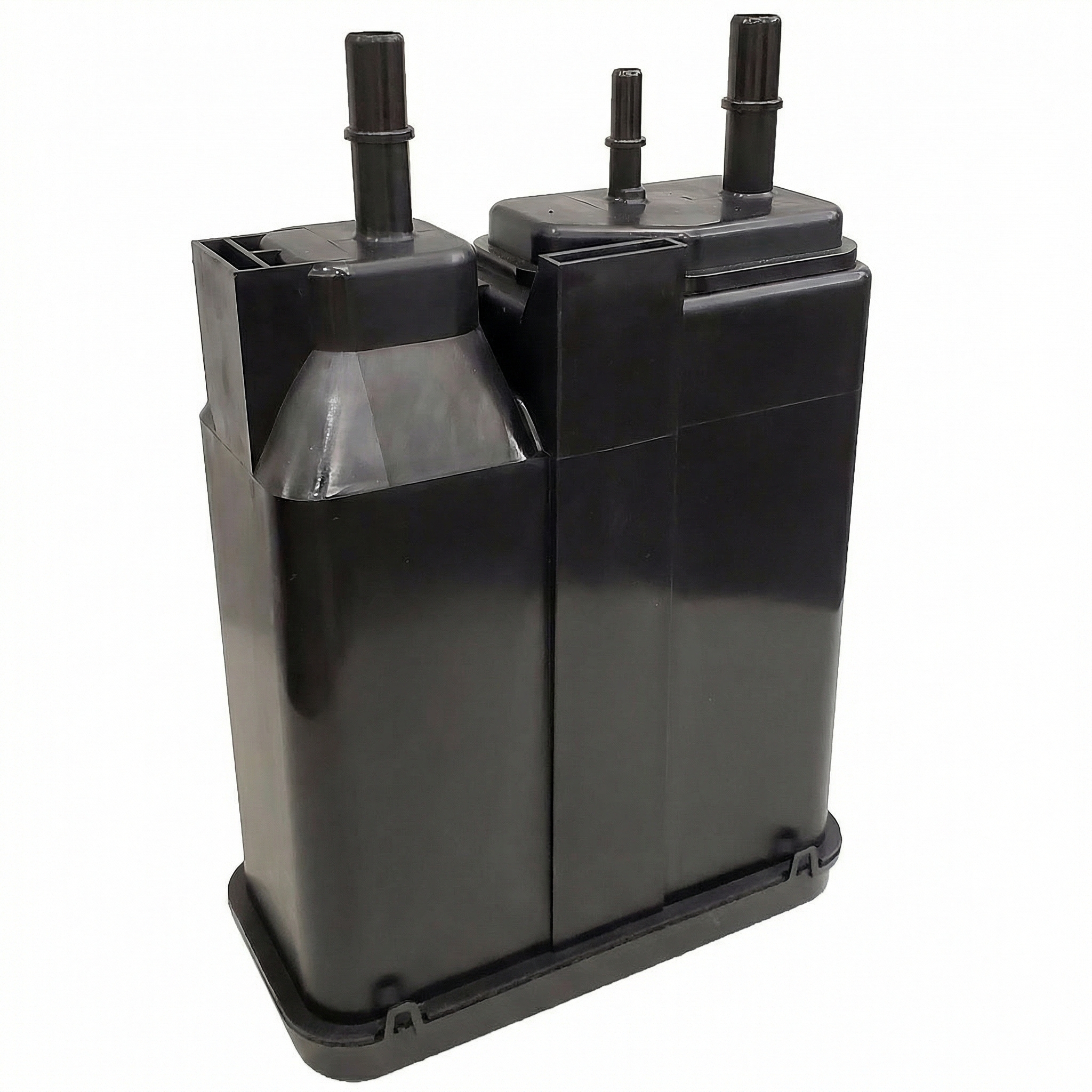
- Failed EVAP Charcoal Canister: → Shop Vapor Canister This is a critical check. Before installing a new purge valve, disconnect the vacuum line coming from the rear of the car and inspect it for black, sand-like charcoal granules. If charcoal is present, the canister has ruptured and must be replaced along with the purge valve to prevent the new valve from being immediately damaged. Failure to do so will cause the new purge valve to fail quickly.
- Cracked or Disconnected EVAP Vacuum Hoses: → Shop Vacuum Hose The plastic and rubber hoses in the EVAP system can become brittle and crack over time, especially the rubber elbows. While less common than purge valve failure for this specific code, a visual inspection of all accessible lines is worthwhile.
- Loose or Faulty Gas Cap: → Shop Fuel Tank Cap While a bad gas cap typically causes a P0442 (small leak) or P0455 (large leak) code, it's a simple and free check. Ensure the cap is tight and the seal is not cracked or worn. It is a low probability cause for P1441.
- Shorted Wiring to Purge Solenoid: → Shop Vapor Canister In rare cases, the wiring to the solenoid could be shorted to ground, causing the valve to be energized and held open constantly. This can be tested with a test light on the control wire; the light should not be on when the engine is off.
- Faulty Fuel Tank Pressure (FTP) Sensor: → Shop Fuel Tank A defective FTP sensor can send incorrect vacuum readings to the PCM, tricking it into thinking there is flow when there isn't. This is an uncommon cause for P1441 compared to the purge valve itself.
Diagnosis Steps
- Verify the code. If possible, use a higher-quality scanner to confirm if the code is P1441. If not, proceed assuming P1440 is pointing to the same issue.
- Inspect the Gas Cap. Ensure it is tight and the rubber seal is intact.
- Locate the EVAP Purge Valve Solenoid on top of the engine. It will have an electrical connector and two vacuum hoses. One hose goes to the intake manifold, the other comes from the EVAP canister at the rear of the car.
- Test the Purge Valve. With the engine off, disconnect the vacuum lines. Attempt to blow air through the valve. No air should pass. If it does, the valve is bad.
- Confirm with a vacuum test (optional but recommended). Attach a hand vacuum pump to the intake-side port of the valve. It should hold vacuum. If it doesn't, it has failed.
- CRITICAL: Check for charcoal. Disconnect the vacuum line coming from the fuel tank to the purge valve. Inspect the inside of the hose for any black, sooty particles. If found, the charcoal canister is bad and must also be replaced. The canister is located above the rear of the gas tank.
- If the purge valve tests good, visually inspect all accessible EVAP hoses for cracks, especially at connection points and bends.
- If no fault is found, the issue may be with the EVAP vent valve (near the tank) or a wiring issue, but this is rare for a P1441 code.
Parts You'll Likely Need
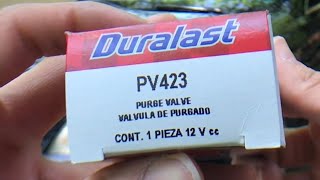
- EVAP Canister Purge Valve / Solenoid
(OEM #ACDelco 214-641 (GM 1997278))— This is the most common failure point for code P1441 on this platform. It gets stuck open, allowing fuel vapors to flow when they should not. This part number is applicable to both the 3.4L and 3.8L V6 engines in the 2000-2005 Impala.
Trusted brands: ACDelco (GM Original Equipment), Delphi, Dorman, Standard Motor Products (SMP)
OEM price range: $40-$75
Aftermarket price range: $20-$50
Related Codes That Often Appear With This One
- P0441 — P0441 ('Incorrect Purge Flow') is the generic equivalent of the manufacturer-specific P1441. Seeing them together is a very strong confirmation that the purge valve is stuck open or leaking internally.
Platform-Specific Known Issues
- Owner Repair Story: Tapping the Valve: In a YouTube video diagnosing a P1441 on a similar GM 3.8L engine, the mechanic demonstrates that the faulty purge valve fails a vacuum test initially. He then taps the valve, and it temporarily seats and begins holding vacuum, confirming the internal mechanism is sticking and needs replacement. 🎬 Watch: Real-world P1441 diagnosis and repair demonstration
- Charcoal Canister Location: → Shop Vapor Canister On the 2000-2005 Impala, the charcoal canister is located on top of the gas tank, at the rear, on the driver's side. Accessing it requires removing the driver's side rear wheel and may require partially dropping the gas tank for replacement.
Mechanic-Grade Diagnostic Values
- EVAP Canister Purge Solenoid Coil Resistance — expected: 15-30 Ohms. Failure: A reading of OL (open circuit) or significantly outside the expected range indicates a damaged internal coil.
- EVAP Purge Solenoid Connector Voltage (Pink Wire) — expected: 11-12+ Volts (Battery Voltage) with Key On, Engine Off. Failure: Near 0V indicates a problem with the power supply circuit or fuse.
- EVAP Purge Solenoid Control Wire Voltage (Dark Green/White wire) — expected: Near 0V with Key On, Engine Off (PCM is not commanding purge). May show a small bias voltage (~0.5V).. Failure: Constant ground or voltage when not commanded indicates a wiring short or PCM driver fault.
- Fuel Tank Pressure (FTP) Sensor Voltage (Key On, Engine Off, Gas Cap Off) — expected: Approximately 1.5 Volts at atmospheric pressure.. Failure: A voltage that is stuck high or low, or does not change when vacuum is applied, points to a faulty sensor or circuit.
Scan Tool Commands That Help
- GM Tech 2: EVAP Purge/Seal Function Test — This is a comprehensive service bay test that commands the purge and vent solenoids to open and close, then monitors the FTP sensor to verify the entire system can seal and hold a vacuum. It can quickly confirm if the purge valve is leaking vacuum when it's commanded closed, directly testing the P1441 condition.
- GM Tech 2 / High-End Scan Tool: EVAP Purge Solenoid Control — This bidirectional control allows the technician to manually command the purge solenoid on and off (or by a percentage). While monitoring fuel trims or FTP sensor data, a technician can verify if the valve is physically responding to the PCM's commands. A lack of change in data when the valve is commanded open/closed points to a stuck valve or a circuit issue.
Wiring & Ground Locations
- EVAP Purge Solenoid PCM Control Wire — On 2005 models, this is a Dark Green/White wire at Pin 76 of the C1 (Blue) connector at the Powertrain Control Module (PCM).. This is the specific wire the PCM uses to ground-side switch the purge solenoid, commanding it to open. A short to ground on this wire would hold the valve open constantly, causing a P1441. An open circuit would typically set a P0443 (circuit code).
- G111 / G113 / G151 — These are engine/transaxle grounds located on transaxle studs on the lower left side of the engine compartment. For example, G111 is below the ignition control module.. The PCM and its sensors rely on solid ground connections. A corroded or loose engine ground can cause erratic sensor readings and unpredictable behavior from actuators like the purge solenoid, potentially leading to incorrect diagnostic codes.
- EVAP Purge Solenoid Location (3.4L LA1) — On top rear of the engine, on the intake manifold, below the ignition coil pack.. Knowing the precise location is critical for diagnosis and replacement. It differs from the 3.8L engine.
- EVAP Purge Solenoid Location (3.8L L36) — On the top front of the engine, near the center of the upper intake plenum.. Knowing the precise location is critical for diagnosis and replacement. It differs from the 3.4L engine.
Real Owner Repair Stories
- GM Forum user (2003 Pontiac Bonneville SSEi (3.8L Supercharged V6, same platform/engine family)) — Service Engine Soon light with code P1441.
❌ Tried (didn't work) The user was considering replacing the Purge Valve, Canister, and Fuel Tank Pressure sensor preventatively after the dealer quoted $80 just for diagnosis.
✅ What actually fixed it The user did not post a final fix, but the thread is a perfect example of an owner correctly identifying the most likely culprits (Purge Solenoid, Valve, Canister, FTP Sensor) for a P1441 code on this GM platform before attempting repairs. - YouTube video by James Danner (GM vehicle with 3800 V6 engine) — Service Engine Soon light, code P1441.
✅ What actually fixed it The video demonstrates a definitive diagnosis. The mechanic uses a scan tool to confirm the code, then tests the purge valve with a hand vacuum pump. It fails to hold vacuum, proving it's stuck open. He taps the valve, and it temporarily seats, further confirming it's mechanically faulty. The fix was replacing the purge valve.
OEM Part Supersession History
GM 1997278→ACDelco 214-641— Standard part number update and branding change from GM to ACDelco.
Heads up: This is a direct replacement with no known incompatibility issues for the specified vehicles.
Model Year Variations Within This Range
- 2000-2005: The physical location of the EVAP Purge Solenoid differs between the two available engines. On the 3.4L V6, it is at the top rear of the engine. On the 3.8L V6, it is at the top front of the engine.
Diagnostic Flowchart
Other Known Issues on This Vehicle
Issues unrelated to this code that are worth knowing about as an owner of this generation:
- Lower Intake Manifold (LIM) Gasket Failure (3.4L LA1) 🔴 High → Shop Engine Intake Manifold — Extremely common, typically between 80,000-150,000 miles. Original plastic/nylon gaskets degrade from Dex-Cool coolant, causing coolant and/or oil leaks. (Ref: TSB #03-06-01-010B)
- Plastic Coolant Elbow Failure (3.8L L36) 🟠 Medium — Very common. The two plastic elbows connecting the water pump to the intake manifold and belt tensioner become brittle and crack, causing a major coolant leak. Often replaced with metal aftermarket versions.
- Transmission Pressure Control (EPC) Solenoid Failure (4T65-E) 🔴 High — Common failure in the 4T65-E automatic transmission used with both engines, causing harsh shifting, shuddering, and setting code P1811. Often occurs around 90,000+ miles.
- Intermediate Steering Shaft (ISS) Clunk 🟡 Low — A very common issue where a 'clunk' noise is heard or felt in the steering wheel during low-speed turns. Caused by a stick-slip condition in the shaft. The fix is to replace the shaft with an updated part. (Ref: TSB #00-02-35-003N)
- Passlock Security System Failure 🟠 Medium — A frequent complaint where the Passlock anti-theft system malfunctions, causing a 'Security' light to illuminate and preventing the car from starting.
- Instrument Cluster Gauge Malfunction 🟡 Low — Erratic or failed speedometer, tachometer, or fuel gauges are a widely reported electrical issue. Often requires replacing the entire instrument panel cluster.
- Upper Intake Manifold (UIM) Failure (3.8L L36) 🟠 Medium → Shop Engine Intake Manifold — The plastic UIM can degrade around the EGR stovepipe, causing an internal coolant leak that can lead to misfires and, in severe cases, engine hydro-lock.
Used vs. New Parts: Buying Guide for This Vehicle
When a used part is the smart pick: For this specific repair, a used part is strongly discouraged. The EVAP purge valve is a known high-failure item due to internal wear and heat cycles. A used part from a junkyard is likely to have significant wear and could fail shortly after installation, repeating the problem.
What to inspect on the donor part:
- Not applicable as used parts are not recommended.
OEM-only on this vehicle (don't cheap out):
- EVAP Canister Purge Valve: While not strictly 'OEM-only', many forum users and mechanics strongly recommend using the OEM ACDelco part (214-641) over aftermarket alternatives.
- Gas Cap: If the gas cap is suspected, an OEM ACDelco replacement is highly recommended as aftermarket caps are notorious for having poor seals that do not resolve EVAP leak codes.
Aftermarket brands forum-validated for this vehicle:
- Delphi (Often an OEM supplier)
- Standard Motor Products (SMP)
Brands owners have reported issues with on this vehicle:
- Dorman: While Dorman parts are widely available, some vehicle owners have reported premature failure of the Dorman 911-030 purge valve, with some failing in as little as 3-6 months, leading to a repeat diagnosis.
Real Owner Stories
Aggregated from forums and TSBs cited above. Mileages and costs reflect what owners reported in those sources.
1996 Chevrolet Impala LT1
Symptoms: The vehicle was showing both DTC P0441 and P1441 codes simultaneously.
What fixed it: The combination of codes strongly pointed to a failure in the purge solenoid or the related vacuum hoses.
Source hint: https://www.chevytalk.org/fusionbb/showtopic.php?tid/176965/ - '96 Impala LT1 showing DTC P0441 and P1441'
GM 3.8L V6 (W-Body)
Symptoms: The purge valve was not activating correctly and was suspected of being stuck open when the car was off.
What fixed it: The owner concluded the purge valve was stuck and required replacement after confirming it should be closed when de-energized.
Source hint: https://www.gmforum.com/new-guy-p1441-code-question-1992-1999-91/p1441-code-question-266856/ - 'New Guy with P1441 code question'
GM 3.8L V6
Symptoms: The purge valve failed an initial vacuum test, indicating an internal leak.
What fixed it: The mechanic demonstrated that tapping the valve caused it to temporarily seat and hold vacuum, confirming the internal mechanism was sticking and the unit needed replacement.
Source hint: Owner Repair Story: Tapping the Valve (YouTube video diagnosis cited in vehicle_specific_issues)
Related OBD-II Codes
Frequently Asked Questions
Does TSB #03-06-01-010B apply to my 3.4L Impala if I'm seeing coolant leaks along with EVAP codes?
My steering wheel clunks during low-speed turns; is there an official GM fix for this on the 2000-2005 Impala?
Where is the charcoal canister located on my 2003 Impala, and is it hard to reach?
Can I use a used EVAP purge valve from a junkyard to fix my P1440 code?
Why does my Impala struggle to start specifically after I fill up the gas tank?
Is there a simple way to check if my purge valve is bad without expensive tools?
Helpful Videos
Used OEM Parts in Stock
New Aftermarket Parts Available


The information in this article is provided for general reference and educational purposes only. Vehicle specifications, procedures, and part compatibility can vary by production date, trim level, and region. Always consult your vehicle's factory service manual and verify part numbers before purchasing or performing repairs. Safety-critical components such as airbags, seat belts, and braking systems should be installed by a qualified professional.
- Chevrolet Impala:
- 🧭 Diagnostic Flowchart
- 🎬 Helpful Videos
- 🛍️ Shop This Part
- What's Unique About the 2000-2005 Chevrolet Impala
- Symptoms You May Notice
- Most Likely Causes
- Rare But Worth Checking
- Diagnosis Steps
- Parts You'll Likely Need
- Related Codes That Often Appear With This One
- Platform-Specific Known Issues
- Mechanic-Grade Diagnostic Values
- Scan Tool Commands That Help
- Wiring & Ground Locations
- Real Owner Repair Stories
- OEM Part Supersession History
- Model Year Variations Within This Range
- Other Known Issues on This Vehicle
- Used vs. New Parts: Buying Guide for This Vehicle
- Real Owner Stories
- 1996 Chevrolet Impala LT1
- GM 3.8L V6 (W-Body)
- GM 3.8L V6
- Related OBD-II Codes
- Frequently Asked Questions
- 🎟️ Get 5% Off