

P1440 on 2000-2006 Chevrolet Suburban: Why This Code is Likely a Mistake and What to Fix
P1440 is not a valid code for a 2000-2006 Suburban. Your scanner has likely misread the real code. The problem is almost certainly either P1441 (a bad EVAP purge solenoid, ACDelco #214-641, causing hard starts after refueling) or B1440 (a faulty ignition switch, ACDelco #D1469G, causing the engine to run after the key is off).
- Stop diagnosing P1440. It is not a real code for your Suburban. Get a better scan tool to find the true code.
- If your truck is hard to start after getting gas, the problem is almost certainly a bad EVAP Purge Solenoid (Code P1441).
- If your engine stays running after you take the key out, the problem is a bad Ignition Switch (Code B1440).
- Both of these common fixes are relatively inexpensive and are considered DIY-friendly, requiring basic hand tools.
What's Unique About the 2000-2006 Chevrolet Suburban
The GMT800 platform, which includes this Suburban, has well-documented issues with both its EVAP system and its ignition switches. Basic code readers often get confused and display 'P1440' when the actual fault is with one of these systems. The key is to look at the symptoms: if you have trouble starting after refueling, it's likely P1441. If the engine keeps running for a few seconds after you turn it off, it's almost certainly B1440.
Symptoms You May Notice
- Check Engine Light is on
- If the actual code is P1441: Difficulty starting the engine, especially after refueling. 🎬 Watch: How to diagnose a hard start after fueling.
- If the actual code is P1441: Slightly rough idle.
- If the actual code is P1441: 'Whoosh' of air when opening the gas cap.
- If the actual code is B1440: Engine continues to run for several seconds after the key is turned off and removed.
- If the actual code is B1440: Intermittent no-start, stalling, or surging while driving.
- If the actual code is B1440: Battery drain due to retained accessory power.
- If the actual code is B1440: Security light may be on, or other electrical oddities.
- Replacing the gas cap. While a bad gas cap can cause other EVAP codes (like P0442 or P0455), it is not the cause for a P1441 'flow during non-purge' condition.
- Replacing the EVAP Vent Solenoid. This part is located near the spare tire and is a common failure, but it typically causes codes like P0446 or P0449, not P1441.
Most Likely Causes
- Misread Code - Actual Fault is P1441: Faulty EVAP Purge Solenoid Valve 🔴 High Probability → Shop Vapor Canister The EVAP purge solenoid on GM vehicles of this era is a very common failure item. It gets stuck open, allowing un-commanded fuel vapor into the intake manifold, which floods the engine after a fill-up.
How to confirm: With the engine off, disconnect the vacuum lines from the purge solenoid on the engine intake. Try to blow through it or use a hand vacuum pump. A good valve is normally closed and should not allow air or vacuum to pass. If it does, it's faulty.
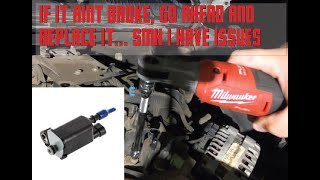
Typical fix: Replace the EVAP Canister Purge Solenoid Valve located on the engine intake manifold. 🎬 Watch: Step-by-step 5.3 Vortec purge solenoid replacement video.
Est. part cost: $25-$60 - Misread Code - Actual Fault is B1440: Faulty Ignition Switch 🔴 High Probability → Shop Ignition Switch The electrical contacts inside the ignition switch wear out over time, sending conflicting signals to the Body Control Module (BCM) about the key's position, which can keep accessory and run power active after key-off.
How to confirm: The primary symptom is the engine 'running-on' for 5-15 seconds after the key is removed. Wiggling the key in the ignition while the engine is running may cause the dashboard lights to flicker or the engine to stumble, also indicating a bad switch.
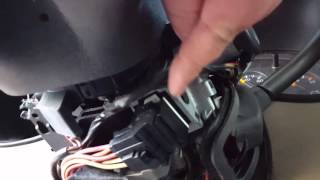
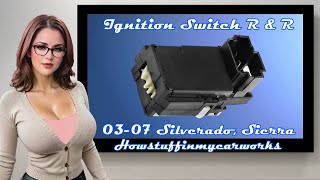
Typical fix: Replace the ignition switch, which is the electrical component connected to the key lock cylinder inside the steering column. 🎬 See how to replace the ignition switch yourself.
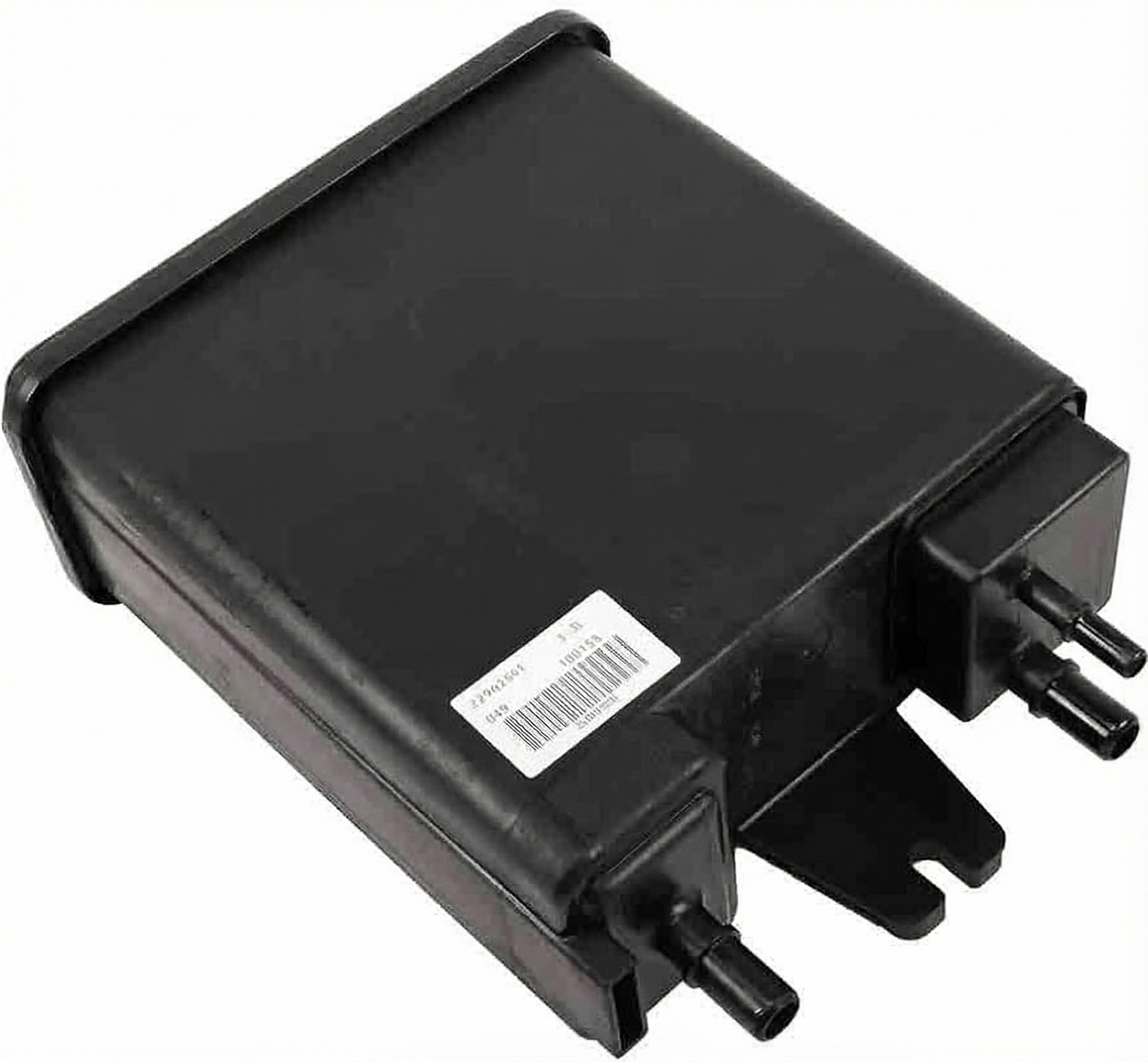
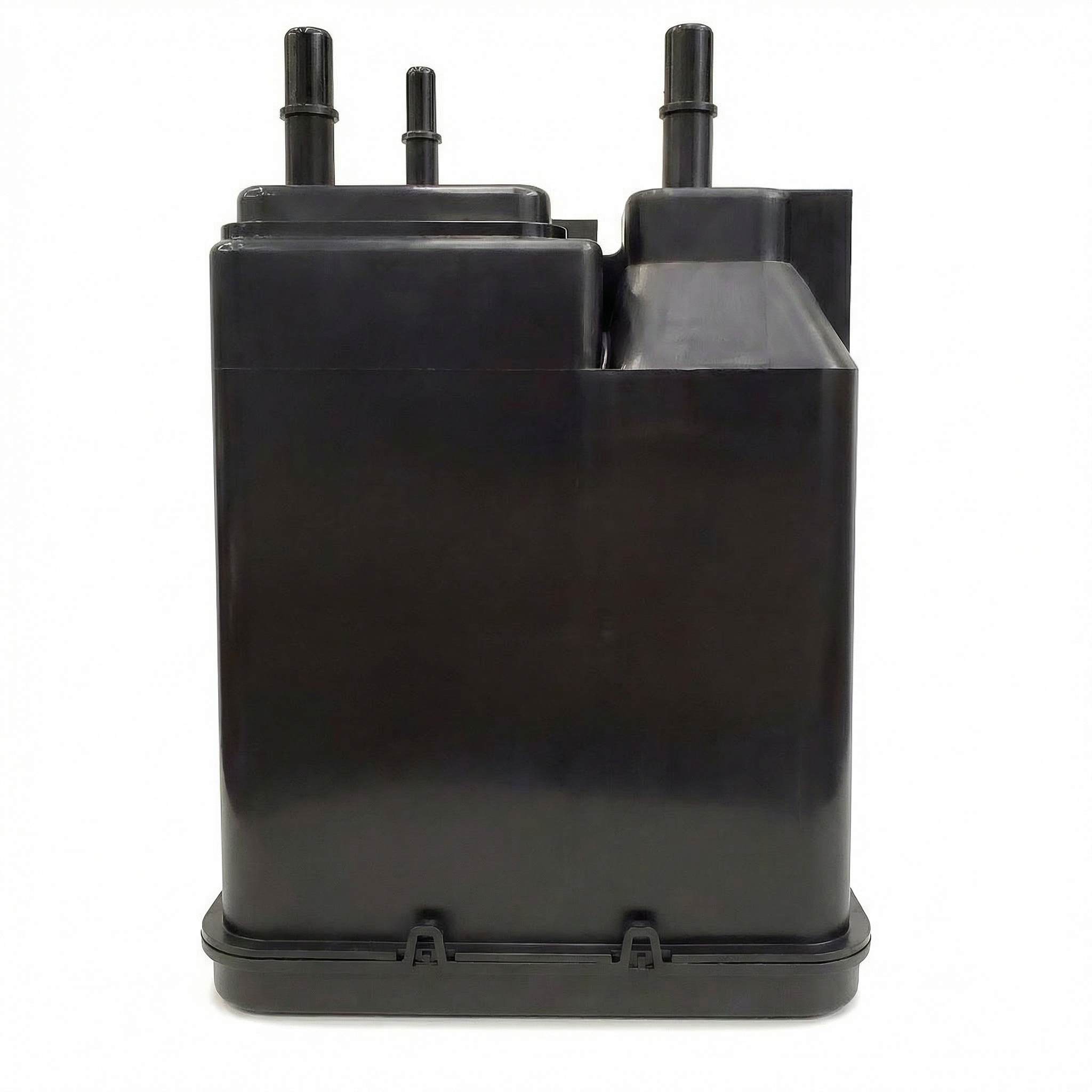
Est. part cost: $30-$80 - If P1441 Persists: Failed EVAP Charcoal Canister ⚪ Low Probability → Shop Vapor Canister Over-filling the fuel tank can saturate the canister with liquid fuel, causing it to break down internally. Charcoal pellets can then travel down the vacuum lines and jam the new purge solenoid open.
How to confirm: When replacing the EVAP purge solenoid, inspect the vacuum lines connected to it for small, black charcoal pellets. If pellets are present, the canister has failed and must be replaced along with cleaning out the lines.
Typical fix: Replace the charcoal canister (located near the fuel tank) and the EVAP purge solenoid, and blow compressed air through the lines to clear any debris.
Est. part cost: $100-$200
Diagnosis Steps
- Confirm the code with a high-quality scanner capable of reading Body (B) codes to determine if the true code is P1441 or B1440.
- If the true code is P1441 (EVAP Flow):
- a. Locate the EVAP Purge Solenoid on the engine's intake manifold.
- b. Disconnect the electrical connector and vacuum lines.
- c. With the engine off, attempt to blow air through the valve from the canister side to the intake side. No air should pass.
- d. Alternatively, use a hand vacuum pump on the canister port. The valve should hold vacuum. If it doesn't, it is stuck open and must be replaced.
- e. As a final check, disconnect the electrical connector, turn the ignition to 'ON' (engine off), and use a multimeter to verify ~12V at the pink wire on the harness-side connector. If no voltage is present, check the 'ECM B' fuse.
- f. Inspect the vacuum lines for black charcoal pellets. If found, the charcoal canister is also bad and must be replaced.
- If the true code is B1440 (Ignition Mismatch):
- a. Confirm the primary symptom: Does the engine continue to run after the key is turned off and removed?
- b. With the engine running, wiggle the key in the ignition. If this causes any electrical flickering or engine stumbling, the ignition switch is confirmed bad.
- c. If symptoms are confirmed, the diagnosis points directly to a faulty ignition switch. Replacement requires removing steering column covers.
Parts You'll Likely Need
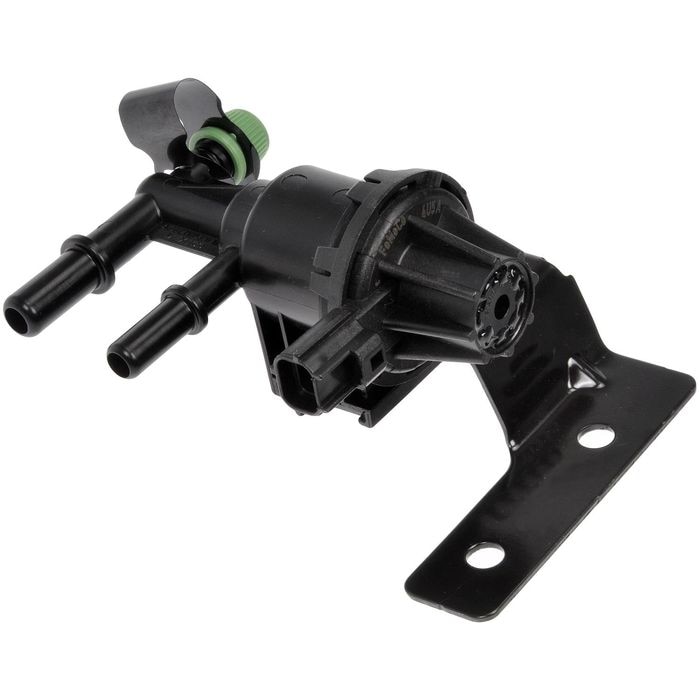
- EVAP Canister Purge Solenoid Valve
(OEM #ACDelco 214-641 / GM 1997278)— This is the most common fix for the underlying P1441 code. It gets stuck open, causing a 'flow during non-purge' condition.
Trusted brands: ACDelco, Dorman
OEM price range: $40-$60
Aftermarket price range: $25-$45 - Ignition Switch
(OEM #ACDelco D1469G / GM 15298923)— This is the most common fix for the underlying B1440 code, which causes the engine to run after the key is off.
Trusted brands: ACDelco, Dorman, Standard Motor Products
OEM price range: $60-$90
Aftermarket price range: $30-$50
Related Codes That Often Appear With This One
- P1441 — This is the most likely actual code if you are experiencing EVAP-related symptoms like hard starting after refueling.
- B1440 — This is the most likely actual code if your engine runs after the key is turned off. It is a Body Control Module code often misidentified by basic scanners.
- P0171 / P0174 — If the actual code is P1441, the stuck-open purge solenoid creates a vacuum leak, which can cause the engine to run lean and trigger these codes.
Technical Service Bulletins (TSBs) & Recalls
- TSB 01-06-04-037: This bulletin primarily addresses EVAP leak codes like P0442 and vent codes like P0446 by suggesting an updated vent solenoid and relocation kit. While not directly for P1441, it shows GM's awareness of EVAP system vulnerabilities on this platform that can lead to component failure.
- TSB 08-06-03-006C: While for the next generation (GMT900), this TSB addresses the 'engine run-on' condition related to B1440, showing a history of this specific ignition switch issue on GM trucks.
Platform-Specific Known Issues
- Real-World B1440 Ignition Switch Failure: → Shop Ignition Switch A technician on iATN.net reported a 2003 Chevrolet Suburban 2500 that was towed in for a no-start condition. The vehicle would start intermittently but then surge and stall. The stored trouble code was B1440, pointing to a malfunction in the monitored ignition switch circuits. This confirms that a failing ignition switch on this platform can cause not only the 'engine run-on' symptom but also intermittent no-start and stalling.
Mechanic-Grade Diagnostic Values
- EVAP Purge Solenoid Coil Resistance — expected: 18 to 30 Ohms. Failure: A reading of OL (open circuit), near zero Ohms (short), or under 20 Ohms is considered a failure according to some GM service documents.
- BCM to Ignition Switch Wiring Resistance (for B1440) — expected: Less than 1.0 Ohm. Failure: Resistance greater than 1.0 Ohm indicates a fault in the wiring between the BCM and the ignition switch.
- BCM Off/Run/Crank Circuit Voltage to Ground (for B1440) — expected: Less than 1.0 Volt with ignition OFF. Failure: A reading greater than 1.0 Volt suggests a short to voltage in the circuit.
- EVAP Purge Solenoid Connector Voltage (Key On, Engine Off) — expected: Approximately 12V on the pink wire. Failure: No voltage on the pink power supply wire points to a blown fuse (e.g., 'ECM B' fuse) or a break in the circuit.
Scan Tool Commands That Help
- Tech2 / GDS2 or equivalent professional scanner: EVAP Purge/Seal — This function is used to diagnose code P1441. It commands the EVAP purge and vent solenoids closed, then monitors the fuel tank pressure sensor. If the system shows a vacuum change during this test, it confirms an unwanted flow, pointing to a stuck-open purge valve.
- Tech2 / GDS2 or equivalent professional scanner: EVAP Purge Solenoid Control — This bidirectional command allows a technician to cycle the purge solenoid on and off (e.g., in 10% increments) with the engine off. You should be able to hear and feel the valve clicking or pulsing. If it doesn't respond, it indicates a bad solenoid or a wiring/PCM driver issue.
- Professional Bi-Directional Scan Tool: Monitor BCM Live Data (PIDs: 'Ignition 1 Signal', 'Accessory Voltage Circuit') — To diagnose B1440, a technician can observe these Body Control Module data PIDs while cycling the key. The displayed power mode on the scan tool must match the physical key position (OFF, ACC, RUN). Any mismatch confirms a faulty ignition switch.
Wiring & Ground Locations
- Body Control Module (BCM) — Located under the driver's side of the dashboard, to the left of the steering column.. The BCM is the 'power mode master' for the vehicle and is what sets code B1440 when it receives conflicting signals from the ignition switch. Testing wiring integrity between the ignition switch and the BCM is a key diagnostic step for B1440.
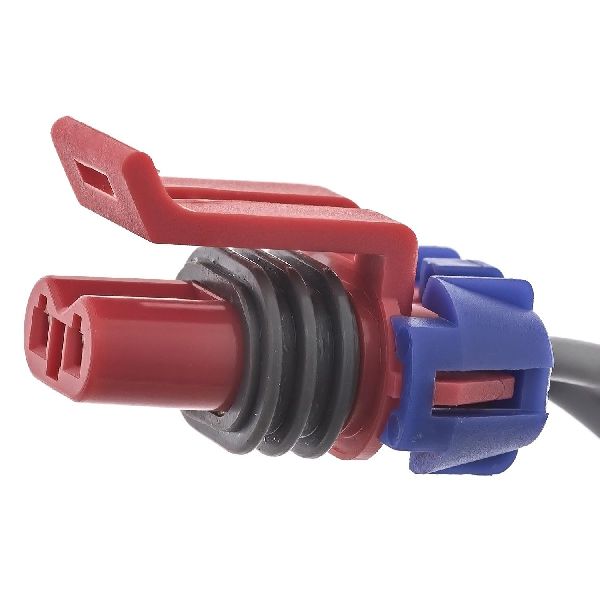
- EVAP Purge Solenoid Connector — On the driver's side of the intake manifold, under the plastic 'Vortec' engine cover.. This 2-pin connector provides power and ground control to the purge solenoid. For P1441 diagnosis, you test for 12V+ on the pink wire (Key On) and check the control wire (typically dark green/white) for a ground signal from the PCM when commanded.
- Ignition Switch Connector — Attached to the ignition switch, inside the steering column covers.. This is the main connector to test for B1440. Probing the various circuits (B+, ACC, IGN 1, RUN/CRANK) with a multimeter while turning the key can verify if the switch is sending the correct voltage signals to the BCM.
Real Owner Repair Stories
- Blazer Forum user (1997 Chevrolet Blazer 4.3L V6 (similar EVAP system design)) — Check Engine Light with code P1441.
❌ Tried (didn't work) Initially unsure of the cause.
✅ What actually fixed it Upon removing the EVAP purge solenoid, a large amount of black charcoal pellets poured out. This confirmed the charcoal canister had failed and contaminated the system. The final fix required replacing both the charcoal canister and the purge solenoid, as well as blowing out all EVAP lines with compressed air to clear the debris.
OEM Part Supersession History
GM 15298923→ACDelco D1469G— Standard part number update and consolidation by the manufacturer.GM 1997278→ACDelco 214-641— Standard part number update and consolidation for the EVAP purge solenoid.
Model Year Variations Within This Range
- 2003-2006: The ignition switch/lock cylinder design for 2003-2006 models is noted as a '4 POSITION WINGLESS FLAT FACE KNOB' where there is no reverse rotation to get to the accessory position. While functionally similar, this is a physical difference from the 2000-2002 models. The part number D1469G covers this later range.
Diagnostic Flowchart
Other Known Issues on This Vehicle
Issues unrelated to this code that are worth knowing about as an owner of this generation:
- Failing Instrument Cluster Stepper Motors 🟠 Medium — Extremely common. Gauges for speedometer, tachometer, fuel, etc. will become erratic, get stuck, or stop working entirely. Usually occurs after 80,000 miles. (Ref: GM extended warranty coverage under program 07187, but it has since expired. Repair is well-documented.)
- Intermediate Steering Shaft (ISS) Clunk 🟡 Low — Very common. A clunking or popping noise is felt through the steering wheel, especially at low speeds or when turning. Caused by a lack of lubrication in the splined slip-joint of the two-piece shaft. (Ref: Multiple TSBs and redesigned parts were issued. A common DIY fix is to lubricate the shaft, but replacement with an updated part is the permanent solution.)
- Cracked Cylinder Heads (Castech 706 Castings) 🔴 High — Affects 5.3L V8 engines with 'Castech' branded 706 casting number heads, primarily from 2001-2006. A manufacturing defect can cause a crack to form in a bolt hole, leading to slow, unexplained coolant loss. (Ref: TSB 02-06-01-009. The only fix is head replacement.)
- Failing Fuel Pump Module 🔴 High — Common failure item, often after 100,000 miles. Symptoms include whining from the tank, hard starting, stalling, and eventual no-start.
- HVAC Blend Door Actuator Failure 🟡 Low — Common. A repetitive clicking or ticking sound from behind the dashboard, often accompanied by an inability to change air temperature or vent direction.
- Cracked Dashboard 🟡 Low — Extremely common, especially in warmer climates. The plastic dashboard develops large cracks, typically originating from the passenger airbag area or instrument cluster hood.
Used vs. New Parts: Buying Guide for This Vehicle
When a used part is the smart pick: For the B1440 fault, a used ignition switch from a reputable auto recycler can be a cost-effective option, especially if it comes from a low-mileage donor vehicle. For the P1441 fault, a used EVAP purge solenoid is generally not recommended due to the high failure rate and low cost of a new part.
Donor-vehicle mileage cap: roughly under 100000 miles for the part to have meaningful remaining life.
What to inspect on the donor part:
- For an ignition switch, verify the donor vehicle's mileage if possible.
- Inspect the electrical connector pins for any signs of corrosion, melting, or damage.
- If possible, test the key operation in the donor column to ensure it feels smooth and does not bind.
OEM-only on this vehicle (don't cheap out):
- While not strictly 'OEM-only', using an ACDelco ignition switch (D1469G) and EVAP purge solenoid (214-641) is highly recommended. GM electronics can be sensitive, and using the OE brand minimizes the risk of compatibility issues, incorrect signals, or premature failure that can sometimes occur with budget aftermarket brands.
Aftermarket brands forum-validated for this vehicle:
- Standard Motor Products (SMP) is a well-regarded aftermarket brand for electrical components like ignition switches and EVAP solenoids, often trusted by professional technicians.
- Delphi is another trusted OEM supplier with a strong reputation for quality.
Brands owners have reported issues with on this vehicle:
- Avoid unbranded, 'white-box' parts from online marketplaces for critical electronic components. While tempting due to low price, they have a higher reported failure rate and can cause frustrating, hard-to-diagnose electrical gremlins.
Real Owner Stories
Aggregated from forums and TSBs cited above. Mileages and costs reflect what owners reported in those sources.
2003 Chevrolet Suburban 2500
Symptoms: Vehicle was towed in for a no-start condition. It would start intermittently but then surge and stall. Stored trouble code was B1440.
What fixed it: Replacement of the ignition switch resolved the malfunction in the monitored ignition switch circuits.
Source hint: iATN.net - 'B1440 Diagnostic Trouble Code Discussion' (October 2013)
1996 Chevrolet K1500 — ~120000 miles
Symptoms: Owner reported receiving code P1441 regarding the EVAP system.
What fixed it: Checking the EVAP canister and vacuum lines for debris and ensuring the purge valve was not stuck open.
Source hint: chevytalk.org - 'Code P1441 ?'
Related OBD-II Codes
Frequently Asked Questions
Why does my Suburban keep running for several seconds after I take the key out of the ignition?
Does TSB 01-06-04-037 apply to my 2000-2006 Suburban's EVAP issues?
Why is my Suburban hard to start only after I fill up the gas tank?
I found small black pellets in my vacuum lines while replacing the purge valve; what are these?
Can a bad ignition switch cause my Suburban to stall while driving?
Is there a fuse I should check if my EVAP purge solenoid isn't working?
Helpful Videos


Used OEM Parts in Stock

New Aftermarket Parts Available


The information in this article is provided for general reference and educational purposes only. Vehicle specifications, procedures, and part compatibility can vary by production date, trim level, and region. Always consult your vehicle's factory service manual and verify part numbers before purchasing or performing repairs. Safety-critical components such as airbags, seat belts, and braking systems should be installed by a qualified professional.
- Chevrolet Suburban:
- 🧭 Diagnostic Flowchart
- 🎬 Helpful Videos
- 🛍️ Shop This Part
- What's Unique About the 2000-2006 Chevrolet Suburban
- Symptoms You May Notice
- Most Likely Causes
- Diagnosis Steps
- Parts You'll Likely Need
- Related Codes That Often Appear With This One
- Technical Service Bulletins (TSBs) & Recalls
- Platform-Specific Known Issues
- Mechanic-Grade Diagnostic Values
- Scan Tool Commands That Help
- Wiring & Ground Locations
- Real Owner Repair Stories
- OEM Part Supersession History
- Model Year Variations Within This Range
- Other Known Issues on This Vehicle
- Used vs. New Parts: Buying Guide for This Vehicle
- Real Owner Stories
- 2003 Chevrolet Suburban 2500
- 1996 Chevrolet K1500 — ~120000 miles
- Related OBD-II Codes
- Frequently Asked Questions
- 🎟️ Get 5% Off