

P1440 on 1999-2006 Chevrolet Tahoe: Why It's a Phantom Code and How to Find the Real Problem (P1441 or B1440)
If your 1999-2006 Tahoe shows a P1440 code, it is almost certainly a scanner error. The real issue is likely either a faulty EVAP Purge Solenoid (code P1441, a ~$30 part) or a failing Ignition Switch (code B1440, a ~$60-$100 part). You must re-scan with a better tool that can read GM-specific body codes to find the true code.
- Do not trust a P1440 code on a 1999-2006 Tahoe. It is a 'phantom code' from a scanner error.
- The first and most important step is to re-scan your vehicle with a better tool to find the true code, which is likely P1441 or B1440.
- If the real code is P1441 (EVAP issue), the most likely fix is a new EVAP Purge Solenoid on the engine.
- If the real code is B1440 (Body issue), the most likely fix is a new ignition switch in the steering column, especially if the engine keeps running after you turn it off.
What's Unique About the 1999-2006 Chevrolet Tahoe
The GM GMT800 platform, which this Tahoe generation is part of, uses a specific set of diagnostic codes that go beyond the basic powertrain 'P' codes. P1441 is the correct code for an EVAP system flow issue, while B-codes like B1440 are used for body electrical problems. Cheaper scan tools often cannot properly interpret the Class 2 Serial Data bus information that carries Body (B), Chassis (C), and Undefined (U) codes, leading them to display the phantom P1440. The key to a correct diagnosis is using a scan tool that can properly read all of GM's manufacturer-specific code types.
Generation note: This range covers two Tahoe generations: the GMT400 (1999 model with the 5.7L Vortec V8) and the GMT800 (2000-2006 models with 4.8L or 5.3L V8s). While the engines and some part locations differ, the confusion between P1441 and B1440 is common to GM trucks of this era, and the likely failed components (EVAP purge solenoid, ignition switch) are known issues on both platforms.
Symptoms You May Notice
- Check Engine Light is on
- If the underlying code is P1441 (EVAP): Difficulty starting, especially after refueling; slight rough idle; minor decrease in fuel economy; whooshing sound from gas cap when opening.
- If the underlying code is B1440 (Ignition): Engine continues to run for several seconds after turning the key off; no-start or intermittent start issues; 'Security' or 'Anti-Theft' light may illuminate; radio or other accessories may stay on with key off.
- Replacing any part based on a generic P1440 definition without first verifying the real trouble code with a capable scanner.
- Replacing the gas cap for a P1441 code. While a bad gas cap can cause other EVAP codes (like P0442 or P0455), P1441 specifically points to flow when the purge valve should be closed, making the purge valve itself the primary suspect.
Most Likely Causes
- Scan Tool Error / Phantom Code 🔴 High Probability Basic OBD-II readers often fail to correctly interpret manufacturer-specific codes, especially the difference between Powertrain (P) and Body (B) codes on GM vehicles that use the Class 2 data bus.
How to confirm: Scan the vehicle again with a high-quality scan tool that can read manufacturer-specific and Body Control Module (BCM) codes.
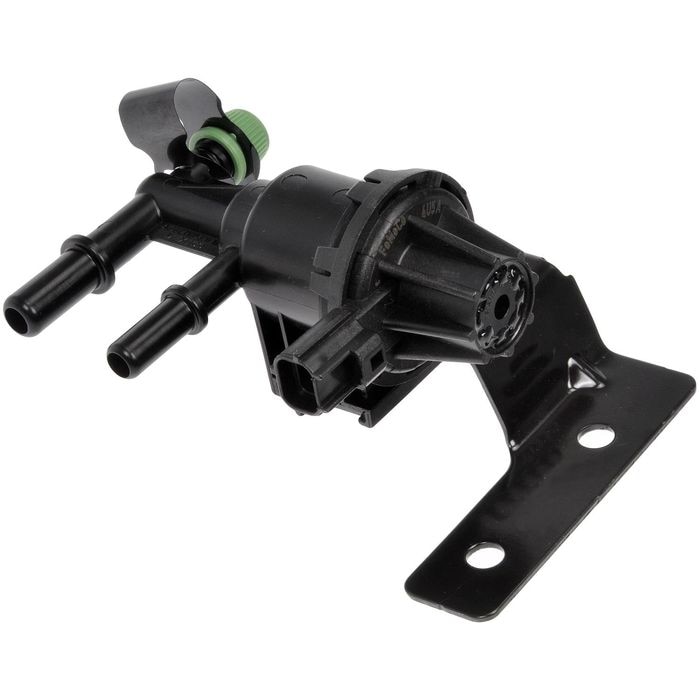
Typical fix: Identify the actual trouble code stored in the computer's memory, which will likely be P1441 or B1440. - Faulty EVAP Purge Solenoid Valve (If Real Code is P1441) 🔴 High Probability → Shop Vapor Canister This valve is a very common failure item on GM trucks of this era. It gets stuck open due to age and carbon buildup, allowing un-metered fuel vapors into the engine when they shouldn't be.
How to confirm: With the engine off, remove the valve from the intake manifold (located on the top, driver's side). Try to blow through it. If air passes through, it is stuck open and has failed. A normally functioning valve is closed when unpowered. A hand vacuum pump can also be used; the valve should hold vacuum when de-energized.
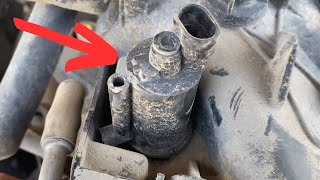
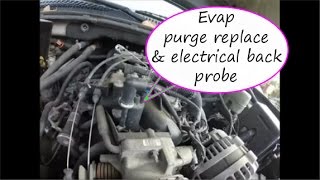
Typical fix: Replace the EVAP Purge Solenoid Valve. 🎬 Watch: How to replace and test the purge solenoid This is a simple repair, typically taking less than 15-30 minutes.
Est. part cost: $25-$50 - Faulty Ignition Switch (If Real Code is B1440) 🔴 High Probability → Shop Ignition Switch The ignition switch contains multiple electrical contacts that tell the Body Control Module (BCM) the key's position (Off, Accessory, Run, Crank). These contacts wear out or develop carbon tracking over time, creating a signal mismatch that triggers code B1440.
How to confirm: Confirm the symptom of the engine running-on after the key is removed. 🎬 See this video on diagnosing a truck that stays running A mechanic would use a scan tool to monitor the ignition switch parameters reported to the BCM to verify the mismatch between the expected and actual signals.
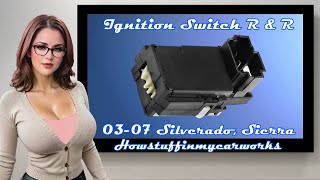
Typical fix: Replace the ignition switch assembly, which is located on the steering column. 🎬 Watch: Step-by-step ignition switch replacement walkthrough
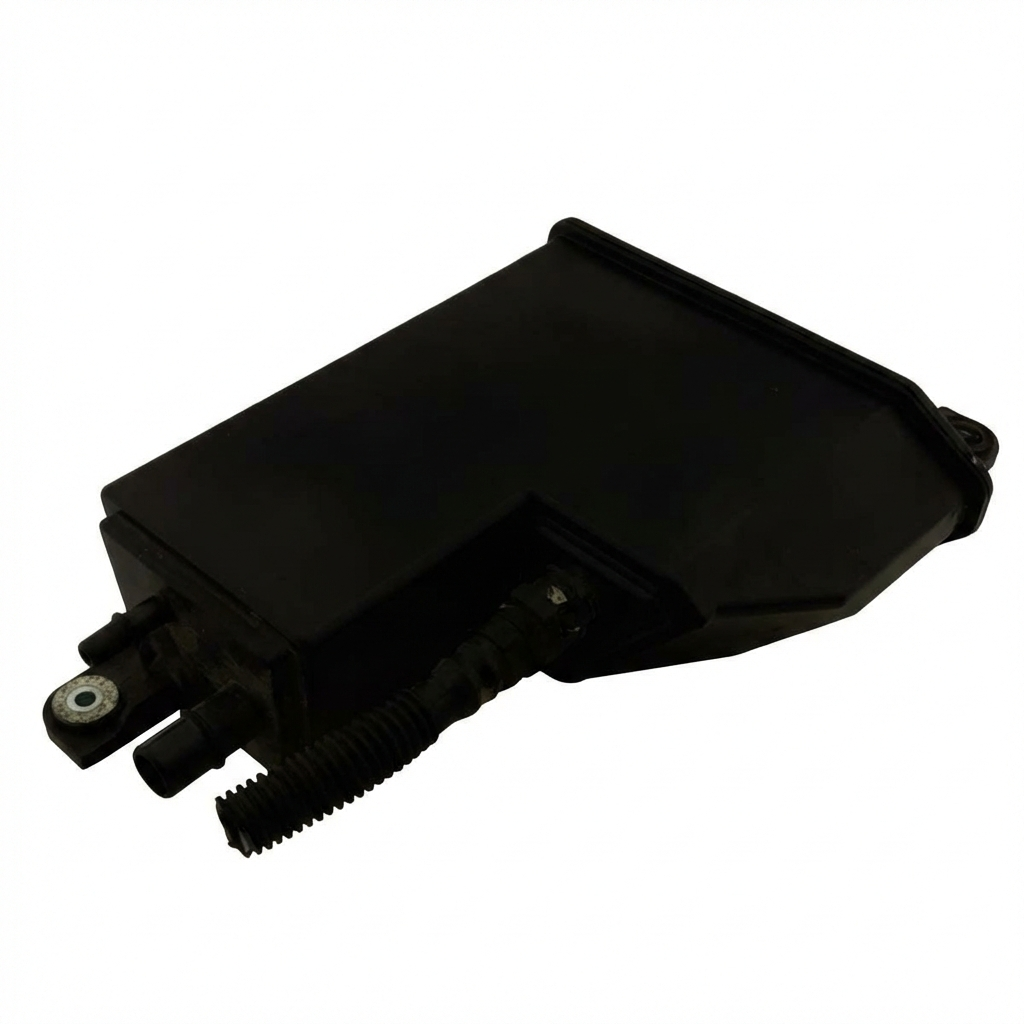
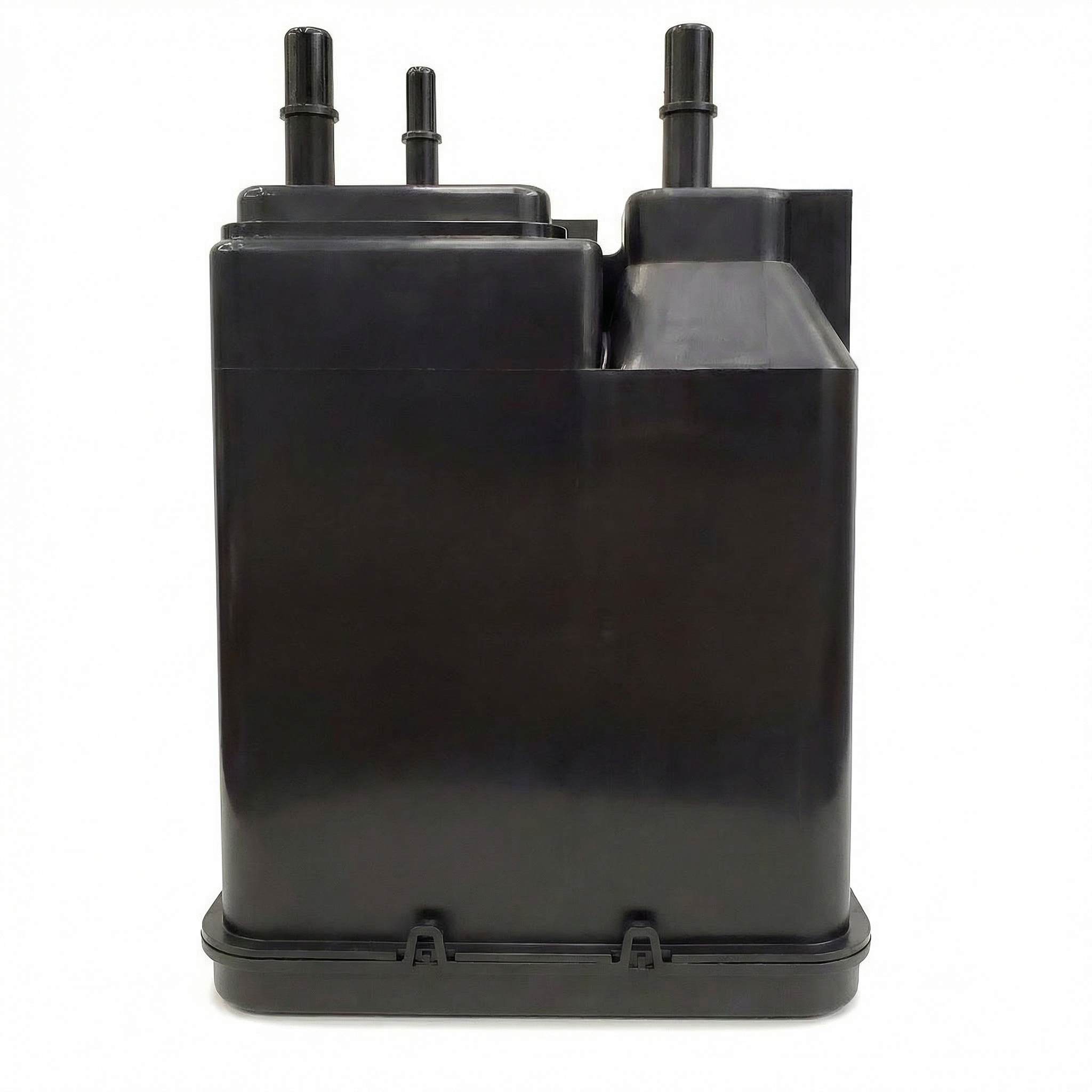
Est. part cost: $60-$120 - Faulty EVAP Vent Solenoid (If Real Code is P1441 or other EVAP codes) 🟡 Medium Probability → Shop Vapor Canister Located near the spare tire and charcoal canister, this valve is exposed to road debris, water, and corrosion, causing it to fail or get stuck. This is another common EVAP system failure point on GMT800 trucks.
How to confirm: Use a scan tool to command the vent solenoid closed, then perform a system smoke test to see if it is leaking. A visual inspection may also reveal cracks or damage.
Typical fix: Replace the EVAP vent solenoid and potentially the attached hose. Often sold as a kit.
Est. part cost: $30-$70
Diagnosis Steps
- Acknowledge that P1440 is not a valid code for your Tahoe and is a scanner error.
- CRITICAL: Re-scan the vehicle with a quality scan tool capable of reading GM-specific Powertrain (P) and Body (B) codes to find the true stored code.
- IF THE REAL CODE IS P1441: Locate the EVAP Purge Solenoid on the intake manifold. With the engine off, disconnect it and try to blow through it. If air passes, it's bad and needs to be replaced. This is the most common fix.
- IF THE REAL CODE IS P1441 (and purge solenoid is good): Inspect the EVAP Vent Solenoid, located near the spare tire, for damage or corrosion. Test its operation with a capable scan tool or check for blockages.
- IF THE REAL CODE IS B1440: Confirm the symptom of the engine staying on after the key is removed. This strongly indicates a failed ignition switch.
- IF THE REAL CODE IS B1440: For a definitive diagnosis, a technician would use a scan tool to monitor the discrete ignition signals (Ignition 0, Ignition 1, Crank) going to the BCM to confirm the mismatch.
- After any repair, clear the codes and perform a complete GM drive cycle to ensure the Check Engine Light does not return.
Parts You'll Likely Need
- EVAP Canister Purge Valve / Solenoid
(OEM #ACDelco 214-641 (or GM 12581282))— This is the most common fix if the real code is P1441. It gets stuck open, causing a constant, un-commanded flow of fuel vapor.
Trusted brands: ACDelco (GM OE), Standard Motor Products, Dorman
OEM price range: $30-$50
Aftermarket price range: $20-$40 - Ignition Switch
(OEM #ACDelco D1462G (or GM 15795321))— This is the most common fix if the real code is B1440. The internal contacts wear out, causing the 'Power Mode Mismatch' and symptoms like engine run-on.
Trusted brands: ACDelco (GM OE), Standard Motor Products, Dorman
OEM price range: $80-$120
Aftermarket price range: $50-$90 - EVAP Canister Vent Solenoid
(OEM #ACDelco 214-2149 (or GM 19207763))— A secondary, but still common, failure in the EVAP system that can cause various codes, including P1441. It's prone to failure from its location under the truck.
Trusted brands: ACDelco (GM OE), Dorman (e.g., 911-032)
OEM price range: $40-$70
Aftermarket price range: $25-$50
Related Codes That Often Appear With This One
- P1441 — This is the most likely 'real' EVAP code that is misread as P1440. It means 'EVAP System Flow During Non-Purge'.
- B1440 — This is the most likely 'real' Body Control Module code misread as P1440. It means 'Power Mode Master Input Circuits Mismatch' and points to the ignition switch.
- P0446 / P0449 — These codes point specifically to a fault in the EVAP Vent Solenoid circuit, a related component that can cause general EVAP system problems and is also a very common failure.
Technical Service Bulletins (TSBs) & Recalls
- GM TSB 08-06-04-037H: Mentions that aftermarket equipment wired into the Run/Crank circuit can cause voltage spikes that damage control modules and may set a B1440 code. [This is particularly relevant for former service vehicles with added equipment.]
- While not for P1440, numerous TSBs exist for the related components. For example, TSBs for the Intermediate Steering Shaft (ISS) clunk and updated EVAP components were released for the GMT800 platform.
Platform-Specific Known Issues
- Owner Experience: P1441 Fix: An owner on TahoeYukonForum.com provided a detailed step-by-step guide with pictures for replacing the EVAP purge solenoid to fix a P1441 code. The job took 15 minutes with a 10mm deep socket and was described as very easy for a DIYer.
- Professional Technician Confirmation: B1440: On the International Automotive Technicians Network (iATN), a technician confirmed a no-start condition on a 2003 Suburban was traced to code B1440, described as 'monitored ignition switch circuits has malfunctioned'. This corroborates the link between B1440 and ignition switch failure.
Mechanic-Grade Diagnostic Values
- EVAP Canister Purge Valve Solenoid Coil Resistance — expected: 30 to 38 ohms. Failure: A reading significantly outside this range indicates a faulty solenoid coil.
- Ignition Switch to BCM Wiring Resistance (for B1440) — expected: Less than 1.0 ohm. Failure: Resistance higher than 1.0 ohm indicates a fault in the wiring between the ignition switch and the Body Control Module (BCM).
- BCM 'Off/Run/Crank' Circuit Voltage (for B1440) — expected: Less than 1.0 volt. Failure: With the ignition OFF and BCM harness disconnected, a reading higher than 1.0 volt between this circuit's terminal and ground suggests a short to voltage.
Scan Tool Commands That Help
- Tech 2 / GDS2 or equivalent professional scanner: EVAP Service Bay Test — This function allows the technician to command the EVAP purge and vent solenoids on and off to verify their mechanical and electrical operation, which is critical for diagnosing P1441. It can seal the system to check for leaks or command the purge solenoid open to check for flow.
- Tech 2 / GDS2 or equivalent professional scanner: Monitor BCM Power Mode Data — For diagnosing B1440, a technician must view the live data stream from the BCM. The scanner will display the status of the three discrete ignition switch signals. An illogical combination (e.g., showing 'RUN' and 'ACCESSORY' simultaneously) confirms the ignition switch has failed.
Wiring & Ground Locations
- G203 — Located at the upper left of the instrument panel cluster, near the driver's side A-Pillar.. This is a key ground point for several instrument panel components, including potentially the Body Control Module (BCM). A poor ground at G203 can cause erratic BCM behavior and various electrical issues, which could theoretically contribute to a B1440 code or other phantom electrical problems. Water leaks from the windshield are known to corrode this ground point.
- EVAP Purge Solenoid Connector — On the EVAP purge solenoid, mounted to the driver's side of the intake manifold.. For testing P1441, one pin on the connector will have 12V+ with the key in the 'Run' position. The other pin is the control wire, which the PCM pulses to ground to activate the solenoid. Verifying voltage here is a key step before replacing the part.
- Engine Block Grounds — There are multiple grounds on the engine block; one is on the driver's side head facing the windshield, and two are on the driver's side of the block itself (one behind the motor mount, one in front).. While not directly related to P1441 or B1440, poor engine grounds can cause a host of difficult-to-diagnose electrical issues and phantom codes. Ensuring these are clean and tight is a best practice for any electrical diagnosis on these trucks.
Real Owner Repair Stories
- TahoeYukonForum.com user 'jbry31' (1996 Chevrolet Tahoe) — Intermittent Check Engine Light with code P1441.
❌ Tried (didn't work) Disconnecting the battery to reset the code (it came back)., Replacing the gas cap.
✅ What actually fixed it The user tested the purge solenoid valve and found it to be faulty. Replacing the purge solenoid valve resolved the P1441 code. The user also noted that a pre-existing problem with the transmission not shifting into overdrive was surprisingly also fixed after replacing the solenoid. - iATN (International Automotive Technicians Network) user (2009 Chevrolet Silverado 3500 HD) — Check Engine Light on, engine continues to run for about 15 seconds after the key is removed.
❌ Tried (didn't work) Replacing the Body Control Module (BCM).
✅ What actually fixed it The confirmed diagnosis was a faulty ignition switch, which was causing the 'Ignition Mismatch' B1440 code and the run-on symptom. The discussion highlights this as a classic symptom of ignition switch failure on GM trucks.
OEM Part Supersession History
GM 1997278→ACDelco 214-641 (also GM 12581282)— Part consolidation and minor design updates over the years.
Heads up: The ACDelco 214-641 is the standard service replacement for a wide range of GM vehicles from the late 90s through the mid-2000s. Some sellers note that a genuine part may arrive as a Delphi-branded part in a GM box, which is normal as Delphi was a primary OEM supplier.GM 15795321→ACDelco D1462G— Standard ACDelco service part numbering.
Heads up: ACDelco D1462G is the direct replacement for the original ignition switch. It is critical to ensure the replacement includes the passlock sensor if required for the specific vehicle year and options.
Model Year Variations Within This Range
- 1999 vs 2000-2006: The 1999 Tahoe is a GMT400 platform with a 5.7L engine, while the 2000-2006 models are GMT800 with 4.8L/5.3L engines. While the P1441/B1440 phantom code issue is common to both, the exact location and bracketry for the EVAP purge solenoid may differ slightly. The EVAP vent solenoid and canister assembly also saw design changes between the two platforms, with the GMT800s being particularly known for vent solenoid issues due to location.
Diagnostic Flowchart
Other Known Issues on This Vehicle
Issues unrelated to this code that are worth knowing about as an owner of this generation:
- Instrument Cluster Stepper Motor Failure 🟠 Medium — Extremely common, especially on 2003-2006 models. Gauges (speedometer, tach, etc.) become erratic, get stuck, or stop working entirely. (Ref: GM issued a special coverage adjustment (07-08-49-019) for some vehicles, but it has since expired.)
- Cracked Dashboard Top 🟡 Low — Very common across all GMT800s, especially in warmer climates. The top of the dash develops cracks, often near the passenger airbag and defroster vents.
- Intermediate Steering Shaft (ISS) Clunk 🟡 Low — A widespread issue causing a noticeable 'clunk' or rattle in the steering column when turning or going over bumps. Caused by a poor design that lacks lubrication. (Ref: GM released several updated part designs. TSB 04-02-35-004 provides details on diagnosis and replacement.)
- Fuel Pump Failure 🔴 High — Common failure item, often occurring over 100,000 miles. The fuel level sender often fails first, causing an inaccurate fuel gauge, followed by complete pump failure leading to a no-start condition.
- Rusted Brake Lines 🔴 High — A serious safety issue, particularly in regions that use road salt. The factory steel brake lines are prone to severe corrosion and can fail without warning, resulting in a sudden loss of braking power. (Ref: NHTSA Campaign Number 14V224000 was a recall for this issue on some GMT800 trucks, but many vehicles were not included.)
- 4WD Transfer Case Position Sensor Failure 🟡 Low — Commonly causes the 'Service 4WD' message. The selector switch in the dash can also fail, causing an inability to switch between 2WD, 4WD, and Auto modes.
Used vs. New Parts: Buying Guide for This Vehicle
When a used part is the smart pick: For the EVAP Purge Solenoid (P1441 fix), a used part is a reasonable choice if sourced from a low-mileage donor. It is a simple electro-mechanical valve and not a high-wear item, though they do fail from age. For the Ignition Switch (B1440 fix), a used part is generally NOT recommended. It is a high-wear mechanical and electrical part, and a used one may have significant internal wear, leading to a repeat failure in a short time.
Donor-vehicle mileage cap: roughly under 80000 miles for the part to have meaningful remaining life.
What to inspect on the donor part:
- For EVAP solenoids, check that the plastic housing is not cracked or brittle.
- Ensure electrical connector pins are clean and free of corrosion.
- Ask the seller if they can confirm the donor vehicle did not have any EVAP-related check engine light codes.
OEM-only on this vehicle (don't cheap out):
- Ignition Switch: While aftermarket switches are available, many professional technicians and forum users strongly recommend using a genuine ACDelco ignition switch for GM vehicles to avoid premature failure and ensure correct operation of the Passlock security system.
Aftermarket brands forum-validated for this vehicle:
- ACDelco (GM OE/Genuine)
- Standard Motor Products (SMP)
- Delphi (often the original OEM supplier)
Brands owners have reported issues with on this vehicle:
- Unbranded, 'white-box' parts from online marketplaces have a high failure rate for electronic components like solenoids and switches. One user review noted an aftermarket purge valve failed within 3 weeks of installation.
Real Owner Stories
Aggregated from forums and TSBs cited above. Mileages and costs reflect what owners reported in those sources.
2002 Chevrolet Tahoe
Symptoms: Check engine light with code P1441; owner provided a guide for others to follow.
What fixed it: Replaced the EVAP purge solenoid on the intake manifold using a 10mm deep socket.
Cost: $25-$50
Source hint: TahoeYukonForum.com: 'HOW TO FIX: - P1441 code, Purge Valve Solenoid'
2003 Chevrolet Suburban
Symptoms: No-start condition traced to a malfunction in the monitored ignition switch circuits.
What fixed it: Replacement of the ignition switch assembly.
Source hint: iATN (International Automotive Technicians Network) professional technician confirmation
2009 Chevrolet Silverado
Symptoms: Delayed engine turn-off where the vehicle continues to run after the key is removed.
What fixed it: Identified as a B1440 diagnostic trouble code issue related to the ignition switch.
Source hint: iATN (International Automotive Technicians Network) discussion for December 2011
Related OBD-II Codes
Frequently Asked Questions
Why is my scanner showing P1440 on my 2003 Tahoe when the manual says it's not a valid code?
My Tahoe continues to run for several seconds after I take the key out. Is this related to code B1440?
Does GM TSB 08-06-04-037H apply to my Tahoe if I have aftermarket electronics installed?
Where is the EVAP Purge Solenoid located on my 5.3L Tahoe engine?
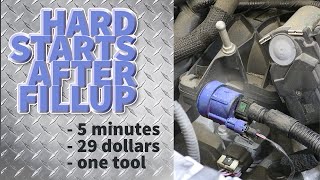
I'm having trouble starting my Tahoe only after I fill up at the gas station. Is this P1441?
Is there a known issue with the instrument cluster on the 2003-2006 Tahoe models?
Helpful Videos


Used OEM Parts in Stock
New Aftermarket Parts Available


The information in this article is provided for general reference and educational purposes only. Vehicle specifications, procedures, and part compatibility can vary by production date, trim level, and region. Always consult your vehicle's factory service manual and verify part numbers before purchasing or performing repairs. Safety-critical components such as airbags, seat belts, and braking systems should be installed by a qualified professional.
- Chevrolet Tahoe:
- 🧭 Diagnostic Flowchart
- 🎬 Helpful Videos
- 🛍️ Shop This Part
- What's Unique About the 1999-2006 Chevrolet Tahoe
- Symptoms You May Notice
- Most Likely Causes
- Diagnosis Steps
- Parts You'll Likely Need
- Related Codes That Often Appear With This One
- Technical Service Bulletins (TSBs) & Recalls
- Platform-Specific Known Issues
- Mechanic-Grade Diagnostic Values
- Scan Tool Commands That Help
- Wiring & Ground Locations
- Real Owner Repair Stories
- OEM Part Supersession History
- Model Year Variations Within This Range
- Other Known Issues on This Vehicle
- Used vs. New Parts: Buying Guide for This Vehicle
- Real Owner Stories
- 2002 Chevrolet Tahoe
- 2003 Chevrolet Suburban
- 2009 Chevrolet Silverado
- Related OBD-II Codes
- Frequently Asked Questions
- 🎟️ Get 5% Off