

P1440 on 2012-2018 Ford C-Max: EVAP System Vacuum Trouble Causes & Fixes
On a 2012-2018 Ford C-Max, code P1440 is almost always caused by a faulty canister purge valve (CPV) located on top of the engine. This common failure can cause hard starting after refueling and, in severe cases, engine stalling. Replacing the valve is a simple DIY fix, with the part costing between $30 and $70. This issue is so prevalent on the shared Ford 2.0L platform that it prompted a major safety recall (18S32) for the Ford Focus and a specific Technical Service Bulletin (19-2207) for the
- P1440 on a Ford C-Max is almost certainly caused by a failed canister purge valve (CPV).
- The most common symptom is the engine struggling to start right after you get gas.
- This is a known issue with a related safety recall (18S32) on its sister vehicle, the Ford Focus. Check if your VIN has an open recall before paying for repairs.
- Replacing the purge valve is a very easy, 15-minute DIY job with basic tools that can save you hundreds in labor costs.
- Ignoring this code can lead to engine stalling and potential damage to the fuel tank.
What's Unique About the 2012-2018 Ford C-Max
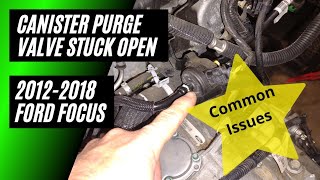
The Ford C-Max shares its 2.0L engine and chassis platform with the 2012-2018 Ford Focus. This is significant because the primary cause of P1440, a stuck-open canister purge valve, is a widespread and well-documented issue on this platform. The failure is so common that Ford issued safety recall 18S32 (NHTSA 18V-735) 🎬 Watch: Overview of common purge valve failure points on this platform. for the Focus, which addresses this exact part. A unique and severe consequence on these vehicles is that the constant vacuum from the stuck valve can physically deform the plastic fuel tank, leading to erratic fuel gauge readings and a risk of the engine stalling while driving. TSB 19-2207 specifically calls out the 2013-2017 C-Max for this failure mode, confirming the problem is identical to the one described in the Focus recall.
Symptoms You May Notice
- Check Engine Light illuminated
- Difficulty starting, sputtering, or stalling immediately after refueling. 🎬 See why your Ford might stall after getting gas.
- Inaccurate or erratic fuel gauge readings and incorrect 'Distance to Empty' display.
- Engine stalling while driving, which can occur without warning.
- Slightly reduced fuel economy
- Rough or fluctuating idle.
- Strong fuel smell around the vehicle.
- Replacing the gas cap. While a loose or faulty gas cap can cause other EVAP codes (like P0455 or P0457), it is not the typical cause for P1440 or the related P1450 on this vehicle. Those codes point to an excess vacuum condition (a suck), not a large leak (a whoosh).
- Replacing the fuel tank pressure sensor. This sensor is what reports the vacuum problem to the PCM, but it is rarely the cause of the problem itself. It is correctly reporting the fault caused by the stuck purge valve.
Most Likely Causes
- Faulty Canister Purge Valve (CPV) 🔴 High Probability → Shop Vapor Canister The canister purge valve used on this platform has a very high failure rate where it sticks in the open position. This is a known issue acknowledged by Ford through TSB 19-2207 for the C-Max and the major safety recall 18S32 for its sister vehicle, the Focus.
How to confirm: Disconnect the EVAP line from the purge valve. With the engine off, you should not be able to blow air through the valve. If you can, it is stuck open and has failed. Alternatively, with the engine running, disconnect the hose leading from the valve to the intake manifold; you should not feel any vacuum from the valve's port. If you do, it's stuck open.
Typical fix: Replace the canister purge valve assembly. After replacement, it is recommended to have a dealer perform the PCM software update specified in recall 18S32 and TSB 19-2207 to ensure the system can properly detect a future failure.
Est. part cost: $30-$70
Rare But Worth Checking
- Deformed Fuel Tank / Saturated Charcoal Canister: → Shop Vapor Canister This is not a root cause, but a consequence of ignoring a failed purge valve for too long. If the purge valve is replaced but problems persist, the fuel tank may be deformed or the charcoal canister may be saturated with liquid fuel, requiring further inspection and replacement. The recall procedure includes inspecting and replacing these parts if necessary.
- Cracked or Disconnected EVAP Hoses: While less common than purge valve failure for this specific code, a crack or disconnection in the EVAP lines between the purge valve and the fuel tank can also cause a vacuum-related fault. A smoke test is the best way to identify such a leak if the purge valve tests good.
Diagnosis Steps
- Check for Recalls and TSBs: Enter your vehicle's VIN on the NHTSA or Ford owner website to see if safety recall 18S32 (for the related Focus) or TSB 19-2207 are noted for your vehicle. The TSB repair may be covered under emissions warranty.
- Scan for Codes: Confirm P1440 is present and check for other codes, especially P1450, P0456, and P2196, which strongly indicate a purge valve failure.
- Inspect the Canister Purge Valve (CPV): The CPV is located on top of the engine and is easy to access, typically having one electrical connector and two green-tabbed hoses. Visually inspect it and its connecting hoses for any obvious cracks or damage.
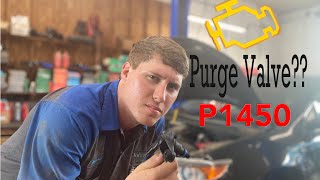
- Test the Purge Valve: Disconnect the electrical connector and the two EVAP hoses from the valve. Try to blow through the valve from the port that leads to the fuel tank. If any air passes through, the valve is stuck open 🎬 Watch this simple diagnosis and repair for the P1450 code. and must be replaced.
- Inspect for Fuel Tank Deformation: If the problem has existed for a long time, visually inspect the bottom of the plastic fuel tank. According to Ford's recall documents, a tank is considered deformed if the bottom is sucked upward by more than 1 inch (25mm) relative to the tank straps. If significant deformation is present, the tank and possibly the fuel pump module may also need to be replaced.
- Smoke Test (If Necessary): If the purge valve tests good, a smoke test of the EVAP system may be needed to find a potential crack or leak in a hose, though this is a less likely cause for this specific code.
Parts You'll Likely Need
- Canister Purge Valve
(OEM #AU5Z-9C915-E)— This is the component that almost always fails to trigger code P1440 on the Ford C-Max. It sticks open, allowing engine vacuum to constantly pull on the fuel tank. The original part number AU5Z-9C915-B has been superseded multiple times, with the latest revision being AU5Z-9C915-E.
Trusted brands: Motorcraft (OEM), Dorman (911-222), Standard Motor Products (CP687)
OEM price range: $50-$70
Aftermarket price range: $30-$55
Related Codes That Often Appear With This One
- P1450 — P1450 ('Unable to Bleed Up Fuel Tank Vacuum') is a very common companion code. Both P1440 and P1450 point directly to the same root cause on this platform: a canister purge valve that is stuck open, creating excessive, constant vacuum on the fuel tank. TSB 19-2207 lists P1450 as a primary code for this issue.
- P0456 — This code for a 'very small leak' can sometimes be triggered alongside P1440/P1450 as the system tries to interpret the abnormal vacuum readings caused by the stuck purge valve. It is also listed as a related code in TSB 19-2207.
- P2196 — This code for 'O2 Sensor Signal Biased/Stuck Rich' can appear because the stuck-open purge valve allows unmetered fuel vapors to be constantly drawn into the engine, creating a rich running condition that the oxygen sensor detects.
Technical Service Bulletins (TSBs) & Recalls
- 18S32 / NHTSA 18V-735: While officially for the Ford Focus, this safety recall addresses the exact same failure mode (stuck canister purge valve leading to tank deformation) that affects the C-Max due to its shared powertrain and EVAP system. The fix involves a PCM reprogram and, if necessary, replacement of the purge valve and other fuel system components like the tank and charcoal canister.
- TSB 19-2207: Issued for 2013-2017 C-Max, Fusion, and MKZ hybrid models, this bulletin directly addresses DTCs P1450, P0456, P0457, P04EE, and/or P04EF caused by a faulty canister purge valve. The official fix is to replace the valve and update the PCM software. Ford allocates 0.9-1.1 hours of labor for this repair.
Platform-Specific Known Issues
- A stuck-open canister purge valve on this platform can create enough vacuum to physically deform the plastic fuel tank. This can damage the fuel pump/sending unit, leading to incorrect fuel level readings and potential stalling. This issue was the subject of Ford Safety Recall 18S32 for the related Ford Focus and TSB 19-2207 for the C-Max.
Mechanic-Grade Diagnostic Values
- Canister Purge Valve (CPV) Solenoid Resistance — expected: 30 to 38 ohms (when engine is cool). Failure: A reading of 0 ohms (short circuit), infinite resistance (open circuit), or a value significantly outside the expected range indicates a faulty solenoid coil.
- Fuel Tank Pressure (FTP) Sensor Voltage (Key On, Engine Off) — expected: Approximately 2.6V to 2.65V. Failure: A significant deviation from this static voltage may indicate a sensor fault or a pre-existing pressure/vacuum issue in the tank before the engine is started.
- FTP Sensor Voltage (During EVAP Test) — expected: Should drop as the purge valve is commanded open and vacuum is pulled on the system.. Failure: If the purge valve is commanded open via a scan tool and the FTP voltage does not drop, it indicates a blockage or a non-functional valve.
Hidden / Shadow Codes Worth Checking
- Mode $06, Test ID $81 (and similar): This is not a DTC, but a non-continuous monitor test result for the EVAP system. It shows the raw measured value from the PCM's self-test, along with the minimum and maximum allowable limits. A value that is very close to the failure limit can indicate a borderline component that may soon cause a code like P1440 to set. (see via A scan tool capable of reading Mode $06 data, such as FORScan or the Ford IDS.)
Scan Tool Commands That Help
- Ford IDS (or equivalent like FORScan): EVAP System Test (Automated) — This is a comprehensive, automated test sequence that commands the purge and vent solenoids in sequence while monitoring the FTP sensor to verify the entire system's integrity. It's the most thorough way to diagnose the system if simple checks for a stuck purge valve are inconclusive.
- Ford IDS (or equivalent like FORScan): Datalogger > Bidirectional Control (EVAPPDC) — This allows a technician to manually command the canister purge valve open by a specific duty cycle (e.g., 20-40%) and watch the Fuel Tank Pressure (FTP) sensor voltage in real-time. If the valve is commanded open and the FTP voltage doesn't drop, it confirms a blockage or a valve that is not opening. Conversely, if the valve is commanded to 0% at idle and vacuum is still present (FTP voltage drops), it confirms the valve is stuck open.
Wiring & Ground Locations
- G105 — Left side of engine compartment.. A poor ground connection at this location could potentially affect the operation of various engine sensors and solenoids, including those in the EVAP system.
- G106 — Behind left headlamp assembly.. This is another primary engine bay ground point. Intermittent or poor connections here can cause erratic behavior in electronically controlled components like the canister purge valve.
- EVAP Canister Purge Valve Connector — On top of the engine, connected to the purge valve.. The circuit for the purge valve can be tested here for power, ground, and control signals from the PCM. A technician would backprobe this connector to check for voltage and resistance to diagnose a circuit fault vs. a component fault.
OEM Part Supersession History
AU5Z-9C915-A→AU5Z-9C915-B— Improved sealing and durability.AU5Z-9C915-B→AU5Z-9C915-E— This is the latest revision of the part specified by Ford to fix the issue described in TSB 19-2207.
Model Year Variations Within This Range
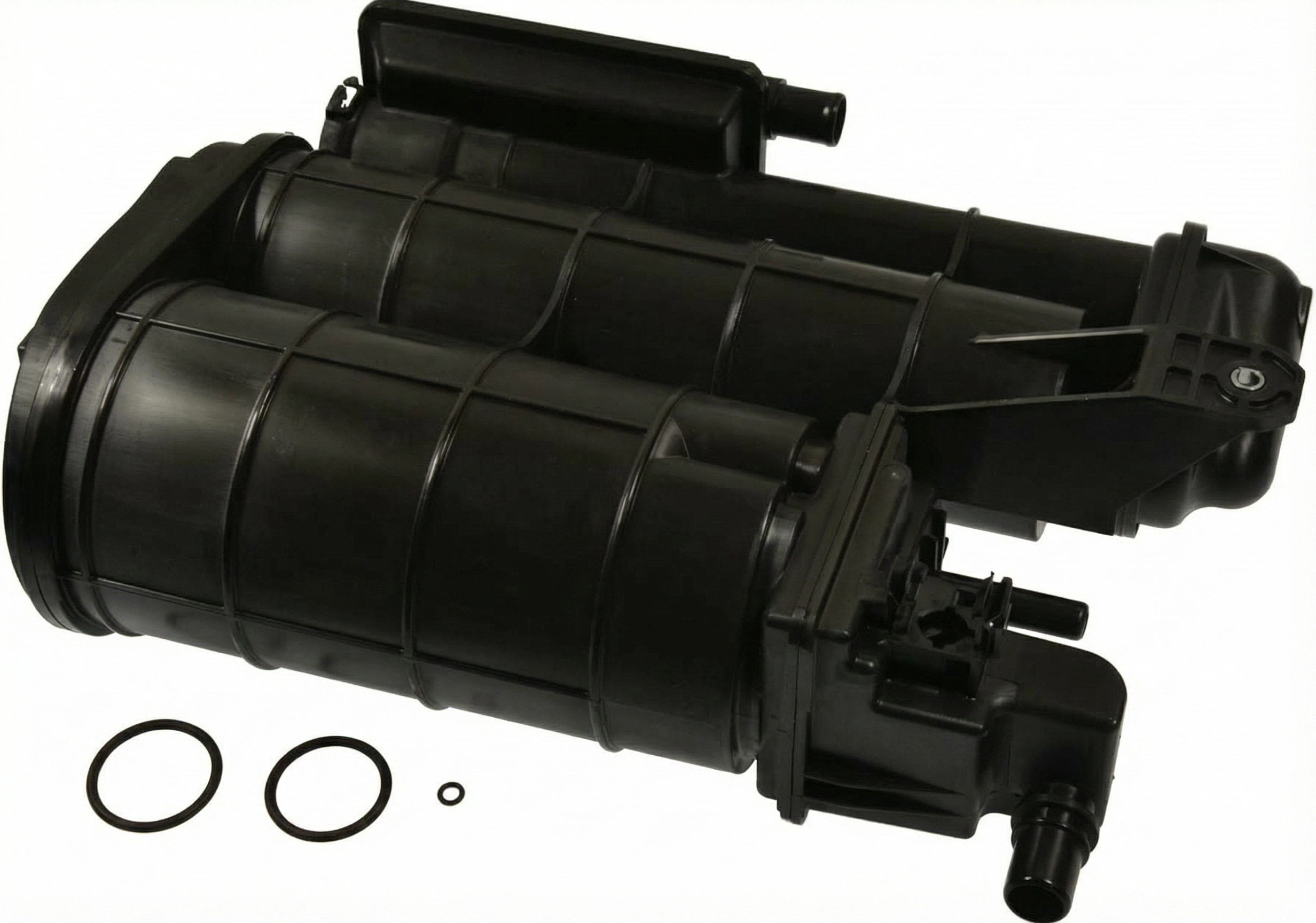
- 2013-2018: While the P1440 code and its primary cause (purge valve) apply to all years, there are different vapor canisters for the standard Hybrid and the plug-in Energi models; they are not interchangeable.
Diagnostic Flowchart
Other Known Issues on This Vehicle
Issues unrelated to this code that are worth knowing about as an owner of this generation:
- Premature eCVT Transmission Failure 🔴 High — Most common on 2013-2014 models, often appearing around 100,000 miles. Symptoms include grinding or howling noises when the gasoline engine is running. (Ref: A known issue, though not a universal recall. Some owners report bearing failure leading to transmission replacement.)
- 12-Volt Battery Parasitic Drain 🟠 Medium — Common across all model years. Owners report the 12V battery dying unexpectedly if the car sits for a few days. The cause is often attributed to software glitches or modules failing to go to sleep. (Ref: TSB 14-0193 (superseded) and others address related wiring harness issues, but many owners report persistent problems.)
- Shifter Cable Bushing Failure 🔴 High — Affects 2013-2018 models. The bushing degrades, causing the shifter cable to detach from the transmission, preventing the vehicle from going into the selected gear or causing it to roll away while in Park. (Ref: Ford Safety Recall 22S43 (NHTSA 22V-413).)
- Power Steering Gear Failure 🔴 High — Most prevalent on 2013-2015 models. Can cause a sudden loss of power steering assist, making the vehicle difficult to steer at low speeds. (Ref: Ford Safety Recalls 14S18 and 15S18 (NHTSA 15V-340).)
Used vs. New Parts: Buying Guide for This Vehicle
When a used part is the smart pick: A used fuel tank may be a viable option if the original is deformed and a new OEM replacement is cost-prohibitive. A used vapor canister can also be a good value, as new aftermarket units are generally not available.
Donor-vehicle mileage cap: roughly under 80000 miles for the part to have meaningful remaining life.
What to inspect on the donor part:
- For a fuel tank, inspect for any signs of warping, especially on the bottom surface near the straps.
- For a vapor canister, ensure there are no physical cracks in the plastic housing and that all hose ports are intact.
- Check that the donor vehicle was not from a region with heavy road salt use, which can degrade plastic and metal components faster.
OEM-only on this vehicle (don't cheap out):
- Canister Purge Valve: Given the extremely high failure rate of the original part and subsequent revisions, using a new OEM (Motorcraft) or a reputable aftermarket equivalent is strongly recommended over a used part. A used valve may have the same defect or a limited remaining lifespan.
Aftermarket brands forum-validated for this vehicle:
- Dorman (for purge valve)
- Standard Motor Products (for purge valve)
Real Owner Stories
Aggregated from forums and TSBs cited above. Mileages and costs reflect what owners reported in those sources.
2015 Ford Focus 2.0L
Symptoms: Fluctuating idle and stalling.
What fixed it: The technician identified fuel control issues related to codes P2196 and P144A.
Source hint: ScannerDanner Forum thread titled 'Another FORD with fuel control issue.'
2013-2017 Ford C-Max Hybrid
Symptoms: DTCs P1450, P0456, P0457, P04EE, and/or P04EF.
What fixed it: Replacement of the canister purge valve and a PCM software update.
Source hint: TSB 19-2207
2012-2018 Ford Focus 2.0L GDI
Symptoms: Stuck canister purge valve leading to fuel tank deformation and stalling.
What fixed it: PCM reprogram and, if necessary, replacement of the purge valve, fuel tank, and charcoal canister.
Source hint: 18S32 / NHTSA 18V-735
Related OBD-II Codes
Frequently Asked Questions
Does TSB 19-2207 apply to my 2013-2017 Ford C-Max?
Is my C-Max covered under the Ford Focus safety recall 18S32?
Why is my fuel gauge reading incorrectly after getting code P1440?
Can a bad purge valve cause my C-Max to stall while driving?
How can I personally test if the canister purge valve is the cause of P1440?
What should I look for when inspecting my fuel tank for damage?
Helpful Videos


We Have This Part in Stock

The information in this article is provided for general reference and educational purposes only. Vehicle specifications, procedures, and part compatibility can vary by production date, trim level, and region. Always consult your vehicle's factory service manual and verify part numbers before purchasing or performing repairs. Safety-critical components such as airbags, seat belts, and braking systems should be installed by a qualified professional.
- Ford C-Max:
- 🧭 Diagnostic Flowchart
- 🎬 Helpful Videos
- 🛍️ Shop This Part
- What's Unique About the 2012-2018 Ford C-Max
- Symptoms You May Notice
- Most Likely Causes
- Rare But Worth Checking
- Diagnosis Steps
- Parts You'll Likely Need
- Related Codes That Often Appear With This One
- Technical Service Bulletins (TSBs) & Recalls
- Platform-Specific Known Issues
- Mechanic-Grade Diagnostic Values
- Hidden / Shadow Codes Worth Checking
- Scan Tool Commands That Help
- Wiring & Ground Locations
- OEM Part Supersession History
- Model Year Variations Within This Range
- Other Known Issues on This Vehicle
- Used vs. New Parts: Buying Guide for This Vehicle
- Real Owner Stories
- 2015 Ford Focus 2.0L
- 2013-2017 Ford C-Max Hybrid
- 2012-2018 Ford Focus 2.0L GDI
- Related OBD-II Codes
- Frequently Asked Questions
- 🎟️ Get 5% Off