

P1440 on 2015-2018 Ford Edge 2.7L: EVAP Vacuum Trouble Causes and Fixes
On a 2015-2018 Ford Edge with the 2.7L EcoBoost engine, code P1440 almost always indicates a problem with the EVAP system, most commonly a faulty canister purge valve or a loose hose connection. The most telling symptom is difficulty starting or a rough idle right after refueling. Before replacing parts, a thorough check of all EVAP hose connections is critical.
- P1440 on your Edge means the EVAP system has a vacuum problem.
- The most common symptom is trouble starting or a stumbling idle right after you get gas.
- Before buying parts, physically check that all EVAP hoses on top of the engine are securely clicked into place, per TSB 19-2132.
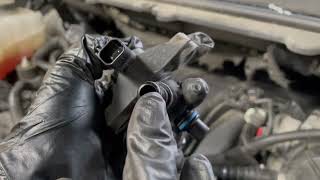
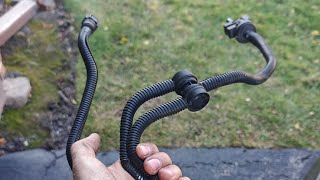
- The most likely failed part is the canister purge valve (Motorcraft CX-2776), which is a DIY-friendly fix that takes less than 30 minutes.
- This code will cause an automatic failure on an emissions inspection.
What's Unique About the 2015-2018 Ford Edge
While P1440 is a general EVAP code, on Ford's 2.7L EcoBoost engine platform, it's often seen with related codes like P144C. Ford has issued technical service bulletins (TSBs) for this engine in other vehicles (like the F-150) that point to simple, common causes like loose or partially connected EVAP vapor lines near the purge valve and air intake. This suggests that before replacing parts, a thorough check of all EVAP hose connections is a critical first step for this specific engine family, as the quick-connect fittings can sometimes feel seated when they are not.
Symptoms You May Notice
- Check Engine Light is on
- Difficulty starting the engine, rough idle, or stalling immediately after refueling. This is the most definitive symptom.
- Rough or unstable idle, especially at a stop or after a hot restart.
- Slightly reduced fuel economy
- A faint smell of fuel around the vehicle.
- Replacing the gas cap. While a loose gas cap can cause other EVAP codes (like P0455 or P0457), P1440 on this vehicle more commonly points to a purge valve or hose issue upstream.
Most Likely Causes
- Faulty EVAP Canister Purge Valve 🔴 High Probability → Shop Vapor Canister The purge valve on this engine is a common failure point across many Ford models, often getting stuck open. This allows un-metered fuel vapor into the intake manifold at the wrong time, causing the classic symptom of a rough start after refueling as the engine is flooded with an overly rich mixture.
How to confirm: With the engine off, disconnect the purge valve and try to blow through it. If air passes, it is stuck open and has failed. Alternatively, with the engine off, disconnect the vapor line from the purge valve to the intake manifold. Use a hand-held vacuum pump to see if the valve holds vacuum; it should. If it doesn't, it's stuck open.
Typical fix: Replacement of the canister purge valve assembly. It is typically located on top of the engine and is easily accessible, held by two 8mm bolts.
Est. part cost: $40-$80 - Loose or Disconnected EVAP Hoses 🟡 Medium Probability Ford issued TSB 19-2132 for the 2.7L EcoBoost engine (in other platforms) specifically for loose EVAP line connections causing similar codes like P144C and P04F0. The quick-connect fittings can sometimes become partially disconnected during other maintenance or due to vibration, without appearing obviously broken.
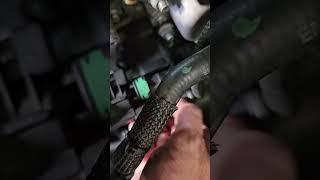
How to confirm: Following the guidance in TSB 19-2132, physically push and pull on the EVAP line connections at the purge valve, the air intake system duct, and any other visible connection points to ensure they are fully seated and locked. A click should be heard and felt when they are properly connected.
Typical fix: Securely reconnecting the loose hose or replacing a damaged connector clip.
Est. part cost: $0-$15
Rare But Worth Checking
- Cracked EVAP Hose: A visual inspection may reveal cracks or damage in the plastic EVAP lines, creating a vacuum leak. A smoke test is the most effective way to find hard-to-see cracks.
- Faulty Fuel Tank Pressure Sensor: → Shop Fuel Tank If the sensor provides incorrect data to the PCM, it can trigger the code even if there is no actual vacuum problem. This is less common than a purge valve failure but can happen.
- Saturated Charcoal Canister: → Shop Vapor Canister Overfilling the fuel tank can sometimes lead to liquid fuel entering the charcoal canister, damaging it and causing various EVAP codes.
Diagnosis Steps
- Read the code with an OBD-II scanner to confirm P1440 is present.
- Note any other codes present, especially P144C, P04F0, or P1450.
- Inspect the gas cap to ensure it is tight and the seal is intact, though this is a less likely cause for this specific code.
- Perform a thorough visual inspection of all accessible EVAP hoses and lines, especially around the top of the engine near the purge valve.
- Following the logic of Ford TSB 19-2132, physically push and pull on the quick-connect fittings for the EVAP lines to ensure they are fully seated. Listen for a 'click'.
- If connections are secure, test the canister purge valve. With the valve disconnected, attempt to blow air through it. If air passes, it is stuck open and must be replaced. This is the most common failure.
- If the purge valve passes the test, the next step would be a smoke test of the entire EVAP system to find any hard-to-see leaks in hoses or the charcoal canister.
- After any repair, clear the code with the scanner and perform a drive cycle to ensure the fix was successful.
Parts You'll Likely Need
- Vapor Canister Purge Valve
(OEM #CX-2776)— This is the most frequent cause of P1440 on this engine, typically failing by sticking open.
Trusted brands: Motorcraft, Dorman, Standard Motor Products
OEM price range: $60-$80
Aftermarket price range: $40-$60
Related Codes That Often Appear With This One
- P144C — This code for 'EVAP System Purge Vapor Line Restricted/Blocked' is very closely related and often caused by the exact same faulty purge valve or hose connection issue.
- P04F0 — This code for 'EVAP System Leak Detected (Gross Leak)' is mentioned alongside P144C in Ford TSBs for the 2.7L engine, pointing to loose hose connections as a shared cause.
- P1450 — A Ford-specific code for 'Unable to Bleed Up Fuel Tank Vacuum'. This is frequently caused by a stuck-open purge valve, the same primary cause as P1440.
Technical Service Bulletins (TSBs) & Recalls
- TSB 19-2132: While for the F-150/Expedition, it covers the same 2.7L EcoBoost engine and codes P04F0/P144C, advising technicians to check for loose EVAP vapor line connections before other diagnostics. This is highly relevant as the engine and EVAP components are shared.
Platform-Specific Known Issues
- On the Ford Edge Forum, multiple owners of 2.7L Sport models confirm that the hard-start-after-refueling symptom is almost exclusively tied to the purge valve. One user noted the entire job took 'less than 15 minutes' with a single 8mm socket.
- A YouTube video by 'Ford Tech Makuloco' (though on an F-150 with the same engine) details how the quick-connect EVAP lines can be deceptive, feeling connected when they are not fully seated, corroborating the advice in TSB 19-2132.
Mechanic-Grade Diagnostic Values
- EVAP Canister Purge Valve Solenoid Resistance — expected: 15 to 38 Ohms.. Failure: A reading of infinity (open circuit) or near-zero (short circuit) indicates a failed solenoid coil.
- Fuel Tank Pressure (FTP) Sensor Voltage (Key On, Engine Off) — expected: Approximately 2.6V to 2.65V when the system is vented to atmosphere.. Failure: If this voltage drops immediately upon starting the engine (when the purge valve is commanded closed), it strongly indicates the purge valve is physically stuck open, allowing engine vacuum into the EVAP system.
- EVAP System Vacuum During Purge (Live Scan Data) — expected: Approximately -2.0 to -4.0 inches of H2O during normal purge operation.. Failure: If the vacuum goes excessively negative (e.g., below -8.0 in-H2O), it can trigger a P1450 code, often caused by a stuck-open purge valve or a blocked vent line.
Hidden / Shadow Codes Worth Checking
- Mode 6, Test ID ($xx), Component ID ($xx): Ford utilizes Mode 6 data to store the results of non-continuous monitor tests, including the EVAP system leak and flow checks. A technician can view the raw test values (e.g., pressure decay measurements) to see if the system is passing or failing marginally, even before a DTC is set. The specific Test and Component IDs vary by model year and software calibration. (see via A scan tool capable of displaying Mode 6 data, such as the Ford IDS, FORScan, or other advanced aftermarket scanners.)
Scan Tool Commands That Help
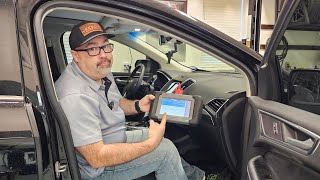
- Ford IDS (or FORScan): EVAP System Test — This is a comprehensive, automated test sequence that commands the purge and vent solenoids while monitoring the FTP sensor. It verifies the system's ability to seal, pull a vacuum, and vent, providing a clear pass/fail result. It is the most thorough way to diagnose the system after basic visual checks fail.
- Ford IDS (or FORScan): Datalogger > Bidirectional Control — This function allows for manual, individual control of the purge valve and vent solenoid. A technician can command the purge valve open while the engine is running and watch live data for a drop in FTP sensor voltage and a change in short-term fuel trims to confirm the valve is opening and flowing vapor.
Wiring & Ground Locations
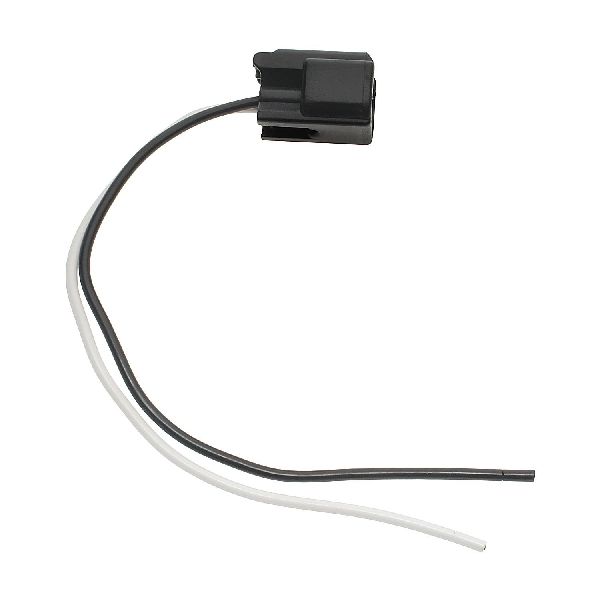
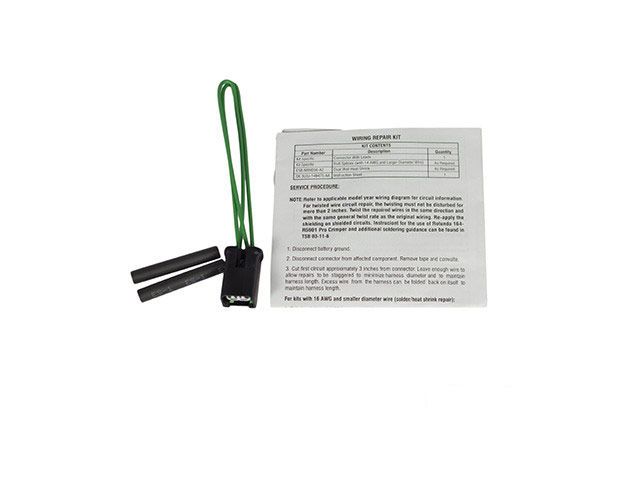
- Purge Valve Connector — The 2-pin electrical connector on the EVAP canister purge valve, located on top of the engine.. This is the point for testing voltage supply and resistance of the solenoid. Diagnostic procedures involve checking for battery voltage at one pin (with key on) and checking continuity to the PCM from the control pin.
- G108 — A major chassis and engine harness ground point, typically located on the firewall or inner fender on the driver's side.. While not exclusive to the EVAP circuit, a loose or corroded primary ground like G108 can cause erratic voltage and unpredictable behavior from various sensors and solenoids controlled by the PCM, potentially leading to false codes.
Real Owner Repair Stories
- YouTube channel 'DownShifting76' (Ford Edge (year not specified, but same body style) with P144C) — Check Engine Light with code P144C, 'evaporative emission system purge flow performance during boost'.
❌ Tried (didn't work) The owner went straight to proper diagnosis instead of guessing parts.
✅ What actually fixed it The canister purge valve on top of the engine was confirmed faulty using a hand-held vacuum pump; it would not hold a vacuum. Replacing the valve and confirming the new part held vacuum resolved the issue. The fix was verified after driving 50-75 miles with no returning code. - Ford F150 Forum user 'KingBeef' (Ford F-150 with 2.7L EcoBoost (shared engine and EVAP components)) — Persistent P144C code, sometimes with misfires or a P0455 (large leak) code.
❌ Tried (didn't work) Replacing the purge valve with an aftermarket part., Replacing the aftermarket purge valve with a Motorcraft purge valve (which then failed a bench test)., Replacing the warrantied Motorcraft purge valve again., Cleaning the capless fuel filler neck.
✅ What actually fixed it The user had installed aftermarket CV Fabrication air inlet tubes (a common modification). The ultimate solution was to reinstall the factory original air inlet tubes, which permanently resolved the P144C code. - YouTube channel 'danny G' (Ford F-150 with P144C) — Recurring P144C check engine light.
❌ Tried (didn't work) Cleaning the capless gas tank system seals., Replacing the purge valve on top of the engine., Cleaning the purge valve on the charcoal canister.
✅ What actually fixed it The final fix was replacing the entire charcoal canister assembly, which came with a new, integrated purge valve. This resolved the code.
When the Usual Fixes Don't Work
- While the vast majority of P1440/P144C/P1450 codes on this engine are fixed by replacing the engine-mounted purge valve, there are documented cases where this does not solve the problem. In one instance, a user had to replace the entire charcoal canister assembly (which contains its own valve) to finally resolve a persistent P144C code after the engine-mounted valve replacement failed to work. In another case, the root cause was an aftermarket air intake system; reverting to the stock intake tubes fixed the code after multiple purge valve replacements did not. This highlights that if a new, quality purge valve doesn't fix the issue, the problem may lie further down the EVAP system or be related to vehicle modifications.
OEM Part Supersession History
F2GZ-9D289-A→F2GZ-9D289-B— Standard product lifecycle revision. The new part is a direct replacement for the old one.CX-2776 (Motorcraft Service Number)→N/A— This is the current service part number for the assembly that includes the F2GZ-9D289-B valve and hose assembly.
Heads up: This part number is correct for the 2015-2018 Edge 2.7L. Note that for 2019+ models, the purge valve is part of a different, larger, and more expensive hose assembly (K2GZ-9D289-A), and CX-2776 will not fit.
Diagnostic Flowchart
Other Known Issues on This Vehicle
Issues unrelated to this code that are worth knowing about as an owner of this generation:
- Leaking Oil Pan 🟠 Medium — Common on earlier 2.7L EcoBoost engines (approx. 2015-2017) due to the use of an RTV sealant on a composite oil pan. Less common on 2018+ models which received an updated pan with a gasket. (Ref: TSB 24-2345 (for 2015-2017 models) and TSB 19-2387 (for 2018-2019 models) were issued to address the procedure for replacing the leaking pan with an updated design.)
- Power Transfer Unit (PTU) Failure (AWD Models) 🔴 High — A well-documented issue across many Ford AWD platforms. The PTU fluid is subjected to extreme heat from the nearby exhaust, causing it to break down. Ford's 'lifetime fluid' designation means it often goes unserviced until failure, which can occur as early as 60,000-90,000 miles. (Ref: No recall, but it is a widely known problem. The primary symptom is a burning gear oil smell. The fix is a costly replacement of the PTU. Preventative fluid changes every 30,000 miles are recommended by independent experts.)
- Front Brake Hose Rupture 🔴 High — Affects 2015-2018 Ford Edge models. The front brake hoses can rupture prematurely, causing a sudden loss of brake fluid and increased stopping distance. (Ref: Ford Recall 20S42 (NHTSA 20V-469). Dealers will replace the front brake hoses with a revised design.)
- Internal Coolant Leaks 🔴 High — Less common than on the 2.0L, but some 2.7L EcoBoost engines have reported internal coolant leaks, sometimes manifesting as coolant consumption with no visible external leak. This can be due to a cracked cylinder head or a failing head gasket.
- Carbon Buildup on Intake Valves 🟡 Low — An inherent characteristic of all direct-injection engines, including the 2.7L EcoBoost. Over many miles (typically 80,000+), buildup can cause a rough idle or slight hesitation. Not a 'failure' but a maintenance consideration. (Ref: No TSB/recall; this is a known trait of GDI engines. The remedy is a manual intake cleaning service (e.g., walnut blasting).)
Used vs. New Parts: Buying Guide for This Vehicle
When a used part is the smart pick: For the primary cause of this code—the canister purge valve—a used part is NOT recommended. It is a relatively low-cost electronic solenoid that fails due to internal wear and heat cycles. A used part has unknown remaining life and may fail quickly.
Donor-vehicle mileage cap: roughly under 20000 miles for the part to have meaningful remaining life.
What to inspect on the donor part:
- For larger assemblies like the charcoal canister, verify the donor vehicle's mileage is extremely low.
- Inspect all plastic components for hairline cracks or brittleness.
- Ensure electrical connector pins are clean, straight, and free of corrosion.
- Verify the part number on the donor part exactly matches the required OEM number.
OEM-only on this vehicle (don't cheap out):
- While not strictly 'OEM-only', using a genuine Motorcraft purge valve is highly recommended for longevity. Some owners report cheap, no-name aftermarket valves failing prematurely.
Aftermarket brands forum-validated for this vehicle:
- Dorman
- Standard Motor Products (SMP)
Brands owners have reported issues with on this vehicle:
- Unbranded, low-cost parts from online marketplaces are frequently cited as having poor quality control and short lifespans.
Real Owner Stories
Aggregated from forums and TSBs cited above. Mileages and costs reflect what owners reported in those sources.
2015-2018 Ford Edge Sport 2.7L
Symptoms: Hard-start-after-refueling symptom.
What fixed it: Replacement of the canister purge valve assembly using a single 8mm socket.
Source hint: Ford Edge Forum
Ford Edge Sport 2.7L
Symptoms: P144c Engine Code and common EVAP failure symptoms.
What fixed it: Purge valve replacement; described as a '5 Minute fix'.
Source hint: YouTube - 'Thez Nutz Garage': 'Ford Edge Sport 2.7 Purge valve replacement P144c Engine Code 5 Minute fix'
2015+ Ford F-150 2.7L EcoBoost
Symptoms: EVAP lines feeling connected when they were actually not fully seated, leading to deceptive diagnostic results.
What fixed it: Physically pushing and pulling on the quick-connect EVAP lines until a 'click' is heard to ensure they are fully seated.
Source hint: YouTube - 'Ford Tech Makuloco'
2.7L EcoBoost V6 (F-150 platform)
Symptoms: P1450 code and EVAP system issues.
What fixed it: Replacement of the EVAP purge valve (identical part and procedure to the Ford Edge 2.7L).
Source hint: YouTube - 'Ford 2.7L evap purge valve replacement, P1450'
Related OBD-II Codes
Frequently Asked Questions
Does TSB 19-2132 apply to my 2015-2018 Ford Edge 2.7L EcoBoost?
Why does my Ford Edge struggle to start only after I fill up the gas tank?
Is there a recall for the EVAP system on the 2015-2018 Edge?
How can I quickly test if the purge valve is the cause of my P1440 code?
Are there other common mechanical issues I should look out for on my 2.7L EcoBoost Edge?
Helpful Videos

Used OEM Parts in Stock
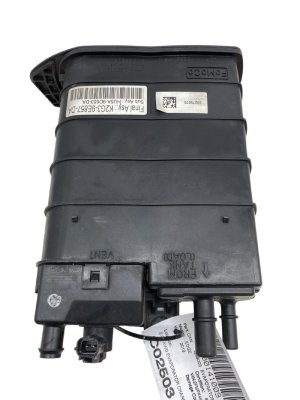

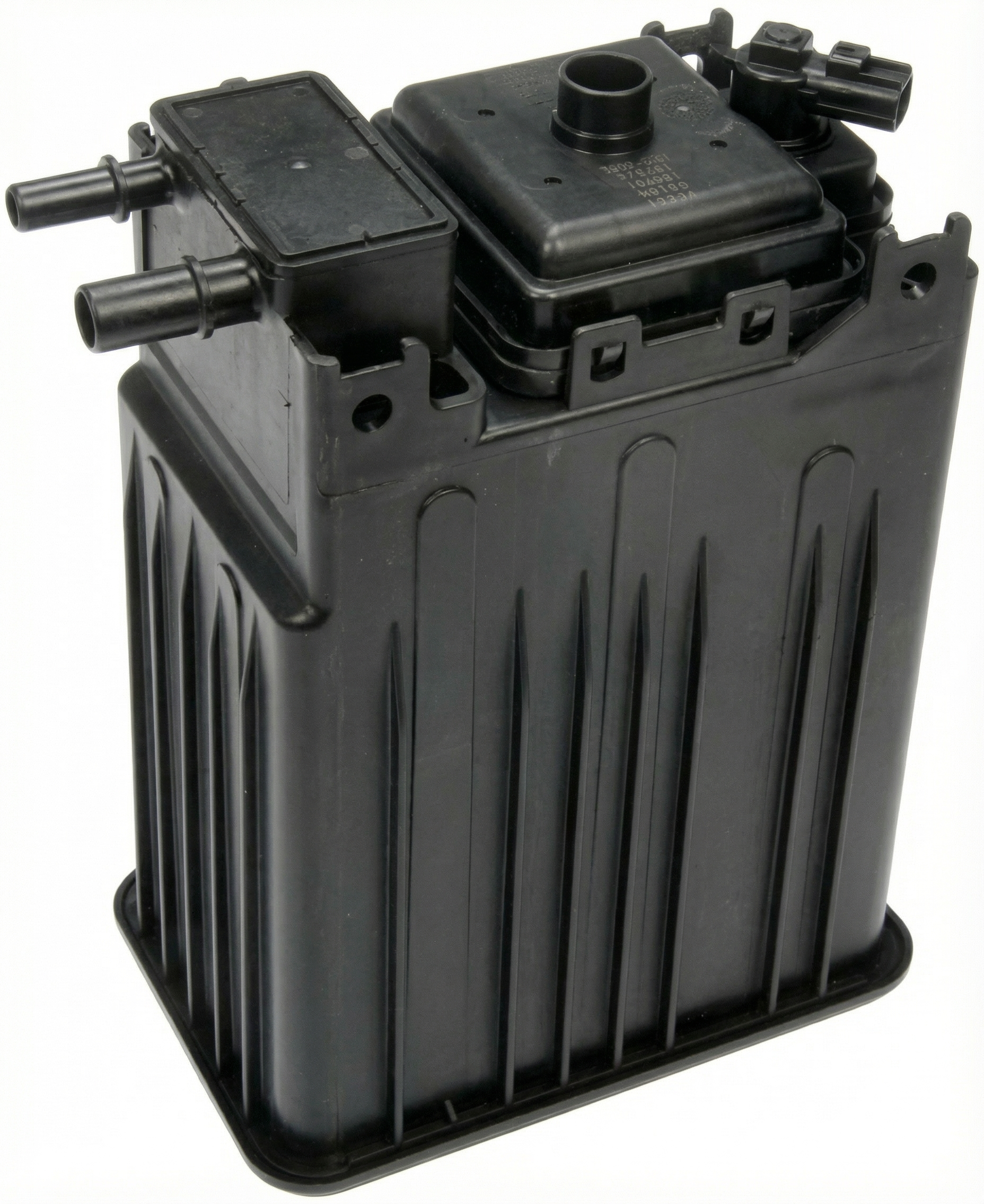
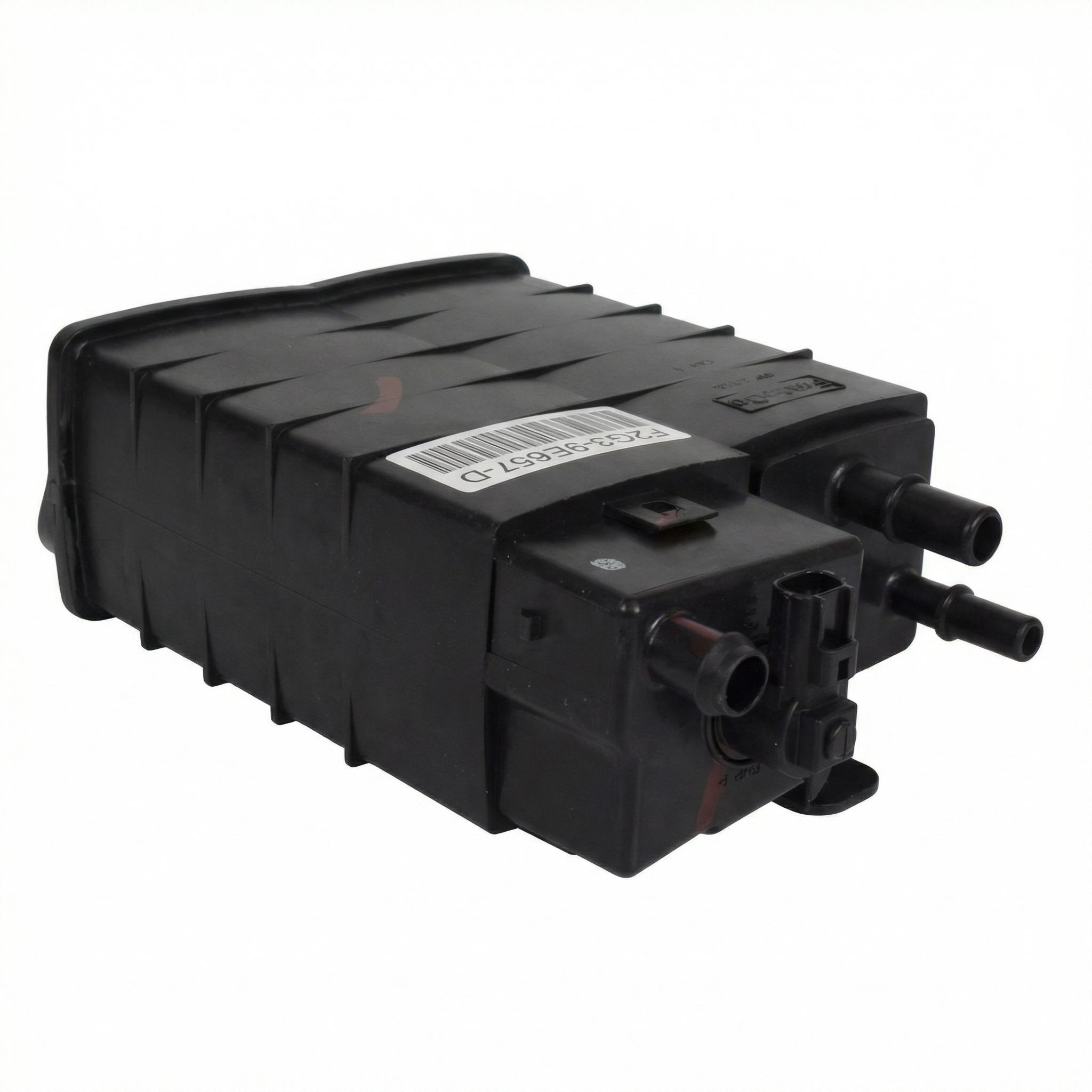
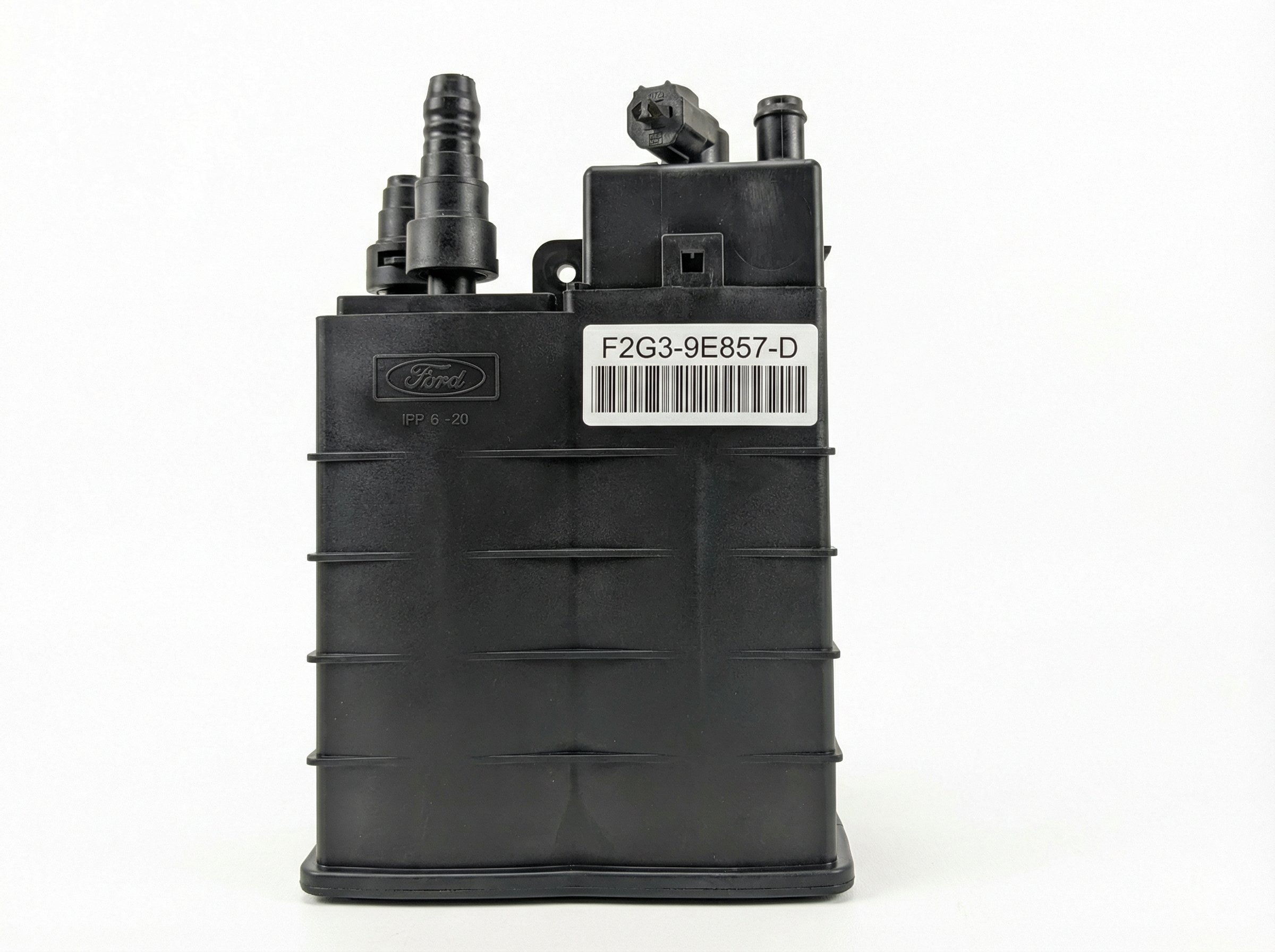
New Aftermarket Parts Available


The information in this article is provided for general reference and educational purposes only. Vehicle specifications, procedures, and part compatibility can vary by production date, trim level, and region. Always consult your vehicle's factory service manual and verify part numbers before purchasing or performing repairs. Safety-critical components such as airbags, seat belts, and braking systems should be installed by a qualified professional.
- Ford Edge:
- 🧭 Diagnostic Flowchart
- 🎬 Helpful Videos
- 🛍️ Shop This Part
- What's Unique About the 2015-2018 Ford Edge
- Symptoms You May Notice
- Most Likely Causes
- Rare But Worth Checking
- Diagnosis Steps
- Parts You'll Likely Need
- Related Codes That Often Appear With This One
- Technical Service Bulletins (TSBs) & Recalls
- Platform-Specific Known Issues
- Mechanic-Grade Diagnostic Values
- Hidden / Shadow Codes Worth Checking
- Scan Tool Commands That Help
- Wiring & Ground Locations
- Real Owner Repair Stories
- When the Usual Fixes Don't Work
- OEM Part Supersession History
- Other Known Issues on This Vehicle
- Used vs. New Parts: Buying Guide for This Vehicle
- Real Owner Stories
- 2015-2018 Ford Edge Sport 2.7L
- Ford Edge Sport 2.7L
- 2015+ Ford F-150 2.7L EcoBoost
- 2.7L EcoBoost V6 (F-150 platform)
- Related OBD-II Codes
- Frequently Asked Questions
- 🎟️ Get 5% Off