

P1440 on 2008-2012 Ford Escape: EVAP Vacuum Trouble Causes and Fixes
On a 2008-2012 Ford Escape, code P1440 is almost always caused by a faulty canister purge valve (Motorcraft part #7U5Z-9C915-D) located on top of the engine. A classic symptom is difficulty starting the vehicle right after refueling. Replacing the purge valve is a simple, 15-minute DIY fix with the part costing around $30-$70.
- P1440 on a 2008-2012 Escape almost always points to a bad canister purge valve.
- If your Escape is hard to start after you get gas, the purge valve is the most likely culprit.
- The purge valve is located on top of the engine and is held by two 8mm bolts, making it a very easy DIY repair that takes less than 30 minutes.
- The correct Motorcraft replacement part number is often 7U5Z-9C915-D.
- Before buying parts, check the capless fuel filler opening for any dirt or debris that might be preventing it from sealing.
- This code will cause an automatic failure on an emissions inspection.
What's Unique About the 2008-2012 Ford Escape
The 2008-2012 Ford Escape belongs to the second generation, which utilizes a capless fuel filler system. Unlike a traditional gas cap, a leak can be caused by debris or a faulty seal in this filler neck. However, the most common failure point by far for P1440 on this platform is the canister purge valve. It is conveniently located right on top of the engine, making it an exceptionally easy part for DIYers to access and replace compared to many other vehicles where it may be buried deeper in the engine bay or near the fuel tank.
Symptoms You May Notice
- Check Engine Light is on
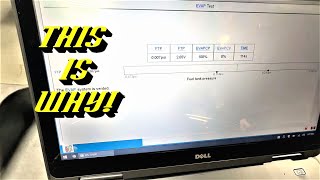
- Difficulty starting the engine, sputtering, or stalling immediately after refueling 🎬 See why your Ford struggles to start after getting gas
- Rough idle
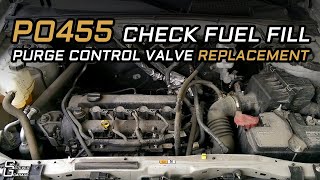
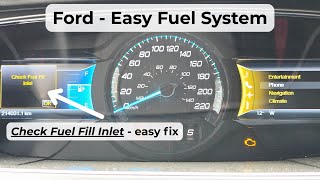
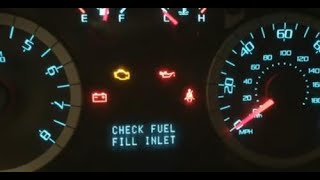
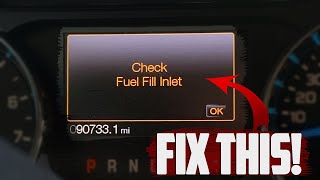
- "Check Fuel Fill Inlet" message on the dashboard 🎬 Watch: How to fix the Check Fuel Fill Inlet message
- Slightly reduced fuel economy
- Faint fuel smell
- Replacing the gas cap. This vehicle does not have a traditional gas cap; the issue would be with the capless filler neck.
Most Likely Causes
- Faulty Canister Purge Valve 🔴 High Probability → Shop Vapor Canister This specific part is a very common failure item on many Ford models from this era, including the Escape and its platform mates. It tends to get stuck open internally, causing a constant vacuum leak into the intake manifold.
How to confirm: The valve is located on top of the engine. A simple test is to disconnect the EVAP hose from the valve that leads to the intake manifold while the engine is idling. Place your finger over the port on the valve; if you feel vacuum, the valve is stuck open and must be replaced. A scan tool can also command it to open and close to test for function.
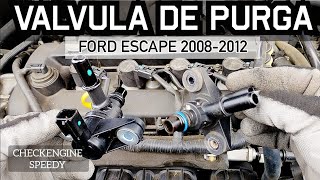
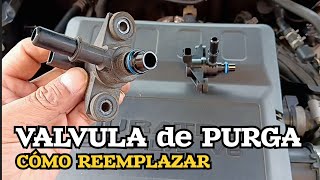
Typical fix: Replace the canister purge valve. It is held on by two 8mm bolts and has one electrical connector and one hose connection, making for a quick replacement. 🎬 Watch: Step-by-step guide to replacing the purge solenoid
Est. part cost: $30-$70 - Debris or Faulty Seal in Capless Fuel Filler Neck 🟡 Medium Probability → Shop Fuel Filler Neck The capless system can be susceptible to dirt, dust, or small debris preventing the internal flap from sealing correctly, which the EVAP system interprets as a leak.
How to confirm: Visually inspect the fuel filler opening for any debris. Clean it carefully with a cloth and the funnel provided with the vehicle. Check the condition of the seal.
Typical fix: Clean the fuel filler neck. If the seal is damaged, the filler neck assembly may need to be replaced.
Est. part cost: $50-$150 - Cracked or Disconnected EVAP Hoses ⚪ Low Probability The plastic and rubber hoses in the engine bay become brittle over time due to constant heat cycles and can develop small cracks.
How to confirm: Visually inspect all accessible EVAP lines running to and from the purge valve for cracks or loose connections. A smoke test is the most effective way to find a leak that isn't obvious.
Typical fix: Replace the cracked section of the hose or the entire hose assembly.
Est. part cost: $15-$50
Rare But Worth Checking
- Faulty EVAP Vent Solenoid: → Shop Vapor Canister This valve is located near the charcoal canister under the vehicle. It's less likely to fail than the engine-mounted purge valve but can cause the same code if it gets stuck.
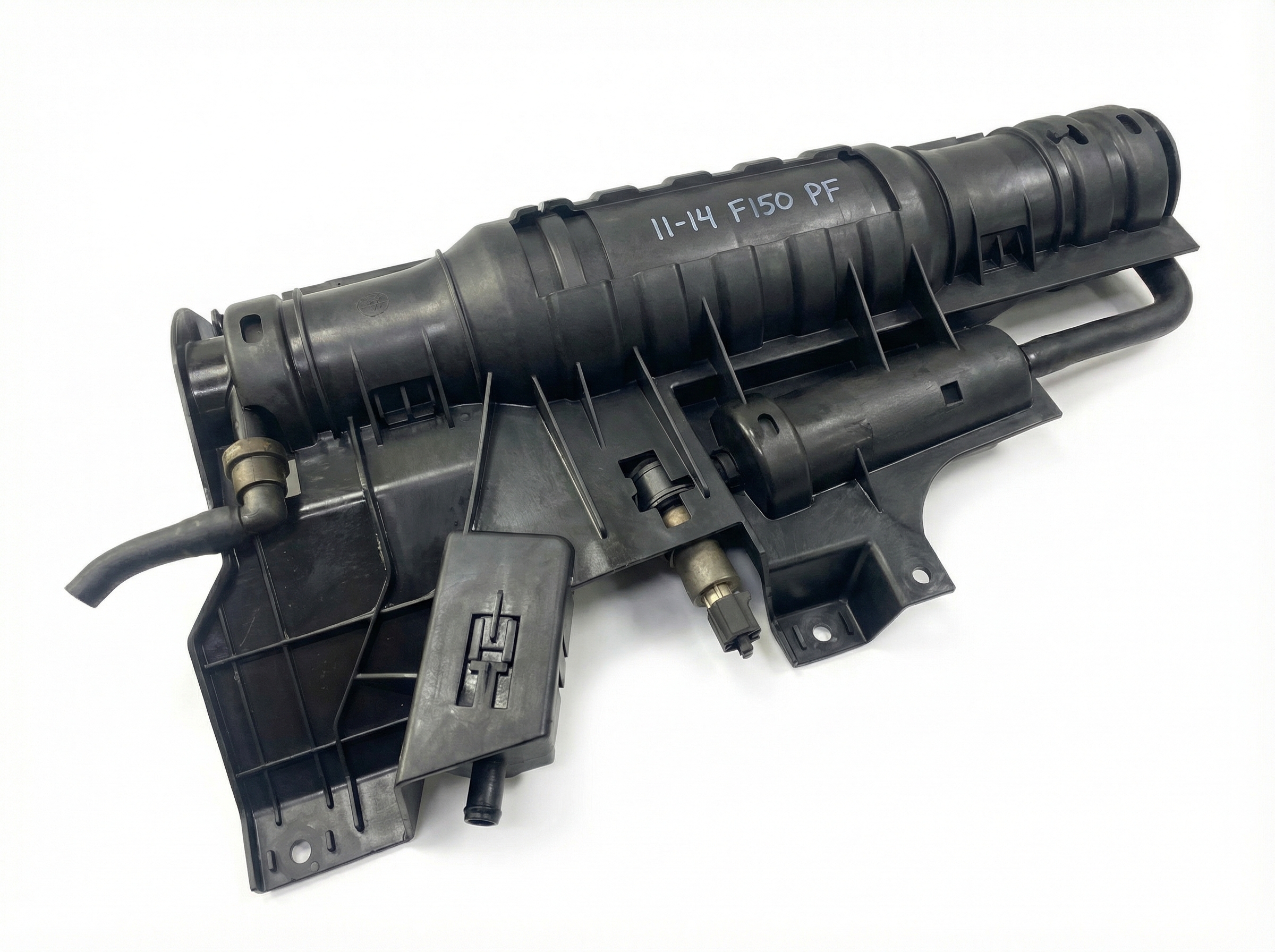
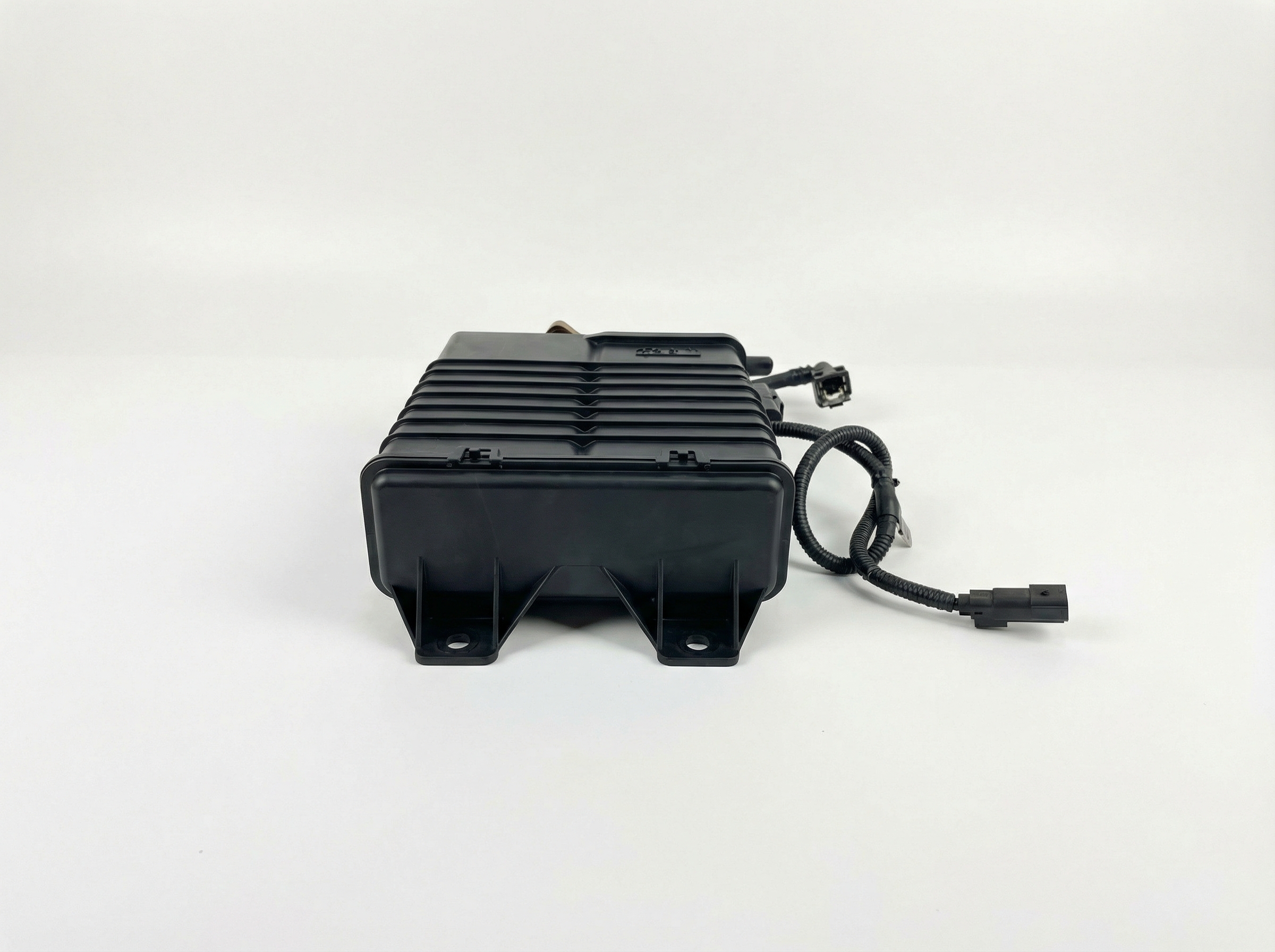
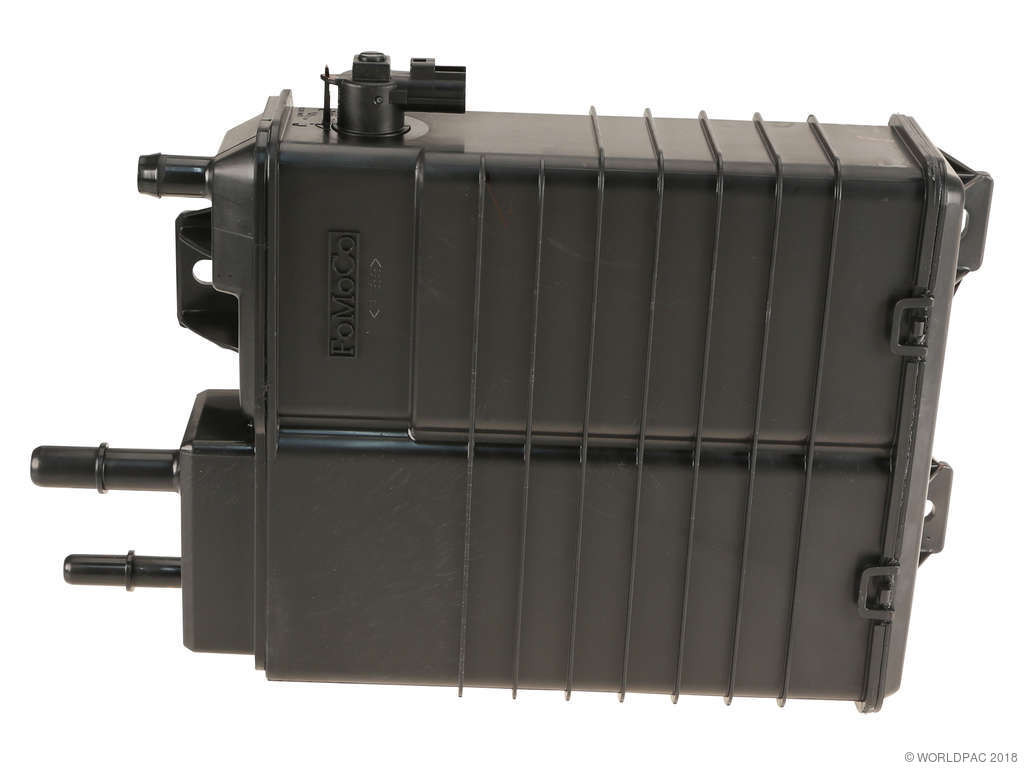
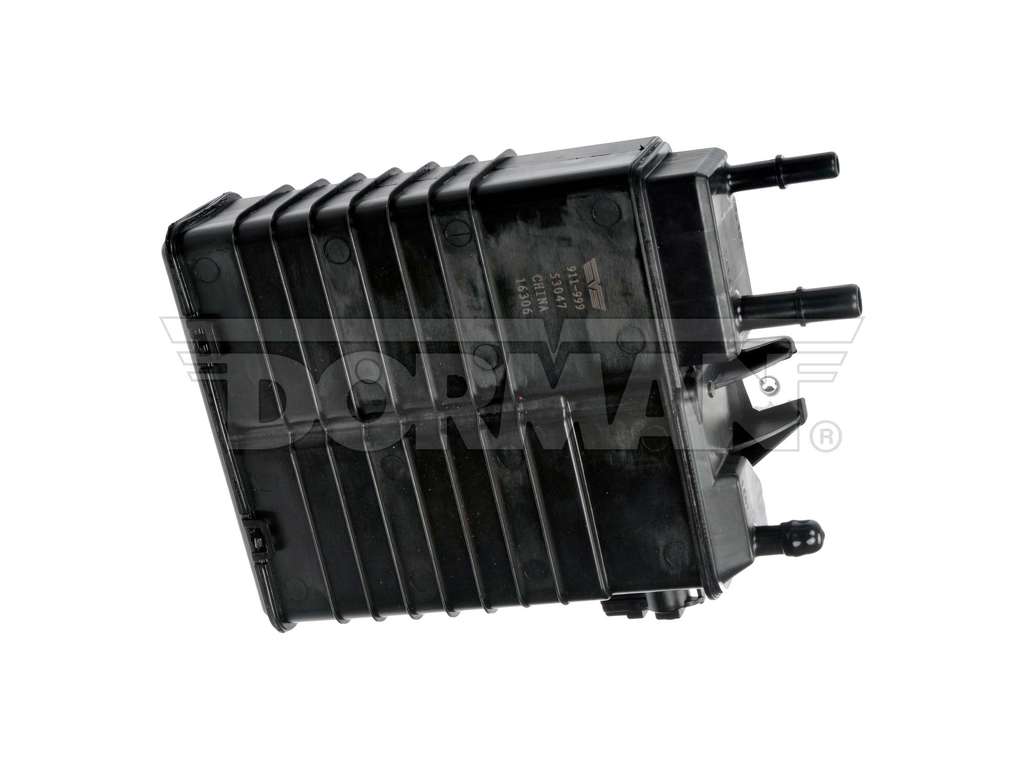
- Failed Charcoal Canister: → Shop Vapor Canister The canister itself can crack or become saturated with fuel if the gas tank is habitually overfilled, leading to EVAP system faults.
Diagnosis Steps
- Read the code with an OBD-II scanner to confirm P1440.
- Inspect the capless fuel filler neck for any debris that could prevent a proper seal. Clean as necessary.
- Locate the canister purge valve on top of the engine. Inspect the attached hoses for any visible cracks or loose connections.
- With the engine idling, disconnect the hose between the purge valve and the intake manifold. Check for vacuum at the valve's port. If vacuum is present, the valve is stuck open and needs replacement.
- If the manual test is inconclusive, use a scan tool to command the purge valve solenoid on and off to verify its operation.
- If replacing the purge valve does not fix the issue, perform a smoke test on the EVAP system to identify any hard-to-find leaks in the hoses, charcoal canister, or filler neck.
- If no leaks are found, test the function of the EVAP vent solenoid, located near the fuel tank.
- As a final step, test the fuel tank pressure sensor to ensure it is sending correct data to the PCM.
Parts You'll Likely Need
- Vapor Canister Purge Valve / Solenoid
(OEM #7U5Z-9C915-D)— This is the most common failure point for code P1440 on this vehicle. It gets stuck open, causing the vacuum fault and often leads to hard starting after refueling.
Trusted brands: Motorcraft, Dorman, Standard Motor Products
OEM price range: $50-$90
Aftermarket price range: $30-$60
Related Codes That Often Appear With This One
- P1450 — This code for 'Unable to Bleed Up Fuel Tank Vacuum' is very closely related and is often caused by the exact same faulty canister purge valve.
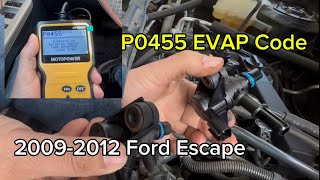
- P0455 — This code indicates a 'Large EVAP Leak,' which can be triggered if the purge valve is stuck wide open.
- P144A — This code for a restricted purge vapor line can also point to a malfunctioning purge valve on this platform.
- P0456 — This code for a 'Small EVAP Leak' can also be triggered by a faulty purge valve or a bad seal on the capless filler neck.
Technical Service Bulletins (TSBs) & Recalls
- TSB 19-2171: While written for newer 2017-2019 Escapes with different codes (P04F0/P144C), it notes that loose or partially connected EVAP vapor lines can be a cause, highlighting the sensitivity of Ford EVAP connections.
Mechanic-Grade Diagnostic Values
- Canister Purge Valve Solenoid Resistance — expected: 15 - 30 Ohms. Failure: A reading of infinite Ohms (open circuit) or near zero Ohms (short circuit) indicates a failed solenoid.
- Canister Purge Valve Connector Voltage (Key On, Engine Off) — expected: Approximately 12V (Battery Voltage) on one pin.. Failure: No voltage suggests a blown fuse or a break in the power supply wire.
- EVAP System 'Workhorse Phase' Vacuum — expected: -3.73 mmHg to -4.47 mmHg. Failure: If the vacuum exceeds -14.95 mmHg, the PCM may set a P1450 code, indicating a restriction.
Scan Tool Commands That Help
- Ford IDS / FORScan / High-End Bidirectional Scanner: EVAP System Test (On-Demand Self-Test) — This is a comprehensive test that forces the EVAP monitor to run without a full drive cycle. It commands the vent and purge valves to seal and pressurize the system, then monitors the FTP sensor to confirm system integrity after a repair.
- Ford IDS / FORScan / High-End Bidirectional Scanner: Purge Valve Solenoid (CPV) ON/OFF Command — Used to directly test the purge valve's mechanical function. A technician can command the valve to cycle while feeling or listening for a click, or checking for vacuum at the port, to see if it is sticking.
Wiring & Ground Locations
- Canister Purge Valve Connector — On top of the engine, at the rear of the engine compartment, connected to the purge valve.. This is where voltage and resistance tests are performed. One pin is power from a fuse, and the other is the control signal (ground provided by the PCM). A fault in this connector or its wiring will prevent the valve from operating correctly.
"I Checked Everything" — The Actual Cause
- In some cases, a sticking purge or vent solenoid can pass a test at a specific moment but fail intermittently during operation. A technician noted that sometimes a slight bump or knock can temporarily correct a solenoid's function, leading to a false 'pass' during diagnosis, only for the code to return later.
OEM Part Supersession History
7U5Z-9C915-D→N/A— This appears to be the stable and correct part number for the entire 2008-2012 model run.
Diagnostic Flowchart
Other Known Issues on This Vehicle
Issues unrelated to this code that are worth knowing about as an owner of this generation:
- 6F35 Transmission Failure 🔴 High — Common, especially in earlier 2008-2010 models, often appearing before 100,000 miles. Issues include harsh shifting, shuddering, delayed engagement, and complete failure. (Ref: No recall, but subject of class-action lawsuits. Regular fluid changes with Mercon LV are recommended as a preventative measure.)
- Electronic Power Steering (EPS) Failure 🔴 High — Widespread issue where steering assist is suddenly lost, making the vehicle very difficult to steer at low speeds. (Ref: Recall 14S05 / NHTSA 14V284000 was issued for the steering torque sensor. Many owners report failures even after the recall was performed.)
- Rear Shock Tower Rust 🔴 High — Very common in regions that use road salt. The upper mount for the rear shock absorber rusts through, allowing the shock to break loose into the cabin. (Ref: No recall, but aftermarket repair panels (e.g., Dorman 924-358) are widely available due to the frequency of the problem.)
- Faulty Throttle Body 🟠 Medium — Not uncommon, can cause stalling or erratic engine behavior. The part was covered under a warranty extension for many vehicles.
Used vs. New Parts: Buying Guide for This Vehicle
When a used part is the smart pick: For this specific repair, a used part is not recommended. The canister purge valve is an inexpensive, high-failure-rate electronic component. The risk of purchasing a used valve that is already failing or has limited life remaining is very high.
What to inspect on the donor part:
- Not applicable as used parts are not advised for this component.
Aftermarket brands forum-validated for this vehicle:
- Motorcraft (OEM)
- Standard Motor Products (SMP) is often considered a reliable, high-quality aftermarket alternative.
- Dorman is a widely available option, though some technicians have reported occasional fitment issues with aftermarket connectors.
Brands owners have reported issues with on this vehicle:
- Some forum users have reported that lower-tier brands like Duralast may have connector clips that do not fit as well as the OEM part, potentially leading to connection issues.
Real Owner Stories
Aggregated from forums and TSBs cited above. Mileages and costs reflect what owners reported in those sources.
2012 Ford Escape 2.5L 4-cylinder
Symptoms: Check Engine Light was on, but there were no drivability issues at all. The computer reported the purge vapor line was restricted or blocked.
What fixed it: The canister purge valve/solenoid was found to be stuck open, drawing vacuum when it should have been closed. Replacing the purge solenoid resolved the issue.
Source hint: GoTech YouTube channel report 'P144A EVAP Code - How To Diagnose and Repair - Easy No-Tool Testing'
2010 Ford Escape
Symptoms: Reported a P1440 code and the classic symptom of hard starting after refueling.
What fixed it: Replacing the purge solenoid valve (part #7U5Z-9C915-D).
Source hint: escape-city.com thread 'P1440 code on 2010 Escape'
Related OBD-II Codes
Frequently Asked Questions
Does TSB 19-2171 apply to my 2008-2012 Ford Escape?
My 2010 Escape is hard to start only after I fill up the gas tank; is this related to P1440?
Can I use a used purge valve from a salvage yard to save money?
Is there a recall for the 'Check Fuel Fill Inlet' message on my 2008-2012 Escape?
Could my P1440 code be related to the Electronic Power Steering recall?
What is the most common part I need to replace for P1440 on this model?
Helpful Videos


Used OEM Parts in Stock

New Aftermarket Parts Available


The information in this article is provided for general reference and educational purposes only. Vehicle specifications, procedures, and part compatibility can vary by production date, trim level, and region. Always consult your vehicle's factory service manual and verify part numbers before purchasing or performing repairs. Safety-critical components such as airbags, seat belts, and braking systems should be installed by a qualified professional.
- Ford Escape:
- 🧭 Diagnostic Flowchart
- 🎬 Helpful Videos
- 🛍️ Shop This Part
- What's Unique About the 2008-2012 Ford Escape
- Symptoms You May Notice
- Most Likely Causes
- Rare But Worth Checking
- Diagnosis Steps
- Parts You'll Likely Need
- Related Codes That Often Appear With This One
- Technical Service Bulletins (TSBs) & Recalls
- Mechanic-Grade Diagnostic Values
- Scan Tool Commands That Help
- Wiring & Ground Locations
- "I Checked Everything" — The Actual Cause
- OEM Part Supersession History
- Other Known Issues on This Vehicle
- Used vs. New Parts: Buying Guide for This Vehicle
- Real Owner Stories
- 2012 Ford Escape 2.5L 4-cylinder
- 2010 Ford Escape
- Related OBD-II Codes
- Frequently Asked Questions
- 🎟️ Get 5% Off