

P1440 on 1999-2007 GMC Sierra: Why This Code is Almost Always a Mistake
P1440 is not a valid code for a 1999-2007 GMC Sierra. Your scanner is likely misreading the actual code, which is either P1441 (an EVAP system fault, often a bad vent solenoid) or B1440 (a body control module fault, usually a bad ignition switch). Re-scan with a better tool before buying any parts.
- Stop: P1440 is not a real code for your 1999-2007 Sierra.
- Verify: Use a better scan tool to check if the actual code is P1441 (EVAP) or B1440 (Body/Ignition).
- Diagnose based on the REAL code: If it's P1441, suspect the EVAP vent solenoid. If it's B1440, suspect the ignition switch.
- Do not buy any parts until you have confirmed the correct trouble code.
What's Unique About the 1999-2007 GMC Sierra
The GMT800 platform, which includes the Sierra, Silverado, Tahoe, and Yukon, has a well-defined set of diagnostic codes. P1440 is conspicuously absent from GM's documentation for these trucks. The confusion arises because basic, inexpensive code readers can fail to distinguish between different module types (Powertrain vs. Body) and may truncate or misreport similar-looking code numbers. This leads owners down a path of diagnosing a non-existent EVAP fault when the real issue could be a completely unrelated ignition switch problem causing the engine to run after the key is turned off.
Generation note: This range covers the first generation GMT800 platform (1999-2006) and the 2007 "Classic" models. The new GMT900 body style also began in 2007. The information regarding the P1441 and B1440 codes is primarily relevant to the GMT800 trucks. The electronics and wiring were different between 1999-2002 and 2003-2006 models, but the P1440 misread issue is common to the entire generation.
Symptoms You May Notice
- Check Engine Light is on.
- If the actual code is P1441 (EVAP): No other noticeable symptoms, or a faint fuel smell. May have difficulty starting immediately after refueling. 🎬 See why your truck struggles to start after getting gas
- If the actual code is B1440 (BCM): Engine continues to run for 10-15 seconds after the key is turned off; difficulty starting; other random electrical issues. The 'Service Air Bag' light may also be illuminated.
- Replacing EVAP system components (like the purge valve or canister) based on a P1440 code without verifying if the code is actually P1441.
- Searching for a fix for P1440 when the real problem is an ignition switch causing a B1440 code.
Most Likely Causes
- Scan Tool Error / Misread Code 🔴 High Probability Basic OBD-II readers often struggle to correctly interpret manufacturer-specific codes or differentiate between modules (Powertrain vs. Body). This is a widely documented issue on GMT800 forums.
How to confirm: Re-scan the vehicle with a professional-grade scan tool that can read codes from all modules, including the Body Control Module (BCM). Verify if the code is actually P1441 or B1440.
Typical fix: Obtain the correct diagnostic trouble code before proceeding.
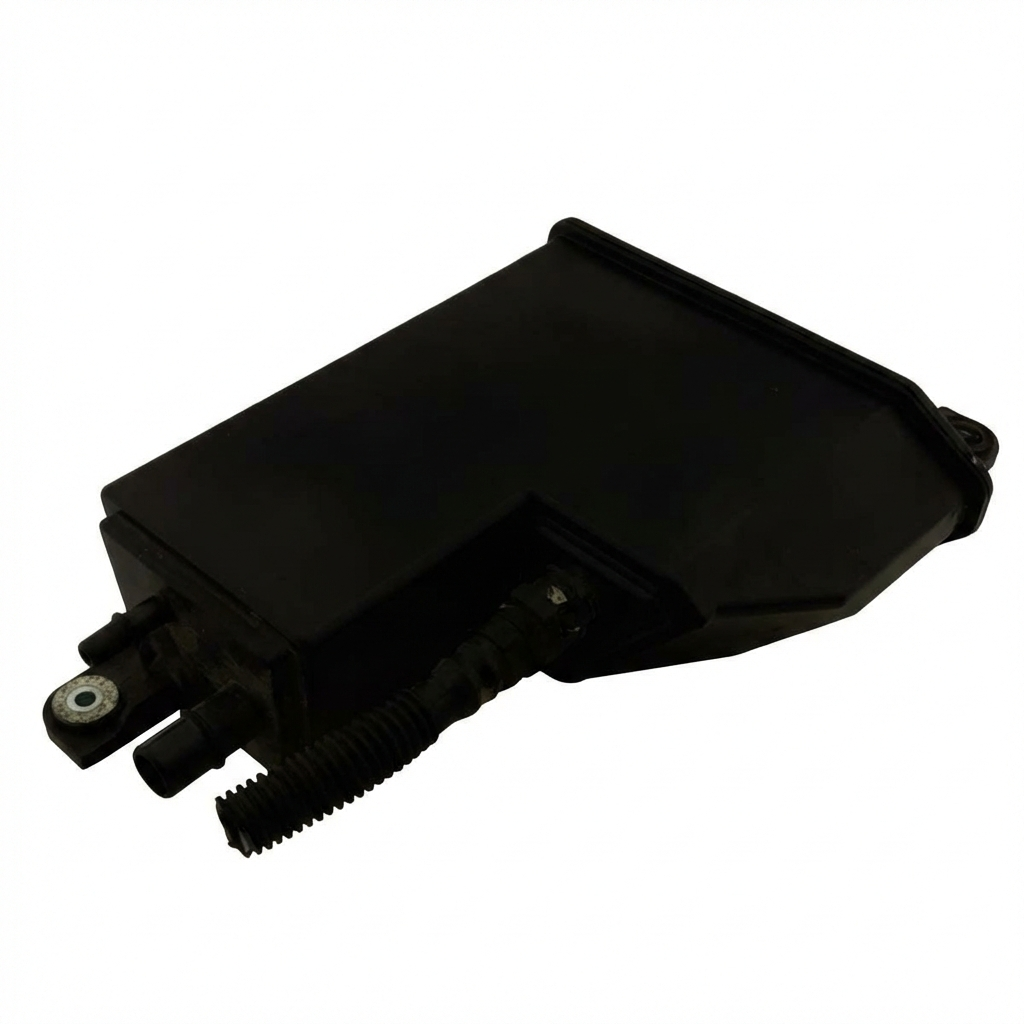
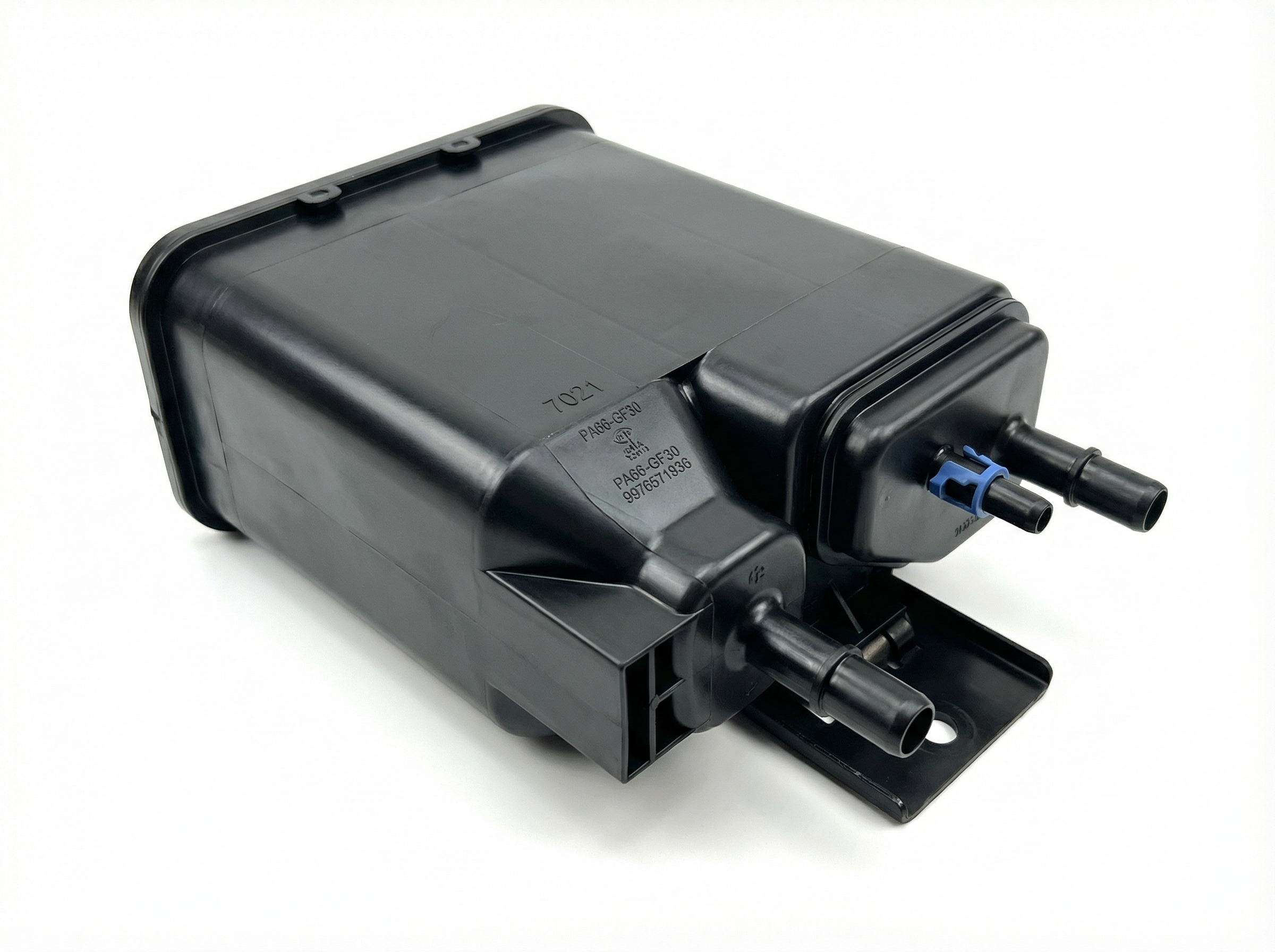
Est. part cost: $0 - IF THE REAL CODE IS P1441: Faulty EVAP Vent Valve Solenoid 🟡 Medium Probability → Shop Vapor Canister The vent solenoid is located under the truck near the spare tire, where it is exposed to road salt, water, and debris, leading to corrosion and failure. GM issued TSB #02-06-04-037H for a related code (P0446) that involves replacing the valve and relocating the filter to a less exposed area above the transmission, confirming the part's vulnerability.
How to confirm: With a scan tool, command the vent valve to open and close. Listen for a clicking sound from the valve. A smoke test is the definitive way to confirm a leak in the valve or associated hoses.
Typical fix: Replace the EVAP vent valve solenoid. Many owners opt to install the updated relocation kit (GM Service Kit P/N 19207762 for 1999-2003 models) at the same time.
Est. part cost: $30-$80 - IF THE REAL CODE IS B1440: Faulty Ignition Switch 🟡 Medium Probability → Shop Ignition Switch The ignition switch on GMT800 trucks is a known failure point due to wear over time, causing a mismatch in the power mode signals sent to the BCM. This is a very common topic in owner forums.
How to confirm: The primary symptom is the engine continuing to run after the key is removed. A scan tool capable of reading BCM data can show the mismatch in the power mode master input circuits. On HD trucks with aftermarket equipment like snow plows, TSB 08-06-03-006C points to voltage spikes as a cause, fixed by installing a diode.
Typical fix: Replace the ignition switch assembly located in the steering column. For 1999 models, there was a mid-year design change, so confirming the column marking (PCX or PCY) is important.
Est. part cost: $40-$100 - IF THE REAL CODE IS P1441: Faulty EVAP Purge Valve Solenoid ⚪ Low Probability → Shop Vapor Canister This valve, located on the engine intake manifold, can get stuck open or closed over time due to carbon buildup or wear.
How to confirm: A common symptom of a stuck-open purge valve is difficulty starting the engine immediately after refueling. A scan tool can be used to command the valve and check its response. You can also disconnect it and try to blow through it; if air passes, it's stuck open and faulty.
Typical fix: Replace the purge valve solenoid.
Est. part cost: $25-$60
Diagnosis Steps
- CRITICAL FIRST STEP: Do not trust the P1440 code. Your first step is to re-scan your vehicle with a high-quality scan tool capable of reading manufacturer-specific and body control module (BCM) codes.
- Identify the true code. Is it P1441, B1440, or something else?
- IF THE CODE IS P1441 (or another EVAP code like P0446/P0449):
- Visually inspect the gas cap seal for cracks or damage. Tighten or replace if necessary.
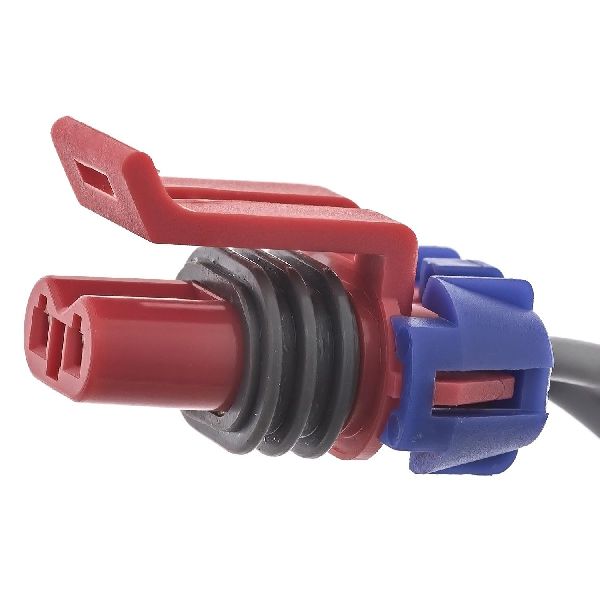
- Locate the EVAP vent solenoid near the spare tire. Inspect the wiring and connector for corrosion or damage. The pigtail connector is a common failure point.
- Use a scan tool to command the vent solenoid closed and perform a smoke test on the EVAP system. Smoke leaking from the vent solenoid indicates it has failed.
- If no leak is found at the vent solenoid, inspect the purge solenoid on the engine intake manifold and all associated EVAP lines for cracks or damage.
- IF THE CODE IS B1440:
- Confirm the primary symptom: Does the engine stay running for several seconds after turning the key off?
- If yes, the ignition switch is the most probable cause.
- For HD trucks with plows or other heavy-duty accessories, investigate TSB 08-06-03-006C regarding voltage spikes and the need for a diode.
- Diagnosis involves testing the various circuits of the ignition switch to confirm the fault, but replacement is the common and straightforward fix.
Parts You'll Likely Need
- Ignition Switch
(OEM #95961440 (Check VIN for specific application))— This is the most common fix if the actual code is B1440, which is often misread as P1440. It resolves the 'engine run-on' symptom.
Trusted brands: ACDelco, Standard Motor Products
OEM price range: $35-$60
Aftermarket price range: $25-$50 - EVAP Vent Valve Solenoid
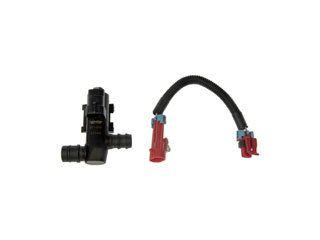
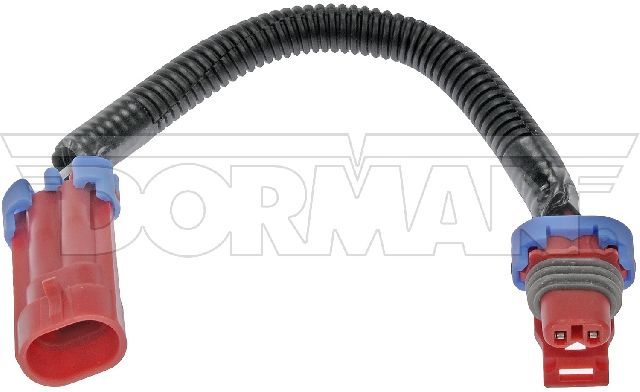
(OEM #20941985 (Supersedes many older numbers, part of kits like 19207762))— This is the most common fix if the actual code is P1441 (or P0446/P0449), which is often misread as P1440. Its exposed location makes it prone to failure from dirt and corrosion.
Trusted brands: ACDelco, Dorman, Delphi
OEM price range: $40-$80
Aftermarket price range: $25-$50 - EVAP Purge Valve Solenoid
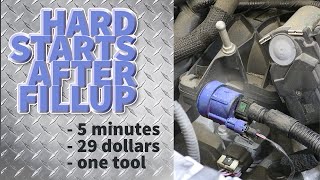
(OEM #1997277)— A less common but still possible fix if the actual code is EVAP-related (like P1441 or P0496). It can cause hard starting after refueling. 🎬 Watch this quick 5-minute fix for hard starting after fill-ups
Trusted brands: ACDelco, Bosch, Dorman
OEM price range: $40-$70
Aftermarket price range: $25-$50
Related Codes That Often Appear With This One
- P1441 — This is the most likely intended EVAP code if your scanner is showing P1440. It means 'Evaporative Emission System Flow During Non-Purge'.
- B1440 — This is a Body Control Module code for 'Power Mode Master Input Circuits Mismatch' and is often confused with P1440 by basic scanners.
- P0446 / P0449 — These codes point specifically to the EVAP vent valve circuit and are often seen with other EVAP codes like P1441, strongly indicating the vent solenoid is the problem. TSB #02-06-04-037H directly addresses these codes.
- P0496 — This code for 'EVAP High Purge Flow' is commonly caused by a stuck-open purge solenoid, which is another potential cause if the real code is EVAP-related.
Technical Service Bulletins (TSBs) & Recalls
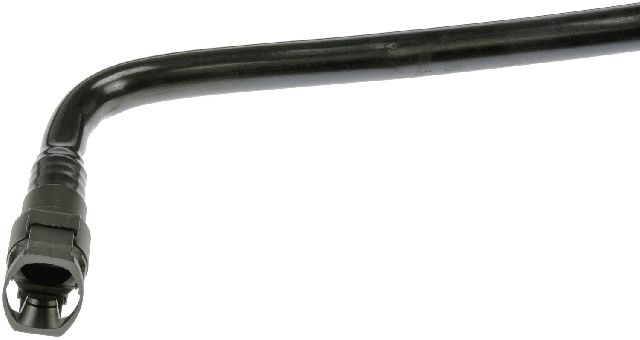
- TSB #02-06-04-037H (and later revisions like I): Addresses codes P0442, P0446, P0449, or P0455 caused by a clogged EVAP canister vent valve solenoid due to dust/dirt/water intrusion. The fix is to replace the vent valve and relocate the air filter to a protected area above the transmission using a service kit. While for different codes, it highlights the known vulnerability of the exact component suspected in a P1441 scenario.
- TSB #08-06-03-006C: Addresses B1440 and 'engine running with key off' on HD trucks with aftermarket equipment like snow plows or salt spreaders.
Platform-Specific Known Issues
- B1440 on HD Trucks with Snow Plows: Heavy Duty (2500/3500) models equipped with aftermarket accessories like snow plows can set a B1440 code due to voltage spikes from the plow's relay. GM issued TSB 08-06-03-006C with a fix that involves installing a diode (P/N 12112422) across the relay coil to suppress the voltage spike.
Mechanic-Grade Diagnostic Values
- EVAP Purge Solenoid Coil Resistance — expected: 18 to 30 Ohms. Failure: A reading significantly outside this range, especially an open circuit (infinite resistance) or a short (near zero ohms). Some GM service documents consider any reading under 20 ohms a failure.
- Ignition Switch Circuit Voltage (B1440 Diagnosis) — expected: Less than 1.0 volt on the 'off/run/crank' voltage circuit at the BCM connector with the ignition OFF.. Failure: A reading greater than 1.0 volt suggests a short to voltage in the wiring between the ignition switch and the BCM.
- Ignition Switch Circuit Resistance (B1440 Diagnosis) — expected: Less than 1.0 ohm between the BCM connector and the ignition switch connector on the relevant circuits.. Failure: Higher resistance indicates an open or high resistance in the wiring, which can cause the BCM to see an incorrect ignition switch position.
Scan Tool Commands That Help
- Tech 2 / GDS2 or equivalent professional scanner: EVAP Service Bay Test — This is a comprehensive, automated test that commands the various EVAP solenoids and monitors the fuel tank pressure sensor to verify the integrity of the entire system. It's used after a repair to confirm the fix or when trying to isolate a stubborn, intermittent leak.
- Tech 2 / GDS2 or equivalent professional scanner: EVAP Purge/Seal (Output Control) — This function allows a technician to manually command the EVAP Purge Solenoid and Vent Solenoid on and off. It is essential for diagnosis. For a P1441, you would command the purge valve closed (0%) and the vent valve closed to seal the system. If the fuel tank pressure sensor still shows a vacuum being pulled, it confirms the purge valve is leaking.
- Professional scanner with BCM access: BCM Live Data - Power Mode Master Input Circuits — When diagnosing a B1440, viewing the live data for the ignition switch inputs at the BCM is critical. The scan tool will display the status of each circuit (e.g., 'Ignition 1 Signal', 'Accessory Signal'). As you turn the key through its positions (Off, Acc, Run, Start), you can watch for a parameter that doesn't change correctly or shows an illogical state, confirming a fault in the ignition switch or its wiring.
Real Owner Repair Stories
- Go-Parts forum compilation (GM Truck (year not specified, but GMT800/900 platform)) — Engine continues to run for 10-15 seconds after the key is turned off (engine run-on). Code B1440 was stored.
❌ Tried (didn't work) Initially suspecting the Body Control Module (BCM) due to the body code.
✅ What actually fixed it Diagnosed and replaced the faulty ignition switch. This resolved the engine run-on symptom and cleared the B1440 code. - Tahoe Yukon Forum user (1996 Chevrolet Tahoe 5.7L Vortec (pre-GMT800 but demonstrates identical P1441 cause/fix)) — Service Engine Soon light on for a long time with code P1441. Owner was tired of resetting it.
❌ Tried (didn't work) Resetting the code repeatedly.
✅ What actually fixed it Replaced the EVAP Purge Valve Solenoid located on the passenger side of the intake manifold. The user noted this was the 'general consensus' fix for this code. - Reddit user r/GMT800 (GMT800 Truck (year/model not specified)) — Intermittent no-crank condition, especially on colder mornings, after installing a new ignition switch.
✅ What actually fixed it The user discovered the aftermarket (Standard Motor Products) ignition switch had poor internal contact. The current was arcing across a gap instead of making solid contact. The advice was to physically inspect and test new parts, especially non-OEM, before final installation.
OEM Part Supersession History
10357992, 15077742, 15105998, and others→19207763 (and later revisions)— Part of the EVAP Vent Valve Solenoid assembly. GM frequently updates these parts to improve durability and address failure modes. The newer part numbers often come as part of a kit with improved hoses or filters.
Heads up: While newer parts are generally backward compatible, it's crucial to verify the specific part number or kit for your exact year and model, as hose lengths and connector styles can vary. Some kits are designed for specific frame lengths or fuel tank sizes.12610560→12690512, 12737252— For the EVAP Purge Valve Solenoid. Later versions are designed to be more resistant to sticking from fuel additives and charcoal canister debris.
Heads up: These are generally interchangeable for the application, but using the latest revision is always recommended for longevity.
Model Year Variations Within This Range
- 1999: There was a mid-year design change for the ignition switch. When replacing the switch on a 1999 model, you must check the steering column for a 'PCX' or 'PCY' marking to ensure you purchase the correct 'Second Design' part if applicable.
- 1999-2002 vs 2003-2007: The GMT800 platform received a significant interior and electrical update for the 2003 model year. This included changes to the Body Control Module (BCM), instrument cluster, and associated wiring. While the root causes of P1441 (EVAP) and B1440 (Ignition Switch) are the same, the specific wiring diagrams and BCM connector pinouts will differ between these two eras.
Diagnostic Flowchart
Other Known Issues on This Vehicle
Issues unrelated to this code that are worth knowing about as an owner of this generation:
- Instrument Cluster Gauge Stepper Motor Failure 🟠 Medium — Extremely common, especially on 2003-2006 models. Gauges (speedometer, tachometer, fuel, etc.) will stick, read incorrectly, or fail completely. (Ref: No recall, but a class-action lawsuit was settled. It is a widely known defect.)
- Intermediate Steering Shaft (ISS) Clunk 🟡 Low — Very common across all years. A clunking or popping noise is felt in the steering wheel, especially at low speeds or when turning. Caused by a poor design that loses lubrication. (Ref: TSB #00-02-35-003N describes the diagnosis and repair, which involves replacing the shaft with an updated design.)
- Rusted/Corroded Brake Lines 🔴 High — Highly prevalent in vehicles from the 'salt belt'. The factory steel lines lack sufficient corrosion protection and can rust to the point of failure, causing a sudden loss of braking power. (Ref: NHTSA opened an investigation (PE10004) but no full recall was issued. It is a critical safety issue owners should inspect for.)
- 4L60-E Automatic Transmission Failure 🔴 High — Common, particularly in 1500-series trucks. The 3-4 clutch pack is a frequent failure point, leading to loss of 3rd and 4th gears. Often occurs between 100,000 and 150,000 miles.
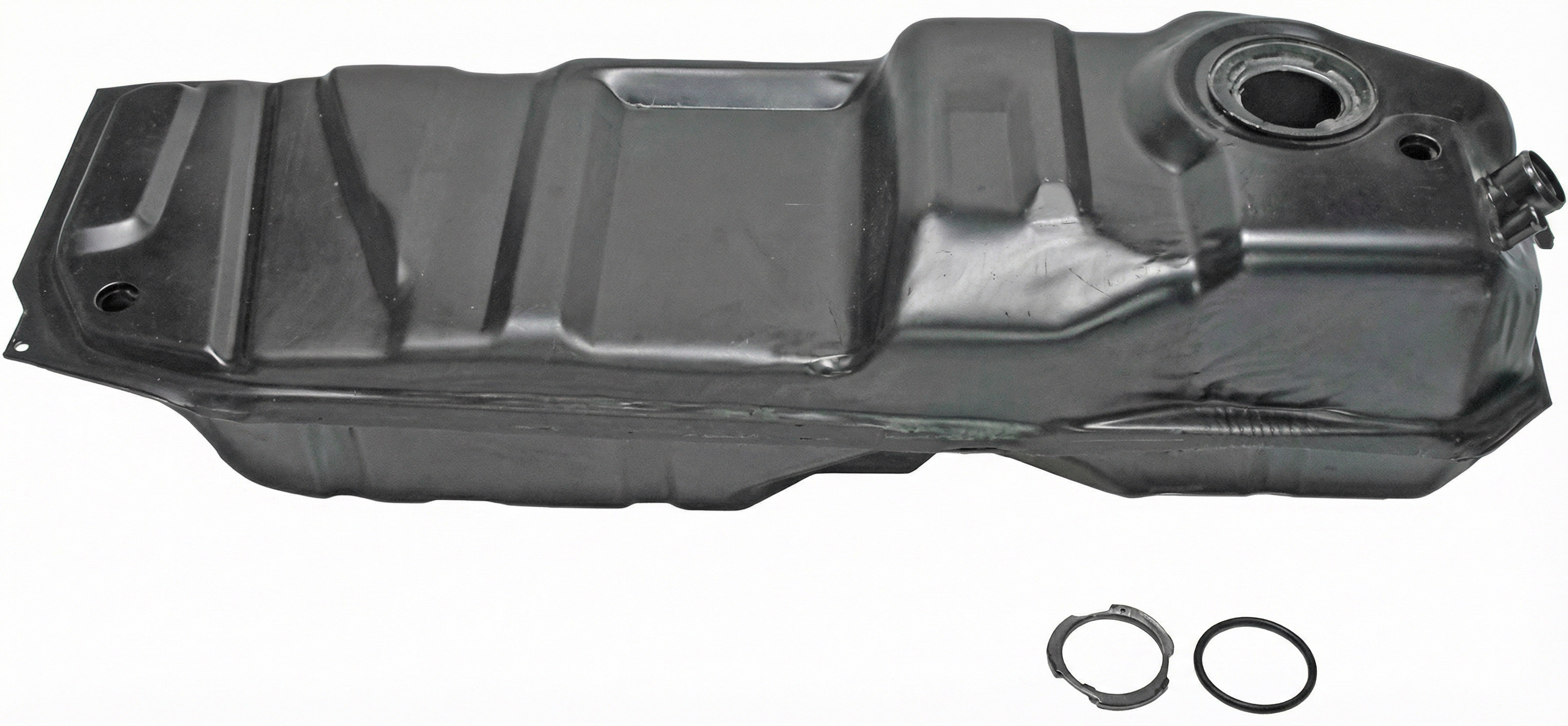
- Fuel Level Sensor Failure (Sending Unit) 🟡 Low — Common failure where the fuel gauge becomes erratic or reads empty. Requires dropping the fuel tank to replace the sending unit assembly inside the pump module.
- Rocker Panel and Cab Corner Rust 🟠 Medium — Very common in northern climates. The rear of the rocker panels and the cab corners behind the doors are notorious for trapping moisture and rusting from the inside out.
Used vs. New Parts: Buying Guide for This Vehicle
When a used part is the smart pick: For these specific repairs, buying used parts is generally not recommended. The failure modes for both the ignition switch (internal wear) and EVAP solenoids (corrosion, sticking) are age and use-related. A used part from a junkyard is likely to have similar wear and a high probability of premature failure.
Donor-vehicle mileage cap: roughly under 50000 miles for the part to have meaningful remaining life.
What to inspect on the donor part:
- For an ignition switch, there are no reliable visual cues. It's an electronic wear item.
- For an EVAP solenoid, check for heavy rust or corrosion on the housing and electrical pins. Avoid parts from vehicles in heavy salt-belt regions.
- Ensure the plastic connector is not brittle or cracked.
OEM-only on this vehicle (don't cheap out):
- While not strictly 'OEM-only', many forum users report higher satisfaction and longevity with ACDelco or Delphi branded ignition switches and EVAP solenoids compared to store-brand or no-name aftermarket parts.
Aftermarket brands forum-validated for this vehicle:
- ACDelco (OEM)
- Delphi
- Standard Motor Products (SMP)
- Bosch
Brands owners have reported issues with on this vehicle:
- Unbranded, 'white-box' parts from online marketplaces have a higher reported failure rate. One user specifically noted an issue with an aftermarket Standard ignition switch having incorrect internal tolerances causing a no-crank condition.
Real Owner Stories
Aggregated from forums and TSBs cited above. Mileages and costs reflect what owners reported in those sources.
2003-2007 GMC Sierra 2500/3500 HD
Symptoms: The engine continues to run even after the key is turned off and removed from the ignition. This occurred on a truck equipped with a snow plow.
What fixed it: Installed a diode (P/N 12112422) across the plow's relay coil to suppress voltage spikes as directed by TSB 08-06-03-006C.
Source hint: TSB #08-06-03-006C
1999-2007 GMC Sierra
Symptoms: Check engine light on with a code read as P1440. Upon further inspection with a better tool, the code was actually B1440. The truck had difficulty starting and other random electrical issues.
What fixed it: Replaced the ignition switch assembly located in the steering column.
Source hint: common_causes
Related OBD-II Codes
Frequently Asked Questions
Why does my GMC Sierra keep running for 10-15 seconds after I take the key out?
Does TSB 08-06-03-006C apply to my GMC Sierra 2500 with a snow plow?
I have a 1999 Sierra; is there anything specific I need to know before replacing the ignition switch?
Is there a specific GM service kit to fix the EVAP vent valve issues mentioned in TSB #02-06-04-037H?
Why does my truck struggle to start only after I fill up the gas tank?
Can a basic code reader give me the wrong information for this GMC Sierra?
Helpful Videos

Used OEM Parts in Stock
New Aftermarket Parts Available


The information in this article is provided for general reference and educational purposes only. Vehicle specifications, procedures, and part compatibility can vary by production date, trim level, and region. Always consult your vehicle's factory service manual and verify part numbers before purchasing or performing repairs. Safety-critical components such as airbags, seat belts, and braking systems should be installed by a qualified professional.
- GMC Sierra:
- 🧭 Diagnostic Flowchart
- 🎬 Helpful Videos
- 🛍️ Shop This Part
- What's Unique About the 1999-2007 GMC Sierra
- Symptoms You May Notice
- Most Likely Causes
- Diagnosis Steps
- Parts You'll Likely Need
- Related Codes That Often Appear With This One
- Technical Service Bulletins (TSBs) & Recalls
- Platform-Specific Known Issues
- Mechanic-Grade Diagnostic Values
- Scan Tool Commands That Help
- Real Owner Repair Stories
- OEM Part Supersession History
- Model Year Variations Within This Range
- Other Known Issues on This Vehicle
- Used vs. New Parts: Buying Guide for This Vehicle
- Real Owner Stories
- 2003-2007 GMC Sierra 2500/3500 HD
- 1999-2007 GMC Sierra
- Related OBD-II Codes
- Frequently Asked Questions
- 🎟️ Get 5% Off