

P1440 on 2003-2009 Mercedes-Benz E-Class: EVAP System Fault Causes and Fixes
On a 2003-2009 W211 E-Class, code P1440 indicates a fault in the evaporative emissions (EVAP) system. The most common causes are a faulty charcoal canister shut-off valve in the rear wheel well or a bad purge valve in the engine bay. Always check for a loose gas cap first.
- P1440 on a W211 E-Class is an EVAP system fault, not a critical engine problem.
- Always start diagnosis by checking that the gas cap is tight and its seal is intact.
- The two most likely failed parts are the purge valve (engine bay) and the charcoal canister shut-off valve (rear passenger wheel well).
- If a visual inspection and basic valve tests don't find the problem, a smoke test is the most reliable way to find the source of the leak.
- Using an OEM gas cap is recommended if a replacement is needed to avoid further issues.
What's Unique About the 2003-2009 Mercedes-Benz E-Class
On the W211 E-Class, the P1440 code is often a general EVAP system fault that can be triggered by multiple components. Diagnostic tools specific to Mercedes, like STAR/XENTRY, may display more detailed descriptions, such as "activated charcoal canister shut off valve mechanical defect" or "purge control valve permanently open". Unlike some vehicles where the code points to a single part, on this platform it requires a systematic check of both the front-end purge valve and the rear-mounted canister and shut-off valve assembly. The shut-off valve, located in the rear passenger-side wheel well, is particularly exposed to road debris and moisture, making it a common failure point.
Symptoms You May Notice
- Check Engine Light is on
- A noticeable fuel smell, particularly around the rear of the vehicle or near the driver's side of the engine bay
- Difficulty starting the engine immediately after refueling
- Slightly reduced fuel economy
- Audible clicking or buzzing from the purge valve in the engine bay may become erratic or stop entirely
- Replacing the oxygen sensors. This code is strictly related to the EVAP system and has no connection to the O2 sensors.
- Assuming the code is for a large leak (like P0455) and only looking for major hose disconnections, when the issue could be a malfunctioning valve.
- Replacing the purge valve when the actual fault is the charcoal canister shut-off valve in the rear, or vice-versa.
Most Likely Causes
- Faulty Charcoal Canister Shut-Off Valve (Vent Valve) 🔴 High Probability → Shop Vapor Canister The valve is part of the charcoal canister assembly located in the rear passenger-side wheel well, where it is exposed to water, salt, and road debris, leading to corrosion and mechanical failure.
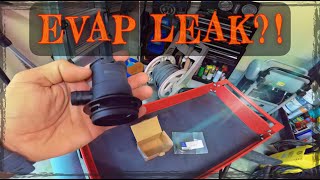
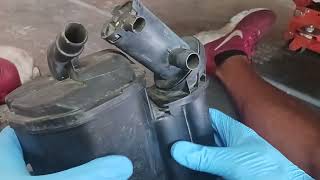
How to confirm: Locate the canister in the rear passenger wheel well behind the liner. 🎬 See how to locate and remove the vapor canister Inspect for visible cracks or damage. A mechanic can use a scan tool (like Autel or STAR/XENTRY) to command the valve (Y58/4) to open and close to test its function. A smoke test will show smoke exiting the valve if it is stuck open.
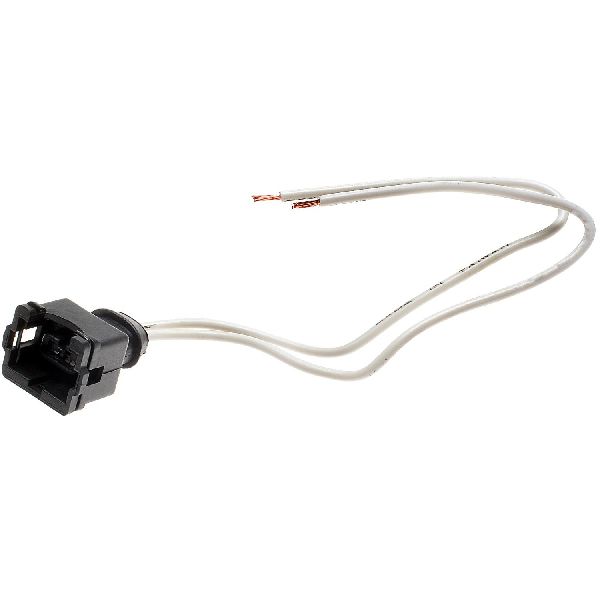
Typical fix: Replace the shut-off valve. The valve twists a quarter-turn to remove from the canister. If replacing with an updated part, a new wiring harness pigtail (Part No. A2114400134) may be required to adapt the new connector to the original harness. 🎬 Watch: How to replace the Y58/4 shut-off valve
Est. part cost: $80-$200 - Faulty EVAP Purge Valve 🟡 Medium Probability → Shop Vapor Canister The purge valve is located in the engine bay and can become stuck open or closed over time due to carbon buildup or simple mechanical wear. A stuck-open valve is a common trigger for the P1440 code.
How to confirm: Locate the valve in the engine bay, typically on the driver's side near the intake manifold. With the engine running, it should tick or pulse audibly. You can disconnect it and test for vacuum flow; there should be no flow when it is not energized. A scan tool can also actuate the valve (Y58/1) to confirm operation.
Typical fix: Replace the purge valve. This is generally a straightforward repair involving disconnecting two hoses and an electrical connector.
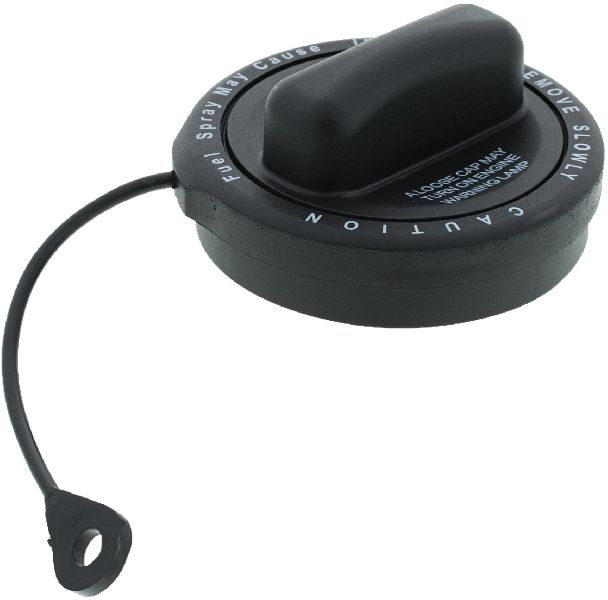
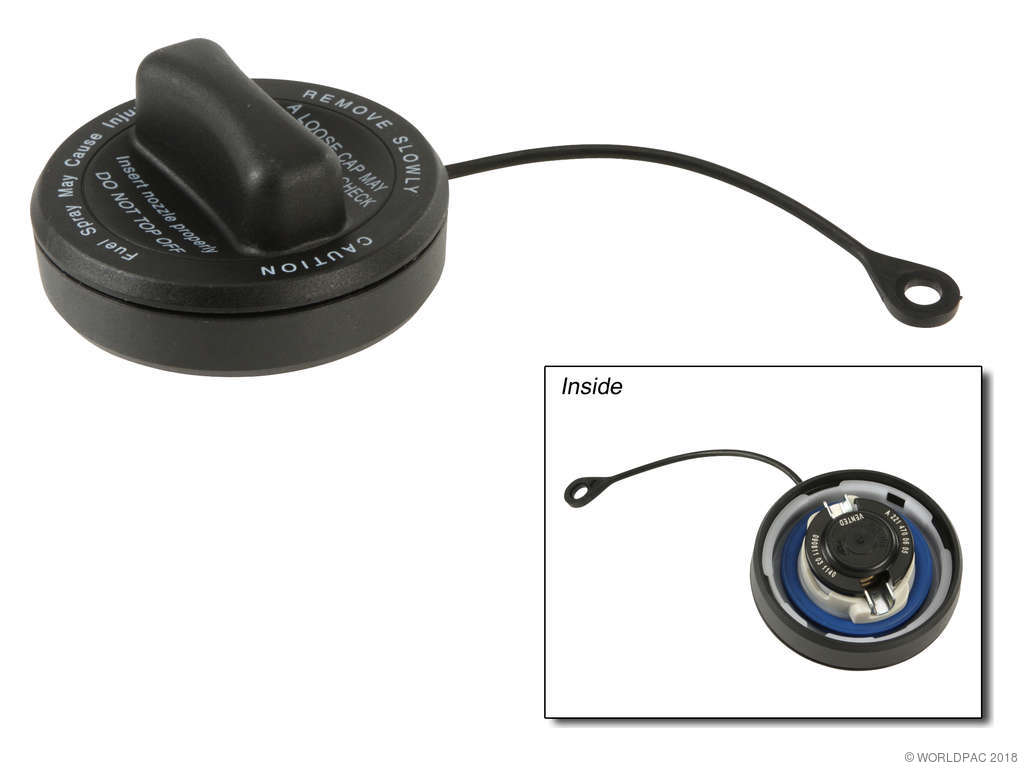
Est. part cost: $30-$100 - Loose or Faulty Gas Cap 🟡 Medium Probability → Shop Fuel Tank Cap The gas cap seal can degrade over time, or the cap may simply not have been tightened correctly after refueling.
How to confirm: Ensure the gas cap is tightened until it clicks several times. Inspect the rubber O-ring on the cap for cracks, brittleness, or damage. A smoke test will quickly reveal a leaking cap seal.
Typical fix: Tighten the cap and clear the codes. If the seal is damaged, replace the gas cap with a high-quality OEM part, as aftermarket caps can sometimes cause sealing issues.
Est. part cost: $20-$50 - Cracked or Disconnected EVAP Hoses ⚪ Low Probability The plastic and rubber hoses that make up the EVAP system can become brittle with age and exposure to engine heat, leading to cracks.
How to confirm: A visual inspection may reveal obvious cracks or disconnections. However, small leaks are often difficult to see and typically require a smoke test, where a mechanic injects low-pressure smoke into the EVAP system to see where it escapes.
Typical fix: Replace the specific section of cracked hose. This can range from a simple fix to a more complex one if the hose is in a hard-to-reach area.
Est. part cost: $10-$60
Rare But Worth Checking
- Faulty Fuel Tank Pressure Sensor: → Shop Fuel Tank This sensor monitors pressure within the EVAP system. If it provides incorrect readings to the computer, it can trigger a P1440 code even if there are no leaks. This should be considered after all other common causes have been ruled out.
- Leaking Fuel Pump or Level Sender Seals: The large rubber seals for the fuel pump and sending units under the rear seat can deteriorate and cause an EVAP leak, often accompanied by a strong fuel smell inside the cabin. This was a widespread issue that led to a warranty extension from Mercedes-Benz. A smoke test showing smoke emerging from under the rear seat is the primary indicator.
Diagnosis Steps
- Check the Gas Cap: Ensure it is tight and the seal is not cracked or worn. Clear the code and drive to see if it returns.
- Scan with a Mercedes-Specific Tool: Use a scanner like STAR/XENTRY or a high-end Autel to read the manufacturer-specific fault description. This can differentiate between a purge valve fault (Y58/1) and a shut-off valve fault (Y58/4).
- Inspect and Test the Purge Valve (Y58/1): Locate the purge valve in the engine bay. Listen for a ticking sound with the engine running. Use the scan tool to perform an actuation test, listening for the valve to click on and off.
- Inspect and Test the Charcoal Canister Shut-Off Valve (Y58/4): Lift the vehicle and remove the rear passenger-side wheel and fender liner. Visually inspect the canister and valve for cracks or damage. Use the scan tool to perform an actuation test on the valve.
- Perform a Smoke Test: If the valves appear to be working and the gas cap is good, the next step is to perform a smoke test. This involves injecting smoke into the EVAP system 🎬 Watch: Diagnosing a clogged EVAP system on an E350 (usually via the service port) to find the exact location of any leaks in hoses, seals, or components.
- Test the Fuel Tank Pressure Sensor: If no leaks are found, a technician may need to test the fuel tank pressure sensor to ensure it is sending accurate data to the ECM.
Parts You'll Likely Need
- Charcoal Canister Shut-Off Valve (Vent Valve)
(OEM #0004704993)— This valve is a frequent failure point due to its exposed location in the rear wheel well. It can get stuck open or closed, triggering the P1440 fault. This part is superseded by 000-470-71-93.
Trusted brands: Bosch, URO Parts, Genuine Mercedes-Benz
OEM price range: $100-$150
Aftermarket price range: $60-$100 - EVAP Purge Valve
(OEM #0004708893)— This valve in the engine bay controls the flow of fuel vapors to the engine and can fail by sticking open or closed.
Trusted brands: Bosch, Pierburg, Genuine Mercedes-Benz
OEM price range: $70-$120
Aftermarket price range: $30-$60 - Gas Cap
(OEM #2304700405)— A worn seal on the gas cap is a very common cause for all EVAP system codes.
Trusted brands: Genuine Mercedes-Benz
OEM price range: $30-$50
Aftermarket price range: $15-$30 - Shut-Off Valve Wiring Harness Adapter
(OEM #2114400134)— Required when replacing an early-style shut-off valve with the updated part, which has a different electrical connector.
Trusted brands: Genuine Mercedes-Benz
OEM price range: $15-$25
Related Codes That Often Appear With This One
- P0442 — This code indicates a small leak in the EVAP system. P1440 can be a manufacturer-specific equivalent or a related fault pointing to the same set of problems, like a bad gas cap or failing valve.
- P0455 — This indicates a large leak. If the component causing P1440 (like a stuck-open purge valve) fails completely, the system may interpret it as a large leak, triggering this code as well.
- P2422 — This code specifically indicates the EVAP system vent valve (shut-off valve) is stuck closed. It directly points to a failure of the valve integrated into the charcoal canister assembly.
Technical Service Bulletins (TSBs) & Recalls
- S-B-03.30/08i - This Technical Service Bulletin addresses the M272/M273 balance shaft gear wear, a major known issue for this platform, which can cause timing-related fault codes.
Platform-Specific Known Issues
- Real-World Repair Story: A YouTube video on the 'DCF Garage' channel documented a 2003 E320 with a P1440-related code, specifically 'Y58/4 activated charcoal canister shut off valve mechanical defect'. The owner first tested the purge valve (Y58/1) and confirmed it was working. The fix was replacing the charcoal canister shut-off valve (Y58/4) located in the rear passenger wheel well. The video highlights that after replacement, the code did not clear immediately. It only cleared after forcing an actuation test of the new valve with a scan tool, which simulates a drive cycle for the ECU.
Mechanic-Grade Diagnostic Values
- EVAP Purge Valve (Y58/1) or Shut-Off Valve (Y58/4) Coil Resistance — expected: 20-50 Ohms. Failure: A reading of infinity (OL) indicates an open circuit; a reading near zero indicates a shorted coil.
- Voltage at Shut-Off Valve (Y58/4) Connector — expected: ~12V (Battery Voltage) with Key On, Engine Off on the power pin.. Failure: Zero or significantly low voltage points to a wiring issue, a blown fuse, or a problem with the Rear SAM (Signal Acquisition Module) which powers the valve.
- Fuel Tank Pressure (FTP) Sensor Voltage — expected: Approximately 1.5V - 2.5V at Key On, Engine Off (KOEO), representing atmospheric pressure.. Failure: Voltage is stuck at 0V, 5V, or a value that does not change when the system is tested (e.g., by opening the gas cap).
Hidden / Shadow Codes Worth Checking
- Y58/4: This is the Mercedes component identifier for the 'Activated charcoal canister shut-off valve'. A fault may be described as 'mechanical defect', 'signal too small', or 'permanently open', pointing directly to the shut-off valve or its circuit. (see via Mercedes-Benz STAR/XENTRY diagnostic software or a high-end professional scanner (e.g., Autel, Launch) with Mercedes-specific software.)
- Y58/1: This is the Mercedes component identifier for the 'Purge control valve'. A fault may be described as 'permanently open', which can trigger the general P1440 code. (see via Mercedes-Benz STAR/XENTRY diagnostic software or a high-end professional scanner.)
- P2025: A manufacturer-specific code that directly names the 'Y58/4 Activated Charcoal canister shut off valve' and indicates a mechanical defect or that the component is permanently open. It is a more specific equivalent to a generic EVAP vent circuit code. (see via Mercedes-Benz specific scanners like STAR/XENTRY, or advanced OBD-II scanners.)
Scan Tool Commands That Help
- Mercedes-Benz XENTRY/DAS: EVAP System Leak Test / Actuations — This is the dealer-level guided test. It allows a technician to command the purge valve (Y58/1) and shut-off valve (Y58/4) to close, sealing the system. The tool then monitors the fuel tank pressure sensor to see if the system holds vacuum, definitively testing for leaks.
- Mercedes-Benz XENTRY/DAS: Actuation of component Y58/4 (Charcoal canister shut-off valve) — Used to manually cycle the shut-off valve to check for mechanical sticking. It's also used to command the valve closed during a smoke test; if smoke exits the vent while commanded shut, the valve is confirmed faulty.
- Mercedes-Benz XENTRY/DAS: Reset Adaptations (in ME-SFI Control Module) — After replacing an EVAP component like a valve or sensor, it can be beneficial to reset the learned fuel trim and EVAP test values in the Engine Control Module (ECM) to ensure the system re-learns correctly with the new part.
Wiring & Ground Locations
- Rear SAM (Signal Acquisition Module) — Located in the trunk, typically on the driver's side behind the trim panel.. The Rear SAM provides the power supply to the charcoal canister shut-off valve (Y58/4). A failure in the SAM's driver circuit for the valve, or corrosion on the SAM itself (often due to water leaks from the trunk seal), can cut power to the valve and trigger a fault code, mimicking a failed valve or wiring.
- Y58/4 Connector (Shut-Off Valve) — Attached to the shut-off valve, behind the rear passenger-side wheel well liner.. This 2-pin connector is the primary point for electrical testing of the shut-off valve. Due to its exposed location, corrosion on the pins is a very common cause of intermittent or permanent faults for this component.
- Y58/1 Connector (Purge Valve) — Attached to the purge valve, located in the engine bay directly behind the driver's side headlight.. This is the connection point for testing the purge valve. The metal retaining clip on this connector is fragile and easily lost during removal.
Real Owner Repair Stories
- DCF Garage on YouTube (2003 Mercedes-Benz E320 (W211)) — Check Engine Light with Mercedes-specific codes 'Y58-4 activated charcoal canister shut off valve mechanical defect' and 'Y58-1 purge control valve permanently open'.
❌ Tried (didn't work) The owner first used a scan tool's actuation test on the purge valve (Y58/1) in the engine bay and heard it clicking, correctly concluding it was likely not the problem.
✅ What actually fixed it The charcoal canister shut-off valve (Y58/4) was replaced. The video shows the replacement, including the need for the wiring adapter pigtail (A2114400134). The code did not clear on its own but was gone after running a forced actuation test on the new valve with the scan tool.
"I Checked Everything" — The Actual Cause
- A common scenario is performing a smoke test without first using a scan tool to command the charcoal canister shut-off valve (Y58/4) closed. If the valve is open (its default state when unpowered), smoke will simply exit through the vent, leading the technician to mistakenly believe the valve is stuck open or that there's a massive leak, when in fact the system was never properly sealed for the test.
OEM Part Supersession History
0004704993→0004707193 (and others like 0004706393)— Updated design for the charcoal canister shut-off valve.
Heads up: The updated valve (0004707193) has a different electrical connector than the original. When replacing an early-style valve, a wiring harness adapter pigtail (PN 2114400134) is required to connect it to the vehicle's harness.
Model Year Variations Within This Range
- 2003-2009: The engine bay layout and routing of vacuum lines for the purge valve (Y58/1) differ between the pre-facelift models (~2003-2006) with M112/M113 engines and the facelift models (~2007-2009) with M272/M273 engines. The valve's location is still on the driver's side but may be mounted differently. The diagnostic approach remains the same.
Diagnostic Flowchart
Other Known Issues on This Vehicle
Issues unrelated to this code that are worth knowing about as an owner of this generation:
- Sensotronic Brake Control (SBC) Pump Failure 🔴 High — The pump has a finite service life based on brake actuations (typically 100,000-150,000 miles). A warning will appear on the dash when the limit is reached. Mercedes extended the warranty to 25 years with unlimited mileage for this component. (Ref: NHTSA Action Number: PE04057, Mercedes-Benz Extended Warranty)
- M272/M273 Engine Balance Shaft Gear Wear 🔴 High — Affects M272 V6 and M273 V8 engines up to specific serial numbers (M272 up to 2729..30 468993). Symptoms like a check engine light (P0016/P0017) and rattling can appear from 60,000-100,000 miles. (Ref: S-B-03.30/08i)
- Valeo Radiator Glycol Contamination 🔴 High — Affects early models (approx. 2003-2004) equipped with Valeo radiators. A failure in the integrated transmission cooler leaks coolant into the transmission fluid, destroying the transmission. Symptoms include shuddering and jerky shifts.
- Airmatic Suspension Failure 🟠 Medium — Common after 80,000-120,000 miles. Failures include leaking air springs (causing sagging corners), worn compressors, and faulty valve blocks.
- Fuel Tank/Sender Unit Leaks 🟠 Medium → Shop Fuel Tank — A strong fuel smell, especially after refueling, is caused by deteriorating seals on the fuel sending units or cracks in the fuel tank itself. This became the subject of a warranty extension. (Ref: Mercedes-Benz Extended Warranty (related to NHTSA Campaign ID: 08V431000))
Used vs. New Parts: Buying Guide for This Vehicle
When a used part is the smart pick: For this repair, using used parts is generally not recommended. The primary failure components are electronic solenoid valves (purge and shut-off) that have a finite lifespan and are prone to wear and contamination. The cost savings of a used part are minimal compared to the risk of premature failure and the labor to replace it again.
Donor-vehicle mileage cap: roughly under 80000 miles for the part to have meaningful remaining life.
What to inspect on the donor part:
- If buying a used valve is unavoidable, inspect the electrical connector pins for any signs of green or white corrosion.
- Check the plastic housing for cracks or heat damage.
- Test the resistance with a multimeter before purchase; it should be within the 20-50 Ohm range.
OEM-only on this vehicle (don't cheap out):
- Gas Cap: Aftermarket gas caps are notorious for having poor seals that do not meet the precise pressure requirements of the Mercedes EVAP system, often causing codes to return. Always use a Genuine Mercedes-Benz cap.
Aftermarket brands forum-validated for this vehicle:
- Bosch: Bosch is the Original Equipment Manufacturer (OEM) for many Mercedes-Benz fuel and emissions components. A Bosch-branded part is often identical to the Genuine Mercedes part and is a reliable choice.
- Pierburg: Another OEM supplier for Mercedes-Benz, particularly for valves and pumps. A Pierburg purge valve is a high-quality alternative to the dealer part.
Brands owners have reported issues with on this vehicle:
- URO Parts: While some users have success, others report premature failure of URO-branded electronic components like EVAP valves. While their 'URO Premium' line may offer better quality, the standard parts can be a gamble.
Real Owner Stories
Aggregated from forums and TSBs cited above. Mileages and costs reflect what owners reported in those sources.
2003 Mercedes-Benz E320
Symptoms: The vehicle threw a P1440-related code described as 'Y58/4 activated charcoal canister shut off valve mechanical defect.'
What fixed it: Replacing the charcoal canister shut-off valve (Y58/4) and then forcing an actuation test of the new valve with a scan tool to clear the code.
Source hint: YouTube video on the 'DCF Garage' channel
2003-2009 Mercedes-Benz E-Class (W211)
Symptoms: Persistent P0446 (EVAP Vent Control Circuit) code, which is a close relative of P1440.
What fixed it: The diagnostic path involved replacing the gas cap and shut-off valve, followed by a smoke test to find elusive leaks.
Source hint: MBWorld.org forum thread titled 'Evap charcoal canister shut off valve testing'
2003-2009 Mercedes-Benz E-Class (W211)
Symptoms: Strong gas fume smell inside and around the vehicle.
What fixed it: Replacement of fuel tank components/fuel sender seals under a Mercedes-Benz warranty extension.
Source hint: MBWorld.org forum thread titled '***Gas Fume Smell... Finally a Recall!***'
Related OBD-II Codes
Frequently Asked Questions
I smell gas near the rear of my W211; is there a recall for this?
Where is the charcoal canister shut-off valve located on the E-Class?
Does the M272 balance shaft TSB (S-B-03.30/08i) relate to my P1440 code?
What specific part is needed if I replace the shut-off valve with an updated version?
Can I use an aftermarket gas cap to fix this code?
How can a mechanic distinguish between the purge valve and the shut-off valve?
Helpful Videos

We Have This Part in Stock


The information in this article is provided for general reference and educational purposes only. Vehicle specifications, procedures, and part compatibility can vary by production date, trim level, and region. Always consult your vehicle's factory service manual and verify part numbers before purchasing or performing repairs. Safety-critical components such as airbags, seat belts, and braking systems should be installed by a qualified professional.
- Mercedes-Benz E-Class:
- 🧭 Diagnostic Flowchart
- 🎬 Helpful Videos
- 🛍️ Shop This Part
- What's Unique About the 2003-2009 Mercedes-Benz E-Class
- Symptoms You May Notice
- Most Likely Causes
- Rare But Worth Checking
- Diagnosis Steps
- Parts You'll Likely Need
- Related Codes That Often Appear With This One
- Technical Service Bulletins (TSBs) & Recalls
- Platform-Specific Known Issues
- Mechanic-Grade Diagnostic Values
- Hidden / Shadow Codes Worth Checking
- Scan Tool Commands That Help
- Wiring & Ground Locations
- Real Owner Repair Stories
- "I Checked Everything" — The Actual Cause
- OEM Part Supersession History
- Model Year Variations Within This Range
- Other Known Issues on This Vehicle
- Used vs. New Parts: Buying Guide for This Vehicle
- Real Owner Stories
- 2003 Mercedes-Benz E320
- 2003-2009 Mercedes-Benz E-Class (W211)
- 2003-2009 Mercedes-Benz E-Class (W211)
- Related OBD-II Codes
- Frequently Asked Questions
- 🎟️ Get 5% Off