

P1440 on 1996-2004 Nissan Pathfinder: EVAP System Fault Causes and Fixes
On a 1996-2004 Pathfinder, code P1440 is almost always caused by a failed EVAP Canister Vent Control Valve located at the rear of the vehicle. Due to rust and debris, this valve sticks, triggering the light. Expect to pay $70-$150 for the part, with a DIY difficulty of 3/5 due to rust.
- P1440 on your Pathfinder is most likely the EVAP Canister Vent Control Valve at the rear of the truck, not the gas cap.
- Before replacing the valve, check for black charcoal particles in the EVAP lines. If you find any, you must also replace the charcoal canister and clean the lines to prevent repeat failure.
- Be prepared for a fight with rusted bolts when removing the canister and valve. Using penetrating oil beforehand is highly recommended.
- Always clear the code and perform a drive cycle after the repair to ensure the Check Engine Light does not return.
What's Unique About the 1996-2004 Nissan Pathfinder
The R50 generation Pathfinder and its twin, the Infiniti QX4, are particularly prone to this code due to the design and location of its EVAP components. The EVAP canister and its associated Vent Control Valve are mounted at the rear of the vehicle, behind the driver's side rear wheel, where they are highly exposed to road salt, water, and debris. This leads to a very high failure rate of the Vent Control Valve due to rust and corrosion, making it the primary suspect for P1440, far more so than a simple loose gas cap.
🎬 Watch: Understanding the P1440 code and common fixes.Generation note: The 1996-2004 year range covers the entire second generation (R50) of the Nissan Pathfinder. This includes models with the earlier 3.3L VG33E V6 (1996-2000) and the later 3.5L VQ35DE V6 (2001-2004). The design and common failures of the EVAP system related to code P1440 are consistent across both engine types within this generation.
Symptoms You May Notice
- Check Engine Light is on
- A noticeable smell of gasoline, especially after parking the vehicle.
- Slightly reduced fuel economy.
- Difficulty starting immediately after refueling. This happens when a stuck-open purge valve allows excess fuel vapor to flood the engine, creating a rich condition that makes it hard to start until the excess fuel is cleared by pressing the gas pedal.
- Difficulty filling the fuel tank (gas pump nozzle clicks off repeatedly). This can be caused by a clogged canister or a stuck-closed vent valve preventing air from escaping the tank.
- Replacing only the gas cap. While it's a valid first step for any EVAP code, on the R50 Pathfinder it is rarely the root cause for P1440.
- Replacing only the EVAP Canister Vent Control Valve without checking for charcoal particles. If the canister has failed, the new valve will quickly become clogged and fail again.
Most Likely Causes
- Failed EVAP Canister Vent Control Valve (Solenoid) 🔴 High Probability → Shop Vapor Canister Vent Valve The valve is located at the rear of the vehicle, mounted to the charcoal canister, where it is exposed to road salt and moisture, causing it to rust and seize internally. The original design was known to be problematic, and later OEM replacements have an updated design.
How to confirm: Listen for a 'click' from the valve (located near the spare tire) when 12V is applied using a capable scan tool or direct power leads. If it doesn't click, or if it's audibly stuck, it has failed. You can also remove the valve and try to blow through it; it should be open by default. When 12V is applied, it should close and you should not be able to blow through it. Visual inspection for heavy rust is a strong indicator of failure.
Typical fix: Replace the EVAP Canister Vent Control Valve and its O-ring. The most difficult part of the job is often dealing with rusted mounting hardware for the valve and the canister bracket.
Est. part cost: $70-$150 - Deteriorated Charcoal Canister 🟡 Medium Probability → Shop Vapor Canister Over time, the charcoal briquettes inside the canister can break apart, especially with age and vibration. These particles then contaminate the entire EVAP system, clogging valves and lines.
How to confirm: Disconnect the EVAP service port hose in the engine bay (often has a green cap) and check for black charcoal pellets. If particles are present, the canister has failed and is contaminating the system. Shaking the disconnected canister may also produce a rattling sound of loose charcoal.
Typical fix: The charcoal canister must be replaced. 🎬 See this walkthrough for replacing the R50 charcoal canister. Crucially, all EVAP lines and valves (including the purge valve in the engine bay and the new vent control valve) must be blown out with compressed air to remove all charcoal debris before installing new parts. Failure to do so will cause the new components to fail quickly.
Est. part cost: $150-$250 - Failed EVAP Canister Purge Volume Control Valve ⚪ Low Probability → Shop Vapor Canister This valve is located in the engine bay and is less exposed than the rear vent valve, but it can fail or become clogged with charcoal particles from a failed canister. A valve stuck open can cause the hard-start-after-refueling symptom.
How to confirm: Test the valve for operation using a scan tool or by applying 12V power. With the engine running and warmed up, disconnect the hose from the charcoal canister side; you should eventually feel a slight vacuum as the valve opens. Check the lines connected to it for charcoal debris.
Typical fix: Replace the valve. If clogged with charcoal, the canister must also be replaced and the lines cleaned.
Est. part cost: $100-$180 - Loose or Faulty Gas Cap ⚪ Low Probability → Shop Fuel Tank Cap
How to confirm: Ensure the gas cap is tight (clicks multiple times). Inspect the cap's seal for cracks or damage. A smoke test can confirm if the cap is the source of the leak. While a common cause for general EVAP codes, it's less frequently the specific cause for P1440 on this platform compared to the vent valve.
Typical fix: Tighten or replace the gas cap. Using an OEM cap is highly recommended as aftermarket caps can cause sealing issues.
Est. part cost: $15-$40
Rare But Worth Checking
- Rusted Fuel Filler Neck: → Shop Fuel Filler Neck Forum users and mechanics have noted that the metal fuel filler neck on these vehicles can rust through, creating a leak in the EVAP system that can trigger various EVAP codes. This is worth inspecting if other components check out. A visual inspection may reveal rust holes or fuel stains.
- Cracked or Disconnected EVAP Hoses: While less common than component failure, an old, brittle, or disconnected rubber hose can cause the small leak that triggers P1440. A visual inspection and/or smoke test is needed to find such a leak.
Diagnosis Steps
- Read the code with an OBD-II scanner to confirm P1440 is present. Note any other accompanying codes like P0440 or P1448.
- Inspect the gas cap. Ensure it is tight and the seal is not cracked or brittle. If in doubt, replace it with an OEM cap, clear the code, and drive to see if it returns.
- Locate the EVAP service port in the engine bay (a hose with a small green cap). Disconnect it and check for any black charcoal pellets. If found, the charcoal canister is bad and must be replaced along with cleaning the entire system.
- If no charcoal is found, move to the rear of the vehicle. Locate the EVAP Canister Vent Control Valve on the charcoal canister (black box near the spare tire, behind the driver's side rear wheel).
- Visually inspect the valve and its connector for heavy rust or damage. Due to its location, failure is common.
- Use a capable scan tool to command the vent valve to open and close. Listen for an audible click. Alternatively, disconnect the valve and apply 12V power directly to its terminals to test for operation. No click means the valve is seized and needs replacement.
- If the vent valve works, the issue may be the Purge Volume Control Valve in the engine bay. Test it in a similar manner.
- If all components appear to function, inspect the fuel filler neck for severe rust or holes.
- If no visible issue is found, a smoke test is the next step to find a small leak in a hose or the canister body itself.
Parts You'll Likely Need
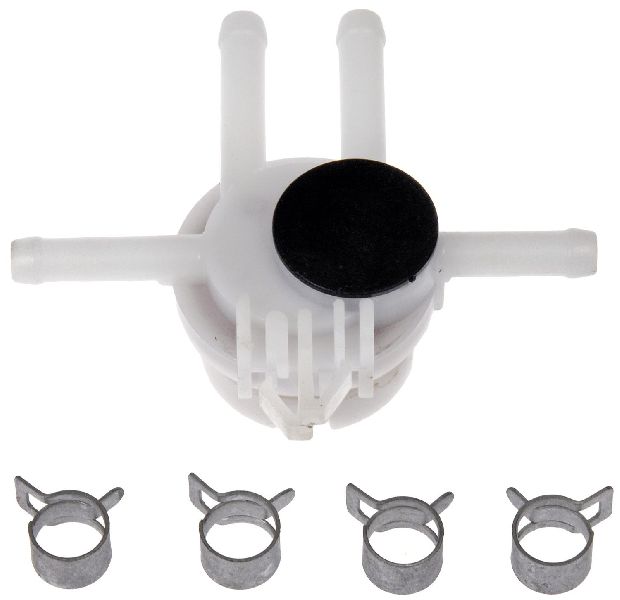
- EVAP Canister Vent Control Valve
(OEM #14935-AM60B)— This is the most common failure point for code P1440 on this vehicle due to its exposed location causing it to rust and stick. Note: This part number supersedes older numbers including 14935-54U06, 14935-AM600, and 14935-AM60A.
Trusted brands: Nissan (OEM), Dorman (911-503), Standard Motor Products (CVS67)
OEM price range: $120-$160
Aftermarket price range: $70-$110 - EVAP Charcoal Canister
(OEM #14950-1S717)— Required if the old canister has broken down and is sending charcoal particles into the EVAP lines, which is a common secondary failure. Often replaced with the vent valve as an assembly.
Trusted brands: Nissan (OEM), Dorman (911-480)
OEM price range: $200-$280
Aftermarket price range: $150-$220
Related Codes That Often Appear With This One
- P0440 — This is a generic code for a general EVAP system malfunction. P1440 is the more specific Nissan code that often points towards the purge system components.
- P1447 — This code also points to an EVAP system purge flow check, often caused by the same charcoal canister failure that can trigger P1440.
- P1448 — This code specifically points to an open circuit in the EVAP Canister Vent Control Valve, often appearing alongside P0440 or P1440 when the valve is electrically failed or disconnected.
Technical Service Bulletins (TSBs) & Recalls
- NTB98-018d: This Nissan Technical Service Bulletin addresses various EVAP diagnostic t
Platform-Specific Known Issues
- Extreme rust on the mounting hardware for the charcoal canister and vent valve is very common, often requiring penetrating oil, heat, or even cutting/drilling bolts for removal. Some owners have to source replacement brackets from junkyards due to the original rusting away.
Mechanic-Grade Diagnostic Values
- EVAP Canister Vent Control Valve Solenoid Resistance — expected: 15 to 30 Ohms. Failure: A reading outside of this range indicates a damaged solenoid winding.
- EVAP Canister Purge Volume Control Valve Solenoid Resistance — expected: 15 to 30 Ohms. Failure: A reading outside of this range suggests the solenoid coil is faulty.
- Fuel Tank Pressure (FTP) Sensor Voltage (Key On, Engine Off) — expected: Approximately 0.5V to 4.5V, varying with pressure. Should not be stuck at 0V or 5V.. Failure: Voltage stuck at 0V or 5V, or does not change when vacuum is applied to the sensor, indicates a failed sensor or wiring issue.
Scan Tool Commands That Help
- Nissan CONSULT-II (or capable aftermarket scanner): EVAP System Work Support / Active Test — This function allows the technician to command individual EVAP components, like the Vent Control Valve and Purge Volume Control Valve, to open or close. This is used to test the mechanical function of the valves by listening for a 'click' and observing changes in system pressure, confirming if they are stuck or operating correctly.
Wiring & Ground Locations
- EVAP Canister Vent Control Valve Connector — At the valve itself, located on or near the charcoal canister behind the driver's side rear wheel.. The connector and its wiring are highly susceptible to corrosion and damage from road debris and salt, which can cause an open or short circuit, triggering P1440 or related codes like P1448. One wire will be 12V+ from the ECM relay, and the other is the control ground from the ECM.
- Engine Ground Strap — A braided strap running from the passenger side exhaust manifold heat shield to the firewall.. A corroded or broken main engine ground can cause unstable sensor readings and erratic behavior in various systems, including emissions components controlled by the ECM. While not a direct cause of P1440, a poor ground can complicate diagnosis and cause intermittent issues.
- Data Link Connector (Consult) — Located on the lower dash panel, to the left of the steering column.. This is the port used to connect a scan tool to read codes, view live data, and perform bidirectional tests on the EVAP system components.
Real Owner Repair Stories
- Maxima.org forum user (Nissan Maxima (shares similar EVAP components)) — P1440 Check Engine Light
❌ Tried (didn't work) Initial diagnosis was uncertain.
✅ What actually fixed it The user found the EVAP canister vent valve was "rusted to hell." They had to replace both the valve and the entire canister because one of the mounting bolts broke off inside the old canister during removal, damaging it. This resolved the code. - NPORA Forums user 'albino' (1998 Nissan Pathfinder SE) — P1440 and P0325 (Knock Sensor)
❌ Tried (didn't work) Checking hoses., Replacing the EVAP Canister Vent Control Valve (at the rear)., Verifying 12V at both the vent and purge valve connectors.
✅ What actually fixed it The user was confusing the 'purge volume control valve' (under the hood) with the 'vent control valve' (on the canister). After realizing the code pointed to the valve under the hood, they sourced a used, identical-looking purge valve from a junkyard '98 Altima and installed it, which resolved the code.
"I Checked Everything" — The Actual Cause
- In a case reported on a Nissan forum for a similar vehicle, a user had a persistent P1440 code, but a professional smoke test found no leaks. The shop also activated all solenoids and reported they were functioning. A forum moderator suggested the cause could be an intermittent failure of the EVAP purge valve solenoid or small, hard-to-detect cracks in the plastic body of the EVAP canister itself, which might not show up in a standard test but could open under specific conditions.
Model Year Variations Within This Range
- 1996-2000 (VG33E) vs 2001-2004 (VQ35DE): While the fundamental design and failure points of the EVAP system are very similar across the R50 generation, some specific part numbers for valves and the canister may differ between the early 3.3L models and the later 3.5L models. However, the primary cause of P1440 (rusted rear vent control valve) and the secondary cause (disintegrated charcoal canister) are common to both.
Diagnostic Flowchart
Used vs. New Parts: Buying Guide for This Vehicle
When a used part is the smart pick: Sourcing a used charcoal canister bracket from a junkyard is a very smart choice, especially if the original has rusted away. These are simple metal parts, and finding one from a dry, southern climate can provide a rust-free replacement. Used EVAP valves (purge or vent) can also be a cost-effective fix if tested for functionality before purchase, as demonstrated by a forum user who successfully used a valve from an Altima.
Donor-vehicle mileage cap: roughly under 150000 miles for the part to have meaningful remaining life.
What to inspect on the donor part:
- For brackets: Check for zero to minimal surface rust. Avoid any parts with flaking or deep pitting.
- For canisters/valves: Look for vehicles from dry climates to minimize rust seizure. Inspect plastic for cracks.
- For canisters: Disconnect a hose and tap it to see if any black charcoal pellets fall out. If they do, the canister is bad and should be avoided.
OEM-only on this vehicle (don't cheap out):
- Gas Cap: While not the most common cause for this specific code, if the gas cap is the problem, using an OEM replacement is strongly recommended as aftermarket caps are known to have sealing issues on Nissans.
Aftermarket brands forum-validated for this vehicle:
- Dorman (911-503 for Vent Valve, 911-480 for Canister): Widely available and frequently used as a direct replacement with generally positive reviews for fit and function.
Real Owner Stories
Aggregated from forums and TSBs cited above. Mileages and costs reflect what owners reported in those sources.
1996-2004 Nissan Pathfinder
Symptoms: Check Engine Light with code P1440. An initial attempt to fix the issue by replacing the gas cap did not solve the problem.
What fixed it: The problem was resolved by replacing the EVAP Canister Vent Control Valve with a redesigned OEM part.
Source hint: NICOclub Forums - "Vent Control Valve Replacement Step-by-Step"
1996-2004 Nissan Pathfinder
Symptoms: Check Engine Light with P1440, and black charcoal pellets were found in the EVAP system lines upon inspection.
What fixed it: Replaced the deteriorated charcoal canister and associated valves, then blew out all the EVAP lines with compressed air to remove the contaminating charcoal debris before installing the new parts.
Source hint: NPORA Forums (nissanpathfinders.net) - "How to replace EVAP canister and valves"
1996-2004 Nissan Pathfinder
Symptoms: While attempting to replace the EVAP canister or vent valve to fix a P1440 code, the mounting hardware was found to be extremely rusted and seized.
What fixed it: The repair required cutting the old bolts. The original canister bracket had rusted away and had to be replaced with one sourced from a junkyard.
Source hint: Vehicle-specific issues noted in article context
Related OBD-II Codes
Frequently Asked Questions
I have a P1440 code on my Pathfinder. Is it safe to just replace the gas cap and see if it goes away?
My mechanic wants to replace the charcoal canister for a P1440 code. How can I be sure this is necessary?
My Pathfinder is hard to start right after I get gas. Is this related to the P1440 code?
I'm trying to replace the EVAP Canister Vent Control Valve myself. Any special tips for a 1996-2004 Pathfinder?
I found black charcoal bits in my EVAP lines. Can I just replace the clogged valve?
I have an Infiniti QX4 with a P1440 code, not a Pathfinder. Is this information still relevant?
Helpful Videos
We Have This Part in Stock


The information in this article is provided for general reference and educational purposes only. Vehicle specifications, procedures, and part compatibility can vary by production date, trim level, and region. Always consult your vehicle's factory service manual and verify part numbers before purchasing or performing repairs. Safety-critical components such as airbags, seat belts, and braking systems should be installed by a qualified professional.
- Nissan Pathfinder:
- 🧭 Diagnostic Flowchart
- 🎬 Helpful Videos
- 🛍️ Shop This Part
- What's Unique About the 1996-2004 Nissan Pathfinder
- Symptoms You May Notice
- Most Likely Causes
- Rare But Worth Checking
- Diagnosis Steps
- Parts You'll Likely Need
- Related Codes That Often Appear With This One
- Technical Service Bulletins (TSBs) & Recalls
- Platform-Specific Known Issues
- Mechanic-Grade Diagnostic Values
- Scan Tool Commands That Help
- Wiring & Ground Locations
- Real Owner Repair Stories
- "I Checked Everything" — The Actual Cause
- Model Year Variations Within This Range
- Used vs. New Parts: Buying Guide for This Vehicle
- Real Owner Stories
- 1996-2004 Nissan Pathfinder
- 1996-2004 Nissan Pathfinder
- 1996-2004 Nissan Pathfinder
- Related OBD-II Codes
- Frequently Asked Questions
- 🎟️ Get 5% Off