

P1440 on 2007-2012 Nissan Sentra 2.0L: EVAP Purge System Fault Causes and Fixes
On a 2007-2012 Sentra, code P1440 is most often caused by a faulty EVAP Canister Vent Control Valve located at the right-rear of the car, which fails from rust and debris. The second most common cause is the EVAP Purge Solenoid in the engine bay. A loose or faulty gas cap is a less common but simple-to-check cause. Expect to pay $40-$120 for the correct replacement valve.
- P1440 on your Sentra is an emissions-related code that will not prevent you from driving the car.
- The most likely cause is a faulty EVAP Canister Vent Control Valve located at the rear of the vehicle, on the right side.
- The second most likely cause is the EVAP Purge Solenoid located on the right side of the engine.
- Always check that the gas cap is tight and its seal is intact before buying any parts.
- A professional smoke test is the fastest way to find a leak if the cause is not one of the common solenoid valves.
What's Unique About the 2007-2012 Nissan Sentra
For the B16 generation Sentra (2007-2012), the EVAP system components have well-known failure patterns. The EVAP Canister Vent Control Valve, located at the right-rear of the vehicle, is exposed to road debris and moisture, causing it to rust and stick. This is a documented issue on similar Nissan platforms like the Rogue, where the original valve design was updated by Nissan due to high failure rates. The second common failure, the Purge Volume Control Solenoid, is located on the right side of the MR20DE engine. While the code seems general, the diagnostic path for this specific vehicle is well-established and usually leads to one of these two valves.
Symptoms You May Notice
- Check Engine Light is on
- A faint smell of fuel, especially around the rear of the car or after parking in a garage
- Slightly reduced fuel economy
- In some cases, difficulty starting immediately after refueling
- In rare cases, a rough idle
- Replacing the gas cap when the actual fault lies with one of the EVAP system's solenoid valves.
- Assuming a valve is good because it 'clicks' with a scan tool. The valve can still be mechanically stuck or leaking internally.
Most Likely Causes
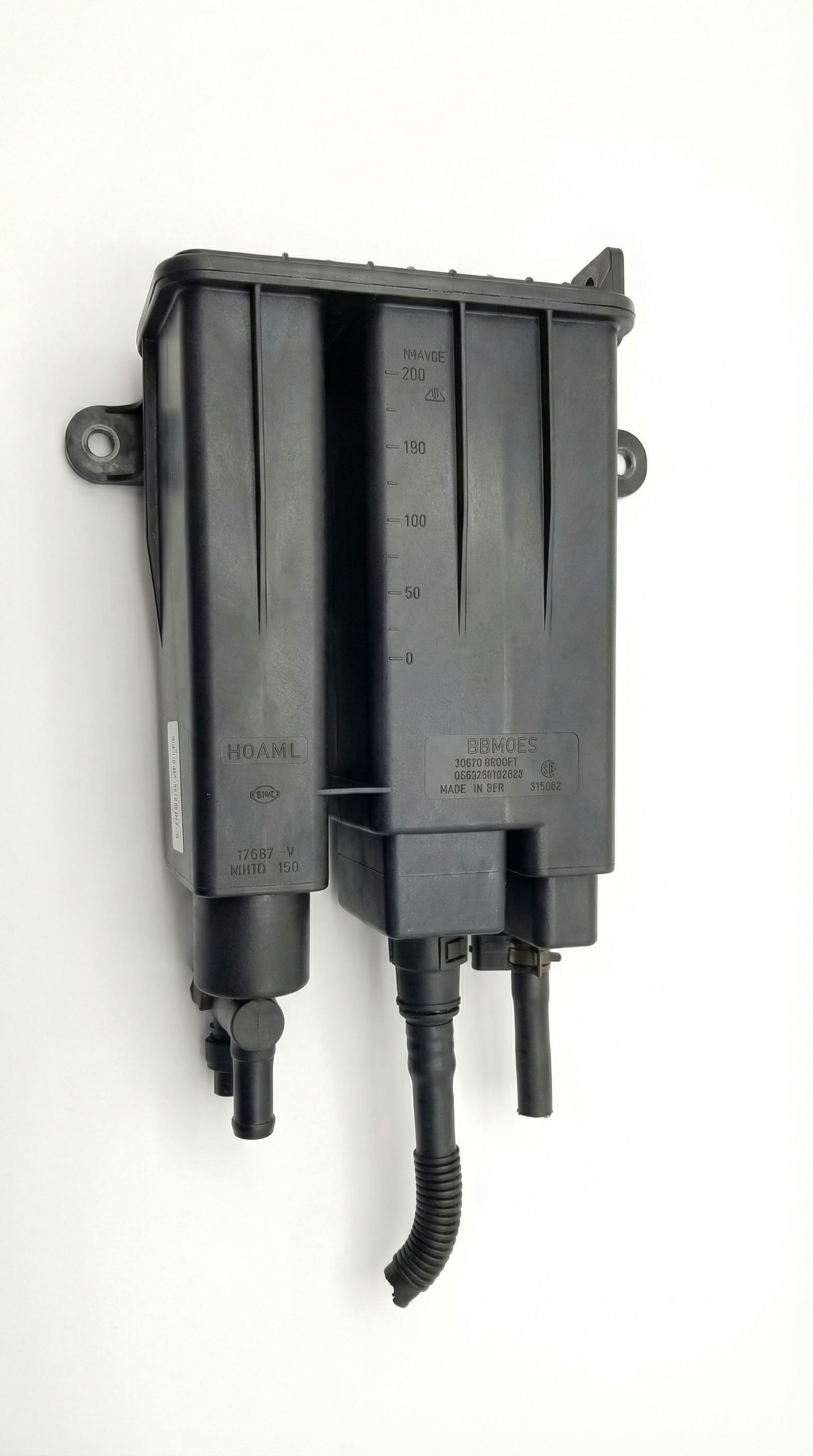
- Faulty EVAP Canister Vent Control Valve 🔴 High Probability → Shop Vapor Canister Vent Valve The valve is located under the right-rear of the car, where it is exposed to road salt, water, and debris, causing the internal plunger to rust and stick. This is a common failure across many Nissan models of the era for the same reason.
How to confirm: Use a bidirectional scan tool to command the valve closed; if a click is not heard or if the system still cannot hold a vacuum during a smoke test, the valve is faulty. You can also apply 12V directly to the valve terminals to listen for a click. A lack of a click confirms electrical failure, but the valve can still be mechanically stuck even if it clicks.
Typical fix: Replace the EVAP canister vent control valve. The mounting bolts are often rusted and may break, requiring extra time for removal. Applying penetrating oil liberally before attempting removal is highly recommended.
Est. part cost: $50-$150 - Faulty EVAP Canister Purge Volume Control Solenoid 🟡 Medium Probability → Shop Vapor Canister This valve, located in the engine bay, cycles frequently and can fail by getting stuck open or closed over time. It's a common failure point on many vehicles using this system.
How to confirm: Disconnect the electrical connector and hoses. With the engine off, try to blow through the valve; it should be closed (no air passes). If air passes, it's stuck open. Use a scan tool to command it open and listen for a click. You can also bench test it with a 12V source and a hand vacuum pump to see if it holds vacuum when closed and releases it when energized.
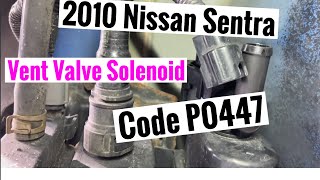
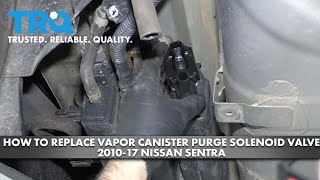
Typical fix: Replace the purge volume control solenoid valve. This is typically a 10-15 minute job. 🎬 See this step-by-step purge solenoid replacement guide
Est. part cost: $60-$130 - Loose or Faulty Gas Cap ⚪ Low Probability → Shop Fuel Tank Cap
How to confirm: Ensure the gas cap is tightened until it clicks. Inspect the cap's O-ring seal for cracks or damage. Even if it looks okay, an aging seal can be the culprit. On similar Nissan platforms, aftermarket gas caps have been known to cause this code even when new; OEM is strongly recommended.
Typical fix: Tighten or replace the gas cap. It is highly recommended to use an OEM part, as some aftermarket caps do not seal correctly.
Est. part cost: $15-$40 - Cracked or Disconnected EVAP Hoses ⚪ Low Probability Rubber hoses can become brittle and crack with age and exposure to engine heat.
How to confirm: Visually inspect all accessible EVAP lines in the engine bay and around the canister for cracks, loose connections, or obvious damage. A smoke test is the most effective way to find a hard-to-see leak.
Typical fix: Replace the damaged section of hose. Ensure you use fuel-vapor-rated hose for the repair.
Est. part cost: $10-$50
Rare But Worth Checking
- Failed Charcoal Canister: → Shop Vapor Canister This usually happens if you habitually 'top off' the fuel tank after the pump clicks off. Excess fuel can saturate the charcoal pellets, ruining the canister and causing blockages or other codes. It can also be damaged if the vent valve mounting bolt breaks during removal.
Diagnosis Steps
- Check the Gas Cap: Ensure it is tight and the seal is not cracked or worn. Clear the code and drive to see if it returns. Consider replacing with an OEM cap if it's old, as they are a known, though less common, cause.
- Visual Inspection: Inspect the EVAP hoses in the engine bay and around the rear canister for any obvious cracks, disconnections, or damage.
- Scan Tool Test: Use a bidirectional scanner to actuate the EVAP Purge Solenoid (in the engine bay) and the EVAP Vent Control Valve (at the rear). Listen for an audible click from each component as it is commanded on and off.
- Test the Purge Solenoid: Disconnect the purge solenoid in the engine bay. It should be closed by default. Try blowing through it; if air passes, it is stuck open and must be replaced.
- Test the Vent Control Valve: If the vent valve does not click with the scan tool, check for power and ground at its connector. If the circuit is good, the valve itself has failed. These often fail mechanically from rust, even if they click. Be prepared for the mounting bolts to be seized with rust.
- Smoke Test: If the valves appear to be working electrically, perform a smoke test on the EVAP system. This involves injecting pressurized smoke into the system's service port (often a green cap in the engine bay) and looking for where it escapes, revealing the location of any leaks. 🎬 Watch: How to perform an EVAP smoke test
Parts You'll Likely Need
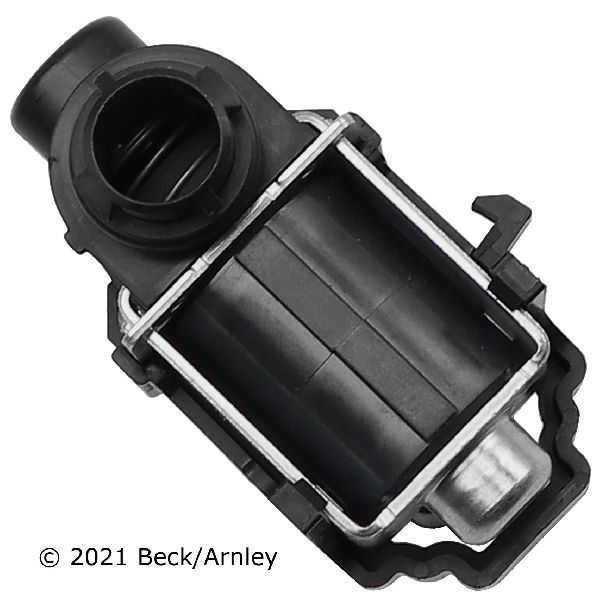
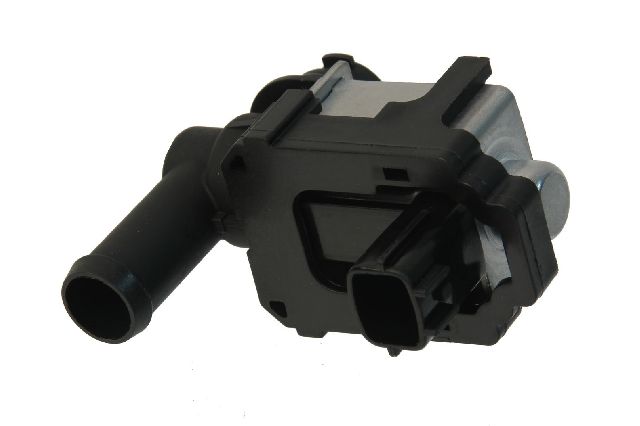
- EVAP Canister Vent Control Valve
(OEM #14935-JF00B)— This is the most common failure point for P1440 on this vehicle, as it is exposed to the elements and prone to sticking from rust and debris. This part number is widely used across many Nissan models. It may be superseded by 14935-JF02C or 14935-JF01C.
Trusted brands: Nissan (OEM), Dorman (911-502), Standard Motor Products (CVS67)
OEM price range: $90-$150
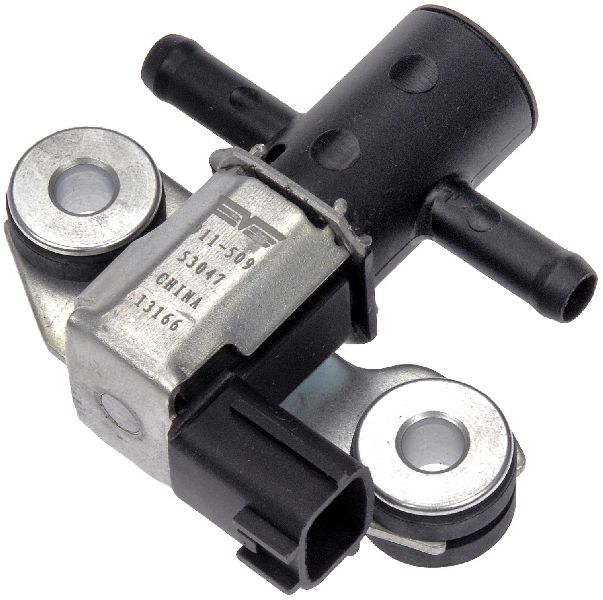
Aftermarket price range: $40-$80 - EVAP Canister Purge Volume Control Solenoid
(OEM #14930-EN20A)— This is the second most common failure. It is located in the engine bay and is responsible for metering fuel vapors into the engine. The original part number was 14930-ET000, which was superseded by 14930-EN200 and then 14930-EN20A.
Trusted brands: Nissan (OEM), Hitachi, Standard Motor Products (CP615)
OEM price range: $80-$130
Aftermarket price range: $50-$90
Related Codes That Often Appear With This One
- P0448 — This code specifically points to a fault in the EVAP canister vent control valve circuit. If seen with P1440, the vent control valve is almost certainly the problem.
- P0455 / P0456 — These codes indicate a large or small EVAP system leak. The same faulty component causing P1440, like a stuck-open vent valve, can also be interpreted by the ECM as a general system leak.
- P0441 — This code for 'Incorrect Purge Flow' is often seen with P1440 because a stuck or non-functioning purge valve directly causes the condition that P0441 detects.
Platform-Specific Known Issues
- The mounting bolts for the rear EVAP Canister Vent Control Valve are highly susceptible to rusting and breaking during removal. Applying penetrating oil beforehand is recommended. If they break, drilling and extracting the broken bolt may be required, and in some cases, the canister itself can be damaged, necessitating a more expensive repair.
Mechanic-Grade Diagnostic Values
- EVAP Canister Purge Volume Control Solenoid Resistance — expected: 15 to 30 Ohms at 68°F (20°C).. Failure: A reading of infinity (open circuit) or near-zero (short circuit) indicates a failed solenoid coil.
- EVAP Canister Vent Control Valve Resistance — expected: 15 to 30 Ohms at 68°F (20°C).. Failure: A reading outside this range indicates a damaged solenoid winding.
- EVAP Canister Vent Control Valve Power Supply — expected: Battery voltage (~12V) at terminal 2 of the harness connector with the ignition ON.. Failure: No voltage indicates a wiring issue, blown fuse, or problem with the IPDM E/R (Intelligent Power Distribution Module Engine Room).
- EVAP Canister Purge Volume Control Solenoid Power Supply — expected: Battery voltage (~12V) at terminal 1 of the harness connector with the ignition ON.. Failure: No voltage points to a problem in the power supply circuit, likely a fuse or the IPDM E/R.
Scan Tool Commands That Help
- Nissan CONSULT or compatible bidirectional scanner: Active Test: 'Vent Control Valve' — Used to command the rear vent control valve to close. This is the first step before a smoke test to seal the system. You should hear a click from the valve. If it doesn't click, electrical testing is needed. If it clicks but the system doesn't seal, the valve is mechanically stuck.
- Nissan CONSULT or compatible bidirectional scanner: Active Test: 'Purge Volume Control' — Used to command the purge solenoid in the engine bay to open and close, usually by a percentage. While monitoring fuel tank pressure, commanding the valve open should cause a vacuum to be drawn on the tank (pressure drops). If no change occurs, the valve or its passages are blocked.
- Nissan CONSULT or compatible bidirectional scanner: DTC WORK SUPPORT: 'EVAP SML LEAK P1440' — This is a guided diagnostic routine within the Nissan CONSULT software that walks a technician through a specific test procedure to confirm the P1440 fault condition.
Wiring & Ground Locations
- EVAP Canister Vent Control Valve — Under the right-rear of the vehicle, mounted to or near the charcoal canister, close to the muffler.. This is the physical location of the most common part to fail. Its exposure to road spray and exhaust heat accelerates corrosion and failure, triggering P1440.
- EVAP Canister Purge Volume Control Solenoid Valve — On the right (passenger) rear side of the MR20DE engine.. This is the location of the second most common part to fail. Technicians need to locate it to perform resistance and function tests.
- M61 — A key ECM ground point located on the right side of the dash for the B16 Sentra.. A poor ground at this location can cause erratic behavior from the ECM and the components it controls, including the EVAP solenoids, potentially leading to false codes.
- IPDM E/R (Intelligent Power Distribution Module Engine Room) — Located in the left front of the engine compartment.. This module contains the integrated relays and fuses that supply power to the EVAP system components. If voltage is missing at a solenoid, this module is a primary suspect after checking the wiring.
Real Owner Repair Stories
- Maxima Forums user 'defiance' (Nissan Maxima (similar EVAP system and code behavior)) — Persistent P1440 Check Engine Light.
❌ Tried (didn't work) Cleaning and reinstalling a rusty but functional vent control valve., Replacing the gas cap with an aftermarket (Stant) brand cap.
✅ What actually fixed it After the other fixes failed, the code was finally resolved by reinstalling the original OEM Nissan gas cap. The aftermarket cap did not seal correctly, causing the code to persist. - Maxima Forums user 'Teddie18' (Nissan Maxima (similar EVAP system and code behavior)) — P1440 code.
❌ Tried (didn't work) Attempting to remove the vent control valve from the canister.
✅ What actually fixed it The bolt holding the vent valve to the canister broke during removal, which in turn damaged the canister itself. The problem was fixed by replacing both the EVAP canister vent control valve and the entire charcoal canister assembly.
"I Checked Everything" — The Actual Cause
- In a documented case on a similar Nissan platform, a vehicle repeatedly passed a smoke test, and both the purge and vent solenoids clicked when actuated. The persistent P1440 code was ultimately resolved by replacing an aftermarket gas cap with a new OEM Nissan cap. This indicates the cap was not sealing correctly under the specific vacuum conditions of the EVAP self-test, even though it appeared to seal for a smoke test.
Model Year Variations Within This Range
- 2007-2012: While the core MR20DE engine and EVAP system remained consistent through the B16 generation, there were no major changes noted that would affect the diagnosis or common causes of P1440. The primary failure points (rear vent valve, engine bay purge solenoid) are the same across this year range.
Diagnostic Flowchart
Other Known Issues on This Vehicle
Issues unrelated to this code that are worth knowing about as an owner of this generation:
- CVT Transmission Failure 🔴 High — Widespread issue, particularly as mileage exceeds 60,000-80,000 miles. Can manifest as shuddering, hesitation, whining, or complete loss of power. (Ref: Multiple class-action lawsuits have been filed, and Nissan has offered warranty extensions for some models, but no universal recall was issued for this generation.)
- Premature Engine Mount Failure 🟠 Medium — Commonly reported around 100,000 miles. The front and rear mounts on the crossmember are noted as being particularly weak. Symptoms include excessive vibration at idle and clunking noises during acceleration or gear changes.
- Cracked Exhaust Manifold 🟠 Medium — A known issue on some Nissan models of this era. Can cause a loud ticking noise from the engine bay, especially when cold, which may disappear as the engine warms up and the metal expands.
- Throttle Body Failure 🟡 Low — Can cause rough/fluctuating idle, stalling, and difficulty accelerating. Sometimes cleaning the throttle body can resolve the issue, but replacement is also common.
Used vs. New Parts: Buying Guide for This Vehicle
When a used part is the smart pick: For this repair, using a used part is generally not recommended for the electronic solenoids (purge and vent valves). Their low cost new, combined with the high failure rate from internal wear and corrosion, makes a used part a poor value proposition. A used charcoal canister assembly from a low-mileage, non-salt-belt donor vehicle could be a cost-effective option if the original is physically damaged (e.g., from a broken bolt).
Donor-vehicle mileage cap: roughly under 60000 miles for the part to have meaningful remaining life.
What to inspect on the donor part:
- For a canister assembly, check for zero rust on the vent valve mounting bolts.
- Ensure there are no cracks in the plastic housing of the canister.
- Confirm the donor vehicle is from a dry, non-rust-belt region.
- Shake the canister; there should be no sound of loose charcoal pellets.
OEM-only on this vehicle (don't cheap out):
- Gas Cap: It is highly recommended to use an OEM Nissan gas cap. Multiple owner reports confirm that even new aftermarket caps (including from known brands like Stant) can fail to seal properly on this system and cause persistent EVAP codes.
Aftermarket brands forum-validated for this vehicle:
- Dorman (for vent valve and purge solenoid)
- Standard Motor Products (SMP)
- Hitachi (often the original equipment supplier for the purge solenoid)
Brands owners have reported issues with on this vehicle:
- Generic, unbranded gas caps from online marketplaces.
Real Owner Stories
Aggregated from forums and TSBs cited above. Mileages and costs reflect what owners reported in those sources.
2011 Nissan Sentra MR20DE
Symptoms: The owner noted a 'small Evap leak' code (P1440).
What fixed it: Replacing the gas cap with an OEM part was the primary recommendation for this specific thread.
Source hint: Nissan Forums thread titled 'P1440 code'
2007-2012 Nissan Sentra (Platform Mate: Maxima)
Symptoms: Persistent P1440 code even when all other EVAP components tested good.
What fixed it: Switching from an aftermarket gas cap to an OEM gas cap resolved the issue.
Source hint: Maxima Forums user story
2007-2012 Nissan Sentra (Platform Mate: Rogue)
Symptoms: EVAP system failure (P0455) related to the rear vent control valve.
What fixed it: Replacing the rear vent control valve with a new part featuring an updated design.
Source hint: NICOclub Forums: 'vent-control-valve-replacement-step-by-step'
Related OBD-II Codes
Frequently Asked Questions
Why is the EVAP Canister Vent Control Valve so prone to failure on my 2007-2012 Nissan Sentra?
I replaced my gas cap with one from an auto parts store, but the P1440 code is still there. What should I do?
Is there a trick to removing the rear vent control valve without breaking anything?
Can I test the EVAP Purge Volume Control Solenoid myself?
Does my Sentra have a specific service port for a smoke test?
Are there any other major issues I should watch for on this generation of Sentra besides EVAP codes?
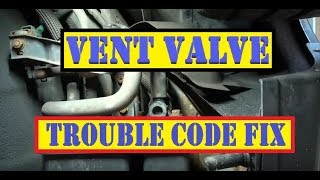
Helpful Videos
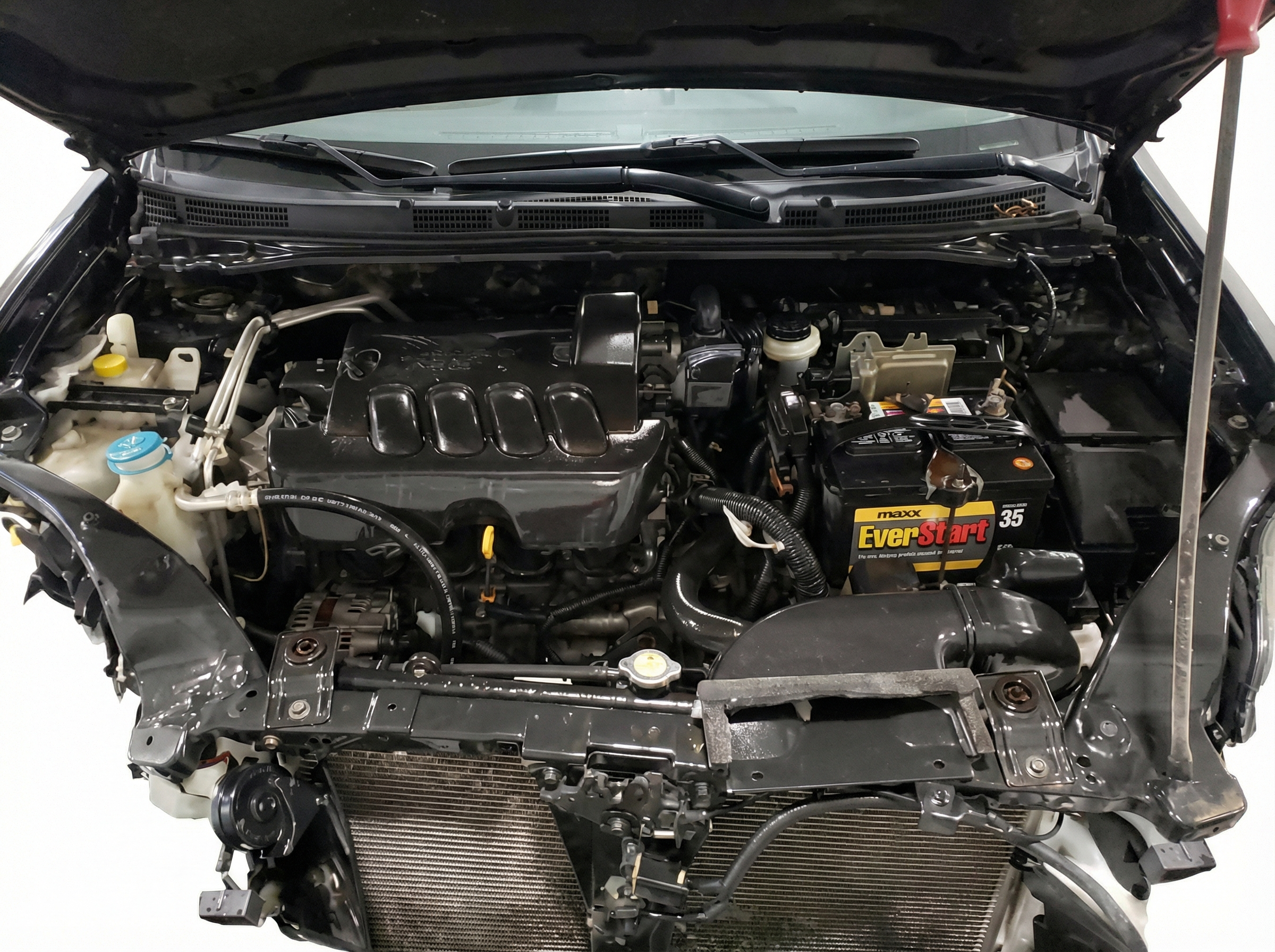
Used OEM Parts in Stock
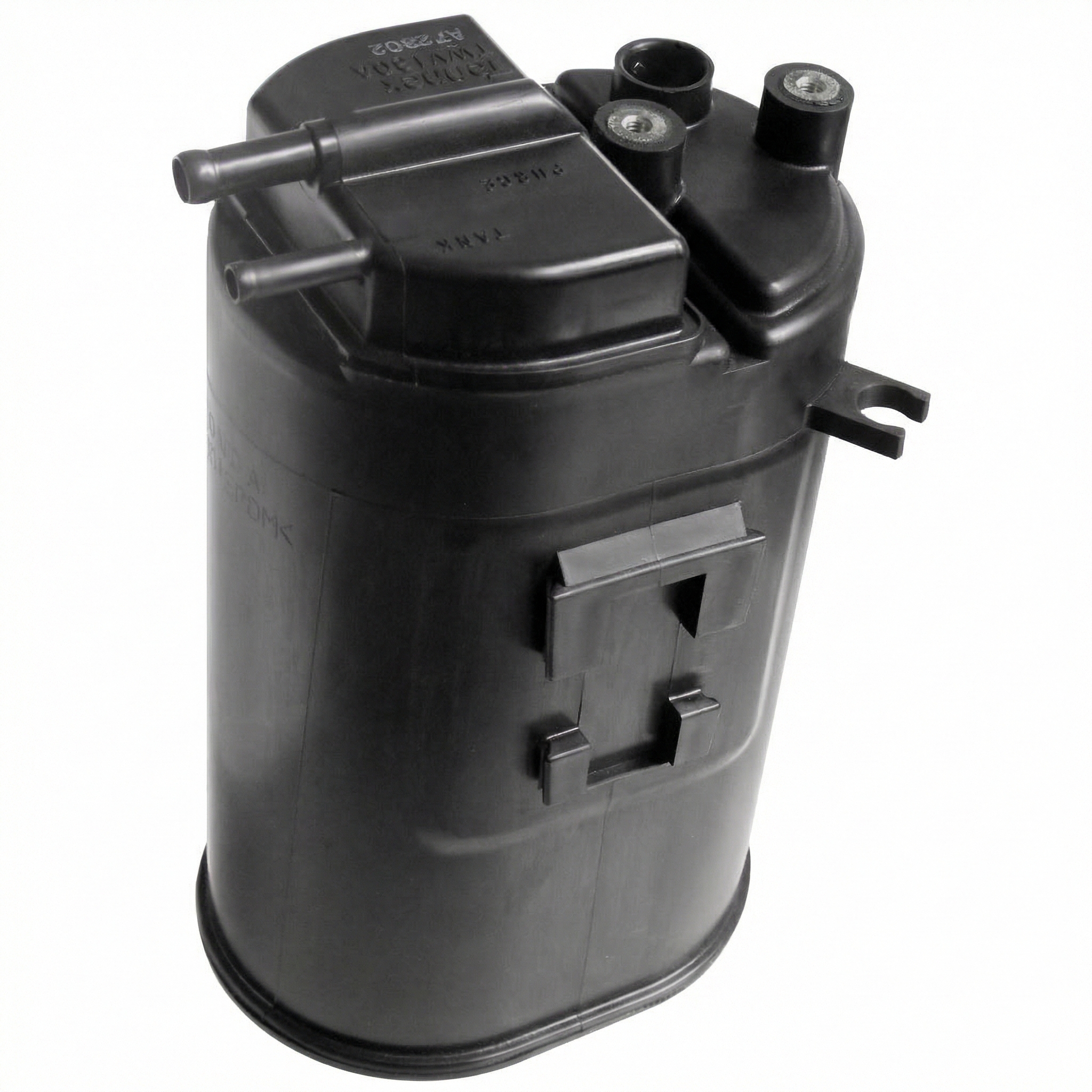
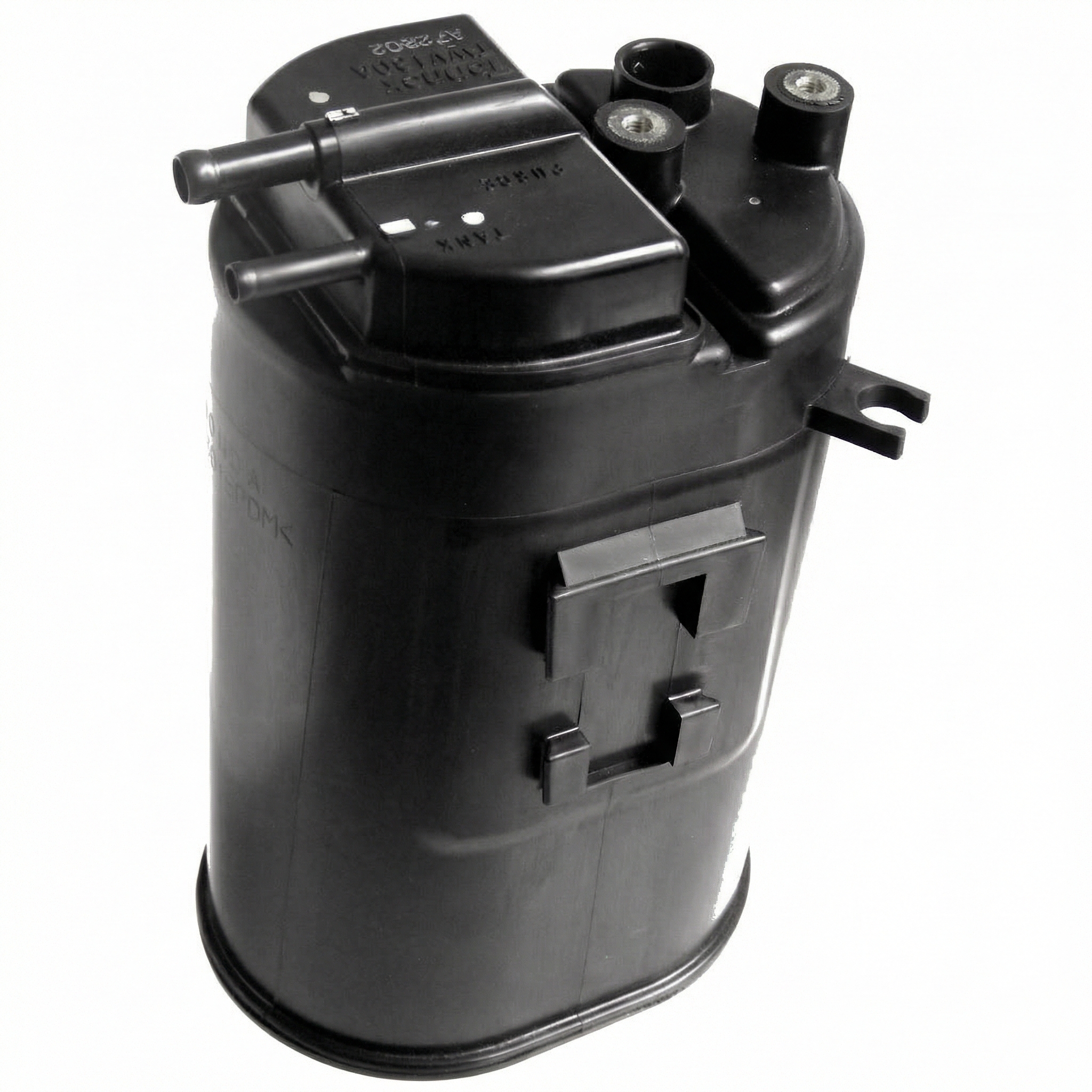
New Aftermarket Parts Available


The information in this article is provided for general reference and educational purposes only. Vehicle specifications, procedures, and part compatibility can vary by production date, trim level, and region. Always consult your vehicle's factory service manual and verify part numbers before purchasing or performing repairs. Safety-critical components such as airbags, seat belts, and braking systems should be installed by a qualified professional.
- Nissan Sentra:
- 🧭 Diagnostic Flowchart
- 🎬 Helpful Videos
- 🛍️ Shop This Part
- What's Unique About the 2007-2012 Nissan Sentra
- Symptoms You May Notice
- Most Likely Causes
- Rare But Worth Checking
- Diagnosis Steps
- Parts You'll Likely Need
- Related Codes That Often Appear With This One
- Platform-Specific Known Issues
- Mechanic-Grade Diagnostic Values
- Scan Tool Commands That Help
- Wiring & Ground Locations
- Real Owner Repair Stories
- "I Checked Everything" — The Actual Cause
- Model Year Variations Within This Range
- Other Known Issues on This Vehicle
- Used vs. New Parts: Buying Guide for This Vehicle
- Real Owner Stories
- 2011 Nissan Sentra MR20DE
- 2007-2012 Nissan Sentra (Platform Mate: Maxima)
- 2007-2012 Nissan Sentra (Platform Mate: Rogue)
- Related OBD-II Codes
- Frequently Asked Questions
- 🎟️ Get 5% Off