

P1440 on 2000-2004 Nissan Xterra 3.3L: EVAP System Causes and Fixes
On a 2000-2004 Xterra, P1440 most often points to a faulty EVAP canister vent control valve located at the rear of the truck near the spare tire. This part gets clogged with dust or rusts, causing a small leak detection. Expect to pay $30-$70 for an aftermarket part; it's a common DIY fix that often requires dealing with rusted bolts. Many owners relocate the valve's breather hose to prevent future failures.
- P1440 on your Xterra almost always means there's a problem with an EVAP system valve or a cracked hose.
- Start your diagnosis at the back of the truck; the vent valve near the spare tire is the most likely culprit due to its exposure to dirt and rust.
- Don't immediately buy parts. First, check that the gas cap is tight and inspect the visible vacuum lines for cracks.
- If you replace the rear vent valve, consider extending the breather hose to a higher location to prevent the new part from failing for the same reason.
- This is a very DIY-friendly repair that usually requires only basic hand tools and can save you hundreds in labor costs.
What's Unique About the 2000-2004 Nissan Xterra
The first-generation Nissan Xterra is a capable off-road vehicle, and this usage pattern directly contributes to the most common cause of a P1440 code. The EVAP canister and its vent control valve are located at the rear of the truck, low to the ground, where they are exposed to dust, dirt, water, and road salt. This leads to the vent valve becoming clogged with debris or the solenoid rusting and failing, a frequent complaint among owners. While the code is generic to Nissan, the Xterra's specific design and typical use case make this rear-mounted valve the primary suspect, more so than on sedans like the Maxima which can also get this code.
Symptoms You May Notice
- Check Engine Light is on
- A faint smell of fuel, particularly around the rear of the vehicle.
- Difficulty starting immediately after refueling (less common)
- Slightly reduced fuel economy.
- Failing a state emissions inspection
- Replacing the oxygen sensors. O2 sensors are not related to the EVAP system and will not fix a P1440 code.
- Replacing the fuel pump. While a faulty fuel tank pressure sensor (often part of the pump assembly on newer cars) can cause other EVAP codes, it's not a primary cause for P1440 on this platform.
Most Likely Causes
- Faulty EVAP Canister Vent Control Valve/Solenoid 🔴 High Probability → Shop Vapor Canister Vent Valve Its location at the rear of the vehicle near the spare tire exposes it to significant road grime, dust, and moisture, causing it to clog with dirt or rust internally. Owners report the bolts securing it to the canister are often extremely rusted.
How to confirm: Locate the valve on the charcoal canister at the rear of the truck (spare tire removal is necessary). Apply 12V power to its terminals; you should hear a distinct click. If it doesn't click, or if it's audibly stuck, it has failed. You can also try to blow through it; it should be closed when no power is applied. Visually inspect for heavy rust or a clogged breather port. Test the solenoid's resistance; a reading between 20-30 Ohms is expected.
Typical fix: Replace the vent control valve. It is often easier to remove the entire charcoal canister (held by four 10mm bolts) to access the valve's bolts, which should be soaked in penetrating oil. Some owners proactively relocate the breather hose to a higher, cleaner location (like behind a tail light) to prevent future clogs.
Est. part cost: $30 - $90 - Faulty EVAP Canister Purge Volume Control Solenoid 🟡 Medium Probability → Shop Vapor Canister Standard electronic component failure over time due to heat cycles in the engine bay.
How to confirm: Locate the valve in the engine bay, typically on the passenger side. With the engine running, disconnect the vacuum hose leading to the intake manifold; you should not feel any vacuum at idle. You can also test it by applying 12V power to hear it click, similar to the vent valve.
Typical fix: Replace the solenoid. This is typically an easy repair with basic hand tools, involving swapping two hoses and an electrical connector. 🎬 See how to replace the engine bay purge valve yourself.
Est. part cost: $70 - $120 - Cracked or Disconnected EVAP Hoses 🟡 Medium Probability The rubber hoses become brittle over time due to age and heat, leading to small cracks that create a vacuum leak. This is especially true for the small 1/4 inch hoses connected to the valves.
How to confirm: Visually inspect all accessible EVAP hoses in the engine bay and around the canister for cracks, especially at connection points. A smoke test is the most effective way to find a hard-to-see leak.
Typical fix: Replace the cracked section of hose with new vacuum tubing of the same diameter. Many owners recommend replacing all small vacuum lines while servicing the valves as a preventative measure.
Est. part cost: $5 - $20 - Loose or Faulty Gas Cap ⚪ Low Probability → Shop Fuel Tank Cap
How to confirm: Ensure the gas cap is tightened until it clicks. Inspect the rubber O-ring on the cap for cracks or damage. If it looks worn, it may not be sealing properly.
Typical fix: Tighten or replace the gas cap. It is highly recommended to use an OEM Nissan cap, as some aftermarket caps do not seal correctly and can perpetuate the issue.
Est. part cost: $15 - $35
Rare But Worth Checking
- Cracked Charcoal Canister: → Shop Vapor Canister The plastic body of the canister itself can develop a hairline crack, often near the mounting bolts, causing a leak. This is usually found with a smoke test after all other components have been checked.
- Rusted Fuel Filler Neck: → Shop Fuel Filler Neck On vehicles from rust-prone areas, the metal fuel filler neck can develop pinhole rust leaks, which will trigger an EVAP code. This was a known issue on related Nissan SUVs and is mentioned in TSB NTB00-085 for the Pathfinder/QX4.
- Water-Saturated Charcoal Canister: → Shop Vapor Canister If the vent valve fails in an open state or the breather is submerged, the canister can become saturated with water, impeding vapor flow and triggering a fault.
Diagnosis Steps
- Check the Gas Cap: Ensure it is tight and the seal is not cracked or worn. Clear the code and drive to see if it returns.
- Inspect Hoses: Visually inspect all EVAP vacuum lines in the engine bay and around the rear canister for obvious cracks, loose connections, or deterioration. Pay close attention to the small 1/4" hoses.
- Test the EVAP Canister Vent Control Valve (Rear): Remove the spare tire to access the EVAP canister. Check for battery voltage (approx. 12V) at the connector with the key on. Apply a 12V source directly to the valve's pins to check if the solenoid clicks. Test the solenoid's resistance with a multimeter; it should be between 20-30 Ohms. If it's silent, out of spec, or clogged with dirt, it needs replacement.
- Consider Removing the Canister for Access: The two bolts holding the vent valve to the canister are notoriously difficult to access and often rusted. It is frequently easier to remove the entire canister assembly (four 10mm bolts) to work on the valve on a bench.
- Test the EVAP Purge Volume Control Solenoid (Engine Bay): Locate the valve in the engine bay. Check for power and test its operation with a 12V source. Check for vacuum at the intake port side at idle (should be none).
- Perform a Smoke Test: If the cause is not yet found, the most reliable method is to introduce smoke into the EVAP system via the service port. Smoke will escape from any cracks or leaks, pinpointing the exact location of the fault. 🎬 Watch: This walkthrough shows how to find and fix an EVAP leak.
Parts You'll Likely Need
- EVAP Canister Vent Control Valve (Solenoid)
(OEM #14933-54U0A (supersedes 14933-54U00))— This is the most common failure point on the 1st Gen Xterra due to its exposed location at the rear of the vehicle, leading to clogs and rust.
Trusted brands: Nissan (OEM), Dorman (911-501), Standard Motor Products
OEM price range: $90-$120
Aftermarket price range: $30-$80 - EVAP Canister Purge Volume Control Solenoid
(OEM #14930-5M00A)— This valve in the engine bay is the second most likely solenoid to fail, either by sticking internally or failing electronically.
Trusted brands: Nissan (OEM), Hitachi, Carquest
OEM price range: $110-$160
Aftermarket price range: $70-$100
Related Codes That Often Appear With This One
- P1448 —
Technical Service Bulletins (TSBs) & Recalls
- While no specific TSB for P1440 on the Xterra was found, TSB NTB00-085 for the related Pathfinder/QX4 addresses a similar EVAP issue concerning the fuel filler neck rusting, which can also cause a P1440 code.
Platform-Specific Known Issues
- The EVAP canister vent valve is highly susceptible to being clogged by dust and dirt from unpaved roads. A popular preventative measure among owners is to detach the breather hose from the valve and extend it up into a cleaner area, such as the cavity behind the driver's side tail light assembly. This is often called the 'diff breather mod' colloquially, though it applies to the EVAP breather in this context. The hose is often capped with a small fuel filter or dedicated breather filter to keep debris and insects out while allowing air to pass.
Mechanic-Grade Diagnostic Values
- EVAP Canister Vent Control Valve Solenoid Resistance — expected: 20 - 30 Ohms. Failure: A reading significantly outside this range, or an open circuit (infinite resistance), indicates a failed solenoid coil.
- EVAP Canister Vent Control Valve Connector Voltage — expected: Approximately 12 Volts (Battery Voltage). Failure: No voltage indicates a wiring issue, blown fuse, or problem with the power distribution module.
Scan Tool Commands That Help
- Nissan CONSULT / CONSULT-II: DTC WORK SUPPORT > EVAPORATIVE SYSTEM > EVAP SML LEAK P1440 — This is a specific, guided diagnostic test within the factory scan tool to confirm the P1440 fault. The tool walks the technician through the steps to test the system's integrity.
- Advanced Bidirectional Scan Tool: EVAP Vent Valve - ON/OFF — To manually command the rear vent valve closed while performing a smoke test or checking for blockage. This allows a technician to confirm if the valve is physically responding to the ECU's command.
Wiring & Ground Locations
- EVAP Canister Vent Control Valve — Under the right rear of the vehicle, mounted directly on the charcoal canister, near the spare tire.. This is the primary component associated with P1440 on this vehicle. Its 2-pin connector is exposed to the elements and can become corroded, causing a poor connection or circuit fault.
- EVAP Canister Purge Volume Control Solenoid Valve — In the engine bay, on the left side (driver's side in US), outboard of the brake fluid reservoir.. This is the second most likely solenoid to fail. Its connector and associated vacuum lines in the hot engine bay can degrade over time.
- Engine Control Module (ECM) — Below the center of the dashboard, behind the lower cover.. The ECM is the source of the commands to both EVAP solenoids and interprets the sensor data. While rare, an ECM driver failure could mimic a component failure.
Real Owner Repair Stories
- nicoclub.com forum user (2002 Infiniti Q45 (similar Nissan EVAP system)) — Persistent P1440 code for 6 months.
❌ Tried (didn't work) Replaced gas cap with OEM part., Smoke test performed by a mechanic, which found no leaks., Mechanic activated all solenoids and valves, which appeared to be functioning correctly.
✅ What actually fixed it The user was still diagnosing, but the expert advice given was that the likely cause was an intermittent failure of a solenoid (which would pass a one-time test), hairline cracks in the plastic charcoal canister itself, or a rusted fuel filler neck tube. This highlights that standard tests can miss the actual root cause.
"I Checked Everything" — The Actual Cause
- A common scenario for a persistent P1440 is when a smoke test passes, showing no leaks. In this case, the fault is often not a static leak but a functional failure. The most likely culprit is the EVAP canister vent control valve solenoid failing intermittently; it may work when tested but stick during a drive cycle. Another possibility is a hairline crack in the charcoal canister that only opens under specific temperature or vibration conditions, or a water-saturated canister that doesn't leak smoke but impedes vapor flow.
OEM Part Supersession History
14933-54U00→14933-54U0A— Likely a minor revision for improved reliability or manufacturing process. The parts are functionally identical and fully interchangeable.
Diagnostic Flowchart
Used vs. New Parts: Buying Guide for This Vehicle
When a used part is the smart pick: For this specific repair, using used parts is generally not recommended for the electronic solenoids. However, if the charcoal canister itself is physically cracked (a rare failure), a used canister from a dry, low-mileage donor vehicle could be a cost-effective replacement. The plastic canister body is not a high-wear item.
Donor-vehicle mileage cap: roughly under 100000 miles for the part to have meaningful remaining life.
What to inspect on the donor part:
- For a used charcoal canister, inspect thoroughly for any hairline cracks, especially around mounting points.
- Ensure the donor vehicle is from a dry climate to minimize the risk of internal moisture saturation.
- Shake the canister; if you hear rattling (loose charcoal), do not buy it.
- Avoid parts from vehicles that show signs of significant off-road use (caked-on mud, heavy underbody rust).
OEM-only on this vehicle (don't cheap out):
- Gas Cap: It is strongly recommended by forum veterans to use a genuine Nissan OEM gas cap. Many aftermarket caps fail to seal correctly, causing the P1440 code to persist or return.
Aftermarket brands forum-validated for this vehicle:
- Dorman (for solenoids)
- Standard Motor Products (SMP)
- Hitachi (often an OEM supplier)
Brands owners have reported issues with on this vehicle:
- Unbranded, no-name parts from online marketplaces should be treated with caution, as some owners have reported receiving defective parts out of the box.
Real Owner Stories
Aggregated from forums and TSBs cited above. Mileages and costs reflect what owners reported in those sources.
2001 Nissan Xterra
Symptoms: Check Engine Light with code P1441 (EVAP system very small leak).
What fixed it: Replaced three common failure components: the Purge Cut Valve Solenoid, the Vacuum Cut Valve, and the Vapor Canister Purge Valve. Also replaced about 2 feet of 1/4 inch hose.
Cost: <$100
Source hint: YouTube - Nissan Xterra EVAP Leak Fixed
2000-2004 Nissan Xterra VG33E
Symptoms: A persistent P1440 code that would not go away after trying common fixes.
What fixed it: The owner was troubleshooting rare causes, such as a water-saturated charcoal canister or a damaged O-ring on the vent valve itself.
Source hint: Maxima.org: A thread titled 'The P1440 That just wont go away !'
2000-2004 Nissan Xterra VG33E
Symptoms: The P1440 code was present even though a professional smoke test passed, indicating no obvious leaks.
What fixed it: The owner was advised to consider an intermittent failure of one of the EVAP solenoids or to look for hairline cracks in the charcoal canister that would not show up on a standard smoke test.
Source hint: nicoclub.com (Nissan Forum): In a thread titled 'P1440 Code, No Obvious Solution'
1996-2004 Nissan Pathfinder (R50)
Symptoms: Check Engine Light with code P1440.
What fixed it: The diagnostic path confirmed by owners starts with replacing the gas cap with an OEM Nissan part, and if that fails, moves to testing and replacing the rear vent control valve.
Source hint: NPORA Forums (Pathfinder)
Related OBD-II Codes
Frequently Asked Questions
Where is the EVAP canister vent control valve located on my 2000-2004 Xterra?
Why does the vent control valve fail so often on these Xterras?
What is the 'breather mod' and how does it help prevent P1440?
Do I really need to use an OEM Nissan gas cap?
What resistance reading should I get when testing the vent control valve solenoid?
Is it easier to just remove the whole charcoal canister to replace the vent valve?
Does TSB NTB00-085 apply to my Xterra for this code?
Helpful Videos

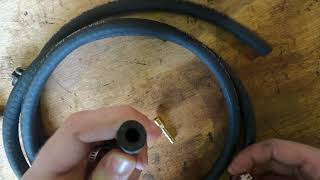
We Have This Part in Stock

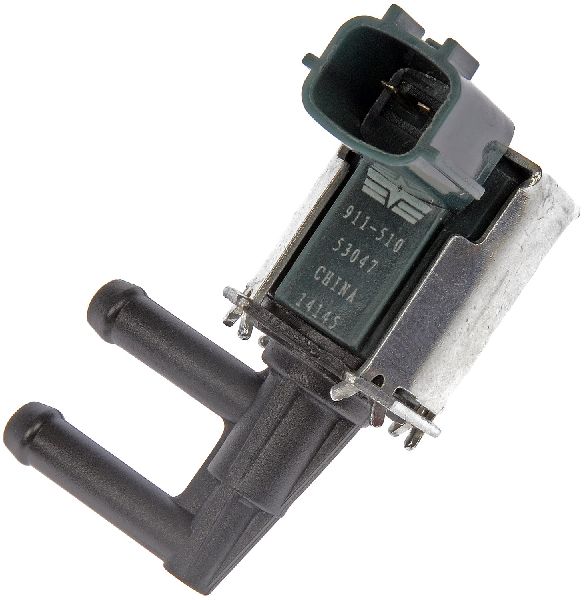
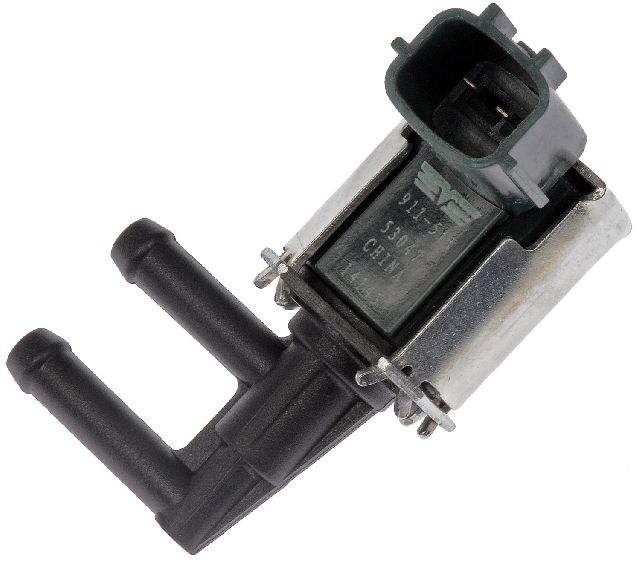



The information in this article is provided for general reference and educational purposes only. Vehicle specifications, procedures, and part compatibility can vary by production date, trim level, and region. Always consult your vehicle's factory service manual and verify part numbers before purchasing or performing repairs. Safety-critical components such as airbags, seat belts, and braking systems should be installed by a qualified professional.
- Nissan Xterra:
- 🧭 Diagnostic Flowchart
- 🎬 Helpful Videos
- 🛍️ Shop This Part
- What's Unique About the 2000-2004 Nissan Xterra
- Symptoms You May Notice
- Most Likely Causes
- Rare But Worth Checking
- Diagnosis Steps
- Parts You'll Likely Need
- Related Codes That Often Appear With This One
- Technical Service Bulletins (TSBs) & Recalls
- Platform-Specific Known Issues
- Mechanic-Grade Diagnostic Values
- Scan Tool Commands That Help
- Wiring & Ground Locations
- Real Owner Repair Stories
- "I Checked Everything" — The Actual Cause
- OEM Part Supersession History
- Used vs. New Parts: Buying Guide for This Vehicle
- Real Owner Stories
- 2001 Nissan Xterra
- 2000-2004 Nissan Xterra VG33E
- 2000-2004 Nissan Xterra VG33E
- 1996-2004 Nissan Pathfinder (R50)
- Related OBD-II Codes
- Frequently Asked Questions
- 🎟️ Get 5% Off