

P1440 on 1999-2004 Oldsmobile Alero: EVAP System Fault Causes and Fixes
On a 1999-2004 Alero, code P1440 almost always points to a faulty vapor canister purge solenoid (valve) located on top of the engine. It's an inexpensive part (around $25-$60) and a very easy DIY fix that takes less than 30 minutes. This is a well-documented failure on the Alero and its platform mates like the Pontiac Grand Am.
- P1440 on an Alero is almost certainly a bad vapor canister purge solenoid on top of the engine.
- Symptoms include a Check Engine Light, rough idle, and especially difficulty starting after refueling.
- The fix is very simple, takes under 30 minutes, and the part costs between $25 and $60.
- This is a shared, common problem with the Pontiac Grand Am and other GM N-body cars of the era.
What's Unique About the 1999-2004 Oldsmobile Alero
The Oldsmobile Alero, and other GM N-body vehicles from this era using the 2.4L or 3.4L engines, are well-known for having the EVAP purge solenoid fail. This specific part is a frequent cause for various EVAP codes, including P1440. The failure is typically mechanical wear or electrical failure within the solenoid itself, causing it to remain open. Unlike some vehicles where EVAP issues are complex to diagnose, the problem on the Alero is very often this single, easily accessible, and affordable component located right on top of the engine.
Symptoms You May Notice
- Check Engine Light illuminated
- Rough idle, especially when stopped or at low speeds
- Difficulty starting the engine immediately after getting gas (hard starting/stalling)
- Slightly reduced fuel economy
- A faint smell of fuel around the vehicle
- Engine may stall at low RPMs
- Replacing the O2 sensors. Oxygen sensors are part of the exhaust system and do not monitor the EVAP system.
- Replacing the fuel tank pressure sensor without proper diagnosis. While it can fail, it's much less common than the purge solenoid or a bad gas cap for this code.
- Replacing the fuel pump. While a failing fuel pump can cause starting issues, it will not cause a P1440 code.
Most Likely Causes
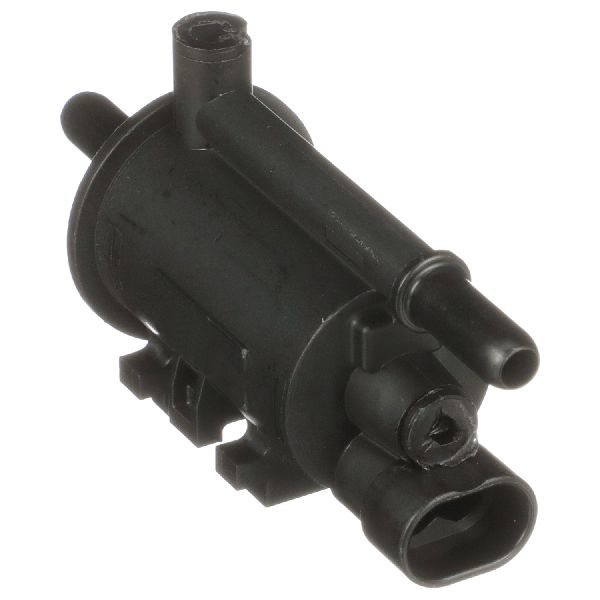
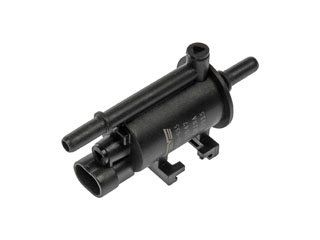
- Faulty Vapor Canister Purge Solenoid/Valve 🔴 High Probability → Shop Vapor Canister This specific component is a known weak point on this GM platform; the internal valve mechanism wears out or the solenoid coil fails, causing it to get stuck open. Debris from an aging charcoal canister can also contribute to it getting stuck.
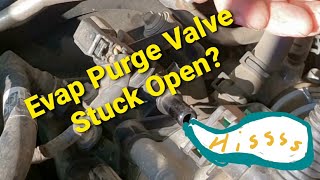
How to confirm: The solenoid is located on top of the engine with two hoses and an electrical connector. A simple test is to disconnect the electrical connector and the hose leading to the intake manifold. With the engine running at idle, there should be NO vacuum felt from 🎬 Watch: This quick test confirms if your purge valve is stuck. the solenoid's port. If you feel suction, the valve is stuck open and must be replaced. You can also try blowing through it with the engine off; it should be closed (no air passes).
Typical fix: Replacement of the purge solenoid is the most common and effective fix. It is held by a small bracket and is easily accessible, typically requiring only a screwdriver or a small socket.
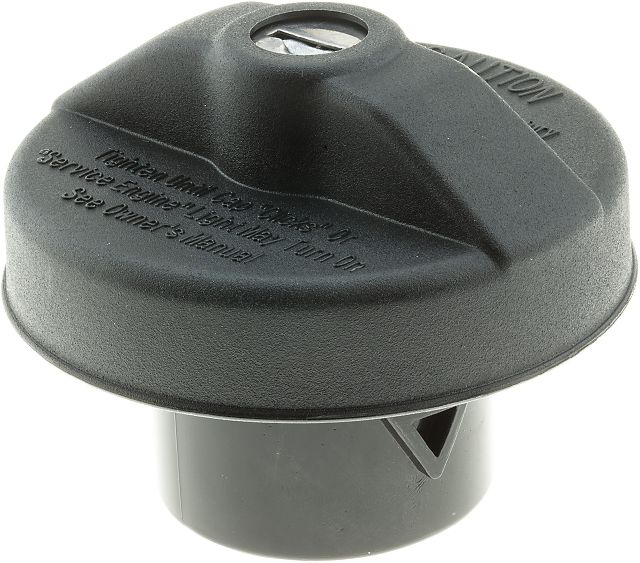
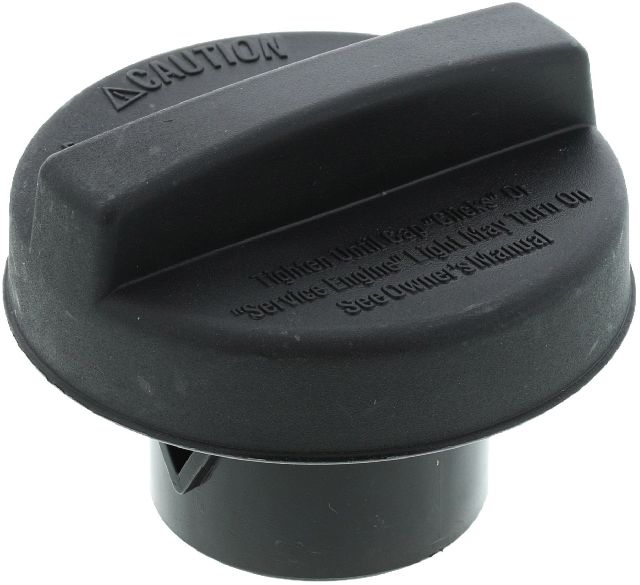
Est. part cost: $25-$60 - Loose or Defective Gas Cap 🟡 Medium Probability → Shop Fuel Tank Cap The gas cap seal can degrade over time, preventing the EVAP system from holding pressure during its self-test. While this more commonly throws a P0442 (small leak) code, it can contribute to general EVAP faults.
How to confirm: Inspect the gas cap for cracks or damage to the rubber O-ring. Ensure it is tightened until it clicks at least one click. If the seal is visibly worn or damaged, it's suspect. Many forum users recommend trying a new OEM cap as a cheap first step.
Typical fix: Replace the gas cap with a new, quality OEM or equivalent part. Aftermarket caps can sometimes cause sealing issues.
Est. part cost: $10-$25 - Cracked or Disconnected EVAP Hoses ⚪ Low Probability Rubber and plastic lines in the engine bay and under the car become brittle with age and can crack or break, especially the lines connected directly to the purge solenoid.
How to confirm: Visually inspect all accessible EVAP lines between the charcoal canister (near the fuel tank), the purge solenoid, and the intake manifold. A smoke test is the most effective way to find a leak that isn't obvious.
Typical fix: Replace the damaged section of hose.
Est. part cost: $5-$30
Rare But Worth Checking
- Failed EVAP Vent Solenoid: → Shop Vapor Canister This valve is located near the charcoal canister by the fuel tank. It can get clogged with dirt or fail electrically, but is much less common to fail than the purge solenoid on the Alero for this specific code. Failure here usually results in a P0446 code.
- Defective Charcoal Canister: → Shop Vapor Canister The canister itself can crack or become saturated with fuel (often from habitually overfilling the gas tank), causing a restriction or sending charcoal pellets into the EVAP lines, which can jam the purge solenoid open.
Diagnosis Steps
- Check the Gas Cap: Ensure it is tight and the seal is not cracked or worn. A loose gas cap is a common cause for all EVAP codes.
- Inspect and Test the Purge Solenoid: Locate the purge solenoid on top of the engine. Visually inspect it and its connecting hoses for any obvious cracks or damage. With the engine running at idle, disconnect the EVAP line from the solenoid to the intake manifold and check for vacuum at the solenoid's port. There should be none. If vacuum is present, the valve is stuck open and is faulty.
- Check for Power: With the ignition on, use a multimeter to confirm there is power at the 🎬 See this deep dive on how to test a purge solenoid. electrical connector for the purge solenoid.
- Inspect Hoses: Trace the EVAP hoses from the engine bay back towards the fuel tank, looking for any visible damage, especially at connection points.
- Perform a Smoke Test: If no obvious issues are found, the most reliable way to find a small leak is to introduce smoke into the EVAP system (usually via the service port) and watch for where it escapes.
- Check the Vent Solenoid: If no leaks are found, inspect and test the vent solenoid located near the charcoal canister under the rear of the vehicle. It should be open with the engine off.
Parts You'll Likely Need
- Vapor Canister Purge Solenoid
(OEM #ACDelco 214-641)— This is the most frequent failure point on the 1999-2004 Alero that causes EVAP system codes like P1440.
Trusted brands: ACDelco (GM OE), Dorman (P/N: 911-030), Standard Motor Products (SMP)
OEM price range: $40-$65
Aftermarket price range: $25-$50 - Fuel Cap
(OEM #ACDelco GT229 (example, verify by VIN))— A worn or damaged gas cap seal is a very common cause of EVAP leaks and is an inexpensive first step in diagnosis.
Trusted brands: ACDelco, Stant
OEM price range: $15-$25
Aftermarket price range: $10-$20
Related Codes That Often Appear With This One
- P0440 — Indicates a general EVAP system malfunction, often triggered alongside more specific codes like P1440.
- P0442 — Indicates a small EVAP system leak, which can be caused by the same faulty components (like a bad gas cap or cracked hose) that might be diagnosed alongside a P1440.
- P0446 — Points to a fault in the EVAP vent control circuit, which is the other main solenoid in the system. A problem here can sometimes accompany a purge-side fault.
Technical Service Bulletins (TSBs) & Recalls
- TSB 01-06-04-037: While not for P1440 specifically, this TSB provides diagnostic aids for difficult-to-find EVAP leaks and codes like P0440 and P0442 on various GM models, including the Alero. It recommends specific smoke machine procedures and checking for leaks at the fuel tank gaskets and fuel filler neck.
Platform-Specific Known Issues
- This vehicle platform was subject to a major safety recall (NHTSA Campaign ID: 14V400000) for a faulty ignition switch that could move out of the 'run' position while driving, causing the engine to stall and disabling the airbags. While unrelated to code P1440, owners should verify this critical recall has been performed.
Mechanic-Grade Diagnostic Values
- EVAP Purge Solenoid Coil Resistance — expected: 30 to 38 Ohms when the engine is cool.. Failure: A reading of 0 Ohms (short), infinite/OL (open), or significantly outside the expected range indicates a failed solenoid coil.
- EVAP Vent Solenoid Coil Resistance — expected: 48 to 65 Ohms.. Failure: A reading significantly outside this range points to a failure of the vent solenoid, which is located near the fuel tank.
- Purge Solenoid Connector Voltage — expected: Battery voltage (approx. 12V) on one pin with Key On, Engine Off.. Failure: No voltage suggests a problem with the power supply fuse (e.g., F/P-INJR fuse) or wiring, not the solenoid itself.
- Fuel Tank Pressure (FTP) Sensor Voltage — expected: Approximately 1.45 - 1.5 Volts with Key On, Engine Off (at atmospheric pressure).. Failure: A voltage that is stuck high or low and does not change when vacuum is applied to the system points to a faulty sensor.
Scan Tool Commands That Help
- GM Tech2 or equivalent professional scanner: EVAP Service Bay Test — This is a comprehensive, automated test that commands the PCM to run the entire EVAP monitor sequence while the vehicle is stationary, allowing a technician to check the integrity of the whole system.
- GM Tech2 or equivalent professional scanner: Purge/Seal or EVAP Purge Solenoid Control — This bidirectional control allows the technician to manually command the purge solenoid open (by percentage) and closed. This is used to verify if the solenoid clicks, if it holds vacuum when commanded closed, and if it allows vacuum to pass when commanded open.
Wiring & Ground Locations
- Purge Solenoid Connector — On the EVAP purge solenoid, top of the engine.. This 2-pin connector provides power and control. One wire (typically Pink) receives 12V+ from an ignition-switched fuse. The other wire is the control line to the Powertrain Control Module (PCM), which grounds the circuit to open the valve. A bad connection here will prevent the solenoid from operating.
- G114 — Located on the left rear of the engine block.. This is a primary engine ground. While not directly for the purge solenoid itself, a poor connection at this ground can cause erratic behavior from the PCM and other engine sensors, potentially leading to incorrect diagnostics or faults.
- G103 — On the left side of the engine, attached to a transmission stud (for the 3.4L V6).. This is another critical engine and component ground point. Ensuring it is clean and tight is a fundamental step when diagnosing any electrical fault related to engine controls.
Real Owner Repair Stories
- Car Talk Community Forum User (2001 Oldsmobile Alero 2.4L I4) — Check Engine Light with code P0440 (EVAP small leak/no flow) and a strong smell of gas fumes in and around the car, especially on a cold start.
❌ Tried (didn't work) Replacing the EVAP vent solenoid near the gas tank did not resolve the gas smell or the check engine light.
✅ What actually fixed it The community diagnosed the issue as a likely fuel-saturated charcoal canister. This happens from habitually overfilling the gas tank past the first click, which floods the canister with raw fuel instead of just vapor. The saturated canister can no longer properly store vapors, causing the strong fuel smell.
OEM Part Supersession History
ACDelco 214-641→This part number is listed as discontinued by some suppliers. It cross-references to GM part numbers 12573220 and 12581282. A common, direct-fit aftermarket replacement is Dorman 911-030.— Part consolidation and end of vehicle life.
Model Year Variations Within This Range
- 2002-2004: For 4-cylinder models, the engine changed from the 2.4L LD9 to the 2.2L Ecotec L61 starting in the 2002 model year. However, the EVAP system components and the diagnosis for code P1440 remained consistent across all engines (2.2L, 2.4L, and 3.4L) used in the Alero.
Diagnostic Flowchart
Used vs. New Parts: Buying Guide for This Vehicle
When a used part is the smart pick: For the EVAP Purge Solenoid, a used part from a junkyard is a reasonable and cost-effective choice. It is a simple, durable component and its failure is not strictly tied to high mileage.
Donor-vehicle mileage cap: roughly under 120000 miles for the part to have meaningful remaining life.
What to inspect on the donor part:
- Inspect the plastic housing for cracks or brittleness.
- Ensure the vacuum ports are not broken or clogged with debris.
- If possible, test the resistance with a multimeter before purchase; it should be between 30-38 ohms.
- Check for any signs of black charcoal pellets in the ports, which would indicate the donor vehicle had a failed charcoal canister.
OEM-only on this vehicle (don't cheap out):
- None for this specific repair. Aftermarket solutions are widely available and considered reliable.
Aftermarket brands forum-validated for this vehicle:
- ACDelco (Original GM supplier)
- Dorman (P/N: 911-030)
- Standard Motor Products (SMP)
Real Owner Stories
Aggregated from forums and TSBs cited above. Mileages and costs reflect what owners reported in those sources.
2003 Oldsmobile Alero
Symptoms: The car was having difficulties starting up and would sometimes stall immediately after starting.
What fixed it: The symptoms were identified as classic signs of a stuck-open purge valve flooding the engine with fuel vapors.
Source hint: Car Talk Community - 2003 Olds Alero having difficulties starting up
Oldsmobile Alero
Symptoms: The check engine light was on and the car was hard to start after refueling.
What fixed it: Replacement of the vapor canister purge solenoid resolved the issues.
Source hint: Aleromod.com - Main Forums
Oldsmobile Alero
Symptoms: The owner described engine stalling issues.
What fixed it: The symptoms were noted to align with those of a faulty EVAP purge valve.
Source hint: Edmunds Car Forums - Oldsmobile Alero Starting-Stalling Problems
Related OBD-II Codes
Frequently Asked Questions
My 2002 Alero is hard to start right after I get gas. Is this related to the P1440 code?
Where is the purge solenoid located on my Alero and how can I quickly test it?
Is it worth trying a new gas cap for a P1440 code before doing other repairs?
I'm buying a used purge solenoid for my Alero. What should I look for?
Are there any specific aftermarket brands you recommend for the Alero's purge solenoid?
I saw a major safety recall for the Oldsmobile Alero. Is it related to the P1440 EVAP code?
Does TSB 01-06-04-037 apply directly to code P1440?
Helpful Videos
We Have This Part in Stock


The information in this article is provided for general reference and educational purposes only. Vehicle specifications, procedures, and part compatibility can vary by production date, trim level, and region. Always consult your vehicle's factory service manual and verify part numbers before purchasing or performing repairs. Safety-critical components such as airbags, seat belts, and braking systems should be installed by a qualified professional.
- Oldsmobile Alero:
- 🧭 Diagnostic Flowchart
- 🎬 Helpful Videos
- 🛍️ Shop This Part
- What's Unique About the 1999-2004 Oldsmobile Alero
- Symptoms You May Notice
- Most Likely Causes
- Rare But Worth Checking
- Diagnosis Steps
- Parts You'll Likely Need
- Related Codes That Often Appear With This One
- Technical Service Bulletins (TSBs) & Recalls
- Platform-Specific Known Issues
- Mechanic-Grade Diagnostic Values
- Scan Tool Commands That Help
- Wiring & Ground Locations
- Real Owner Repair Stories
- OEM Part Supersession History
- Model Year Variations Within This Range
- Used vs. New Parts: Buying Guide for This Vehicle
- Real Owner Stories
- 2003 Oldsmobile Alero
- Oldsmobile Alero
- Oldsmobile Alero
- Related OBD-II Codes
- Frequently Asked Questions
- 🎟️ Get 5% Off