

P1440 on 2000-2007 Subaru Impreza: Fuel Tank Pressure Control System Faults and Fixes
On a 2000-2007 Subaru Impreza, code P1440 is almost always caused by a failed purge control solenoid valve located in the engine bay. This is an electrical fault, not a system leak. Expect to pay $40-$80 for an aftermarket part, and it's a DIY-friendly fix.
- P1440 on a Subaru Impreza is an electrical code, not a leak code.
- The most likely culprit is a failed purge control solenoid valve located in the engine bay.
- Do not waste time or money on a smoke test or replacing the gas cap for this specific code.
- Diagnosis is straightforward with a multimeter to test the solenoid's resistance (spec: 29-35 ohms) and operation.
- This is a very DIY-friendly repair that can be completed in under an hour with basic tools.
What's Unique About the 2000-2007 Subaru Impreza
While many EVAP codes on older Subarus are infamous for being caused by rusted fuel filler necks (often triggering a P0440), the P1440 code is different. Its 'Low Input' definition specifically directs diagnosis towards an electrical failure rather than a physical leak. For the Impreza of this era, the overwhelming cause is the purge control solenoid valve in the engine bay failing electrically, which is a simpler diagnosis and fix than hunting for a rust-induced vapor leak.
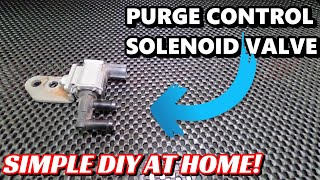
Generation note: The 2000-2007 period covers the entire second generation (GD) Impreza, which had three distinct front-end styles: the 'Bugeye' (2000-2003), 'Blobeye' (2004-2005), and 'Hawkeye' (2006-2007). While the underlying cause is the same, the exact part number for the purge control solenoid valve may differ between these versions. For example, a 2004 2.5L turbo STI model may use part number 16102AA391. 🎬 Watch this step-by-step solenoid installation and routing guide. Always verify the part fitment for your specific model year and trim.
Symptoms You May Notice
- Check Engine Light is on
- A faint fuel smell, particularly around the engine bay
- Slightly reduced fuel economy
- Potential for a rough or unstable idle, sometimes more noticeable after refueling
- Replacing the gas cap. While a loose or faulty gas cap is a common cause for many EVAP codes (like P0442 or P0455), it does not cause an electrical 'low input' fault like P1440.
- Performing a smoke test. A smoke test is used to find physical leaks in the EVAP system. P1440 is an electrical circuit code, so a smoke test will not identify the root cause.
Most Likely Causes
- Faulty Purge Control Solenoid Valve 🔴 High Probability → Shop Vapor Canister Purge Solenoid The solenoid is exposed to constant heat cycles in the engine bay, which can lead to the internal coil windings failing over time, causing an open or short circuit.
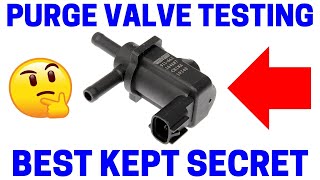
How to confirm: Check the electrical connector for corrosion or damage. Test the solenoid's resistance with a multimeter; it should be within a specific range, typically 29-35 ohms for this platform. 🎬 See how to test and replace the valve at home. An infinite reading (OL) indicates an open circuit, while a near-zero reading indicates a short. Apply 12V directly to the solenoid's pins to listen for an audible 'click', indicating it is actuating.
Typical fix: Replace the purge control solenoid valve. It is typically mounted on the passenger side of the intake manifold and is accessible with basic hand tools.
Est. part cost: $40-$80 - Damaged Wiring or Connector 🟡 Medium Probability Engine bay wiring can become brittle and crack over time due to heat and vibration, leading to a break in the circuit for the purge control solenoid.
How to confirm: Visually inspect the wiring harness leading to the purge control solenoid for any signs of cracking, fraying, or melting. Use a multimeter to check for continuity between the ECU and the solenoid connector. With the key on, one pin on the connector should have battery voltage.
Typical fix: Repair the damaged section of the wire or replace the connector pigtail.
Est. part cost: $5-$25
Rare But Worth Checking
- Faulty Engine Control Unit (ECU): This is extremely rare. Before condemning the ECU, all other possibilities, including the solenoid and its entire wiring circuit, must be exhaustively tested.
Diagnosis Steps
- Verify the code with an OBD-II scanner. Confirm that P1440 is the only code present.
- Locate the purge control solenoid valve. On most 2000-2007 Imprezas, it is mounted on the passenger side of the intake manifold.
- Inspect the electrical connector and wiring. Check for any obvious damage, corrosion, or loose connections. Ensure the connector is seated properly.
- Test the solenoid's resistance. Disconnect the electrical connector and use a multimeter set to Ohms (Ω) to measure the resistance across the two pins on the solenoid. The reading should be between 29 and 35 ohms. An infinite reading (OL) indicates an open circuit (failed solenoid), while a very low reading (near 0) indicates a short (failed solenoid).
- Test the solenoid's operation. Use a power probe or two jumper wires to apply 12V and ground directly to the solenoid's pins. You should hear a distinct click as it opens and closes. If it doesn't click, it has failed.
- Check the wiring circuit. If the solenoid tests good, check for voltage at the connector with the key on, engine off. One wire should have battery voltage (approx. 12V). If not, check the relevant fuse. Then, check the continuity of the ground/signal wire back to the ECU.
- Replace the faulty component. If the solenoid is bad, replace it. If the wiring is damaged, repair it.
Parts You'll Likely Need
- Vapor Canister Purge Solenoid Valve
(OEM #16102AA391 (verify by VIN, common for 2.5L Turbo models))— This is the most common failure point for the P1440 code on this vehicle, as the code indicates an electrical fault in its circuit.
Trusted brands: Subaru (OEM), Dorman, Standard Motor Products
OEM price range: $70-$120
Aftermarket price range: $40-$80
Platform-Specific Known Issues
- Forum Owner Experience: A user on the Ultimate Subaru Message Board with an older, related Impreza model experienced difficulty fueling, which was diagnosed by other members as a stuck-closed vent solenoid, a component in the same EVAP system. While P1440 points to the purge solenoid, a failure in the vent solenoid can sometimes cause related drivability symptoms.
Mechanic-Grade Diagnostic Values
- Purge Control Solenoid Valve Coil Resistance — expected: 29-35 Ohms. Failure: A reading of infinity (Open Loop/OL) or near-zero ohms (short circuit) indicates a failed solenoid.
- Voltage at Purge Solenoid Connector (Key On, Engine Off) — expected: ~12V (Battery Voltage) on one of the two pins.. Failure: A reading of 0V or significantly less than battery voltage suggests a blown fuse, a break in the power supply wire, or an issue with the ECU driver circuit.
Scan Tool Commands That Help
- Subaru Select Monitor (SSM) or equivalent professional scanner (e.g., Foxwell NT510 Elite): Evaporative System Leak Test / Active Test — This is a dealer-level (or advanced aftermarket scanner) function that forces the EVAP system's self-test to run without needing to complete a full drive cycle. It can also be used to command the purge solenoid valve to open and close, allowing a technician to verify its mechanical operation and listen for the characteristic 'click'. This is useful for confirming a repair is successful or for testing a solenoid that passes a resistance test but may be mechanically stuck.
Wiring & Ground Locations
- E5 (Purge control solenoid valve connector) — On the purge control solenoid valve, typically mounted to the passenger side of the intake manifold.. This is the primary connector to inspect for corrosion, damage, or looseness. A 2004 Impreza service manual identifies this connector as E5. A wiring specialty shop, iWire, also identifies this connector by the diagram IDs E4, E64, and E68 depending on the specific model year and trim.
Real Owner Repair Stories
- Go-Parts Repair Database (summarizing common owner experiences) (1997-2002 Subaru Forester (platform mate)) — Check Engine Light with codes P0440/P1440 and vehicle was very difficult to refuel.
❌ Tried (didn't work) Replacing the gas cap., Performing a smoke test which passed, indicating no leaks.
✅ What actually fixed it The issue was a blockage in the EVAP vent system, likely a clogged vent valve or a blocked charcoal canister, which prevented the tank from venting properly during refueling. Clearing the obstruction resolved the code. This highlights that while P1440 is an electrical code for the purge solenoid, related mechanical blockages in the EVAP system can sometimes cause unusual symptoms.
OEM Part Supersession History
16102AA080→16102AA391, 16102AA490, 16102AA450— Standard part evolution and consolidation for newer models.
Heads up: The connector plug is physically compatible across a wide range of Subarus from 1997-2021, including Impreza, WRX, STI, Forester, Legacy, and Outback. However, always verify the specific part number for your vehicle's VIN as internal valve characteristics could differ.
Diagnostic Flowchart
Other Known Issues on This Vehicle
Issues unrelated to this code that are worth knowing about as an owner of this generation:
- Head Gasket Failure (Naturally Aspirated 2.5L EJ25 engines) 🔴 High — Very common, typically between 120,000 and 150,000 miles. Affects non-turbo 2.5L engines from 1999-2011.
- Rear Quarter Panel / Wheel Arch Rust 🟠 Medium — Extremely common on GD-chassis Imprezas, especially in regions with road salt. Rust forms in the rear wheel arches and can spread to the strut towers.
- AVCS Solenoid Failure / Clogged Filters 🟠 Medium — Can occur on models equipped with Active Valve Control System (AVCS), causing rough idle, hesitation, and codes like P0011 or P0021. Often caused by sludge from delayed oil changes clogging small filter screens in the oil lines. (Ref: Subaru has issued TSBs for diagnosing AVCS-related DTCs, such as 02-163-16R, though this applies to later models, the diagnostic principles are similar.)
- Faulty Front Oxygen (O2) Sensor 🟠 Common —
Used vs. New Parts: Buying Guide for This Vehicle
When a used part is the smart pick: A used OEM purge control solenoid from a reputable auto recycler is a very reasonable choice for this repair. The part is not a high-wear item, and failure is typically a random electrical event rather than a predictable end-of-life wear pattern. A used part can offer significant cost savings over a new OEM part.
Donor-vehicle mileage cap: roughly under 150000 miles for the part to have meaningful remaining life.
What to inspect on the donor part:
- Ensure the plastic housing is not cracked or brittle.
- Check that the electrical connector pins are clean, straight, and free of corrosion.
- If possible, test the resistance with a multimeter before purchase; it should be between 29-35 ohms.
- Ask the seller if the donor vehicle had any EVAP-related trouble codes.
OEM-only on this vehicle (don't cheap out):
- Gas Cap - While not the cause of P1440, if you need to replace your gas cap for other reasons, it is strongly recommended to use a genuine Subaru (OEM) part. Aftermarket caps are a frequent cause of other EVAP leak codes.
Aftermarket brands forum-validated for this vehicle:
- Standard Motor Products (SMP)
- Dorman
Brands owners have reported issues with on this vehicle:
- Unbranded, no-name parts from online marketplaces should be avoided due to inconsistent quality control and potential for premature failure.
Real Owner Stories
Aggregated from forums and TSBs cited above. Mileages and costs reflect what owners reported in those sources.
2000-2007 Subaru Impreza
Symptoms: The owner experienced difficulty fueling the vehicle, where the tank would not take fuel properly.
What fixed it: Diagnosis of a stuck-closed vent solenoid, which is a related component in the same EVAP system.
Source hint: Ultimate Subaru Message Board - 'fuel tank willl not take fuel' (2009)
Related OBD-II Codes
Frequently Asked Questions
Where is the purge control solenoid located on my 2000-2007 Impreza?
What resistance should I look for when testing the solenoid with a multimeter?
Can I use a used part to fix the P1440 code on my Subaru?
Are there any specific aftermarket brands recommended for the purge solenoid?
Does the common head gasket issue on the EJ25 engine cause the P1440 code?
Should I replace my gas cap with an aftermarket one if I have EVAP codes?
Helpful Videos
Used OEM Parts in Stock
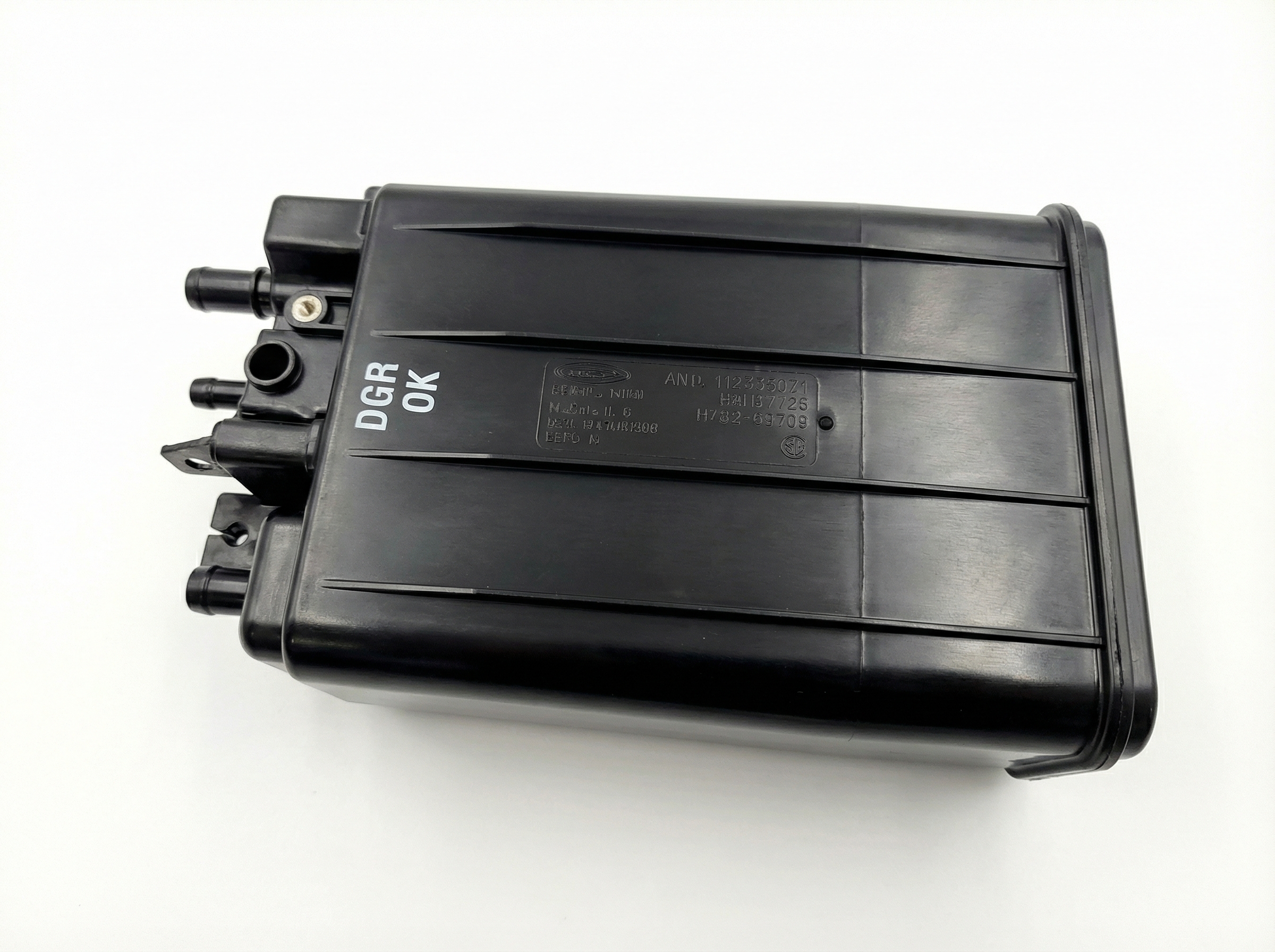
New Aftermarket Parts Available


The information in this article is provided for general reference and educational purposes only. Vehicle specifications, procedures, and part compatibility can vary by production date, trim level, and region. Always consult your vehicle's factory service manual and verify part numbers before purchasing or performing repairs. Safety-critical components such as airbags, seat belts, and braking systems should be installed by a qualified professional.
- Subaru Impreza:
- 🧭 Diagnostic Flowchart
- 🎬 Helpful Videos
- 🛍️ Shop This Part
- What's Unique About the 2000-2007 Subaru Impreza
- Symptoms You May Notice
- Most Likely Causes
- Rare But Worth Checking
- Diagnosis Steps
- Parts You'll Likely Need
- Platform-Specific Known Issues
- Mechanic-Grade Diagnostic Values
- Scan Tool Commands That Help
- Wiring & Ground Locations
- Real Owner Repair Stories
- OEM Part Supersession History
- Other Known Issues on This Vehicle
- Used vs. New Parts: Buying Guide for This Vehicle
- Real Owner Stories
- 2000-2007 Subaru Impreza
- Related OBD-II Codes
- Frequently Asked Questions
- 🎟️ Get 5% Off