

P1440 on 2005-2009 Subaru Outback 2.5L: Causes and Fixes for Fuel Tank Pressure Control
On a 2005-2009 Subaru Outback, code P1440 almost always points to a failed Purge Control Solenoid Valve in the engine bay. It's a DIY-friendly fix with the part costing between $40 and $60 for an aftermarket replacement.
- P1440 on your Outback is an electrical code, not a leak code, and most often points to the purge control solenoid valve in the engine bay.
- Before buying any parts, check that your gas cap is tight and the seal is in good condition.
- The most likely fix is replacing the purge control solenoid, a task that is accessible for most DIY mechanics and requires basic hand tools.
- If you also have trouble filling your gas tank, the problem is more likely with the vent valve near the charcoal canister in the rear of the car.
What's Unique About the 2005-2009 Subaru Outback
Unlike many other manufacturers where P1440 might indicate a general leak, Subaru's definition points specifically to an electrical circuit issue. For the 2005-2009 Outback, this code is very commonly traced to the purge control solenoid valve located conveniently on the intake manifold in the engine bay, rather than a more difficult-to-access component near the fuel tank. This makes diagnosis and repair significantly more straightforward for DIY mechanics compared to other EVAP system faults.
Symptoms You May Notice
- Check Engine Light is on
- A faint fuel smell, particularly around the rear of the vehicle or engine bay
- Slightly reduced fuel economy
- Intermittent rough idle or engine hesitation
- Difficulty filling the fuel tank (gas pump nozzle clicks off repeatedly)
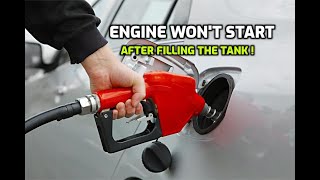
- Difficulty starting the engine immediately after refueling. 🎬 See why your car won't start after filling the tank.
- Replacing oxygen sensors. This code is strictly related to the EVAP system and has no connection to the O2 sensors.
- Replacing the charcoal canister when only the vent valve has failed. Test the individual components before replacing the entire assembly.
Most Likely Causes
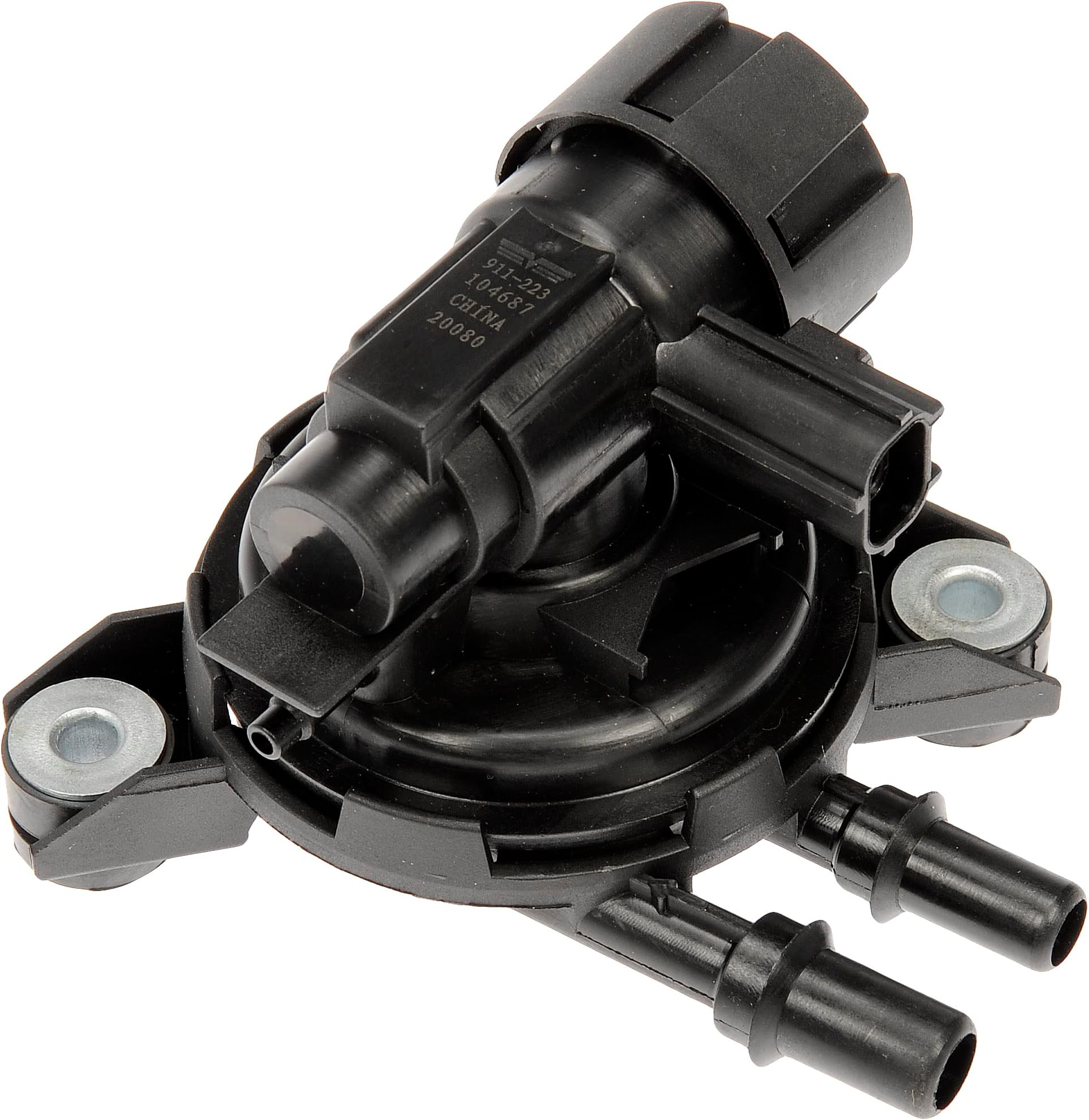
- Faulty Purge Control Solenoid Valve 🔴 High Probability → Shop Vapor Canister Purge Solenoid The solenoid, located on the intake manifold, fails electrically over time, creating the 'low input' condition detected by the ECU. It can also get stuck open or closed, disrupting vapor flow and sometimes causing rough idle or starting issues after refueling.
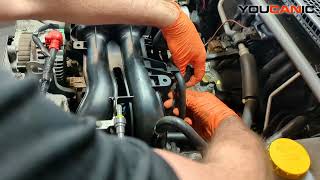
How to confirm: Locate the valve on the passenger side of the intake manifold. With the engine running and warm, the valve should tick and you should feel a slight vacuum on the port coming from the charcoal canister. You can also test the valve's resistance with a multimeter (should be between 29-35 ohms 🎬 Watch: How to test and replace the purge valve solenoid.) or apply 12V to its terminals to listen for a click.
Typical fix: Replace the purge control solenoid valve.
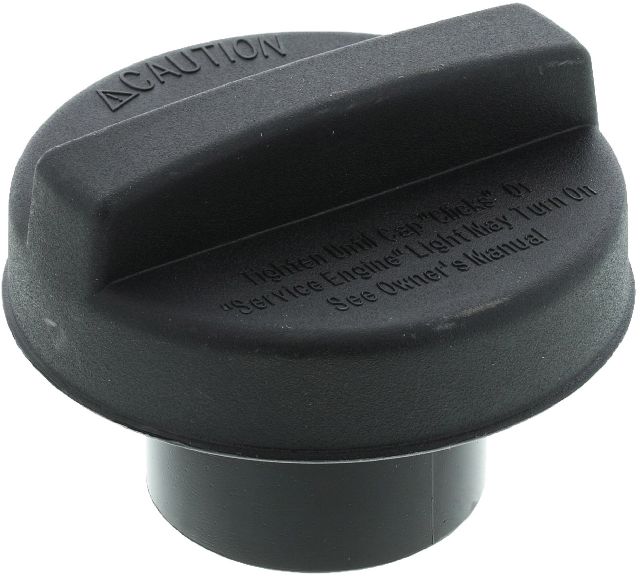
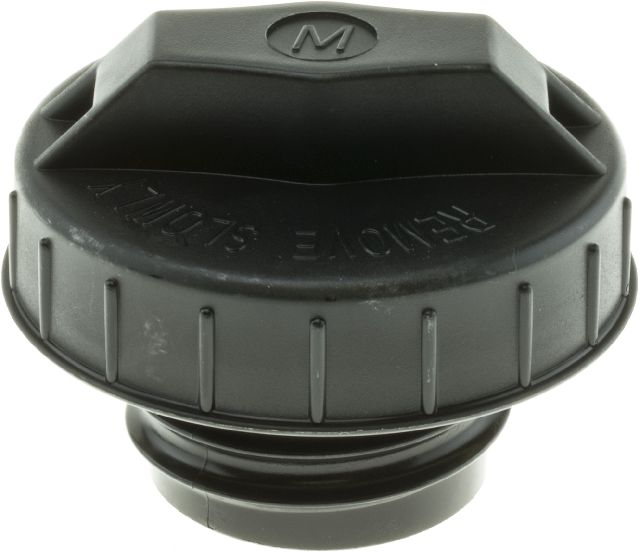
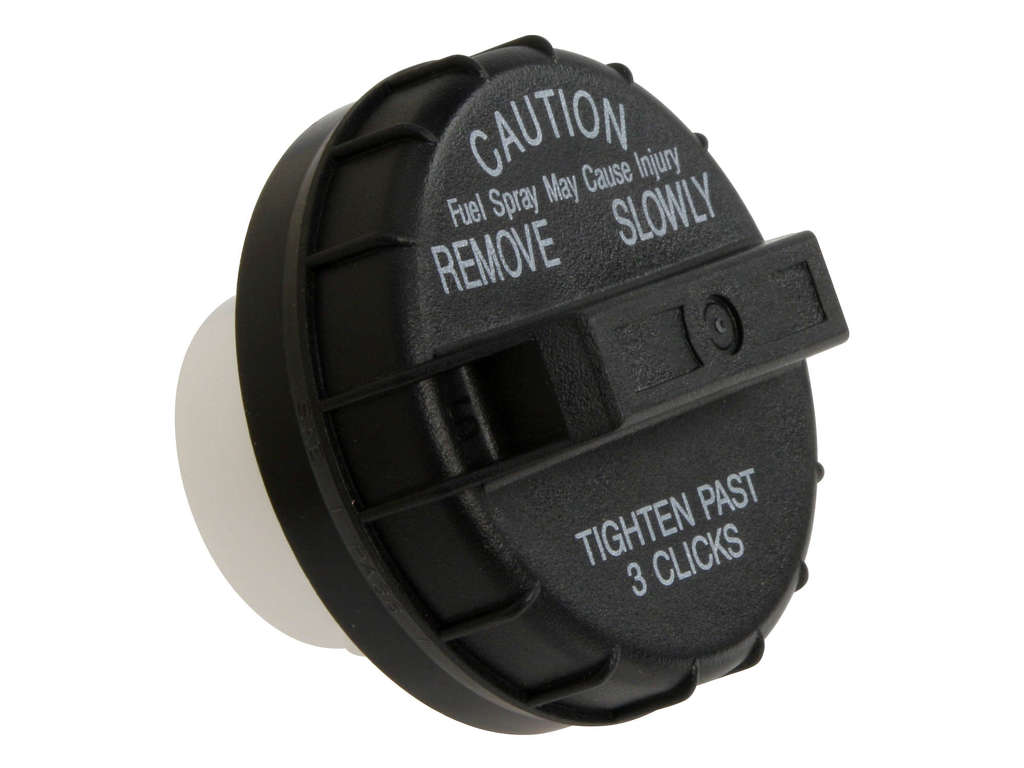
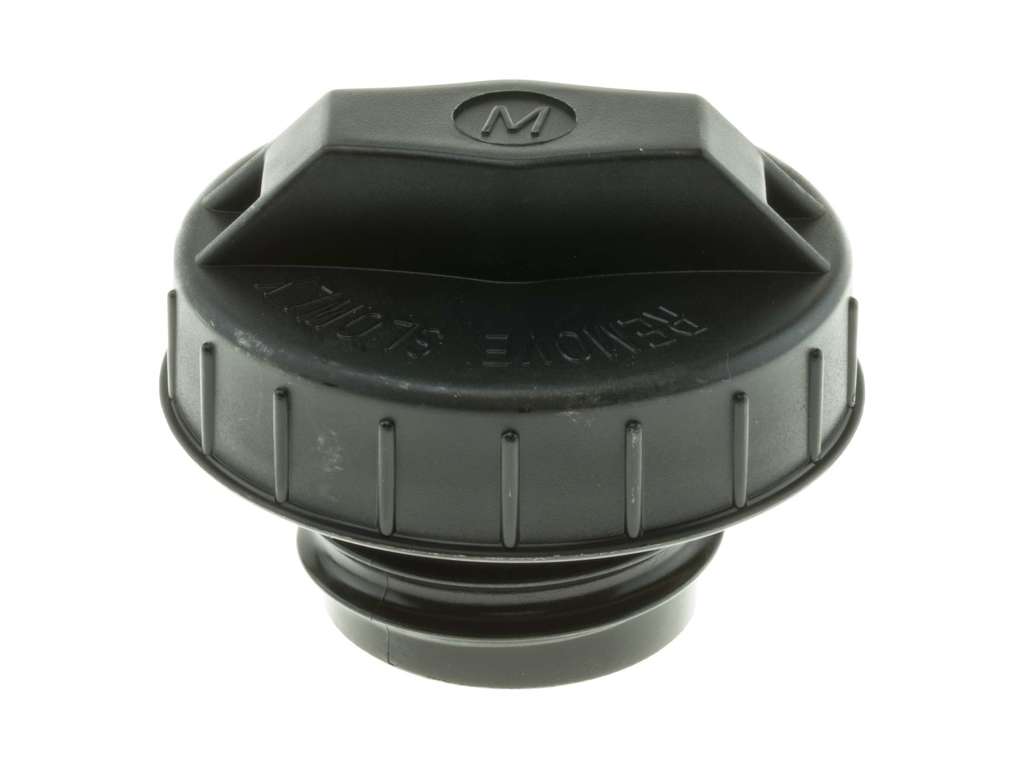
Est. part cost: $40-$90 - Loose or Defective Gas Cap 🟡 Medium Probability → Shop Fuel Tank Cap The rubber seal on the gas cap degrades over time, preventing the EVAP system from holding pressure during its self-test. While less likely to cause the specific P1440 circuit code, it's a common EVAP failure point.
How to confirm: Inspect the gas cap for any visible cracks or brittleness in the rubber O-ring. Ensure it is tightened until it clicks at least once. Replacing it with a new OEM cap is a cheap and effective diagnostic step.
Typical fix: Replace the gas cap.
Est. part cost: $15-$35 - Damaged or Disconnected EVAP Hoses ⚪ Low Probability Rubber hoses in the engine bay and underneath the car become brittle with age and can crack or disconnect, causing a leak or a blockage. A cracked hose near the purge solenoid is a possible cause.
How to confirm: Visually inspect all accessible EVAP hoses, especially those connected to the purge solenoid in the engine bay and the charcoal canister near the rear wheel, for cracks, kinks, or loose connections. A smoke test is the definitive way to find a hard-to-see leak.
Typical fix: Replace the damaged section of hose.
Est. part cost: $10-$30 - Faulty Canister Vent Valve/Solenoid ⚪ Low Probability → Shop Vapor Canister
How to confirm: Diagnosis is more involved and may require a bi-directional scan tool to command the valve open and closed. It can also be removed and bench-tested with a 12V source. Resistance should be 30-50 Ohms.
Typical fix: Replace the vent valve solenoid, which may be integrated with the charcoal canister.
Est. part cost: $60-$150
Rare But Worth Checking
- Damaged Wiring or Connector: Since P1440 is a circuit code, a frayed wire or corroded connector pin leading to the purge control solenoid can be the root cause. This should be suspected if a new valve does not fix the code.
Diagnosis Steps
- Check the Gas Cap: Ensure it is tight and the seal is not cracked or worn. If in doubt, replace it with an OEM cap.
- Inspect Hoses: Visually inspect the EVAP hoses connected to the purge control solenoid on the intake manifold for any obvious cracks or disconnections.
- Test the Purge Control Solenoid Valve: This is the most likely culprit. Locate it in the engine bay on the passenger side of the intake manifold. With the engine warm, disconnect the hose from the canister side and feel for vacuum. If there is no vacuum, the valve may be faulty.
- Electrical Test of Purge Solenoid: Disconnect the electrical connector. Use a multimeter to measure the resistance across the two pins on the solenoid. A reading outside the 29-35 ohm range suggests it has failed. You can also briefly apply 12V power to the pins; a healthy solenoid will make an audible 'click'.
- Inspect Vent System: If you have trouble filling the gas tank, inspect the vent valve and charcoal canister at the rear of the vehicle for blockages or damage.
- Perform a Smoke Test: If the above steps do not reveal the cause, a smoke test is the most effective way to find hairline cracks or hidden leaks in the EVAP lines.
Parts You'll Likely Need
- Vapor Canister Purge Control Solenoid Valve
(OEM #16102AA400 (interchangeable with K5T48478))— This is the most common part to fail and directly cause the P1440 'low input' circuit code on this Subaru.
Trusted brands: Subaru (OEM), Standard Motor Products, Dorman
OEM price range: $60-$90
Aftermarket price range: $40-$60 - Fuel Cap
(OEM #42031AE010 (Verify with VIN))— A worn-out gas cap seal is a common cause for many EVAP system codes and is an inexpensive first step in diagnosis.
Trusted brands: Subaru (OEM), Stant
OEM price range: $25-$35
Aftermarket price range: $15-$25
Related Codes That Often Appear With This One
- P0442 — Indicates a small EVAP leak. If the P1440 is caused by a stuck-open purge valve or a cracked hose, the system will also detect it as a small leak.
- P0455 — Indicates a large EVAP leak. This is most often seen with P1440 if the gas cap is completely loose or missing.
- P1443 — This is another Subaru-specific code, often pointing to a fault with the vent control solenoid function. If you have difficulty refueling along with a CEL, a fault in the vent system is likely.
Technical Service Bulletins (TSBs) & Recalls
- No specific Technical Service Bulletins (TSBs) were found to directly address the P1440 code for the 2005-2009 Subaru Outback during research. TSBs for this era often relate to other systems like CVT diagnostics or carbon cleaning procedures.
Platform-Specific Known Issues
- Purge Solenoid vs. Rusted Filler Neck: → Shop Vapor Canister While some older Subaru models, like the 1997-2002 Forester, are notorious for throwing EVAP codes due to a rusted fuel filler neck, this is not a common cause for the 2005-2009 Outback. For this specific platform, the P1440 code points almost exclusively to the purge control solenoid valve located in the engine bay.
Mechanic-Grade Diagnostic Values
- Purge Control Solenoid Valve Coil Resistance — expected: 29-35 Ohms. Failure: A reading of infinity (Open Loop) or near zero ohms (short circuit) indicates a failed solenoid.
- Voltage at Purge Solenoid Connector (Key On, Engine Off) — expected: ~12V (Battery Voltage) on one pin. Failure: No voltage suggests a blown fuse or a break in the power supply wire.
- EVAP Canister Vent (Drain) Valve Solenoid Resistance — expected: 30 - 50 Ohms. Failure: A reading significantly outside this range indicates the solenoid has failed.
Scan Tool Commands That Help
- Subaru Select Monitor: Evaporative System Leak Test — This is a dealer-level forced test to run the entire EVAP monitor sequence without having to perform a full drive cycle. It can be used to verify a repair is successful after replacing a component.
- Subaru Select Monitor (or equivalent professional scanner): Actuation test for Purge Control Solenoid Valve — This command manually cycles the purge solenoid on and off, allowing a technician to listen for the 'click' of an operating solenoid and confirm the ECU driver and wiring are functional.
Wiring & Ground Locations
- Purge Control Solenoid Connector — On the passenger side of the intake manifold, connected to the purge control solenoid valve.. This 2-pin connector provides power and the ground-side control signal from the ECM. Corrosion or damage here is a direct cause of a P1440 circuit fault. One pin should have battery voltage with the key on.
- Intake Manifold Grounds — There are several ground points on the intake manifold. The ECU itself is often grounded via the manifold.. A poor ground connection at the intake manifold can cause erratic sensor readings and intermittent circuit faults for components controlled by the ECU, including the purge solenoid. Ensuring these grounds are clean and tight is a critical step if a new solenoid doesn't fix the code.
- Main Engine Grounds — Key grounds include a strap from the passenger-side cylinder head to the chassis, one from the driver's side head to the chassis, and one near the starter.. While not directly for the purge solenoid, overall engine grounding integrity is crucial for stable ECU operation. Degraded main grounds can lead to a host of seemingly unrelated electrical issues and fault codes.
OEM Part Supersession History
16102AA400→16102AA490— Standard part revision and consolidation by the manufacturer.
Heads up: The new part number (16102AA490) is a direct replacement and is fully compatible with vehicles that originally used 16102AA400.
Diagnostic Flowchart
Other Known Issues on This Vehicle
Issues unrelated to this code that are worth knowing about as an owner of this generation:
- Head Gasket Failure 🔴 High — Very common between 80,000 and 150,000 miles. The EJ253 SOHC engine is known for external oil leaks from the head gasket, often dripping onto the exhaust manifold causing a burning smell.
- Premature Catalytic Converter Failure 🟠 Medium — Commonly occurs around 100,000 miles, often presenting with a P0420 code and sometimes a rattling noise from the exhaust. Failure can be caused by other engine issues or degradation of the converter itself.
- Front CV Axle Clicking/Failure 🟠 Medium — A clicking or popping sound during turns is a frequent sign of a failing outer CV joint, common with age and mileage. Owners strongly recommend using OEM replacement axles to avoid vibration issues with aftermarket parts.
- Rear Suspension 'Ghostwalking' 🟡 Low — Some owners report a feeling of instability from the rear of the car at highway speeds. This has been attributed to worn rear trailing arm bushings. Upgrading to polyurethane bushings is a common fix.
Used vs. New Parts: Buying Guide for This Vehicle
When a used part is the smart pick: A used purge control solenoid from a reputable auto recycler is a reasonable choice. The failure mode is typically a sudden electrical open/short rather than gradual wear, so a working used part has a good chance of having a long remaining life.
Donor-vehicle mileage cap: roughly under 120000 miles for the part to have meaningful remaining life.
What to inspect on the donor part:
- Ask the recycler to test the resistance before purchase; it should be within the 29-35 Ohm range.
- Visually inspect the plastic housing and connector for cracks, brittleness, or heat damage.
- Ensure the vacuum nipples are intact and not broken or cracked.
OEM-only on this vehicle (don't cheap out):
- Fuel Cap - Aftermarket gas caps are notorious for having incorrect seal designs or vent pressures, often causing more EVAP codes than they solve. Always use a genuine Subaru (OEM) cap.
Aftermarket brands forum-validated for this vehicle:
- Standard Motor Products (SMP)
- Dorman
Brands owners have reported issues with on this vehicle:
- No-name, unbranded parts from online marketplaces should be avoided due to inconsistent quality control.
Real Owner Stories
Aggregated from forums and TSBs cited above. Mileages and costs reflect what owners reported in those sources.
2005 Subaru Outback 2.5L
Symptoms: Rough idle and difficulty starting the engine specifically after refueling.
What fixed it: Fault in the purge/vent solenoid system.
Source hint: Reddit r/MechanicAdvice - 'Codes P0174 and P1443 - 05 Subaru Outback'
Related OBD-II Codes
Frequently Asked Questions
Is there a specific TSB for the P1440 code on my 2005-2009 Subaru Outback?
Should I check the fuel filler neck for rust as the cause of my EVAP code?
Where is the purge control solenoid located on the EJ253 2.5L engine?
What electrical resistance should I look for when testing the purge solenoid?
Can I use a used part to fix this issue, and what should I look for?
Why does the gas pump nozzle keep clicking off when I try to fill my tank?
Helpful Videos
Used OEM Parts in Stock
New Aftermarket Parts Available


The information in this article is provided for general reference and educational purposes only. Vehicle specifications, procedures, and part compatibility can vary by production date, trim level, and region. Always consult your vehicle's factory service manual and verify part numbers before purchasing or performing repairs. Safety-critical components such as airbags, seat belts, and braking systems should be installed by a qualified professional.
- Subaru Outback:
- 🧭 Diagnostic Flowchart
- 🎬 Helpful Videos
- 🛍️ Shop This Part
- What's Unique About the 2005-2009 Subaru Outback
- Symptoms You May Notice
- Most Likely Causes
- Rare But Worth Checking
- Diagnosis Steps
- Parts You'll Likely Need
- Related Codes That Often Appear With This One
- Technical Service Bulletins (TSBs) & Recalls
- Platform-Specific Known Issues
- Mechanic-Grade Diagnostic Values
- Scan Tool Commands That Help
- Wiring & Ground Locations
- OEM Part Supersession History
- Other Known Issues on This Vehicle
- Used vs. New Parts: Buying Guide for This Vehicle
- Real Owner Stories
- 2005 Subaru Outback 2.5L
- Related OBD-II Codes
- Frequently Asked Questions
- 🎟️ Get 5% Off