

P1440 on 1999-2005 Suzuki Grand Vitara: EVAP System Fault Guide
P1440 on a Suzuki Grand Vitara likely indicates a fault in the evaporative emissions (EVAP) system. While the exact Suzuki definition is not well-documented, common causes for this code on other vehicles include a loose gas cap, a faulty purge valve, or cracked vacuum hoses. Start by checking the gas cap, as it's the simplest and most common fix for EVAP issues.
- The exact definition of P1440 for a 1999-2005 Suzuki Grand Vitara is not well-documented. It almost certainly indicates a fault in the EVAP (emissions) system.
- The easiest and most common fix is to check, tighten, or replace the gas cap.
- If the gas cap isn't the issue, the most likely culprits are the EVAP purge valve in the engine bay or a cracked vacuum hose.
- The Chevrolet Tracker (1999-2004) is a direct platform mate, and information about its EVAP system repairs can be relevant.
- The OEM part number for the likely-faulty purge valve is 18117-65D00.
What's Unique About the 1999-2005 Suzuki Grand Vitara
The 1999-2005 Grand Vitara belongs to a single generation, simplifying diagnostics. However, Suzuki's specific definition for P1440 is not widely published, unlike for brands such as Nissan or Ford. This lack of specific information means diagnosis must rely on general EVAP system troubleshooting principles rather than Suzuki-specific known issues for this particular code. Owners should be cautious about replacing parts based on another manufacturer's definition for P1440. A key platform-mate, the Chevrolet Tracker (1999-2004), shares the same chassis and engine options and also experiences general EVAP system faults that can trigger similar codes.
Symptoms You May Notice
- Check Engine Light is on
- A faint smell of fuel near the vehicle
- Slightly reduced fuel economy
- Difficulty starting the vehicle immediately after refueling
- Rough idle
- Replacing the oxygen sensor. EVAP system faults are unrelated to the oxygen sensors, although a severe vacuum leak from a stuck-open purge valve could eventually affect air-fuel ratio readings.
- Replacing the catalytic converter. While EVAP issues can slightly affect the air-fuel mixture, they are not a direct cause of catalytic converter failure.
Most Likely Causes
- Loose or Faulty Gas Cap 🔴 High Probability → Shop Fuel Tank Cap Gas cap seals degrade over time and are often the simplest and most common point of failure in any EVAP system.
How to confirm: Ensure the gas cap clicks at least three times when tightened. Inspect the rubber seal on the cap for cracks, stiffness, or damage. A new, OEM-spec cap is an inexpensive and effective test.
Typical fix: Tighten or replace the gas cap.
Est. part cost: $10-$30 - Faulty EVAP Purge Valve/Solenoid 🟡 Medium Probability → Shop Vapor Canister This valve is constantly working while the engine runs and can get stuck open or closed over time, a common failure on many vehicles.
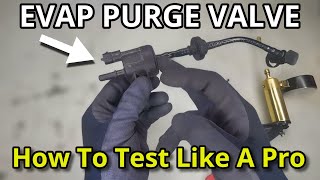
How to confirm: With the engine off, try to blow through the valve; it should be closed. Apply 12V power to the solenoid terminals; it should click open and allow air to pass. A vacuum pump can also be used to check if it holds vacuum when closed. A service manual provides detailed circuit inspection steps. 🎬 Watch: This step-by-step guide shows you how to test the solenoid.
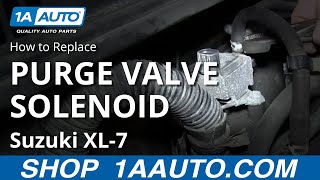
Typical fix: Replace the purge valve. On the Grand Vitara, it is typically located in the engine bay, at the left rear, connected by two hoses 🎬 See this walkthrough on how to replace the purge valve. and an electrical connector.
Est. part cost: $40-$90 - Cracked or Disconnected EVAP Hoses 🟡 Medium Probability Rubber hoses become brittle and crack with age and exposure to engine heat and the elements, leading to vacuum leaks.
How to confirm: Visually inspect all accessible EVAP hoses between the engine, purge valve, charcoal canister, and fuel tank for cracks, holes, or loose connections. A smoke test is the most effective way to find small, hard-to-see leaks.
Typical fix: Replace the damaged section of hose.
Est. part cost: $5-$25 - Faulty EVAP Vent Valve/Solenoid ⚪ Low Probability → Shop Vapor Canister Located near the charcoal canister under the vehicle, this valve is exposed to road debris, moisture, and even spider webs, which can cause it to fail or become blocked.
How to confirm: Test the valve for proper operation with a scan tool or by applying 12V power. It is normally open and should close when energized. Check for blockages from dirt or insects. A clicking sound does not guarantee it is sealing properly.
Typical fix: Replace the vent valve. Note that on older models, this part may be discontinued, requiring a universal part to be adapted.
Est. part cost: $50-$120
Rare But Worth Checking
- Leaking or Saturated Charcoal Canister: → Shop Vapor Canister The charcoal canister stores fuel vapors and is located near the fuel tank, typically at the rear driver's side. It can fail by cracking or becoming saturated with liquid fuel if the gas tank is habitually overfilled. This can cause a persistent fuel smell and other EVAP codes.
- Faulty Fuel Tank Pressure Sensor: → Shop Fuel Tank This sensor reports the pressure in the EVAP system to the ECU. If it sends incorrect data, the computer may set a fault code even if no leak exists.
- Blocked EVAP Canister Vent Line: → Shop Vapor Canister On some Suzuki models, spiders have been known to build webs in the EVAP canister's air vent line, causing a restriction. This can create excessive negative pressure in the fuel tank, potentially deforming it. Suzuki issued a TSB for this issue on Kizashi models.
Diagnosis Steps
- Read the code with an OBD-II scanner to confirm P1440 is the primary code present.
- Inspect the gas cap. Ensure it is tight and the seal is in good condition. If in doubt, replace it with an OEM-spec cap, as this is the most common and cheapest fix.
- Clear the code and drive for a few days to see if it returns. If it does not, the gas cap was the likely issue.
- If the code returns, perform a visual inspection of all EVAP hoses in the engine bay and under the vehicle, looking for obvious cracks or disconnections.
- Locate and test the EVAP purge valve in the engine bay (left rear of the engine). Check if it's stuck open or closed using a hand-held vacuum pump or by applying 12V power. It should hold vacuum when off and allow flow when powered.
- If the purge valve and hoses appear fine, the next step is a smoke test. This involves injecting low-pressure smoke into the EVAP system to find leaks that are not visible to the naked eye.
- While the system is being smoke tested, check for leaks from the vent valve (near the canister), the charcoal canister itself, and the fuel tank pressure sensor connections.
- If no leaks are found, the vent valve and pressure sensor should be tested electrically with a multimeter and scan tool. Command the vent valve closed and see if it seals.
- If all components test good and no leaks are found, there could be a rare issue with the ECU or its wiring, but this is highly unlikely.
Parts You'll Likely Need
- Gas Cap — This is the most common and easiest-to-fix failure point for any EVAP system code.
Trusted brands: Stant, Gates, Suzuki (OEM)
OEM price range: $25-$40
Aftermarket price range: $10-$30 - Vapor Canister Purge Valve / Solenoid
(OEM #18117-65D00 (cross-reference K5T48295))— This is a moving part that can stick or fail electrically, making it a frequent cause of EVAP codes like P1440 on many vehicles.
Trusted brands: Standard Motor Products (SMP), Dorman, Bosch
OEM price range: $70-$120
Aftermarket price range: $40-$90
Related Codes That Often Appear With This One
- P0440 — P0440 is a general EVAP system malfunction code. If the condition that triggers P1440 is also seen as a general fault, both may appear.
- P0442 — P0442 indicates a small EVAP leak. Since P1440 on other makes can mean a small leak or purge problem, these codes can be related.
- P0455 — P0455 indicates a large EVAP leak. It's less common to see with a small leak code, but a major component failure could be interpreted differently by the ECU at different times.
- P0443 — P0443 specifically points to a malfunction in the purge control valve circuit, making it a common companion code if the purge valve itself has failed electrically.
Technical Service Bulletins (TSBs) & Recalls
- While no TSBs specifically for P1440 on the Grand Vitara were found, Suzuki has issued TSBs for related EVAP issues on other models. For example, TSB TS 03 08144 for the 2010-2013 Kizashi addresses a restricted EVAP canister air vent line caused by spider webs, which could be a theoretical possibility on the Grand Vitara.
Platform-Specific Known Issues
- Discontinued EVAP Vent Valve: → Shop Vapor Canister Vent Valve In a documented case on a similar Suzuki Vitara, the canister vent valve was found to be faulty but was no longer available as an OEM part. The repair required adapting a universal-style vent valve to fit the vehicle. This could be a potential issue for older Grand Vitara models.
Mechanic-Grade Diagnostic Values
- EVAP Canister Purge Valve Solenoid Resistance — expected: 15 - 30 Ohms. Failure: A reading far outside this range (open circuit or short) indicates a failed solenoid coil.
- Fuel Tank Pressure (FTP) Sensor Voltage — expected: Approximately 2.5V with the gas cap off (atmospheric pressure). Voltage should decrease as vacuum is applied and increase as pressure is applied.. Failure: Voltage stuck high (e.g., 5V) or low (e.g., 0V), or does not change when pressure/vacuum is applied, indicates a faulty sensor or circuit issue.
Scan Tool Commands That Help
- Suzuki Scan Tool (SDT / SDT-II): MISC TEST Mode — This function is used to perform active tests on various components. For the EVAP system, it can be used to command the EVAP canister purge valve to open or close, allowing a technician to verify its mechanical and electrical operation without removing it from the vehicle.
- Professional Aftermarket Scan Tool (e.g., Autel, Snap-on): EVAP System Test / Purge/Vent Solenoid Actuation — Modern professional scanners have bidirectional capabilities to command the purge and vent valves on and off. This is essential for testing the solenoids' function and for sealing the system to perform a leak test with a smoke machine or by observing the fuel tank pressure sensor.
Wiring & Ground Locations
- EVAP Canister Purge Valve — Located at the left rear of the engine, in the engine bay. It will have two vacuum hoses and one electrical connector attached.. This is the primary component implicated by a P1440 'Purge Valve Stuck Open' definition on other makes. Knowing its exact location is critical for testing and replacement.
- EVAP System Wiring (H25 V6 Engine) — The service manual for the H25 engine (DTC P0443) contains a detailed wiring diagram showing the connection between the main relay, the purge valve, and the ECM (PCM).. If the purge valve itself tests good, the next step is to check for opens or shorts in the wiring between the valve and the ECM. This diagram is essential for tracing the circuit.
Real Owner Repair Stories
- YouTube video on a similar GM vehicle (Vehicle driven frequently on limestone/gravel roads) — Persistent P0440 and P0443 EVAP codes
❌ Tried (didn't work) Initial inspection did not reveal obvious cause.
✅ What actually fixed it The entire EVAP system was contaminated with fine road dust. The charcoal canister was cut open and found to be saturated with dust that had been pulled all the way through the system to the purge valve. The fix required replacing the charcoal canister and purge solenoid, and relocating the vent valve's air intake filter to a cleaner location (engine bay) using a length of heater hose. - YouTube video on a 2004 Suzuki Vitara (2004 Suzuki Vitara (mechanically similar)) — EVAP leak code
❌ Tried (didn't work) A smoke test quickly identified a leak.
✅ What actually fixed it The canister vent valve was leaking badly. The technician confirmed it would click when commanded by a scan tool, but it was not sealing internally. The OEM part was discovered to be discontinued and unavailable from Suzuki or aftermarket suppliers. The final repair involved adapting a common GM-style vent valve to fit the Suzuki's hoses and wiring connector.
"I Checked Everything" — The Actual Cause
- In cases on other vehicles where a P1440 is present but a smoke test passes, the cause has been found to be an intermittently failing purge or vent solenoid that tests fine when cold but fails under specific operating conditions. Another possibility is a hairline crack in the body of the charcoal canister, often near the mounting tabs, which only leaks under specific thermal or vibration conditions and can be missed during a static smoke test.
Model Year Variations Within This Range
- 2002-2005: The 2.5L H25A V6 engine received a 10 horsepower increase starting in the 2002 model year. This does not directly affect the EVAP system's operation but is a notable change within the generation.
- 2003-2005: The dashboard and center console were restyled for the 2003 model year. This does not impact engine or emissions components.
Diagnostic Flowchart
Used vs. New Parts: Buying Guide for This Vehicle
When a used part is the smart pick: For major structural components like the charcoal canister or specific brackets, a used part from a junkyard can be a viable option, especially if the new part is expensive or hard to find. Inspect the used part carefully for any cracks or damage, particularly around the hose ports and mounting tabs.
Donor-vehicle mileage cap: roughly under 80000 miles for the part to have meaningful remaining life.
What to inspect on the donor part:
- Check the donor vehicle's history if possible; avoid parts from vehicles operated in heavily salted (rust belt) regions.
- For a charcoal canister, ensure there are no visible cracks or signs of physical damage.
- For any valve, check that the electrical connector pins are clean and free of corrosion.
- Ensure all plastic hose nipples are intact and not brittle or broken.
OEM-only on this vehicle (don't cheap out):
- Gas Cap: While aftermarket caps are available, many technicians recommend using an OEM (Original Equipment Manufacturer) gas cap to ensure a perfect seal, as this is a very common and sensitive leak point in the EVAP system.
Aftermarket brands forum-validated for this vehicle:
- Standard Motor Products (SMP)
- Dorman
- Bosch
Brands owners have reported issues with on this vehicle:
- No-name, unbranded electronic parts (solenoids, sensors) from online marketplaces should be avoided, as their quality control and longevity can be highly questionable.
Real Owner Stories
Aggregated from forums and TSBs cited above. Mileages and costs reflect what owners reported in those sources.
2004 Suzuki Vitara
Symptoms: Check Engine Light on due to an EVAP leak.
What fixed it: The technician diagnosed a leaking canister vent valve, but the OEM part was discontinued. The repair was completed by adapting a common GM vent valve to fit.
Source hint: South Main Auto Repair (YouTube) - EVAP Diagnosis on a Suzuki Vitara
2010-2013 Kizashi
Symptoms: Check Engine Light due to a restricted EVAP canister air vent line.
What fixed it: The root cause was found to be spider webs creating a blockage in the EVAP canister air vent line. The fix was to clear the obstruction.
Source hint: TSB TS 03 08144
Related OBD-II Codes
Frequently Asked Questions
My mechanic says the EVAP vent valve is bad on my older Grand Vitara, but he can't find the part. What are my options?
Does this P1440 information also apply to my Chevrolet Tracker?
I live in an area with a lot of spiders. Could they really cause an EVAP code on my Suzuki?
Where is the EVAP purge valve located on my 1999-2005 Grand Vitara?
Is it safe to just tighten my gas cap and clear the P1440 code?
Should I use a cheap aftermarket gas cap to fix this code?
What should I look for when buying a used charcoal canister from a junkyard?
Helpful Videos
We Have This Part in Stock


The information in this article is provided for general reference and educational purposes only. Vehicle specifications, procedures, and part compatibility can vary by production date, trim level, and region. Always consult your vehicle's factory service manual and verify part numbers before purchasing or performing repairs. Safety-critical components such as airbags, seat belts, and braking systems should be installed by a qualified professional.
- Suzuki Grand Vitara:
- 🧭 Diagnostic Flowchart
- 🎬 Helpful Videos
- 🛍️ Shop This Part
- What's Unique About the 1999-2005 Suzuki Grand Vitara
- Symptoms You May Notice
- Most Likely Causes
- Rare But Worth Checking
- Diagnosis Steps
- Parts You'll Likely Need
- Related Codes That Often Appear With This One
- Technical Service Bulletins (TSBs) & Recalls
- Platform-Specific Known Issues
- Mechanic-Grade Diagnostic Values
- Scan Tool Commands That Help
- Wiring & Ground Locations
- Real Owner Repair Stories
- "I Checked Everything" — The Actual Cause
- Model Year Variations Within This Range
- Used vs. New Parts: Buying Guide for This Vehicle
- Real Owner Stories
- 2004 Suzuki Vitara
- 2010-2013 Kizashi
- Related OBD-II Codes
- Frequently Asked Questions
- 🎟️ Get 5% Off