

P1440 on 2001-2006 Suzuki XL-7 2.7L V6: EVAP System Fault Causes and Fixes
On a 2001-2006 Suzuki XL-7, code P1440 almost always points to a problem in the EVAP system. The most likely fix is replacing the engine-mounted EVAP purge valve, which is a common failure point and a simple DIY job. Before buying parts, always check for a loose or worn-out gas cap first, as this is a frequent and simple-to-fix cause.
- Start your diagnosis with the easiest and cheapest fix: check that your gas cap is tight and its seal is not cracked.
- The most likely culprit for P1440 on the 2001-2006 XL-7 is the engine-mounted EVAP purge valve (Part No. 18117-52G00), which is an easy and affordable DIY replacement.
- A key symptom pointing directly to a failed purge valve is difficulty starting the engine immediately after refueling.
- If replacing the purge valve and gas cap doesn't solve the issue, a smoke test is the most reliable way to find a leak in the system's hoses or other components.
What's Unique About the 2001-2006 Suzuki XL-7
What makes this code particularly straightforward on the first-generation Suzuki XL-7 is the high failure rate and easy accessibility of the EVAP purge valve. Unlike on many other vehicles where EVAP components are buried, the purge valve on the H27A V6 engine is located right on top of the engine, held by two 10mm bolts, making it a common and relatively simple DIY repair that can be done in under 30 minutes. While other EVAP faults are possible, owner and mechanic experiences frequently point to this specific valve as the primary culprit for P1440.
Symptoms You May Notice
- Check Engine Light is on
- A noticeable smell of gasoline, particularly around the vehicle.
- Slightly rough idle or difficulty starting immediately after refueling.
- Minor decrease in fuel economy.
- Engine may stumble or hesitate upon takeoff from a stop.
- Replacing the O2 sensors. Oxygen sensors are not directly related to the EVAP system and will not fix a P1440 code.
- Replacing the EGR valve. While the EGR system on the XL-7 is prone to clogging, it has its own set of codes (like P0401) and is a separate system from the EVAP system.
Most Likely Causes
- Faulty EVAP Purge Valve 🔴 High Probability → Shop Vapor Canister This specific part is a well-documented common failure item on the H27A engine. It can get stuck open or closed due to carbon buildup or electrical failure, causing an improper purge flow.
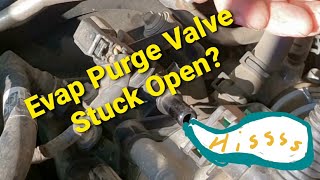
How to confirm: The valve is located on top of the engine. With the engine off, disconnect the valve and its hoses. Try to blow through it; a healthy valve should be closed and not allow air to pass. 🎬 Watch: A quick and easy test for a stuck valve. You can also test it by applying 12V to its terminals to see if it clicks open. A multimeter test on the solenoid should show a resistance between 15 and 30 Ohms.
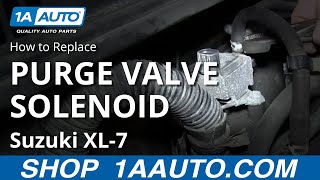
Typical fix: Replace the EVAP purge valve. This involves removing two 10mm bolts, two hose clamps (which can be moved with pliers), and one electrical connector. 🎬 Watch: See this step-by-step purge valve replacement walkthrough.
Est. part cost: $40-$90 - Loose or Faulty Gas Cap 🟡 Medium Probability → Shop Fuel Tank Cap This is a common issue on all vehicles, not specific to the XL-7. Age and use degrade the cap's seal.
How to confirm: Ensure the gas cap is tightened until it clicks multiple times. Inspect the rubber seal on the cap for any cracks, tears, or signs of dry rot. A damaged seal will not hold pressure. Many owners recommend using an OEM replacement cap, as some aftermarket caps do not seal correctly.
Typical fix: Tighten the cap or replace it with a new OEM or high-quality aftermarket cap if the seal is damaged.
Est. part cost: $15-$30 - Cracked or Disconnected EVAP Hoses 🟡 Medium Probability Over time, the rubber hoses in the engine bay and underneath the vehicle can become brittle from heat and age, leading to cracks and vacuum leaks, especially at connection points and bends.
How to confirm: Visually inspect all EVAP lines running from the charcoal canister (near the gas tank) to the purge valve on the engine. A smoke test is the most definitive way to find small, hard-to-see leaks.
Typical fix: Replace the cracked section of hose. In many cases, this can be done with bulk vacuum hose of the correct diameter.
Est. part cost: $10-$25 - Failed Canister Vent Valve/Solenoid ⚪ Low Probability → Shop Vapor Canister
How to confirm: This valve is located near the charcoal canister by the fuel tank. It is normally open and closes when the system runs a self-test. It can be tested with a scan tool or by applying voltage to see if it functions. It can also get stuck due to dirt, debris, or even spider webs, which is a known issue on some Suzuki models.
Typical fix: Replace the canister vent valve.
Est. part cost: $50-$100
Rare But Worth Checking
- Leaking Charcoal Canister: → Shop Vapor Canister The plastic body of the canister itself can develop cracks over time. This is usually found with a smoke test after all other components have been checked. The canister is located under the vehicle, near the fuel tank.
- Faulty Fuel Tank Pressure Sensor: → Shop Fuel Tank If the sensor that monitors EVAP system pressure provides incorrect readings, the ECM may set a P1440 code even if there is no physical leak. This is typically diagnosed after a smoke test finds no leaks and all valves test correctly.
Diagnosis Steps
- Check the Gas Cap: Ensure it is tight (at least three clicks). Remove it and inspect the rubber O-ring for cracks or damage. If it looks worn, replace it, preferably with an OEM part.
- Clear the Code and Drive: After checking the cap, clear the code with a scanner and drive the vehicle for a few days to see if it returns. If it doesn't, the cap was the issue.
- Inspect Engine Bay Hoses: If the code returns, perform a careful visual inspection of the EVAP hoses in the engine compartment, especially the ones connected to the purge valve. Look for obvious cracks or disconnections.
- Test the EVAP Purge Valve: Locate the purge valve on the engine. Disconnect the electrical connector and hoses. Attempt to blow through the valve; it should be closed and block airflow. If air passes through, the valve is stuck open and must be replaced. For a more thorough test, apply 12V to the connector pins and listen for a click, confirming the solenoid actuates.
- Perform a Smoke Test: If the visual inspection and purge valve test do not reveal the problem, the most effective next step is a smoke test. A mechanic will introduce vaporized smoke into the EVAP system to quickly and accurately find the source of any leaks in hoses, the charcoal canister, or other components.
- Inspect Underbody Components: If a smoke test is not possible, visually inspect the charcoal canister and vent valve near the fuel tank for any physical damage or cracked hoses. The vent valve can be removed and tested for function by applying 12V.
Parts You'll Likely Need
- EVAP Canister Purge Valve
(OEM #18117-52G00, 18117-52G00-000)— This is the most frequent cause of P1440 on this vehicle. It gets stuck open or closed, causing the system to fail its self-test.
Trusted brands: Standard Motor Products (SMP) CP533, Dorman 911-600, Beck/Arnley
OEM price range: $120-$170
Aftermarket price range: $40-$90 - Fuel Cap
(OEM #89250-65J00 (example, verify with VIN))— A worn seal on the gas cap will cause a pressure leak in the EVAP system, which is a common trigger for this code across all vehicles.
Trusted brands: Stant, Duralast, Genuine Suzuki (recommended)
OEM price range: $25-$40
Aftermarket price range: $15-$30
Related Codes That Often Appear With This One
- P0442 — P0442 indicates a 'Small Leak Detected'. P1440 is a manufacturer-specific code that can sometimes be triggered by the same fault condition, and they may appear together.
- P0455 — P0455 indicates a 'Large Leak Detected'. If the component causing the P1440 fails completely (e.g., a hose falls off), it could also trigger a large leak code.
- P0496 — Indicates 'EVAP Flow During a Non-Purge Condition'. This code is very common on GM vehicles that share components and logic. If the purge valve is stuck open, it will cause this code, which strongly points to the purge valve itself.
Technical Service Bulletins (TSBs) & Recalls
- While no specific TSB for P1440 on the XL-7 was found, Suzuki has issued TSBs for other models like the Kizashi (TS 03 08144) for EVAP issues caused by spiders blocking vent lines. This highlights the possibility of external debris causing blockages in the vent valve or lines on the XL-7 as well.
Platform-Specific Known Issues
- Hard Starting After Refueling: A very common real-world symptom reported by owners is difficulty starting the engine right after filling the gas tank. This happens because a stuck-open purge valve allows un-metered fuel vapor to flood the intake manifold, creating a rich condition that makes starting difficult. This symptom strongly points to a failed purge valve. 🎬 Watch: Why your car won't start after refueling.
Mechanic-Grade Diagnostic Values
- Fuel Pressure (at fuel feed pipe) — expected: Engine Stopped, Pump On: 270-310 kPa (38.4-44.0 psi). At Idle: 210-260 kPa (29.8-37.0 psi). 1 Min After Stop: >200 kPa (28.4 psi).. Failure: Pressure below these ranges indicates a weak fuel pump or leak. Pressure above could indicate a faulty regulator.
- EVAP Canister Vent Valve Solenoid Resistance — expected: 28 - 30 Ohms. Failure: A reading far outside this range (open or shorted) indicates a failed solenoid coil.
- Fuel Tank Pressure (FTP) Sensor Signal Voltage — expected: Approx. 2.5V with key on, engine off, and gas cap removed (atmospheric pressure). Varies between ~0.5V (high vacuum) and ~4.5V (pressure).. Failure: Voltage stuck at 0V, 5V, or a value that doesn't change when vacuum/pressure is applied indicates a failed sensor or wiring issue.
- EVAP Canister Vent Valve Power Supply — expected: 10V - 14V (battery voltage) at ECM connector C51-2-18 with key on.. Failure: Zero volts indicates an open circuit (broken wire or blown fuse) between the fuse box and the ECM/valve.
Scan Tool Commands That Help
- Professional Scan Tool (e.g., Snap-on, Autel): EVAP System Test / Purge and Seal — This bidirectional test is used to verify system integrity after a visual inspection and basic component tests are inconclusive. The scanner commands the vent valve closed and the purge valve open to create a vacuum, then seals the system to monitor for a pressure drop (leak).
Wiring & Ground Locations
- EVAP Canister Vent Valve Wiring — The wiring harness running to the EVAP canister vent valve, located near the fuel tank underneath the vehicle.. A wire can break inside the harness near the connector, causing an open circuit code (like P0449) that will not be fixed by replacing the valve. On a 2004 XL-7, the specific wire from ECM pin C51-2-18 was light purple with a red stripe.
Real Owner Repair Stories
- 2CarPros forum user 'ASEMASTER6371' (2004 Suzuki XL-7) — Persistent P0449 (Evaporative Emission System Vent Valve/Solenoid Circuit) code returning immediately after clearing.
❌ Tried (didn't work) Replacing the canister vent valve/solenoid., Clearing the code., A smoke test which found a minor, unrelated leak near a filter that the mechanic deemed normal.
✅ What actually fixed it Found a broken 'light purple with a red stripe' wire at the electrical connector for the vent valve. The user followed the shop manual to test for voltage at the ECM pin C51-2-18, found 0 volts, and traced the wiring to find the break. Splicing the wire resolved the code permanently.
"I Checked Everything" — The Actual Cause
- In one documented case of a persistent EVAP code (P0449), a smoke test was misleading. It showed a small, insignificant leak at a filter, but the actual cause was a complete electrical failure (a broken wire) in the vent valve circuit that a smoke test cannot detect. The fix required electrical diagnosis, not leak chasing.
OEM Part Supersession History
18117-52G00→18117-52G00— No supersession found. This part number appears stable and is widely cross-referenced to other numbers like K5T48290 for aftermarket replacements.
Diagnostic Flowchart
Used vs. New Parts: Buying Guide for This Vehicle
When a used part is the smart pick: For this repair, used parts are generally not recommended for the electronic valves or gas cap, as these are common failure items due to age and wear. A used charcoal canister from a low-mileage, non-corroded donor vehicle may be a viable option if the original is physically cracked.
Donor-vehicle mileage cap: roughly under 100000 miles for the part to have meaningful remaining life.
What to inspect on the donor part:
- For a charcoal canister, inspect the plastic housing for any hairline cracks, especially around the hose nipples.
- Check for excessive rust on any associated metal brackets, as this indicates a hard life in a salt-belt region.
- Ensure hose connection points are intact and not brittle.
OEM-only on this vehicle (don't cheap out):
- Fuel Cap: Many owners report that only the Genuine Suzuki cap provides a reliable, long-lasting seal. Aftermarket caps are frequently cited as a cause of recurring EVAP codes.
Aftermarket brands forum-validated for this vehicle:
- Standard Motor Products (SMP): Generally regarded as a high-quality aftermarket brand that often meets or exceeds OE specifications.
Brands owners have reported issues with on this vehicle:
- Dorman: While Dorman offers a wide variety of parts and some innovative 'OE Fix' solutions, their quality can be inconsistent. Multiple sources report Dorman parts failing prematurely. It is often recommended to use them only when an OEM or other trusted aftermarket brand is unavailable.
Real Owner Stories
Aggregated from forums and TSBs cited above. Mileages and costs reflect what owners reported in those sources.
2004 Suzuki XL-7 H27A 2.7L V6
Symptoms: Having trouble starting after putting gas in the tank.
What fixed it: Replacing the purge valve under the hood.
Source hint: Edmunds Forums
Related OBD-II Codes
Frequently Asked Questions
My 2004 XL-7 is hard to start right after I get gas. Is this related to the P1440 code?
Where is the EVAP purge valve located on the 2.7L V6 engine?
I need to replace my gas cap. Does it matter which brand I buy for my Suzuki?
How can I test the purge valve myself before replacing it?
I heard spiders can cause EVAP issues on Suzukis. Could that be the problem with my XL-7?
I have a Grand Vitara with the 2.7L V6, not an XL-7. Does this information still apply?
What is the most reliable way to find a small crack in an EVAP hose?
Helpful Videos

The information in this article is provided for general reference and educational purposes only. Vehicle specifications, procedures, and part compatibility can vary by production date, trim level, and region. Always consult your vehicle's factory service manual and verify part numbers before purchasing or performing repairs. Safety-critical components such as airbags, seat belts, and braking systems should be installed by a qualified professional.
- Suzuki XL-7:
- 🧭 Diagnostic Flowchart
- 🎬 Helpful Videos
- What's Unique About the 2001-2006 Suzuki XL-7
- Symptoms You May Notice
- Most Likely Causes
- Rare But Worth Checking
- Diagnosis Steps
- Parts You'll Likely Need
- Related Codes That Often Appear With This One
- Technical Service Bulletins (TSBs) & Recalls
- Platform-Specific Known Issues
- Mechanic-Grade Diagnostic Values
- Scan Tool Commands That Help
- Wiring & Ground Locations
- Real Owner Repair Stories
- "I Checked Everything" — The Actual Cause
- OEM Part Supersession History
- Used vs. New Parts: Buying Guide for This Vehicle
- Real Owner Stories
- 2004 Suzuki XL-7 H27A 2.7L V6
- Related OBD-II Codes
- Frequently Asked Questions
- 🎟️ Get 5% Off