

P1440 on 2005-2007 Toyota Sequoia: Air Injection Valve Circuit Fault Guide
On a 2005-2007 Toyota Sequoia, code P1440 almost always points to a failure in the Secondary Air Injection (SAI) system. The most common cause is a failed air pump that ingests moisture, causing its internal foam filter and fan to disintegrate. This debris is then forced into the air switching valves, causing them to seize and triggering the fault code. A full OEM repair can cost over $2,000, leading many owners to install an aftermarket bypass kit as a permanent, cost-effective solution.
- P1440 on a 2005-2007 Sequoia indicates a fault with the Bank 1 Secondary Air Injection (SAI) valve circuit, but it almost always signifies a larger system failure.
- The root cause is typically a moisture-damaged air pump that fails and sends debris into the switching valves, causing them to get stuck.
- This fault will trigger a Check Engine Light and put the truck into 'limp mode,' severely limiting power.
- A proper OEM repair is very expensive and requires replacing both the air pump and the switching valves, as replacing only one part will lead to a repeat failure.
- A widely used and more affordable alternative is installing an aftermarket electronic bypass kit, which disables the system and tricks the computer to clear the codes and limp mode.
What's Unique About the 2005-2007 Toyota SEQUOIA
The Secondary Air Injection System on the 2005 and later 4.7L 2UZ-FE V8 engine (with VVT-i) is notoriously prone to failure. The system's design, particularly the unsealed air pump's location, makes it susceptible to moisture and condensation from the exhaust. This moisture corrodes the pump and causes its internal foam filter to break down, sending shrapnel-like debris into the sensitive air switching valves, causing them to fail. The problem was so widespread across the Tundra, Sequoia, 4Runner, and Land Cruiser platforms that Toyota issued Technical Service Bulletin T-SB-0230-12 Rev1 and a warranty extension, though it has expired for most vehicles.
Diagnostic Flowchart
Tap your situation to follow the diagnostic path that matches what you're seeing on this vehicle.
Symptoms You May Notice
- Check Engine Light (CEL) is on
- VSC and TRAC lights are flashing
- Vehicle enters 'limp mode' with severely reduced power and acceleration
- Loud whining, grinding, or vacuum cleaner-like noise from the engine bay on a cold start, which may disappear after a minute
- No sound from the air pump on a cold start (indicating it has already seized)
- Guaranteed failure of an emissions test
- Replacing only the air switching valve without replacing the failed air pump. Debris from the old pump will quickly destroy the new valve.
- Replacing only the air pump without replacing the valves. If a valve is stuck open, it will allow hot exhaust gases to flow backward and destroy the new pump.
- Mistaking the P1440 circuit code for a simple EVAP system leak. While P1440 can refer to an EVAP issue on other makes/models, on this specific Toyota platform it is almost exclusively related to the Secondary Air Injection system.
Most Likely Causes
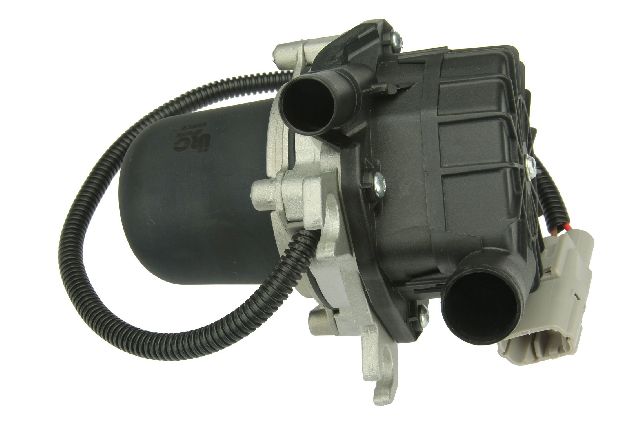
- Failed Secondary Air Injection Pump 🔴 High Probability → Shop Secondary Air Injection Pump The pump is unsealed and located in an area where it can ingest moisture. This causes the internal foam filter to deteriorate and the fan blades to disintegrate. Debris from the failed pump is then blown downstream, contaminating the entire system. This is the root cause of the vast majority of SAI system failures.
How to confirm: Listen for a loud whining or grinding noise on cold start, which indicates the pump is failing. If there is no noise, the pump may have already seized. A technician can use a bidirectional scan tool to command the pump on and verify its operation. Physical inspection requires removing the intake manifold, where you will likely find water and black plastic/foam debris inside the pump and hoses.
Typical fix: Replace the air injection pump. It is critical to also inspect and replace the air switching valves, as pump debris will have contaminated and damaged them. Simply replacing the pump is not enough.
Est. part cost: $300-$700 - Failed Air Switching Valve (Bank 1) 🔴 High Probability The valves get stuck open or closed due to debris from a failing air pump or from moisture/carbon buildup from the exhaust. P1440 specifically points to an electrical circuit fault in the Bank 1 valve, but this is almost always caused by the mechanical failure of the valve from debris.
How to confirm: Requires removing the intake manifold to access the valves, which are located under a coolant crossover pipe at the rear of the engine. The valve can be tested for functionality by applying 12V power. Visual inspection of the valve's ports will likely show black debris from the failed pump. Resistance across the valve's solenoid should be between 4.5 and 5.5 Ω at 68°F (20°C).
Typical fix: Replace the failed air switching valve assembly. It is highly recommended to replace the air pump and the other valve (Bank 2) at the same time to prevent a repeat failure.
Est. part cost: $200-$500 - Damaged Wiring or Connectors ⚪ Low Probability The wiring harness for the SAI system is located under the intake manifold, a location known to be attractive to rodents seeking shelter. Chewed wires are a possible, though less common, cause. Connectors can also suffer from corrosion due to moisture.
How to confirm: Visually inspect the wiring harness for the air pump and switching valves for any signs of damage, chewing, or corrosion at the connectors. This requires removal of the intake manifold.
Typical fix: Repair the damaged section of the wiring harness or clean/replace the affected connector.
Est. part cost: $10-$100
Rare But Worth Checking
- Failed Air Injection Control Driver: This is the electronic module that controls the air injection system, located on the driver-side inner fender. While uncommon, TSB T-SB-0230-12 Rev1 notes that it can fail, often in conjunction with other codes like P0418 and P2445. Always diagnose the pump and valves first, as their failure is far more common.
- Failed Engine Control Module (ECM): In very rare instances, the ECM itself can be the source of the circuit fault. This should only be considered after every other component in the system has been thoroughly tested and proven to be functional. The bypass kit installation instructions from Hewitt-Tech mention this as an extreme case.
Diagnosis Steps
- Scan the ECM for all stored trouble codes. Note any other codes related to the secondary air injection system (e.g., P0418, P1443, P244x) and chassis codes (C1201).
- On a cold start, listen for the sound of the air pump running for the first 60-90 seconds. It sounds like a loud vacuum cleaner. A loud whine or grinding suggests a failing pump; no sound suggests a dead pump or relay issue.
- If possible, use a bidirectional scan tool like Toyota Techstream to perform the 'Control the Air Injection System' active test. This can help isolate whether the fault is with the pump, a valve, or the control circuit.
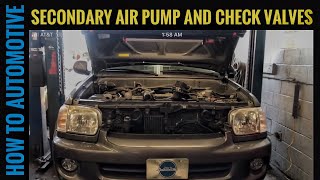
- If choosing a full repair, remove the intake manifold to gain access to the SAI components. This is a significant job requiring 4-7 labor hours. 🎬 Watch: Step-by-step guide to replacing the pump and valves.
- Visually inspect the air pump and hoses for signs of moisture or black, soot-like debris from the disintegrated foam filter. This confirms pump failure.
- Inspect the wiring and connectors for the air switching valves and pump for any damage, corrosion, or loose connections.
- Test the Bank 1 air switching valve by applying 12V power and ground to its terminals to see if it actuates. Check the resistance of the valve's solenoid, which should be between 4.5 and 5.5 Ohms at 68°F (20°C).
- If debris is found, it is mandatory to replace both the air pump and both switching valves (Bank 1 and 2) to ensure a lasting repair.
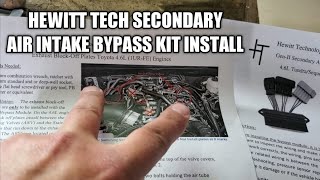
- Alternatively, consider installing an aftermarket bypass kit, which electronically bypasses the system, avoiding the costly mechanical repair. 🎬 Watch: How to install a bypass kit on your Sequoia.
Parts You'll Likely Need
- Air Switching Valve Assembly
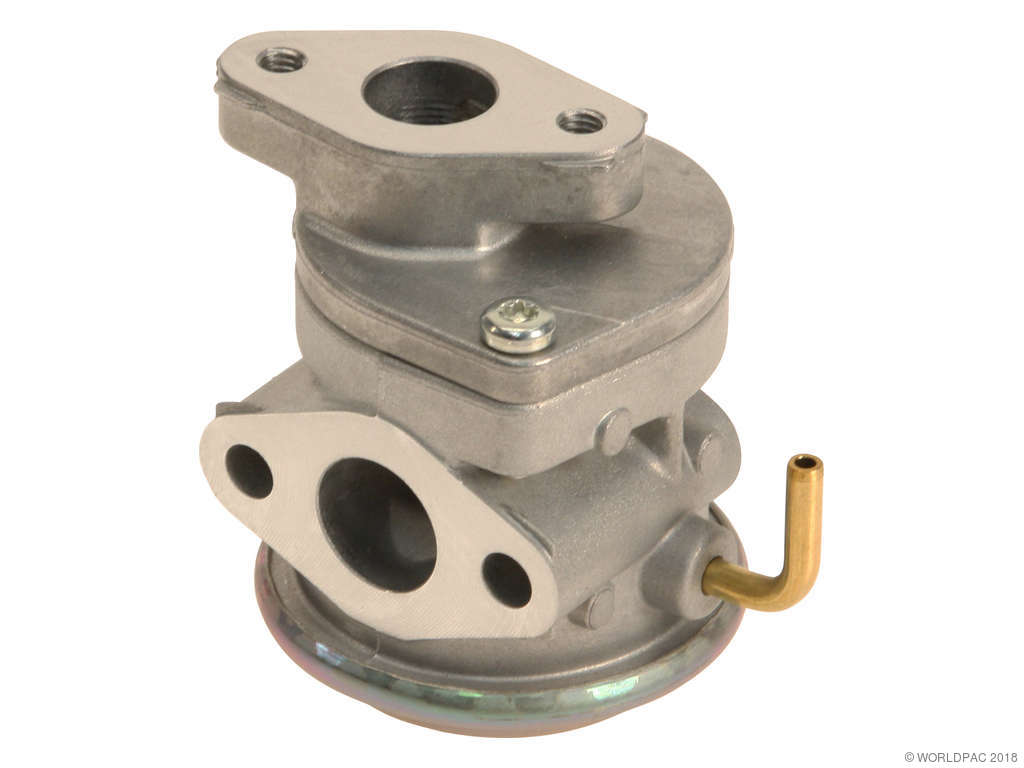
(OEM #25710-50022)— This is the valve assembly that contains the Bank 1 valve. It fails due to contamination from the air pump or moisture intrusion. P1440 directly points to a fault with this component's circuit. This part number supersedes 25710-50020 and 25710-50021.
Trusted brands: Toyota (OEM), Dorman
OEM price range: $200-$350
Aftermarket price range: $150-$250 - Air Pump Assembly
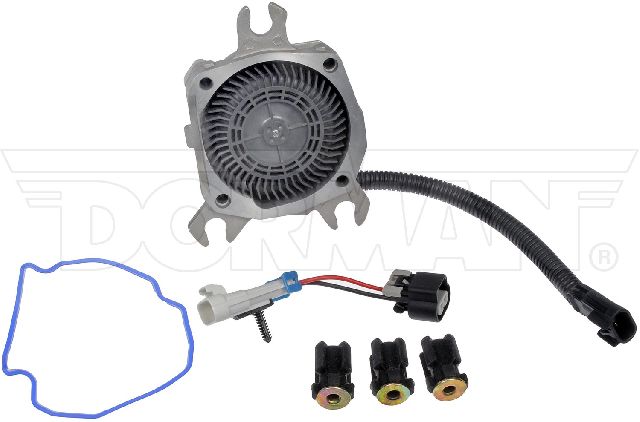
(OEM #17600-0F010)— This is the root cause of the failure in most cases. It ingests moisture, fails, and sends debris throughout the system, destroying the valves. It must be replaced if the valves have failed due to contamination.
Trusted brands: Toyota (OEM), Dorman
OEM price range: $500-$700
Aftermarket price range: $300-$500 - Secondary Air Injection System Bypass Kit — A popular and permanent alternative to a costly OEM repair. This kit electronically mimics the signals of a functioning SAI system, tricking the ECM into thinking the system is working correctly. This clears the codes and prevents limp mode without replacing the expensive mechanical parts.
Trusted brands: Hewitt Technologies
Aftermarket price range: $350-$450
Related Codes That Often Appear With This One
- P1443 — This is the equivalent circuit fault code for the Bank 2 air switching valve. It's common for debris from the single air pump to damage both valves simultaneously.
- P0418 — This code indicates a fault in the air injection system relay or driver circuit, often triggered by a seized pump drawing excessive current.
- P2440, P2441, P2442, P2443, P2445 — These codes indicate that the air switching valves or pump are mechanically stuck open or closed/off. They often accompany the P1440/P1443 circuit codes and confirm a mechanical failure within the system, usually from debris.
- C1201 — This is not an engine code, but a chassis code indicating an 'Engine Control System Malfunction'. It is the code that actually triggers the 'limp mode' and disables VSC/TRAC as a safety precaution. It will clear once the primary engine fault is resolved.
Technical Service Bulletins (TSBs) & Recalls
- T-SB-0230-12 Rev: Air Injection System MIL 'ON' - This bulletin, provided in the prompt and confirmed by search results, lists P1440 and other related codes, identifying the cause as debris from the air pump contaminating the system for 2005-2007 Sequoias.
- T-SB-0230-12: An earlier version of the same bulletin, also confirming the issue.
Platform-Specific Known Issues
- Toyota issued Technical Service Bulletin T-SB-0230-12 Rev1, which covers this exact issue for the 2005-2007 Sequoia and its platform mates. The TSB acknowledges that debris from the air pump contaminates the system and provides a diagnostic procedure.
- Toyota also issued a warranty extension for this problem, but it was limited and has likely expired for all affected 2005-2007 vehicles by now.
Mechanic-Grade Diagnostic Values
- Air Switching Valve (ASV) Solenoid Resistance — expected: 4.5 to 5.5 Ω at 20°C (68°F). Failure: Resistance is outside the specified range.
- Air Pump Motor Resistance — expected: 0.4 to 1.0 Ω at 20°C (68°F). Failure: Resistance is outside the specified range, indicating a faulty motor.
- Air Switching Valve No. 2 Bolt Torque — expected: 18 N·m (185 kgf·cm, 13 ft·lbf). Failure: N/A - This is an assembly specification.
- Air Pump Assembly Bolt Torque — expected: 16 N·m (163 kgf·cm, 12 ft·lbf). Failure: N/A - This is an assembly specification.
Scan Tool Commands That Help
- Toyota Techstream: Active Test: "Control the Air Injection System" or "Air injection check" — This allows a technician to manually command the air pump and air switching valves to operate for short intervals (typically 5 seconds). It is used to verify if the components are responding to commands from the ECM, helping to isolate a failed part from a wiring or control module issue.
Wiring & Ground Locations
- Engine Harness Ground (Driver Side) — On the driver's side frame rail, where a wiring harness bracket is mounted. Typically a 12mm bolt.. A poor ground connection for the engine harness can cause a variety of electrical faults and incorrect sensor readings, potentially contributing to circuit codes like P1440.
- Engine Harness Ground (Passenger Side) — On the passenger side of the engine, near the firewall, connected to the engine harness near the mass airflow sensor wiring. Typically a 10mm bolt.. This ground is part of the main engine harness which includes wiring for the SAI system. A compromised connection here could lead to intermittent or persistent circuit faults.
- Air Injection Control Driver (AID) Connectors — On the inner driver-side fender in the engine bay. The driver module is mounted to a bracket.. These connectors are the interface between the ECM and the SAI pump/valves. They are a critical point for checking voltage and continuity when diagnosing circuit codes P1440, P1443, and P0418.
Real Owner Repair Stories
- IH8MUD.com forum user 'wilcoxoffroad' (2006 Lexus LX470 (same 4.7L 2UZ-FE engine and SAI system)) — Initially had a P2445 code. After installing a Hewitt-Tech bypass kit, new codes P1440 and P1443 appeared. The engine had a rough idle and felt sluggish.
❌ Tried (didn't work) Installing a Hewitt-Tech full bypass kit., Replacing the Hewitt-Tech AID module and wire loom., Clearing codes (they came back immediately).
✅ What actually fixed it The issue was multi-faceted after the initial bypass kit install. The user found and replaced two bad ignition coils which resolved the rough idle. However, the P1440 code persisted. The final resolution involved working with Hewitt-Tech support, who suggested that driving for an extended period with the original stuck valve code (P2445) may have damaged the ECU. The user was preparing to replace the pressure sensor or ECU as the next step, highlighting that even a bypass kit isn't a guaranteed fix if other underlying issues exist. - IH8MUD.com forum user (2005 Tundra 4.7L with 84k miles) — Loud air pump noise on startup after a timing belt replacement.
❌ Tried (didn't work) N/A - Owner went straight to the bypass solution.
✅ What actually fixed it The owner, having previously experienced a complete SAI system failure on an '06 Land Cruiser, recognized the loud pump as a sign of imminent failure. Instead of waiting for codes to appear, they proactively installed a Hewitt-Tech bypass module to permanently eliminate the problematic system.
OEM Part Supersession History
25710-50020, 25710-50021→25710-50022— Unspecified, but part revisions are common to improve reliability and address known failure modes like moisture intrusion or material degradation.
Heads up: The newer part number 25710-50022 is the correct and current replacement for the 2005-2007 Sequoia.
Helpful Videos
We Have This Part in Stock


The information in this article is provided for general reference and educational purposes only. Vehicle specifications, procedures, and part compatibility can vary by production date, trim level, and region. Always consult your vehicle's factory service manual and verify part numbers before purchasing or performing repairs. Safety-critical components such as airbags, seat belts, and braking systems should be installed by a qualified professional.
- Toyota SEQUOIA:
- 🧭 Diagnostic Flowchart
- 🎬 Helpful Videos
- 🛍️ Shop This Part
- What's Unique About the 2005-2007 Toyota SEQUOIA
- Symptoms You May Notice
- Most Likely Causes
- Rare But Worth Checking
- Diagnosis Steps
- Parts You'll Likely Need
- Related Codes That Often Appear With This One
- Technical Service Bulletins (TSBs) & Recalls
- Platform-Specific Known Issues
- Mechanic-Grade Diagnostic Values
- Scan Tool Commands That Help
- Wiring & Ground Locations
- Real Owner Repair Stories
- OEM Part Supersession History
- 🎟️ Get 5% Off