

P1440 on 2001-2007 Volvo V70: Purge Valve Stuck Open Causes and Fixes
On a 2001-2007 Volvo V70, code P1440 almost always means the EVAP purge valve is stuck open. The most common fix is to replace the valve itself, which is a DIY-friendly job costing between $50 and $150 for the part. Note the location varies: it's on the radiator fan shroud for 2001-2002 models (easy) and under the intake manifold for 2003-2007 models (more difficult).
- P1440 on a 2001-2007 V70 specifically means the EVAP Purge Valve is stuck open.
- The most likely fix is replacing the purge valve itself. Test it by trying to blow through it when it's unplugged; if air passes, it's bad. A 9V battery can be used to check for an audible click.
- Check the location before buying parts or starting work: on 2001-2002 models it's on the radiator fan shroud (easy, 10-minute job), on 2003-2007 models it's under the intake manifold (harder, can take several hours).
- A stuck valve can cause a rough idle, poor MPG, and may trigger a 'System Too Lean' (P0171) code.
- Always inspect the connected vacuum hoses for cracks and brittleness, as they can also be the cause of the problem.
What's Unique About the 2001-2007 Volvo V70
The 2001-2007 V70 is part of Volvo's P2 platform. For this specific code, the key difference is the physical location of the purge valve, which changed during the production run. On 2001-2002 models, the valve is typically found on the radiator fan shroud, making it very easy to access. On 2003-2007 models, it was moved to a much less accessible position underneath the intake manifold, requiring more disassembly to reach. Unlike on some other Volvo models where P1440 can point to a leak detection pump, on the P2 V70 it reliably points to the purge valve circuit.
Symptoms You May Notice
- Check Engine Light illuminated
- Rough or unstable idle, especially at low speeds
- Slightly reduced fuel economy (lower MPG)
- Difficulty starting the engine immediately after refueling
- A faint fuel smell from the engine bay
- Hesitation during acceleration
- Replacing the gas cap. While a faulty gas cap can cause other EVAP codes like P0455 (Large Leak), the P1440 code specifically points to a functional fault with the purge valve (stuck open) rather than a system-wide leak.
- Replacing the charcoal canister. The canister itself rarely fails in a way that causes this specific code, unless it has broken apart internally and sent debris into the purge valve, jamming it open.
Most Likely Causes
- Faulty EVAP Purge Valve 🔴 High Probability → Shop Vapor Canister The valve is a moving part (a solenoid) that can fail mechanically by sticking or electrically over time. Debris from a deteriorating charcoal canister can also travel through the lines and cause the valve to jam open.
How to confirm: Unplug the valve's electrical connector and remove the hoses. Try to blow through the valve. If air passes through, it is stuck open and has failed. You can also apply 9-12V power from a battery to the terminals; a healthy valve will make an audible click as it opens and closes. If it doesn't click, it's failed electrically. A multimeter test of the coil should show a resistance between 21-30 ohms.
Typical fix: Replace the EVAP purge valve.
Est. part cost: $50-$150 - Cracked or Disconnected EVAP Hoses 🟡 Medium Probability The rubber and plastic hoses in the engine bay become brittle with age and heat cycles, leading to cracks, especially at the connection points to the purge valve and intake manifold. Owners on forums note that the smaller vacuum lines can become powdery and degrade.
How to confirm: Visually inspect all hoses connected to the purge valve for obvious cracks, brittleness, or loose connections. A smoke test is the most effective way to find small, hard-to-see leaks.
Typical fix: Replace the damaged section of hose.
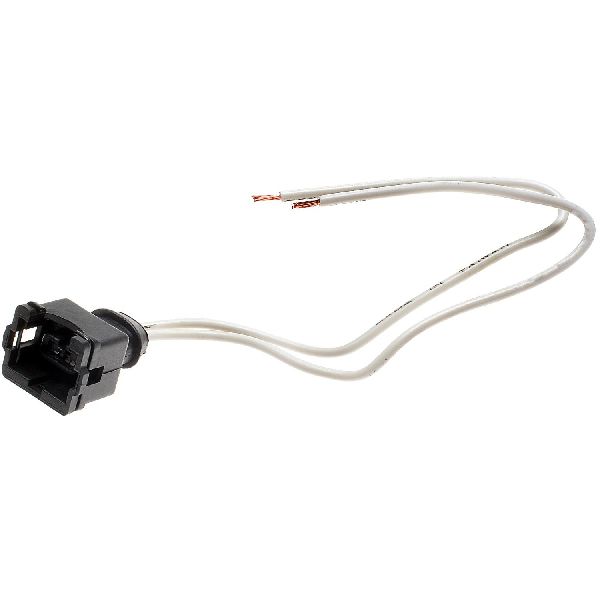
Est. part cost: $10-$30 - Damaged Wiring or Connector ⚪ Low Probability The electrical connector or wiring for the purge valve can become damaged or corroded, especially on the under-manifold location where it is more exposed to heat and oil.
How to confirm: Inspect the electrical connector for bent or corroded pins. Check for 12V power at the connector with the key on. Use a multimeter to check for continuity in the wiring harness if a visible issue is not present.
Typical fix: Repair the damaged wiring or replace the connector pigtail.
Est. part cost: $15-$40
Rare But Worth Checking
- Faulty Engine Control Module (ECM): This is extremely rare. The ECM driver that controls the purge valve can fail, but this should only be considered after all other possibilities, including the valve, hoses, and wiring, have been thoroughly ruled out.
Diagnosis Steps
- Read the code with an OBD-II scanner to confirm P1440 is present.
- Locate the EVAP purge valve. For 2001-2002 models, check the radiator fan shroud on the driver's side. For 2003-2007 models, locate it under the intake manifold. It can be found by feel as it gets very dirty.
- Visually inspect the hoses connected to the valve for any obvious cracks, breaks, or loose connections.
- With the engine off, disconnect the electrical connector and hoses from the purge valve.
- Attempt to blow through the valve. If air can pass through, the valve is stuck open and must be replaced. It should be completely sealed when no power is applied.
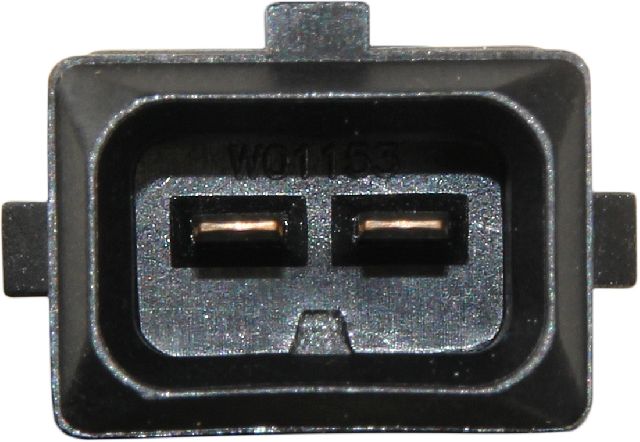
- If the valve is sealed, test its electrical function. Connect a 9V or 12V battery to the two pins on the valve's connector. You should hear a distinct 'click' as the solenoid actuates. If there is no click, the solenoid is dead.
- If the valve seems to be working, inspect the electrical connector on the car's harness for power (around 12V) with the key in the 'on' position.
- If no other cause is found, perform a smoke test on the EVAP system to check for hidden leaks in the lines between the canister, valve, and intake manifold. 🎬 Watch: Diagnosing Volvo EVAP system leaks
Parts You'll Likely Need
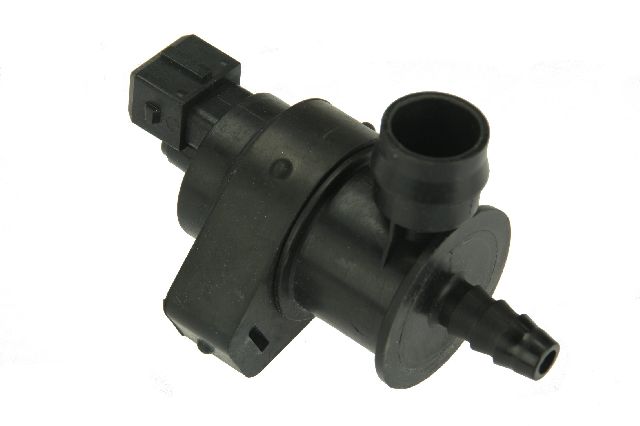
- Vapor Canister Purge Valve / Solenoid
(OEM #8653908 (typically for 2003+ models), 9155936 (for earlier models))— This is the component that fails most often, either by sticking internally or failing electrically, directly causing the P1440 code. Part number 8653908 is widely cited for P2 models, often superseding other numbers.
Trusted brands: Bosch (often the OEM supplier), Genuine Volvo, URO Parts, Standard Motor Products (SMP)
OEM price range: $90-$150
Aftermarket price range: $40-$90
Related Codes That Often Appear With This One
- P0171 — A stuck-open purge valve creates a vacuum leak by allowing unmetered air and fuel vapor into the intake manifold, which can cause the engine to run lean and trigger a P0171 'System Too Lean' code.
- P0455 — While P1440 is specific to the valve being stuck open, the resulting constant flow can sometimes be interpreted by the ECU as a large system leak, triggering a P0455 'Gross Leak Detected' code as well.
Platform-Specific Known Issues
- The location of the purge valve changed after the 2002 model year. Early P2 models (2001-2002) have the valve on the fan shroud, making it a 10-minute replacement, 🎬 See this step-by-step replacement walkthrough often requiring no tools to unclip. Later models (2003-2007) have it under the intake manifold, which is much more difficult to access and may require removing the intake manifold for a proper replacement, a significantly more involved job.
- A Reddit user shared their experience doing a PCV system replacement (which also requires intake manifold removal) and made a mistake by completely removing a bolt that should have been left threaded, causing a coolant leak upon reassembly. This highlights the complexity of working in the under-manifold area for the 2003+ models.
Mechanic-Grade Diagnostic Values
- EVAP Purge Valve Solenoid Resistance — expected: 21-30 Ohms. A more precise target is ~21 Ohms.. Failure: An open circuit (infinite resistance) or a short (near zero resistance) indicates a failed coil.
- EVAP Purge Valve Connector Voltage — expected: Approximately 12V (battery voltage) on one of the two pins with Key On, Engine Off.. Failure: 0V or significantly low voltage points to a wiring issue, fuse, or a problem with the ECM power supply.
Scan Tool Commands That Help
- Volvo VIDA (Vehicle Information & Diagnostics for Aftersales): Component Activation / Fault Tracing for EVAP System — This function allows a technician to command the purge valve to cycle open and closed. It's used to confirm if the valve is receiving the command from the ECM and is mechanically capable of actuating (an audible click should be heard). This definitively tests the entire control circuit from the computer to the valve.
Wiring & Ground Locations
- Engine Ground Strap (Small) — Runs from the top of the engine's valve cover to a point on the firewall/bulkhead.. This is a primary engine ground. Forum users report that corrosion on this small, often overlooked strap can cause a host of intermittent and bizarre electrical issues, including strange idle behavior and fault codes. Cleaning the contact points on the valve cover and firewall is a crucial preventative maintenance step.
- Engine Ground Strap (Large) — A large, heavy-gauge cable that typically runs from the transaxle to the vehicle's frame/subframe.. This is the main ground path for the entire powertrain. While less likely to cause a single, specific code like P1440, its integrity is critical for all vehicle electronics. A poor connection here can lead to hard-to-diagnose starting and running issues.
- EVAP Purge Valve (in wiring diagrams) — Designated as component 8/18 in some official Volvo wiring diagrams.. Knowing this designator helps in navigating official service manuals or wiring diagrams to trace the specific wires from the valve back to the Engine Control Module (ECM) for continuity testing.
Real Owner Repair Stories
- volvoXC.com forum user 'Antherzoll' (2005 Volvo XC70 (P2 Platform)) — Check Engine Light with code P0497 (EVAP Low Purge Flow), which is related to P1440.
❌ Tried (didn't work) Initially suspected the EVAP Purge Valve itself.
✅ What actually fixed it The root cause was not the valve but the connected vacuum lines. The lines had become old, brittle, and were described as 'degrading (getting powdery)'. Replacing the affected sections of vacuum hose, including the one going to the intake manifold, resolved the code. - Turbobricks forum user 'Janspeed' (Volvo P2 V70) — Multiple weird errors including 'DSTC service needed', varying idle, CEL, cam adjuster error, and weird throttle response. Errors were intermittent.
❌ Tried (didn't work) Chasing individual error codes.
✅ What actually fixed it The problem was traced to a poor ground connection. The user discovered significant corrosion on the valve cover side of the small ground cable that runs from the valve cover to the firewall. After cleaning the corrosion and re-securing the ground connection, all the intermittent electronic faults disappeared.
"I Checked Everything" — The Actual Cause
- While no specific stories were found, it's important to note that a smoke test is designed to find physical leaks in the EVAP hoses and canister. The P1440 code specifically indicates the purge valve is 'stuck open'. This is a functional failure, not a system leak. A smoke machine might show smoke passing through the open valve and into the intake manifold, which could be misinterpreted as a normal function if the technician isn't aware that the valve should be closed during the test. The definitive test is to remove the valve and attempt to blow through it; if air passes, it has failed, regardless of what a smoke test shows.
OEM Part Supersession History
31104896→8653908— Standard part revision for improved reliability or manufacturing changes.
Heads up: No known incompatibilities; the latest part number (8653908) is the correct replacement for the original.
Model Year Variations Within This Range
- 2001-2002 vs 2003-2007: The location of the EVAP purge valve. On 2001-2002 models, it is on the radiator fan shroud (easy access). On 2003-2007 models, it is located under the intake manifold (difficult access). This change significantly impacts the labor time and difficulty of the repair.
Diagnostic Flowchart
Other Known Issues on This Vehicle
Issues unrelated to this code that are worth knowing about as an owner of this generation:
- Electronic Throttle Module (ETM) Failure 🔴 High — Very common on 1999-2002 models. Less common on later models but still a known issue. Failure can cause 'limp home mode'. (Ref: Volvo issued a recall and extended warranty (10 years/200,000 miles) in North America, involving a software update and replacement if necessary.)
- Clogged PCV / Crankcase Ventilation System 🔴 High — A very common maintenance item. The system clogs with sludge over time, typically needing service every 80k-100k miles. Ignoring it can cause high crankcase pressure, leading to blown engine seals (like the rear main seal).
- AWD Angle Gear / Collar Sleeve Failure 🟠 Medium — Common on all-wheel-drive (AWD) models. The splined collar connecting the transmission to the angle gear strips out, resulting in loss of power to the rear wheels. This is a wear item, often failing after 100k miles. (Ref: The original collar sleeve design was a known weak point; later parts were improved.)
- Front Suspension Compliance (Control Arm Bushings & Spring Seats) 🟠 Medium — Control arm bushings and front upper spring seats are common wear items, often failing after 70k-100k miles. Failure leads to clunking noises, poor handling, and uneven tire wear.
- Automatic Transmission Valve Body Failure (Aisin AW55-50/51) 🔴 High — Common on higher mileage vehicles, especially if fluid has not been changed regularly. Symptoms include harsh shifting, flaring between gears, and neutral-to-drive delays. Often requires valve body replacement. (Ref: Volvo released software updates to address shift quality, but mechanical wear is the ultimate cause.)
- Instrument Cluster (DIM) Failure 🟡 Low — Widespread issue where solder joints on the circuit board fail, causing erratic gauges, flickering lights, and nonsensical error messages. Usually requires the unit to be removed and re-soldered.
Used vs. New Parts: Buying Guide for This Vehicle
When a used part is the smart pick: For this specific repair, buying a used EVAP purge valve is not recommended. The failure is often mechanical (sticking) or electrical (coil burnout) due to age and heat cycles. A used part from a junkyard is likely to have a similar amount of wear and a high risk of premature failure.
What to inspect on the donor part:
- Not applicable as used part purchase is not advised.
OEM-only on this vehicle (don't cheap out):
- While not strictly 'OEM-only', using a new part from a reputable brand is critical. The labor involved in replacing the under-manifold version (2003-2007 models) is significant, so you do not want to do the job twice. A cheap, unbranded part is a major gamble.
Aftermarket brands forum-validated for this vehicle:
- Bosch (often the original equipment manufacturer for Volvo electronics)
- Standard Motor Products (SMP)
- Pierburg
Brands owners have reported issues with on this vehicle:
- Generic, no-name brands from online marketplaces should be avoided due to inconsistent quality and the high labor cost of a potential repeat repair.
Real Owner Stories
Aggregated from forums and TSBs cited above. Mileages and costs reflect what owners reported in those sources.
2001-2007 Volvo V70 (P2 Platform)
Symptoms: The owner noted that while the purge valve is a standard fix for P1440, they found degraded, powdery vacuum lines connected to the valve.
What fixed it: Replacing the degraded vacuum lines rather than the valve itself.
Source hint: volvoXC.com - Thread: 'purge valve?' (2015)
2003-2007 Volvo XC70 (P2 Platform)
Symptoms: During a PCV system replacement (which involves the same under-manifold area as the late-model purge valve), the owner accidentally removed a bolt that should have been left threaded.
What fixed it: The owner warned that this mistake causes a coolant leak from the thermostat housing during reassembly.
Source hint: reddit.com/r/VolvoXC70 - Thread: 'Typical problems with your xc70 P2' (2022)
Related OBD-II Codes
Frequently Asked Questions
Where is the EVAP purge valve located on my 2002 Volvo V70?
I have a 2005 V70; is the purge valve replacement difficult?
Can a P1440 code cause my V70 to have trouble starting after I get gas?
What electrical readings should I see if I test the purge valve with a multimeter?
Are there any specific risks when removing the intake manifold on a 2003+ V70 to reach the valve?
Is the P1440 code common on other Volvos from this era?
Helpful Videos
We Have This Part in Stock


The information in this article is provided for general reference and educational purposes only. Vehicle specifications, procedures, and part compatibility can vary by production date, trim level, and region. Always consult your vehicle's factory service manual and verify part numbers before purchasing or performing repairs. Safety-critical components such as airbags, seat belts, and braking systems should be installed by a qualified professional.
- Volvo V70:
- 🧭 Diagnostic Flowchart
- 🎬 Helpful Videos
- 🛍️ Shop This Part
- What's Unique About the 2001-2007 Volvo V70
- Symptoms You May Notice
- Most Likely Causes
- Rare But Worth Checking
- Diagnosis Steps
- Parts You'll Likely Need
- Related Codes That Often Appear With This One
- Platform-Specific Known Issues
- Mechanic-Grade Diagnostic Values
- Scan Tool Commands That Help
- Wiring & Ground Locations
- Real Owner Repair Stories
- "I Checked Everything" — The Actual Cause
- OEM Part Supersession History
- Model Year Variations Within This Range
- Other Known Issues on This Vehicle
- Used vs. New Parts: Buying Guide for This Vehicle
- Real Owner Stories
- 2001-2007 Volvo V70 (P2 Platform)
- 2003-2007 Volvo XC70 (P2 Platform)
- Related OBD-II Codes
- Frequently Asked Questions
- 🎟️ Get 5% Off