

P1441 on 2000-2005 Buick LeSabre 3.8L: Causes and Fixes for EVAP Flow During Non-Purge
On a 2000-2005 Buick LeSabre, code P1441 is almost always caused by a sticking EVAP Purge Solenoid Valve located on top of the engine. It's an inexpensive part (around $25-$50) and is very easy to replace, making it a common DIY fix. Before replacing, check the vacuum lines for black charcoal debris, which would indicate a failed charcoal canister is the root cause.
- P1441 on your LeSabre points directly to a problem with unwanted flow in the EVAP system, not a leak.
- The most likely cause, by a wide margin, is a faulty EVAP Purge Solenoid Valve on top of the engine.
- You can confirm the failure in minutes with a simple hand-held vacuum pump; if the valve doesn't hold vacuum when de-energized, it's bad.
- This is a very DIY-friendly repair that can be done in under 20 minutes with basic tools.
What's Unique About the 2000-2005 Buick LeSabre
The GM 3.8L V6 engine is well-known for its reliability, but this particular EVAP code is a very common and well-documented issue across many GM vehicles using this engine. The primary culprit, the EVAP purge solenoid, is conveniently located right on top of the engine, making diagnosis and replacement much simpler than on many other vehicles where it might be buried. The failure is almost always mechanical (the valve sticks internally) rather than electrical, leading to a straightforward and highly effective fix.
Symptoms You May Notice
- Check Engine Light is on
- Slightly rough or fluctuating idle
- Difficulty starting the engine immediately after refueling. This happens because the stuck-open purge valve allows raw fuel vapors to be drawn into the intake manifold, creating an overly rich mixture that floods the engine.
- A faint fuel odor may be present in some cases
- Replacing the gas cap. While a bad gas cap can cause other EVAP codes (like P0455 for a large leak), it is not the cause of P1441, which indicates improper flow from a stuck-open component, not a system leak.
- Replacing the EVAP Vent Solenoid. The vent solenoid is located near the charcoal canister and has a different function (venting the system to the atmosphere). P1441 specifically points to a problem with the purge side of the system, which is controlled by the purge solenoid on the engine.
Most Likely Causes
- Sticking/Faulty EVAP Canister Purge Solenoid Valve 🔴 High Probability → Shop Vapor Canister This is a very common failure point on GM vehicles of this era using the 3.8L engine. The internal valve mechanism wears over time and can stick open or fail to seal completely, allowing un-commanded vacuum flow.
How to confirm: Disconnect the electrical connector and the two vacuum lines from the solenoid on top of the engine. Using a hand vacuum pump on either port, check if the valve holds vacuum. A new, functioning valve should hold vacuum perfectly when de-energized. If it leaks down, it is faulty. You should not be able to blow through it 🎬 Watch: How to test the solenoid with no tools. by mouth when it is disconnected.
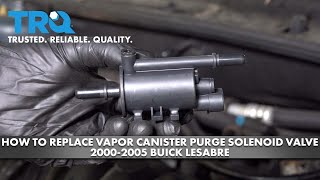
Typical fix: Replace the EVAP canister purge solenoid valve. It is mounted on a simple bracket on top of the engine and is held in place by a clip, making for a quick replacement. 🎬 See this step-by-step replacement walkthrough for your LeSabre. Before installing the new valve, it is wise to blow compressed air through the line running back toward the charcoal canister to clear any potential debris.
Est. part cost: $25-$60
Rare But Worth Checking
- Damaged Charcoal Canister: → Shop Vapor Canister If the charcoal canister has broken down internally, small black charcoal pellets can travel up the EVAP line and physically jam the purge solenoid open, causing the code to return even after the solenoid is replaced. When replacing the purge solenoid, it's critical to inspect the attached hoses for any black debris. If found, the canister must be replaced, and the lines blown out. GM issued a TSB (02-06-04-037) for other models related to dust and debris clogging EVAP components, highlighting the sensitivity of the system.
- Faulty Fuel Tank Pressure (FTP) Sensor: → Shop Fuel Tank A failing FTP sensor could incorrectly report a vacuum in the system when there is none, triggering the code. This is much less common than the purge solenoid failing.
- Wiring Short: A short in the wiring harness could cause the solenoid to stay energized (open) when it should be closed. This is unlikely compared to a simple mechanical failure of the valve itself.
Diagnosis Steps
- Verify the code with an OBD-II scanner.
- Locate the EVAP Canister Purge Solenoid on top of the engine, near the throttle body.
- Visually inspect the solenoid, its connector, and the two attached vacuum hoses for any obvious cracks or damage.
- Disconnect the electrical connector from the solenoid.
- Disconnect both vacuum hoses from the solenoid.
- Inspect the port and hose that leads back to the fuel tank for black, granular debris. If charcoal pellets are present, the charcoal canister is failing and must be replaced along with the solenoid.
- Blow compressed air through the line leading back to the canister to ensure it is clear of obstructions.
- Attach a hand-held vacuum pump to one of the solenoid's ports.
- Pump the vacuum pump to 15-20 inHg. The solenoid should hold this vacuum without leaking. If the vacuum level drops, the valve is stuck open internally and must be replaced.
- If the valve holds vacuum and no debris is found, the issue may be a rare electrical problem, which would require more advanced testing of the wiring 🎬 See this deep dive on professional purge solenoid testing. harness and PCM signals.
Parts You'll Likely Need
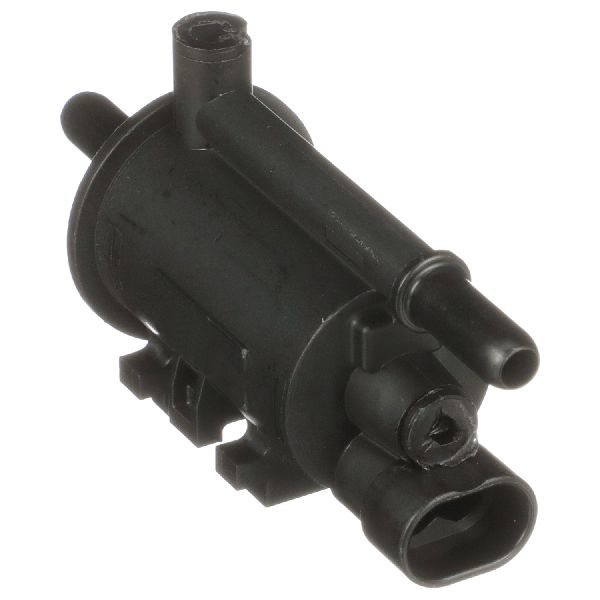
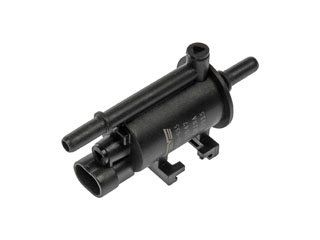
- Vapor Canister Purge Solenoid Valve
(OEM #1997279)— This is the component that fails in the vast majority of P1441 cases on this vehicle by sticking open internally. The original GM part is 1997279. This cross-references to ACDelco parts 214-641 and 214-2246.
Trusted brands: ACDelco (OEM), Delphi, Standard Motor Products (SMP), Dorman
OEM price range: $40-$60
Aftermarket price range: $25-$45
Related Codes That Often Appear With This One
- P0496 — P0496 is the generic SAE equivalent of the manufacturer-specific P1441 code, both meaning "EVAP Flow During a Non-Purge Condition". Some scan tools may display one or the other for the exact same fault.
Technical Service Bulletins (TSBs) & Recalls
- GM TSB #02-06-04-037: While officially for code P0446 on trucks, this bulletin is relevant as it details problems with dirt/debris intrusion into the EVAP system, sometimes from a disintegrating charcoal canister, which can cause a P1441 by jamming the purge solenoid. It outlines a fix involving a relocated filter box to prevent future contamination.
Mechanic-Grade Diagnostic Values
- EVAP Canister Purge Solenoid Coil Resistance — expected: 30 - 38 Ohms. Failure: A reading outside this range, especially infinite (open circuit) or zero (short circuit), indicates a faulty coil.
- EVAP Purge Solenoid Connector Voltage (Key On, Engine Off) — expected: One pin should have ~12V (battery voltage). The other pin is the ground, which is controlled (pulsed) by the PCM when a purge is commanded.. Failure: No voltage on the power pin indicates a fuse or wiring issue upstream. Voltage on the ground-side pin when not commanded indicates a short to ground in the harness or a faulty PCM driver.
- Fuel Tank Pressure (FTP) Sensor Voltage (Gas Cap Off) — expected: Approximately 2.5V - 2.7V at atmospheric pressure.. Failure: Voltage stuck high (near 5V) or low (near 0V), or not changing when vacuum is applied during a test, points to a faulty sensor.
Scan Tool Commands That Help
- Tech 2 / GDS2 (or equivalent professional scanner): EVAP Purge/Seal — This bidirectional command allows a technician to manually command the purge solenoid open and closed while monitoring the Fuel Tank Pressure (FTP) sensor. It's used to verify if the solenoid is responding to the PCM's command and if the system is sealing properly, which is essential for differentiating a mechanical fault (stuck valve) from an electrical one.
- Tech 2 / GDS2 (or equivalent professional scanner): EVAP Vent Solenoid Control — While not the direct cause of P1441, commanding the vent solenoid closed is part of a full system diagnostic (like a smoke test) to ensure the entire system is sealed before focusing on the purge side.
Wiring & Ground Locations
- G101 — On the engine block, near the starter motor.. This is a primary engine-to-chassis ground. A poor connection here can cause a host of intermittent electrical issues for engine sensors and actuators controlled by the PCM.
- G107 — On the chassis, near the A/C accumulator in the engine bay.. This is the chassis ground point that connects to the main engine ground (G101). Corrosion or looseness here can interrupt the ground path for the entire engine management system.
- Bellhousing Bolt Ground — A stud on a top bellhousing bolt, where the engine meets the transaxle.. This is another critical grounding point for the main engine wiring harness, which includes the circuits for the PCM and its controlled components like the purge solenoid.
- Purge Solenoid Connector — Two-pin connector directly on the purge solenoid on top of the engine.. This is the point for electrical testing. One wire (typically Pink) is ignition power, and the other (typically Dark Green/White) is the ground signal from the PCM. Verifying power and signal here is key to ruling out a wiring fault.
Real Owner Repair Stories
- GM Forum user 'Mark' (2003 Pontiac Bonneville SSEi (Same L67/L36 platform)) — Check Engine Light with code P1441.
❌ Tried (didn't work) Initially misidentified the purge solenoid, looking for it in the wrong location.
✅ What actually fixed it The owner took a 'shotgun approach' instead of paying for a diagnostic. He replaced the EVAP Purge Valve, the EVAP Vent Solenoid, and the Fuel Tank Pressure Sensor for a total of $65 in parts. This resolved the code. - YouTube video by stuzman52 (2000 Buick LeSabre) — Check Engine Light with code P1441.
✅ What actually fixed it A hand vacuum pump test on the purge solenoid showed it was not holding vacuum (stuck open). Tapping on the solenoid temporarily made it work, confirming it was mechanically sticking. Replacing the purge solenoid was the definitive fix.
OEM Part Supersession History
1997279→ACDelco 214-641, 214-2246— Standard part evolution and consolidation of part numbers over time.
Heads up: The original GM part 1997279 is widely cross-referenced. ACDelco 214-641 and 214-2246 are common, functionally identical replacements for this application.
Diagnostic Flowchart
Other Known Issues on This Vehicle
Issues unrelated to this code that are worth knowing about as an owner of this generation:
- Lower Intake Manifold (LIM) Gasket Failure 🔴 High → Shop Engine Intake Manifold — Extremely common, often occurring between 60,000 and 150,000 miles. The original plastic/silicone gaskets degrade from exposure to Dex-Cool antifreeze, causing internal coolant and oil leaks.
- Plastic Coolant Elbow Failure 🟠 Medium — Very common failure. Two plastic elbows connecting the water pump passage to the belt tensioner housing become brittle and crack, causing a significant coolant leak.
- Power Window Regulator Failure 🟡 Low — Extremely common across all doors. The plastic clips and cable guides within the regulator assembly break, causing the window to make grinding noises or drop into the door.
- Upper Intake Manifold (UIM) Failure 🟠 Medium → Shop Engine Intake Manifold — Common, but less so than the LIM gaskets. The plastic UIM can crack or warp, particularly around the EGR stovepipe area, leading to coolant leaks or vacuum leaks. (Ref: GM Corporate Bulletin #01-06-01-007B addresses this on similar engines.)
- Transmission Pressure Control (EPC) Solenoid Failure 🟠 Medium — A frequent issue on the 4T65-E transmission, typically after 100,000 miles, causing harsh shifting, slipping, or delayed engagement.
Used vs. New Parts: Buying Guide for This Vehicle
When a used part is the smart pick: For this specific repair, buying a used part is NOT recommended. The primary failure part, the EVAP purge solenoid, is a low-cost wear item. The risk of getting a used part that has failed or is near the end of its life is high, and the savings are minimal compared to a new aftermarket part.
What to inspect on the donor part:
- Not applicable as new purchase is strongly advised.
OEM-only on this vehicle (don't cheap out):
- While not strictly 'OEM-only', using an ACDelco (the OEM supplier) purge solenoid is highly recommended for guaranteed fit and reliability. Some forum users report issues with off-brand parts.
Aftermarket brands forum-validated for this vehicle:
- ACDelco (OEM)
- Standard Motor Products (SMP)
- Delphi
Brands owners have reported issues with on this vehicle:
- Unbranded, 'white-box' parts from online marketplaces may have a higher failure rate or inconsistent quality control.
Real Owner Stories
Aggregated from forums and TSBs cited above. Mileages and costs reflect what owners reported in those sources.
2000 Buick LeSabre — 89000 miles
Symptoms: Check Engine Light with code P1441 and a lean bank 1 error. The issue recurred even after the previous owner had replaced the EVAP canister system multiple times.
What fixed it: The owner tested the recently installed 'new' purge valve and found it had already failed. The report states, 'it did test bad - valve was completely open even when out of the vehicle.' Replacing the faulty new valve was the fix.
Source hint: Reddit thread titled 'Repeat P1441 EVAP System Flow During Non-Purge'
Pontiac Bonneville with 3.8L V6
Symptoms: Owner was diagnosing a P1441 code and trying to differentiate between the on-engine purge solenoid and the under-car vent solenoid.
What fixed it: The issue was resolved after correctly identifying and likely replacing the faulty purge solenoid on the engine.
Source hint: GM Forum: EVAP ISSUES, Code P1441
GM S-Series Blazer
Symptoms: A P1441 code was caused by charcoal particles from a failed EVAP canister getting stuck in the purge solenoid, holding it open.
What fixed it: The confirmed fix required replacing both the failed charcoal canister and the contaminated purge solenoid, as well as flushing the vapor lines to clear all debris.
Source hint: Blazer Forum: P1441: Charcoal in Vapor Lines / Bad Canister
Related OBD-II Codes
Frequently Asked Questions
Where is the EVAP purge solenoid located on my 2000-2005 Buick LeSabre?
My LeSabre is hard to start right after I get gas. Is this related to the P1441 code?
How can I test the purge solenoid myself to confirm it's bad?
I disconnected the EVAP lines and found black, charcoal-like pellets. What does this mean?
Does GM TSB #02-06-04-037 apply to my P1441 code?
What other cars with the 3.8L V6 have this same P1441 problem?
Helpful Videos
Used OEM Parts in Stock

New Aftermarket Parts Available


The information in this article is provided for general reference and educational purposes only. Vehicle specifications, procedures, and part compatibility can vary by production date, trim level, and region. Always consult your vehicle's factory service manual and verify part numbers before purchasing or performing repairs. Safety-critical components such as airbags, seat belts, and braking systems should be installed by a qualified professional.
- Buick LeSabre:
- 🧭 Diagnostic Flowchart
- 🎬 Helpful Videos
- 🛍️ Shop This Part
- What's Unique About the 2000-2005 Buick LeSabre
- Symptoms You May Notice
- Most Likely Causes
- Rare But Worth Checking
- Diagnosis Steps
- Parts You'll Likely Need
- Related Codes That Often Appear With This One
- Technical Service Bulletins (TSBs) & Recalls
- Mechanic-Grade Diagnostic Values
- Scan Tool Commands That Help
- Wiring & Ground Locations
- Real Owner Repair Stories
- OEM Part Supersession History
- Other Known Issues on This Vehicle
- Used vs. New Parts: Buying Guide for This Vehicle
- Real Owner Stories
- 2000 Buick LeSabre — 89000 miles
- Pontiac Bonneville with 3.8L V6
- GM S-Series Blazer
- Related OBD-II Codes
- Frequently Asked Questions
- 🎟️ Get 5% Off