

P1441 on 1994-1999 Cadillac Deville: EVAP Flow During Non-Purge Causes and Fixes
On a 1994-1999 Cadillac Deville, code P1441 is almost always caused by a faulty EVAP Purge Solenoid Valve that is stuck open. This part, ACDelco #214-641, is relatively inexpensive and easy to replace, typically costing between $25 and $70.
- P1441 means fuel vapor is flowing to the engine when it shouldn't be.
- The most likely culprit is a stuck-open EVAP Purge Solenoid Valve (ACDelco 214-641), located on the rear valve cover.
- You can test the valve yourself with a hand vacuum pump; if it doesn't hold vacuum when de-energized, it's faulty.
- This is a relatively simple and inexpensive DIY repair that can be completed in under an hour.
- Do not confuse this with a gas cap issue; P1441 is a flow problem, not a system leak.
What's Unique About the 1994-1999 Cadillac Deville
For the Northstar V8 in this generation of Deville, the most common failure point for a P1441 code is the EVAP purge solenoid valve getting stuck open. Unlike general EVAP leak codes (like P0442 or P0455), P1441 specifically points to an improper flow condition, not a system leak. The purge solenoid on this engine is located on the rear valve cover near the firewall, making it accessible for testing and replacement.
Symptoms You May Notice
- Check Engine Light is on
- Rough or fluctuating idle speed
- Slight decrease in fuel economy
- Difficulty starting the engine, especially after refueling or when hot
- Possible fuel odor, which may become stronger if the charcoal canister gets saturated
- Vehicle will fail an emissions inspection
- Replacing the gas cap. While a bad gas cap can cause other EVAP codes (like P0455 for a large leak), it is not the cause for P1441, which is about flow during a non-purge condition.
- Replacing the EVAP Vent Solenoid. The vent solenoid is located near the canister and has a different function. P1441 almost always points to the purge solenoid located in the engine bay.
Most Likely Causes
- Faulty EVAP Purge Solenoid Valve 🔴 High Probability → Shop Vapor Canister This valve cycles frequently and can fail mechanically over time, typically by sticking open or developing an internal leak. The high under-hood temperatures of the Northstar V8 can accelerate the wear on plastic and rubber components.
How to confirm: Disconnect the electrical connector and the vacuum lines from the valve. With the engine off, try to blow through the valve or apply a hand vacuum pump to the port that leads from the charcoal canister. It should be sealed and hold vacuum. If air passes through or it fails to hold vacuum, the valve is bad. A YouTube video demonstrates this exact test, showing a faulty valve failing to hold vacuum until it is tapped, at which point it temporarily seats correctly.
Typical fix: Replace the EVAP Purge Solenoid Valve. On the Northstar V8, it is located on the rear valve cover.
Est. part cost: $25-$70 - Cracked or Disconnected EVAP Vacuum Hose 🟡 Medium Probability Rubber hoses become brittle and crack with age and exposure to engine heat, which is significant in the Northstar engine bay.
How to confirm: Visually inspect all vacuum lines connected to the purge solenoid and the intake manifold for cracks, splits, or loose connections. A smoke test can also be performed to find leaks that are not visible.
Typical fix: Replace the damaged section of vacuum hose.
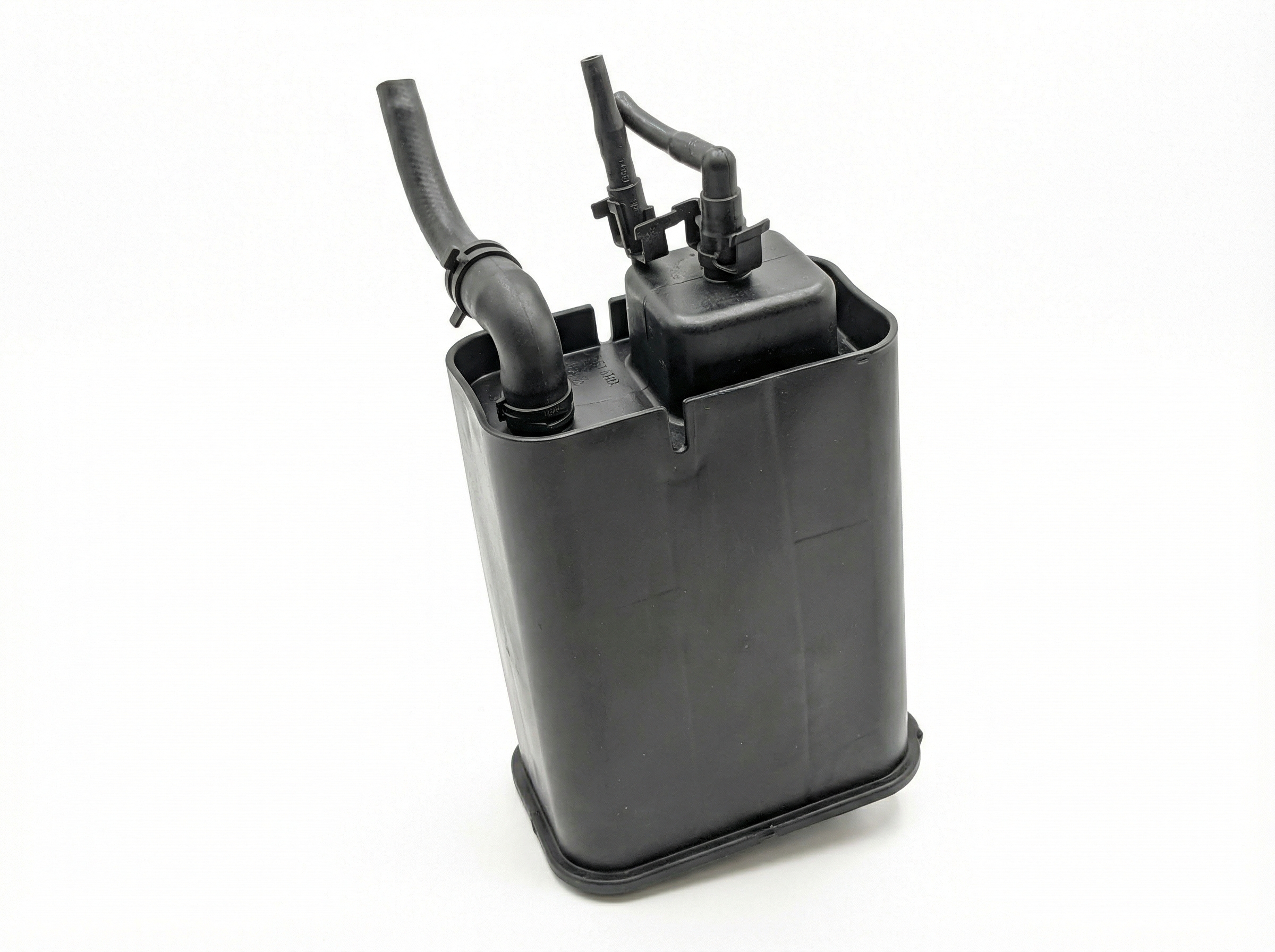
Est. part cost: $5-$20 - Contaminated Charcoal Canister ⚪ Low Probability → Shop Vapor Canister Consistently overfilling the fuel tank (topping off) can force liquid gasoline into the charcoal canister, which is designed only for vapor. This saturates the charcoal, causing pellets to break loose and travel down the vacuum lines, which can jam the new purge valve open.
How to confirm: Disconnect the vacuum line from the purge valve that leads to the canister. If charcoal pellets or black dust are present, the canister has failed and contaminated the system.
Typical fix: Replace the charcoal canister and the purge solenoid valve, and blow out the vacuum lines to clear any debris. Failure to replace a contaminated canister will likely cause the new purge valve to fail quickly.
Est. part cost: $100-$250
Rare But Worth Checking
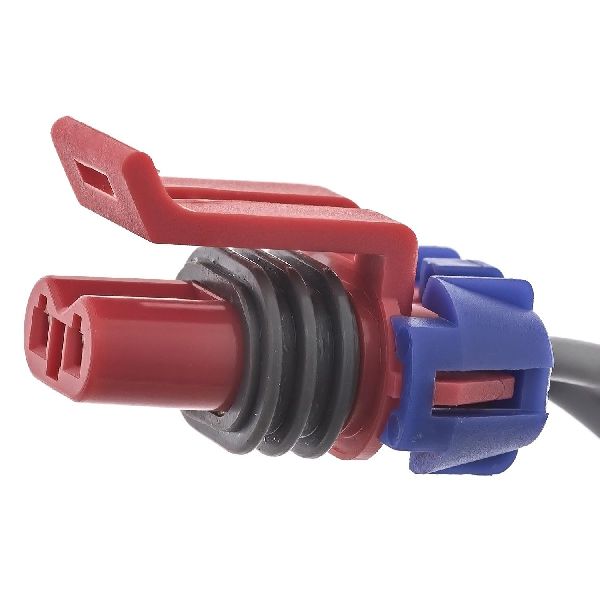
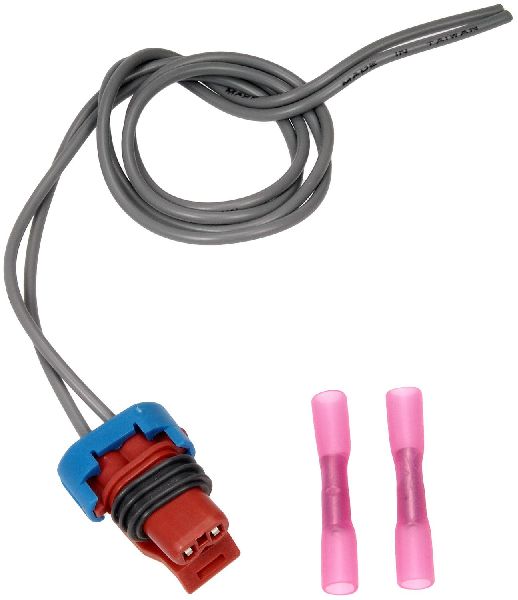
- Wiring Harness Issue: A short to ground in the control circuit for the purge solenoid could theoretically cause issues, but it's much less common than a mechanical failure of the valve itself. Owners on forums have discussed checking for voltage at the connector as part of their diagnosis.
Diagnosis Steps
- Verify the code with an OBD-II scanner. Confirm P1441 is present.
- Locate the EVAP Purge Solenoid Valve. On the 4.6L Northstar engine, it is on the rear valve cover, near the firewall.
- Perform a visual inspection. Check the vacuum hoses connected to the solenoid for any obvious cracks, breaks, or loose connections.
- Test the Purge Solenoid. Disconnect the electrical plug and vacuum lines. The valve is normally closed. Use a hand vacuum pump on the inlet port (from the canister). The valve should hold vacuum. If it doesn't, it is stuck open and must be replaced.
- If the valve holds vacuum, check for contamination. Inspect the port and hose for black charcoal granules from the EVAP canister. If present, the canister and valve need replacement.
- If the valve seems to work correctly, check the wiring. With the key on and engine off, one pin on the electrical connector should have battery voltage. The other pin is the ground control from the PCM. A user on a GM forum confirmed checking for ~11.5 VDC at the connector.
- If all components test good, consider a smoke test of the EVAP system to check for obscure leaks in the purge line.
- After repair, clear the code with the scanner and perform a drive cycle to ensure the fix is complete.
Parts You'll Likely Need
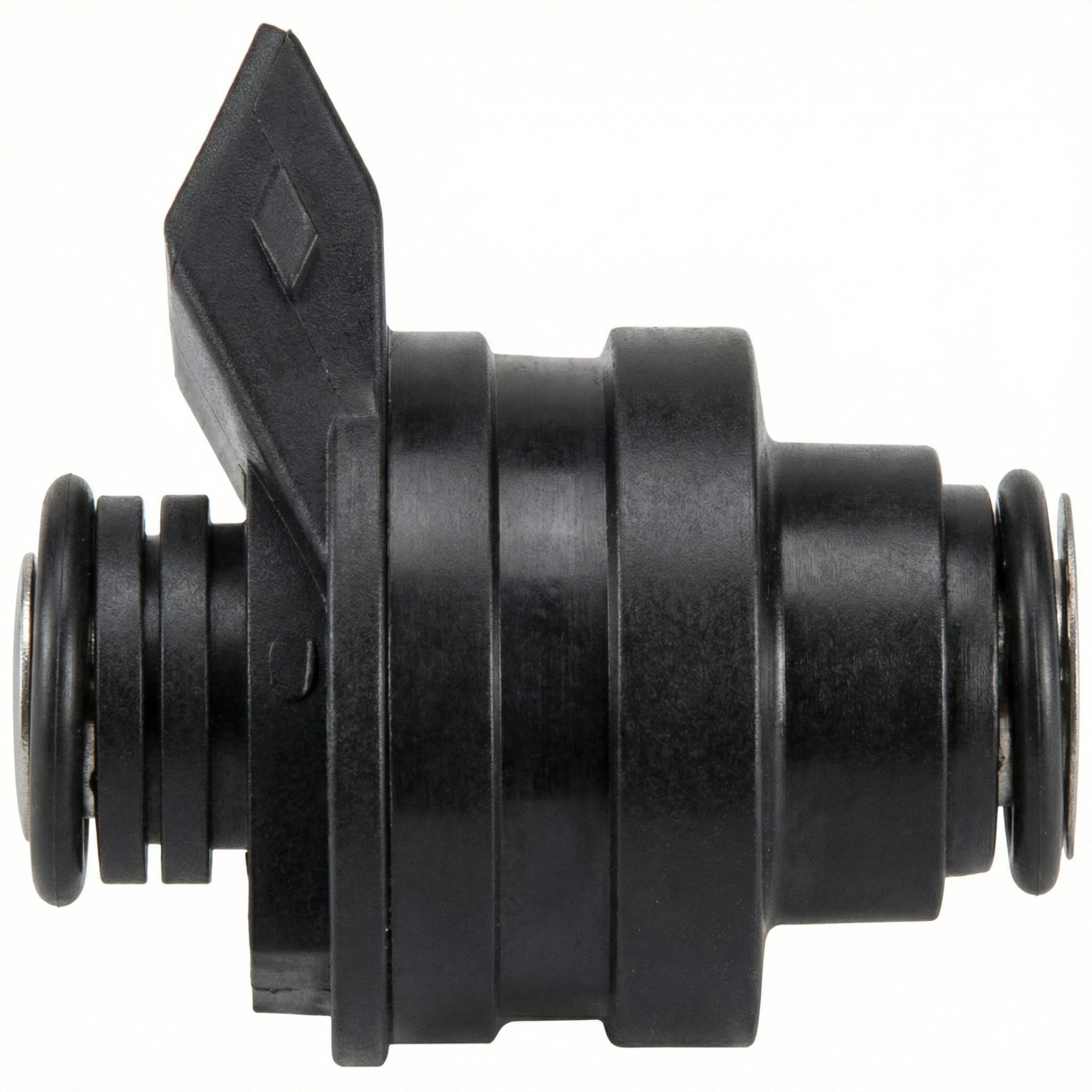
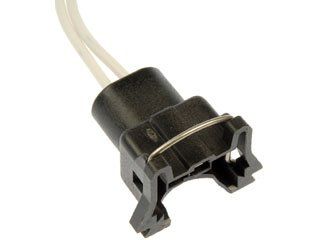
- Vapor Canister Purge Valve / Solenoid
(OEM #ACDelco 214-641)— This is the component that mechanically fails by sticking open, directly causing the un-commanded vapor flow that triggers code P1441.
Trusted brands: ACDelco, Delphi, Standard Motor Products
OEM price range: $40-$70
Aftermarket price range: $25-$50
Related Codes That Often Appear With This One
- P0443 — P0443 indicates an electrical circuit failure of the purge solenoid. If the solenoid's coil fails or wiring is damaged, it can appear alongside P1441, which indicates a mechanical flow problem.
Mechanic-Grade Diagnostic Values
- EVAP Purge Solenoid Coil Resistance — expected: 25-50 Ohms. Failure: A reading of 0 Ohms indicates a shorted coil. An infinite or 'OL' reading indicates an open coil. Both require replacement of the solenoid.
- EVAP Purge Solenoid Connector Voltage (Key On, Engine Off) — expected: ~12V (Battery Voltage) on the power feed wire (Pink wire is common on GM).. Failure: No voltage indicates a problem with the power supply, such as a blown fuse or a break in the wire. The other wire is the ground control from the PCM and should show voltage until the PCM commands the solenoid on (by grounding it).
Scan Tool Commands That Help
- Tech 2: EVAP Purge/Seal Test — This bidirectional command allows the technician to manually command the purge solenoid ON and OFF to verify its mechanical and electrical function. You can listen for the solenoid to click and watch live data to see if the system holds vacuum when sealed. This is a definitive way to test the solenoid without removing it.
- Tech 2: EVAP Service Bay Test — This is a comprehensive, automated test that runs the entire EVAP monitor sequence while the vehicle is stationary in the service bay. It can be used to verify a repair is complete and that the EVAP monitor will run and pass, which is necessary to clear the code and pass an emissions inspection. It requires specific conditions like a cold start and holding RPMs steady.
Wiring & Ground Locations
- Engine Block to Chassis Ground — A large, heavy-gauge ground strap runs from the engine block (often near the transmission bellhousing area on the right side) to the vehicle's frame/chassis.. While not a direct cause of P1441, a poor engine block ground can cause a host of erratic electrical issues and incorrect sensor readings for the Powertrain Control Module (PCM), which controls the EVAP system. Ensuring this ground is clean and tight is a critical step in diagnosing any electronic fault.
- G102 — Located at the left rear of the engine.. This ground point serves the ignition coils. While not directly tied to the EVAP circuit, poor grounds in the engine bay can create electrical noise and voltage offsets that can affect PCM calculations and sensor readings.
Real Owner Repair Stories
- YouTube video by 'stuzman52' (2000 Buick LeSabre (Shares the same common purge solenoid with the Deville)) — Check Engine Light with code P1441.
❌ Tried (didn't work) The video focuses directly on the most likely cause.
✅ What actually fixed it The EVAP purge solenoid was confirmed faulty using a hand vacuum pump. It was stuck open and would not hold vacuum. Tapping the solenoid caused it to temporarily seat and work correctly, confirming it was mechanically sticking. The final fix was replacing the purge solenoid valve.
OEM Part Supersession History
1997278→12569751, ACDelco 214-641— Standard part evolution and consolidation across multiple GM platforms.1997301→1997278 (which was then superseded by 214-641)— Early part number consolidation.
Diagnostic Flowchart
Other Known Issues on This Vehicle
Issues unrelated to this code that are worth knowing about as an owner of this generation:
- Head Gasket Failure due to Pulled Head Bolts 🔴 High — Extremely common on 1993-1999 models, often occurring between 60,000 and 100,000 miles. The failure is caused by the steel head bolts stripping the threads in the aluminum engine block.
- Chronic Oil Leaks (Upper & Lower Case Halves) 🔴 High — Very common. The main source is often the upper oil pan (oil manifold), which is a massive, engine-out repair job. Leaks from the rear main seal were also common on pre-2000 models due to a design flaw.
- Excessive Oil Consumption 🟠 Medium — Pre-2000 models are known to burn as much as one quart of oil every 500-1,000 miles due to carbon buildup on the piston rings, which prevents them from sealing properly against the cylinder walls.
- Crankshaft Position Sensor Failure 🟠 Medium — A frequently reported failure leading to rough running, stalling, or a no-start condition.
- Water Pump and Cooling System Leaks 🟠 Medium — Leaks from the water pump and radiator are a common source of coolant loss, which can exacerbate the engine's tendency to overheat.
Used vs. New Parts: Buying Guide for This Vehicle
When a used part is the smart pick: For this specific repair, buying a used part is NOT recommended. The EVAP purge solenoid is an inexpensive, high-wear electronic and mechanical part. The risk of getting a used part that has already failed or is near the end of its service life is very high.
What to inspect on the donor part:
- Not applicable as a used part is not advised.
OEM-only on this vehicle (don't cheap out):
- While not strictly 'OEM-only', using a reputable brand is critical. ACDelco (the OEM supplier) or Delphi are strongly recommended. Avoid no-name, white-box parts as their internal seals and coil windings may not meet OEM specifications for durability, leading to a quick repeat failure.
Aftermarket brands forum-validated for this vehicle:
- ACDelco (GM Original Equipment)
- Delphi
- Standard Motor Products (SMP)
Brands owners have reported issues with on this vehicle:
- Unbranded, generic parts from online marketplaces should be avoided due to a high likelihood of premature failure.
Real Owner Stories
Aggregated from forums and TSBs cited above. Mileages and costs reflect what owners reported in those sources.
1997 Cadillac Deville d'Elegance
Symptoms: Check Engine Light with P1441 code, failed smog test readiness.
What fixed it: The owner replaced the EVAP purge valve solenoid, which cleared the P1441 code and resulted in the vehicle's monitors being ready for a smog test.
Source hint: YouTube comment from ETERNAL SOLDIERS on video '1997 Cadillac deville d'Elegance P1441 Evap purge valve solenoid replacement'
Related OBD-II Codes
Frequently Asked Questions
Where is the EVAP Purge Solenoid Valve located on my 1997 Deville's 4.6L Northstar engine?
Can topping off my gas tank cause the P1441 code on my Cadillac?
I replaced the purge solenoid on my Deville, but the Check Engine Light with P1441 came back. What could be the problem?
My Deville is hard to start after I get gas and sometimes has a rough idle. Are these symptoms of a P1441 code?
How can I test the purge solenoid myself to see if it's bad?
Are other cars with the Northstar V8, like the Eldorado or Seville, also prone to this P1441 issue?
Besides the solenoid, what is another common cause for P1441 on this engine?
Used OEM Parts in Stock
New Aftermarket Parts Available


The information in this article is provided for general reference and educational purposes only. Vehicle specifications, procedures, and part compatibility can vary by production date, trim level, and region. Always consult your vehicle's factory service manual and verify part numbers before purchasing or performing repairs. Safety-critical components such as airbags, seat belts, and braking systems should be installed by a qualified professional.
- Cadillac Deville:
- 🧭 Diagnostic Flowchart
- 🛍️ Shop This Part
- What's Unique About the 1994-1999 Cadillac Deville
- Symptoms You May Notice
- Most Likely Causes
- Rare But Worth Checking
- Diagnosis Steps
- Parts You'll Likely Need
- Related Codes That Often Appear With This One
- Mechanic-Grade Diagnostic Values
- Scan Tool Commands That Help
- Wiring & Ground Locations
- Real Owner Repair Stories
- OEM Part Supersession History
- Other Known Issues on This Vehicle
- Used vs. New Parts: Buying Guide for This Vehicle
- Real Owner Stories
- 1997 Cadillac Deville d'Elegance
- Related OBD-II Codes
- Frequently Asked Questions
- 🎟️ Get 5% Off