

P1441 on 1992-2002 Cadillac Eldorado: EVAP Flow During Non-Purge Causes and Fixes
For the 1992-2002 Cadillac Eldorado, code P1441 almost always means the EVAP Purge Solenoid Valve is stuck open. Replacing this valve is the most common fix, costing around $25-$50 for an ACDelco part, and is a simple DIY job located on top of the engine.
- P1441 on your Eldorado means the EVAP Purge Valve is almost certainly stuck open.
- This is a simple and inexpensive DIY repair. The part is usually located on top of the engine near the alternator and can be replaced in under 30 minutes with basic tools.
- The correct ACDelco replacement part is likely 214-641, which costs around $25-$50.
- Symptoms of a bad purge valve can include a rough idle and difficulty starting after getting gas, in addition to the Check Engine Light.
- Do not waste money replacing the gas cap for this specific code; it is not the cause.
What's Unique About the 1992-2002 Cadillac Eldorado
On the Northstar V8 platform, the P1441 code is a straightforward emissions issue that rarely points to deeper engine problems. Unlike more complex codes, the diagnosis for P1441 is highly focused. The primary culprit is almost always the EVAP purge solenoid, a common failure point on many GM vehicles of this era due to age and wear. Owners typically find this to be one of the simpler and more affordable repairs on an otherwise complex engine. The valve is easily accessible on top of the engine, near the intake manifold and alternator.
Symptoms You May Notice
- Check Engine Light is on
- Difficulty starting the engine immediately after refueling
- Rough or fluctuating idle
- Slightly reduced fuel economy
- A faint fuel odor may be present, especially near the gas cap or engine bay
- Engine hesitation or sluggishness during acceleration (less common)
- Replacing the gas cap. A bad gas cap typically causes a large leak code (like P0455), not a non-purge flow code like P1441. While a loose cap can cause EVAP issues, it's an unlikely cause for this specific code.
- Replacing the EVAP vent solenoid. The vent solenoid is located near the canister and usually triggers different codes when it fails, such as P0446.
Most Likely Causes
- Stuck-Open EVAP Purge Solenoid Valve 🔴 High Probability → Shop Vapor Canister The valve is a simple electro-mechanical part that can wear out over time, with the internal seal failing or the mechanism sticking from contamination or age. This is a very common failure on GM vehicles from this period.
How to confirm: Disconnect the purge valve. With the engine off, try to blow through the valve or apply a hand vacuum pump to the port leading to the intake manifold. If air passes through or it fails to hold vacuum, the valve is stuck open and is faulty.
Typical fix: Replace the EVAP Purge Solenoid Valve. It is typically located on a bracket near the alternator.
Est. part cost: $25-$50 - Damaged or Clogged EVAP Hoses ⚪ Low Probability Plastic and rubber vacuum lines in the engine bay can become brittle and crack over time due to heat cycles. A user on a GM forum noted they accidentally caused a similar code by knocking a line loose while putting the engine cover on.
How to confirm: Visually inspect all vacuum lines connected to the purge solenoid and charcoal canister for cracks, breaks, or loose connections. A smoke test can be performed to find hard-to-see leaks.
Typical fix: Replace the damaged section of hose.
Est. part cost: $10-$30 - Charcoal Granules in Purge Line ⚪ Low Probability If the internal structure of the charcoal canister fails, small carbon granules can travel down the purge line and hold the new purge valve open, causing the code to return.
How to confirm: When removing the old purge valve, check its inlet port and the connecting hose for black, sand-like particles. If found, the charcoal canister is failing.
Typical fix: Replace the purge valve, clear the lines with compressed air, and replace the charcoal canister to prevent a recurrence. Failure to replace the canister will cause the new purge valve to fail quickly.
Est. part cost: $100-$200
Rare But Worth Checking
- Wiring Harness Issue: A short to ground in the purge valve control circuit could theoretically hold the valve open, but this is far less common than mechanical failure of the valve itself. A forum user detailed checking for 12V at the connector with the ignition on as a diagnostic step.
Diagnosis Steps
- Verify the Check Engine Light is on and code P1441 is present using an OBD-II scanner.
- Locate the EVAP Purge Solenoid Valve. On the Northstar V8, it is typically found on or near the intake manifold, often on a bracket behind the alternator, with an electrical connector and two vacuum lines attached.
- Visually inspect the vacuum hoses connected to the purge valve for any obvious cracks, disconnections, or deterioration.
- Disconnect the electrical connector and the two hoses from the purge valve.
- Attempt to blow air through the valve from the canister side to the engine side. A good, normally-closed valve should not allow air to pass when de-energized.
- Alternatively, use a hand vacuum pump on the port that connects to the engine's intake manifold. The valve should hold vacuum. If it does not, it is stuck open and needs to be replaced.
- If the valve tests good, inspect the lines for blockage, especially for black charcoal granules from a failing EVAP canister.
- If no physical faults are found, the issue could be electrical, but this is rare. Check for 12V at the connector with the key on. The PCM provides the ground to activate the solenoid.
Parts You'll Likely Need
- EVAP Vapor Canister Purge Solenoid Valve
(OEM #214-641)— This valve is the most common failure point for code P1441, as it gets stuck open and allows un-commanded fuel vapor flow.
Trusted brands: ACDelco
OEM price range: $25-$50
Aftermarket price range: $18-$40
Related Codes That Often Appear With This One
- P0496 — P0496 is the generic SAE equivalent of the manufacturer-specific P1441. Both point to the same issue: EVAP flow during a non-purge condition.
- P0443 — This code indicates a fault in the purge control valve's electrical circuit. It may appear alongside P1441 if there's a wiring issue or if the solenoid coil has failed, though P1441 is more specific to unwanted flow.
Platform-Specific Known Issues
- Purge Valve Location: → Shop Vapor Canister On many Northstar engines, the purge valve is located on a bracket right behind the alternator, making it relatively easy to access from the top of the engine bay.
Mechanic-Grade Diagnostic Values
- EVAP Purge Solenoid Coil Resistance — expected: 15 to 30 Ohms. Failure: A reading far outside this range indicates a damaged internal circuit, requiring valve replacement.
- EVAP Purge Solenoid Connector Voltage (Key On, Engine Off) — expected: 12V (battery voltage) on the power supply pin (typically pink wire on GM harnesses).. Failure: No voltage suggests a blown fuse or a break in the power supply wire.
- PCM Diagnostic Test Trigger (Fuel Tank Pressure) — expected: Fuel tank pressure should not decrease when the PCM commands the purge valve closed.. Failure: If the fuel tank pressure sensor detects a vacuum (pressure decrease below -11 in. H2O) during the non-purge test, it will set DTC P1441.
Scan Tool Commands That Help
- GM Tech2: EVAP Purge/Seal or "Seal System EVAP" — This bidirectional command allows a technician to manually command the purge solenoid OFF and the vent solenoid ON (closed) to seal the system. While monitoring the Fuel Tank Pressure (FTP) sensor, a technician can verify if the system holds vacuum. If the pressure drops (vacuum increases), it confirms an unwanted flow, pointing directly to a leaking purge solenoid as the cause of P1441.
- GM Tech2: EVAP Purge Solenoid Control — This function allows the user to command the purge solenoid ON and OFF, or control it by a percentage (PWM). A technician can listen for an audible click from the valve as it's commanded, providing a quick check of its electrical function.
Wiring & Ground Locations
- Engine Block Ground — There are multiple grounds on the Northstar engine block. One key ground is located near the Engine Coolant Temperature (ECT) sensor, under the EGR valve area. Another is often found on the lower rear of the engine block.. While a bad ground is not a common cause for P1441, a poor engine ground can cause a variety of intermittent electrical issues and sensor reading faults. Ensuring engine block grounds are clean and tight is a good practice during any electrical diagnosis.
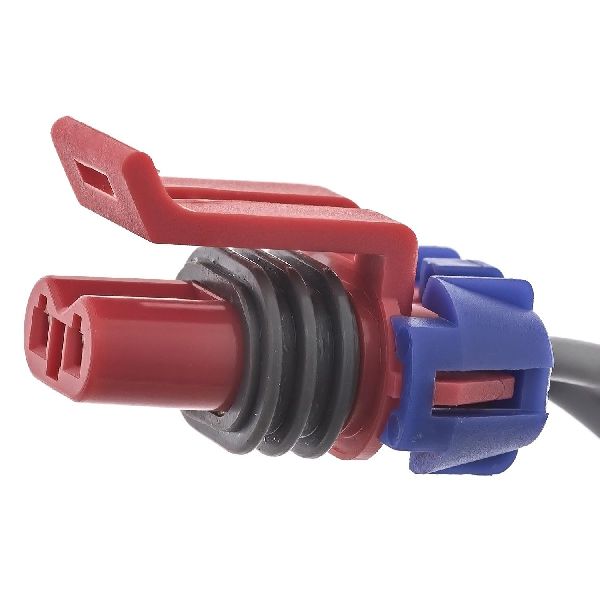
- EVAP Purge Solenoid Connector — On the EVAP purge solenoid valve itself, located near the alternator on top of the engine.. This is the primary point for electrical testing. It's a two-pin connector. One pin receives 12V ignition power (often a pink wire), and the other is the control circuit that the PCM pulses to ground to open the valve.
Real Owner Repair Stories
- YouTube channel 'Ogre's Speed Shop' (2000 Chevrolet Camaro 3.8L V6) — Service Engine Soon light came on instantly. The car also had a history of stumbling or stalling after being parked for 10-30 minutes (warm soak).
❌ Tried (didn't work) The owner first scanned the code, which was P1441. No other parts were replaced before diagnosing the solenoid.
✅ What actually fixed it The owner diagnosed a stuck-open purge solenoid. With the engine running, he disconnected the vacuum line from the solenoid and felt vacuum, then unplugged the electrical connector and the vacuum was still present, confirming it was mechanically stuck open. He also blew compressed air through the disconnected valve and it flowed freely, which it should not. Replacing the purge solenoid fixed the code.
OEM Part Supersession History
1997252, 1997312→1997279— Part consolidation and design updates by GM.1997278 (GM)→214-641 (ACDelco)— This is the ACDelco service part number that corresponds to the GM OE number.
Heads up: The part number 214-641 is widely cross-referenced but does not appear to fit the 1992-2002 Eldorado according to some catalogs, which list 1997279 (also sold as ACDelco 214-646) for the 2000-2002 models. Buyers should verify fitment by VIN, as there may be variations.
Model Year Variations Within This Range
- 1992-1995: Vehicles from 1992-1995 use OBD-I or a hybrid OBD-1.5 system. While the P1441 code may exist, the diagnostic criteria and PCM logic can be different from the standardized OBD-II systems in 1996 and newer models. The fundamental cause (stuck purge valve) is likely the same, but diagnostic steps may vary.
- 2000-2002: Part fitment for the EVAP purge solenoid for these years is commonly listed as GM part 1997279 or ACDelco 214-646, which fits the 2000-2002 Eldorado. The previously cited 214-641 may be for other GM applications and not the Northstar in this specific range.
Diagnostic Flowchart
Other Known Issues on This Vehicle
Issues unrelated to this code that are worth knowing about as an owner of this generation:
- Head Gasket Failure (Pulled Head Bolts) 🔴 High — Common on pre-2000 models, typically between 50,000 and 100,000 miles. The issue is caused by torque-to-yield head bolts stripping the threads in the aluminum block.
- Excessive Oil Consumption 🟠 Medium — Particularly prevalent in 1993-1999 engines due to carbon buildup on piston rings, leading to consumption as high as one quart every 500-1,000 miles. (Ref: A GM service procedure exists for a 'four-step piston ring cleaning procedure' to address this.)
- Oil Leaks (Rear Main Seal, Valve Covers) 🟠 Medium — Rear main seal leaks were common on 1993-1999 models because the seal was not pressed into the block. Valve cover gaskets also frequently leak due to engine heat.
- Crankshaft Position Sensor Failure 🟠 Medium — Failure can cause stalling or no-start conditions. It's a reported issue for this vehicle generation.
- Auto Level Ride Compressor Failure 🟡 Low — The air suspension compressor is a common failure point, leading to a sagging rear suspension.
Used vs. New Parts: Buying Guide for This Vehicle
When a used part is the smart pick: For this specific repair, buying a used EVAP purge solenoid is generally not recommended. The part is inexpensive new, and it is a common failure item due to age and wear of internal seals. A used part from a junkyard is likely to have similar age and wear, offering no guarantee of longevity and potentially causing the code to return soon after installation.
Donor-vehicle mileage cap: roughly under 50000 miles for the part to have meaningful remaining life.
What to inspect on the donor part:
- If buying used is the only option, visually inspect the part for cracks in the plastic housing.
- Check that the vacuum ports are clean and free of debris or charcoal granules.
- If possible, perform a bench test with a hand vacuum pump to ensure it holds vacuum before purchasing.
OEM-only on this vehicle (don't cheap out):
- While not strictly 'OEM-only', using a reputable brand like ACDelco is highly recommended over no-name aftermarket parts to ensure proper function and longevity. The cost difference is often minimal.
Aftermarket brands forum-validated for this vehicle:
- ACDelco (GM Original Equipment)
Brands owners have reported issues with on this vehicle:
- While Dorman is a common aftermarket brand, some professional mechanics and forum users express concerns about the long-term reliability of their electronic components compared to OEM.
Real Owner Stories
Aggregated from forums and TSBs cited above. Mileages and costs reflect what owners reported in those sources.
1997 Cadillac DeVille
Symptoms: The check engine light was on with error code P1441, and the car needed to pass a smog inspection.
What fixed it: The owner replaced the EVAP purge valve solenoid to clear the P1441 code.
Source hint: YouTube comment from 'ETERNAL SOLDIERS' cited in owner reports.
GM vehicle with Northstar-like engine bay
Symptoms: An EVAP code appeared after putting the engine cover back on.
What fixed it: The owner found and reconnected a vacuum line that had been accidentally knocked loose during other work.
Source hint: A user report from a GM forum, cited in the article's common causes.
1996 Oldsmobile Aurora (4.0L Northstar variant)
Symptoms: The owner had a P1441 code and was asking for help.
What fixed it: Forum members explained the code indicates the Fuel Tank Pressure sensor is detecting vacuum when it shouldn't, pointing to a leaking purge valve as the culprit.
Source hint: Aurora Club of North America (ACNA) Forum
Related OBD-II Codes
Frequently Asked Questions
Where is the EVAP purge solenoid located on my Northstar V8?
Why is my Eldorado hard to start right after I get gas?
I replaced the purge valve for P1441, but the code came back. What should I check next?
Can I use an EVAP purge valve from a Cadillac Seville or DeVille on my Eldorado?
How does my Eldorado's computer know the purge valve is stuck open to set the P1441 code?
Besides this P1441 code, are there other common oil-related issues I should know about on my 1999 Northstar engine?
Used OEM Parts in Stock
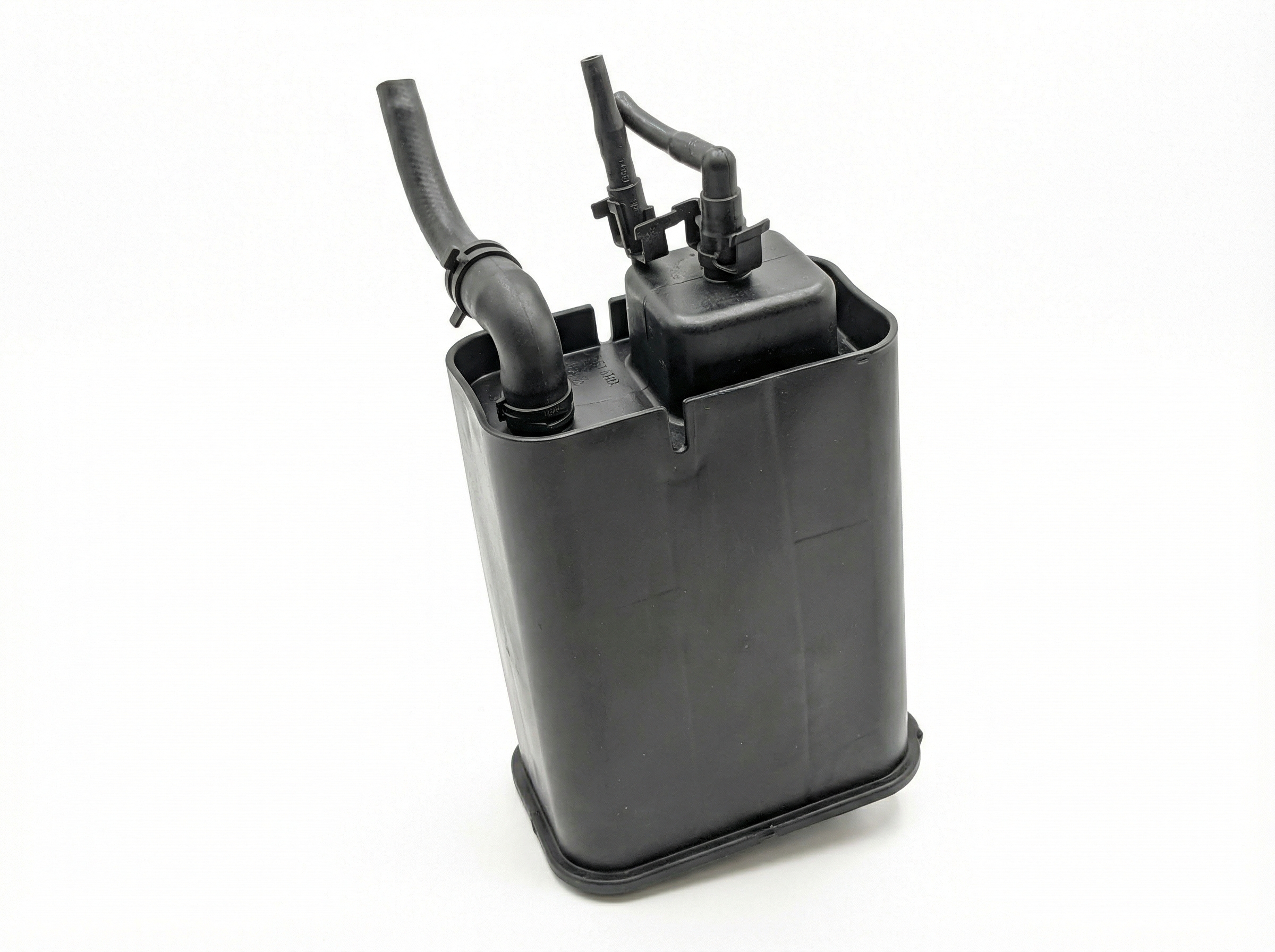
New Aftermarket Parts Available


The information in this article is provided for general reference and educational purposes only. Vehicle specifications, procedures, and part compatibility can vary by production date, trim level, and region. Always consult your vehicle's factory service manual and verify part numbers before purchasing or performing repairs. Safety-critical components such as airbags, seat belts, and braking systems should be installed by a qualified professional.
- Cadillac Eldorado:
- 🧭 Diagnostic Flowchart
- 🛍️ Shop This Part
- What's Unique About the 1992-2002 Cadillac Eldorado
- Symptoms You May Notice
- Most Likely Causes
- Rare But Worth Checking
- Diagnosis Steps
- Parts You'll Likely Need
- Related Codes That Often Appear With This One
- Platform-Specific Known Issues
- Mechanic-Grade Diagnostic Values
- Scan Tool Commands That Help
- Wiring & Ground Locations
- Real Owner Repair Stories
- OEM Part Supersession History
- Model Year Variations Within This Range
- Other Known Issues on This Vehicle
- Used vs. New Parts: Buying Guide for This Vehicle
- Real Owner Stories
- 1997 Cadillac DeVille
- GM vehicle with Northstar-like engine bay
- 1996 Oldsmobile Aurora (4.0L Northstar variant)
- Related OBD-II Codes
- Frequently Asked Questions
- 🎟️ Get 5% Off