

P1442 on 1995-2005 Chevrolet Blazer: EVAP Vacuum Switch High Voltage Causes and Fixes
On a 1995-2005 Chevy Blazer, code P1442 almost always points to an electrical fault with the EVAP Canister Vent Valve Solenoid, not a system leak. The most common fix is replacing the solenoid itself, which is located near the fuel tank and spare tire. An aftermarket replacement part typically costs between $25 and $50.
- P1442 on a Blazer is an electrical circuit code, not a leak code.
- The most likely culprit is the EVAP Canister Vent Valve Solenoid, located near the fuel tank and spare tire.
- Do not waste time or money replacing the gas cap or looking for cracked hoses for this specific code; those issues cause different codes like P0442.
- Diagnosis involves checking the wiring and connector for damage and testing for correct voltage before replacing the part.
- The replacement part is relatively inexpensive and accessible for a DIY repair, often requiring only basic hand tools.
What's Unique About the 1995-2005 Chevrolet Blazer
Unlike many other manufacturers where a P144x code might indicate a system leak or a secondary air injection fault, on this generation of GM trucks (S-10 platform), P1442 specifically flags an electrical circuit issue. The vehicle's computer is seeing an incorrect voltage, pointing the diagnosis directly towards a specific component's circuit (the EVAP vacuum switch/vent solenoid) rather than a general, hard-to-find vapor leak. This is different from a P0442 (Small EVAP Leak) code which could be a gas cap or rotted filler neck.
Generation note: The 1995-2005 year range covers the entire second generation of the Chevrolet S-10 Blazer. The GMC S-15 Jimmy, Chevrolet S-10 pickup, and GMC Sonoma of the same era share the same platform, 4.3L V6 engine, and components, so this guide is directly applicable to them as well.
Symptoms You May Notice
- Check Engine Light is on
- Inability to pass a state emissions test
- Possible faint fuel odor (less common for this specific code, more common with leak codes like P0442)
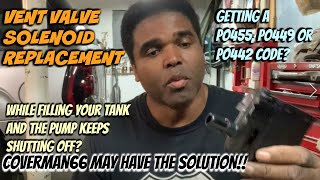
- Difficulty filling the fuel tank (gas pump clicks off repeatedly 🎬 Watch: Fix gas pump clicking with a vent valve replacement), which can be a symptom of a stuck-closed vent valve.
- Replacing the gas cap. A bad gas cap causes a leak code (like P0442, P0455) by failing to seal the system, not a P1442 high voltage circuit code on a GM.
- Replacing the EVAP Purge Valve/Solenoid. The purge valve is located in the engine bay and controls the flow of vapors from the canister to the engine. P1442 points specifically to the vent valve/switch circuit near the charcoal canister at the rear of the vehicle.
- Searching for a vacuum leak in EVAP hoses. While leaks are a common EVAP issue (often causing P0442), this specific code is electrical in nature and points to a voltage problem, not a physical leak.
Most Likely Causes
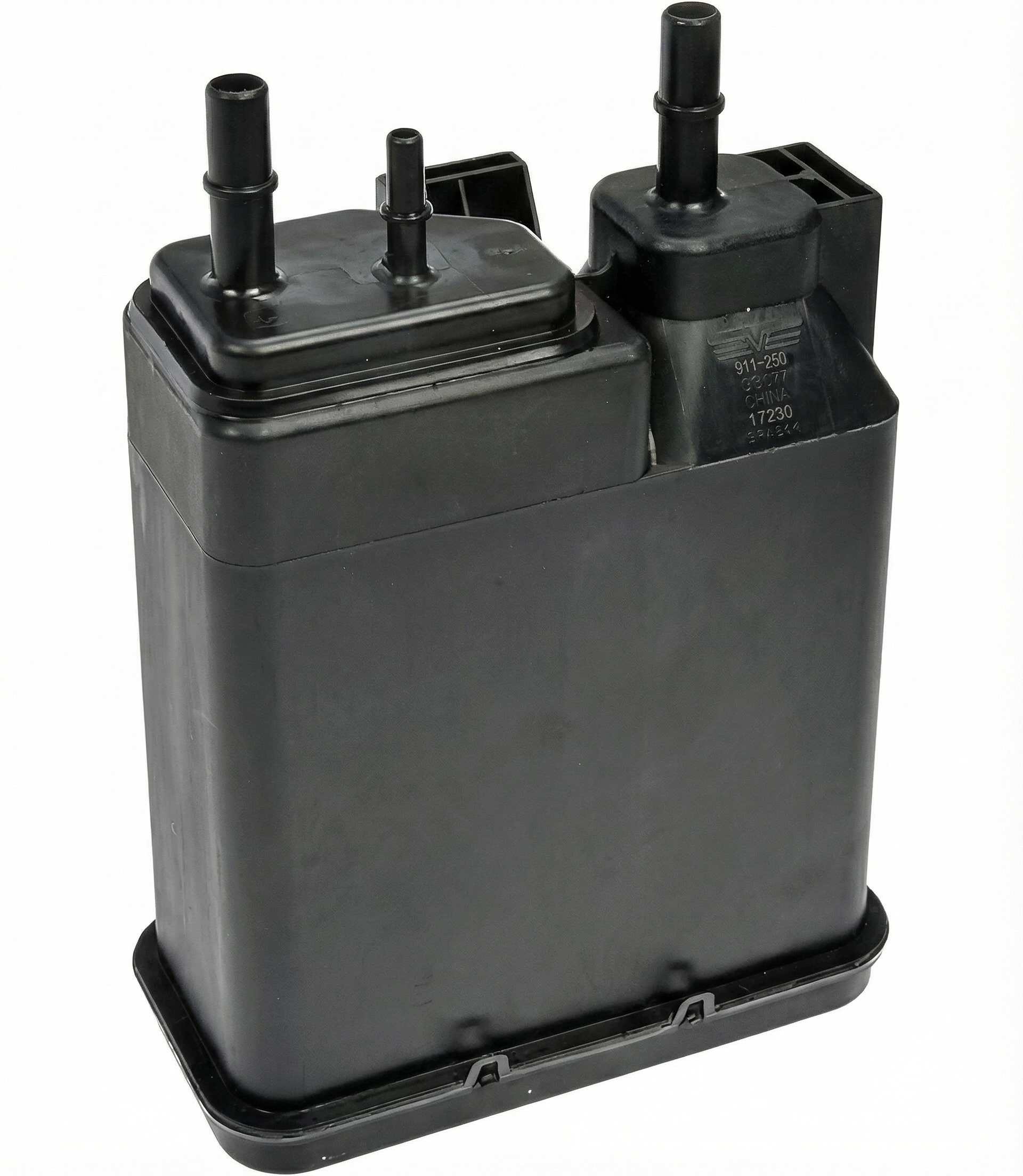
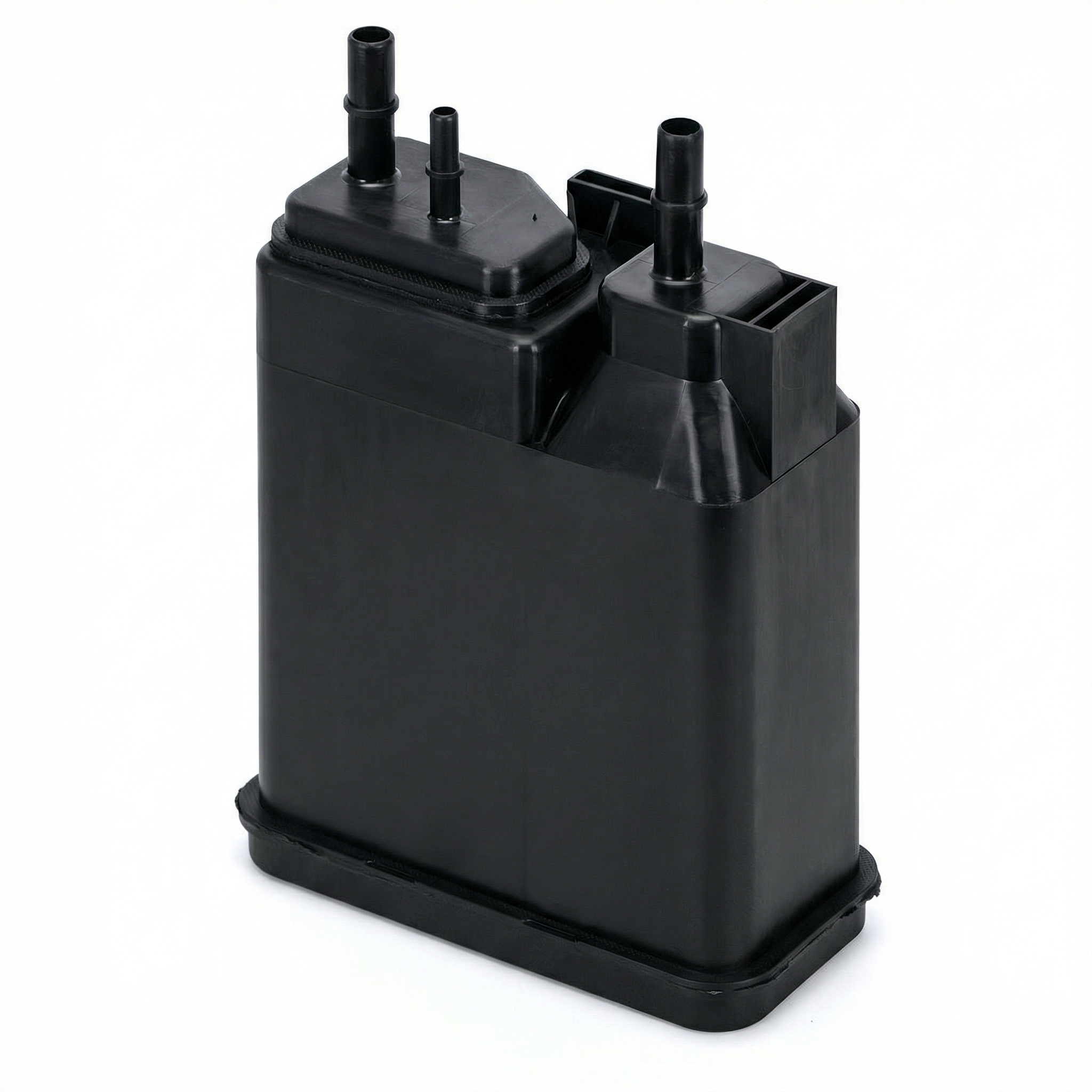
- Faulty EVAP Canister Vent Valve Solenoid 🔴 High Probability → Shop Vapor Canister The solenoid is exposed to the elements under the vehicle, typically mounted to the charcoal canister near the fuel tank and spare tire. This location makes it highly susceptible to moisture, road salt, and corrosion over time, which can cause internal electrical shorts leading to a high voltage signal.
How to confirm: With the ignition on (engine off), use a multimeter to check for battery voltage at the power pin on the solenoid's connector. Then, check the signal wire voltage; a 'High Voltage' code suggests it may be shorted to a power source. You can also test the solenoid's resistance across its two pins; an out-of-spec reading (usually should be 20 ohms or more) or an open/shorted circuit indicates failure. A functional test involves applying 12V directly to the solenoid pins and listening for an audible 'click' as it actuates.
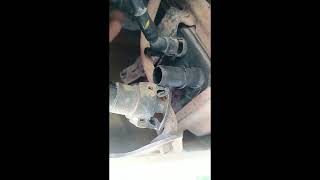
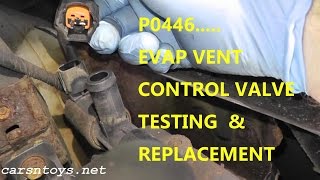
Typical fix: Replace the EVAP canister vent valve solenoid assembly. This is often a simple unbolt/unclip repair. 🎬 See this walkthrough on how to replace the vent valve
Est. part cost: $25-$60 - Shorted Wiring Harness 🟡 Medium Probability The wiring harness runs along the frame rail from the engine bay to the rear of the vehicle. It can become chafed against the frame, melted by proximity to the exhaust, or corroded from water and salt exposure, causing the signal wire to short to a power source.
How to confirm: Visually inspect the entire length of the wiring harness from the PCM to the vent solenoid for any signs of physical damage. Pay close attention to areas where the harness is clipped to the frame or passes near the exhaust. Disconnect both the PCM and the solenoid and use a multimeter to check for continuity between the signal wire and power/ground wires to identify a short.
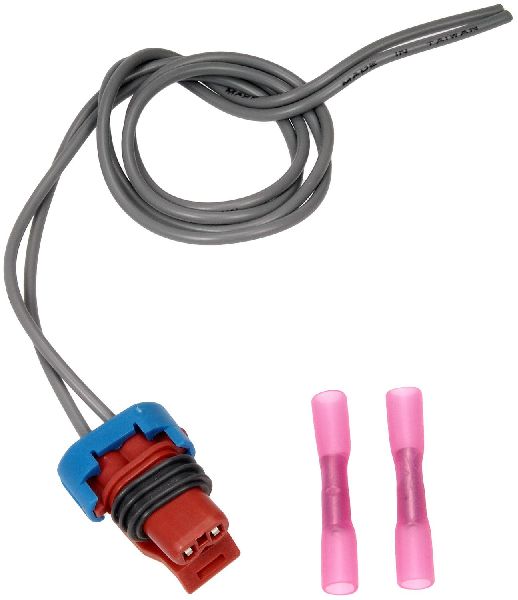
Typical fix: Repair the damaged section of the wire by splicing in a new piece of wire and using heat-shrink tubing. Protect the repaired area from future damage with a plastic wire loom or by re-routing it away from sharp edges or heat sources.
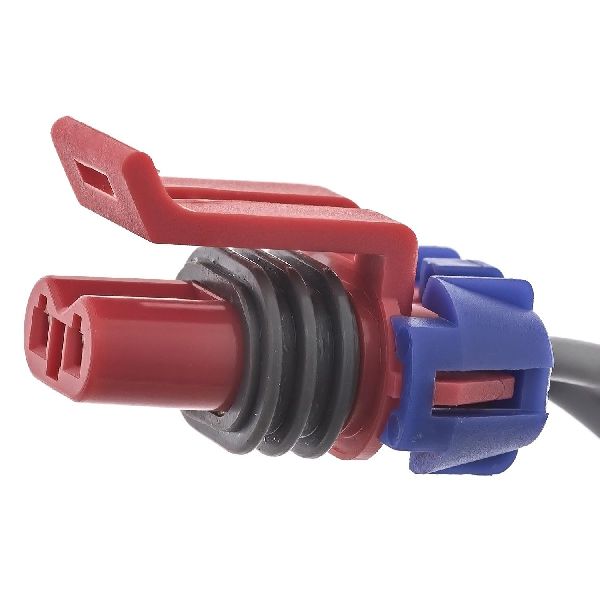
Est. part cost: $5-$20 - Corroded or Damaged Connector ⚪ Low Probability The connector at the vent solenoid is located under the truck and is prone to water and road salt intrusion, which can corrode the pins and cause a poor connection or a short. The plastic locking tabs can also become brittle and break, leading to a loose connection.
How to confirm: Unplug the connector from the vent solenoid and inspect the terminals for green or white corrosion, bent pins, or pushed-out pins. Ensure the weather seal is intact and the locking tab engages securely.
Typical fix: Clean the connector terminals with an electrical contact cleaner and a small brush. If the damage is severe, replace the connector pigtail, which requires cutting the old one off and splicing the new one in.
Est. part cost: $10-$30
Rare But Worth Checking
- Faulty Powertrain Control Module (PCM): This is extremely rare. The internal driver circuit for the vent solenoid in the PCM can fail, but this should only be considered after all other possibilities, including the component, wiring, and connectors, have been exhaustively ruled out.
Diagnosis Steps
- Verify the code with an OBD-II scanner.
- Locate the EVAP Canister Vent Valve Solenoid. On the Blazer/Jimmy, it is typically mounted on or directly next to the charcoal canister, which is located near the fuel tank, often above the spare tire.
- Visually inspect the electrical connector and wiring harness going to the solenoid for any obvious signs of damage, corrosion, chafing, or melting.
- Disconnect the connector. With the ignition on (engine off), use a multimeter to check for power at the connector. One pin should have battery voltage (12V).
- Check the voltage on the signal wire (the other wire). A 'High Voltage' code suggests this wire may be shorted to a power source, showing 5V or 12V when it should be near 0V (when the valve is not commanded on).
- If wiring seems okay, test the old solenoid. Check its resistance with a multimeter (should be 20 ohms or more). You can also use a 9V battery or a power probe to apply power directly to the solenoid's pins; you should hear a distinct 'click' as it opens or closes.
- If the solenoid is confirmed faulty or the wiring is confirmed to be good, replace the EVAP Canister Vent Valve Solenoid.
- Clear the code with the scanner and perform a complete drive cycle to ensure the code does not return.
Parts You'll Likely Need
- EVAP Vapor Canister Vent Solenoid
(OEM #25932571)— This component contains the vacuum switch and solenoid coil that most commonly fails electrically, sending the high voltage signal to the PCM and triggering code P1442. Its exposed location under the vehicle makes it a frequent failure point.
Trusted brands: ACDelco (Original GM), Dorman, Standard Motor Products (SMP)
OEM price range: $40-$60
Aftermarket price range: $25-$45
Platform-Specific Known Issues
- Real Owner Experience: A user on BlazerForum.com with a 1996 Blazer experienced codes P0446 and P1441. After extensive diagnosis, they found the vent line from the T-fitting to the canister was completely blocked. While not a P1442, it highlights the vulnerability of the EVAP lines in that area to blockage, which can cause related system faults.
Mechanic-Grade Diagnostic Values
- EVAP Canister Vent Valve Solenoid Coil Resistance — expected: At least 20 ohms. Failure: A reading significantly lower than 20 ohms, or an open circuit (infinite resistance), indicates a failed solenoid.
- EVAP Canister Vent Valve Control Wire Voltage (at PCM) — expected: Near 0V with ignition on, engine off (valve not commanded on).. Failure: A reading of 5V or 12V indicates a short to power in the wiring harness, which is a direct cause for the 'High Voltage' code.
Scan Tool Commands That Help
- GM Tech 2: EVAP System Bay Test — This function allows a technician to command the EVAP vent valve and purge solenoid to activate with the engine off. For P1442, you can command the vent valve to cycle and listen for the audible 'click' to confirm mechanical function, and watch voltage on the signal wire to see if it responds correctly to the command. This helps separate a wiring fault from a faulty component without having to physically apply voltage at the connector.
Wiring & Ground Locations
- EVAP Canister Vent Valve Control Wire — This is a White wire located at Pin 2 of the C3 (Clear) connector on the Powertrain Control Module (PCM) for 1998+ models.. This is the specific control wire from the PCM to the vent solenoid. A short to power on this wire will cause the P1442 code. Knowing the pin location allows for testing the circuit directly at the PCM to isolate the fault between the PCM, wiring, and the solenoid.
- G119 (4.3L Engine) — Located on the right front of the engine block.. While P1442 is a high voltage (short to power) code, a poor ground connection can cause a variety of unpredictable electrical issues in related circuits. Verifying the integrity of major engine and chassis grounds is a key step in ruling out complex electrical faults.
Real Owner Repair Stories
- Camaro Forums user (1995 Chevrolet Camaro 3.8L V6) — Intermittent Check Engine Light with code P1442 for about a year.
❌ Tried (didn't work) Replacing the gas cap., Having a mechanic replace a 'bad hose'.
✅ What actually fixed it The user was advised that the problem was not a leak but an electrical issue with the EVAP vacuum switch/solenoid itself, and the next step was to locate and test/replace that specific component.
OEM Part Supersession History
10382105, 15750484→25932571— Component revision and consolidation by GM.
Model Year Variations Within This Range
- 1995: Wiring diagrams and parts catalogs for 1995 models sometimes show a different EVAP system design that does not use a vent solenoid in the same way as later models. Diagnosis on a 1995 model should first confirm the presence and type of vent valve/solenoid before proceeding with tests for later-year vehicles. The system became more standardized from 1996 onwards with the transition to OBD-II.
Diagnostic Flowchart
Other Known Issues on This Vehicle
Issues unrelated to this code that are worth knowing about as an owner of this generation:
- Lower Intake Manifold Gasket Leaks (4.3L V6) 🔴 High → Shop Engine Intake Manifold — Extremely common, especially on models using Dex-Cool coolant. Often occurs between 80,000 and 150,000 miles. Can cause coolant to mix with oil, leading to engine damage if not addressed. (Ref: While no specific recall, numerous TSBs exist for similar GM engines regarding gasket material updates.)
- Worn Steering Components (Idler Arm, Pitman Arm) 🟠 Medium — Very common failure point leading to loose, wandering steering and clunking noises. Often requires replacement after 100,000 miles.
- Fuel Pump Failure 🔴 High — Common across many GM models of this era, including the Blazer. The pump often fails between 100,000 and 150,000 miles, resulting in a crank-no-start condition or stalling.
- 4WD Vacuum Actuator / Switch Failure 🟠 Medium — The vacuum-operated 4WD system is a known weak point. The actuator under the battery tray can fail, vacuum lines can leak, or the switch on the transfer case can fail, sometimes leaking transmission fluid into the vacuum lines and damaging HVAC controls.
- Worn Door Hinge Pins and Bushings 🟡 Low — Almost universal on high-mileage examples. The heavy doors cause the hinge pins to wear out, leading to sagging doors that are difficult to close and may pop loudly.
- Faulty Distributor Gear / Position Sensor 🟠 Medium — Wear on the distributor gear is common and can cause rough running, misfires, and poor acceleration, particularly when the engine is hot.
- Erratic or Inaccurate Fuel Gauge 🟡 Low — A very common complaint, especially on 1998-2002 models. The sending unit in the fuel tank fails, causing the gauge to read empty, full, or fluctuate wildly.
Used vs. New Parts: Buying Guide for This Vehicle
When a used part is the smart pick: A used EVAP vent solenoid from a junkyard is a reasonable choice for this repair, as it is a simple electro-mechanical part that is not a major wear item. It is an accessible component, making replacement low-risk if the used part is non-functional.
Donor-vehicle mileage cap: roughly under 120000 miles for the part to have meaningful remaining life.
What to inspect on the donor part:
- Visually inspect the plastic housing for cracks or heat damage.
- Check the electrical connector pins for any signs of corrosion (green or white powder) or being bent.
- If possible, bring a 9V or 12V battery to the junkyard and test for an audible 'click' when power is applied to the pins.
- Select a part from a vehicle that appears to have been well-maintained and is from a dry, non-salt-belt region if possible.
OEM-only on this vehicle (don't cheap out):
- Powertrain Control Module (PCM)
Aftermarket brands forum-validated for this vehicle:
- ACDelco (OEM)
- Standard Motor Products (SMP)
- Dorman (often includes updated designs or pigtails)
Brands owners have reported issues with on this vehicle:
- No-name, unbranded parts from online marketplaces should be treated with caution, as quality control can be inconsistent.
Real Owner Stories
Aggregated from forums and TSBs cited above. Mileages and costs reflect what owners reported in those sources.
1996 Blazer
Symptoms: Owner experienced codes P0446 and P1441, leading to extensive diagnosis of the EVAP system.
What fixed it: The problem was a completely blocked vent line running from the T-fitting to the charcoal canister.
Source hint: BlazerForum.com - A thread titled 'how to test an evap vapor charcoal canister?'
Related OBD-II Codes
Frequently Asked Questions
Where is the EVAP vent valve solenoid located on my 1999 Chevrolet Blazer?
Why is the vent valve solenoid a common failure point on these S-10 platform trucks?
I'm having trouble filling my gas tank; the pump keeps clicking off. Is this related to code P1442?
How can I test the vent valve solenoid myself to see if it's bad?
My mechanic suspects a shorted wire is causing the P1442 code. Is this a known issue on the Blazer?
I have a 2000 GMC Jimmy with a P1442 code. Does this article apply to my truck?
What is the estimated cost for just the replacement EVAP vent valve solenoid part?
Helpful Videos
Used OEM Parts in Stock
New Aftermarket Parts Available


The information in this article is provided for general reference and educational purposes only. Vehicle specifications, procedures, and part compatibility can vary by production date, trim level, and region. Always consult your vehicle's factory service manual and verify part numbers before purchasing or performing repairs. Safety-critical components such as airbags, seat belts, and braking systems should be installed by a qualified professional.
- Chevrolet Blazer:
- 🧭 Diagnostic Flowchart
- 🎬 Helpful Videos
- 🛍️ Shop This Part
- What's Unique About the 1995-2005 Chevrolet Blazer
- Symptoms You May Notice
- Most Likely Causes
- Rare But Worth Checking
- Diagnosis Steps
- Parts You'll Likely Need
- Platform-Specific Known Issues
- Mechanic-Grade Diagnostic Values
- Scan Tool Commands That Help
- Wiring & Ground Locations
- Real Owner Repair Stories
- OEM Part Supersession History
- Model Year Variations Within This Range
- Other Known Issues on This Vehicle
- Used vs. New Parts: Buying Guide for This Vehicle
- Real Owner Stories
- 1996 Blazer
- Related OBD-II Codes
- Frequently Asked Questions
- 🎟️ Get 5% Off