

P1442 on 2011-2019 Ford Explorer 3.5L: Understanding Code Definition Uncertainty
The definition of code P1442 for a 2011-2019 Ford Explorer is most likely 'Evaporative Emission Control System Incorrect Purge Flow', though it is exceptionally rare for this vehicle. While online sources show conflicting definitions, modern Ford applications point towards an EVAP system fault. Owners with EVAP issues on this platform more commonly report codes like P1450 or P0456, usually caused by a faulty purge valve.
- The definition for P1442 on a 2011-2019 Explorer is most likely EVAP-related, but the code itself is exceptionally rare for this vehicle.
- Do not buy any parts until you have a definitive diagnosis from a high-quality scan tool that provides Ford-specific code descriptions.
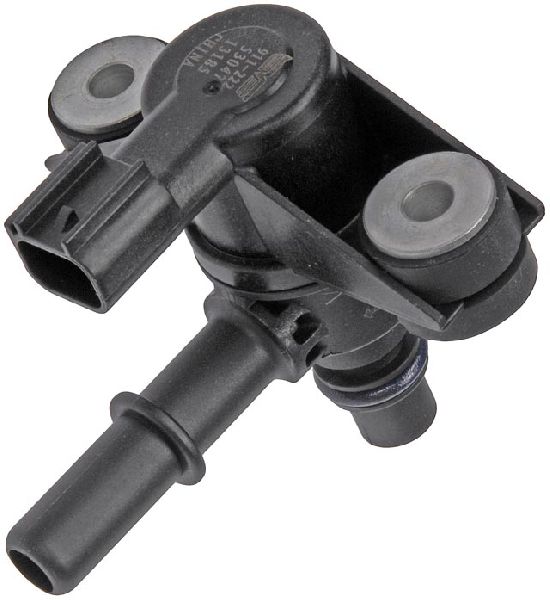
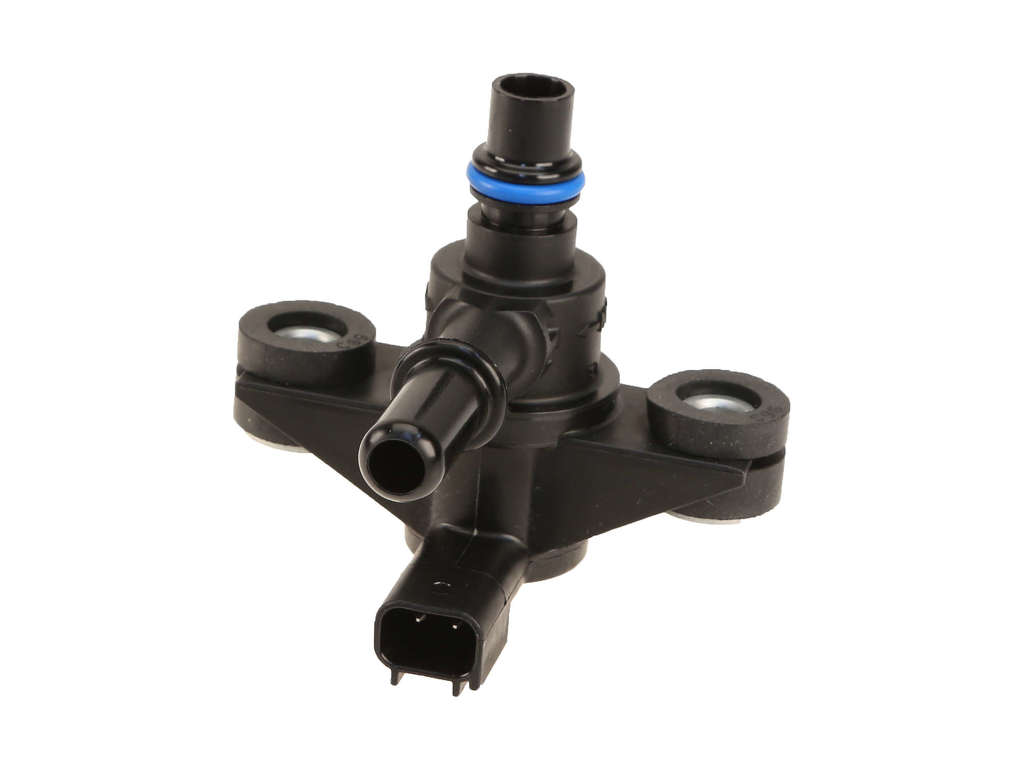
- If you have EVAP-like symptoms (fuel smell, check engine light), you are far more likely to have a code like P1450 or P0456, which commonly points to a failed EVAP Purge Valve (OEM Part BL3Z-9C915-A).
- The most likely first step is paying for a professional diagnosis to simply identify the system at fault.
What's Unique About the 2011-2019 Ford Explorer
What's unique about the 2011-2019 Explorer regarding P1442 is its apparent absence. Extensive searches of owner forums, including explorerforum.com, and technical service bulletin databases show no real-world instances of this code for this specific generation and engine. This suggests the code is either non-existent for this platform or so exceptionally rare that it is undocumented in common repair discussions. The confusion stems from generic code lists. While the 3.5L V6 platform certainly experiences EVAP system failures, they manifest under different, more common trouble codes like P1450.
Symptoms You May Notice
- Check Engine Light is on.
- Vehicle may fail an emissions inspection.
- Possible faint fuel smell, especially after parking.
- Difficulty starting the engine immediately after refueling.
- Gas pump nozzle may click off repeatedly when trying to fill the tank. 🎬 Watch: Why the gas pump keeps clicking off
- Replacing any part before confirming the correct definition of the code for your specific vehicle. Given the uncertainty, diagnosis must start with a high-end scan tool that can provide the Ford-specific code description.
- Confusing P1442 with more common Ford EVAP codes like P1450 or P0456, leading to incorrect diagnostic paths.
Most Likely Causes
Rare But Worth Checking
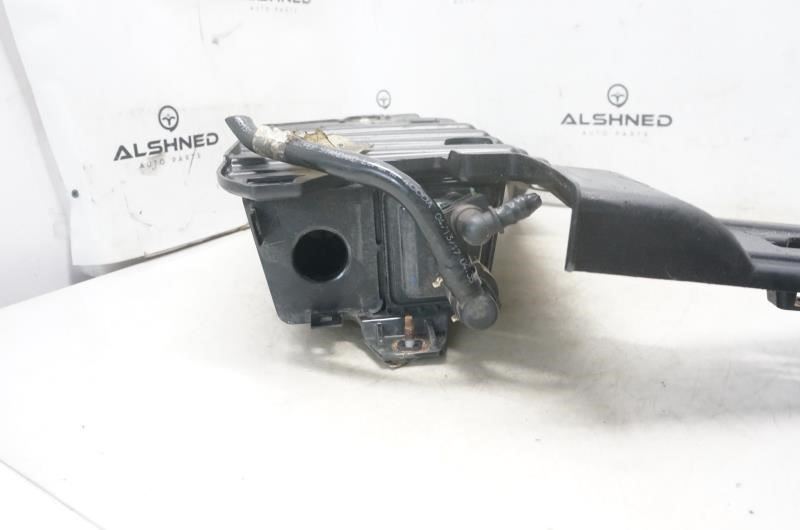
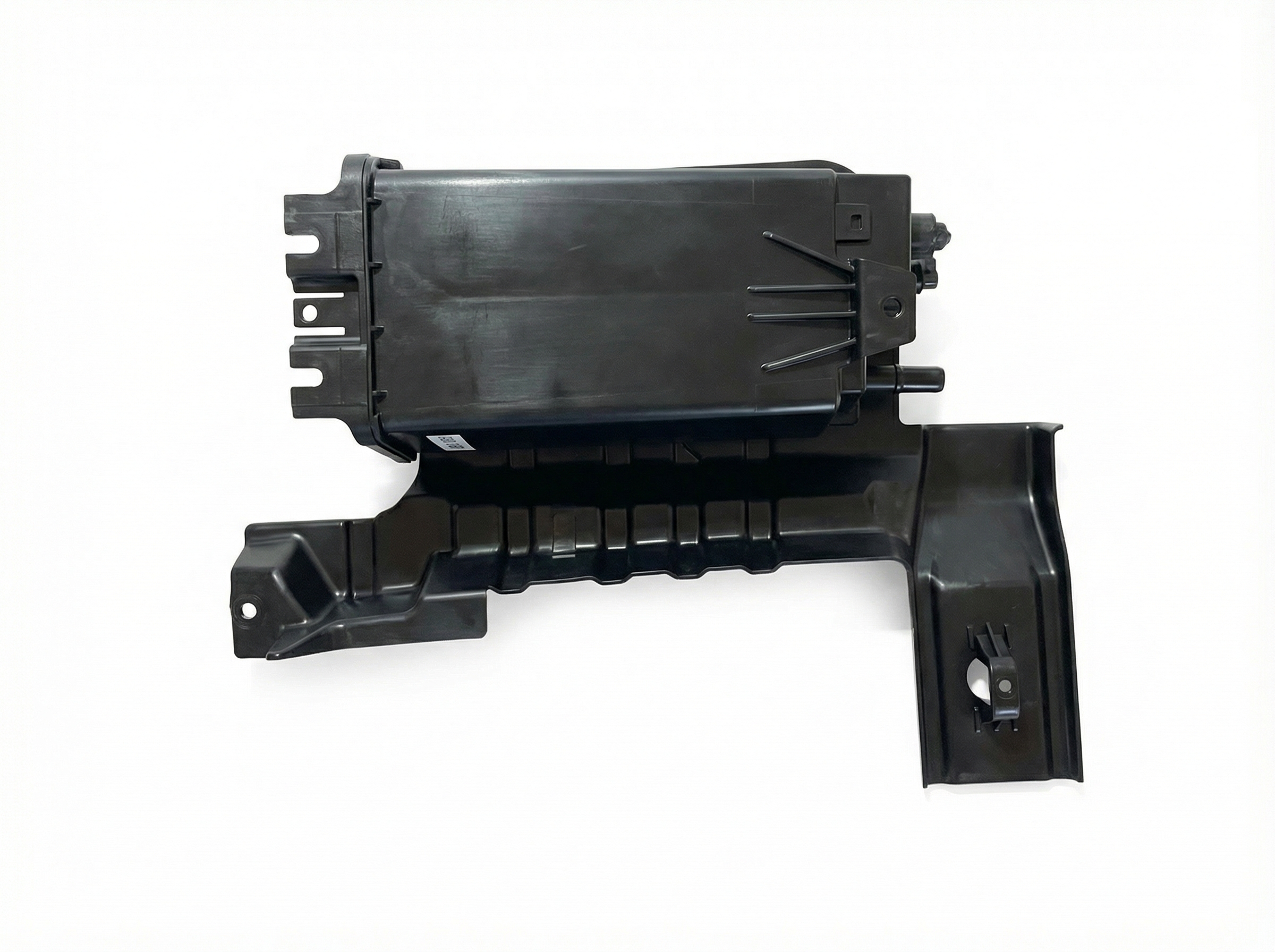
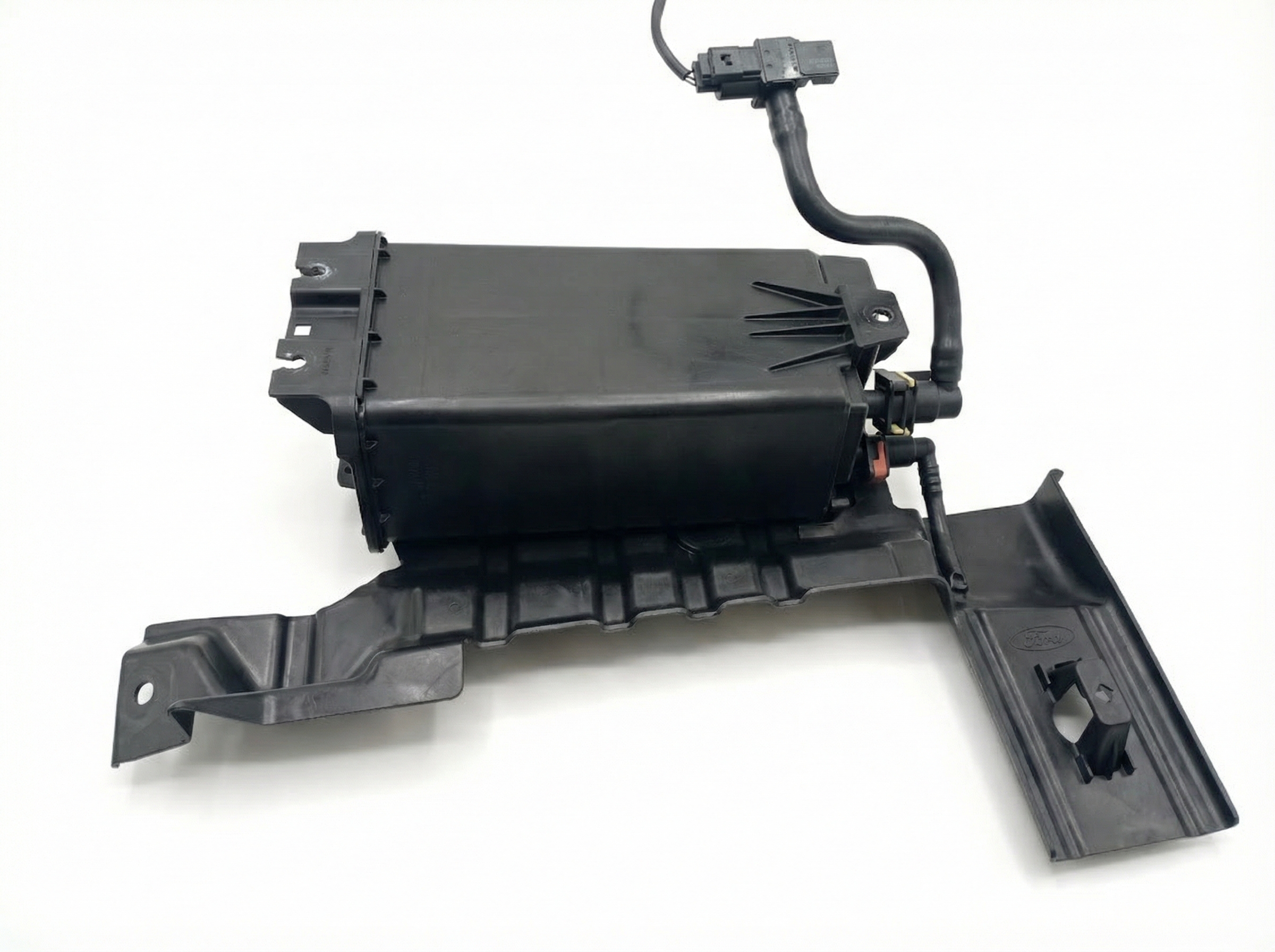
- Faulty EVAP charcoal canister (cracked or saturated with fuel).
- Defective fuel tank pressure sensor.
- A loose or faulty gas cap (though this more commonly causes a small leak code).
Diagnosis Steps
- The first and most critical step is to use a professional-grade diagnostic scan tool that provides manufacturer-specific (Ford) trouble code definitions, not just generic OBD-II readings.
- Assuming the code points to an EVAP fault, locate the EVAP canister purge valve. On the 3.5L V6, it is mounted on top of the intake manifold, next to the throttle body.
- Inspect all visible EVAP hoses for cracks, brittleness, or loose connections between the intake manifold, purge valve, and charcoal canister.
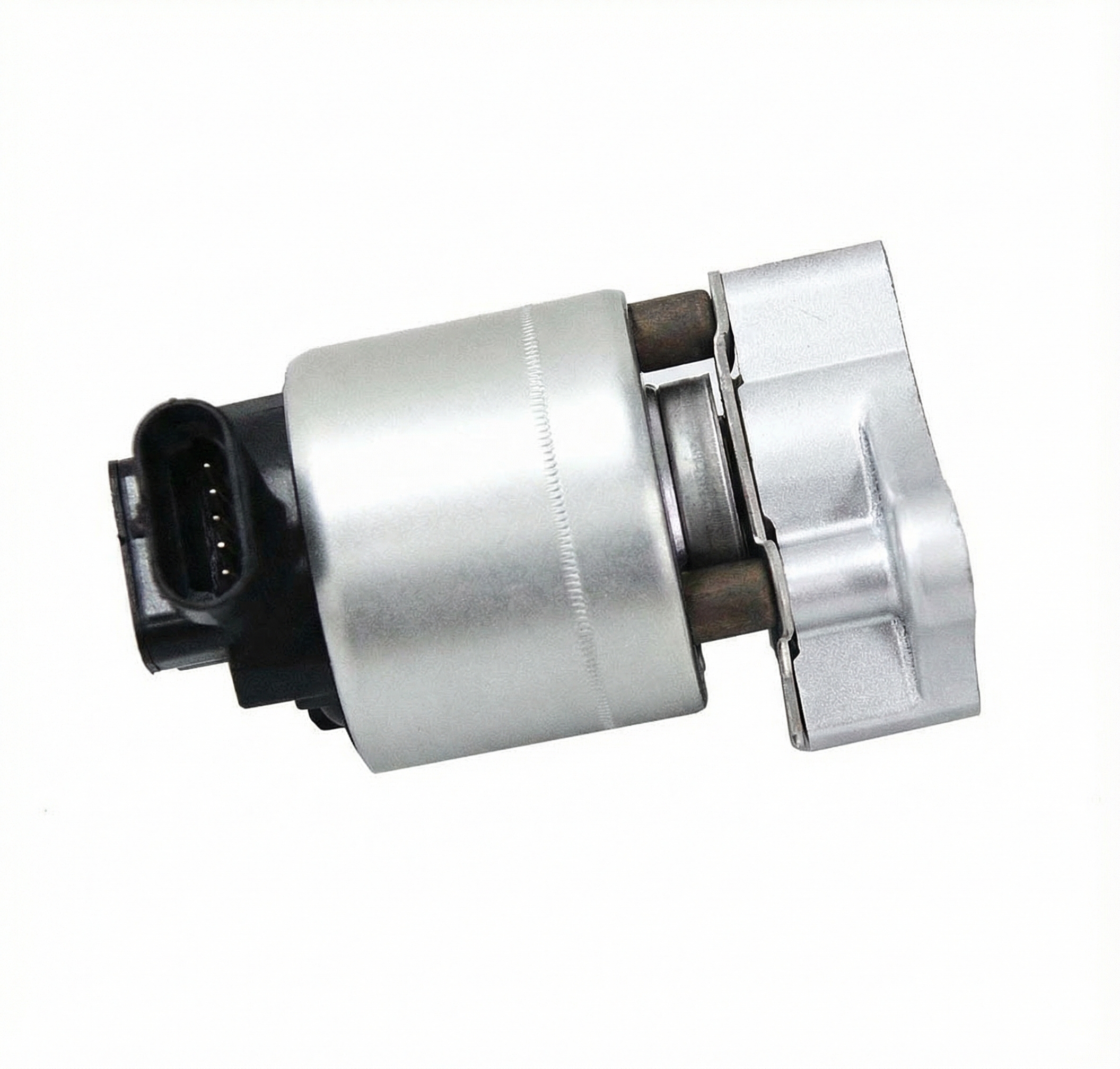
- Test the Purge Valve: With the engine off, disconnect the valve. Try to blow through it. If air passes through, the valve is stuck open and is faulty. You can also apply 12V power to the valve's electrical contacts; you should hear an audible click as it opens. If it doesn't click, it has failed electrically.
- Check for Power: With the key on, use a multimeter to check for voltage at the electrical connector for the purge valve.
- Perform a Smoke Test: If the purge valve tests good, the best way to find a leak in the EVAP system is to inject smoke into the system (usually via the service port) and look for smoke escaping from cracked hoses, the charcoal canister, or seals.
- Due to the code's rarity on this vehicle, consulting a Ford dealership or a technician with access to Ford's official service manuals (IDS) is highly recommended to avoid unnecessary parts replacement.
Parts You'll Likely Need
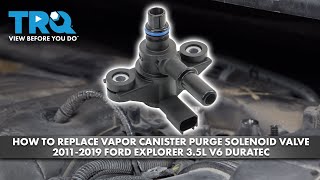
- Vapor Canister Purge Valve / Solenoid 🎬 Watch: How to replace the 3.5L V6 purge valve
Related Codes That Often Appear With This One
- P0441 - Evaporative Emission Control System Incorrect Purge Flow
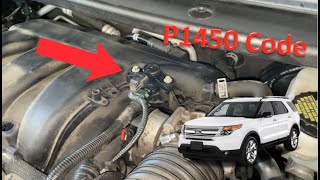
- P1450 - Unable to Bleed Up Fuel Tank Vacuum (Very common on this platform for the same parts failure) 🎬 See how to fix the common P1450 code
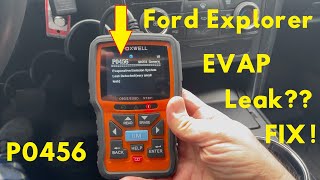
- P0456 - Evaporative Emission System Leak Detected (Very Small Leak)
Platform-Specific Known Issues
- There are no documented, vehicle-specific issues, TSBs, or recalls linking the P1442 code to the 2011-2019 Ford Explorer 3.5L V6.
- However, failure of the EVAP Purge Valve (leading to other codes like P1450) is a very well-documented common issue for this platform.
Mechanic-Grade Diagnostic Values
- Canister Purge Valve (CPV) Solenoid Resistance — expected: 22 to 38 Ohms. Failure: A reading of infinity (OL) indicates an open coil; a reading near zero indicates a shorted coil. Some sources cite 20-40 Ohms as a general range for this type of solenoid.
- EVAP Canister Vent Solenoid Resistance — expected: 48 to 65 Ohms. Failure: A reading outside this range indicates a failed solenoid coil. This part is located under the vehicle near the charcoal canister.
- Fuel Tank Pressure (FTP) Sensor Voltage (Key On, Engine Off) — expected: ~2.6V to 2.7V. Failure: A significantly different voltage with the gas cap off (system at atmospheric pressure) indicates a faulty sensor or wiring issue. A drop in voltage immediately after starting the engine can indicate a purge valve that is stuck open.
- Fuel Tank Pressure (FTP) during Purge — expected: -2.0 to -4.0 inches of water (-inH2O). Failure: If the PCM commands the purge valve open and the pressure does not change to a slight vacuum, it indicates a flow problem (blockage or failed valve).
Hidden / Shadow Codes Worth Checking
- Mode $06, Test ID $80: This refers to the onboard diagnostic monitor results for the EVAP system leak test. A professional scan tool can access this data to see if the test value is within the MIN and MAX limits set by Ford, providing insight into system integrity before a full-blown code is set. (see via Professional-grade scan tool with Mode 6 data capability.)
Scan Tool Commands That Help
- Ford IDS / FDRS / FORScan: EVAP System Test — This is an automated, on-demand test that commands the purge and vent solenoids to seal the system, pulls a vacuum, and monitors for decay. It's the primary diagnostic function to confirm if a leak or flow fault exists. The tool will report if the test passes or fails.
- Ford IDS / FDRS / FORScan: Vapor Management Valve (Purge Valve) Duty Cycle Control — This bidirectional control allows a technician to manually command the purge valve open and closed while monitoring the Fuel Tank Pressure (FTP) sensor. This can confirm if the valve is physically responding to electrical commands.
- Ford IDS / FDRS / FORScan: EVAP Canister Vent Valve ON/OFF — This command manually closes the normally-open vent solenoid. It's used to seal the system for leak testing or to diagnose a vent valve that is stuck open or closed.
Wiring & Ground Locations
- Purge Valve Connector — On the purge valve itself, located on the top left of the 3.5L V6 engine's intake manifold, near the throttle body.. This is the primary point for testing voltage and resistance of the purge valve circuit. One pin should have ~12V with the key on, and the other is a PCM-controlled ground.
- G100 / G101 — G100 is at the top rear of the engine. G101 is on the left side of the engine compartment.. These are primary engine and chassis ground points. A corroded or loose ground here can cause a variety of electrical issues, including erratic behavior of emissions components like solenoids and sensors.
- C213 — A large bulkhead connector located behind the driver's side kick panel, near the brake pedal.. Wiring for the under-vehicle EVAP components, such as the vent valve and fuel tank pressure sensor, passes through this connector. Corrosion or a poor pin fit here can cause intermittent faults that are difficult to trace.
- Underhood Fuse Box — Located in the engine compartment, next to the battery.. Contains fuses and relays that provide power to the EVAP system components. A blown fuse will cause a circuit fault.
"I Checked Everything" — The Actual Cause
- In cases of the very common P1450 code ('Unable to Bleed Up Fuel Tank Vacuum'), a smoke test will almost always pass with no leaks found. This is because P1450 is not a leak code, but a blockage or flow code. The cause is typically either a purge valve that is stuck open (allowing engine vacuum into the EVAP system when it shouldn't) or a blocked vent path (preventing the system from venting to atmosphere). Technicians often misdiagnose by performing a smoke test, finding nothing, and then struggling to find the root cause. The correct procedure is to test the purge valve's function directly (by blowing through it or using a scan tool) and checking the vent solenoid and its hose for blockages.
OEM Part Supersession History
AU5Z-9C915-A→AU5Z-9C915-B— Part revision, likely for improved durability or to address common failure modes.
Heads up: The part listed in the Pass 2 data, BL3Z-9C915-A, is primarily for the F-150 3.5L engine. The correct part for the Explorer 3.5L is typically AU5Z-9C915-B or a similar variant. While they may appear similar, using the correct application-specific part is critical.
Model Year Variations Within This Range
- 2016-2019: The Ford Explorer received a significant facelift for the 2016 model year. While the core 3.5L engine and EVAP components remained largely the same, some wiring harness routing and fuse box layouts were altered. Fuse numbers and locations from a 2011-2015 model may not be accurate for a 2016-2019 vehicle.
Diagnostic Flowchart
Other Known Issues on This Vehicle
Issues unrelated to this code that are worth knowing about as an owner of this generation:
- Internal Water Pump Failure 🔴 High — Common after 80,000-120,000 miles. Failure can cause coolant to mix with engine oil, leading to catastrophic engine damage if not caught early. (Ref: No recall, but it is a widely known design flaw. A weep hole on the side of the engine block near the A/C compressor will leak coolant externally as a warning sign.)
- Power Transfer Unit (PTU) Failure (AWD Models) 🔴 High — Common due to fluid overheating from proximity to the exhaust and lack of a drain plug for servicing. Symptoms include grinding/banging noises and a smell like propane or natural gas. (Ref: No recall, but it is a well-documented failure. Aftermarket solutions include PTUs with added cooling fins and a drain plug.)
- Electronic Throttle Body (ETB) Failure 🟠 Medium — Common across many Ford models of this era. Causes sudden loss of power ('limp mode') and a wrench light on the dash. Often triggers codes P2111 or P2112. (Ref: Ford had customer satisfaction programs (e.g., 16B32 for 2016 models), but these have largely expired.)
- Exhaust Odor In Cabin 🟡 Low — Affects 2011-2017 models. Exhaust fumes can be drawn into the cabin under heavy acceleration, particularly with the A/C in recirculation mode. (Ref: Ford issued TSB 16-0166 to address the issue by sealing gaps and seams in the rear of the vehicle.)
Used vs. New Parts: Buying Guide for This Vehicle
When a used part is the smart pick: For this repair, a used part is generally not recommended. The purge valve is an inexpensive electronic solenoid with a known high failure rate. The risk of getting a used part that has already failed or is near the end of its service life is high. Given the low cost of a new part ($35-$60), buying new is the smarter choice.
Donor-vehicle mileage cap: roughly under 40000 miles for the part to have meaningful remaining life.
What to inspect on the donor part:
- If buying used is unavoidable, source from the lowest-mileage donor vehicle possible.
- Visually inspect the plastic housing for cracks or heat damage.
- Ensure the electrical connector pins are clean and free of corrosion.
- Test the part before purchase if possible: try to blow through it. If any air passes, it is faulty.
OEM-only on this vehicle (don't cheap out):
- Vapor Canister Purge Valve / Solenoid
Aftermarket brands forum-validated for this vehicle:
- Motorcraft (OEM)
Brands owners have reported issues with on this vehicle:
- Dorman: Some forum users report premature failure of Dorman purge valves, with some lasting only a few thousand miles before failing again.
- Generic/No-Name (eBay/Amazon): Users report very inconsistent quality, with some failing almost immediately. While some have had luck, the failure rate appears high.
Real Owner Stories
Aggregated from forums and TSBs cited above. Mileages and costs reflect what owners reported in those sources.
2011-2017 Ford Explorer 3.5L V6
Symptoms: The owner experienced a P1450 code (a closely related EVAP fault) and demonstrated the replacement of the canister purge valve.
What fixed it: Replacement of the Canister Purge Valve.
Source hint: YouTube - 'How To Replace Canister Purge Valve On A 2011-2017 Ford Explorer - P1450 Code'
2011-2017 Ford Explorer 3.5L V6
Symptoms: The owner provided instructions on how to diagnose EVAP purge flow issues by blowing through the valve to check if it is stuck open.
What fixed it: Testing and replacing the Purge Valve if air passes through while the valve is unpowered.
Source hint: YouTube - 'How to check and replace Purge Valve for OBDII code PO456'
Related OBD-II Codes
Frequently Asked Questions
Where is the EVAP canister purge valve located on my 2011-2019 Explorer 3.5L V6?
Is there a TSB for P1442 on the 2011-2019 Ford Explorer?
I'm seeing P1442, but I heard P1450 is more common. Are they related?
Can I use a Dorman brand replacement purge valve to fix this?
Why does my gas pump nozzle keep clicking off when I try to fill up my Explorer?
Does the Ford Flex or Taurus have this same P1442 issue?
Helpful Videos
Used OEM Parts in Stock

New Aftermarket Parts Available


The information in this article is provided for general reference and educational purposes only. Vehicle specifications, procedures, and part compatibility can vary by production date, trim level, and region. Always consult your vehicle's factory service manual and verify part numbers before purchasing or performing repairs. Safety-critical components such as airbags, seat belts, and braking systems should be installed by a qualified professional.
- Ford Explorer:
- 🧭 Diagnostic Flowchart
- 🎬 Helpful Videos
- 🛍️ Shop This Part
- What's Unique About the 2011-2019 Ford Explorer
- Symptoms You May Notice
- Most Likely Causes
- Rare But Worth Checking
- Diagnosis Steps
- Parts You'll Likely Need
- Related Codes That Often Appear With This One
- Platform-Specific Known Issues
- Mechanic-Grade Diagnostic Values
- Hidden / Shadow Codes Worth Checking
- Scan Tool Commands That Help
- Wiring & Ground Locations
- "I Checked Everything" — The Actual Cause
- OEM Part Supersession History
- Model Year Variations Within This Range
- Other Known Issues on This Vehicle
- Used vs. New Parts: Buying Guide for This Vehicle
- Real Owner Stories
- 2011-2017 Ford Explorer 3.5L V6
- 2011-2017 Ford Explorer 3.5L V6
- Related OBD-II Codes
- Frequently Asked Questions
- 🎟️ Get 5% Off