

P1442 on 2005-2021 Nissan Frontier: EVAP Small Leak Causes and Fixes
On a 2005-2021 Nissan Frontier, P1442 almost always means you have a small leak in the EVAP system. The most common fixes are replacing a faulty gas cap or the EVAP canister vent valve located at the rear of thetruck. A new gas cap costs $15-$40, while a vent valve is typically $50-$150.
- P1442 on your Frontier means there's a small leak in the fuel vapor system.
- Always start with the simplest fix: check that your gas cap is tight. If it's old, replace it.
- The most likely part to have failed is the EVAP canister vent valve, located at the rear of the truck above the spare tire. It's a very common problem on this platform.
- You can continue to drive the truck, but you won't be able to pass an emissions test until the leak is fixed.
- A smoke test is the fastest and most accurate way for a mechanic to find the exact location of the leak.
What's Unique About the 2005-2021 Nissan Frontier
The Nissan Frontier's D40 platform (2005-2021) is notoriously prone to EVAP system issues, particularly related to the canister vent valve. A Nissan Technical Service Bulletin (NTB15-079g) for a related code (P0448, EVAP Vent Control Valve Closed) points to a design vulnerability where dust and debris, especially from unpaved roads, can be drawn into the system near the fuel filler neck. This contamination clogs the vent valve and saturates the charcoal canister, leading to component failure and codes like P1442. While the gas cap is a common cause on any vehicle, on the Frontier, the vent valve itself is a very high-probability failure point due to this specific dust intrusion issue.
Generation note: This range covers the second generation (D40) Frontier. However, a major update occurred for the 2020-2021 model years, which introduced a new 3.8L V6 (VQ38DD) engine and 9-speed transmission. While the principles of the EVAP system are the same, some components, like the EVAP canister, have different part numbers for the 2020-2021 models, so be sure to buy parts specific to your year. The canister for 2020-2021 models is part number 14950-9BT0A.
Symptoms You May Notice
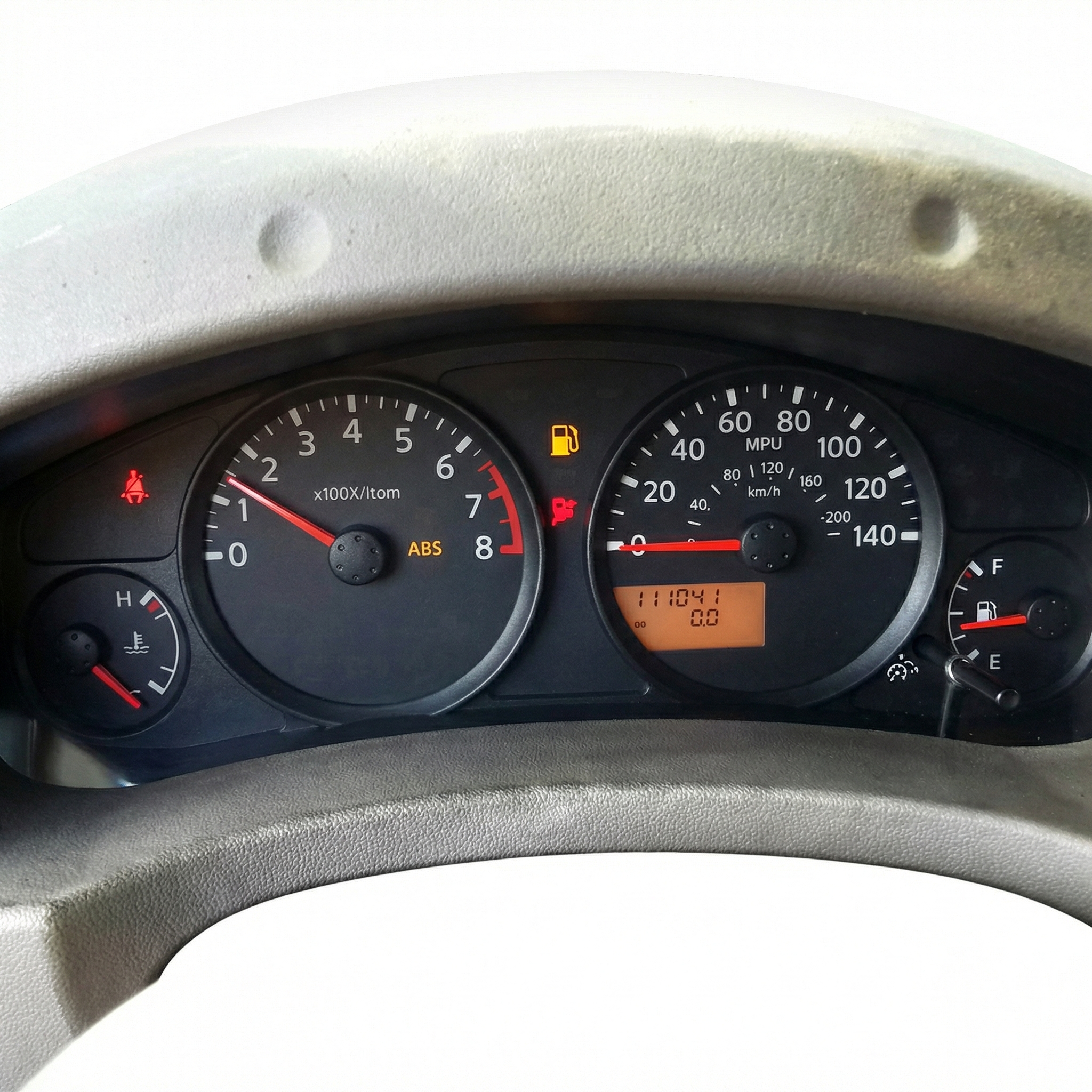
- Check Engine Light is illuminated.
- You will fail an emissions or smog test.
- A faint fuel smell may be noticeable, but this is rare with a small leak.
- A 'whoosh' of air when opening the gas cap may be heard if the system is not venting correctly.
- Difficulty starting the engine immediately after refueling (less common with small leaks, but possible).
- Replacing the O2 sensors. O2 sensors are not part of the EVAP system and will not cause a P1442 code.
- Immediately replacing the expensive charcoal canister. The canister itself is often fine unless cracked or saturated with dirt; the much cheaper vent valve attached to it is the more likely culprit.
Most Likely Causes
- Loose, Worn, or Incorrect Gas Cap 🔴 High Probability → Shop Fuel Tank Cap This is the most common cause for any EVAP leak code on any vehicle. The rubber seal degrades over time.
How to confirm: Ensure the cap is tight (clicks several times). Check the rubber o-ring for cracks, stiffness, or damage. A new, OEM-spec cap is a cheap and easy first step. Aftermarket caps are a frequent source of EVAP codes.
Typical fix: Replace the gas cap with a genuine OEM part.
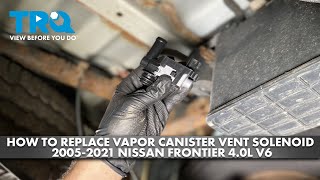
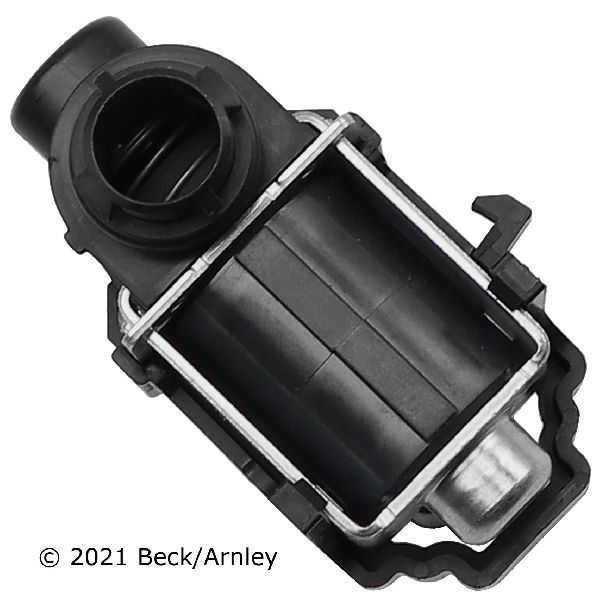
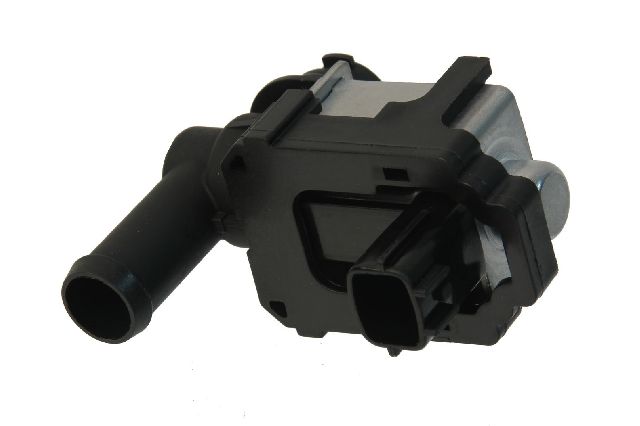
Est. part cost: $25-$45 - Faulty EVAP Canister Vent Control Valve (Solenoid) 🔴 High Probability → Shop Vapor Canister Vent Valve This is a very common failure on the Frontier. The valve is located at the rear of the truck and is susceptible to getting clogged with dust and debris, causing it to stick open or closed. This is the central issue addressed in TSB NTB15-079g.
How to confirm: The valve can be removed and tested. It is normally open. When 12V is applied, it should click closed. A bi-directional scan tool can also command it to operate. Often, it's replaced based on its high failure rate after the gas cap is ruled out. Visual inspection may reveal dust packed into the valve's port.
Typical fix: Replace the vent control valve. 🎬 Watch: Step-by-step guide to replacing the vent solenoid. It is located on or near the charcoal canister above the spare tire. Due to the dust issue, some owners opt to perform the full TSB procedure which includes replacing the canister and filler pipe.
Est. part cost: $50-$150 - Cracked or Disconnected EVAP Hoses 🟡 Medium Probability Rubber hoses become brittle over time with exposure to heat and elements, leading to cracks.
How to confirm: Visually inspect all accessible EVAP lines from the engine bay to the canister at the rear. A smoke test is the most effective way to find a small hose leak.
Typical fix: Replace the cracked section of hose.
Est. part cost: $5-$30 - Faulty EVAP Purge Volume Control Valve ⚪ Low Probability While less common than the vent valve, this solenoid in the engine bay can also fail, though it typically produces different codes.
How to confirm: With the engine running at idle, disconnect the vacuum hose from the purge valve that leads to the canister. There should be no vacuum present. If there is, the valve is stuck open. A bi-directional scanner can command it open to check for a change in engine RPM.
Typical fix: Replace the purge valve.
Est. part cost: $40-$100
Rare But Worth Checking
- Cracked EVAP Charcoal Canister: → Shop Vapor Canister The plastic canister itself can develop a hairline crack from impact or age, creating a leak. More commonly, it becomes saturated with dust and debris from a failed vent valve, requiring replacement as part of a complete repair. An owner on a forum noted their clogged canister weighed significantly more than the new part due to trapped dirt.
- Rusted Fuel Filler Neck: → Shop Fuel Filler Neck In areas with heavy road salt use, the metal fuel filler neck can rust through, creating a leak in the EVAP system. Visually inspect the pipe leading from the gas cap to the tank. TSB NTB15-079g involves replacing this pipe to solve the dust intrusion problem.
Diagnosis Steps
- Check the Gas Cap: Ensure your gas cap is an OEM part and is tightened until it clicks multiple times. If it's old, the seal may be bad. Replacing the gas cap is a low-cost, high-impact first step.
- Clear the Code and Drive: After tightening or replacing the cap, clear the code with a scanner and drive for a few days to see if it returns. The EVAP monitor needs specific conditions to run, typically with the fuel tank between 15-85% full.
- Visual Inspection: If the code returns, visually inspect all visible EVAP hoses in the engine bay and around the canister at the rear of the truck. Look for obvious cracks, disconnections, or damage.
- Inspect the Vent Valve: Locate the EVAP canister and vent valve above the spare tire. Check its electrical connector for corrosion and ensure it's secure. Given its high failure rate on the Frontier, this is the next most likely part to fail. You can remove it (usually a quarter-turn twist) and check for dust/debris.
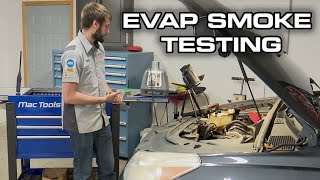
- Perform a Smoke Test: 🎬 See how to use a smoke machine to find leaks. This is the most reliable way to find a small leak. A smoke machine fills the EVAP system with visible smoke under low pressure. Smoke will escape from any leak point, making it easy to identify the source, whether it's a hose, valve, or the canister itself.
- Test Components: If a smoke test is unavailable, you can test the vent and purge valves. The vent valve (at the rear) should be open with the truck off. The purge valve (in the engine bay) should be closed. A bi-directional scan tool can command the valves to change state to verify operation.
Parts You'll Likely Need
- Gas Cap
(OEM #17251-ZZ62D (fits many 2007-2020 models), 17251-79960)— The seal fails over time, causing a leak. This is the most common and cheapest fix for EVAP codes. Using a non-OEM cap is a known cause of issues.
Trusted brands: Nissan OE
OEM price range: $35-$45
Aftermarket price range: $15-$25 - EVAP Canister Vent Control Valve / Solenoid
(OEM #14935-JF00A (superseded by 14935-JF02C))— This part is a known high-failure item on the Nissan Frontier, often due to dust and debris contamination. The OEM part has been updated multiple times.
Trusted brands: Nissan OE, Bosch, Dorman
OEM price range: $60-$110
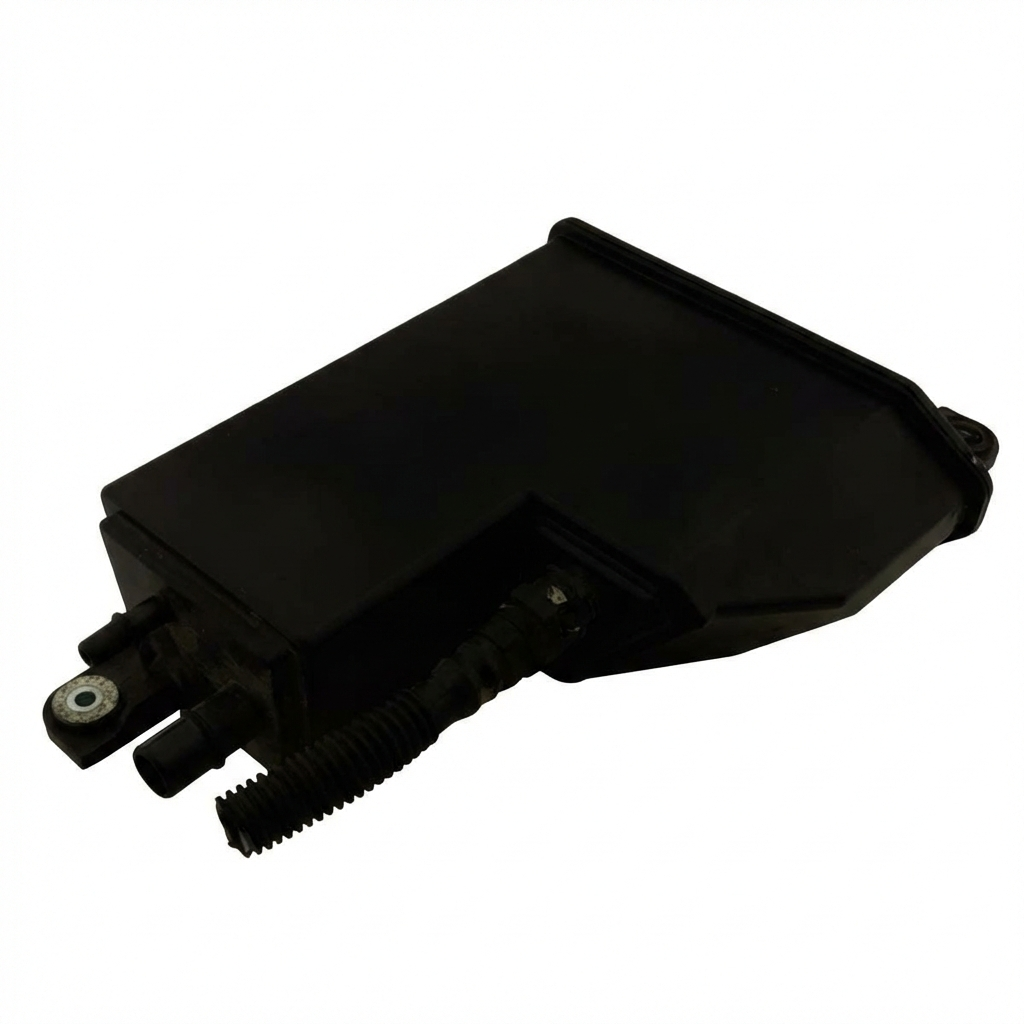
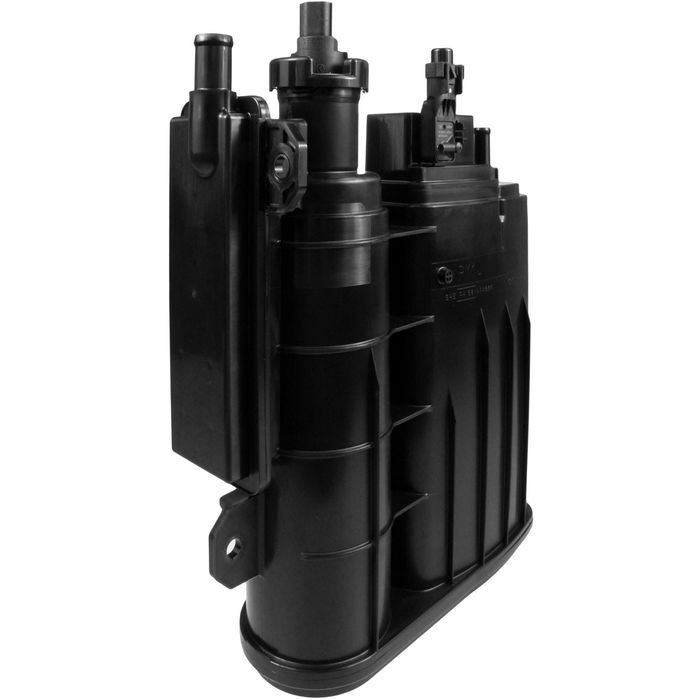
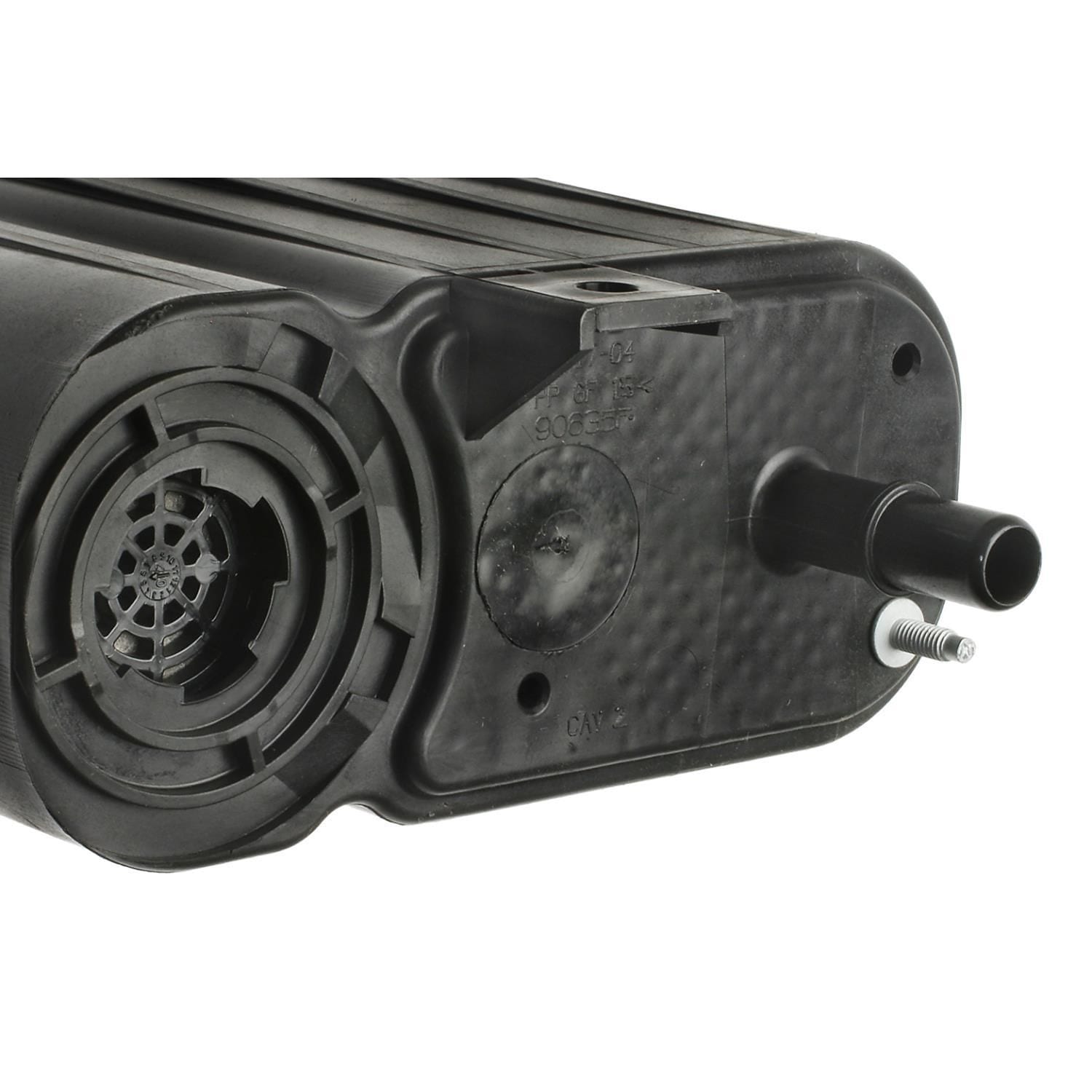
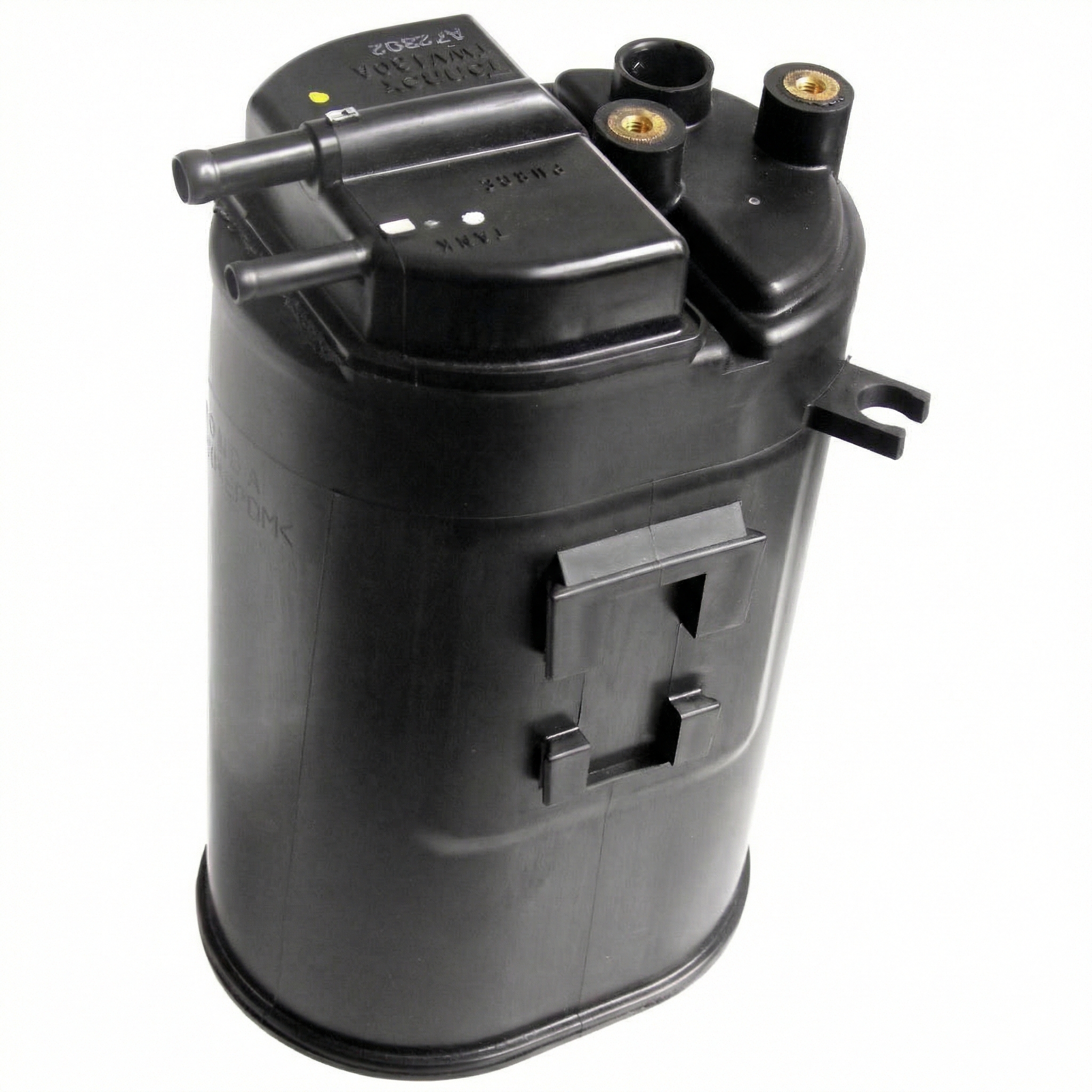
Aftermarket price range: $40-$80 - EVAP Vapor Canister
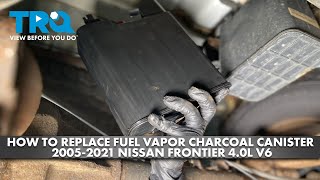
(OEM #14950-9BT0A (2020-2021 w/ 3.8L V6))🎬 Watch: How to replace the charcoal canister yourself. — Replaced less often, but necessary if it is cracked or internally clogged with debris, which is common if the vent valve has failed due to dust per TSB NTB15-079g.
Trusted brands: Nissan OE, Dorman
OEM price range: $230-$300
Aftermarket price range: $150-$220
Technical Service Bulletins (TSBs) & Recalls
- NTB15-079g: While for code P0448, this TSB is highly relevant as it addresses the common root cause of EVAP system contamination from dust on 2005-2019 models, leading to vent valve failure.
- NTB16-122: Connects DTC P0448 directly with the symptom of being 'difficult to fill the fuel tank', which can also be related to a clogged vent system.
Platform-Specific Known Issues
- A Technical Service Bulletin (NTB15-079g) for a related code (P0448) on 2005-2019 models indicates a systemic issue with dust contaminating the EVAP system. The official fix involves replacing the canister, vent valve, fuel filler pipe, and rerouting a drain hose to prevent future dust intrusion, highlighting how common this failure path is.
Mechanic-Grade Diagnostic Values
- EVAP Canister Vent Control Valve Solenoid Resistance — expected: Approximately 32 ohms. Failure: A reading that is significantly higher (open circuit) or lower (short) indicates a failed solenoid coil.
- EVAP Purge Volume Control Valve Solenoid Resistance — expected: 15 - 30 ohms. Failure: A reading far outside this range suggests the valve's internal electrical circuit is damaged.
- Fuel Tank Pressure (FTP) Sensor Voltage (KOEO) — expected: Near 0 Volts. Failure: A voltage stuck at 0V or 5V, or one that doesn't change during a system test, points to a faulty sensor or wiring.
- Fuel Tank Pressure (FTP) Sensor Reading During Leak Test — expected: A negative pressure reading, down to approximately -600 Pa. Failure: If the pressure does not change when the vent and purge valves are commanded closed, it indicates a leak or a faulty sensor.
- Voltage at EVAP Canister Vent Control Valve Connector — expected: Approximately 12V (Battery Voltage) on one pin with ignition ON. Failure: No voltage suggests a wiring issue, a blown fuse, or a problem with the IPDM E/R (Intelligent Power Distribution Module Engine Room).
Scan Tool Commands That Help
- Nissan CONSULT or compatible bi-directional scanner: EVAP System Test / Actuator Test — Use this function to command the EVAP Vent Control Valve and Purge Valve to open or close. While monitoring Fuel Tank Pressure sensor data, this allows a technician to confirm if the valves are physically responding to commands from the ECM.
- Snap-on Diagnostic Scanners: Evaporative Emission Canister Purge Valve Leak Test — This is a proprietary guided test that automates part of the diagnostic process for checking the purge valve and related components.
Wiring & Ground Locations
- L31C2 — The 2-pin electrical connector on the EVAP canister vent control valve itself, located on the charcoal canister assembly under the truck bed near the spare tire.. This is the direct connection to the most common component to fail. Checking for power, ground, and corrosion here is a critical diagnostic step.
- E15 / E24 — Ground points located in the right front of the engine compartment.. These are primary engine compartment grounds. While not directly for the rear EVAP components, a poor ground here can cause a host of difficult-to-diagnose electrical issues with the ECM and related systems.
- G203 — Ground point located in the right kick panel area inside the cabin.. Interior grounds can affect the Body Control Module (BCM) and instrument cluster, which communicate with the ECM. A fault here is less likely to cause P1442 but is part of a comprehensive electrical check.
Real Owner Repair Stories
- Collective knowledge from ClubFrontier.org and NissanForums.com (2005-2019 Nissan Frontier (D40), all trims) — Check Engine Light with P1442 or other EVAP codes (P0448, P0455, etc.), difficulty fueling.
❌ Tried (didn't work) Replacing the gas cap with a cheap aftermarket version, which often fails to seal correctly., Clearing the code without fixing the underlying issue, only for it to return after the EVAP monitor runs again., Replacing the purge valve in the engine bay, which fails much less frequently than the rear vent valve.
✅ What actually fixed it For the vast majority of owners, after confirming the gas cap is a good OEM unit and is tight, the definitive fix is replacing the EVAP Canister Vent Control Valve (solenoid) located at the rear of the truck. Due to the common dust contamination issue, many owners find they must replace the entire canister assembly if the valve has failed multiple times.
"I Checked Everything" — The Actual Cause
- A common scenario that frustrates technicians is when a smoke test shows no leaks, yet the P1442 code persists. In this situation, the problem is often not a physical leak but an electrical fault. The most likely culprit is a failing Fuel Tank Pressure (FTP) sensor. The sensor incorrectly reports a pressure change (or lack thereof) to the ECM, causing the computer to believe a leak exists when the system is actually sealed. The ECM triggers the P1442 code based on this false data, even though no smoke will escape during a test.
OEM Part Supersession History
14935-JF00A→14935-JF00B, 14935-JF00C, 14935-JF00D, 14935-JF00E, and finally 14935-JF02C— Revisions by the manufacturer to improve reliability and address failure modes. Given the high failure rate of this part due to dust contamination, multiple updates were made over the years.
Heads up: While older versions may fit, it is critical to use the latest available part number (e.g., 14935-JF02C) to ensure you have the most updated design. Using an old stock part may lead to premature failure.
Model Year Variations Within This Range
- 2009-2019: A significant mid-cycle refresh occurred for the 2009 model year. Changes included a new front-end design (grille, bumper, headlights) and a redesigned interior dashboard and center console. While this did not change the fundamental EVAP system design at the rear, it's a key differentiator from the 2005-2008 models.
- 2020-2021: These last two years of the D40 generation received the new 3.8L V6 engine and 9-speed automatic transmission that would be used in the next-generation D41 Frontier. This powertrain change also came with a different EVAP canister (part number 14950-9BT0A), making parts non-interchangeable with 2005-2019 models.
Diagnostic Flowchart
Other Known Issues on This Vehicle
Issues unrelated to this code that are worth knowing about as an owner of this generation:
- Transmission Cooler/Radiator Failure (SMOD) 🔴 High — Common on 2005-2010 models with automatic transmissions. The internal radiator cooler fails, mixing coolant and transmission fluid, which destroys the transmission. (Ref: No recall, but was the subject of a class-action lawsuit.)
- Timing Chain Tensioner Wear 🔴 High — Common on early VQ40DE engines (approx. 2005-2010). The plastic tensioner guides wear out, causing a distinct whining noise on startup and eventually leading to timing failure if not addressed. (Ref: Nissan issued service bulletins addressing the issue.)
- Faulty Fuel Level Sending Unit 🟠 Medium — Very common across many model years. The sending unit in the fuel tank fails, causing the fuel gauge to read empty or inaccurately. (Ref: Nissan extended the warranty on this component for certain model years.)
Used vs. New Parts: Buying Guide for This Vehicle
When a used part is the smart pick: For this specific repair, using a used part from a salvage yard is strongly discouraged. The primary failure mode for the EVAP vent valve and canister on the Frontier is contamination from dust and debris. A used part from a donor vehicle is highly likely to have the same issue or be close to failing for the same reason.
Donor-vehicle mileage cap: roughly under 5000 miles for the part to have meaningful remaining life.
What to inspect on the donor part:
- Verify the donor vehicle was not from a dusty climate or an area with unpaved roads.
- Inspect the used valve's air filter port for any signs of dust or dirt; if it's not perfectly clean, do not buy it.
- If buying a used canister, it should feel light; a canister saturated with dirt and fuel will be noticeably heavier than a new one.
OEM-only on this vehicle (don't cheap out):
- Gas Cap: Aftermarket gas caps are a notorious source of EVAP codes due to improper sealing. Always use a genuine Nissan cap.
- EVAP Canister Vent Control Valve: While some aftermarket brands exist, the OEM part has undergone multiple revisions to fix the original design flaw. Using the latest Nissan part is the safest bet.
- Fuel Tank Pressure Sensor: As a critical sensor providing data to the ECM, using an OEM part ensures correct voltage ranges and avoids compatibility issues.
Aftermarket brands forum-validated for this vehicle:
- Bosch: Often an OEM supplier, Bosch parts are generally considered a high-quality alternative.
- Standard Motor Products (SMP): Some forum users report positive experiences, preferring SMP over other aftermarket brands like Dorman.
Brands owners have reported issues with on this vehicle:
- Dorman: This brand has a 'hit-or-miss' reputation in owner forums. While some Dorman parts are innovative, others are reported to have lower quality and reliability than OEM.
- No-Name/Generic Brands: Cheap, unbranded valves and sensors sold on marketplaces like Amazon and eBay have a high reported failure rate and should be avoided for critical emissions components.
Real Owner Stories
Aggregated from forums and TSBs cited above. Mileages and costs reflect what owners reported in those sources.
2005-2019 Nissan Frontier
Symptoms: The Check Engine Light came on for an EVAP code.
What fixed it: After confirming the gas cap was not the issue, the EVAP canister vent valve was replaced, which solved the problem.
Source hint: ClubFrontier.org: Numerous owner discussions corroborate the high failure rate of the EVAP canister vent valve as a primary cause for various EVAP codes on the D40 Frontier.
2005-2019 Nissan Frontier
Symptoms: Check Engine Light was on due to an EVAP code caused by dust contamination of the system.
What fixed it: The official TSB procedure was followed, which involved replacing the canister, vent valve, fuel filler pipe, and rerouting a drain hose to prevent future dust intrusion.
Source hint: TSB NTB15-079g: While for code P0448, this TSB is highly relevant as it addresses the common root cause of EVAP system contamination from dust on 2005-2019 models, leading to vent valve failure.
2005-2019 Nissan Frontier
Symptoms: The truck was difficult to fill with fuel and had an illuminated Check Engine Light.
What fixed it: The issue was diagnosed as a clogged vent system, a problem addressed by Nissan in a technical service bulletin.
Source hint: TSB NTB16-122: Connects DTC P0448 directly with the symptom of being 'difficult to fill the fuel tank', which can also be related to a clogged vent system.
Related OBD-II Codes
Frequently Asked Questions
I saw TSB NTB15-079g mentioned for my Frontier, but it's for code P0448. Does it apply to my P1442 code?
What is the absolute first thing I should check for a P1442 code on my 2005-2021 Frontier?
Where is the EVAP canister vent control valve located on my Nissan Frontier?
My Frontier has a P1442 code and is also hard to fill with gas. Are these issues related?
Why is the vent valve so likely to fail on the Nissan Frontier?
Can I use an EVAP vent valve from a Nissan Xterra or Pathfinder on my Frontier?
Helpful Videos

Used OEM Parts in Stock
New Aftermarket Parts Available


The information in this article is provided for general reference and educational purposes only. Vehicle specifications, procedures, and part compatibility can vary by production date, trim level, and region. Always consult your vehicle's factory service manual and verify part numbers before purchasing or performing repairs. Safety-critical components such as airbags, seat belts, and braking systems should be installed by a qualified professional.
- Nissan Frontier:
- 🧭 Diagnostic Flowchart
- 🎬 Helpful Videos
- 🛍️ Shop This Part
- What's Unique About the 2005-2021 Nissan Frontier
- Symptoms You May Notice
- Most Likely Causes
- Rare But Worth Checking
- Diagnosis Steps
- Parts You'll Likely Need
- Technical Service Bulletins (TSBs) & Recalls
- Platform-Specific Known Issues
- Mechanic-Grade Diagnostic Values
- Scan Tool Commands That Help
- Wiring & Ground Locations
- Real Owner Repair Stories
- "I Checked Everything" — The Actual Cause
- OEM Part Supersession History
- Model Year Variations Within This Range
- Other Known Issues on This Vehicle
- Used vs. New Parts: Buying Guide for This Vehicle
- Real Owner Stories
- 2005-2019 Nissan Frontier
- 2005-2019 Nissan Frontier
- 2005-2019 Nissan Frontier
- Related OBD-II Codes
- Frequently Asked Questions
- 🎟️ Get 5% Off