

P1442 on 2002-2012 Volkswagen Passat: EGR Position Sensor Fault Causes and Fixes
On a 2002-2012 VW Passat, code P1442 almost always means 'EGR Valve Position Sensor Signal Too High'. This is usually caused by a faulty EGR valve position sensor or carbon buildup preventing the valve from moving correctly. Cleaning the EGR valve or replacing the sensor/valve assembly is the most common fix.
- P1442 on a VW Passat is an EGR system code, not an EVAP code.
- The most likely cause is either a faulty EGR valve/sensor or heavy carbon buildup jamming the valve.
- Diagnosis involves checking the sensor's signal, wiring, and physically inspecting the valve for carbon.
- The fix is typically cleaning the EGR valve and passages or replacing the EGR valve assembly, followed by a system relearn.
- Do not waste money on EVAP parts like a gas cap for this specific code on a Volkswagen.
What's Unique About the 2002-2012 Volkswagen Passat
Unlike many other manufacturers like Nissan or Honda where P1442 points to the EVAP system, on Volkswagen, it is specifically tied to the EGR system. Owners of Passats from this era, particularly those with TDI diesel engines or direct-injection gasoline engines (FSI/TSI), often contend with carbon buildup. This buildup can physically jam the EGR valve, leading to the position sensor reporting an illogical (and in this case, high) signal, which is a common trigger for this code. On TDI models especially, increased soot production from modern engine software can accelerate this process.
Generation note: This range covers the B5.5 (2002-2005) and B6 (2006-2012) generations of the Passat. While the specific EGR valve and engine designs differ (e.g., 1.8T, 2.0T FSI, 2.0L TDI), the P1442 code's meaning and general cause—a fault in the EGR position sensor circuit—remain consistent. The B5.5 TDI (BHW engine) and B6 2.0T FSI (BPY engine) are particularly noted for EGR-related carbon issues.
Symptoms You May Notice
- Check Engine Light is on
- Rough idling or stalling
- Reduced engine performance and acceleration
- Decreased fuel economy
- Possible engine knocking or pinging sounds
- Visible black smoke from exhaust, especially on TDI models
- Failed emissions test
- Replacing the Mass Air Flow (MAF) sensor without diagnosis, as a faulty MAF can sometimes cause similar performance issues.
- Replacing EVAP system components like the purge valve or gas cap, which is a common cause for P14xx codes on other brands but not for P1442 on Volkswagen.
Most Likely Causes
- Faulty EGR Valve Position Sensor 🔴 High Probability → Shop Exhaust Gas Recirculation (EGR) Valve The sensor itself can fail electronically over time, sending an incorrect high voltage signal to the ECU. On many VW models, the electronic portion of the valve can also become contaminated with oil, causing intermittent contact and failure.
How to confirm: Using a multimeter, back-probe the sensor's signal wire. The voltage should change smoothly as vacuum is applied to the EGR valve or as it's commanded open with a scan tool. If the voltage is stuck high or doesn't change, the sensor is likely bad. A wiggle test on the connector can also reveal intermittent faults.
Typical fix: Replace the EGR valve assembly. On most VW Passat models of this era, the position sensor is integrated into the EGR valve and not sold separately. After replacement, a relearn procedure may be required.
Est. part cost: $100-$250 - Carbon Buildup in EGR Valve 🔴 High Probability → Shop Exhaust Gas Recirculation (EGR) Valve Direct injection (FSI, TSI) and diesel (TDI) engines are prone to carbon accumulation, which can cause the EGR valve's pintle to stick open or closed. This prevents the valve from returning to its expected position, causing the sensor to report a high signal.
How to confirm: Remove the EGR valve and visually inspect it and the intake manifold passages for heavy carbon deposits that restrict its movement. Attempt to move the valve's diaphragm or gear manually to see if it's stuck.
Typical fix: Clean the EGR valve and its passages with a dedicated carbon cleaner, brushes, and a blunt screwdriver for heavy deposits. If cleaning is unsuccessful, the valve is too worn, or the internal gears are damaged, it must be replaced.
Est. part cost: $0 (for cleaning) or $100-$250 (for replacement valve) - Wiring Harness or Connector Issue 🟡 Medium Probability Engine bay heat and vibration can cause wires to become brittle and crack, or connectors to become corroded or loose over time. A short to positive voltage on the signal wire is a specific cause for a 'Signal Too High' code.
How to confirm: Visually inspect the wiring harness leading to the EGR valve position sensor for any signs of damage, fraying, or melting. Check the connector for corrosion or pushed-out pins. Use a multimeter to test for a short to positive voltage on the signal wire.
Typical fix: Repair the damaged section of the wiring harness or clean/replace the connector.
Est. part cost: $10-$50
Rare But Worth Checking
- Faulty Engine Control Unit (ECU): This is extremely rare. The ECU should only be considered as the cause after all other possibilities (valve, sensor, wiring) have been exhaustively tested and ruled out.
Diagnosis Steps
- Retrieve the P1442 code and any other stored codes with an OBD-II scanner.
- Visually inspect the EGR valve, its connector, and the wiring harness for obvious damage, corrosion, or loose connections.
- With the engine off, disconnect the EGR connector. Check for 5V reference and a good ground at the connector using a multimeter.
- If wiring seems okay, remove the EGR valve from the engine. Be prepared to plug coolant hoses on TDI models if the EGR cooler is attached.
- Inspect the valve and intake passages for heavy carbon buildup. If passages in the manifold are clogged, they must be cleaned as well, as a new valve will not solve the flow issue.
- Test the EGR position sensor. If integrated, you can test the voltage output while manually actuating the valve's gear or by applying vacuum, watching for a smooth change on a multimeter.
- If the sensor is integrated and tests bad, or if the valve is mechanically stuck and cannot be cleaned, replace the entire EGR valve assembly.
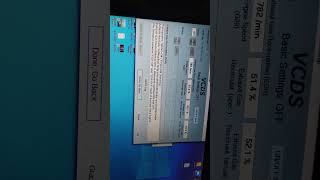
- After replacement or cleaning, clear the code, perform an EGR adaptation/relearn with a 🎬 Watch how to perform an EGR calibration compatible scan tool, and perform a drive cycle to ensure the fault does not return.
Parts You'll Likely Need
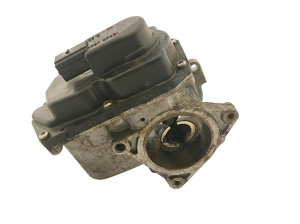
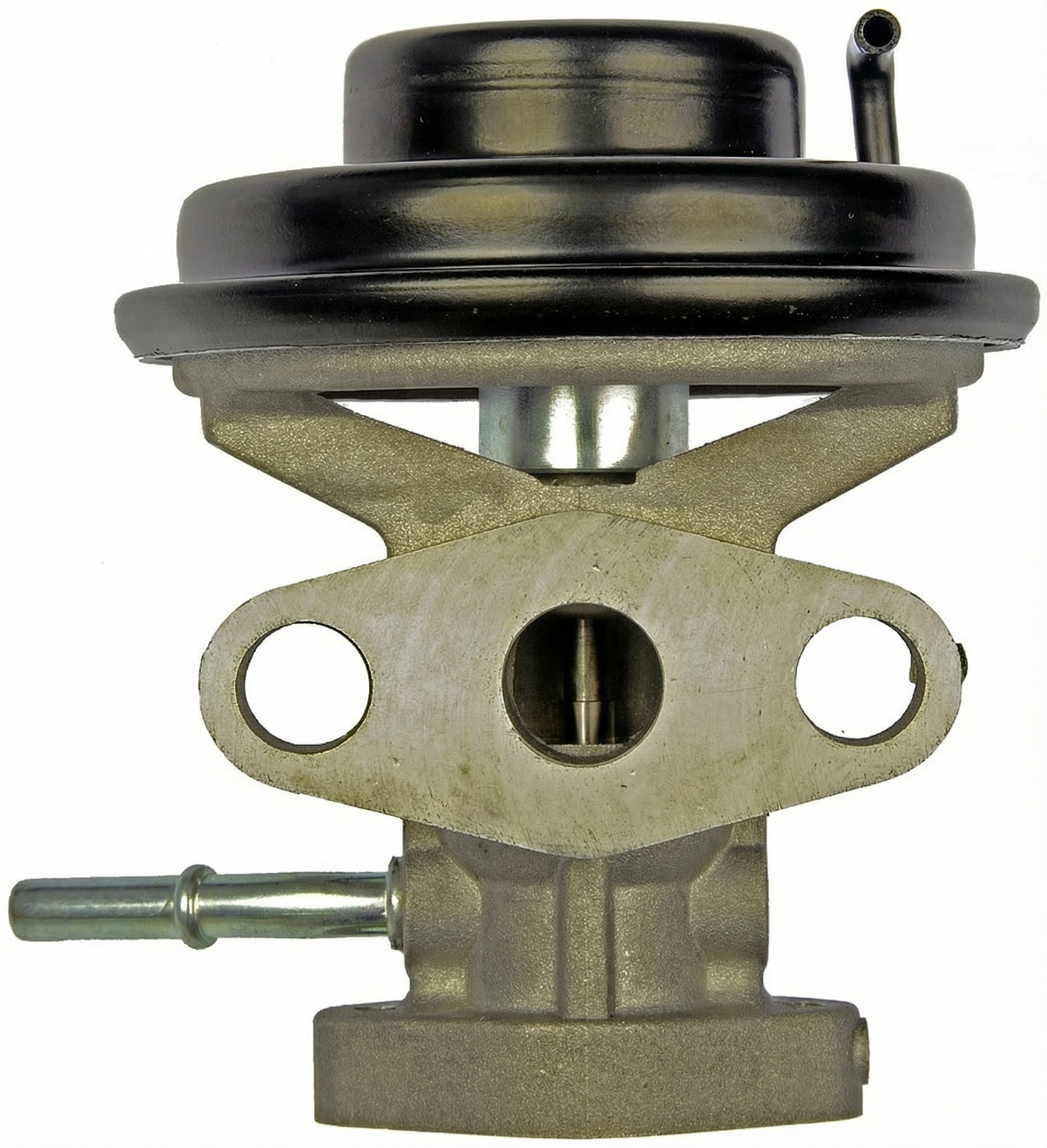
- EGR Valve
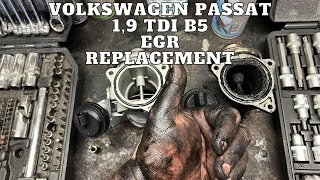
(OEM #Varies by engine. Examples: 038131501AD (B5.5 TDI BHW), 06F131503B (B6 2.0T FSI BPY), 038131501E (B5.5 1.9 TDI). 🎬 Watch this step-by-step 1.9 TDI EGR replacement guide Always verify with VIN.)— This is the most common failure. The position sensor is often integrated into the valve, and carbon buildup frequently requires replacement of the whole unit.
Trusted brands: Bosch, Pierburg, Wahler, Hella
OEM price range: $175-$350
Aftermarket price range: $100-$220
Related Codes That Often Appear With This One
- P0401 (EGR Insufficient Flow Detected) - This can occur if the valve is stuck closed or passages are blocked, even while the sensor reports an incorrect position.
- P0402 (EGR Excessive Flow Detected) - May be logged if the valve is stuck open, leading to performance issues like rough idle.
- P1404 (EGR System Basic Setting not Performed) - This code often appears with P1442, especially after a cleaning attempt, because the faulty sensor prevents the required adaptation from completing successfully.
Platform-Specific Known Issues
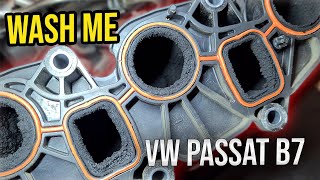
- The EGR valve and associated cooler are extremely prone to clogging with thick, oily soot. When removing the valve, it is critical to also inspect and clean the intake manifold, as it is often equally or more clogged. Failure to do so will result in continued performance issues.
- While also prone to carbon buildup, the electronic portion of the EGR valve on these engines can fail. Owners report success with cleaning the valve body, but sometimes the electronic motor or sensor fails independently of the valve's mechanical state.
- This engine is less prone to EGR issues than the TDI or FSI engines, but the code can still appear. The cause is often a failed diaphragm in the vacuum-operated EGR valve or a faulty position sensor.
Mechanic-Grade Diagnostic Values
- EGR Position Sensor (G212) Signal Voltage — expected: Typically 0.7V - 1.0V with the valve closed (Key On, Engine Off) and rising smoothly to 3.5V - 4.0V as the valve opens.. Failure: A voltage that is stuck high (e.g., near 5.0V) or does not change when the valve is actuated indicates a faulty sensor or a wiring short to positive.
- EGR Position Sensor Reference Voltage — expected: Approximately 5.0V at the connector's reference wire with the key on.. Failure: Significantly lower or no voltage suggests a wiring issue or a problem with the ECU's 5V reference circuit.
- VCDS Measuring Block 074, Field 3 (Potentiometer Voltage) — expected: Should display the live voltage from the position sensor, matching the values seen with a multimeter.. Failure: A value that is static, at the maximum, or doesn't correspond to commanded EGR position points to a sensor or valve failure.
Scan Tool Commands That Help
- VCDS (VAG-COM): Engine -> Basic Settings -> Group 074 — This is the EGR Adaptation procedure. It must be performed after replacing or thoroughly cleaning the EGR valve. The ECU learns the valve's closed and open endpoint voltages. Failure to run this can result in persistent EGR codes.
- VCDS (VAG-COM): Engine -> Measuring Blocks -> Group 074 — Use this to monitor the live EGR position sensor voltage (Field 3) and see the ECU's stored minimum and maximum learned values (Fields 1 & 2). This is critical for diagnosing if the sensor is providing a plausible signal before attempting an adaptation.
- VCDS (VAG-COM): Engine -> Output Tests — To sequentially test various engine components, including cycling the EGR valve. This allows a technician to audibly and sometimes visually confirm the EGR valve's motor is attempting to function, helping to distinguish a mechanical jam from an electrical failure.
Wiring & Ground Locations
- Engine/Transmission Ground Strap — A primary ground strap typically connects the engine block or transmission case to the vehicle's chassis/frame, often near a motor mount. On the B5.5, one is located on the driver's side from the frame to the motor mount.. A corroded or loose main ground strap can create a floating ground, causing sensor reference voltages to be unstable and leading to erroneous high or low signal codes like P1442.
- Cylinder Head Ground Point (-15-) — On the B6 Passat, there is a designated ground connection point directly on the cylinder head.. Many engine sensors use the cylinder head or block for their ground path. Ensuring this connection is clean and tight is crucial for accurate sensor readings.
- EGR Valve Connector Pins — At the electrical connector on the EGR valve itself.. The position sensor has three pins: 5V reference, signal, and ground. A voltage drop test on the ground pin (between the pin and battery negative) should show less than 0.1V, confirming a solid ground path back to the ECU.
Real Owner Repair Stories
- MHH Auto forum user (2003 VW Golf 1.4L 16v (similar EGR system logic)) — Check Engine Light with codes P1442 (EGR Position Sensor Signal Too High) and P1404 (EGR System Basic Setting not Performed).
❌ Tried (didn't work) Removing and cleaning the EGR valve with carb cleaner.
✅ What actually fixed it The user was stuck in a loop where the P1404 fault could not be cleared, which prevented the EGR adaptation (Basic Settings) from running. The community advised that this happens when the position sensor itself has failed electronically. Cleaning the carbon did not fix the bad sensor, so the ECU could not get a valid position reading to complete the adaptation. The final fix required replacing the entire EGR valve assembly.
Model Year Variations Within This Range
- 2002-2005 (B5.5 Generation): Some earlier engines, like the 1.8T and certain TDIs, may use a vacuum-operated EGR valve. Diagnosis for these involves checking vacuum lines for leaks with a hand pump and testing the diaphragm, in addition to checking the separate electronic position sensor.
- 2006-2012 (B6 Generation): Most later engines (FSI, TSI, common rail TDI) use a fully electronic EGR valve where the valve motor and position sensor are a single, integrated unit. Diagnosis focuses on electronic testing via scan tool actuation and checking connector voltages, as there is no vacuum component to test.
Diagnostic Flowchart
Other Known Issues on This Vehicle
Issues unrelated to this code that are worth knowing about as an owner of this generation:
- 1.8T Engine Oil Sludge 🔴 High — Very common on B5.5 Passats, especially if non-synthetic oil was used or oil changes were extended. Can occur from 60,000 miles onward. (Ref: VW offered a warranty extension for this issue, but it has long since expired.)
- 2.0T FSI (BPY) Cam Follower Wear 🔴 High — Extremely common on B6 Passats with the FSI engine. Failure can occur as early as 40,000-60,000 miles, leading to HPFP and camshaft destruction if not caught. (Ref: VW TSB 2013147/8 mentioned an extended warranty (10yr/120k miles) for some VINs.)
- B6 Oil Pump / Balance Shaft Module Failure 🔴 High — Affects B6 Passats with 2.0T FSI and 2.0 TDI engines. The hex drive key for the oil pump wears out, causing sudden and total loss of oil pressure, typically between 70,000-130,000 miles.
- B5.5 Complex Front Suspension Link Failure 🟠 Medium — The 8-link front suspension is prone to wear, causing noises and poor handling. Bushings and ball joints often require replacement every 60,000-80,000 miles.
- B6 Electronic Parking Brake (EPB) Failure 🟠 Medium — Common failure of the switch or calipers, especially in cold weather, preventing the parking brake from engaging or disengaging.
- B5.5 Water Ingression from Clogged Drains 🟠 Medium — Sunroof and plenum drains clog with debris, causing rainwater to leak into the cabin floorboards, potentially damaging the Transmission Control Module (TCM) or Comfort Control Module (CCM).
Used vs. New Parts: Buying Guide for This Vehicle
When a used part is the smart pick: Buying a used EGR valve is generally not recommended for this vehicle due to the high likelihood of both heavy carbon buildup and internal electronic sensor failure. A used part should only be considered if it is from a documented, very low-mileage donor vehicle (<30,000 miles) and is significantly cheaper than a new aftermarket unit.
Donor-vehicle mileage cap: roughly under 30000 miles for the part to have meaningful remaining life.
What to inspect on the donor part:
- Visually inspect the pintle and passages for any signs of thick, oily soot; light, dry carbon is more acceptable.
- If possible, check the electrical connector pins for any corrosion or damage.
- Ask the seller if the donor vehicle had any EGR-related fault codes.
Aftermarket brands forum-validated for this vehicle:
- Pierburg (often the original OEM supplier)
- Wahler
- Bosch
- Hella
- Standard Motor Products (SMP)
Brands owners have reported issues with on this vehicle:
- Unbranded, no-name parts from online marketplaces (e.g., eBay, Amazon) that are priced significantly below known aftermarket brands. These often have high failure rates, either mechanically or electronically, shortly after installation.
Real Owner Stories
Aggregated from forums and TSBs cited above. Mileages and costs reflect what owners reported in those sources.
2005 Passat B5.5 TDI
Symptoms: Owner experienced P1442 alongside P0401 (insufficient flow) codes.
What fixed it: Cleaning the EGR valve and the intake manifold of heavy soot and carbon accumulation.
Source hint: TDIClub - EGR cleaning discussion thread titled 'p1442-and-p0401-egr-codes.229043/'
2006 Passat B6 2.0T
Symptoms: Check engine light with code P1442 indicating EGR Valve Position Sensor Signal Too High.
What fixed it: Replacement of the entire EGR valve assembly because the sensor is integrated and not available separately.
Source hint: VWVortex - B6 Passat 2.0T P1442 thread titled 'p1442-egr-valve-pos-sensor-signal-too-high.5587786/'
2007 Audi A4 2.0 TDI (Platform Mate)
Symptoms: Signal high fault for the EGR position sensor.
What fixed it: Diagnostic testing followed by replacement of the EGR valve.
Source hint: Audi-Sport.net - P1442 EGR Valve Position Sensor Signal High thread
Related OBD-II Codes
Frequently Asked Questions
Can I just clean the EGR valve on my 2.0L TDI Passat to fix the P1442 code?
Is the EGR position sensor a separate part I can buy for my 2006 Passat 2.0T?
Does the 1.8T engine (AWM/AUG) have the same EGR issues as the TDI?
Are there any specific TSBs for the 2.0T FSI engine related to engine components that might be checked while fixing P1442?
What should I check on my TDI Passat besides the EGR valve itself?
Do I need to do anything special after replacing the EGR valve on my Passat?
Helpful Videos
We Have This Part in Stock

The information in this article is provided for general reference and educational purposes only. Vehicle specifications, procedures, and part compatibility can vary by production date, trim level, and region. Always consult your vehicle's factory service manual and verify part numbers before purchasing or performing repairs. Safety-critical components such as airbags, seat belts, and braking systems should be installed by a qualified professional.
- Volkswagen Passat:
- 🧭 Diagnostic Flowchart
- 🎬 Helpful Videos
- 🛍️ Shop This Part
- What's Unique About the 2002-2012 Volkswagen Passat
- Symptoms You May Notice
- Most Likely Causes
- Rare But Worth Checking
- Diagnosis Steps
- Parts You'll Likely Need
- Related Codes That Often Appear With This One
- Platform-Specific Known Issues
- Mechanic-Grade Diagnostic Values
- Scan Tool Commands That Help
- Wiring & Ground Locations
- Real Owner Repair Stories
- Model Year Variations Within This Range
- Other Known Issues on This Vehicle
- Used vs. New Parts: Buying Guide for This Vehicle
- Real Owner Stories
- 2005 Passat B5.5 TDI
- 2006 Passat B6 2.0T
- 2007 Audi A4 2.0 TDI (Platform Mate)
- Related OBD-II Codes
- Frequently Asked Questions
- 🎟️ Get 5% Off