

P1443 on 2005-2007 Toyota Sequoia: Secondary Air Injection Valve Circuit Causes and Fixes
On a 2005-2007 Toyota Sequoia, P1443 indicates an electrical fault with the driver's side (Bank 2) Secondary Air Injection Valve. This is almost always caused by a failed valve, which is often damaged by water entering the system from a failed air pump located in the passenger fender well. Repair involves replacing the valve(s) and inspecting or replacing the air pump. An aftermarket bypass kit is a common alternative to a full OEM repair.
- P1443 on a 2005-2007 Sequoia is an electrical fault in the driver's side (Bank 2) Secondary Air Injection Valve, NOT an EVAP system issue.
- The most common cause is a failed valve, but the root cause is often a failing air pump that has ingested water and sent it through the system.
- For a lasting repair, you must inspect the air pump and lines for water/debris when replacing the failed valve.
- Driving with this code can be risky, as the vehicle may enter a 'limp mode' with severely reduced power.
- This is a known issue covered by Toyota Technical Service Bulletin T-SB-0230-12.
What's Unique About the 2005-2007 Toyota SEQUOIA
Crucially, do not confuse this with an EVAP code. Many generic code websites incorrectly define P1443 as an EVAP system fault, which is true for other manufacturers like Ford but is incorrect for this Toyota. On the 4.7L V8 engine in the Sequoia and its platform mates, this code is exclusively for the Secondary Air Injection (SAI) system. This platform is notorious for SAI system failures caused by the air pump's location in the passenger fender well, where its foam filter can degrade and allow it to ingest water. This water corrodes the pump and is then sent downstream to the air switching valves, which are located in a difficult-to-access position under the intake manifold, leading to electrical and mechanical failures.
Diagnostic Flowchart
Tap your situation to follow the diagnostic path that matches what you're seeing on this vehicle.
Symptoms You May Notice
- Check Engine Light is on
- VSC and TRAC OFF lights may also be illuminated
- Vehicle may enter 'limp mode' with drastically reduced power and inability to accelerate past a certain RPM or speed.
- Loud 'jet engine' or 'vacuum cleaner' noise from the engine bay for a minute after a cold start (if pump is stuck on or failing).
- No unusual pump noise on cold start (if pump is dead or fuse is blown)
- Failure to pass an emissions test
- Replacing EVAP system components like the purge valve or charcoal canister. This code is not related to the EVAP system on a Toyota Sequoia, a common point of confusion with other vehicle makes.
Most Likely Causes
- Failed Secondary Air Injection Switching Valve (Bank 2) 🔴 High Probability → Shop Secondary Air Injection Pump The valve is highly susceptible to corrosion and damage from moisture ingested by the air pump. Its location under the intake manifold also exposes it to significant heat.
How to confirm: Use a bi-directional scan tool to command the Bank 2 valve to open and close; listen for a click. If it doesn't respond, test for power and ground at the valve connector. If power is present, the valve's internal solenoid has likely failed. The valves can be tested with a vacuum source to check diaphragm operation.
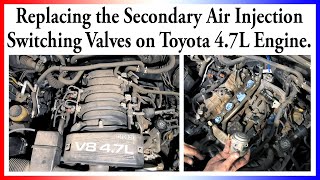
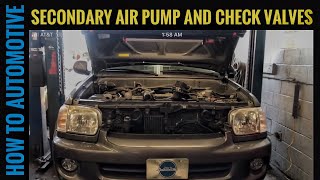
Typical fix: Replace the Bank 2 Air Switching Valve and its gaskets. It is critical to also inspect the air pump and lines for water or debris to prevent repeat failure. Some owners have successfully replaced the valves without removing the entire intake manifold, though it is a very tight and difficult job. 🎬 Watch this step-by-step guide to replacing the pump and valves.
Est. part cost: $150-$300 - Failed Secondary Air Injection Pump 🔴 High Probability → Shop Secondary Air Injection Pump The pump is located in the passenger fender well, where its foam filter can degrade and allow water to be sucked into the motor, causing it to seize or short out. This failure often sends debris and moisture downstream to the switching valves, causing them to fail as well.
How to confirm: Command the air pump 'on' with a scan tool. If it does not run, check for power at the pump and check the related fuses. If power is present, the pump motor has failed. Also inspect the pump and its hoses for any signs of water, rust, or disintegrated foam filter material.
Typical fix: Replace the air pump assembly. This is often done at the same time as replacing the switching valves, as a bad pump is the root cause of most system failures. Toyota released a redesigned snorkel/inlet for the pump to help prevent water intrusion on later models.
Est. part cost: $200-$500 - Damaged Wiring or Connectors 🟡 Medium Probability Wiring in the engine bay, particularly the large harness that runs over the top of the engine, can become brittle from heat. The harness can physically interfere with and break the vacuum nipples on the switching valves.
How to confirm: Visually inspect the wiring harness leading to the Bank 2 valve and the Air Injection Control Driver. Check for broken vacuum nipples on the valve assembly itself. Perform a continuity test from the driver module to the valve connector.
Typical fix: Repair the broken or corroded section of the wiring harness or replace the connector pigtail. If the valve nipple is broken, the valve assembly must be replaced.
Est. part cost: $10-$50 - Failed Air Injection Control Driver ⚪ Low Probability While a durable component, this electronic module can fail, though it's much less common than the pump or valves. TSB T-SB-0230-12 Rev1 includes steps for diagnosing the driver.
How to confirm: This is typically diagnosed by exclusion. If the valve, pump, and wiring are all confirmed to be good, the driver module is the next logical suspect. The TSB provides a specific diagnostic procedure for the driver module.
Typical fix: Replace the Air Injection Control Driver module. An updated part is available per TSB T-SB-0230-12.
Est. part cost: $100-$200
Rare But Worth Checking
- Faulty Aftermarket SAIS Bypass Kit Installation:
Diagnosis Steps
- Scan the ECU for all stored trouble codes. Note if P1443 appears with other related SAI codes like P1440, P0418, or P244x.
- On a cold start, listen for the air pump. It should run for 30-60 seconds and sound like a small vacuum cleaner. A loud grinding noise or no noise at all indicates a pump problem.
- Locate the Bank 2 (driver's side) Air Switching Valve on the top rear of the engine, underneath the intake manifold.
- Visually inspect the valve's electrical connector and nearby wiring for any signs of corrosion, melting, or physical damage. Pay close attention to the large wiring harness that rests near the valves, as it can break the vacuum nipples.
- Using a bi-directional scan tool, command the Bank 2 valve to activate. Listen for an audible click. No click suggests a bad valve or a wiring issue.
- If the valve does not activate, disconnect its connector and use a multimeter to check for battery voltage and ground at the connector when the valve is commanded on by the scan tool.
- If voltage and ground are present but the valve doesn't click, the valve is faulty and needs replacement.
- If voltage is missing, trace the wiring back to the Air Injection Control Driver and the fuse box to check for breaks or a blown fuse (10A EFI #2).
- Thoroughly inspect the air pump (in passenger fender) and connecting hoses for signs of water, rust, or debris, as this is the likely root cause of the valve failure.
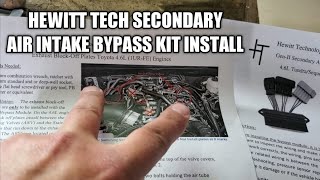
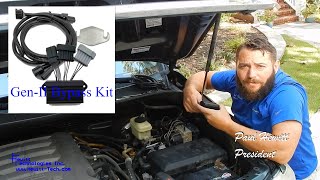
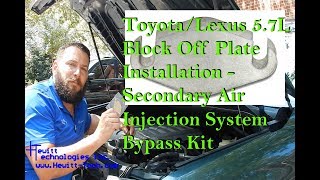
- Consider installing an aftermarket SAIS bypass kit from a company like Hewitt Technologies as an alternative to a full component replacement, especially if emissions testing is not a concern in your area. 🎬 Learn how to install a bypass kit to avoid future repairs.
Parts You'll Likely Need
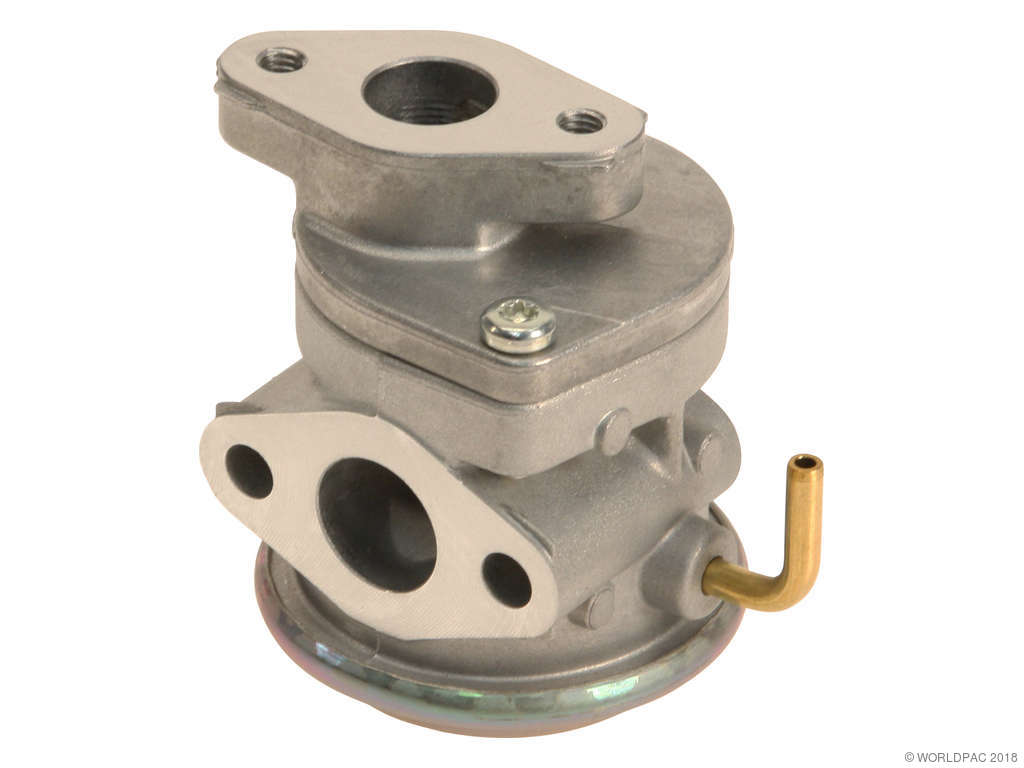
- Air Switching Valve Assembly (Bank 2)
(OEM #25710-50022)— This is the component directly identified by the P1443 code. It fails due to internal corrosion from moisture. This part number supersedes 25710-50020 and 25710-50021.
Trusted brands: Toyota (OEM), Aisin, Dorman (P/N: 911-643)
OEM price range: $250-$350
Aftermarket price range: $150-$250 - Air Pump Assembly
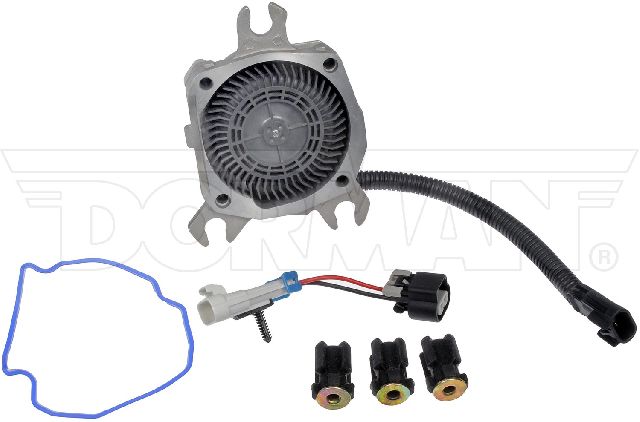
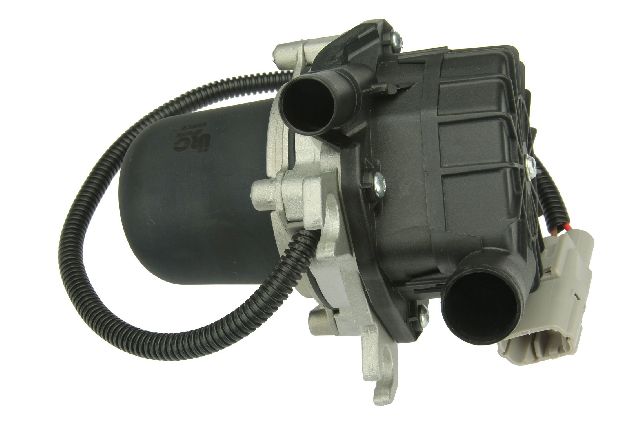
(OEM #17600-0F010)— This is the root cause of most system failures due to water intrusion. It's often replaced with the valves to prevent a repeat failure.
Trusted brands: Toyota (OEM), Aisin, Dorman
OEM price range: $400-$550
Aftermarket price range: $200-$350
Related Codes That Often Appear With This One
- P1440 — This is the identical circuit fault code for the Bank 1 (passenger side) valve. Seeing both codes suggests a widespread system failure, likely originating from the air pump.
- P0418 — This code points to a fault in the air pump's relay circuit. It often appears when the air pump motor seizes from water damage and draws excessive current, or if the pump itself fails.
- P2440, P2441, P2442, P2445 — These codes indicate a mechanical failure (stuck open, stuck closed, pump stuck off) rather than just a circuit fault. They frequently accompany the P144x circuit codes because the underlying cause (water/debris) causes both electrical and mechanical problems.
Technical Service Bulletins (TSBs) & Recalls
- T-SB-0230-12 Rev1 (October 17, 2013): This revised bulletin is the primary document for this issue. It covers the 2005-2007 Sequoia and other 2UZ-FE powered vehicles. It lists P1443 and a host of related codes, attributes the cause to debris from the air pump, and provides updated diagnostic procedures for the Air Injection Control Driver and part numbers for repair. This TSB supersedes T-SB-0230-12 and EG027-07.
Platform-Specific Known Issues
- The primary vehicle-specific issue is the design flaw where the air pump ingests water, leading to a cascade failure of the entire Secondary Air Injection system. Toyota issued TSB T-SB-0230-12 acknowledging this issue, which can be caused by debris passing through the pump assembly and contaminating other components.
- Repair is labor-intensive due to the location of the switching valves underneath the intake manifold, requiring several hours of work.
- A widely discussed owner experience is the choice between a very expensive OEM parts replacement ($1500+) versus installing an aftermarket bypass kit for a few hundred dollars.
Mechanic-Grade Diagnostic Values
- Air Switching Valve (Bank 2) control circuit voltage — expected: Equal to battery voltage (+B) when the valve is commanded OFF by the ECM.. Failure: The ECM logs P1443 if the voltage is less than half of the battery voltage when the valve is commanded OFF, indicating a short or open circuit.
Scan Tool Commands That Help
- Toyota Techstream: Utility: Air Injection Check (Manual Mode) — This function allows a technician to manually command the air pump and air switching valves (ASV1 and ASV2) on and off to verify their operation independently. This is critical for isolating a failed component. Note: The test is limited to 5-second activations and requires a 30-second cooldown between tests to prevent system damage.
Wiring & Ground Locations
- EC — At the rear of the left cylinder head (driver's side).. This is the primary ground point for components on Bank 2. A corroded or loose connection at this specific point can cause an intermittent open in the Air Switching Valve circuit, triggering P1443.
- 10A EFI #2 Fuse — In the engine compartment fuse/relay box.. This fuse supplies power to the secondary air injection system components. If this fuse is blown, the valves will not have power, leading to circuit codes.
- ECM (Engine Control Module) — Behind the glove box.. This location is important for technicians tracing wiring from the Air Injection Control Driver or when installing certain types of aftermarket bypass kits that require tapping into ECM wires.
Real Owner Repair Stories
- Reddit user comment (2007 Toyota Sequoia SR5) — Check Engine Light for SAIS failure.
✅ What actually fixed it The owner replaced the failed air pump with an aftermarket unit from Amazon and also replaced the Air Injection Control Driver with an 'OEM booster module upgrade/swap'. The total cost for the pump and installation was around $600, plus about $100 for the upgraded module. The vehicle passed smog with no issues for 7 years following the repair. - Reddit user comment (2006 Toyota Sequoia (California vehicle)) — SAIS failure just below 100,000 miles.
✅ What actually fixed it The owner replaced the failed components with OEM parts to resolve the issue and pass California smog tests.
When the Usual Fixes Don't Work
- While an aftermarket bypass kit is a very common and effective fix, it is not a guaranteed solution for all SAIS-related codes. In cases where the vehicle was operated for a long time with a mechanical SAIS fault (like a stuck-open valve), secondary damage can occur to the pressure sensors within the valve assemblies or even the ECM. A forum user reported that even after correctly installing a Hewitt Tech bypass kit and receiving a replacement module from the company, P1443 persisted. The suspected cause was underlying damage to the pressure sensor or ECU, which is not something the bypass kit is designed to overcome without additional pressure sensor replacement harnesses.
OEM Part Supersession History
89580-34010, 89580-34011, 89581-34040, 89581-71010→89580-34012 or 89581-34041— Updated part to address failures noted in TSB T-SB-0230-12 Rev1. This is the 'upgraded booster module' some owners refer to.
Model Year Variations Within This Range
- 2005-2007: The Secondary Air Injection (SAIS) system was introduced on the Sequoia starting in the 2005 model year, coinciding with the introduction of the 4.7L 2UZ-FE VVT-i engine. Models prior to 2005 have the non-VVT-i engine and do not have this system, so they are not susceptible to code P1443.
Helpful Videos
We Have This Part in Stock


The information in this article is provided for general reference and educational purposes only. Vehicle specifications, procedures, and part compatibility can vary by production date, trim level, and region. Always consult your vehicle's factory service manual and verify part numbers before purchasing or performing repairs. Safety-critical components such as airbags, seat belts, and braking systems should be installed by a qualified professional.
- Toyota SEQUOIA:
- 🧭 Diagnostic Flowchart
- 🎬 Helpful Videos
- 🛍️ Shop This Part
- What's Unique About the 2005-2007 Toyota SEQUOIA
- Symptoms You May Notice
- Most Likely Causes
- Rare But Worth Checking
- Diagnosis Steps
- Parts You'll Likely Need
- Related Codes That Often Appear With This One
- Technical Service Bulletins (TSBs) & Recalls
- Platform-Specific Known Issues
- Mechanic-Grade Diagnostic Values
- Scan Tool Commands That Help
- Wiring & Ground Locations
- Real Owner Repair Stories
- When the Usual Fixes Don't Work
- OEM Part Supersession History
- Model Year Variations Within This Range
- 🎟️ Get 5% Off