

OBD-II Code P1445: A Manufacturer-Specific Fault Demystified
The Ultimate Guide to Understanding, Diagnosing, and Fixing P1445 on Any Vehicle
- Code P1445 has completely different meanings across brands, requiring you to verify your specific manufacturer's definition before buying parts.
- On 1996-2012 Ford and Mazda vehicles, P1445 indicates an electrical fault in the Purge Flow Sensor circuit, usually fixed by replacing an $80 sensor or repairing a bad ground.
- For 2005-2009 Toyota V8s, this code flags a stuck Secondary Air Injection valve, a mechanical failure that costs $1,500 to $3,500 to repair.
- On Peugeot and Citroen diesels, P1445 is a programmed service reminder to refill the DPF additive fluid and reset the ECU counter, not a physical failure requiring a DPF replacement.
What Does P1445 Mean?
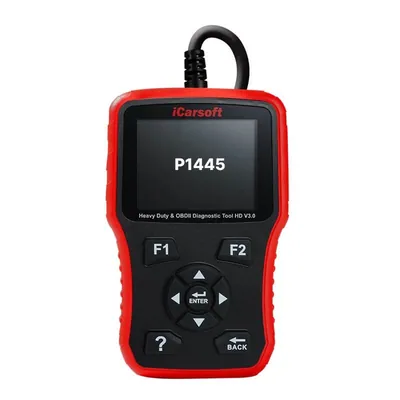
Code P1445 is a manufacturer-specific OBD-II code, meaning its definition changes entirely depending on the brand of your vehicle. On Ford and Mazda, it flags an electrical fault in the Evaporative Emission (EVAP) Purge Flow Sensor circuit. On Toyota V8s, it indicates a mechanically stuck valve in the Secondary Air Injection system. On Peugeot and Citroen diesels, it acts as a programmed service reminder that the Diesel Particulate Filter (DPF) additive fluid is empty. You must retrieve the exact definition for your specific make and model before attempting any repairs.
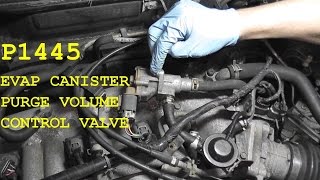
Technical definition: The SAE/OBD-II definition for P1445 varies by manufacturer. Ford/Mazda: 'Purge Flow Sensor Circuit High Input'. Toyota/Lexus: 'Secondary Air Injection System Switching Valve No. 2 Stuck Close Bank 2'. Peugeot/Citroen: 'DPF Additive System - Quantity of Additive Injected Exceeded Maximum Threshold'. Nissan: 'EVAP Canister Purge Volume Control Valve Malfunction'. 🎬 Watch: How to test and replace the Nissan purge valve. Subaru: 'Lateral Accelerometer Circuit Plausibility Failure' or 'Injector Air Control Solenoid Circuit Malfunction'. VW/Audi: 'Catalyst Temperature Sensor 2 Circuit Range/Performance'.
Can I Drive With P1445?
Yes, But With Caution. Yes, you can drive with a P1445 code, as it indicates an emissions or manufacturer-specific fault that will not cause an immediate breakdown. However, ignoring it leads to costly secondary failures. In EVAP-related cases (Ford, Nissan), a stuck-open purge valve creates a rich fuel condition, causing rough idle and permanently damaging the catalytic converter—an $800-$2,500 repair. For Toyota V8s, this specific 'stuck closed' code disables the secondary air injection system. For all vehicles, an active P1445 automatically fails state emissions tests.
Common Causes

- Faulty Purge Flow Sensor (Ford/Mazda) (Very Common) — The sensor fails internally or its ground wire corrodes, sending an incorrect high-voltage signal (above 4.80V) to the engine computer.
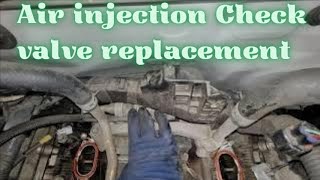
- Stuck Secondary Air Injection Valve (Toyota/Lexus) (Very Common) — Moisture and debris from a disintegrating air pump filter cause the switching valve under the intake manifold to seize in the closed position. 🎬 See this walkthrough for replacing Toyota air injection valves.
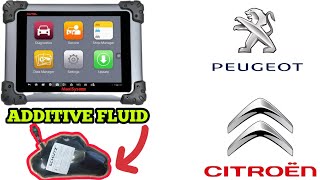
- DPF Additive System Service Interval Reached (Peugeot/Citroen) (Very Common) — The engine computer calculates that the DPF additive (Eolys fluid) is depleted and requires a physical refill and an electronic counter reset. 🎬 Watch: How to reset the additive fluid counter using a scan tool.
- Faulty EVAP Purge Valve or Solenoid (Nissan/General) (Common) — The valve controlling fuel vapor flow fails electrically or sticks open/closed due to carbon buildup.
- Poor Ground Connection (Ford/Mazda) (Common) — An open or corroded ground wire for the Purge Flow Sensor forces the signal voltage high, triggering P1445 even if the sensor is perfectly functional.
- Damaged or Leaking EVAP Hoses (Less Common) — Rubber hoses in the EVAP system crack, become brittle, or disconnect, creating a vacuum leak detected by the system.
- Damaged Wiring or Connectors (Less Common) — Wiring harnesses connected to EVAP or air injection components chafe, melt, or short to power, disrupting critical electrical signals.
- Faulty Eolys Additive Pump (Peugeot/Citroen) (Rare) — The additive pump fails mechanically, injecting incorrect amounts of fluid and triggering the fault code independently of the service counter.
Symptoms
- Check Engine Light is On — The primary and often only symptom noticed by the driver.
- Poor Engine Performance or Rough Idle — The engine idles unevenly or hesitates during acceleration, specifically when a purge valve sticks open and creates a vacuum leak.
- Reduced Fuel Economy — Gas mileage drops by 5-10% when fuel vapors escape or a stuck valve forces a rich air/fuel mixture.
- Fuel Smell — A distinct gasoline odor surrounds the vehicle as vapors escape a compromised EVAP system.
- Failed Emissions Test (also visible on scanner) — An active P1445 code triggers an automatic failure during state OBD-II emissions inspections.
Diagnostic Flowchart
Tap your situation to follow the diagnostic path that matches what you're seeing on this code.
Common Fixes & Costs
- Replace Purge Flow Sensor (or Assembly)
— Parts: $30-$100, Labor: $50-$100, ~0.7 hr book time
(DIY)
: OEM - Replace Secondary Air Injection Valves and Pump (Toyota)
— Parts: $600-$1500, Labor: $800-$2000, ~8.5 hr book time
(Advanced)
: OEM - Refill DPF Additive (Eolys) and Reset Counter (Peugeot/Citroen)
— Parts: $100-$200, Labor: $100-$200, ~1.2 hr book time
(Intermediate)
: OEM - Replace EVAP Purge Valve/Solenoid
— Parts: $20-$150, Labor: $50-$150, ~0.8 hr book time
(DIY)
: OEM - Replace Cracked or Leaking EVAP Hoses — Parts: $20-$70, Labor: $100-$300, ~1.5 hr book time (Intermediate)
Used vs. New Parts: Buying Guide
When a used part is worth it: Buy used for high-cost, non-wear assemblies like the Toyota air injection pump if the vehicle is older and new OEM parts exceed its value. Avoid used parts for cheap electronic sensors or finite-lifespan items like DPFs.
Donor-vehicle mileage cap: roughly under 80000 miles for the part to have meaningful remaining life.
Donor quality checklist:
- Verify the donor vehicle's VIN to ensure exact part compatibility.
- Demand a minimum 90-day functional warranty from the salvage yard.
- Avoid secondary air injection pumps from vehicles in high-humidity or flood-prone areas.
Decision logic:
- If The part is a simple electronic sensor or purge valve under $100 → Buy a new aftermarket or OEM part for reliability and warranty coverage.
- If The vehicle is over 10 years old and requires a $1,500+ Toyota air pump assembly → Purchase a low-mileage used unit from a rear-end collision donor vehicle.
- If The part is a known wear item like a DPF or catalytic converter → Always buy new or professionally remanufactured parts.
Warranty tradeoff: Used salvage parts offer 30-90 day warranties. New aftermarket parts provide 1-year to lifetime warranties. New OEM parts carry 1-2 year manufacturer warranties.
Worst-case if a used part fails: $1500 if a major used component (like the Toyota air pump) fails after 90 days, requiring you to pay for the part and 8 hours of labor a second time.
What Happens If You Wait — Timeline
- 0-1 month: Code is set and Check Engine Light illuminates. No noticeable performance symptoms occur for EVAP faults. Peugeot vehicles display a 'DPF additive low' message. (MPG impact: 0-2%% · Added cost: $0)
- 1-6 months: A stuck-open purge valve causes a slight drop in fuel economy and a rough idle. On Peugeot models, ignoring the additive warning prevents DPF regeneration. (MPG impact: 3-5%% · Added cost: $50-$100 in wasted fuel)
- 6-12 months: A continuously rich condition strains the catalytic converter and O2 sensors. Peugeot DPFs become increasingly clogged with soot, causing noticeable power loss. (MPG impact: 5-10%% · Added cost: $250-$600 for O2 sensor replacement)
- 12+ months: Sustained rich mixtures destroy the catalytic converter. Peugeot DPFs become completely blocked, forcing the car into limp mode and requiring full replacement. (MPG impact: 10-20%% · Added cost: $1200-$3000 for Catalytic converter or DPF replacement)
Cost of Not Fixing It
- 0-3 months: Failed emissions test, illuminated Check Engine Light, and a 5-10% decrease in fuel economy due to inefficient air/fuel mixtures. (Added cost: Negligible, other than increased fuel costs.)
- 3-12 months: A stuck-open purge valve creates a constant rich fuel mixture, causing severe carbon buildup and stressing the oxygen sensors. (Added cost: $250-$600 for O2 sensor replacement.)
- 12+ months: Prolonged rich conditions overheat and permanently destroy the catalytic converter. On Peugeot/Citroen, ignoring the additive warning causes a completely blocked DPF. (Added cost: $1200-$2800 for catalytic converter or DPF replacement.)
Diagnosis Steps
- Read the Code and Get the Manufacturer-Specific Definition
Use an OBD-II scanner to confirm P1445. You must look up the exact definition for your specific vehicle make, as this dictates your entire diagnostic path (e.g., 'Purge Flow Sensor Circuit High' vs. 'Switching Valve Stuck Close').
Tools: OBD-II Scanner (Beginner) - Advanced Electrical Test for PF Sensor (Ford/Mazda)
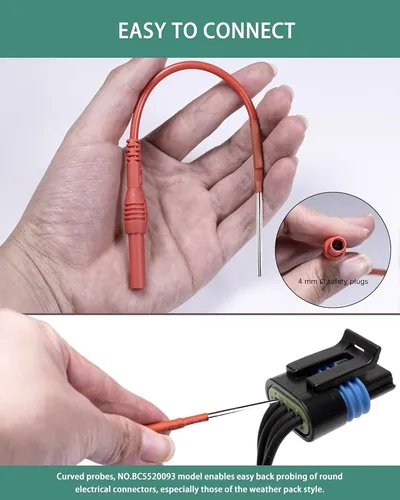
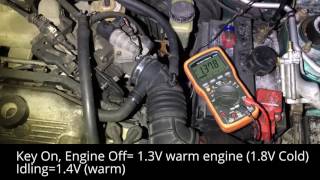
For a 'Circuit High Input' code, turn the key on, engine off (KOEO). Back-probe the PF sensor connector. The signal wire voltage must be between 0.40V and 4.80V. If voltage exceeds 4.80V, disconnect the sensor. If voltage drops, the sensor is faulty. If it stays high, you have a short to power in the wiring. Check the ground wire for high resistance (<5.0 ohms).
Tools: Multimeter, Wiring Diagram (Advanced) - Test Secondary Air Injection System (Toyota V8)
Before removing the intake manifold, use a bidirectional scan tool. Command the air pump on; listen for a vacuum cleaner sound. Command each switching valve open and closed; listen for distinct clicks under the intake manifold. Silence indicates a seized valve.
Tools: Professional OBD-II Scanner with bidirectional controls (Advanced) - Check DPF Additive Level and Counter (Peugeot/Citroen)
Connect a compatible diagnostic tool (like DiagBox). View live data for the DPF additive system. Check the remaining fluid level and the 'total weight of additive deposited'. If the level is fine but the code is active, the calculated weight exceeded its limit and requires an electronic reset.
Tools: Professional Diagnostic Scan Tool (Advanced) - Test the Purge Valve/Solenoid (Nissan/General EVAP)
Locate the purge valve. With the engine off, it must be closed (no air passes through). Measure the solenoid resistance with a multimeter (typically 20-30 ohms). Use a scan tool to command the valve open and closed, listening for a sharp click.
Tools: Multimeter, OBD-II Scanner with control functions (Intermediate) - Visually Inspect Hoses and Wiring
Locate the components specified by your vehicle's code definition. Inspect for cracked, disconnected, or kinked rubber hoses. Check wiring harnesses for frayed, melted, or corroded connections.
Tools: Flashlight (Beginner) - Inspect the Gas Cap
Tighten the gas cap until it clicks and inspect the rubber seal for cracks. While rarely the direct cause of a specific P1445, a compromised cap triggers secondary EVAP codes and is a mandatory baseline check.
Tools: None (Beginner) - Perform a Smoke Test
If diagnosing an EVAP-related P1445 and electrical tests pass, connect a smoke machine to the EVAP service port. Low-pressure smoke will escape from microscopic cracks or loose hose connections, pinpointing the vacuum leak.
Tools: EVAP Smoke Machine (Advanced)
When This Code Triggers (Freeze-Frame Conditions)
- Engine Coolant Temp: 40-95°F (at startup), 180-210°F (during test) (The EVAP monitor requires a cold start where engine and ambient temperatures match, then executes the test once the engine reaches full operating temperature.)
- Fuel Level: 15-85% (The ECU suspends EVAP monitor testing if the fuel tank is too full or too empty. The level must remain between 1/4 and 3/4 full.)
- Vehicle Speed: 45-65 mph (Purge flow tests occur during steady-state highway cruising with minimal steering or throttle inputs.)
- Engine Load: 15-35% (The diagnostic test runs under part-throttle, moderate load conditions, avoiding heavy acceleration or deceleration.)
Related Codes
- P1443 — On Fords, P1443 indicates a Purge Control Valve malfunction, while P1445 points specifically to the Purge Flow Sensor circuit reading high. They often appear together as the components are integrated.
- P2440 / P2442 — On Toyotas, these indicate a Secondary Air Injection valve is stuck open. P1445 means the same valve is stuck closed. All three require replacing the same expensive assembly under the intake manifold.
- P0441 — Indicates 'Incorrect Purge Flow' (a mechanical blockage or stuck valve). P1445 on a Ford is strictly an electrical fault code for the sensor circuit voltage.
- P0440 — A generic code for an EVAP System Malfunction. P1445 provides a much more specific starting point for diagnosis than the broad P0440.
Climate & Environmental Factors
- Cold Weather: Cold temperatures cause rubber EVAP hoses to shrink and become brittle, opening up micro-leaks. In secondary air injection systems, trapped moisture freezes, burning out pump motors or seizing valves.
- High Humidity: Excess moisture drawn into Toyota secondary air injection systems accelerates corrosion, destroying the air pump and switching valves.
- Short Trips in Cold Climates: Frequent short trips prevent the exhaust from reaching full operating temperature, allowing condensation to pool inside air injection pumps and lines without evaporating.
How to Talk to a Mechanic About This Code
Say this: "State the code and its specific definition for your car. For Ford: 'I have a P1445, Purge Flow Sensor Circuit High. Please perform an electrical diagnosis of the sensor and ground circuit.' For Toyota V8: 'I have a P1445, Secondary Air Injection Valve Stuck. Please use a bidirectional scanner to confirm which valve is failing.' For Peugeot: 'I have a P1445 DPF additive service reminder. Please quote me for checking the fluid level and resetting the ECU counter.'"
This language proves you understand the manufacturer-specific nature of the code. It directs the technician toward the correct diagnostic path and protects you from misdiagnoses, like a shop performing a smoke test for a Ford electrical fault or quoting a DPF replacement on a Peugeot.
Avoid saying:
- 'My check engine light is on, can you look at it?'
- 'Just fix whatever is wrong.'
- 'A guy on the internet said to replace the purge valve.'
Questions to ask before authorizing the repair:
- For Ford: What was the resistance of the sensor and the ground wire?
- For Toyota: Did you hear the air pump run and the valves click when commanded with the scanner?
- For Peugeot: Can you confirm you have the software to reset the additive counter after the service?
- Will you provide a written estimate before starting the work?
Where to Take It: Dealer vs Independent vs Chain
- Dealer:
Recommended for Toyota V8s (due to repair complexity) and Peugeot/Citroen (for guaranteed software access).
Best for: Vehicles under warranty., Complex systems like Peugeot/Citroen DPF additive resets requiring proprietary software., Toyota V8 air injection system repairs covered under extended warranty campaigns.
Downsides: Significantly higher labor rates and parts costs., Defaults to replacing entire assemblies rather than performing targeted component repairs. (Typical cost: +50% vs. baseline) - Independent Shop:
Best fit for Ford, Mazda, and Nissan EVAP-related P1445 codes.
Best for: Out-of-warranty vehicles where cost is a factor., Common electrical faults like the Ford/Mazda P1445.
Downsides: May lack the expensive, manufacturer-specific diagnostic tools required for Peugeot additive resets. (Typical cost: +0% vs. baseline) - Chain Shop:
Not recommended. The manufacturer-specific nature of P1445 requires advanced diagnostic expertise.
Best for: Simple, routine maintenance like oil changes.
Downsides: Lacks the advanced bidirectional scanners required for Toyota and Peugeot diagnostics., Highly likely to misdiagnose manufacturer-specific codes. (Typical cost: -10% vs. baseline)
When to Walk Away From the Repair
If the estimated repair cost exceeds 50% of the car's private-party value, sell the car as-is or trade it in.
- Car worth $8000, fix is $3000: Borderline. A $3,000 Toyota Tundra air injection repair equals 38% of the vehicle's value. Consider an aftermarket bypass kit (if legal in your state) before proceeding.
- Car worth $4500, fix is $150: Fix it. For a Ford Ranger with a P1445, the $150 sensor repair is less than 5% of the vehicle's value.
- Car worth $3000, fix is $3000: Walk away. Spending $3,000 on a Toyota repair that equals 100% of its value is financially unsound.
What Scan Tool You Need for This Code
Minimum: A scanner that reads manufacturer-specific trouble codes and provides exact definitions. Basic code readers are insufficient.
A $20 reader cannot perform the bidirectional controls needed to test Toyota air injection valves or execute the special function to reset a Peugeot DPF additive counter.
Budget: BlueDriver Pro Scan Tool (~$100) — Reads manufacturer-specific definitions and live data. Sufficient for diagnosing the Ford/Mazda variant but lacks special functions for Toyota or Peugeot.
Mid-range: Autel MaxiCOM MK808 / Foxwell NT Series (~$250-400) — Offers bidirectional controls to command the Toyota air pump and includes special functions for DPF additive resets on Peugeot models.
Professional: Launch X431 Series / Autel MS906BT (~$500-1200) — Provides full OEM-level diagnostic functions, coding, and adaptations used by professional independent shops.
Rent vs buy: Auto parts store loaner tools are basic code readers incapable of full P1445 diagnosis on Toyota or Peugeot vehicles. You must buy a mid-range scanner or hire a professional.
How to Clear the Code After You Fix It
- Use an OBD-II scan tool to clear the P1445 code.
- Ensure the fuel tank is between 1/4 and 3/4 full.
- Perform a complete drive cycle to allow the ECU to run its self-tests.
Drive cycle (~30 minutes): From a cold start (engine off for 8+ hours), idle for 3 minutes. Drive at a steady 45-65 mph for 15 minutes. Perform 15 minutes of mixed city driving with stop-and-go conditions. Allow the vehicle to cool down. Repeat over 1-3 days until the EVAP monitor reads 'Ready'.
Readiness monitors affected: EVAP System Monitor, Catalyst Monitor, Secondary Air System Monitor
Before emissions retest: drive at least 100 miles to fully set monitors.
Watch out for:
- Disconnecting the battery clears the code but resets all emissions monitors to 'Not Ready', causing an automatic emissions test failure.
- The EVAP monitor is notoriously difficult to set to 'Ready' and requires strict adherence to fuel level and ambient temperature parameters.
- Failing to reset the DPF additive counter on Peugeot/Citroen vehicles guarantees the code will return immediately, even with a full fluid tank.
Will This Fail Emissions / State Inspection?
Yes — this code typically fails an OBD-II emissions inspection.
- California: An active P1445 is an automatic failure. California allows the EVAP monitor to be 'Not Ready' on most vehicles and still pass, provided all other monitors are set.
- New York: A lit Check Engine Light from code P1445 causes an automatic failure. The issue must be repaired and the code cleared before the vehicle can pass.
- Texas: In emissions-testing counties, an illuminated Check Engine Light is an automatic failure. You can pass with one monitor 'Not Ready' (two for model years 1996-2000) after repairs.
Most Commonly Affected Vehicles
- Ford Ranger, Focus, Escort, Mondeo (1996-2012) — Highly prone to 'Purge Flow Sensor Circuit High Input'. The root cause is almost always a failed sensor or a corroded ground wire, not a physical vacuum leak.
- Toyota Tundra, Sequoia, 4Runner (4.7L V8) (2005-2009) — Suffers from stuck Secondary Air Injection System Switching Valves. This is a well-documented, expensive flaw requiring intake manifold removal.
- Peugeot / Citroen 308, 407, C5, Berlingo (1.6L & 2.0L HDI) (2006-2020) — Code P1445 acts as a programmed service reminder indicating the DPF additive fluid (Eolys) counter has expired and requires a reset.
- Mazda B-Series Truck, 626, Protege (1996-2009) — Shares EVAP components with Ford. P1445 indicates 'Purge Flow Sensor Circuit High Input', diagnosed identically to Ford models.
- Nissan Maxima, Altima, Sentra (1996-2004) — Indicates an 'EVAP Canister Purge Volume Control Valve Malfunction', requiring electrical testing of the valve and its wiring harness.
Manufacturer-Specific Notes

- Ford: P1445 is strictly an electrical fault related to the Purge Flow sensor reading high voltage, not a physical leak. Technicians must check the sensor's ground circuit for high resistance before replacing any EVAP parts.
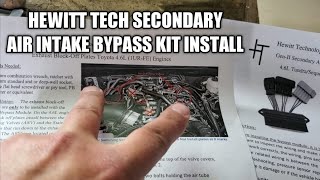
- Toyota/Lexus: This code points to the Secondary Air Injection system, requiring a notoriously expensive ($2,500+) repair because components are buried under the intake manifold. Many owners install aftermarket electronic bypass kits to trick the ECU and avoid the mechanical repair.
- Peugeot/Citroen: P1445 is not a physical fault; it is a programmed service reminder indicating the DPF additive fluid counter has expired. Replacing the DPF is a common, catastrophic misdiagnosis for this code.
Real Owner Stories
1997 Ford Ranger 4.0L - P1445 after engine swap
Check Engine Light with code P1445 appeared immediately after swapping the engine with one from a 1997 Ford Explorer.
What they tried:
- Inspected for disconnected vacuum lines.
- Replaced the Purge Flow Sensor on the new engine.
Outcome: The owner swapped the wiring harness from the original engine onto the replacement engine, resolving the code. The issue was purely electrical, caused by pinout differences in the Explorer's harness.
Lesson: P1445 on Fords is an electrical fault. When swapping components, ensure wiring harnesses are perfectly matched.
2006 Toyota Tundra 4.8L V8 - Persistent P1442 & P1445
Check Engine Light remained on for a year with codes P1442 and P1445, preventing the truck from passing a smog test.
What they tried:
- Mechanic replaced both secondary air injection pumps and valves under the intake manifold multiple times.
Outcome: The issue was resolved by replacing a different, upstream switching valve in the air injection system, allowing the readiness monitors to complete.
Lesson: The Toyota secondary air injection system contains multiple valves. Investigate all related valves before assuming newly installed parts are defective.
2011 Citroen C4 1.6 HDi - P1445 & DPF warnings
Vehicle displayed 'risk of DPF filter clogging' messages and code P1445, despite the owner refilling the Eolys fluid the previous year.
What they tried:
- Sprayed DPF cleaner directly into the exhaust and performed a hard highway drive at high RPM.
Outcome: The ECU's calculated 'DPF distance' was at zero. The owner used a diagnostic tool with a DPF Reset function to tell the ECU the system was serviced, instantly clearing the code.
Lesson: On Peugeot/Citroen, P1445 is a calculated software code. Physical cleaning will never clear the code without an electronic ECU reset.
How to Prevent This Code From Triggering
- Avoid overfilling the fuel tank (Every fill-up) — Topping off the tank forces liquid fuel into the charcoal canister, saturating it and causing blockages that trigger EVAP codes.
- Encourage longer drives (Toyota V8s) (Weekly) — Frequent short trips allow condensation to pool in the secondary air injection system. A 20-minute drive evaporates this moisture, preventing pump and valve corrosion.
- Use only certified DPF additive fluid (Eolys) (When refilling) — Cheap, non-certified additive fluids lack active ingredients, leading to ineffective DPF regeneration and permanent damage to the additive pump.
Frequently Asked Questions
Can a loose gas cap cause the P1445 code?
No. While a loose gas cap causes generic EVAP codes like P0455, it will not trigger the specific electrical or mechanical faults indicated by P1445 on Ford, Toyota, or Peugeot vehicles.
Why did replacing my purge valve not fix P1445 on my Ford Ranger?
On Fords, P1445 specifically indicates an electrical fault in the Purge Flow Sensor circuit. The problem is usually a failed sensor testing outside its 40-230 ohm range or a bad ground connection, rather than a mechanically stuck purge valve.
My mechanic says I need a new DPF for a P1445 code on my Peugeot. Is that right?
No, this is a common and expensive misdiagnosis. On Peugeot/Citroen diesels, P1445 is a service reminder indicating the DPF additive fluid (Eolys) needs refilling and the ECU counter requires a software reset.
What is the bypass kit for a Toyota with a P1445 code?
An aftermarket bypass kit is an electronic module that plugs into the vehicle's wiring to simulate a working secondary air injection system. This turns off the check engine light and prevents limp mode without requiring the $2,500 mechanical repair, though it may not be emissions-legal in all states.
How much does it cost to fix P1445?
Costs vary drastically by brand. A Ford purge sensor replacement costs $80-$200, a Peugeot additive reset costs $200-$400, and a Toyota secondary air injection repair costs $1,400-$3,500 at a dealership.
Key Takeaways
- Code P1445 has completely different meanings across brands, requiring you to verify your specific manufacturer's definition before buying parts.
- On 1996-2012 Ford and Mazda vehicles, P1445 indicates an electrical fault in the Purge Flow Sensor circuit, usually fixed by replacing an $80 sensor or repairing a bad ground.
- For 2005-2009 Toyota V8s, this code flags a stuck Secondary Air Injection valve, a mechanical failure that costs $1,500 to $3,500 to repair.
- On Peugeot and Citroen diesels, P1445 is a programmed service reminder to refill the DPF additive fluid and reset the ECU counter, not a physical failure requiring a DPF replacement.
Helpful Videos

Shop the Parts Behind P1445
Below are the parts most often responsible for code P1445, ranked by how frequently each one is the actual culprit (per the diagnosis above). Tap any to see what we have for your vehicle.




The information in this article is provided for general reference and educational purposes only. Vehicle specifications, procedures, and part compatibility can vary by production date, trim level, and region. Always consult your vehicle's factory service manual and verify part numbers before purchasing or performing repairs. Safety-critical components such as airbags, seat belts, and braking systems should be installed by a qualified professional.
- 🧭 Diagnostic Flowchart
- 🎬 Helpful Videos
- 🛍️ Shop This Part
- What Does P1445 Mean?
- Can I Drive With P1445?
- Common Causes
- Symptoms
- Common Fixes & Costs
- Used vs. New Parts: Buying Guide
- What Happens If You Wait — Timeline
- Cost of Not Fixing It
- Diagnosis Steps
- When This Code Triggers (Freeze-Frame Conditions)
- Related Codes
- Climate & Environmental Factors
- How to Talk to a Mechanic About This Code
- Where to Take It: Dealer vs Independent vs Chain
- When to Walk Away From the Repair
- What Scan Tool You Need for This Code
- How to Clear the Code After You Fix It
- Will This Fail Emissions / State Inspection?
- Most Commonly Affected Vehicles
- Manufacturer-Specific Notes
- Real Owner Stories
- 1997 Ford Ranger 4.0L - P1445 after engine swap
- 2006 Toyota Tundra 4.8L V8 - Persistent P1442 & P1445
- 2011 Citroen C4 1.6 HDi - P1445 & DPF warnings
- How to Prevent This Code From Triggering
- Frequently Asked Questions
- Can a loose gas cap cause the P1445 code?
- Why did replacing my purge valve not fix P1445 on my Ford Ranger?
- My mechanic says I need a new DPF for a P1445 code on my Peugeot. Is that right?
- What is the bypass kit for a Toyota with a P1445 code?
- How much does it cost to fix P1445?
- Key Takeaways
- 🎟️ Get 5% Off