

P1449 on 2020-2023 Toyota Corolla: EVAP Canister Clog Causes and Fixes
On a 2020-2023 Toyota Corolla, code P1449 almost always indicates a clog in the evaporative (EVAP) emission system's vent path. The most common cause is a blocked fresh air filter or hose, often due to debris or spider webs. Expect to inspect and possibly replace the canister pump module assembly, which contains the vent valve and filter.
- P1449 means your EVAP system's air inlet is blocked, not that there is a leak.
- Before buying parts, visually inspect the EVAP vent hose under the rear of the car for mud, debris, or insect nests.
- The most common driver-induced cause is habitually 'topping off' the fuel tank, which floods the charcoal canister with liquid fuel.
What's Unique About the 2020-2023 Toyota Corolla
While no official Toyota TSB for the 2020-2023 Corolla specifically mentions P1449, the definition is consistent across the broader Toyota/Subaru family. Unlike some other brands where P1449 can mean an electrical fault, on a Toyota it points directly to a physical blockage. The system's fresh air inlet, located under the rear of the car, can be susceptible to clogs from road debris, mud, or even insect nests, a common issue for this type of EVAP system design. An older Subaru TSB for P1449 mentions that heavy snow and ice buildup during highway driving can also cause this specific code by blocking the vent.
Symptoms You May Notice
- Check Engine Light is on
- Difficulty filling the fuel tank (gas pump nozzle clicks off repeatedly before full).
- Possible faint fuel smell near the rear of the vehicle.
- On some vehicles, the cruise control and/or traction control systems may be disabled as a secondary effect of the Check Engine Light.
- Replacing the gas cap. While a loose gas cap can cause other EVAP codes (like P0455 or P0457), it does not cause a clog code like P1449.
- Replacing the purge valve in the engine bay. The purge valve (often near the intake manifold) controls vapor flow to the engine; P1449 relates to the vent path at the rear of the vehicle.
Most Likely Causes
- Clogged EVAP Canister Vent Hose or Filter 🔴 High Probability → Shop Vapor Canister The vent inlet is located underneath the car, making it susceptible to blockages from road debris, mud, ice, or insect nests (like spider webs). This is a well-documented issue on many vehicles with similar EVAP designs. An older TSB for other models specifically addresses water and debris intrusion through the fresh air inlet.
How to confirm: Locate the EVAP canister assembly under the rear of the car. Visually inspect the fresh air hose opening for any obvious blockages. Disconnect the hose and attempt to blow air through it to check for a restriction. A Reddit user on r/ft86 confirmed this diagnostic path via a repair manual for a similar vehicle.
Typical fix: Clean any debris from the hose opening. If the hose itself is clogged internally, it may need to be cleaned with compressed air or replaced. On many modern Toyotas, the filter is integrated into the canister pump module.
Est. part cost: $0-$50 - Saturated or Internally Clogged Charcoal Canister 🟡 Medium Probability → Shop Vapor Canister This is almost always caused by habitually 'topping off' the fuel tank. Forcing liquid fuel into the canister, which is designed only for vapor, destroys the activated charcoal and creates an internal blockage.
How to confirm: This is difficult to confirm without ruling out other causes first. If the vent path is clear but symptoms persist, and there is a history of overfilling the tank, the canister is the likely suspect. Sometimes charcoal pellets can be found in the EVAP lines. A scan tool can measure backpressure to help diagnose a clogged canister.
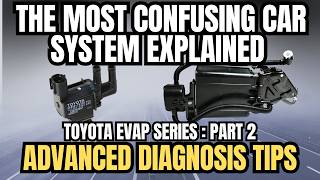
Typical fix: The entire charcoal canister assembly must be replaced. 🎬 See this step-by-step walkthrough for replacing the charcoal canister.
Est. part cost: $250-$400 - Failed Canister Pump Module / Leak Detection Pump ⚪ Low Probability → Shop Evaporative Emissions System Leak Detection Pump The internal valve that opens to allow fresh air can become stuck closed due to age or contamination from a failing canister. The pump module itself contains the filter that is often the source of the 'clogged' code.
How to confirm: This requires a bi-directional scan tool to command the vent valve to open and close while monitoring system pressure. If the valve does not respond to the command, it has failed.
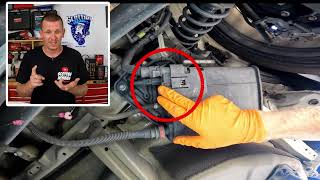
Typical fix: Replace the canister pump module assembly. The correct part number for the 2020-2023 Corolla is 77730-02010. 🎬 Watch: Locate and identify the leak detection pump on your Corolla.
Est. part cost: $150-$275
Diagnosis Steps
- Confirm the P1449 code is present using an OBD-II scanner.
- Check the gas cap to ensure it is tight and the seal is not cracked. This is good practice but is unlikely to be the cause of P1449.
- Safely raise the rear of the vehicle and locate the charcoal canister assembly. It is typically a black plastic box located near the fuel tank.
- Identify the fresh air vent hose connected to the canister or its pump module. Visually inspect the hose's opening for any signs of mud, dirt, ice, or insect nests.
- Disconnect the vent hose and inspect it for internal blockages. Try blowing through it with low-pressure compressed air to confirm it is clear.
- If the hose is clear, the blockage is likely in the component it connects to, which is typically the canister pump module (leak detection pump) that contains an integrated filter.
- If you have a bi-directional scan tool, command the vent valve to open and listen for a click or change in state. If it doesn't respond, the module has likely failed.
- If there is a strong history of overfilling the fuel tank and the vent path seems clear, suspect an internally clogged charcoal canister.
Parts You'll Likely Need
- Canister Pump Module / Leak Detection Pump
(OEM #77730-02010)— This module contains the vent valve and filter that is the most common point of failure or clogging for this code. It is a direct replacement part for the 2019-2024 Corolla.
Trusted brands: Toyota (OEM)
OEM price range: $250-$390
Aftermarket price range: $150-$220 - Charcoal Canister Assembly
(OEM #77740-06230)— This part is needed if the canister is saturated with liquid fuel from repeatedly overfilling the tank, causing an internal blockage that cannot be cleared. Part number 77740-06230 is listed as fitting the 2023 Corolla.
Trusted brands: Toyota (OEM)
OEM price range: $330-$480
Aftermarket price range: $200-$350
Technical Service Bulletins (TSBs) & Recalls
- T-SB-0200-11: Addressed water/debris entry into the EVAP fresh air inlet on 2009-2011 Corollas, causing multiple EVAP codes.
- T-SB-0024-15: Addressed DTC P2420 on 2014-2018 Corollas by replacing the charcoal canister and adding a filter to prevent dust/water intrusion.
- Subaru TSB 11-123-12: Describes DTC P1449 caused by ice and snow clogging the EVAP drain separator during extended highway driving in heavy snow.
Platform-Specific Known Issues
- While no TSBs are specific to P1449 on the 2020-2023 Corolla, older models have had TSBs for related EVAP issues. T-SB-0200-11 addressed water intrusion into the charcoal canister on 2009-2011 Corollas. T-SB-0024-15 (and its revision) addressed a different EVAP code (P2420) on 2014-2018 Corollas by replacing the canister and adding a protective filter, showing a history of sensitivity to debris and moisture in this system.
- A user on Reddit with a similar Toyota platform (Scion FR-S) reported getting code P1449 after driving in snow, suggesting a clog from ice or packed snow is a real-world possibility.
Mechanic-Grade Diagnostic Values
- Resistance of VSV (Vacuum Switching Valve) for EVAP Control — expected: 23-26 ohms at 20°C (68°F). Failure: A reading outside this range indicates a faulty valve coil. An open circuit (infinite resistance) is a common failure.
Hidden / Shadow Codes Worth Checking
- P043E, P043F, P2401, P2402, P2419: On older 2009-2011 Corollas, this specific cluster of five DTCs appearing simultaneously strongly indicates water and debris have entered the EVAP system through the fresh air inlet, likely damaging the charcoal canister. (see via Standard OBD-II scanner. The key is not a single code, but the pattern of all five appearing together.)
Scan Tool Commands That Help
- Toyota Techstream: Evaporative System Check (Automatic Test) — This is a crucial function to force the EVAP system's self-test to run without waiting the usual 5-hour 'cold soak' period. It allows a technician to verify a fix immediately. 🎬 Watch: Professional tips for running EVAP system diagnostic tests. The test cycles the pump and valves, and monitors pressure to confirm system operation.
- Toyota Techstream: Active Test: Activate the VSV for Evap Control — This command allows a technician to manually cycle the purge VSV (usually in the engine bay) on and off. It's used to confirm if the valve is mechanically stuck or electrically dead by listening for a 'click'. While P1449 points to the vent side, this helps rule out other EVAP system faults.
Wiring & Ground Locations
- Chassis Ground Points — On the 2020 Corolla, a primary ground connection from the battery negative terminal runs to the chassis frame. Other accessible ground points for testing or adding accessories can be found on metal brackets near the under-hood fuse box and on the shock towers.. The canister pump module and its associated valves are electrically powered. A poor ground connection to the chassis, especially at the rear of the vehicle, could cause intermittent or failed operation, potentially mimicking a clog or failed component. Always verify ground integrity when diagnosing electrical EVAP components.
Real Owner Repair Stories
- Reddit user on r/subaru (2018 Subaru WRX (uses similar EVAP logic for P1449)) — Check Engine Light with code P1449, which returned after being cleared.
❌ Tried (didn't work) Checking the gas cap., Resetting the code.
✅ What actually fixed it The user recalled a previous, identical issue that was resolved by the dealership. The cause was a spider web inside one of the EVAP hoses. The fix was to locate the vent filter and hoses above the rear wheel well liner and blow out the obstruction. - YouTube video by Melanix Automotive (2018 Subaru Legacy (demonstrates P1449 fix)) — Check Engine Light, ABS light, traction light all on due to code P1449. Gas pump nozzle repeatedly clicking off during refueling.
✅ What actually fixed it The mechanic diagnosed a clogged charcoal vent filter. When blowing into the old filter, no air would pass through. The cause was attributed to a history of overfilling the fuel tank. Replacing the vent filter and clearing the codes resolved all symptoms.
OEM Part Supersession History
77730-12010→77730-02010— Part revision or manufacturer change. The new part number is the correct replacement for the entire 2019-2024 Corolla generation.
Model Year Variations Within This Range
- 2020-2023: While the core components like the leak detection pump (77730-02010) are consistent across non-hybrid and hybrid models within this range, some specific EVAP hoses and pipes have different part numbers for hybrid vs. non-hybrid powertrains. Verifying part numbers with a VIN is crucial when ordering hoses.
Diagnostic Flowchart
Other Known Issues on This Vehicle
Issues unrelated to this code that are worth knowing about as an owner of this generation:
- Weak 12V Auxiliary Battery (Hybrid Models) 🟠 Medium → Shop Vehicle Battery — Common complaint, especially on vehicles used for frequent short trips which don't allow the battery to fully charge. (Ref: T-SB-0033-22 Rev (Provides information on battery maintenance for hybrids))
- Engine Stall at Low Speeds 🔴 High — Affects a limited number of vehicles but prompted a customer support program. (Ref: 22TC07 (Customer Support Program for an ECU programming issue that could cause a stall when accelerating from a stop).)
- Engine Coolant Bypass Valve Failure 🟠 Medium — Reports of failure typically between 30k-55k miles, causing a check engine light. Affects other Toyota models of the same era. (Ref: 24TE04 (Customer Support Program to cover the repair cost).)
- Rattle Noise From Right-Hand Engine Mount 🟡 Low — A vibration or rattle may be heard at idle, especially in warm climates. Does not affect performance. (Ref: T-SB-0088-23 (Provides a procedure to replace the engine mount with an updated part).)
- EGR Cooler Leak (2.0L Hybrid) 🔴 High — Noted as a potential issue on the 2.0L Hybrid (M20A-FXS) engine where a coolant leak into the intake can cause smoke and loss of power.
Used vs. New Parts: Buying Guide for This Vehicle
When a used part is the smart pick: For this repair, used parts are generally not recommended due to the high risk of contamination and unknown service life. Simple, non-mechanical parts like vent hoses might be acceptable if they are visually inspected for cracks and brittleness, but the cost savings are minimal.
Donor-vehicle mileage cap: roughly under 50000 miles for the part to have meaningful remaining life.
What to inspect on the donor part:
- For a Leak Detection Pump: Ask for the donor vehicle's mileage. Avoid parts from high-mileage cars as the internal motor has a finite life.
- For a Charcoal Canister: DO NOT BUY USED. There is no way to verify if it has been saturated with liquid fuel from overfilling, which is the primary cause of failure.
- Inspect electrical connectors for corrosion or damage.
- Check plastic housings for cracks or signs of heat stress.
OEM-only on this vehicle (don't cheap out):
- Charcoal Canister: Strongly recommended to buy new OEM. A used canister is a major gamble, as it may already be contaminated with fuel, leading to a repeat failure.
Brands owners have reported issues with on this vehicle:
- Dorman: While widely available, owner and mechanic experiences with Dorman EVAP components are mixed. Some report premature failure of pumps or valves, leading to doing the repair twice. For a part with moderate labor involved, many prefer the reliability of OEM.
Real Owner Stories
Aggregated from forums and TSBs cited above. Mileages and costs reflect what owners reported in those sources.
Scion FR-S (Toyota Platform-Mate)
Symptoms: The Check Engine Light and traction control light came on after driving in snow, and the diagnostic tool showed code P1449.
What fixed it: The repair manual for the vehicle defines P1449 as 'Canister filter clogged' and directs inspection of the drain tube and separator for blockage. The issue was attributed to a temporary clog from ice or packed snow in the EVAP vent system.
Source hint: Reddit r/ft86
Related OBD-II Codes
Frequently Asked Questions
Why did my cruise control and traction control lights turn on with the P1449 Check Engine Light?
I live in a snowy climate. Could winter weather cause the P1449 code on my Corolla?
I always top off my gas tank. Could this be related to the P1449 code?
Are there any specific TSBs for code P1449 on the 2020-2023 Corolla?
Where is the part that gets clogged to cause P1449 located on my Corolla?
If the canister pump module has failed, what is the correct part number for my 2020-2023 Corolla?
Helpful Videos
Used OEM Parts in Stock
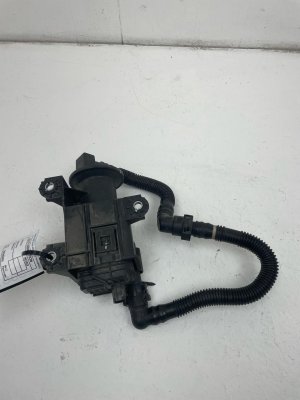

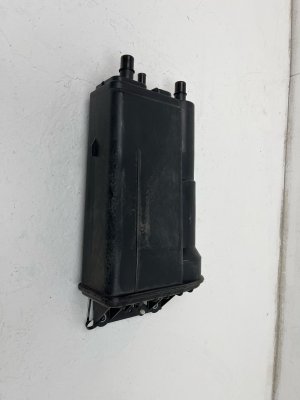
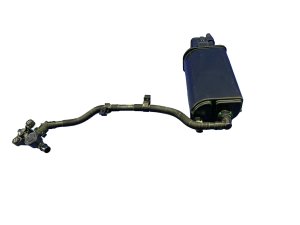
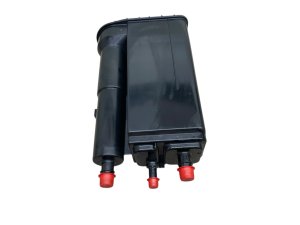
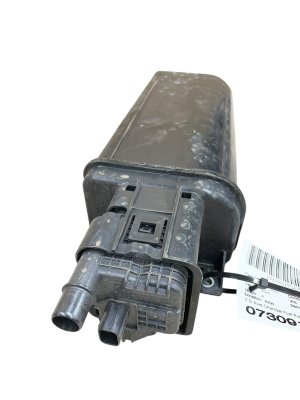
New Aftermarket Parts Available


The information in this article is provided for general reference and educational purposes only. Vehicle specifications, procedures, and part compatibility can vary by production date, trim level, and region. Always consult your vehicle's factory service manual and verify part numbers before purchasing or performing repairs. Safety-critical components such as airbags, seat belts, and braking systems should be installed by a qualified professional.
- Toyota Corolla:
- 🧭 Diagnostic Flowchart
- 🎬 Helpful Videos
- 🛍️ Shop This Part
- What's Unique About the 2020-2023 Toyota Corolla
- Symptoms You May Notice
- Most Likely Causes
- Diagnosis Steps
- Parts You'll Likely Need
- Technical Service Bulletins (TSBs) & Recalls
- Platform-Specific Known Issues
- Mechanic-Grade Diagnostic Values
- Hidden / Shadow Codes Worth Checking
- Scan Tool Commands That Help
- Wiring & Ground Locations
- Real Owner Repair Stories
- OEM Part Supersession History
- Model Year Variations Within This Range
- Other Known Issues on This Vehicle
- Used vs. New Parts: Buying Guide for This Vehicle
- Real Owner Stories
- Scion FR-S (Toyota Platform-Mate)
- Related OBD-II Codes
- Frequently Asked Questions
- 🎟️ Get 5% Off