

P1450 on 2013-2018 Ford C-Max Hybrid: Unable to Bleed Up Fuel Tank Vacuum Causes and Fixes
On a 2013-2018 Ford C-Max, code P1450 is almost always caused by a faulty canister purge valve that is stuck open. Key symptoms are trouble starting after refueling and the gas pump repeatedly clicking off. Replacing the valve is an easy, low-cost DIY fix, typically under $70 for the part. Ford issued TSB 19-2207 for this exact problem, which also affects the Fusion and MKZ Hybrids.
- P1450 on a Ford C-Max almost always means the canister purge valve has failed and is stuck open.
- The most common symptoms are difficulty starting the car right after getting gas and the fuel pump shutting off frequently during refueling.
- This is a very DIY-friendly repair. The purge valve is inexpensive and easy to access in the engine bay.
- Do not mistake this for a loose gas cap; P1450 points to a blockage or stuck valve, not a leak.
- Ford issued a Technical Service Bulletin (TSB 19-2207) for this exact problem, which recommends replacing the valve (Part No. AU5Z-9C915-E) and updating the PCM software.
What's Unique About the 2013-2018 Ford C-Max
The Ford C-Max and its platform mates (Fusion/MKZ Hybrid) have a well-documented, widespread issue with the canister purge valve failing. Ford issued a Technical Service Bulletin (TSB 19-2207) specifically for the 2013-2017 C-Max that identifies this valve as the primary cause for P1450. The TSB confirms the original valve's sealing capability was insufficient. This makes the diagnosis on a C-Max much more straightforward than on other vehicles, where the cause might be less obvious. The high failure rate means the purge valve should be the first and most likely suspect.
Symptoms You May Notice
- Check Engine Light is on
- Difficulty starting the engine, or engine stalling, especially right after refueling
- Fuel pump nozzle clicks off repeatedly and prematurely when filling the gas tank
- A hissing or 'whoosh' sound from the fuel tank area when opening the fuel door
- Rough idle or stumbling during deceleration
- Replacing the gas cap or capless fuel filler neck. This code is caused by an inability to vent vacuum, not a leak. A faulty cap or seal would typically cause a leak-related code like P0455 or P0457.
- Only performing the PCM update from TSB 19-2207 without replacing the purge valve. Some owners report dealers have done this, only for the code to return shortly after, requiring a second visit to replace the faulty valve.
Most Likely Causes
- Faulty Canister Purge Valve (Vapor Management Valve) 🔴 High Probability → Shop Vapor Canister This is a known high-failure part on this platform, as documented by Ford in TSB 19-2207. The valve's internal seal degrades, causing it to stick open and constantly apply engine vacuum to the fuel tank. Mechanics report this is the cause in over 95% of cases for this code on these Fords.
How to confirm: With the engine off, disconnect the electrical connector and the EVAP line from the purge valve. Try to blow through the valve from the EVAP line side; if any air passes through, the valve is stuck open and faulty. 🎬 Watch: A mechanic demonstrates this simple purge valve test. Alternatively, with the engine running, disconnect the EVAP line from the valve and feel the port on the valve itself. If you feel suction, it is stuck open and must be replaced.
Typical fix: Replace the canister purge valve. The part is located in the engine bay, often mounted to the intake manifold, and is typically held on by two bolts, making it a simple replacement. 🎬 See this DIY walkthrough for replacing the C-Max purge valve. Per TSB 19-2207, the official repair also includes having a dealer or qualified shop update the Powertrain Control Module (PCM) software.
Est. part cost: $30-$90 - Blocked or Kinked EVAP Hoses ⚪ Low Probability
How to confirm: Visually inspect all accessible EVAP system hoses between the engine, purge valve, and the charcoal canister for any visible kinks, collapses, or blockages.
Typical fix: Straighten any kinked hoses or replace damaged sections of the line.
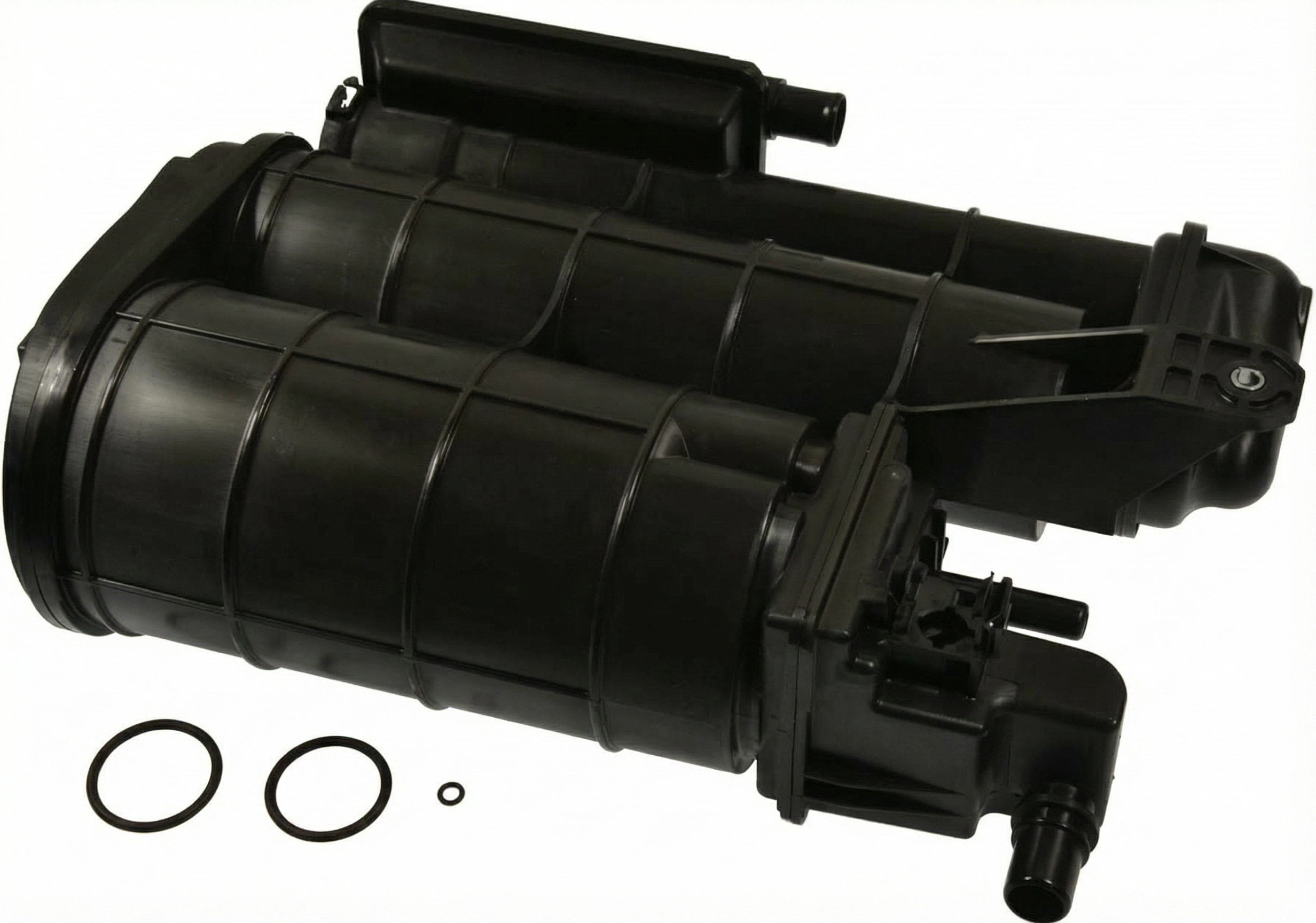
Est. part cost: $10-$50 - Restricted Canister Vent Solenoid or EVAP Canister ⚪ Low Probability → Shop Vapor Canister While less common than the purge valve, the vent path can become blocked by dirt, debris, or spiders building nests, especially on the vent solenoid filter.
How to confirm: This is more difficult to diagnose. If the purge valve is good, the vent solenoid (located near the charcoal canister at the rear of the vehicle) should be inspected for blockages. A professional may need to use a smoke machine to confirm a restriction in the canister or vent path. Note that the C-Max Hybrid and Energi models use different, non-interchangeable vapor canisters.
Typical fix: Clean or replace the canister vent solenoid. If the charcoal canister is saturated with fuel (often from over-filling the gas tank), the entire canister assembly may need replacement.
Est. part cost: $50-$200
Rare But Worth Checking
- Faulty Fuel Tank Pressure (FTP) Sensor: → Shop Fuel Tank While uncommon, the sensor that reports pressure readings to the PCM can fail and send incorrect data, causing the computer to think there is a vacuum issue when there isn't one. A scan tool showing live data can help diagnose a lazy or skewed sensor.
Diagnosis Steps
- Scan the vehicle for trouble codes and confirm P1450 is present. Note any other EVAP codes (P0456, P0457, P04EE, P04EF), as they strongly support a faulty purge valve per TSB 19-2207.
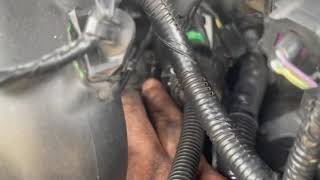
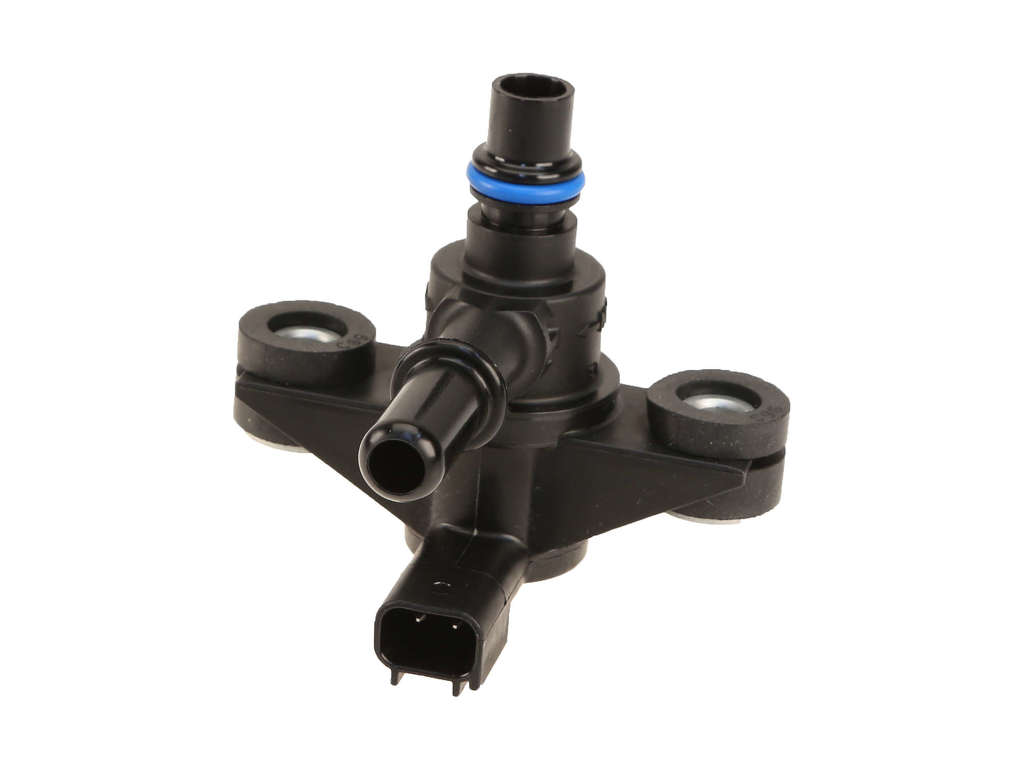
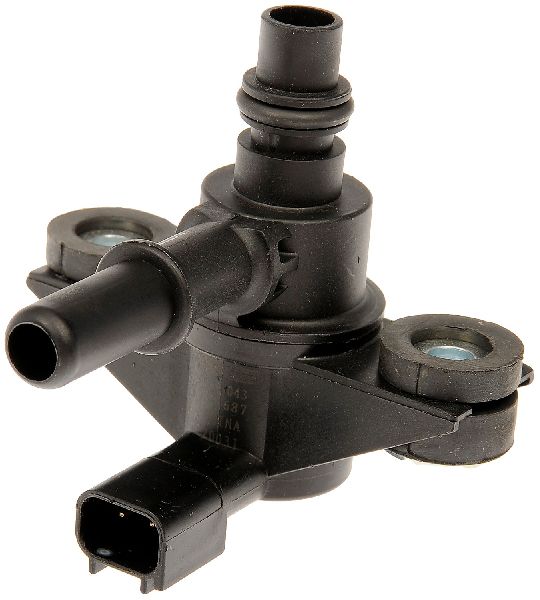
- Locate the canister purge valve in the engine compartment. It's a small black plastic valve with an electrical connector and two hoses attached, mounted near the rear of the engine.
- Perform a simple test: With the engine OFF, disconnect the electrical connector and the hose leading from the valve back toward the fuel tank.
- Attempt to blow air through the port where you just removed the hose. A good valve should be closed when unpowered, so no air should pass through.
- If air passes through, the valve is stuck open and is the cause of the P1450 code. It must be replaced.
- If the purge valve tests good, the next step is to inspect the EVAP hoses for kinks or blockages, followed by checking the canister vent solenoid near the rear of the vehicle for restrictions from dirt or debris.
Parts You'll Likely Need
- Canister Purge Valve / Vapor Management Valve
(OEM #AU5Z-9C915-E)— This is the most common failure point for code P1450 on this specific vehicle, as confirmed by Ford's own service bulletin (TSB 19-2207). Part number AU5Z-9C915-E supersedes previous versions including -A, -B, -C, and -D.
Trusted brands: Motorcraft (OEM), Dorman, Standard Motor Products
OEM price range: $60-$90
Aftermarket price range: $35-$60
Related Codes That Often Appear With This One
- P0456 — Small EVAP Leak. TSB 19-2207 explicitly lists this code alongside P1450 as being caused by the same faulty purge valve.
- P0457 — EVAP Leak (Fuel Cap Loose/Off). Also listed in TSB 19-2207 as a potential companion code caused by the faulty purge valve.
- P04EE / P04EF — EVAP System Codes. These are also mentioned in TSB 19-2207 as being related to the purge valve failure.
Technical Service Bulletins (TSBs) & Recalls
- TSB 19-2207: Addresses an illuminated Malfunction Indicator Lamp (MIL) with DTC P1450, P0456, P0457, P04EE, and/or P04EF. States the cause may be the sealing capability of the canister purge valve. The official fix requires replacing the valve and updating the PCM software. 🎬 Watch: How to fix the P1450 code on this platform. This TSB applies to 2013-2017 C-Max, Fusion, and MKZ Hybrid/Energi models.
Platform-Specific Known Issues
- TSB 19-2207: Ford issued this bulletin for 2013-2017 C-Max models due to a high failure rate of the canister purge valve causing code P1450 and other EVAP codes. The official repair includes replacing the valve and reprogramming the PCM. Some owners have reported that dealers initially only perform the software update, which fails to fix the problem, requiring a second visit to replace the physical valve.
Mechanic-Grade Diagnostic Values
- Fuel Tank Pressure (FTP) Sensor Voltage at KOEO (Key On, Engine Off) — expected: 2.4V - 2.8V at atmospheric pressure.. Failure: A reading that drops significantly upon startup (e.g., below 2.4V) without the purge valve being commanded indicates a stuck-open purge valve. A reading biased high or low at rest points to a faulty sensor.
- Canister Purge Valve (CPV) Solenoid Coil Resistance — expected: Highly variable; reported ranges are 10-60 Ohms or 30-38 Ohms depending on the specific part version.. Failure: A reading of open circuit (OL) or a dead short (near 0 Ohms) indicates a failed coil. Due to variability, a physical function test (blow-through or vacuum test) is more reliable than resistance alone.
- EVAP Canister Vent Valve Solenoid Resistance — expected: 12 - 80 Ohms.. Failure: A reading outside this range indicates a faulty solenoid coil.
- Canister Purge Valve Connector Voltage (KOEO) — expected: 11V - 12V DC on the power supply pin.. Failure: No voltage suggests a wiring issue, blown fuse, or problem with the power supply from the PCM.
Hidden / Shadow Codes Worth Checking
- EVAPCV_F (Purge Valve Fault Flag): This is not a standard DTC but an internal PCM status flag that indicates the computer has detected a fault with the canister purge valve. When this flag is set, it will typically trigger the P1450 check engine light. (see via Advanced scan tools like FORScan can display this specific PID (Parameter ID), providing definitive confirmation that the PCM has condemned the purge valve.)
- Mode $06, TID $82: Mode $06 data provides results from non-continuous monitor self-tests. For Ford EVAP systems, Test ID (TID) $82 often relates to the 'EVAP Monitor (0.020") Leak Check'. While not a code itself, failing this test is a direct contributor to setting codes like P1450. A technician can view these raw test results to see if the system is borderline failing before a DTC is set. (see via A scan tool with Mode $06 capability.)
Scan Tool Commands That Help
- Ford IDS / FORScan: EVAP Purge Valve Command (PID: EVAPCP or similar) — This is the definitive test for a stuck-open purge valve. With the engine running, command the purge valve to 0% (closed). While monitoring the Fuel Tank Pressure (FTP) sensor PID, if the pressure value drops (indicating vacuum is building), the valve is mechanically stuck open and must be replaced.
- Ford IDS / FORScan: EVAP Vent Valve Command — Used to diagnose the vent side of the system if a new purge valve does not resolve the code. Commanding the vent valve closed should seal the system. If the system fails to hold pressure or vacuum during a subsequent test, the vent valve may be stuck open or there is a different leak.
Wiring & Ground Locations
- G108 — Top of the transmission.. This is a primary engine component ground point. A loose or corroded ground here could potentially affect the operation of engine-mounted sensors and solenoids, including the canister purge valve.
- G105 — Left side of the engine compartment.. Another key ground point for components in the engine bay. Verifying its integrity is a good step in diagnosing any unusual electrical behavior related to the EVAP system.
- Canister Purge Valve Connector — On the canister purge valve itself, mounted near the rear of the engine.. The control signal from the PCM is labeled as 'EVAPCP' on wiring diagrams. Technicians can back-probe this connector to verify the presence of battery voltage and the duty-cycle control signal from the PCM, ruling out a wiring or PCM driver issue.
Real Owner Repair Stories
- Dorman part review on a retailer website (Ford Fusion (platform mate) with P1450) — After filling up with fuel, the car would not start unless the accelerator pedal was held down.
✅ What actually fixed it Replacing the canister purge valve with a Dorman aftermarket part resolved the starting issue and the code. - Reddit user on r/FordFocus (Ford Focus (similar EVAP system design)) — Check Engine Light for purge valve related code.
❌ Tried (didn't work) The dealer performed the recall which included a powertrain software update but did not replace the valve.
✅ What actually fixed it The Check Engine Light returned a week later with the same code. The issue was only resolved after the canister purge valve itself was replaced. The user notes this is a common occurrence where the software update alone is insufficient if the part has already failed.
"I Checked Everything" — The Actual Cause
- A smoke test is designed to find positive pressure leaks and is generally not the correct primary diagnostic for P1450, which is a vacuum-related fault. It is normal for a vehicle with P1450 to pass a smoke test. The more relevant 'test passed but still broken' scenario involves the intermittent nature of the purge valve. A technician may remove the valve and test it on the bench, and it may function correctly at that moment. However, under specific thermal or vacuum conditions while driving, the valve's weak internal seal fails, causing it to stick open and set the code. This is why a live data test with a scan tool or an on-vehicle vacuum test with the engine running is more definitive than a simple bench test.
OEM Part Supersession History
AU5Z-9C915-A, -B, -C→AU5Z-9C915-D— Improved internal sealing capability to address the sticking issue.AU5Z-9C915-D→AU5Z-9C915-E— Further revision and improvement. TSB 19-2207, issued in mid-2019, specifies part number AU5Z-9C915-D. The existence of a later -E revision suggests it is the most current and robust version available from Motorcraft.
Heads up: All revisions are physically interchangeable, but installing an older revision (-A through -D) is not recommended as it may fail again prematurely.
Model Year Variations Within This Range
- 2013-2017: The primary TSB from Ford (19-2207) that addresses the P1450 code and the faulty purge valve explicitly covers the 2013-2017 model years for the C-Max.
- 2018: The 2018 model year is not included in TSB 19-2207. While the part may still fail, its exclusion could imply that Ford may have started installing the improved purge valve from the factory during the final model year, potentially making the 2018 C-Max less susceptible to this specific code than earlier years.
Diagnostic Flowchart
Other Known Issues on This Vehicle
Issues unrelated to this code that are worth knowing about as an owner of this generation:
- HF35 Transmission Bearing Failure 🔴 High — Commonly reported between 100,000 and 150,000 miles. Symptoms include a high-pitched whine, grinding, or thumping noise from the transmission area while the vehicle is in motion. (Ref: TSB 19-2391 (supersedes 18-2328) addresses this noise, recommending installation of a transfer shaft kit or a remanufactured transmission assembly for affected vehicles built on or before August 15, 2015.)
- 12V Battery Parasitic Drain 🟠 Medium — Widespread reports of the 12V battery dying unexpectedly, sometimes after the vehicle sits for only a few days. The issue is often linked to software glitches in modules like the Audio Control Module (ACM) that fail to shut down properly. (Ref: TSB 25-2081 addresses a 12V battery drain and recommends reprogramming affected modules. TSB 44851 was also issued for 2015 models for battery drain. Owners often resort to pulling a specific fuse to reset the system as a temporary fix.)
- Audio Control Module (ACM) Failure 🟡 Low — Very common issue where the radio stops producing sound, the clock blinks, or the entire unit fails to power on. This can also be a contributing factor to the 12V battery drain. (Ref: While no specific recall exists, this is a well-documented failure across many Ford models of this era. Owners have found that ACMs from other models like the Ford Escape can sometimes be used as replacements with reprogramming.)
- Shifter Cable Bushing Failure 🟠 Medium — The bushing on the shifter cable can degrade, causing the shifter to feel loose or preventing the vehicle from going into the correct gear, potentially leading to a no-start condition if Park is not detected. (Ref: TSB 21-2152 addresses incorrect shifter lever position on 2013-2018 C-Max models. Recall 22S43 was also issued for this problem on some Ford vehicles.)
Used vs. New Parts: Buying Guide for This Vehicle
When a used part is the smart pick: For the primary cause of P1450 (the canister purge valve), a used part is NEVER recommended. It is a known high-failure component due to a design flaw, and a used part is highly likely to have the same defect or a very short remaining life. For secondary, less common causes like EVAP hoses or the charcoal canister, a used part from a low-mileage, collision-damaged donor vehicle could be a cost-effective option, provided it is inspected for damage or fuel saturation.
Donor-vehicle mileage cap: roughly under 40000 miles for the part to have meaningful remaining life.
What to inspect on the donor part:
- For a charcoal canister: Ensure there is no physical damage, cracking, or signs of being saturated with liquid fuel.
- For EVAP hoses: Check for brittleness, cracking, or soft/swollen spots.
- Avoid parts from vehicles in salt-belt regions, as corrosion can damage electrical connectors and solenoid bodies.
OEM-only on this vehicle (don't cheap out):
- No parts for this specific repair are strictly OEM-only. Quality aftermarket alternatives are widely available and effective.
Aftermarket brands forum-validated for this vehicle:
- Dorman: Often cited in forums and reviews as a reliable and cost-effective alternative that fixes the problem.
- Standard Motor Products (SMP): Generally regarded as a quality aftermarket brand, with some users reporting their parts are re-boxed OEM components.
Brands owners have reported issues with on this vehicle:
- Be cautious with unbranded, 'white-box' parts from online marketplaces, as quality control can be inconsistent.
- Some forum discussions suggest that Standard Motor Products' lower-cost 'T-Series' line can have questionable quality compared to their main product line.
Real Owner Stories
Aggregated from forums and TSBs cited above. Mileages and costs reflect what owners reported in those sources.
2013-2017 Ford C-Max Hybrid
Symptoms: The Check Engine Light was on with code P1450. The car had difficulty starting and would sometimes stall, specifically right after refueling at the gas station.
What fixed it: Replacement of the canister purge valve. Owners on Reddit confirmed this resolved the P1450 code and the associated stalling symptoms.
Source hint: r/cmaxhybrid on Reddit
2014 Ford Focus ST (Platform Mate)
Symptoms: The owner experienced code P1450. The dealer initially only performed a PCM software update as part of a recall, but the Check Engine Light returned with the same code a few days later.
What fixed it: The owner advised that the physical purge valve must be replaced in addition to the software update to actually fix the issue.
Source hint: Reddit thread titled 'P1450 code before and after fuel tank deformation recall, Ford trying to charge me to fix it.'
2013-2017 Lincoln MKZ Hybrid 2.0L
Symptoms: Illuminated Malfunction Indicator Lamp (MIL) with DTC P1450.
What fixed it: Replacement of the canister purge valve using part number AU5Z-9C915-E as specified for this platform mate.
Source hint: TSB 19-2207
Related OBD-II Codes
Frequently Asked Questions
Does TSB 19-2207 apply to my 2013-2017 Ford C-Max Hybrid?
Why does my C-Max stall or struggle to start only after I fill up the gas tank?
Is it true that the C-Max Hybrid and Energi models use different EVAP canisters?
My dealer only wants to update the PCM software for P1450; is that enough?
Can a bad purge valve cause my fuel pump nozzle to click off early when I'm at the gas station?
Where is the canister purge valve located on the 2.0L Hybrid engine?
Helpful Videos





Used OEM Parts in Stock
New Aftermarket Parts Available


The information in this article is provided for general reference and educational purposes only. Vehicle specifications, procedures, and part compatibility can vary by production date, trim level, and region. Always consult your vehicle's factory service manual and verify part numbers before purchasing or performing repairs. Safety-critical components such as airbags, seat belts, and braking systems should be installed by a qualified professional.
- Ford C-Max:
- 🧭 Diagnostic Flowchart
- 🎬 Helpful Videos
- 🛍️ Shop This Part
- What's Unique About the 2013-2018 Ford C-Max
- Symptoms You May Notice
- Most Likely Causes
- Rare But Worth Checking
- Diagnosis Steps
- Parts You'll Likely Need
- Related Codes That Often Appear With This One
- Technical Service Bulletins (TSBs) & Recalls
- Platform-Specific Known Issues
- Mechanic-Grade Diagnostic Values
- Hidden / Shadow Codes Worth Checking
- Scan Tool Commands That Help
- Wiring & Ground Locations
- Real Owner Repair Stories
- "I Checked Everything" — The Actual Cause
- OEM Part Supersession History
- Model Year Variations Within This Range
- Other Known Issues on This Vehicle
- Used vs. New Parts: Buying Guide for This Vehicle
- Real Owner Stories
- 2013-2017 Ford C-Max Hybrid
- 2014 Ford Focus ST (Platform Mate)
- 2013-2017 Lincoln MKZ Hybrid 2.0L
- Related OBD-II Codes
- Frequently Asked Questions
- 🎟️ Get 5% Off