

P1450 on 2008-2012 Ford Escape 2.5L: Causes and Fixes for 'Unable to Bleed Up Fuel Tank Vacuum'
On a 2008-2012 Ford Escape, code P1450 almost always points to a faulty canister purge valve that is stuck open. A top symptom is difficulty refueling where the gas pump clicks off repeatedly, or the engine stalls/is hard to start right after filling the tank. Replacing the canister purge valve is a common, low-cost DIY fix that usually takes less than 15 minutes.
- P1450 on your Escape means there's too much vacuum in the fuel tank that the system can't release.
- The most likely symptom, besides the Check Engine Light, is the engine stalling or being very difficult to start right after you get gas.
- This problem is almost always caused by a cheap, easy-to-replace part called the canister purge valve, located on the engine.
- You can likely fix this yourself in 15 minutes with an 8mm socket for under $50.
What's Unique About the 2008-2012 Ford Escape
The second-generation Ford Escape, like many other Ford models from this era (including the Fusion, Focus, and Edge), is known for issues with its EVAP system components. The canister purge valve is a particularly high-failure item. Owners frequently report the classic combination of symptoms: the P1450 code appearing along with difficulty starting the engine immediately after refueling. This specific symptom combination is a strong indicator of a failed purge valve, as excess fuel vapors are drawn directly into the intake manifold, creating a rich condition that floods the engine.
Symptoms You May Notice
- Check Engine Light is on.
- Difficulty filling the fuel tank (gas pump nozzle clicks off repeatedly).
- Hard starting, stalling, or rough idle immediately after refueling.
- A 'whoosh' sound of air rushing in when opening the gas cap (less common than with a vent solenoid issue, but possible).
- Slightly rough idle or hesitation during normal driving.
- Replacing the gas cap. While a loose or faulty gas cap can cause other EVAP codes (like P0455 or P0457), it is rarely the cause for P1450, which indicates an inability to *relieve* vacuum, not a leak. The 2008-2012 Escape also uses a capless fuel filler system, making this even less likely.
Most Likely Causes
- Stuck-Open Canister Purge Valve 🔴 High Probability → Shop Vapor Canister This is a very common failure part on many Ford vehicles from this period, including the Escape. The internal valve mechanism fails, allowing engine vacuum to be constantly applied to the fuel tank, which the system cannot bleed off.
How to confirm: Locate the purge valve in the engine bay, mounted to the intake manifold. With the engine off, disconnect the electrical connector and the EVAP hose. Try to blow through the valve from the hose port. If any air passes through, it is stuck open and must be replaced. A running engine test involves disconnecting the hose and feeling for vacuum at the valve's port; there should be none at idle with the valve unplugged.
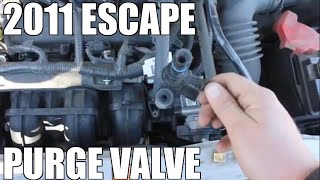
Typical fix: Replace the canister purge valve assembly. It is a very simple repair, typically requiring only an 8mm socket and taking 10-15 minutes. 🎬 Watch: Step-by-step guide to replacing the purge valve yourself.
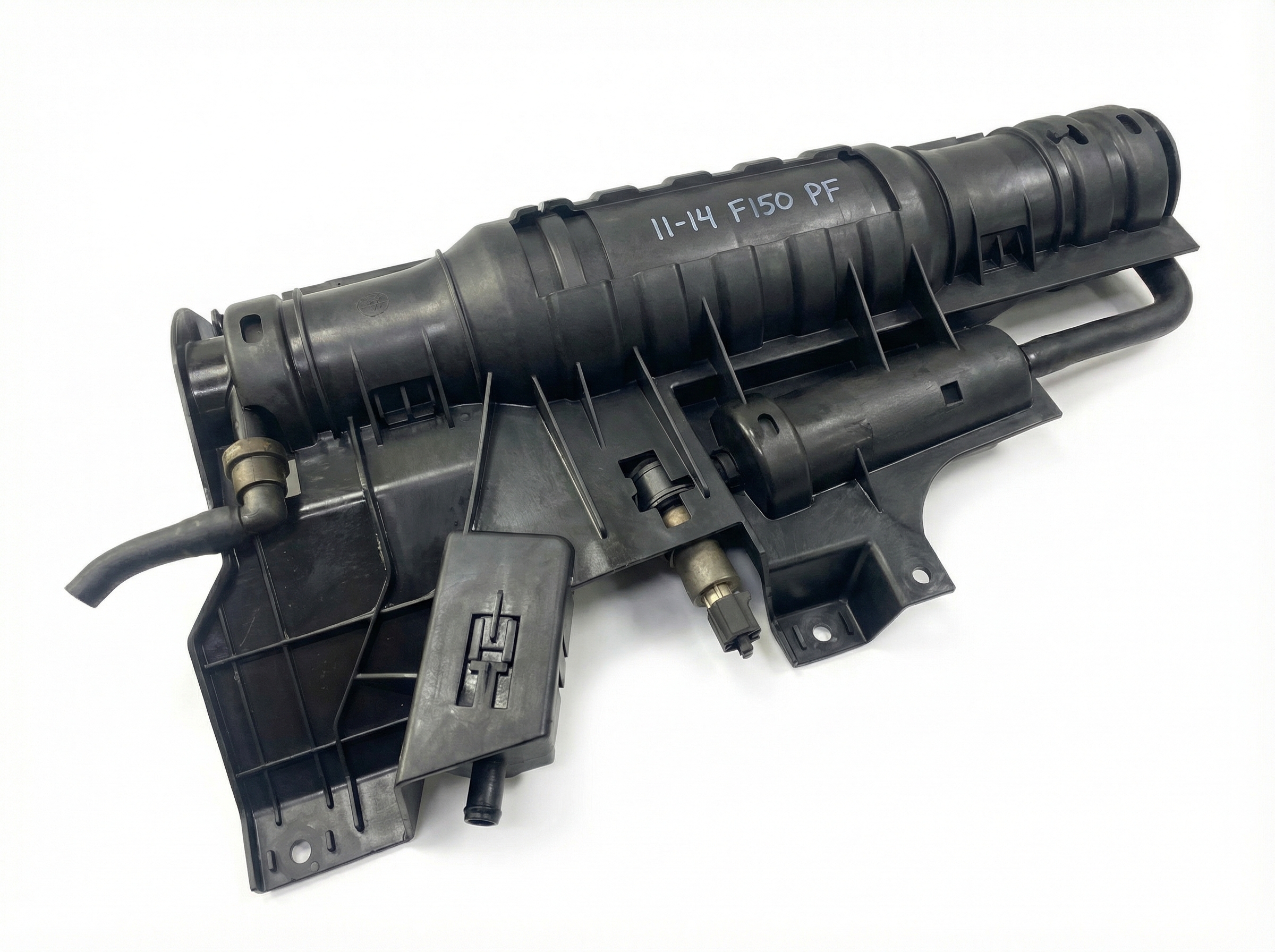
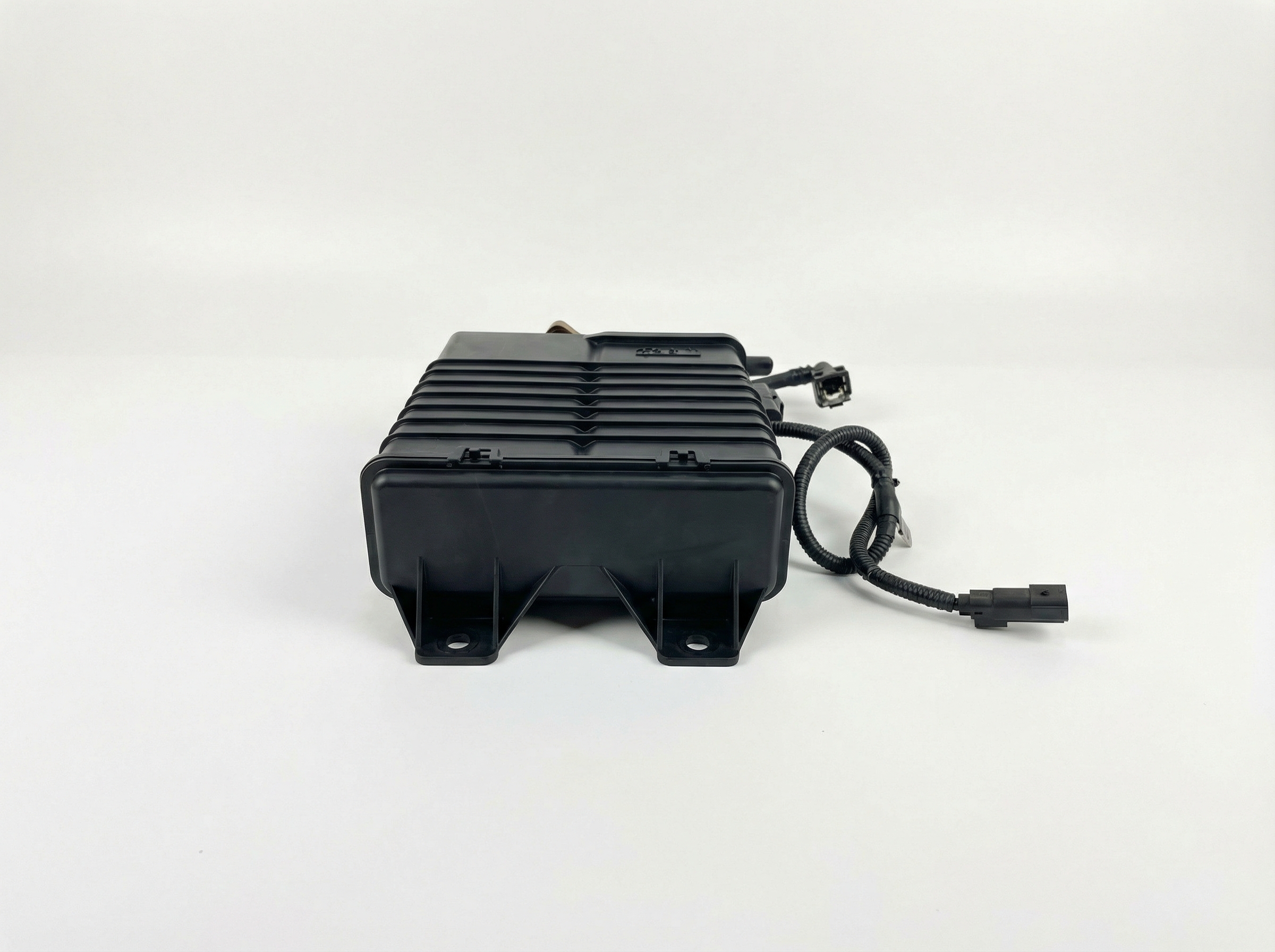
Est. part cost: $25-$75 - Stuck-Closed or Blocked Canister Vent Solenoid 🟡 Medium Probability → Shop Vapor Canister The vent solenoid, located near the EVAP canister under the vehicle by the spare tire, can get stuck closed or its filter/vent tube can become clogged with dirt, debris, or even spider webs, preventing the system from venting fresh air in to relieve vacuum.
How to confirm: Use a scan tool to command the vent solenoid to open and close; you should hear a clicking sound. If it doesn't operate, check for power and ground at the connector. If power is present, the solenoid has likely failed. Also, inspect the vent tube for blockages.
Typical fix: Replace the canister vent solenoid and ensure the vent tube is clear.
Est. part cost: $35-$100 - Blocked EVAP Canister or Vent Hoses ⚪ Low Probability → Shop Vapor Canister Hoses can become kinked or blocked by debris. The charcoal canister itself can become saturated with fuel (often from over-filling the gas tank) or clogged with dust, restricting airflow.
How to confirm: Visually inspect all EVAP hoses for kinks, pinches, or damage. A smoke test is the most effective way to find blockages or restrictions in the canister or lines.
Typical fix: Replace the blocked hose or the entire charcoal canister if it is saturated or internally blocked.
Est. part cost: $10-$30 for hoses, $100-$200 for a canister
Rare But Worth Checking
- Faulty Fuel Tank Pressure (FTP) Sensor: → Shop Fuel Tank The FTP sensor reports the pressure or vacuum level to the PCM. If it provides an inaccurate reading, the computer may set a P1450 code even if the valves and hoses are functioning correctly. This is much less common than a valve failure but is a possibility if all other components check out.
Diagnosis Steps
- Read the code with an OBD-II scanner and confirm P1450 is present. Note any other codes like P0456.
- Confirm symptoms. Ask if the car is hard to start or stalls only after filling the fuel tank. If yes, the canister purge valve is the prime suspect.
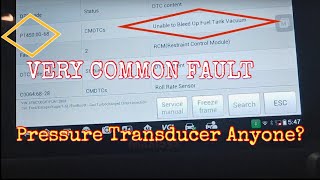
- Test the canister purge valve. Locate it on the front of the engine. With the engine off, disconnect the electrical plug and the vapor hose. Try to blow through the port where the hose was connected. 🎬 See this simple test to confirm a failed purge valve. If air passes through, it has failed and needs replacement.
- If the purge valve test is inconclusive or passes, proceed to the vent solenoid. Locate the EVAP canister and vent solenoid under the rear of the vehicle. Inspect its vent tube for blockages (dirt, spider webs).
- Use a capable scan tool to command the vent solenoid to open and close. Listen for a click. If it doesn't operate, test for 12V power and ground at its electrical connector with the key on. If power and ground are good but it doesn't click, the solenoid is faulty.
- If both valves seem to be working, perform a visual inspection of all EVAP hoses between the engine, canister, and fuel tank for any obvious kinks, collapses, or damage.
- If no issues are found, the final steps are to test the Fuel Tank Pressure (FTP) sensor's accuracy with a vacuum gauge or perform a smoke test on the EVAP system to find an internal restriction in the canister or lines.
Parts You'll Likely Need
- Canister Purge Valve / Solenoid
(OEM #AU5Z-9C915-E (supersedes AU5Z-9C915-D, AU5Z-9C915-C, AU5Z-9C915-B, and 9U5Z-9C915-H))— This is the most frequent cause of P1450 on this and similar Ford models. It gets stuck open, causing constant engine vacuum to be applied to the fuel tank.
Trusted brands: Motorcraft (OEM), Dorman (911-222), Standard Motor Products
OEM price range: $40-$70
Aftermarket price range: $25-$50 - Canister Vent Solenoid
(OEM #9U5Z-9F945-A)— This is the second most common cause. It gets stuck closed or its vent becomes clogged, trapping vacuum in the system.
Trusted brands: Motorcraft, Dorman
OEM price range: $50-$90
Aftermarket price range: $35-$60
Related Codes That Often Appear With This One
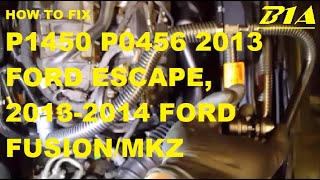
- P0456 — A small EVAP leak code that can sometimes accompany P1450. A sticking purge valve can cause both conditions, and some TSBs address these codes together. 🎬 Watch: Diagnosing hard start issues and related EVAP codes.
- P0446 — This code points specifically to a fault in the vent control circuit, which can be the root cause of the P1450 if the vent solenoid is stuck closed or its circuit fails.
Technical Service Bulletins (TSBs) & Recalls
- TSB 19-2323 / 16-0075: Addresses hard start/stall after refueling with DTC P1450 and/or P0456, fixed by replacing the canister purge valve. Applies to multiple Ford vehicles including Escape and Fusion.
Platform-Specific Known Issues
- A Technical Service Bulletin (TSB 19-2323, which supersedes 16-0075) was issued for some Ford models for P1450 with hard start/stall after refueling, pointing to a faulty canister purge valve. While the TSB explicitly covers the 2013+ Escape, the problem, symptom, and faulty part are identical for the 2009-2012 generation.
Mechanic-Grade Diagnostic Values
- Canister Purge Valve Solenoid Resistance — expected: 30 - 38 Ohms. Failure: An open circuit (infinite resistance) or a short (near-zero resistance) indicates a failed coil.
- Canister Vent Solenoid Resistance — expected: 48 - 65 Ohms. Failure: A reading outside this range indicates a faulty solenoid coil.
- Fuel Tank Pressure (FTP) Sensor Voltage (KOEO) — expected: 2.40V - 2.80V (Key On, Engine Off). Failure: A voltage outside this range at KOEO can indicate a biased sensor or a wiring issue. If voltage drops significantly below 2.4V immediately at engine start with the purge valve commanded closed, it points to a leaking purge valve.
Hidden / Shadow Codes Worth Checking
- P1450-00: This is a sub-type code confirming the 'Unable to Bleed Up Fuel Tank Vacuum' condition. The '00' indicates no specific sub-fault is identified, but its presence on a professional scanner confirms the P1450 fault. (see via Ford IDS, FORScan, or other professional-level scan tools.)
Scan Tool Commands That Help
- FORScan / Ford IDS: EVAP Purge Valve (VMV) Bidirectional Control — This is the definitive test for a stuck-open purge valve. With the engine running at idle, command the valve to 0% duty cycle (closed). While monitoring the FTP sensor PID, if vacuum continues to build (pressure voltage drops), the valve is mechanically leaking and must be replaced.
- FORScan / Ford IDS: EVAP Vent Valve Bidirectional Control — Use this to test for a stuck-closed vent valve. The vent valve is normally open. Commanding it closed should seal the system. If the system holds vacuum when commanded closed but throws P1450 during normal operation, it suggests the valve is failing to open to relieve vacuum.
- Ford IDS: VBV Check (Toolbox > Powertrain > Fuel > EVAP) — This is a specific, automated test routine found in newer versions of the Ford diagnostic software to check the vapor blocking valve system, which is related to the purge valve function.
Wiring & Ground Locations
- G101 / G104 — G101 is located at the rear of the engine on the 2.5L. G104 is on the left front of the engine compartment. Both serve as major grounds for the powertrain.. A poor ground connection at these points can cause erratic behavior or failure of PCM-controlled components, including the EVAP solenoids.
- Canister Purge Valve Connector — On the purge valve itself, located at the rear of the engine compartment.. This is where voltage and ground signals are supplied to the valve. For a 2011 Escape, the power wire is often Gray/Red and the ground control wire from the PCM is Gray/Blue.
- Canister Vent Solenoid Connector — Under the vehicle near the rear axle, connected to the EVAP canister.. This connector provides power and ground to the vent solenoid. A common failure point is an open circuit in the power wire (Gray/Red) that runs under the carpet inside the vehicle, which will prevent the solenoid from operating even if the part is new.
- PCM Connector C175B — At the Powertrain Control Module (PCM), located at the rear center of the firewall.. This is the source of the control signals. For a 2011 Escape, the power for the EVAP solenoids can be traced to Pin 62, and the ground control for the vent solenoid is on Pin 13.
Real Owner Repair Stories
- YouTube - "2011 Ford Escape Subscriber Vehicle - Evap Codes Won't Clear" (2011 Ford Escape) — Persistent EVAP codes after replacing both the purge valve and the vent solenoid.
❌ Tried (didn't work) Replacing the canister purge valve, Replacing the canister vent solenoid
✅ What actually fixed it The power wire (Gray/Red) to the canister vent solenoid was broken somewhere in the harness under the driver's seat/carpet. The mechanic confirmed no power was reaching the vent solenoid connector. The final fix was to bypass the break by running a new power wire from a known-good splice point (PCM connector C175B, Pin 62) directly to the vent solenoid connector. - Ford F150 Forum user 'ahlbe1cl' (2008 Ford F-150 5.4L (similar EVAP logic)) — P1450 code, hard to start after filling the tank.
❌ Tried (didn't work) Initial inspection of common parts.
✅ What actually fixed it The owner removed the entire EVAP canister assembly and discovered a 'pre-filter' box attached to it was completely impacted with dirt and debris. Cleaning out the filter box and blowing out the canister and lines with compressed air resolved the code without replacing any parts. - Fiesta ST Forum user 'Duece's' (Ford Fiesta ST (similar purge valve failure)) — P1450 and P219A codes, stuttering after fill-ups, smell of gasoline.
❌ Tried (didn't work) Attempting to replace only the purge valve sensor while reusing the old nylon lines.
✅ What actually fixed it Replacing the entire purge valve *and line assembly* as a single unit. The user noted that trying to remove the old nylon lines from the valve and install them on a new one was 'annoying/impossible' and recommended buying the complete assembly to save time and ensure a good seal.
"I Checked Everything" — The Actual Cause
- In a documented case on a 2011 Escape, after replacing both the purge and vent valves, the EVAP codes persisted. A smoke test would have shown no leaks, as the components were new and sealed. The actual cause was a broken power wire leading to the canister vent solenoid, located under the vehicle's carpet. The solenoid itself was good, but it was receiving no power to operate. This type of open-circuit electrical fault is invisible to a smoke test and required checking for voltage at the component's connector to diagnose.
When the Usual Fixes Don't Work
- While replacing the canister purge valve fixes P1450 in the vast majority of cases, it is not a guaranteed solution. In one documented repair on a 2011 Escape, the code returned even after replacing both the purge and vent valves. The ultimate cause was found to be a broken power wire in the harness leading to the vent solenoid. This highlights the importance of verifying power and ground at the component connectors if replacing the part doesn't solve the issue. In another case involving a similar Ford platform, the issue was not a failed part but a charcoal canister pre-filter that was completely clogged with dirt, preventing the system from venting.
Documented NHTSA Reports
- An owner reported in NHTSA ODI #10585836 that their vehicle displayed a "Check Engine" and "Fill Cap" light with codes P144A, P1450, and P2196; the dealer resolved the issue by replacing the purge valve (9U5Z-9C915-H).
- According to NHTSA ODI #10568554, a technician found a P1450 default code and discovered the canister was full of fuel, requiring the replacement of the evaporator canister, pipe, and valve.
- In NHTSA ODI #11269116, an owner described the check engine light illuminating with code P1450, indicating excessive vacuum in the fuel tank, which eventually led to the vehicle suddenly stalling.
- An owner report in NHTSA ODI #11268044 noted hesitation and stalling while idling along with a vibration from the fuel tank or fuel cap, which the dealer attributed to the evaporator purge valve.
- NHTSA ODI #11092727 describes a vehicle stuttering when at idle, usually after filling the tank, with code P1450 persisting even after the EVAP vent solenoid was addressed.
OEM Part Supersession History
9U5Z-9C915-H→AU5Z-9C915-B, then -C, then -D, and finally AU5Z-9C915-E— Ford has updated this high-failure part multiple times to improve reliability.
Heads up: All listed part numbers are physically and functionally interchangeable. The latest revision (AU5Z-9C915-E) is recommended for the most updated design. The Dorman 911-222 is a common aftermarket cross-reference for this entire family of parts.
Model Year Variations Within This Range
- 2008-2012: There are no significant design changes to the 2.5L EVAP system's core function or common failure points within this model year range. The primary variation is the series of part number supersessions for the canister purge valve as Ford released improved revisions over time. The diagnostic and repair procedure is identical across all years.
Diagnostic Flowchart
Other Known Issues on This Vehicle
Issues unrelated to this code that are worth knowing about as an owner of this generation:
- 6F35 Transmission Failure 🔴 High — Common, especially in 2009-2014 models. Can occur under 100,000 miles. Symptoms include harsh shifting, shuddering, slipping, and delayed engagement. (Ref: Multiple TSBs exist for shift quality issues, but no major recall for complete failure. A class-action lawsuit was filed regarding this transmission.)
- Electronic Throttle Body (ETB) Failure 🟠 Medium — A very common issue causing the vehicle to enter a 'limp home' mode with reduced power, often with a wrench light. (Ref: Ford issued Customer Satisfaction Program 13N03, extending the warranty on the ETB to 10 years or 150,000 miles.)
- Rear Shock Tower Rust 🔴 High — Extremely common in regions that use road salt. The passenger side rear shock tower rusts through from the inside out, compromising structural integrity. (Ref: No recall, but aftermarket repair panels (like Dorman 924-358) are widely available due to the frequency of the problem.)
- Power Steering Failure 🔴 High — Common failure of the electric power steering (EPAS) system, resulting in a sudden loss of steering assist. (Ref: Recall 14S05 was issued to address issues with the torque sensor or the entire steering column module.)
Used vs. New Parts: Buying Guide for This Vehicle
When a used part is the smart pick: A used part is generally not recommended for the electronic solenoids (purge or vent) due to their high failure rate and unknown remaining lifespan. However, obtaining used structural parts like EVAP hoses or the plastic canister assembly from a junkyard can be a cost-effective choice, provided they are inspected for damage.
Donor-vehicle mileage cap: roughly under 75000 miles for the part to have meaningful remaining life.
What to inspect on the donor part:
- For hoses, check for any dry rot, cracking, or brittleness.
- For the charcoal canister, inspect for physical cracks or signs of being saturated with liquid fuel (which makes it unusable).
- For the capless fuel filler neck, ensure the internal flap moves freely and seals properly.
OEM-only on this vehicle (don't cheap out):
- No part is strictly OEM-only, but the canister purge valve is the most critical component. While aftermarket versions exist, some owners report shorter lifespans compared to the genuine Motorcraft part. For the highest probability of a long-term fix, OEM is strongly recommended for the purge valve.
Aftermarket brands forum-validated for this vehicle:
- Dorman (part 911-222 for the purge valve) is widely available and commonly used, though some reports mention longevity issues.
- Standard Motor Products (SMP) is generally considered a reputable aftermarket supplier for emission components.
Brands owners have reported issues with on this vehicle:
- Unbranded, 'white-box' parts from online marketplaces should be avoided, as their quality control and reliability are highly questionable and can lead to repeat failures.
Real Owner Stories
Aggregated from forums and TSBs cited above. Mileages and costs reflect what owners reported in those sources.
2008 Ford Escape
Symptoms: Reported P1450 and trouble starting the vehicle specifically after filling up the gas tank.
What fixed it: Replacement of the stuck-open purge valve solenoid.
Source hint: Reddit r/MechanicAdvice (2018-04-08)
2011 Ford Escape
Symptoms: Check engine light with code P1450.
What fixed it: Replaced the canister purge valve using an 8mm wrench; the repair took approximately 10 minutes.
Source hint: YouTube - "How to Change Ford Escape Purge Valve 2008-2012" by Fun Guy (2019-08-07)
2015 Ford Escape
Symptoms: Hard starting specifically after refueling; diagnosed with code P1450.
What fixed it: Replacing the canister purge valve.
Cost: $375-$375
Source hint: Reddit r/fordescape (2019-02-19)
Related OBD-II Codes
Frequently Asked Questions
Does TSB 19-2323 apply to my 2008-2012 Ford Escape?
Why does my Escape struggle to start only after I fill up the gas tank?
Is there a specific part number recommended for the purge valve on 2009-2012 models?
Can I test the purge valve myself before buying a new one?
Could a problem with the rear shock towers be related to my EVAP codes?
Is the Electronic Throttle Body (ETB) failure related to P1450?
Helpful Videos

Used OEM Parts in Stock
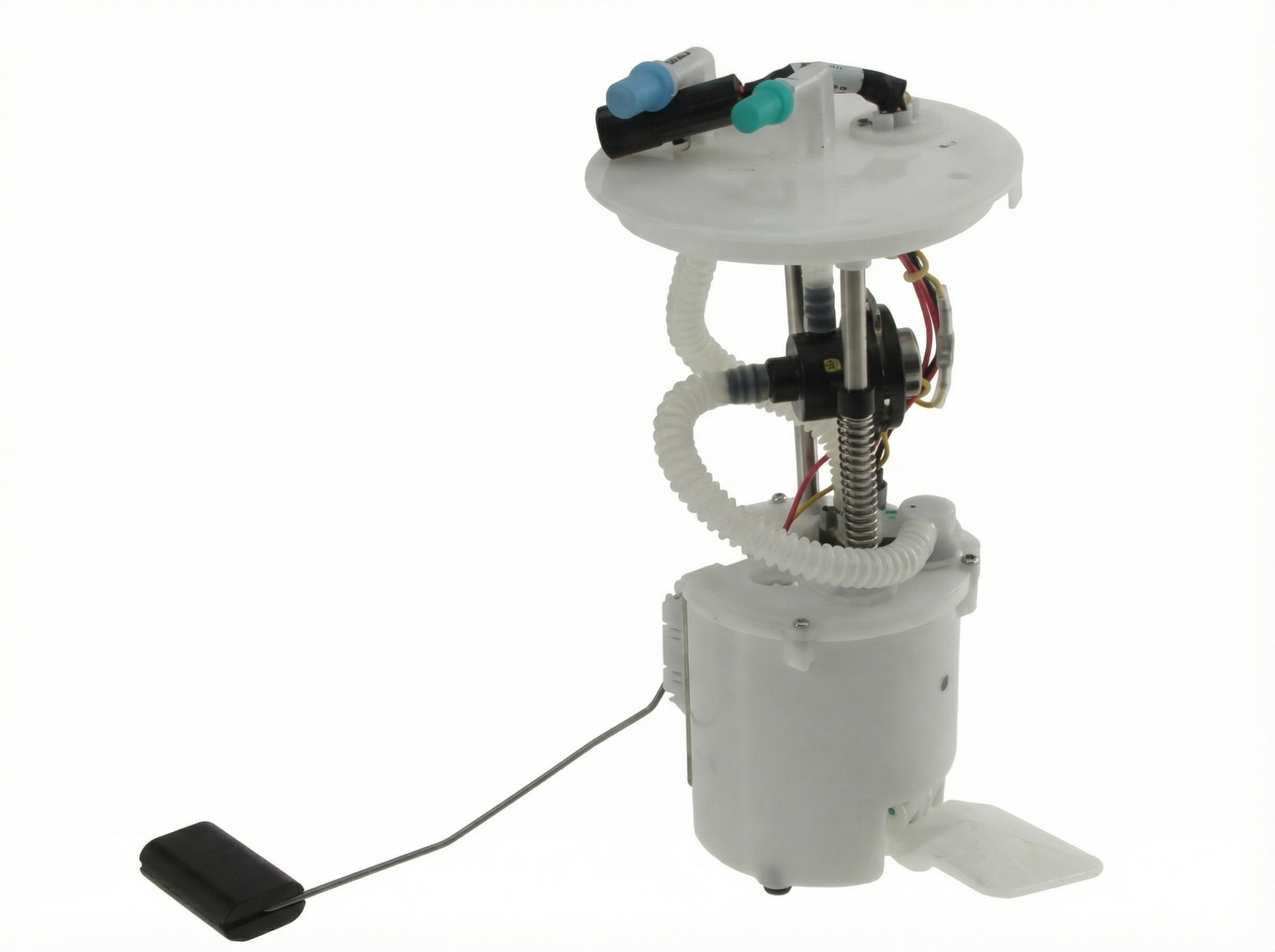
New Aftermarket Parts Available

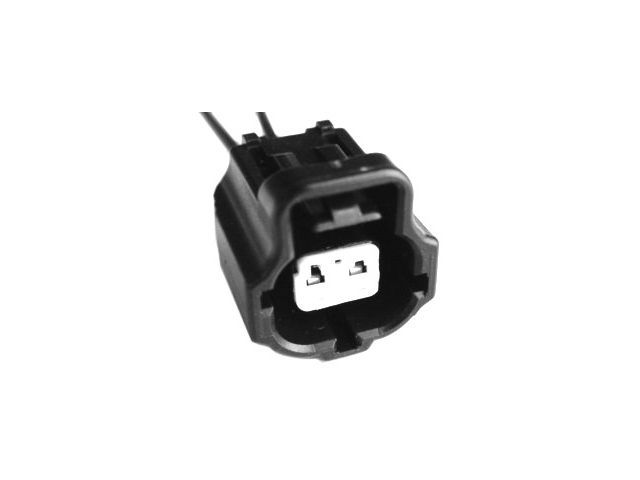
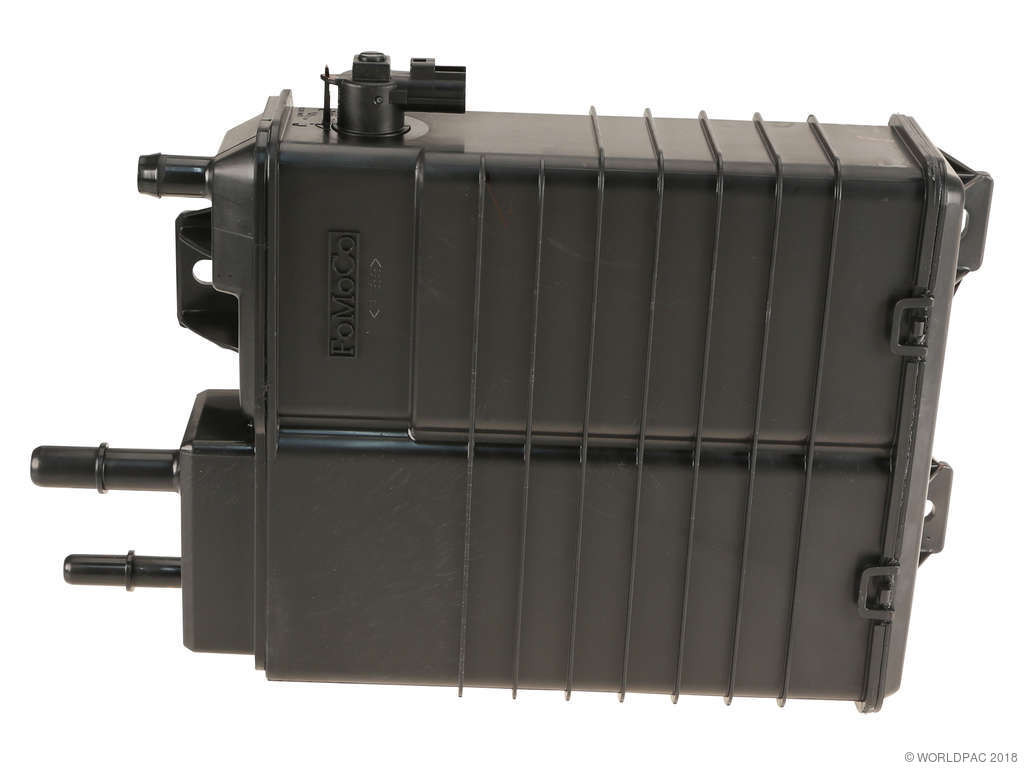
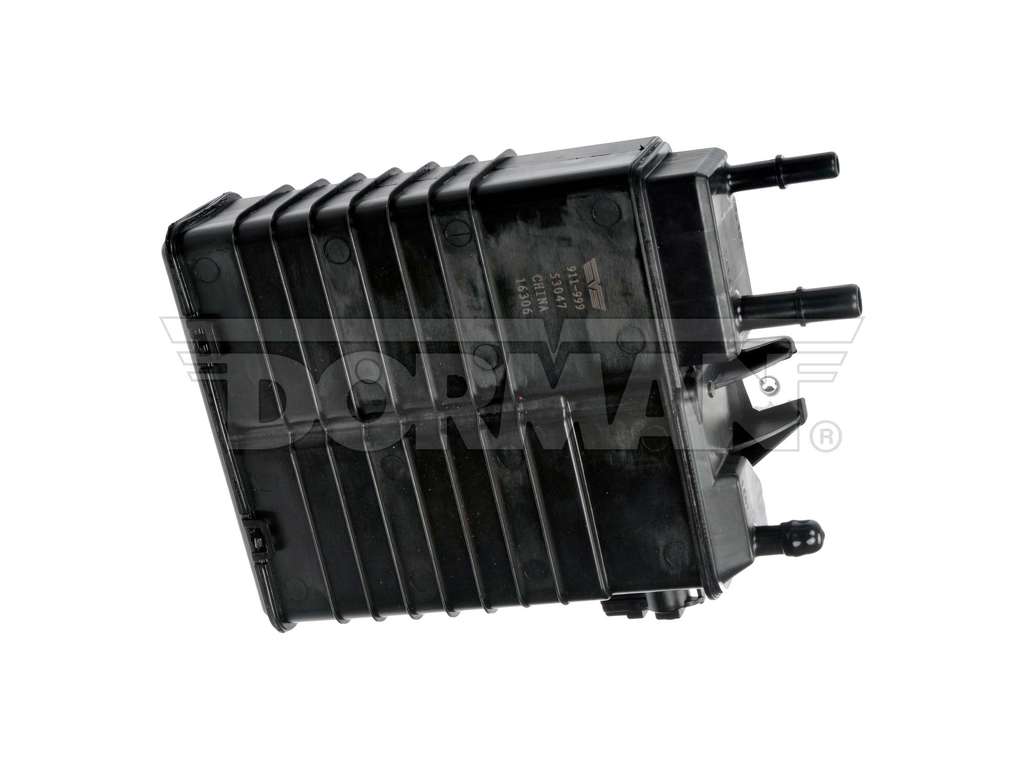

The information in this article is provided for general reference and educational purposes only. Vehicle specifications, procedures, and part compatibility can vary by production date, trim level, and region. Always consult your vehicle's factory service manual and verify part numbers before purchasing or performing repairs. Safety-critical components such as airbags, seat belts, and braking systems should be installed by a qualified professional.
- Ford Escape:
- 🧭 Diagnostic Flowchart
- 🎬 Helpful Videos
- 🛍️ Shop This Part
- What's Unique About the 2008-2012 Ford Escape
- Symptoms You May Notice
- Most Likely Causes
- Rare But Worth Checking
- Diagnosis Steps
- Parts You'll Likely Need
- Related Codes That Often Appear With This One
- Technical Service Bulletins (TSBs) & Recalls
- Platform-Specific Known Issues
- Mechanic-Grade Diagnostic Values
- Hidden / Shadow Codes Worth Checking
- Scan Tool Commands That Help
- Wiring & Ground Locations
- Real Owner Repair Stories
- "I Checked Everything" — The Actual Cause
- When the Usual Fixes Don't Work
- Documented NHTSA Reports
- OEM Part Supersession History
- Model Year Variations Within This Range
- Other Known Issues on This Vehicle
- Used vs. New Parts: Buying Guide for This Vehicle
- Real Owner Stories
- 2008 Ford Escape
- 2011 Ford Escape
- 2015 Ford Escape
- Related OBD-II Codes
- Frequently Asked Questions
- 🎟️ Get 5% Off