

P1450 on 2011-2014 Ford F-150 3.7L: 'Unable to Bleed Up' Causes and Fixes
On a 2011-2014 F-150 with the 3.7L engine, code P1450 is almost always caused by a faulty canister purge valve that is stuck open. The most common and telling symptom is difficulty starting the truck right after refueling. It's a simple, 15-minute DIY fix, with the OEM Motorcraft part typically costing between $30 and $60.
- P1450 on your F-150 means the fuel tank has excessive vacuum that it can't release.
- The most likely cause by far is a stuck-open canister purge valve, especially if you have trouble starting the truck right after getting gas.
- You can test the purge valve in minutes: if you feel suction from it at idle, it's bad.
- This is a very DIY-friendly repair; replacing the purge valve usually takes less than 30 minutes and costs under $80.
- Don't immediately replace the gas cap or charcoal canister; diagnose the purge valve and vent solenoid first.
What's Unique About the 2011-2014 Ford F-150
For the 12th generation F-150 (2009-2014), and specifically models with the 3.7L V6 (along with the 5.0L and 3.5L), the P1450 code is exceptionally common and is traced back to the canister purge valve in a vast majority of cases. The valve is conveniently located on the driver's side of the intake manifold, making it very easy to access and replace. A tell-tale symptom on this platform is a rough-running or difficult-to-start engine right after you fill up the gas tank, which points directly to the purge valve failing and allowing raw fuel vapors to flood the engine at the wrong time.
Symptoms You May Notice
- Check Engine Light illuminated
- Difficulty starting the engine, especially immediately after refueling (long crank time)
- Engine stalls after starting post-refuel
- Rough or unstable idle
- A 'whoosh' sound from the fuel filler neck when opening the cap (due to vacuum release)
- Difficulty filling the fuel tank (gas pump nozzle clicks off repeatedly).
- Reduced fuel economy
- Replacing the gas cap. A faulty gas cap typically causes a large leak code (like P0455 or P0457), not an excessive vacuum code like P1450.
- Performing a smoke test to find a leak. P1450 is a flow or blockage problem, not a leak. The system can be perfectly sealed and still trigger this code because a valve is stuck open or closed.
Most Likely Causes
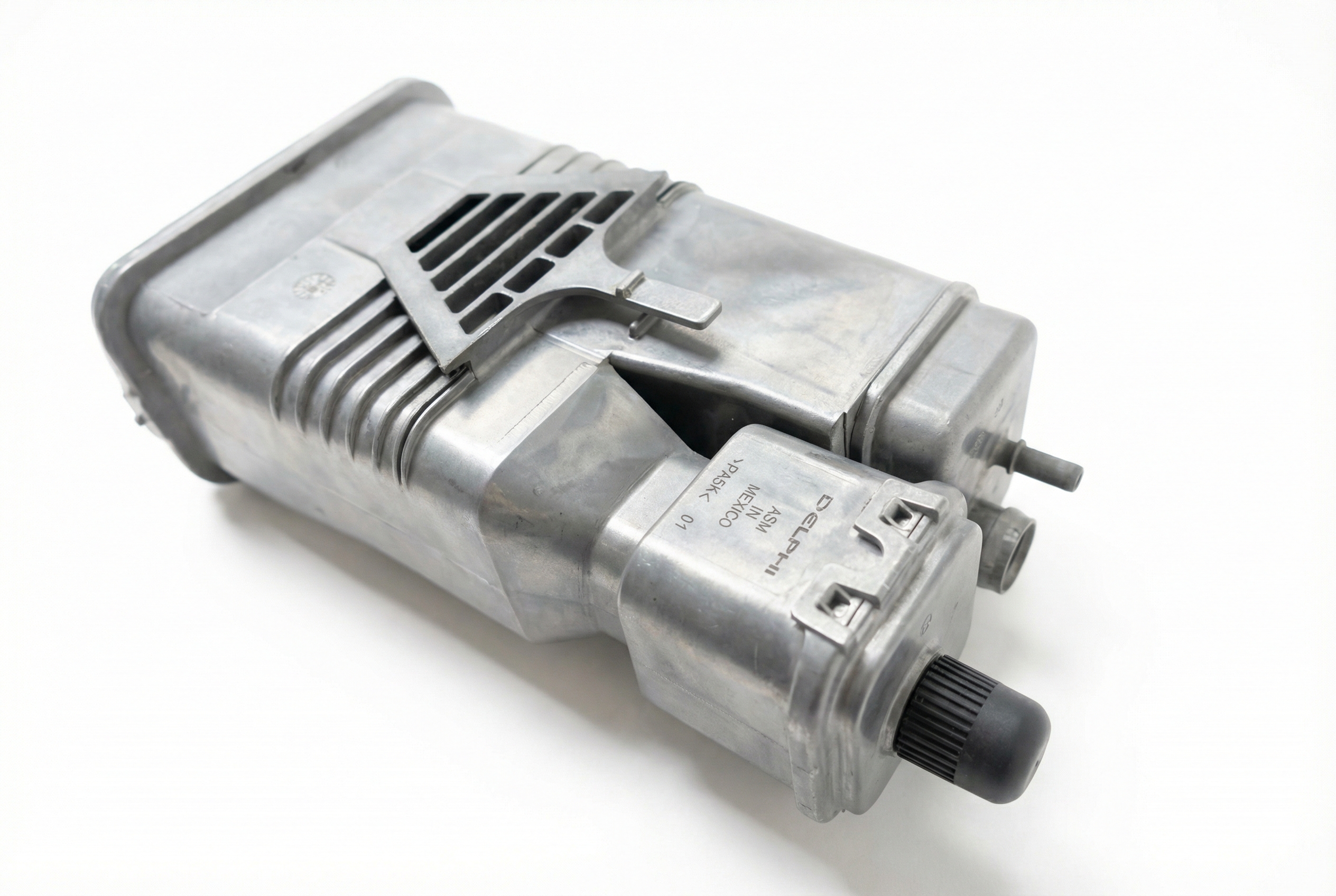
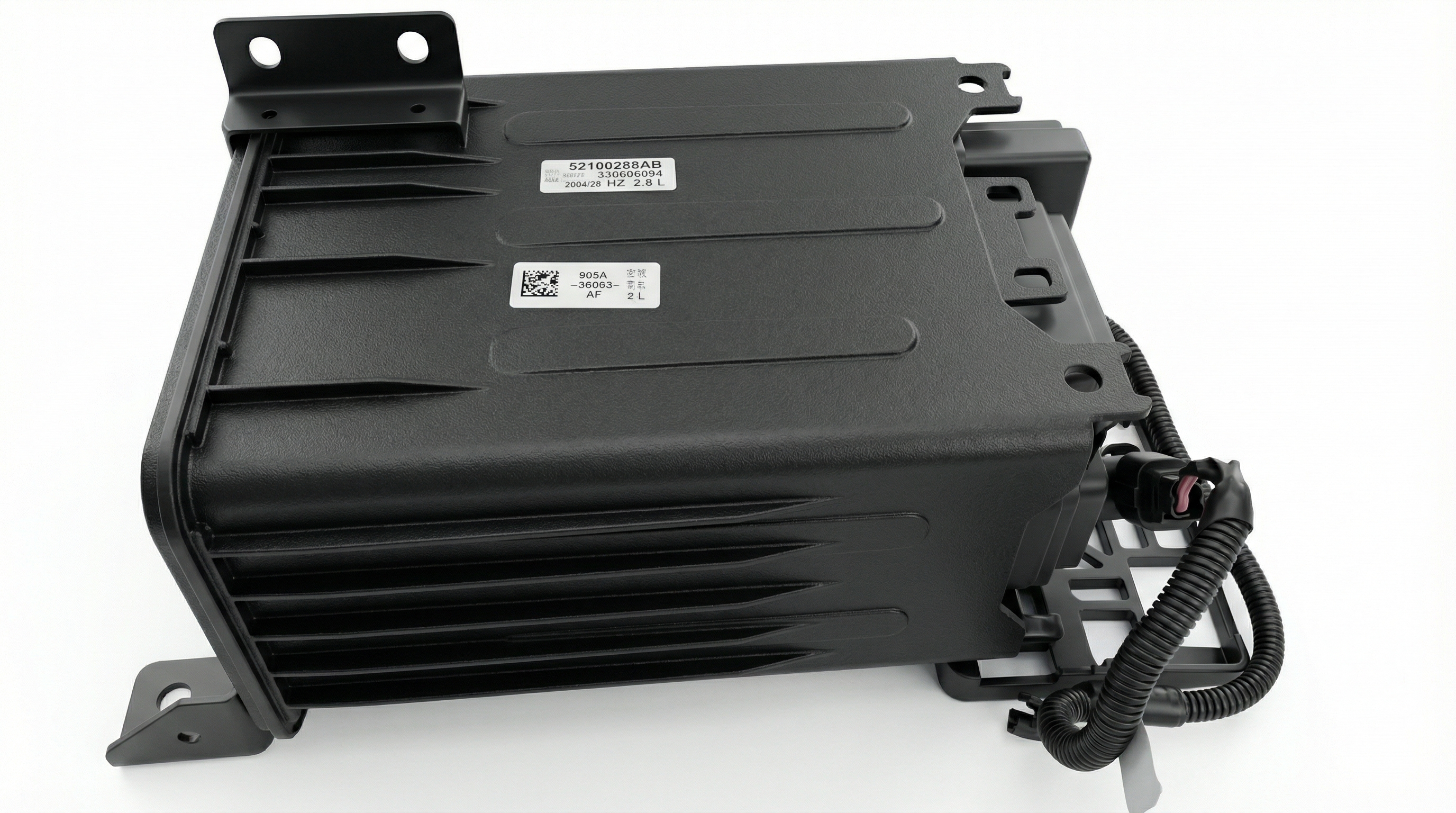
- Stuck-Open Canister Purge Valve 🔴 High Probability → Shop Vapor Canister This specific part (Motorcraft AU5Z-9C915-B / CX-2409) has a very high failure rate across many Ford models of this era, including the F-150, Mustang, and Edge. It fails by sticking open internally, allowing constant, un-commanded engine vacuum to be pulled on the fuel tank. NHTSA ODI #11467127 confirms this failure mode, noting a diagnosis where a sticking canister purge valve was pulling a constant vacuum.
How to confirm: With the engine running at idle, locate the purge valve on the driver's side of the intake manifold. Disconnect the electrical connector and the EVAP hose coming from the rear of the truck. Place your finger over the valve's port where the hose was connected. If you can feel any suction, the valve is stuck open and faulty. There should be zero vacuum flow when the valve is de-energized (unplugged).
Typical fix: Replace the canister purge valve assembly. It is held by two 8mm bolts and is easily accessible, making for a 10-15 minute repair.
Est. part cost: $30-$80 - Blocked Canister Vent Solenoid or Filter 🟡 Medium Probability → Shop Vapor Canister The vent solenoid and its filter are located near the charcoal canister by the spare tire, making them highly susceptible to clogging from road dirt, dust, and even spider webs, which prevents the tank from venting.
How to confirm: Visually inspect the vent solenoid and its associated hoses for dirt, debris, or blockages. A user on f150forum.com noted a small rectangle 'prefilter' box on the assembly was completely filled with dirt. Using a capable scan tool, command the vent solenoid to open and close to check for an audible click and proper function.
Typical fix: Clean or replace the canister vent solenoid and its filter. Sometimes the entire vent hose assembly needs to be cleared with compressed air or replaced.
Est. part cost: $40-$100 - Kinked or Collapsed EVAP Hose ⚪ Low Probability Hoses can become brittle over time or be improperly routed during other repairs, leading to a restriction that traps vacuum in the system. Manufacturer Bulletin #TSB 21-2106 notes that P1450 may be due to a kinked evaporator emissions fresh air vent line.
How to confirm: Visually inspect all accessible EVAP lines between the engine bay, the fuel tank, and the charcoal canister for any visible kinks, pinches, or damage. Pay close attention to the line running from the purge valve to the rear of the truck.
Typical fix: Repair or replace the damaged section of the hose. In some cases, as suggested in TSB 21-2106, using a zip tie to properly secure the line can correct the condition.
Est. part cost: $10-$50
Rare But Worth Checking
- Faulty Fuel Tank Pressure (FTP) Sensor: → Shop Fuel Tank This is worth checking if the purge and vent valves are confirmed to be working correctly. The sensor could be sending a false, stuck vacuum reading to the PCM. NHTSA ODI #11321251 describes a case where an owner replaced the fuel tank pressure solenoid but the P1450 code and stalling issues persisted, suggesting deeper diagnostic needs.
- Fuel-Saturated Charcoal Canister: → Shop Vapor Canister This typically only occurs from habitually overfilling ('topping off') the fuel tank. The canister becomes waterlogged with liquid fuel, which restricts airflow and can ruin the canister. A sign of this is a canister that feels significantly heavier than its replacement.
Diagnosis Steps
- Verify the Check Engine Light is on and code P1450 is present using an OBD-II scanner.
- Note any other codes present, as they can help pinpoint the issue (e.g., P2196/P2198 for a rich condition). NHTSA ODI #11580810 notes that P1450 often appears alongside P2196, defined as an O2 sensor stuck rich.
- Confirm the primary symptom: Does the truck have a long crank or stall immediately after refueling? If yes, the purge valve is the prime suspect.
- Start the engine and let it idle. Locate the canister purge valve on the driver's side of the intake manifold.
- Disconnect the electrical connector from the purge valve. Then, disconnect the vapor line coming from the rear of the truck (it may have a green or white clip).
- Place your finger over the port on the valve itself. If you feel any suction, the valve is stuck open and must be replaced. This is the most common failure and fix.
- If no suction is present, the purge valve is likely good. The next step is to inspect the vent path.
- Locate the EVAP canister and vent solenoid, usually near the spare tire.
- Inspect the vent solenoid, its filter box, and all attached hoses for any signs of blockage from dirt, mud, or debris.
- If a scan tool is available, command the vent solenoid to open and listen for a click. Test to see if air can pass through when commanded open.
- If both valves appear to be working, trace the EVAP lines to check for any kinks or collapses.
- As a final check, monitor the Fuel Tank Pressure (FTP) sensor reading on a scan tool to ensure it is responding correctly and not stuck on a single reading.
Parts You'll Likely Need
- Vapor Canister Purge Valve / Solenoid
(OEM #AU5Z-9C915-B (Motorcraft CX-2409))— This is the most common failure point for code P1450 on this vehicle, failing in a 'stuck open' position. The part number AU5Z-9C915-B supersedes the older 9U5Z-9C915-H.
Trusted brands: Motorcraft, Bosch, Standard Motor Products
OEM price range: $40-$65
Aftermarket price range: $25-$50 - EVAP Vent Solenoid / Valve — This is the second most likely cause, failing in a 'stuck closed' position or becoming blocked by debris, preventing the fuel tank from venting.
Trusted brands: Motorcraft, Dorman
OEM price range: $60-$100
Aftermarket price range: $40-$70
Related Codes That Often Appear With This One
- P0496 — This is a GM-specific code, but it describes 'EVAP Flow During a Non-Purge Condition,' which is the exact same mechanical failure as a stuck-open purge valve that causes P1450 on a Ford.
- P0452 — This code indicates the Fuel Tank Pressure (FTP) sensor is reading a constant low pressure (vacuum). It can be triggered alongside P1450 if the root cause is a truly stuck valve, or it could point to the FTP sensor itself being the problem.
- P2196 / P2198 — O2 Sensor Signal Biased/Stuck Rich. If the purge valve is stuck open, it can feed excessive fuel vapors into the intake, causing a rich running condition that these O2 sensor codes will detect. A user on Reddit with a 3.7L Mustang experienced these codes alongside P1450. NHTSA ODI #11580810 also documents P2196 appearing as a secondary code to P1450.
- P0300 / P0316 — Random misfires or misfires on startup. NHTSA ODI #11467127 reports these codes appearing in conjunction with P1450 when a sticking purge valve causes fueling issues.
Platform-Specific Known Issues
- The canister purge valve on the 3.7L V6 is located in a very accessible position on the driver's side of the intake manifold, held on by two 8mm bolts, making replacement extremely straightforward.
Mechanic-Grade Diagnostic Values
- Fuel Tank Pressure (FTP) Sensor Voltage (Key On, Engine Off) — expected: 2.4V - 2.6V (at atmospheric pressure, gas cap off). Failure: A reading significantly outside this range with the system at rest suggests a faulty sensor or wiring issue.
- Fuel Tank Pressure (FTP) Sensor Voltage (Engine Running) — expected: Voltage should drop below 2.4V as vacuum builds.. Failure: If voltage is low (<2.4V) when the purge valve is commanded closed (0% duty cycle), it indicates an un-commanded vacuum source, likely a stuck-open purge valve.
- Canister Purge Valve Solenoid Resistance — expected: 15 to 30 Ohms. Failure: A reading near 0 Ohms (short circuit) or infinite/OL (open circuit) indicates a failed solenoid coil.
Scan Tool Commands That Help
- FORScan / Ford IDS: EVAP System Test — This is a comprehensive, automated test that cycles the purge and vent solenoids to verify the entire system's integrity after a repair or for complex diagnosis where the fault is not obvious.
- FORScan / Ford IDS: Output State Control (OSC) for Purge (EVAPP) and Vent (EVAPCV) Solenoids — Allows a technician to manually command the purge and vent solenoids on and off to isolate a specific component. For P1450, you can command the purge valve to 0% (closed) at idle; if the FTP sensor still shows vacuum building, the valve is mechanically stuck open.
- FORScan: Monitor FTP PID (Fuel Tank Pressure) — When the engine is off, open the fuel filler neck with the white funnel. The FTP reading should be 0.0 kPa. If it shows a vacuum or pressure, the FTP sensor may be faulty or biased.
Wiring & Ground Locations
- G401 — Above the rear axle on the left frame rail.. This is a primary frame ground point for rear-mounted components. Poor grounding here could affect the operation of the nearby Canister Vent Solenoid, which is critical for bleeding off tank vacuum.
- VREF Circuit — In the wiring harness near the Fuel Tank Pressure (FTP) sensor, on or near the fuel tank.. A rare but possible cause is an open in the 5-volt reference (VREF) circuit that the PCM supplies to the FTP sensor. If this circuit is damaged, the sensor will send incorrect data, potentially causing a P1450 code even if all mechanical parts are good.
Real Owner Repair Stories
- NHTSA ODI #11343783 — An owner reported a stuck canister purge valve that triggered the P1450 "unable to bleed up fuel tank vacuum" code specifically after filling up at a gas station, which also caused the vehicle to stall.
- f150forum.com user 'ahlbe1cl' (2008 F-150 5.4L (pre-generation but analogous EVAP components and issue)) — P1450 code, hard to start after filling the fuel tank.
❌ Tried (didn't work) Initial visual inspection
✅ What actually fixed it The user removed the EVAP canister assembly near the spare tire and found a small 'prefilter' box attached to it was completely filled with dirt. After cleaning the prefilter with compressed air, the hard-start symptom and code were resolved. - Reddit user on r/MechanicAdvice (Unknown Ford with P1450) — P1450 code returned one month after replacing the purge valve.
❌ Tried (didn't work) Replaced canister purge valve (worked temporarily).
✅ What actually fixed it The replacement purge valve had failed electrically despite being mechanically sound (it held vacuum). It tested at a low 10.5 ohms, outside the typical 15-30 ohm spec, indicating an internal short. This highlights that even new parts can fail and require electrical testing to confirm.
"I Checked Everything" — The Actual Cause
- P1450 is a code for a flow/blockage issue ('Unable to Bleed Up Vacuum'), not a leak code like P0455. The system can be perfectly sealed and pass a smoke test but still trigger P1450. This happens if the canister purge valve is mechanically stuck open (constantly applying vacuum) or the canister vent solenoid is stuck closed (preventing vacuum release). A smoke test will not identify these failure modes and is often an incorrect diagnostic step for this specific code.
OEM Part Supersession History
9U5Z-9C915-H→AU5Z-9C915-B— Part revision and improvement by the manufacturer.
Heads up: The newer part AU5Z-9C915-B is a direct replacement for the older 9U5Z-9C915-H.
Diagnostic Flowchart
Other Known Issues on This Vehicle
Issues unrelated to this code that are worth knowing about as an owner of this generation:
- Internal Water Pump Failure (Transverse Applications) 🔴 High — This is a major design flaw primarily affecting the transverse (FWD/AWD) mounted 3.7L/3.5L engines (e.g., Edge, Flex, Explorer, Taurus), not the RWD F-150. Failure often occurs between 80k-150k miles and leaks coolant directly into the engine oil, leading to catastrophic engine failure.
- Electronic Throttle Body Failure 🟠 Medium — Common across many 2011-2016 Ford models with 3.7L/5.0L engines. Can occur at any mileage, causing the vehicle to suddenly enter 'limp mode' with a wrench light on the dash and codes like P2111 or P2112. (Ref: Customer Satisfaction Program 16B23 for some models.)
- Transmission Molded Lead Frame Failure 🔴 High — Affects 2011-2013 F-150s with the 6R80 transmission. A faulty output speed sensor on the internal lead frame can cause a sudden, unexpected downshift to 1st gear, potentially locking the rear wheels. (Ref: Safety Recall 19S07; Customer Satisfaction Program 19N01 (Extended warranty to 10 years/150k miles).)
Used vs. New Parts: Buying Guide for This Vehicle
When a used part is the smart pick: For this repair, using used parts is generally not recommended. The primary failure part, the canister purge valve, is an inexpensive, high-failure-rate electronic component. The cost savings of a used part are minimal and not worth the risk of premature failure. Hoses and the charcoal canister could be sourced used, but only from a low-mileage, non-corroded donor vehicle.
Donor-vehicle mileage cap: roughly under 50000 miles for the part to have meaningful remaining life.
What to inspect on the donor part:
- For a canister/vent assembly, inspect for any signs of dirt, mud, or insect nests in the vent ports.
- Ensure all plastic hose connectors and clips are intact and not brittle.
- Check the donor vehicle's location; parts from dry, salt-free climates are preferable.
OEM-only on this vehicle (don't cheap out):
- Canister Purge Valve
Aftermarket brands forum-validated for this vehicle:
- Motorcraft (OEM)
- Bosch
- Standard Motor Products (SMP)
Brands owners have reported issues with on this vehicle:
- While Dorman is a common aftermarket brand, for this specific high-failure-rate part, forums often recommend sticking with Motorcraft to avoid repeat failures, even though some Dorman parts may have design improvements.
Real Owner Stories
Aggregated from forums and TSBs cited above. Mileages and costs reflect what owners reported in those sources.
2014 Ford F-150 XLT 3.7L V6 — 211000 miles
Symptoms: The truck is throwing O2 sensor codes along with P1450. It stalls frequently when idling or slowing down for traffic, and after fueling up it takes forever to get back started.
What fixed it: Replacing the canister purge valve.
Source hint: owner_reports r/FordF150
2015+ Ford F-150 — ~100000 miles
Symptoms: Hard start after fueling; the owner noted that a simple 'blow through' test on the valve didn't always indicate the failure.
What fixed it: Replacing the purge valve.
Source hint: f150forum.com: Thread 'Hard start after fueling'
2011-2014 Ford F-150 — ~120000 miles
Symptoms: P1450 Error Code Excessive Fuel tank Vacuum and hard start issues.
What fixed it: Cleaning a small rectangle 'prefilter' box on the vent solenoid assembly that was completely filled with dirt.
Source hint: f150forum.com: Thread 'P1450 Error Code Excessive Fuel tank Vacuum'
2014 Ford Mustang 3.7L V6 — ~85000 miles
Symptoms: P1450 along with rich codes, gasoline smell, and rough idle.
What fixed it: Replacing the purge valve (Part AU5Z-9C915-B).
Source hint: Reddit r/Mustang: Thread 'P1450? Details in comments'
Related OBD-II Codes
Frequently Asked Questions
Where is the canister purge valve located on my 2011-2014 F-150 with the 3.7L V6?
Which specific replacement part should I buy for the purge valve on my 3.7L F-150?
Why does my truck struggle to start only after I fill up the gas tank?
I hear a 'whoosh' sound when I open my gas cap; is this related to P1450?
Is there a recall for the transmission issues on my 2011-2013 F-150?
Can a dirty filter cause the P1450 code on my Ford truck?
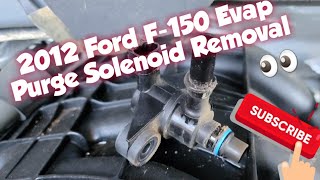
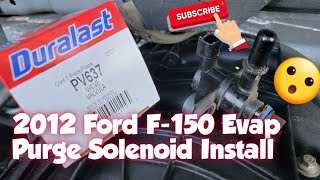
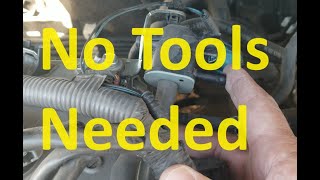
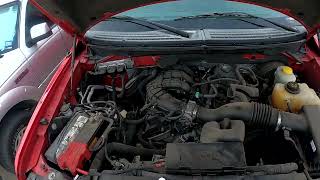
Helpful Videos
Used OEM Parts in Stock

New Aftermarket Parts Available


The information in this article is provided for general reference and educational purposes only. Vehicle specifications, procedures, and part compatibility can vary by production date, trim level, and region. Always consult your vehicle's factory service manual and verify part numbers before purchasing or performing repairs. Safety-critical components such as airbags, seat belts, and braking systems should be installed by a qualified professional.
- Ford F-150:
- 🧭 Diagnostic Flowchart
- 🎬 Helpful Videos
- 🛍️ Shop This Part
- What's Unique About the 2011-2014 Ford F-150
- Symptoms You May Notice
- Most Likely Causes
- Rare But Worth Checking
- Diagnosis Steps
- Parts You'll Likely Need
- Related Codes That Often Appear With This One
- Platform-Specific Known Issues
- Mechanic-Grade Diagnostic Values
- Scan Tool Commands That Help
- Wiring & Ground Locations
- Real Owner Repair Stories
- "I Checked Everything" — The Actual Cause
- OEM Part Supersession History
- Other Known Issues on This Vehicle
- Used vs. New Parts: Buying Guide for This Vehicle
- Real Owner Stories
- 2014 Ford F-150 XLT 3.7L V6 — 211000 miles
- 2015+ Ford F-150 — ~100000 miles
- 2011-2014 Ford F-150 — ~120000 miles
- 2014 Ford Mustang 3.7L V6 — ~85000 miles
- Related OBD-II Codes
- Frequently Asked Questions
- 🎟️ Get 5% Off