

P1450 on 2009-2019 Ford Flex: Causes and Fixes for 'Unable to Bleed Up Fuel Tank Vacuum'
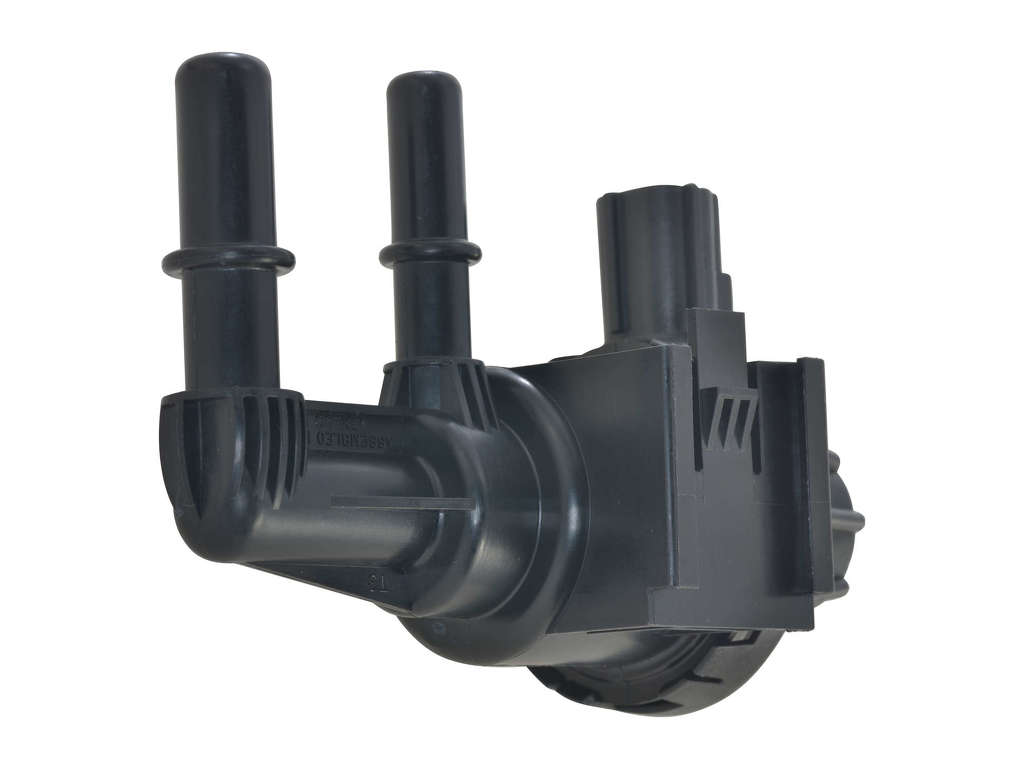
On a 2009-2019 Ford Flex, code P1450 is almost always caused by a faulty canister purge valve that is stuck open. A key symptom is difficulty starting or rough running right after refueling. Replacing the purge valve is a simple DIY fix, with the Motorcraft part (OEM part #9U5Z-9C915-H, which may be superseded by newer versions) costing around $30-$60.
- P1450 on a Ford Flex almost always points to a faulty canister purge valve.
- The most telling symptom is the engine running rough or stalling right after you put gas in the tank.
- The fix is typically inexpensive and easy, involving the replacement of the purge valve located on top of the engine.
- Use an OEM Motorcraft part for best results, as some aftermarket versions have poor reviews.
What's Unique About the 2009-2019 Ford Flex
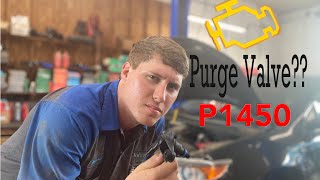
The Ford Flex, sharing its D4 platform and powertrain with vehicles like the Ford Explorer and Lincoln MKT, is highly susceptible to this code due to the common failure of its canister purge valve. While the code can have several causes, the purge valve failing in a stuck-open position is a well-documented and extremely common failure pattern on this platform. This often leads to a very specific and telling symptom: the engine stumbles, runs rough, or is hard to start immediately after filling the gas tank 🎬 Watch: How a faulty purge valve causes stalling after refueling, which strongly points to the purge valve as the culprit before any tools are even picked up.
Symptoms You May Notice
- Check Engine Light is on
- Difficulty starting the engine, sputtering, or stalling immediately after refueling
- Rough idle, especially after refueling
- A 'whoosh' sound of rushing air when opening the fuel filler door (less common)
- Slightly reduced fuel economy
- Engine may stall at stops or when accelerating from a stop shortly after refueling
- Replacing the fuel filler neck or capless fuel system components. While these can cause other EVAP codes (like for leaks, e.g., P0457), they are not the typical cause for a P1450 'unable to bleed vacuum' code.
- Performing a smoke test. A smoke test is used to find external leaks (vapor escaping the system). P1450 is an internal flow problem (vacuum being trapped in the system), so a smoke test will not identify a stuck-open purge valve, the most common cause.
Most Likely Causes
- Stuck-Open Canister Purge Valve 🔴 High Probability → Shop Vapor Canister The purge valve is a known common failure point on many Ford platforms from this era, including the Flex and its platform mates. It can get stuck open, allowing constant engine vacuum to be applied to the fuel tank, which the system cannot bleed off.
How to confirm: With the engine running, disconnect the EVAP hose on the tank side of the purge valve. If you can feel vacuum with your finger, the valve is stuck open and must be replaced. The valve should be normally closed with the engine on and no command from the PCM. This test takes less than five minutes. The valve is located on the engine, near the intake manifold.
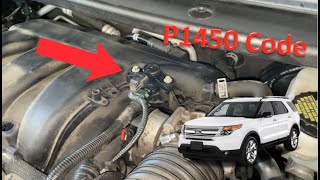
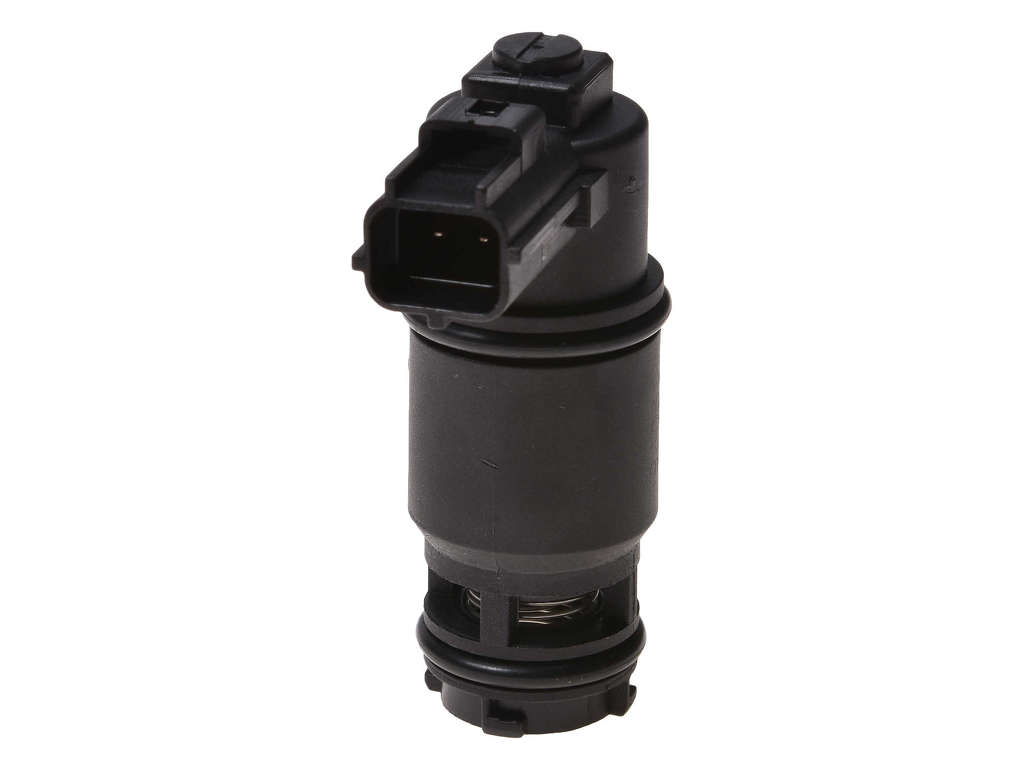
Typical fix: Replace the canister purge valve. It is located on top of the engine and is typically held in place by two 8mm bolts. 🎬 Watch: Step-by-step purge valve replacement on this Ford platform
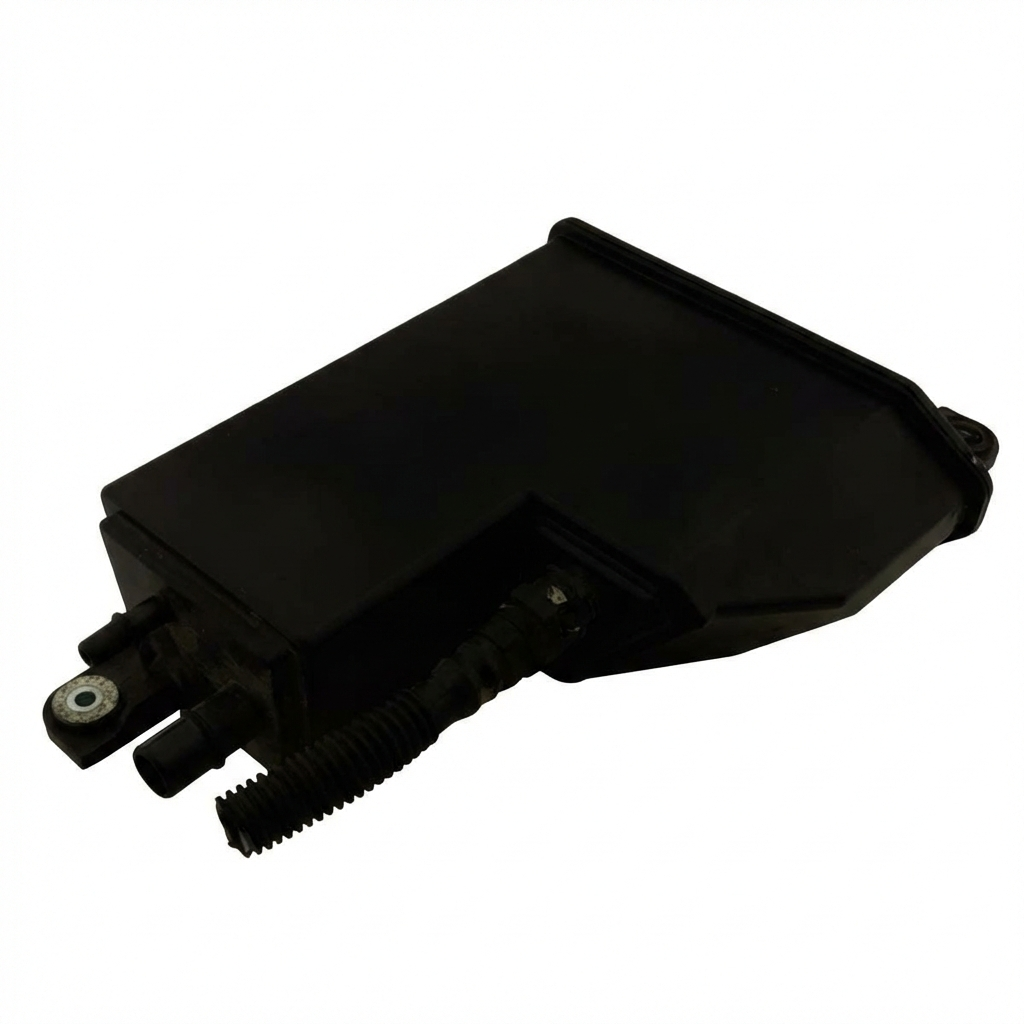
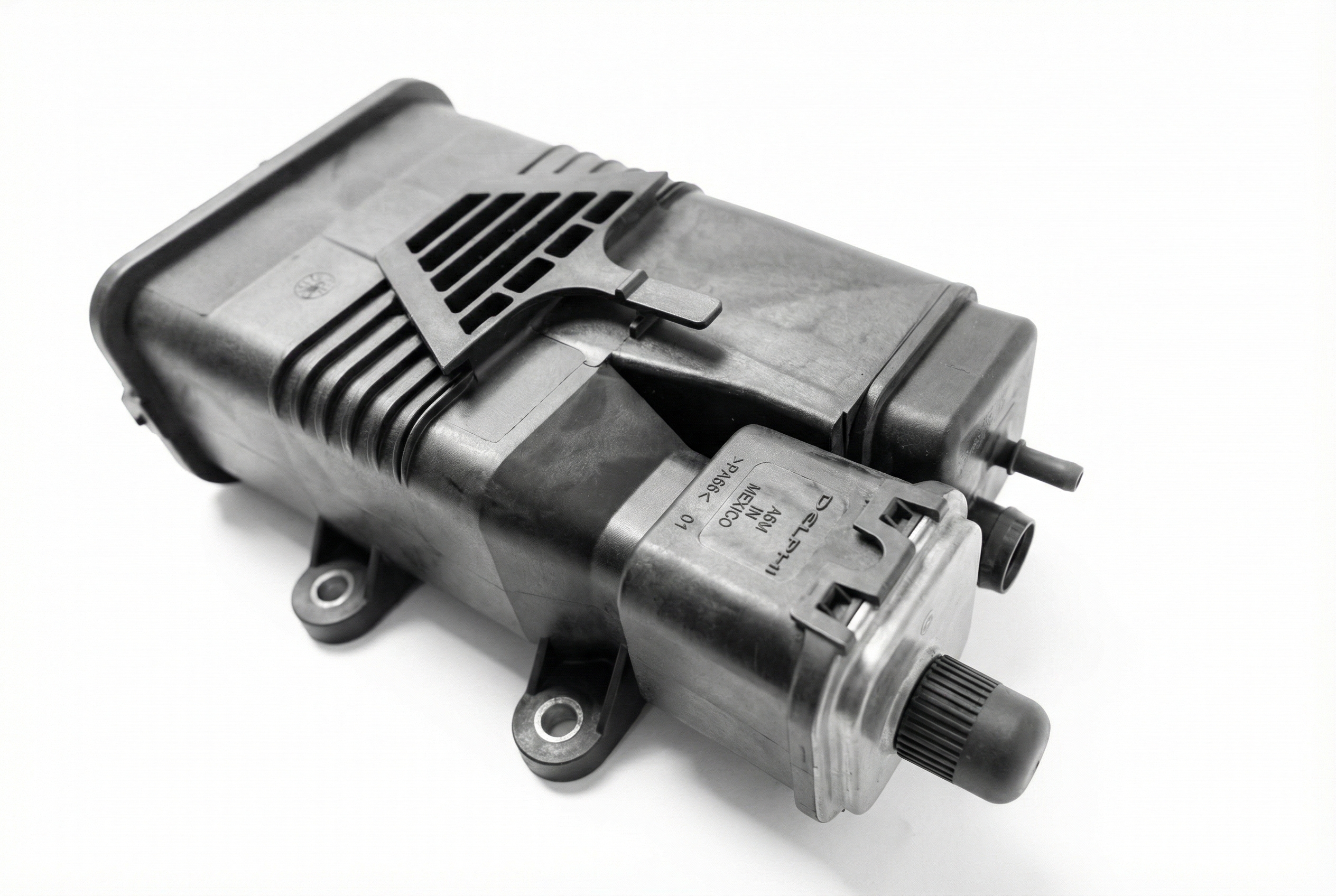
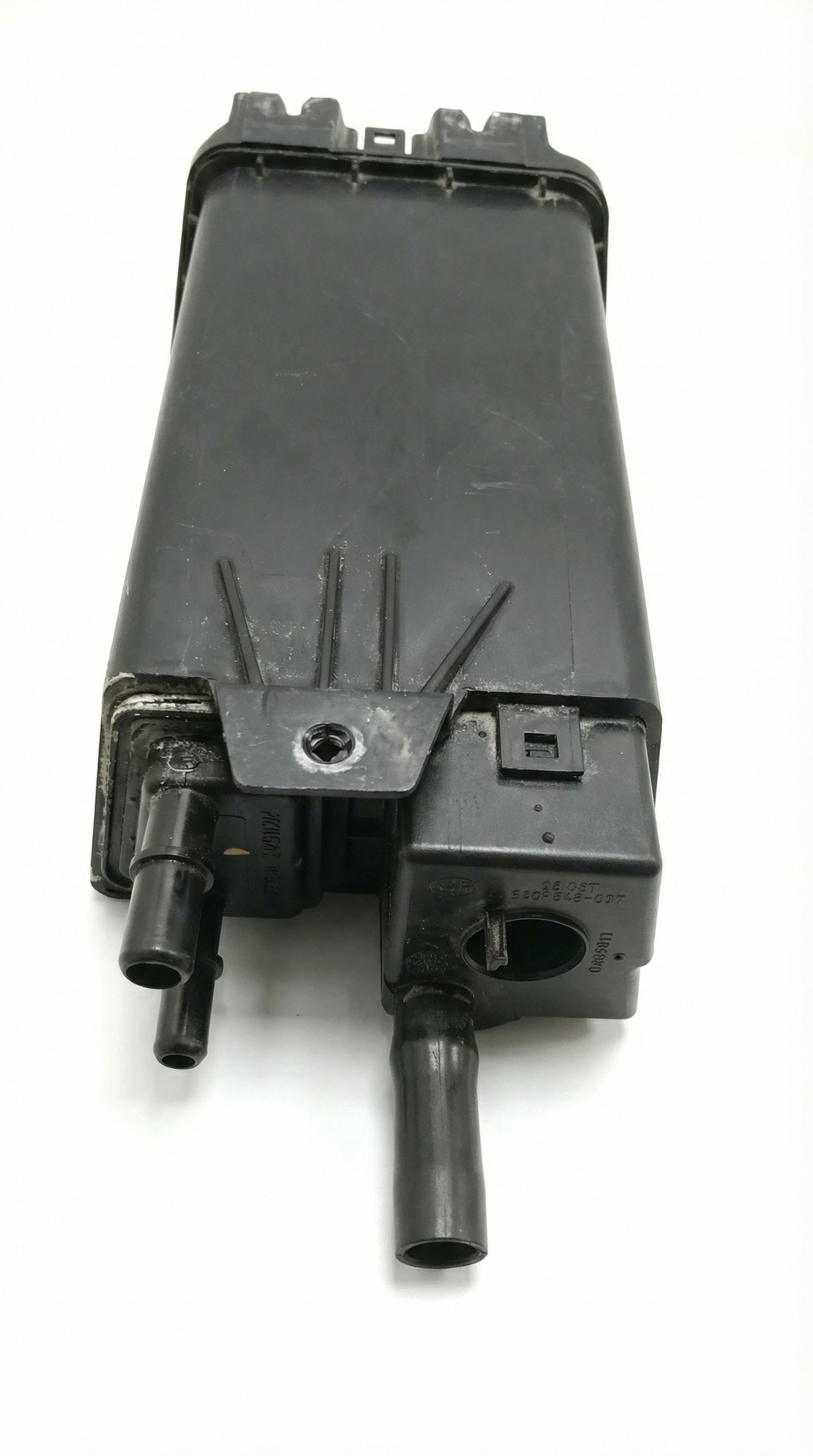
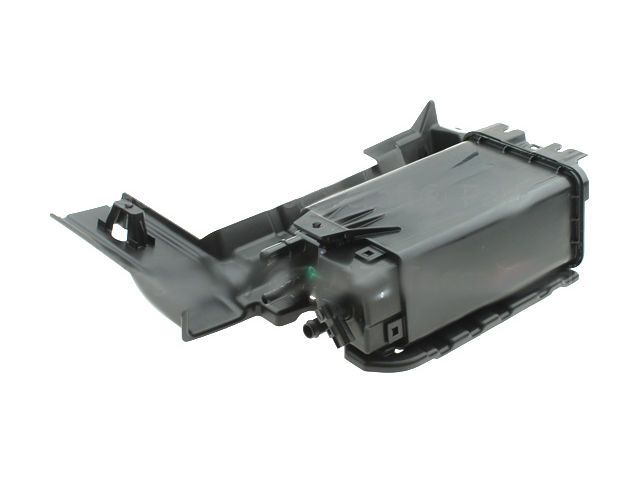
Est. part cost: $30-$60 - Blocked or Faulty EVAP Canister Vent Solenoid 🟡 Medium Probability → Shop Vapor Canister The vent solenoid, located near the charcoal canister under the vehicle by the fuel tank, can get clogged with dirt, debris, or spider webs, or fail electrically. This prevents it from opening to vent tank vacuum.
How to confirm: Inspect the vent solenoid and its hoses for blockages. You can test the solenoid by applying 12V power to see if it clicks and opens. If it doesn't open or is clogged, it needs replacement.
Typical fix: Replace the EVAP canister vent solenoid. This is more difficult to access than the purge valve.
Est. part cost: $40-$80 - Kinked or Blocked EVAP Vent Hose ⚪ Low Probability
How to confirm: Visually inspect the EVAP hoses running from the engine bay to the charcoal canister near the fuel tank. Look for any obvious kinks, collapses, or blockages.
Typical fix: Straighten the hose or replace the damaged section. Manufacturer service bulletin TSB 21-2106 notes that a kinked evaporator emissions fresh air vent line can trigger P1450 and recommends attaching a zip tie to correct the routing.
Est. part cost: $10-$30
Rare But Worth Checking
- Faulty Fuel Tank Pressure (FTP) Sensor: → Shop Fuel Tank This sensor tells the computer the pressure/vacuum level in the tank. It can fail and send incorrect readings, but it is much less common than the purge or vent valves failing.
- Clogged EVAP (Charcoal) Canister: → Shop Vapor Canister This can happen if the fuel tank is habitually overfilled ('topping off'), which forces raw fuel into the canister and ruins the charcoal bed. This is an expensive part, so other causes should be ruled out first.
Diagnosis Steps
- Confirm the primary symptom: Does the vehicle run rough or stall after getting gas? If yes, the purge valve is highly suspect.
- Scan for other codes. P144A, P2196, or P2198 strongly point to the purge valve. NHTSA ODI #11580810 describes a case where P1450 (excessive vacuum) appeared alongside P2196 (O2 sensor stuck rich).
- Locate the canister purge valve on the engine. On the 3.5L, it's typically on the back side of the engine near the firewall. It will have two hoses and an electrical connector.
- Start the engine. Disconnect the electrical connector from the purge valve.
- Carefully disconnect the hose leading from the purge valve back towards the fuel tank. Place your finger over the port on the valve. If you feel suction, the valve is stuck open and must be replaced. This is the definitive test. 🎬 See a mechanic demonstrate this P1450 diagnostic and repair process NHTSA ODI #11467127 confirms this failure mode, noting a sticking canister purge valve pulling a constant vacuum.
- If the purge valve tests good, the next step is to inspect the EVAP vent solenoid and hoses near the fuel tank. This component is located underneath the vehicle near the spare tire. Check for blockages from dirt, debris, or spider webs in the vent hose.
- If all valves and hoses are clear, the issue could be a faulty Fuel Tank Pressure (FTP) sensor, though this is less likely.
Parts You'll Likely Need
- Canister Purge Valve
(OEM #9U5Z-9C915-H)— This is the most frequent cause of the P1450 code on the Ford Flex, often failing in a stuck-open position. This part number has been superseded by newer revisions like 9U5Z-9C915-J and AU5Z-9C915-B/E.
Trusted brands: Motorcraft, Dorman (e.g., 911-222)
OEM price range: $30-$60
Aftermarket price range: $20-$40
Related Codes That Often Appear With This One
- P144A — This code for 'EVAP System Purge Flow Performance' often appears with P1450 because a stuck purge valve affects the system's flow characteristics.
- P2196 / P2198 — These codes indicate 'O2 Sensor Signal Stuck Rich'. They can be triggered when a stuck-open purge valve allows excess, un-metered fuel vapor into the intake manifold, causing a rich condition that the oxygen sensors detect.
- P2195 / P2197 — Less commonly, these 'O2 Sensor Signal Stuck Lean' codes can appear alongside P1450, as seen in some platform mates like the Lincoln MKX. This can happen as the PCM struggles to adapt to the inconsistent fuel vapor flow.
- P0300 / P0316 — Misfire codes, including misfires on startup, have been documented alongside P1450 in NHTSA ODI #11467127 due to the fuel mixture imbalance caused by the purge valve.
Technical Service Bulletins (TSBs) & Recalls
- TSB 19-2207: While not for the Flex, it addresses P1450 on other Ford vehicles by replacing the canister purge valve.
- TSB 21-2106: Notes that P1450 may be caused by a kinked evaporator emissions fresh air vent line and provides a service procedure for re-securing the line.
Platform-Specific Known Issues
- Ford issued TSB 19-2207 for other models (Fusion, C-Max, MKZ) with similar engines for code P1450, identifying the fix as replacing the canister purge valve and updating the PCM software. While not officially for the Flex, it shows a known pattern of failure for this part across the Ford lineup.
- For the 3.5L EcoBoost engine, the purge valve may be more expensive and come with an attached hose assembly, unlike the less expensive valve for the naturally aspirated 3.5L.
Mechanic-Grade Diagnostic Values
- Canister Purge Valve Solenoid Resistance — expected: 22 to 30 Ohms. Failure: A reading near zero (shorted) or infinite/OL (open) indicates a faulty valve coil.
- Fuel Tank Pressure (FTP) Sensor Voltage (Key On, Engine Off) — expected: ~2.6 - 2.7 Volts at atmospheric pressure. Failure: A reading significantly different from this range suggests a biased or faulty sensor. A reading that drops immediately upon starting the engine (with purge commanded off) points to a stuck-open purge valve.
- FTP Sensor Live Data (Scan Tool) — expected: Near 0 inH2O (inches of water) or 2.6-2.7V with the gas cap off (atmospheric pressure).. Failure: With the engine running and purge valve commanded OFF (0%), if the pressure value drops into a vacuum (negative inH2O) or voltage drops below ~2.4V, it confirms unwanted vacuum is being pulled, likely by a stuck-open purge valve.
Scan Tool Commands That Help
- Ford IDS (or FORScan, high-end bidirectional scanner): EVAP System Test (On-Demand Self-Test) — This is a comprehensive, automated test that commands the purge and vent valves to seal the system, pulls a vacuum, and monitors the FTP sensor for decay. It can confirm the system's ability to hold vacuum but for P1450, the primary issue is an inability to vent, which is better tested with individual component commands.
- Ford IDS (or FORScan, high-end bidirectional scanner): EVAP Purge Valve Command (0-100%) — This is the definitive test for a stuck-open purge valve. Command the valve to 0% (closed) while monitoring FTP sensor data. If vacuum still builds in the tank, the valve is mechanically stuck open and has failed.
- Ford IDS (or FORScan, high-end bidirectional scanner): Canister Vent (CV) Solenoid On/Off Command — Used to diagnose a potential blockage in the vent side of the system. With the engine off, commanding the (normally open) vent solenoid to close should seal the system. If you then manually apply vacuum and it won't hold, you have a leak. If it holds vacuum but P1450 persists, the vent solenoid may be clogged or failing to open when de-energized.
Wiring & Ground Locations
- G102 / G104 — G102 is on the right rear of the engine compartment; G104 is on the right rear of the engine itself (for a 2014 model). Locations can vary slightly by year.. These are primary engine and engine compartment grounds. A poor ground here can cause erratic behavior in various sensors and solenoids controlled by the PCM, including the purge valve.
- G103 — Located on the left side of the engine compartment.. This ground point serves the Powertrain Control Module (PCM). A faulty ground here could cause a wide range of issues, including incorrect readings or commands for the EVAP system.
- Purge Valve Connector — On the purge valve itself, located on the engine.. This 2-wire connector provides power and the control signal from the PCM. Check for battery voltage on one pin (key on) and a pulsing ground signal from the PCM on the other when the valve is commanded open. Corrosion or damage here will prevent the valve from operating correctly.
- Vent Solenoid Connector — Under the vehicle, near the charcoal canister by the fuel tank.. A user reported losing voltage at this connector after heavy vibration from air hammering during a wheel bearing job, causing a P0446 (Vent Control Circuit) code. This demonstrates the harness routing over the fuel tank is susceptible to damage from nearby work, which could also potentially cause a P1450 if the solenoid loses power and can't be commanded.
Real Owner Repair Stories
- Reddit r/MechanicAdvice (2009 Ford Flex, 200k miles) — Check Engine Light with code P0446 (EVAP Vent Control Circuit).
❌ Tried (didn't work) Replacing the Canister Vent Valve Solenoid.
✅ What actually fixed it The user diagnosed no voltage at the vent solenoid plug. They suspected the wiring harness, which runs over the fuel tank, was damaged from the intense vibration of using an air hammer to replace a seized rear wheel bearing. The final fix was to repair the broken wire in the harness. - YouTube - Sparky's Answers (2017 Ford Fusion (similar EVAP system)) — Stalls and hard to restart after refueling, intermittent buzzing from rear of vehicle, code P1450.
✅ What actually fixed it The canister purge solenoid was tested and confirmed to be leaking vacuum when commanded closed. Replacing the canister purge solenoid fixed the issue. The mechanic theorized the buzzing noise was the capless fuel filler flap being popped open by the excessive tank vacuum. - NHTSA ODI #11343783 — An owner reported that the P1450 "unable to bleed up fuel tank vacuum" code was triggered consistently after filling up at a gas station, which was resolved by replacing the canister purge valve.
- NHTSA ODI #11321251 — One owner noted the vehicle stalls and has trouble starting with code P1450; however, they reported that replacing the fuel tank pressure solenoid did not resolve the issue, highlighting the importance of testing the purge valve first.
"I Checked Everything" — The Actual Cause
- P1450 is a code for an internal vacuum regulation failure, not an external leak. A smoke test, which is designed to find external leaks by pressurizing the system, will almost always come back clean and is the wrong initial diagnostic step. The failure is that the system cannot *release* vacuum, which points to a stuck-closed vent valve or, far more commonly, a stuck-open purge valve that is constantly applying engine vacuum that the vent system cannot overcome.
OEM Part Supersession History
9U5Z-9C915-H→9U5Z-9C915-J, AU5Z-9C915-A, AU5Z-9C915-B, AU5Z-9C915-E— Standard part evolution and revision by Ford.
Heads up: The listed part numbers are generally interchangeable for this application. The Dorman aftermarket equivalent is 911-222.
Diagnostic Flowchart
Other Known Issues on This Vehicle
Issues unrelated to this code that are worth knowing about as an owner of this generation:
- Internal Water Pump Failure (3.5L/3.7L Duratec) 🔴 High — Commonly occurs between 60,000 and 120,000 miles. Failure can cause coolant to mix with engine oil, leading to catastrophic engine damage. (Ref: No recall, but it is a widely documented issue and the subject of class-action lawsuits. The repair is extremely labor-intensive and expensive ($2,000-$4,000) as the pump is driven by the timing chain inside the engine.)
- Power Transfer Unit (PTU) Overheating/Failure (AWD Models) 🔴 High — Common across many Ford AWD models of this era. The 'lifetime' fluid is cooked by heat from the nearby exhaust, leading to breakdown and failure. Symptoms include a burning oil/propane smell and whining/grinding noises. (Ref: TSB 19-2017 was issued for leaks on some models. Preventative fluid changes every 30,000 miles are highly recommended by owners.)
- Faulty Door Ajar Sensor/Latch 🟡 Low — A very common annoyance where the car believes a door is open when it is not, causing the dome light to stay on and draining the battery. The 2013 model year is particularly noted for this. (Ref: No recall. Owners often resort to DIY bypasses or replacing the entire door latch assembly.)
- Electronic Power Steering Assist (EPAS) Failure 🔴 High — Most prevalent on 2011-2013 models. Can result in a sudden loss of power steering, making the vehicle very difficult to steer. (Ref: Multiple recalls were issued, including 15V340000, for this issue.)
- Cracked Rear Toe Link 🔴 High — Affected 2013-2018 models. A fracture in the rear suspension toe link could cause a loss of steering control. (Ref: Recall 20V072000 was issued to replace the rear toe links.)
Used vs. New Parts: Buying Guide for This Vehicle
When a used part is the smart pick: For the canister purge valve, a used OEM Motorcraft part from a low-mileage (<60,000 miles) donor vehicle can be a reliable and cost-effective option. Since it's a common failure item, a new part is often preferred, but a used OEM part is generally considered superior to a new, unproven aftermarket brand.
Donor-vehicle mileage cap: roughly under 60000 miles for the part to have meaningful remaining life.
What to inspect on the donor part:
- Verify the donor vehicle's mileage.
- Inspect the part for any cracks in the plastic housing.
- Ensure the electrical connector pins are clean and free of corrosion.
- If possible, perform a simple mouth-blow test; you should not be able to blow through the valve easily as it is normally closed.
OEM-only on this vehicle (don't cheap out):
- EVAP (Charcoal) Canister: This part is expensive and its performance is critical. Aftermarket canisters can have issues with charcoal quality, leading to repeat problems. It's best to use an OEM part if the canister needs replacement.
Aftermarket brands forum-validated for this vehicle:
- Motorcraft (OEM)
- Dorman (generally considered acceptable for this part, e.g., 911-222, though some users report premature failures)
Brands owners have reported issues with on this vehicle:
- Some forum users have reported extremely short lifespans (under 5,000 miles) from non-Dorman, generic, or unbranded aftermarket purge valves, suggesting the internal components are not robust enough to handle fuel vapors and pressure cycling. One user noted that some aftermarket valves use weaker check valves and materials that corrode with ethanol exposure.
Real Owner Stories
Aggregated from forums and TSBs cited above. Mileages and costs reflect what owners reported in those sources.
2015 Ford Flex
Symptoms: The vehicle would sputter and stall immediately after getting gas. The Check Engine Light was on with multiple codes present.
What fixed it: Replacement of the canister purge valve.
Source hint: YouTube: Ford Flex Sputters and Stalls Canister Purge Valve Replacement P144A P1450 P2196 P2198
2013 Ford Flex
Symptoms: Experienced the P1450 code and noted symptoms specifically after refueling the vehicle.
What fixed it: Replacing the purge valve.
Source hint: Reddit
Documented NHTSA Reports
NHTSA ODI #11580810
Symptoms: A diagnostic tool returned manufacturer codes P1450 (unable to bleed gas tank - excessive vacuum) and P2196 (O2 sensor stuck).
NHTSA ODI #11467127
Symptoms: Check engine lamp on with codes P0300 random misfire, P0316 misfire on startup, and P1450 cannot bleed fuel tank vacuum.
What fixed it: Diagnosis found a sticking canister purge valve was pulling a constant vacuum.
NHTSA ODI #11321251
Symptoms: Vehicle stalls and has trouble starting with code P1450. The owner checked for clogged or cracked fuel lines but found none.
What actually fixed it: The owner reported that replacement of the fuel tank pressure solenoid did not resolve the problem.
Related OBD-II Codes
Frequently Asked Questions
Does TSB 19-2207 apply to my Ford Flex?
Is the purge valve different for the 3.5L EcoBoost engine compared to the standard 3.5L?
Why does my Flex stall specifically after I fill up the gas tank?
Where is the purge valve located on the 3.5L Ford Flex engine?
Can I test the purge valve myself before buying a new one?
Are there other common issues I should watch for on my Flex while fixing this EVAP code?
Helpful Videos


Used OEM Parts in Stock
New Aftermarket Parts Available


The information in this article is provided for general reference and educational purposes only. Vehicle specifications, procedures, and part compatibility can vary by production date, trim level, and region. Always consult your vehicle's factory service manual and verify part numbers before purchasing or performing repairs. Safety-critical components such as airbags, seat belts, and braking systems should be installed by a qualified professional.
- Ford Flex:
- 🧭 Diagnostic Flowchart
- 🎬 Helpful Videos
- 🛍️ Shop This Part
- What's Unique About the 2009-2019 Ford Flex
- Symptoms You May Notice
- Most Likely Causes
- Rare But Worth Checking
- Diagnosis Steps
- Parts You'll Likely Need
- Related Codes That Often Appear With This One
- Technical Service Bulletins (TSBs) & Recalls
- Platform-Specific Known Issues
- Mechanic-Grade Diagnostic Values
- Scan Tool Commands That Help
- Wiring & Ground Locations
- Real Owner Repair Stories
- "I Checked Everything" — The Actual Cause
- OEM Part Supersession History
- Other Known Issues on This Vehicle
- Used vs. New Parts: Buying Guide for This Vehicle
- Real Owner Stories
- 2015 Ford Flex
- 2013 Ford Flex
- Documented NHTSA Reports
- NHTSA ODI #11580810
- NHTSA ODI #11467127
- NHTSA ODI #11321251
- Related OBD-II Codes
- Frequently Asked Questions
- 🎟️ Get 5% Off