

P1450 on 2011-2015 Lincoln MKX 3.7L: Causes and Fixes for Unable to Bleed Up Fuel Tank Vacuum
On a 2011-2015 Lincoln MKX, the P1450 code is almost always caused by a faulty EVAP canister purge valve that is stuck open or leaking. This is a very common, inexpensive, and easy DIY fix, typically costing $35-$70 for the part. Ford has issued multiple Technical Service Bulletins (TSBs) for this exact issue on the MKX and its platform mates.
- P1450 on your Lincoln MKX means the fuel tank has too much vacuum.
- The most likely cause, by far, is a bad canister purge valve located in the engine bay.
- Symptoms often include a check engine light and trouble starting the car right after you get gas.
- You can test the purge valve in minutes: with the engine running, unplug the vapor line from the valve and feel for suction. If there's suction, the part is bad.
- This is a very beginner-friendly DIY repair that can be done with basic hand tools in under 30 minutes.
What's Unique About the 2011-2015 Lincoln MKX
This P1450 code is an extremely common issue across the Ford and Lincoln lineup using the 3.5L and 3.7L engines. The cause is almost universally a canister purge valve that fails and sticks open, constantly applying engine vacuum to the fuel tank. Ford has issued specific TSBs for the Lincoln MKX to address this. TSB 14-0213 covers 2012-2013 models, and TSB 14-0191 covers certain 2014 models, both identifying the purge valve as the primary culprit. The high failure rate and issuance of multiple TSBs make this a predictable and well-documented problem.
Symptoms You May Notice
- Check Engine Light is on
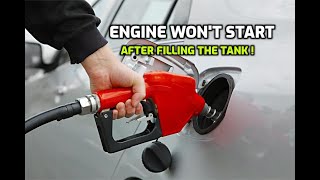
- Difficulty starting the engine, especially immediately after getting gas. 🎬 Watch: Why your car won't start after getting gas. This is caused by raw fuel vapors being sucked into the intake manifold through the stuck-open purge valve, effectively flooding the engine. Manufacturer Bulletin #16-0075 specifically notes a potential loss of engine RPM after refueling in related Lincoln models.
- Engine may stall or run rough at idle or low speeds. Manufacturer Bulletin #SSM 46525 confirms that vehicles may exhibit a rough idle alongside this code.
- Difficulty filling the fuel tank (gas pump nozzle clicks off repeatedly). This can be a symptom of a blocked vent path or a saturated canister, sometimes seen with P1450. Manufacturer Bulletin #SSM 46525 identifies a "slow fuel fill concern" as a documented symptom.
- A 'whoosh' sound may be heard when opening the fuel filler door as vacuum is released.
- Associated lean condition codes (P2195, P2197) may be stored as the stuck purge valve creates a vacuum leak.
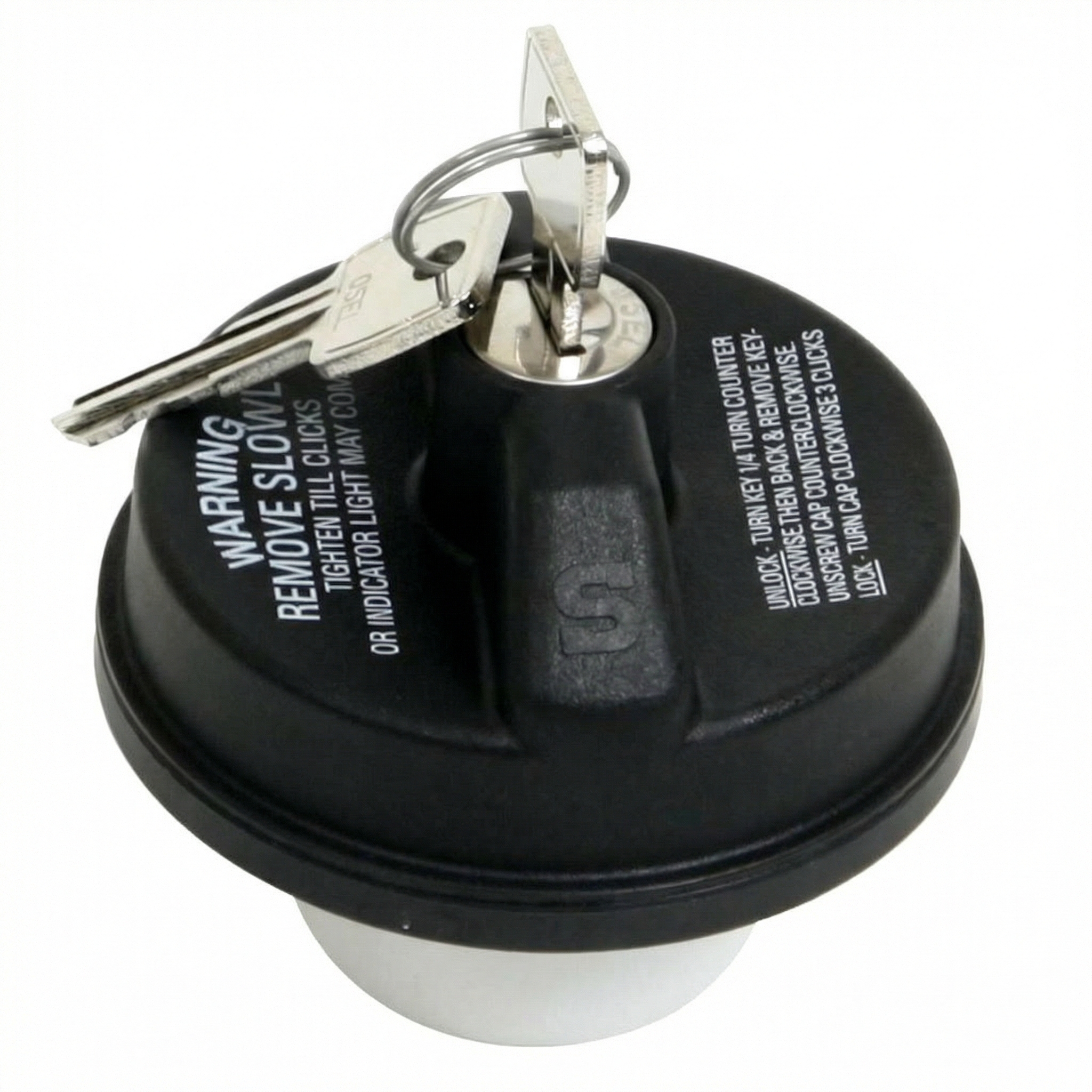
- Replacing the gas cap. While a faulty cap can cause other EVAP codes (like for small leaks), it is not a typical cause for P1450, which indicates an inability to *relieve* vacuum, not a leak *into* the system. The MKX also uses a capless fuel filler system, making this diagnosis incorrect.
Most Likely Causes
- Faulty EVAP Canister Purge Valve 🔴 High Probability → Shop Vapor Canister The canister purge valve used on many Ford/Lincoln vehicles of this period has a very high failure rate where it gets stuck open or does not seal properly. This is confirmed by multiple TSBs (14-0213, 14-0191) issued by Ford for the MKX. Manufacturer Bulletin #TSB 19-2207 further notes that P1450 may be due to the "sealing capability of the canister purge valve" across various Lincoln platforms.
How to confirm: Locate the purge valve in the engine bay. With the engine running at idle, disconnect the electrical connector. Then, disconnect the EVAP hose leading from the valve towards the rear of the vehicle. Place your finger over the port on the valve; if you feel any suction, the valve is stuck open and is faulty. Alternatively, with the valve removed from the vehicle, try to blow through it. A good valve should be closed and block all airflow; if air passes through, it is bad.
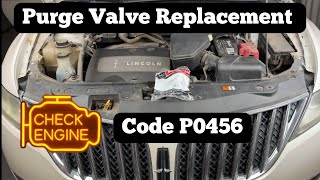
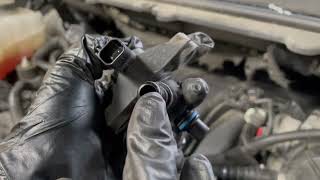
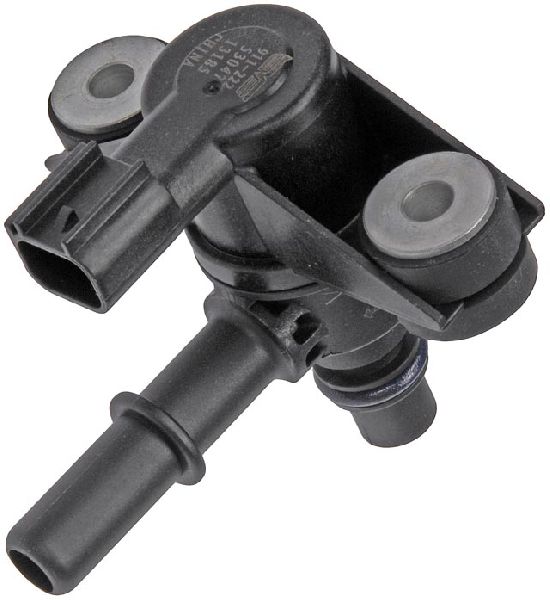
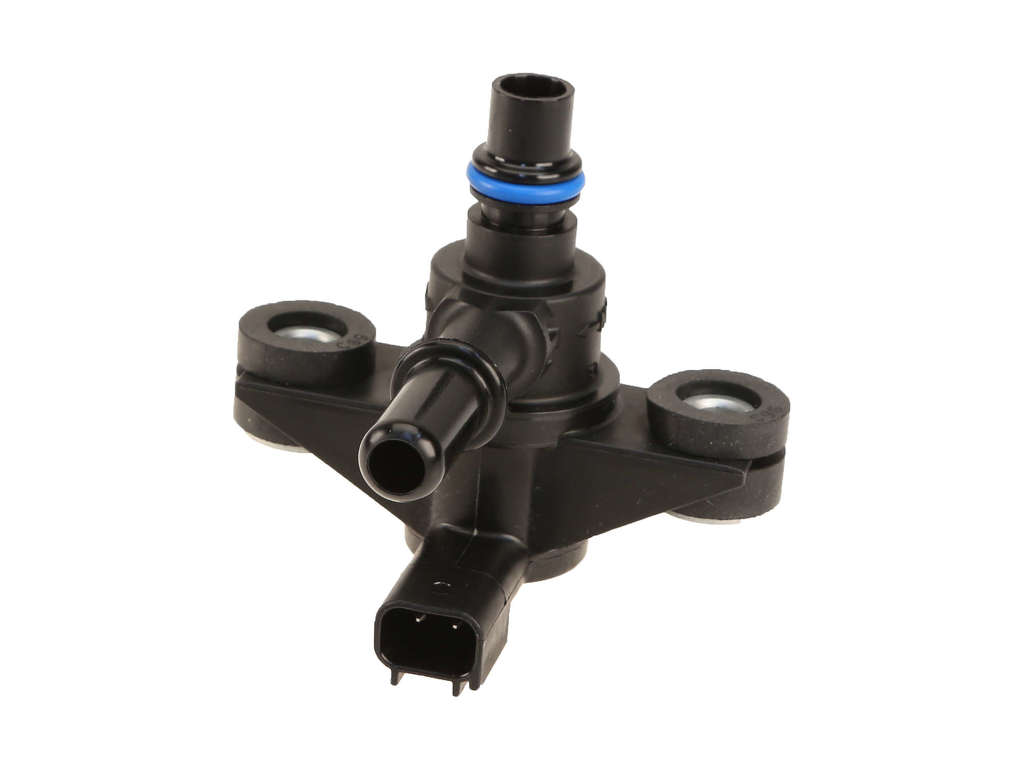
Typical fix: Replace the canister purge valve. It is mounted on the intake manifold with two 8mm bolts and has one electrical connector and one hose connection. 🎬 See this step-by-step purge valve replacement walkthrough.
Est. part cost: $35-$70 - Blocked EVAP Canister Vent Solenoid or Hose ⚪ Low Probability → Shop Vapor Canister The vent solenoid's filter is open to the atmosphere and can become clogged with dirt, debris, or even insect nests, preventing the system from venting. This is a common failure point on EVAP systems in general.
How to confirm: Inspect the vent solenoid and its hoses, located near the charcoal canister at the rear of the vehicle. Check for any visible blockages, kinks, or dirt. A smoke test can definitively confirm a vent path restriction.
Typical fix: Clean the vent path or replace the vent solenoid and/or filter if clogged or faulty.
Est. part cost: $40-$80 - Kinked or Collapsed EVAP Hose ⚪ Low Probability Rubber hoses can degrade over time, becoming soft and collapsing under vacuum, or they can be inadvertently kinked during other service.
How to confirm: Visually inspect all accessible EVAP hoses between the engine bay, the charcoal canister, and the fuel tank for any sharp bends, pinching, or visible collapse.
Typical fix: Replace the damaged section of the hose.
Est. part cost: $10-$30
Rare But Worth Checking
- Faulty Fuel Tank Pressure (FTP) Sensor: → Shop Fuel Tank While less common, the sensor that reports the pressure/vacuum to the PCM can fail and send incorrect readings, causing the computer to believe there is a vacuum issue when there isn't one. This usually requires an advanced scan tool to diagnose by observing live sensor data to see if it responds logically to pressure changes.
- Saturated Charcoal Canister: → Shop Vapor Canister Consistently overfilling the fuel tank (topping off) can force liquid fuel into the charcoal canister, which is designed only for vapor. This can saturate the canister and block airflow, leading to various EVAP codes including P1450. TSB 14-0191 for the 2014 MKX specifically calls for replacing the canister along with the purge valve under certain conditions.
- Deformed Fuel Tank: → Shop Fuel Tank A long-term P1450 condition can cause the plastic fuel tank to physically deform or collapse inward due to the constant vacuum. A Reddit user with this code reported this happening, which is a significant escalation of the repair. This is a consequence of the fault, not a primary cause, but is a critical consideration.
Diagnosis Steps
- Scan for any other trouble codes. Codes like P2195/P2197 strongly suggest a vacuum leak, pointing towards the purge valve. Manufacturer Bulletin #SSM 48301 notes that P1450 often appears alongside other EVAP codes like P0496 or P2450.
- Locate the canister purge valve on the 3.7L engine, near the firewall, mounted to the intake manifold.
- Start the engine and let it idle.
- Disconnect the electrical connector from the purge valve to ensure it is not being commanded on.
- Disconnect the vapor line that runs from the purge valve back to the EVAP canister. There is a small tab on the connector to release it.
- Place your finger over the port on the purge valve itself. If you feel any suction/vacuum, the valve is leaking internally and must be replaced. This is the most definitive and common test.
- If the purge valve is not leaking, check for specific TSBs. TSB 14-0191 for 2014 models suggests that if P1450 is present with other codes, the carbon canister may also need replacement and the vapor tube blown out with compressed air.
- If no TSB applies and the purge valve is good, the next step is to inspect the vent side of the system. Raise the vehicle and inspect the EVAP hoses and vent solenoid near the charcoal canister for any blockages, kinks, or damage.
- If no blockages are found, a smoke machine can be used to test the integrity and flow of the entire EVAP system.
Parts You'll Likely Need
- Vapor Canister Purge Valve
(OEM #AU5Z-9C915-E)— This is the most common failure point for the P1450 code on this platform, confirmed by multiple TSBs. The valve sticks open, causing constant vacuum on the fuel tank. The part number has been superseded multiple times (from AU5Z-9C915-A, -B, -C, -D, to the current -E), indicating revisions to fix the problem. TSBs from 2014 specified the -B version.
Trusted brands: Motorcraft, Dorman, Bosch, Standard Motor Products
OEM price range: $50-$70
Aftermarket price range: $35-$60 - Fuel Vapor Charcoal Canister
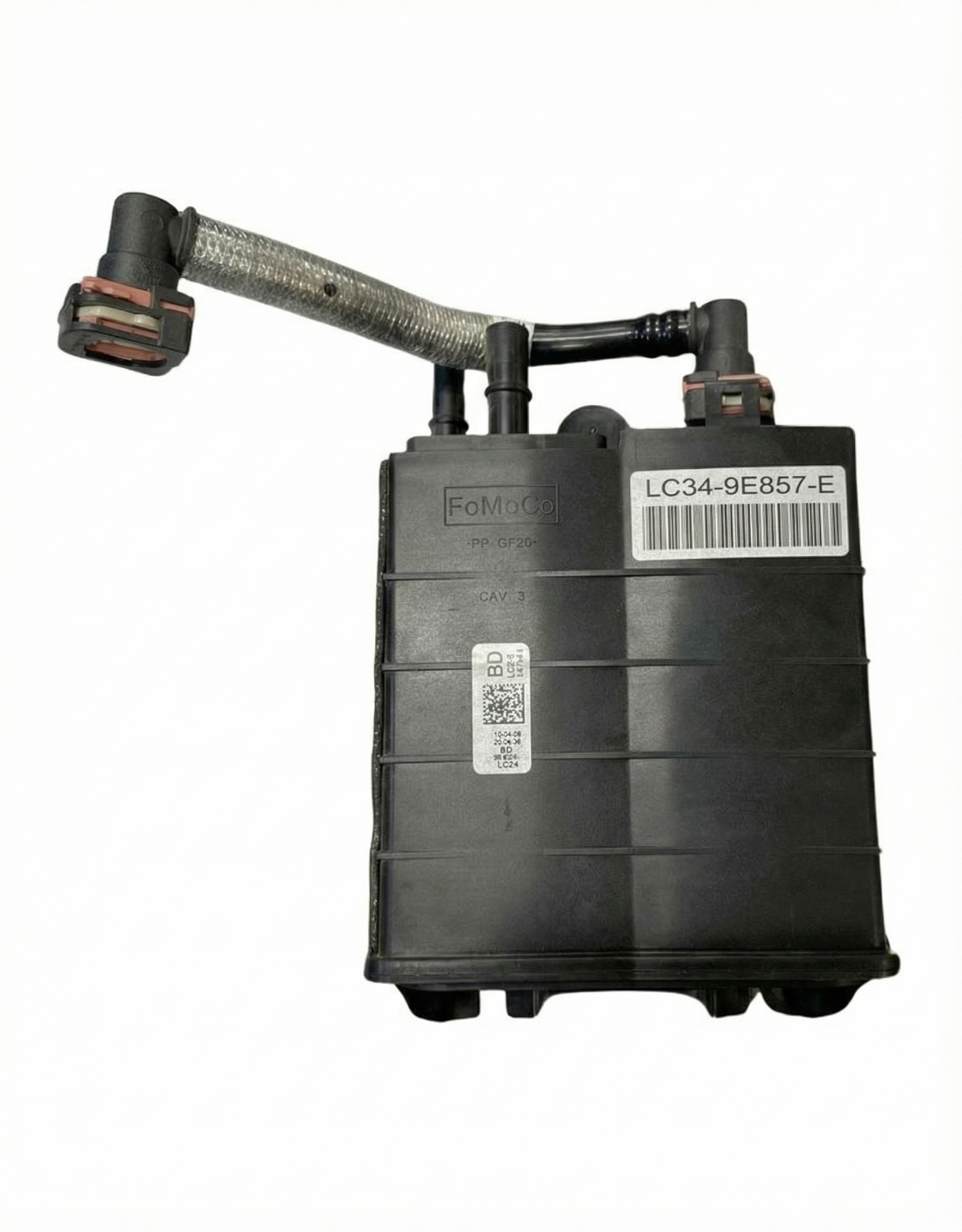
(OEM #7T4Z-9D653-B)— For 2014 MKX models built between 12/1/2013 and 3/8/2014, TSB 14-0191 recommends replacing the canister along with the purge valve if P1450 is present with other EVAP codes. This is not typically required for a standalone P1450 code.
Trusted brands: Motorcraft
OEM price range: $150-$250
Aftermarket price range: $100-$180
Related Codes That Often Appear With This One
- P2195 — O2 Sensor Signal Stuck Lean (Bank 1). A stuck-open purge valve creates a vacuum leak, allowing unmetered air into the intake manifold, which can cause lean conditions. A 2014 MKX with P1450 was documented with this exact code combination. 🎬 Watch: Diagnosing a 2014 MKX with P1450 and lean codes.
- P2197 — O2 Sensor Signal Stuck Lean (Bank 2). Same as P2195, but for the second cylinder bank. Also documented alongside P1450 on a 2014 MKX.
- P0456 — EVAP System Small Leak Detected. A faulty purge valve that doesn't seal properly can be interpreted by the PCM as a small leak. TSB 14-0191 for the 2014 MKX lists P1450 and P0456 together as being caused by the same fault. This association is also noted in Manufacturer Bulletin #TSB 19-2207.
- P0442 — EVAP System Medium Leak Detected. Similar to P0456, this can appear alongside P1450 as noted in TSB 14-0191 for the 2014 MKX.
- P0455 — EVAP System Large Leak Detected. Manufacturer Bulletin #SSM 46525 indicates this code may be stored in the PCM memory alongside P1450.
Technical Service Bulletins (TSBs) & Recalls
- TSB 14-0213
- TSB 14-0191
- Manufacturer Bulletin #TSB 19-2207
- Manufacturer Bulletin #SSM 46525
- Manufacturer Bulletin #SSM 48301
- Manufacturer Bulletin #16-0075
Platform-Specific Known Issues
- TSB 14-0213: For 2012-2013 MKX models (and platform mates) built from 1/3/2012 to 7/31/2012, this TSB directly addresses DTC P1450. The action is to replace the canister purge valve with part number AU5Z-9C915-B (or its successor).
- TSB 14-0191: For 2014 MKX models (and Ford Edge) built from 12/1/2013 to 3/8/2014, this TSB addresses P1450 in combination with other codes (P0442, P0456, P2196, P2198). The fix is more involved: replace the purge valve, replace the carbon canister, and blow out the vapor tube with compressed air.
Mechanic-Grade Diagnostic Values
- Canister Purge Valve Solenoid Resistance — expected: 22 to 30 Ohms. Failure: A reading outside of this range indicates a faulty solenoid coil.
- Fuel Tank Pressure (FTP) Sensor Voltage (Key On, Engine Off) — expected: 2.4 to 2.8 Volts. Failure: A voltage significantly outside this range at atmospheric pressure suggests a biased or failed sensor.
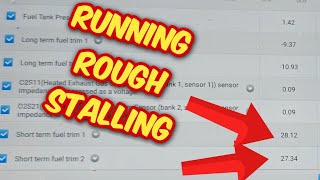
- Short/Long Term Fuel Trim (Live Data) — expected: Close to 0% at idle with purge valve commanded off (0%).. Failure: If the purge valve is stuck open, it creates a vacuum leak, causing fuel trims to become highly positive (e.g., +20% to +30%) as the PCM adds fuel to compensate. If the valve sticks open while driving, raw fuel vapor can be pulled in, causing trims to go highly negative.
Hidden / Shadow Codes Worth Checking
- P1450 00 EC: This is an extended code format that may be displayed on some Ford-specific scan tools. The '00' is a failure type code, and 'EC' is the component identifier. The diagnostic path remains the same as a standard P1450. (see via Ford IDS (Integrated Diagnostic System) or other high-end scan tools with manufacturer-specific data capabilities.)
Scan Tool Commands That Help
- Autel MaxiSYS (or similar bidirectional scanner): Active Test: Canister Purge Valve Duty Cycle Control — This is used to confirm a mechanically sticking purge valve. By commanding the valve to open at various percentages (e.g., 15%, 25%, 50%), you can listen for the valve's clicking sound and watch live data (FTP sensor, fuel trims) to see if it responds correctly. A faulty valve may get stuck open and not change its pulse rate or close when commanded to 0%.
Wiring & Ground Locations
- Canister Purge Valve Connector — On the purge valve itself, located near the firewall, mounted to the intake manifold.. This 2-pin connector provides power and ground control to the solenoid. A damaged connector or wiring can cause an open or short in the circuit, which typically sets codes like P0443, but can be related. The pigtail uses two 16-gauge wires.
- EVAPCP / VPWR Circuits — In the harness between the PCM and the canister purge valve.. On Ford systems, the purge valve control circuit is often labeled 'EVAPCP'. A fault in this circuit (short to ground, open) or in the power supply wire ('VPWR') can prevent the valve from operating correctly, leading to EVAP system codes.
- Factory Wiring Diagrams — Vehicle-specific service manuals.. For advanced diagnosis involving tracing wires or finding specific ground points (e.g., G-series grounds), a factory wiring diagram is essential. These diagrams show connector pinouts, wire colors, and the physical location of grounds.
Real Owner Repair Stories
- Scanner Danner Premium video on YouTube (2014 Lincoln MKX 3.7L) — Stalling, running rough, and codes P1450, P2195 (Lean Bank 1), P2197 (Lean Bank 2).
❌ Tried (didn't work) Initial diagnosis focused on the lean codes, but the technician quickly correlated them to the P1450.
✅ What actually fixed it The canister purge valve was confirmed to be sticking using a scan tool's bidirectional control. When commanded, the valve would get stuck open. Replacing the canister purge valve resolved all codes and symptoms. - NHTSA ODI #11578507 — An owner of a related Lincoln model reported the vehicle moving from 0-2 on its own while stopped. A diagnostic device confirmed error code P1450.
OEM Part Supersession History
AU5Z-9C915-A, AU5Z-9C915-B, AU5Z-9C915-C, AU5Z-9C915-D→AU5Z-9C915-E— Multiple revisions were released by Ford to address the high failure rate of the valve sticking open. The -E version is the latest and most reliable iteration.
Heads up: The Motorcraft service part numbers CX2470 and CX2695 also correspond to these OEM parts and may be used interchangeably with the correct OEM number.
Model Year Variations Within This Range
- 2014 (specific build dates: 12/1/2013 to 3/8/2014): Per TSB 14-0191, if P1450 is present with other EVAP leak codes (P0442, P0456), the procedure requires replacing both the purge valve AND the charcoal canister, in addition to blowing out the vapor tube. This differs from other years where only the purge valve is typically replaced.
Diagnostic Flowchart
Used vs. New Parts: Buying Guide for This Vehicle
When a used part is the smart pick: For this specific repair, buying a used part is not recommended. The primary failure part, the canister purge valve, is inexpensive and has a known high failure rate due to a design flaw. A used valve from a junkyard has a high probability of being faulty or failing shortly after installation.
What to inspect on the donor part:
- Not applicable for the purge valve. For a charcoal canister, if needed, inspect for any cracks in the housing or strong fuel odor, which indicates saturation.
OEM-only on this vehicle (don't cheap out):
- Vapor Canister Purge Valve. It is strongly recommended to use the genuine Ford/Motorcraft part (AU5Z-9C915-E). Ford has revised this part multiple times to correct the original flaw. Some technicians report that aftermarket versions can have poorly fitting electrical connectors or clips, leading to installation issues.
Aftermarket brands forum-validated for this vehicle:
- While OEM is recommended, brands like Dorman, Standard Motor Products (SMP), and Bosch are common aftermarket suppliers. If choosing aftermarket, be prepared for potential minor fitment differences.
Brands owners have reported issues with on this vehicle:
- No specific brands are universally cited as 'bad', but generic, unbranded parts from online marketplaces should be avoided due to questionable quality control.
Real Owner Stories
Aggregated from forums and TSBs cited above. Mileages and costs reflect what owners reported in those sources.
Lincoln MKC
Symptoms: The owner reported a P1450 code for the EVAP system not bleeding off vacuum.
What fixed it: The owner advises not to overfill the gas tank, as they believe this is a primary cause of the issue.
Source hint: youtube_comment from RANS87IROCZ
2014 Lincoln MKX 3.7L
Symptoms: Check Engine Light on with code P1450, sometimes accompanied by other EVAP or fuel trim codes like P0442, P0456, P2196, or P2198.
What fixed it: The official fix per TSB 14-0191 was to replace the purge valve, replace the carbon canister, and blow out the vapor tube with compressed air.
Source hint: Ford Edge Forum - TSB 14-0191
2011-2015 Ford Edge 3.7L
Symptoms: The P1450 code returned one month after the owner replaced the canister purge valve.
What fixed it: The initial replacement of the purge valve was not a permanent solution, indicating another component in the EVAP system was likely the root cause.
Source hint: Ford Edge Forum - P1450 code Purge Valve fixed but code comes back again one month later?
Lincoln MKC (NHTSA ODI #11578507)
Symptoms: An owner reported the vehicle moving from 0-2 on its own while stopped. A diagnostic device confirmed error code P1450.
What fixed it: The owner noted existing recalls for similar fuel gas problems for the same make and model year.
Related OBD-II Codes
Frequently Asked Questions
I have a 2013 Lincoln MKX with code P1450. Is there a specific TSB for my vehicle?
My 2014 MKX has P1450 along with a lean code. What does Ford recommend?
How can I quickly test the purge valve on my MKX's 3.7L engine?
Why is my Lincoln MKX so difficult to start right after I fill up the gas tank?
I replaced the purge valve on my MKX but the P1450 code came back. What else could be wrong?
What are the most common symptoms of a P1450 code on this Lincoln MKX?
Helpful Videos
Used OEM Parts in Stock

New Aftermarket Parts Available


The information in this article is provided for general reference and educational purposes only. Vehicle specifications, procedures, and part compatibility can vary by production date, trim level, and region. Always consult your vehicle's factory service manual and verify part numbers before purchasing or performing repairs. Safety-critical components such as airbags, seat belts, and braking systems should be installed by a qualified professional.
- Lincoln MKX:
- 🧭 Diagnostic Flowchart
- 🎬 Helpful Videos
- 🛍️ Shop This Part
- What's Unique About the 2011-2015 Lincoln MKX
- Symptoms You May Notice
- Most Likely Causes
- Rare But Worth Checking
- Diagnosis Steps
- Parts You'll Likely Need
- Related Codes That Often Appear With This One
- Technical Service Bulletins (TSBs) & Recalls
- Platform-Specific Known Issues
- Mechanic-Grade Diagnostic Values
- Hidden / Shadow Codes Worth Checking
- Scan Tool Commands That Help
- Wiring & Ground Locations
- Real Owner Repair Stories
- OEM Part Supersession History
- Model Year Variations Within This Range
- Used vs. New Parts: Buying Guide for This Vehicle
- Real Owner Stories
- Lincoln MKC
- 2014 Lincoln MKX 3.7L
- 2011-2015 Ford Edge 3.7L
- Lincoln MKC (NHTSA ODI #11578507)
- Related OBD-II Codes
- Frequently Asked Questions
- 🎟️ Get 5% Off