

P1450 on 2003-2006 Lincoln Navigator: Causes and Fixes for EVAP Vacuum Issues
For a 2003-2006 Lincoln Navigator, code P1450 is most often caused by a faulty canister purge valve located in the engine bay. This is a simple part to replace and typically costs between $40 and $100. Other common causes include a blocked canister vent solenoid at the rear of the vehicle, collapsed EVAP hoses over the fuel tank, or a clogged vent filter, sometimes due to spider nests.
- P1450 means your fuel tank has too much vacuum and can't vent.
- The most likely fix is replacing the canister purge valve in the engine bay, a DIY-friendly job.
- Before buying parts, test the purge valve by starting the engine and feeling for suction on the valve's inlet port. No suction means the problem is elsewhere.
- If the purge valve is good, inspect the canister vent solenoid and its filter at the rear of the vehicle for blockages.
- Be aware of a mid-year part change for the purge valve in 2005; check your vehicle's build date before ordering.
What's Unique About the 2003-2006 Lincoln Navigator
On the second-generation Navigator (and its sibling, the Ford Expedition), the EVAP system components are known to fail in a few common ways. While the canister purge valve is a frequent culprit on many Ford products, these trucks are also susceptible to blockages in the rear canister vent solenoid due to dirt and debris, and even collapsed rubber EVAP lines running over the top of the fuel tank. One owner on a forum specifically noted that replacing collapsed hoses above the tank was one of the attempted repairs for this code on their 2006 Navigator.
Symptoms You May Notice
- Check Engine Light is on
- Difficulty starting the engine, especially right after filling the gas tank
- Rough idle immediately after refueling
- A loud 'whoosh' sound from air rushing into the tank when you open the gas cap
- Difficulty filling the fuel tank (the pump nozzle clicks off repeatedly)
- Slightly reduced fuel economy.
- Engine stuttering or hesitation during acceleration.
- Replacing the gas cap. While a faulty gas cap can cause other EVAP codes (like for small or large leaks), it is not a typical cause for P1450, which indicates an inability to relieve vacuum, not a leak. However, some forum users have reported a bad aftermarket cap causing issues, so using an OEM cap is recommended if it's suspect.
Most Likely Causes
- Faulty Canister Purge Valve 🔴 High Probability → Shop Vapor Canister This is the most common failure point for P1450 across most Ford platforms. The valve, which is normally closed, gets stuck open or leaks, constantly applying engine vacuum to the fuel tank when it shouldn't.
How to confirm: With the engine running at idle, disconnect the electrical connector from the purge valve, then disconnect the EVAP hose coming from the rear of the vehicle. Place your finger over the port on the valve itself. If you feel any suction, the valve is stuck open and must be replaced. You can also use a hand vacuum pump on the disconnected valve; it should hold vacuum without power applied.
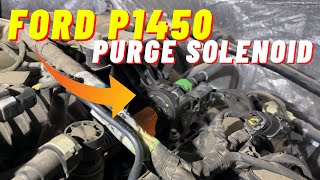
Typical fix: Replace the canister purge valve. This part is located in the engine bay, typically on the intake manifold, and is held on by two 8mm bolts. 🎬 See how a faulty purge valve causes this vacuum code
Est. part cost: $40-$110 - Blocked Canister Vent Solenoid or Filter 🟡 Medium Probability → Shop Vapor Canister The vent solenoid is located at the rear of the vehicle near the spare tire and charcoal canister, where it is exposed to road dirt, debris, and moisture. The filter can become clogged with dust, or spiders have been known to build nests and egg sacs inside the vent tube, causing a complete blockage.
How to confirm: Locate the vent solenoid on or near the charcoal canister. Inspect the attached hose and filter box for dirt, nests, or other blockages. You can try to blow through the vent hose; it should be free-flowing. You can also test the solenoid with a bidirectional scan tool or by applying 12V to see if it clicks open and closed.
Typical fix: Replace the canister vent solenoid and/or clean the vent hose and filter. Sometimes just blowing the debris out with compressed air is sufficient.
Est. part cost: $50-$100 - Kinked or Collapsed EVAP Hoses 🟡 Medium Probability Rubber hoses, especially the ones routed over the fuel tank, can degrade over time, becoming soft and collapsing under the constant vacuum created by a stuck purge valve. This creates a restriction that prevents the system from bleeding off vacuum.
How to confirm: Visually inspect all accessible EVAP lines between the engine, charcoal canister, and fuel tank. Pay close attention to bends and connection points. A smoke test is the most effective way to identify a collapsed or kinked line that may not be obvious, as the smoke will stop at the restriction. 🎬 Watch: A simple diagnosis and repair guide for P1450
Typical fix: Replace the damaged section of the hose. This often requires lowering the fuel tank for access, making it a more labor-intensive repair.
Est. part cost: $20-$80 - Saturated Charcoal Canister ⚪ Low Probability → Shop Vapor Canister Repeatedly 'topping off' the fuel tank after the pump clicks off can force liquid gasoline into the charcoal canister, which is only designed to handle vapor. This saturates the charcoal pellets, turning them into a solid, non-porous blockage that prevents airflow.
How to confirm: If the canister is saturated, you may have other EVAP codes. The canister may feel unusually heavy, and you might smell raw fuel near it. The ultimate confirmation is removing it and finding liquid fuel inside. A smoke test will also show no flow through a blocked canister.
Typical fix: Replace the charcoal canister. This is an expensive part, so confirm other causes are ruled out first. 🎬 Watch: A breakdown of common causes and fixes for P1450 A user on a forum noted that this part can be discontinued, suggesting a used part from a salvage yard might be necessary.
Est. part cost: $150-$300
Rare But Worth Checking
- Faulty Fuel Tank Pressure (FTP) Sensor: → Shop Fuel Tank While less common for this specific code, the sensor that reports the vacuum level to the computer can fail and give false readings. This is usually diagnosed after confirming the mechanical parts of the EVAP system (valves, hoses) are working correctly. A scan tool showing erratic or stuck pressure readings with the gas cap off can point to a faulty sensor.
Diagnosis Steps
- Check for a 'whoosh' sound when opening the gas cap. This is a strong, immediate indicator of excessive vacuum in the tank, confirming the condition described by the code.
- Connect an OBD-II scanner and check for any other pending or active codes. Note the fuel tank pressure (FTP) sensor reading in PSI or Volts.
- Locate the canister purge valve in the engine bay. With the engine running, disconnect the hose leading from the charcoal canister to the valve.
- Feel the inlet port on the purge valve for suction. There should be absolutely no vacuum at idle when the valve is not commanded on. If vacuum is present, the valve is faulty and needs replacement.
- If the purge valve is good, move to the rear of the vehicle. Locate the canister vent solenoid near the spare tire and charcoal canister.
- Visually inspect the vent solenoid, its filter, and the attached hose for any blockages like dirt, mud, or spider webs/egg sacs. Disconnect the hose and try to blow through it.
- If the vent path appears clear, test the solenoid's function. Use a bidirectional scanner to command it open and closed, listening for a click. Alternatively, apply 12V and ground to its terminals to check for operation. Remember the vent solenoid is normally open, so it should allow air to pass freely when de-energized.
- If both valves seem to be working, perform a visual inspection of all EVAP hoses for obvious kinks, cracks, or collapsed sections, paying special attention to the lines running over the fuel tank.
- If no obvious issues are found, a smoke test is the definitive next step. Introduce smoke into the EVAP service port. If the system is working, smoke should eventually exit from the canister vent solenoid filter. If it doesn't, there is a blockage in a line, the vent solenoid is stuck closed, or the charcoal canister itself is blocked.
Parts You'll Likely Need
- Canister Purge Valve / Solenoid
(OEM #6L3Z-9C915-A (Motorcraft CX-2083) for vehicles built up to 12/05/2005; 9U5Z-9C915-H (Motorcraft CX-2082) for vehicles built from 12/05/2005.)— This is the most frequent cause of P1450. It gets stuck open, allowing constant engine vacuum to the fuel tank. Note the mid-year part change in 2005.
Trusted brands: Motorcraft, Dorman, Standard Motor Products
OEM price range: $60-$110
Aftermarket price range: $40-$70 - Canister Vent Solenoid
(OEM #9L3Z-9C987-A (or older F57Z-9C987-AB))— This valve controls the flow of fresh air into the EVAP system to equalize pressure. It's located in a vulnerable spot under the truck and can get clogged with debris or stick closed, causing a blockage.
Trusted brands: Motorcraft, Dorman (p/n 911-230), Standard Motor Products (p/n CVS23), Wells
OEM price range: $70-$120
Aftermarket price range: $50-$80
Technical Service Bulletins (TSBs) & Recalls
- While not for this exact year range, Ford TSB 13-3-5 for 2009-2010 5.4L engines mentions P1450 occurring alongside other codes, indicating Ford has acknowledged it in official service literature.
- A TSB for older F-150s mentions checking for mold flashing in a 90-degree elbow on the EVAP line from the canister as a cause for P1450, which could be a relevant inspection point.
- Manufacturer TSB #TSB 19-2207 notes that P1450 may be due to the sealing capability of the canister purge valve on various Lincoln and Ford products.
- Manufacturer TSB #SSM 46525 indicates that vehicles may exhibit an illuminated MIL with P1450 alongside a rough idle and/or slow fuel fill concern.
- Manufacturer TSB #16-0075 describes a loss of engine RPM after refueling in conjunction with an illuminated malfunction indicator lamp and code P1450.
- Manufacturer TSB #SSM 48301 suggests that vehicles may exhibit an illuminated MIL with P1450 and directs technicians to perform pinpoint test (PPT) HX in the Powertrain Controls and Emission Diagnosis manual.
Platform-Specific Known Issues
- The rubber EVAP hoses that run over the top of the fuel tank are known to soften and collapse, creating a restriction that triggers P1450. Accessing these may require lowering the fuel tank. A 2006 Navigator owner confirmed their mechanic performed this repair, though it did not solve their specific issue, indicating other causes should be ruled out first.
Mechanic-Grade Diagnostic Values
- Fuel Tank Pressure (FTP) Sensor Voltage, Key On Engine Off (KOEO), gas cap off — expected: 2.37V to 2.97V (typically ~2.6V).. Failure: A voltage near 0V or 5V indicates a sensor or wiring fault. A reading that doesn't return to this range with the system at rest suggests a blockage or stuck valve.
- FTP Sensor Reference Voltage (VREF) — expected: 4.0V to 6.0V (typically 5.0V).. Failure: Voltage outside this range indicates a problem with the PCM or the VREF circuit.
- EVAP System Pressure during Purge (Engine Running) — expected: A slight negative pressure, approximately -2.0 to -4.0 inches of H2O.. Failure: A pressure that goes significantly more negative (e.g., towards -8.0 in-H2O) and fails to bleed up when the purge valve is commanded closed can trigger P1450.
Hidden / Shadow Codes Worth Checking
- P1450-00: This is a more specific format of the P1450 code that may be displayed on advanced scan tools like Ford's IDS. The '-00' suffix doesn't typically change the diagnosis but confirms it's a generic fault within that parameter. (see via Ford IDS (Integrated Diagnostic System) or other professional-grade scan tools.)
Scan Tool Commands That Help
- Ford IDS (or equivalent high-end scanner): Manual EVAP Test / EVAP System Test — This function allows a technician to manually command the purge and vent solenoids and monitor the FTP sensor response in real-time. It's used to verify the function of each component individually without waiting for the PCM to run its automatic self-test, which has strict preconditions (fuel level, temperature, etc.).
- Ford IDS (or equivalent high-end scanner): Datalogger for PIDs: FTP V (Fuel Tank Pressure Voltage), EVAPCV (Canister Vent Solenoid Command), EVAPPDC (Purge Valve Duty Cycle) — Graphing these PIDs allows a technician to see the exact moment the fault occurs. For P1450, you would watch to see if FTP voltage drops (vacuum increases) when EVAPPDC is at 0% (purge valve should be closed), confirming a leaking purge valve.
Wiring & Ground Locations
- G102 — Located at the right rear of the engine compartment.. This is a primary engine compartment ground. A poor connection here could potentially affect the operation of engine-mounted components like the canister purge valve.
- PCM Relay (R203 in Power Distribution Box) — In the under-dash fuse box, located on the right-hand side of the instrument panel.. This relay supplies power to the PCM and various sensors and solenoids, including the EVAP system components. A faulty relay could cause intermittent power issues.
- Fuel Pump Relay (R303 in Power Distribution Box) — In the under-dash fuse box.. While not a direct cause, the PCM monitors the fuel pump, and its operation can influence EVAP test conditions. A wiring issue here could be related in complex diagnostic scenarios.
- FTP Sensor Wiring — The FTP sensor is on top of the fuel tank. The wiring runs along the frame rail to the PCM. On a similar F-150, the signal wire is Red/Pink.. A short or open in the VREF (Reference Voltage), Signal, or Signal Return wires for the FTP sensor can cause false P1450 codes. Testing for 5V reference and signal voltage at the sensor connector is crucial if valves and hoses check out.
Real Owner Repair Stories
- Ford F150 Forum (2015 Ford F-150 (similar EVAP system logic)) — Slow gas fill problem, Check Engine Light with code P1450.
❌ Tried (didn't work) Replacing the canister purge valve., Ensuring the vent line from the canister was clear.
✅ What actually fixed it Replacing the charcoal canister, which was found to be 7-8 lbs heavier than the new one, indicating it was saturated with liquid fuel. - NHTSA ODI #11578507 — An owner reported the engine RPM moving from 0-2 on its own while being stopped; a diagnostic device confirmed error code P1450.
OEM Part Supersession History
6L3Z-9C915-A→9U5Z-9C915-H, which is also replaced by 9U5Z-9C915-J.— Part design updates for improved durability and performance.
Heads up: The purge valve part number changed for vehicles built on or after 12/05/2005. Using the early-style part on a later vehicle (or vice-versa) may result in fitment or electrical connection issues.
Model Year Variations Within This Range
- 2003-2005 (up to 12/05/2005): Uses canister purge valve part number 6L3Z-9C915-A (Motorcraft CX-2083).
- 2006 (from 12/05/2005): Uses canister purge valve part number 9U5Z-9C915-H (Motorcraft CX-2082).
Diagnostic Flowchart
Used vs. New Parts: Buying Guide for This Vehicle
When a used part is the smart pick: Used parts can be a cost-effective option for mechanical items like the charcoal canister (if confirmed to be dry and not saturated) and undamaged EVAP hoses. Given that new canisters can be expensive or discontinued, a used one from a dry, low-mileage donor vehicle is a viable option.
Donor-vehicle mileage cap: roughly under 100000 miles for the part to have meaningful remaining life.
What to inspect on the donor part:
- For solenoids (purge/vent): Check for cracks in the plastic housing and ensure electrical pins are clean and not corroded.
- For charcoal canister: It should feel light for its size. If it feels heavy or sloshes, it's saturated with fuel and useless. Check all ports for blockages or nests.
- For hoses: Squeeze the rubber hoses to ensure they are firm and not soft, spongy, or sticky, which indicates they are prone to collapsing under vacuum.
OEM-only on this vehicle (don't cheap out):
- Fuel Tank Pressure (FTP) Sensor: Aftermarket sensors can have different voltage scaling, leading to incorrect readings by the PCM even if the part is new. It is strongly recommended to use an OEM Motorcraft sensor to avoid repeat diagnostics.
Aftermarket brands forum-validated for this vehicle:
- Dorman: Often provides cost-effective replacements for solenoids (like p/n 911-230 for the vent solenoid) and sometimes includes design improvements over the original.
- Standard Motor Products (SMP): A well-regarded aftermarket manufacturer for emissions and engine management components.
Brands owners have reported issues with on this vehicle:
- Unbranded, no-name parts from online marketplaces should be avoided, especially for electronic components like sensors and solenoids. Failure rates are high and can lead to wasted time and money.
Real Owner Stories
Aggregated from forums and TSBs cited above. Mileages and costs reflect what owners reported in those sources.
2006 Lincoln Navigator — 180000 miles
Symptoms: P1450 code was present.
What fixed it: A mechanic replaced collapsed EVAP hoses located above the fuel tank; however, this did not resolve the P1450 code, indicating another underlying issue.
Source hint: CarKiller forum report
2006 Lincoln Navigator
Symptoms: Check engine light on, scanner shows P1450 code.
What fixed it: The owner had not yet found a fix after replacing the gas cap, purge valve, and a vapor canister check valve. They suspected the fuel vapor canister itself was the remaining issue.
Source hint: Ford Truck Enthusiasts Forums - 2006 Navigator P1450 code
Lincoln Navigator / Ford Expedition with 5.4L V8
Symptoms: P1450 code and symptoms of a blocked EVAP vent.
What fixed it: The owner discovered a spider egg sac causing a complete blockage in the canister vent solenoid or its attached hose. Clearing the blockage resolved the issue.
Source hint: Ford-Trucks.com
Related OBD-II Codes
Frequently Asked Questions
I heard the EVAP hoses over the fuel tank can cause P1450 on my Navigator. Is this a common repair?
What is the most likely part I'll need to replace for a P1450 code on my 2005 Lincoln Navigator?
I live in a dusty area and sometimes park near trees. Could that be related to my P1450 code?
I always top off my gas tank after the pump clicks off. Could this have caused the P1450 problem?
Are there any official Ford TSBs that apply to the P1450 code on my 2003-2006 Navigator?
My 2004 Ford Expedition has a P1450 code. Is the diagnostic information for the Navigator the same?
What's the first thing I should check myself before taking my Navigator to a shop for P1450?
Helpful Videos


Used OEM Parts in Stock
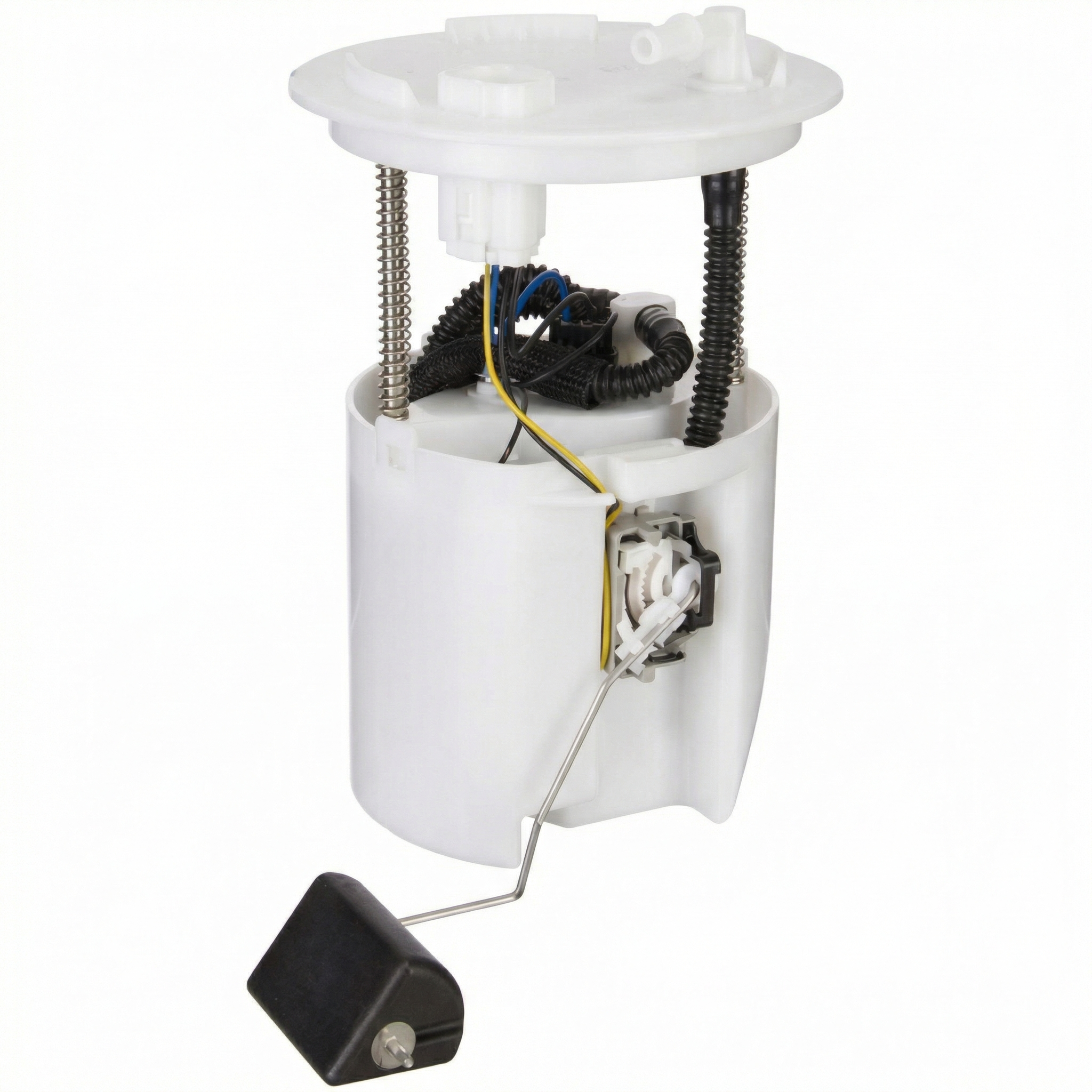
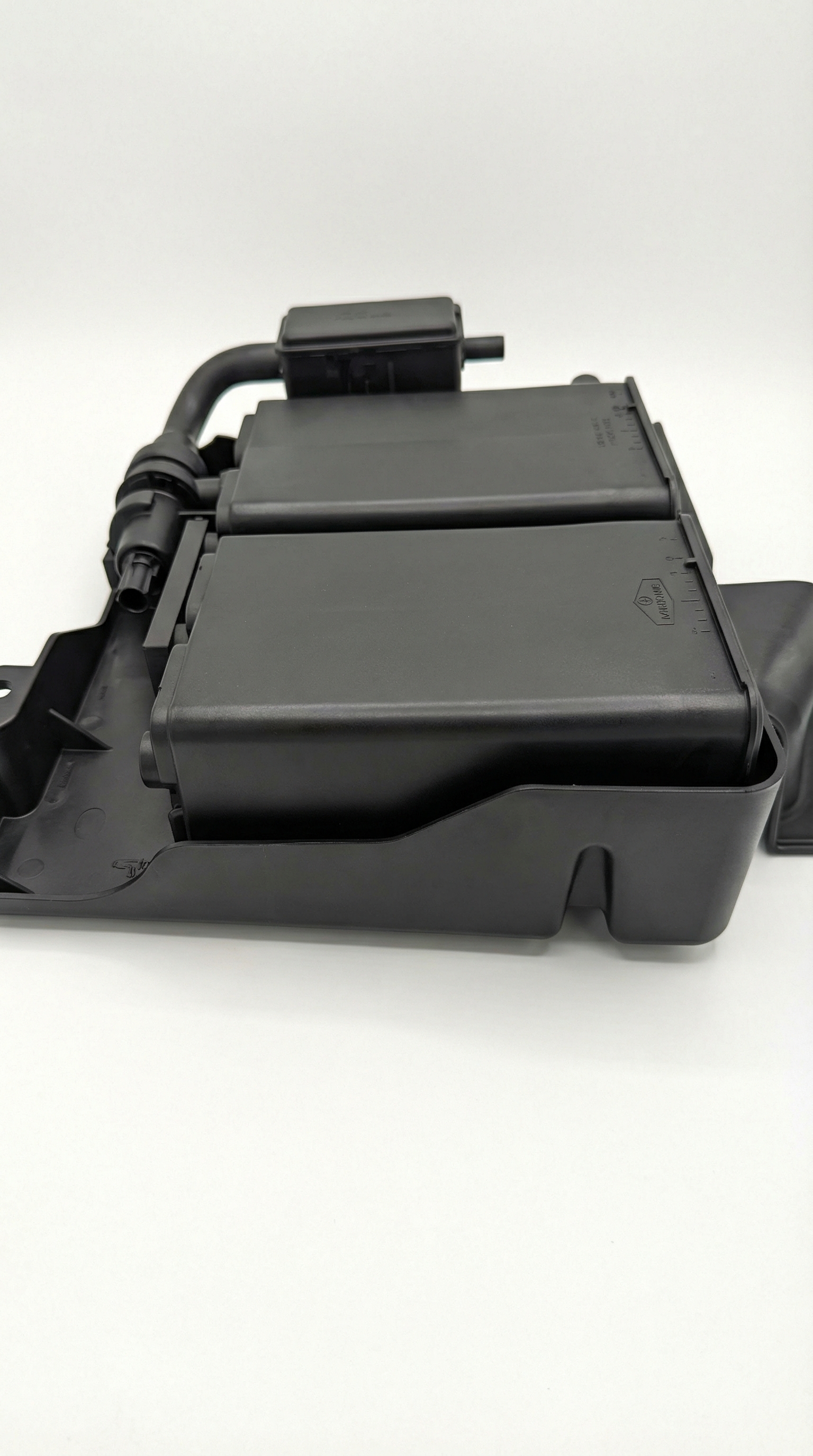
New Aftermarket Parts Available


The information in this article is provided for general reference and educational purposes only. Vehicle specifications, procedures, and part compatibility can vary by production date, trim level, and region. Always consult your vehicle's factory service manual and verify part numbers before purchasing or performing repairs. Safety-critical components such as airbags, seat belts, and braking systems should be installed by a qualified professional.
- Lincoln Navigator:
- 🧭 Diagnostic Flowchart
- 🎬 Helpful Videos
- 🛍️ Shop This Part
- What's Unique About the 2003-2006 Lincoln Navigator
- Symptoms You May Notice
- Most Likely Causes
- Rare But Worth Checking
- Diagnosis Steps
- Parts You'll Likely Need
- Technical Service Bulletins (TSBs) & Recalls
- Platform-Specific Known Issues
- Mechanic-Grade Diagnostic Values
- Hidden / Shadow Codes Worth Checking
- Scan Tool Commands That Help
- Wiring & Ground Locations
- Real Owner Repair Stories
- OEM Part Supersession History
- Model Year Variations Within This Range
- Used vs. New Parts: Buying Guide for This Vehicle
- Real Owner Stories
- 2006 Lincoln Navigator — 180000 miles
- 2006 Lincoln Navigator
- Lincoln Navigator / Ford Expedition with 5.4L V8
- Related OBD-II Codes
- Frequently Asked Questions
- 🎟️ Get 5% Off