

P1450 on 2012-2015 Mazda 5: Unable to Bleed Fuel Tank Vacuum Causes and Fixes
On a 2012-2015 Mazda 5, code P1450 is almost always caused by a faulty vapor canister purge solenoid valve that is stuck open. This is a common failure item, and replacing this valve is a straightforward DIY fix that usually resolves the issue. Expect to pay around $50-$70 for an OEM part.
- P1450 on your Mazda 5 means there's a blockage preventing fuel tank vacuum from being released, not a leak.
- The most likely cause by far is a faulty vapor canister purge solenoid valve located in the engine bay.
- Before buying any parts, perform a simple 5-minute test: with the engine idling and the valve unplugged, unplug the hose from the purge valve and check for suction. If you feel vacuum, the valve is bad.
What's Unique About the 2012-2015 Mazda 5
The 2012-2015 Mazda 5 uses the 2.5L four-cylinder engine (L5-VE), which it shares with other Mazda models of the era like the Mazda 3 and Mazda 6. While a Technical Service Bulletin (TSB 01-012/14) for P1450 specifically names the Mazda 6, it highlights that both the V6 and the 2.5L engines experience this issue due to a faulty purge valve. This indicates a known weakness with this component design across the Mazda lineup. Manufacturer service bulletin #01-012-14-2908A confirms that some vehicles may experience MIL illumination with DTC P1450:00 stored in memory, specifically describing the condition as being "unable to bleed up fuel tank vacuum." Owners on forums for the Mazda 5 and the mechanically similar Mazda 3 and CX-9 have confirmed struggling with this specific code, often replacing multiple parts before identifying the true cause, which is frequently the purge solenoid.
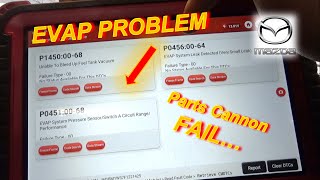
🎬 Watch: Why the 'parts cannon' fails and how to diagnose P1450 correctly.Symptoms You May Notice
- Check Engine Light is on.
- A 'whoosh' sound may be heard from the gas cap when opening it to refuel, due to the trapped vacuum being released.
- In some cases, the vehicle may be difficult to start or stall immediately after refueling.
- Rough or unstable idle if the purge valve is stuck open, creating a constant vacuum leak.
- Replacing the gas cap. While a faulty gas cap can cause EVAP leak codes (like P0455 or P0457), it is not a typical cause for P1450, which indicates a blockage or inability to vent, not a leak. 🎬 See how to troubleshoot different EVAP codes like P0442 small leaks.
Most Likely Causes
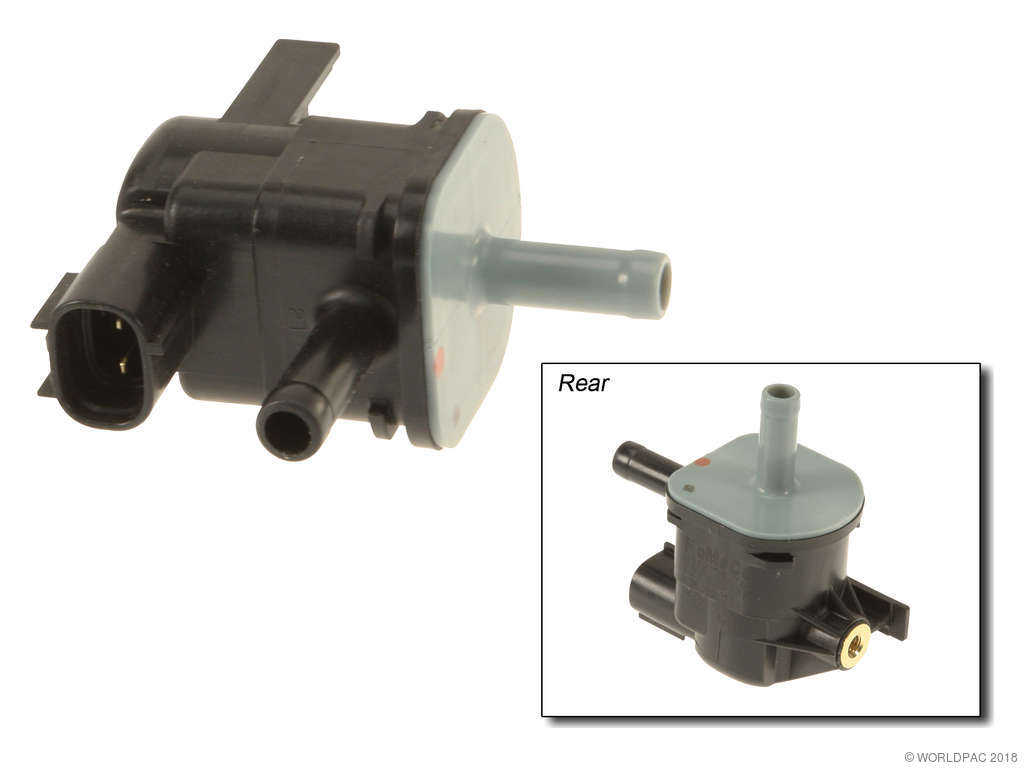
- Faulty Vapor Canister Purge Solenoid Valve 🔴 High Probability → Shop Vapor Canister This is a known failure point across multiple Mazda models using the 2.5L engine. A related TSB for the Mazda 6 points to a faulty purge valve design. Manufacturer service bulletin #01-012-14-2908A notes that this concern may be caused by the purge valve, which has since been modified to eliminate the issue. The valve gets stuck open, allowing constant engine vacuum to pull on the fuel tank. This is the most common fix reported by owners in forums.
How to confirm: With the engine idling, disconnect the electrical connector from the purge valve. Then, disconnect the EVAP hose coming from the charcoal canister side of the valve (located in the engine bay). If you feel suction coming from the valve's port with the engine running and the valve unplugged, it is mechanically stuck open and must be replaced. The valve should be closed with no vacuum present when de-energized.
Typical fix: Replace the vapor canister purge solenoid valve. The TSB for the Mazda 6 2.5L engine specifies an updated part number, Z504-18-741A.
Est. part cost: $50-$90 - Blocked or Stuck-Closed Canister Vent Solenoid/Valve 🟡 Medium Probability → Shop Vapor Canister The vent solenoid, located near the charcoal canister at the rear of the vehicle, has a vent that is open to the atmosphere. It can become clogged with dirt, road debris, or famously, spider webs, preventing fresh air from entering the system to relieve vacuum. Mazda has previously recalled other models for spider webs blocking this exact component.
How to confirm: Locate the EVAP canister and vent solenoid near the fuel tank. Inspect the vent hose and filter for blockages. You can test the solenoid by applying 12V to see if it actuates (clicks). A capable scan tool can also command the valve to open and close to test its function.
Typical fix: Clean the vent hose and filter or replace the canister vent solenoid if it is faulty.
Est. part cost: $40-$80 - Kinked, Pinched, or Blocked EVAP Hose ⚪ Low Probability Hoses can be misrouted or pinched during other repairs, or become blocked internally. A forum user with a 2012 Mazda 5 suspected a kinked hose after replacing multiple components without success. In one documented case on a similar Mazda, the small reference hose to the FTP sensor itself was clogged with dust, causing the sensor to read a constant vacuum and trigger the P1450 code.
How to confirm: Visually inspect all accessible EVAP lines running from the engine bay to the fuel tank for any signs of kinks, collapses, or obvious blockages. A smoke test is the most effective way to identify restrictions in the lines that are not visually apparent.
Typical fix: Reroute, un-kink, or replace the damaged section of hose. Ensure the small reference line to the FTP sensor is clear.
Est. part cost: $10-$30
Rare But Worth Checking
- Faulty Fuel Tank Pressure (FTP) Sensor: → Shop Fuel Tank The sensor itself can fail and send incorrect vacuum readings to the PCM, making the computer believe there is a vacuum when there isn't. This is less common than a mechanical part failure. A key diagnostic step is to check the FTP sensor reading with the gas cap off; it should be near zero.
- Clogged Charcoal Canister: → Shop Vapor Canister If the charcoal canister becomes saturated with fuel (often from overfilling the gas tank) or clogged with debris, it can prevent proper airflow and cause a blockage. This is often a last resort after checking the more common solenoid and hose issues.
Diagnosis Steps
- Verify Code: Confirm P1450 is the active code using an OBD-II scanner.
- Check Gas Cap: When refueling, listen for a loud 'whoosh' of air. This indicates a significant vacuum is being held, supporting the P1450 diagnosis.
- Inspect Purge Solenoid Valve: This is the most likely culprit. With the engine running at idle, locate the purge valve in the engine bay. Disconnect the electrical connector and the hose coming from the charcoal canister. Place your finger over the port on the valve. If you feel suction, the valve is stuck open and needs to be replaced.
- Inspect Canister Vent Solenoid and Hoses: If the purge valve is good, raise the rear of the vehicle to access the EVAP canister and vent solenoid. Inspect the vent hose for dirt, nests, or other blockages. Spiders are a known cause of blockages in this area on Mazdas.
- Test Canister Vent Solenoid: Command the vent solenoid to open and close using a capable scan tool, or apply 12V power to the solenoid terminals to check for an audible click. If it doesn't operate, it needs replacement.
- Inspect All EVAP Hoses: Visually trace the EVAP lines from the engine to the tank, looking for any sharp bends, kinks, or collapsed sections. Pay special attention to the small vacuum line going to the Fuel Tank Pressure sensor.
- Check Fuel Tank Pressure (FTP) Sensor: Using a scan tool with live data, monitor the Fuel Tank Pressure (FTP) sensor reading. With the gas cap off and the engine off, the reading should be near 0 volts or atmospheric pressure. If it shows a significant vacuum even with the cap off, the sensor may be faulty or its reference hose is blocked.
Parts You'll Likely Need
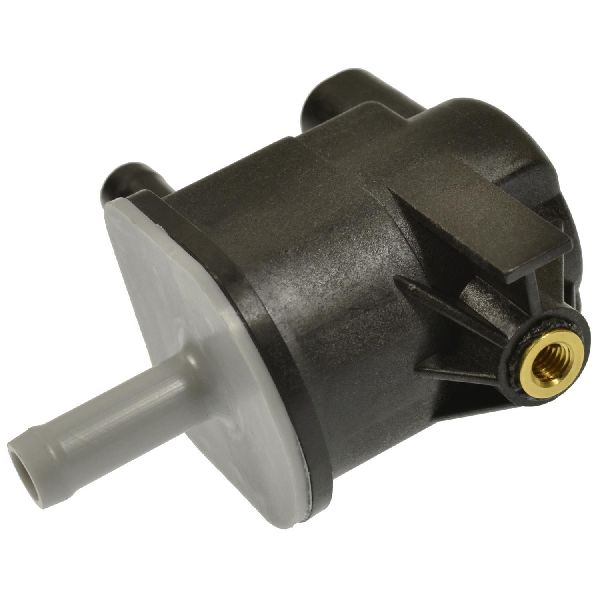
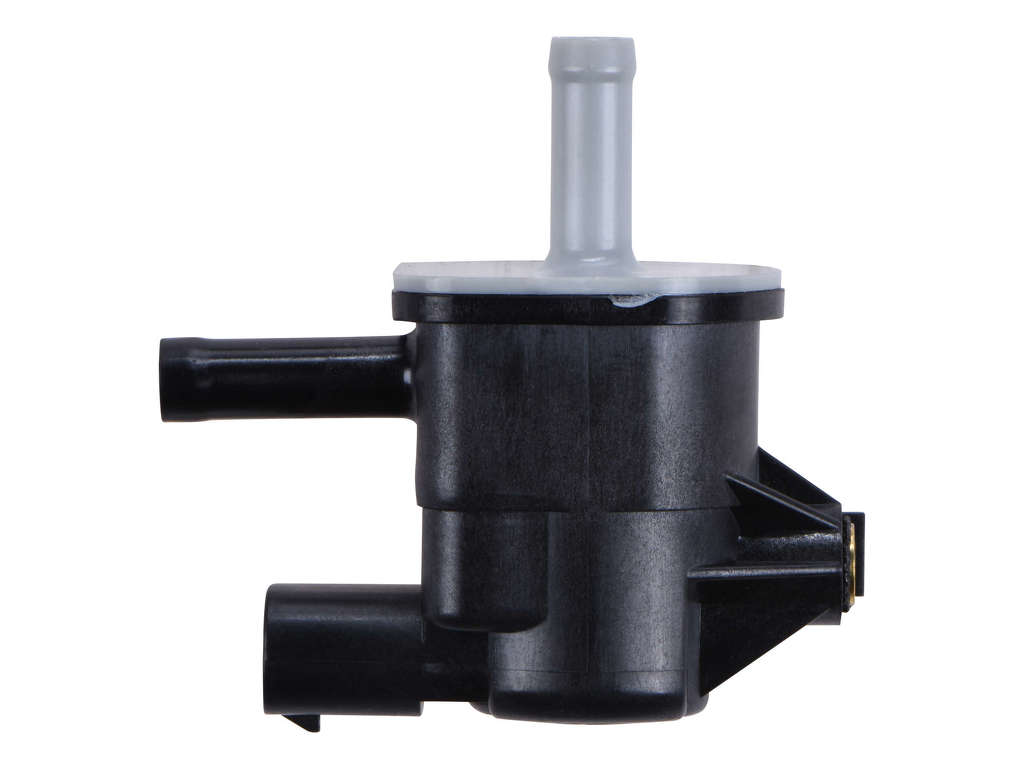
- Vapor Canister Purge Solenoid Valve
(OEM #Z504-18-741A (updated part per TSB), LF15-18-741 (original))— This is the most common failure part for a P1450 code on the Mazda 2.5L engine, as it gets stuck open and causes excessive vacuum in the fuel tank. TSB 01-012/14 for the related Mazda 6 calls for a modified part.
Trusted brands: Mazda OE, Dorman (e.g., 911-706), Standard Motor Products (SMP) (e.g., CP596)
OEM price range: $50-$90
Aftermarket price range: $30-$60
Technical Service Bulletins (TSBs) & Recalls
- TSB 01-012/14: While for the Mazda 6, this TSB is highly relevant as it addresses P1450 caused by a faulty purge valve and notes the 2.5L engine (used in the Mazda 5) is also affected, requiring a different, modified part number (Z504-18-741A).
- Bulletin #01-012-14-2908A: This manufacturer bulletin specifically addresses the illumination of the MIL with DTC P1450:00, noting that the purge valve has been modified to resolve the inability to bleed up fuel tank vacuum.
Platform-Specific Known Issues
- A 2012 Mazda 5 owner on Mazdas247.com reported a stubborn P1450 code returning even after replacing the purge valve, vent valve, and gas cap, leading them to suspect a hard-to-find hose blockage.
- Another owner on Mazdas247 with a CX-9 (sharing EVAP components) dealt with P1450 for almost a year after replacing the purge valve and gas cap, before being directed to inspect the canister and vent solenoid area at the rear of the vehicle.
Mechanic-Grade Diagnostic Values
- Vapor Canister Purge Valve Solenoid Resistance — expected: 30 to 38 ohms (when cool). Failure: A reading significantly outside this range, or an open/short circuit.
- EVAP Canister Vent Valve Solenoid Resistance — expected: 48 to 65 ohms. Failure: A reading outside this range indicates a damaged solenoid winding.
- Fuel Tank Pressure (FTP) Sensor Voltage (Key On, Engine Off, Gas Cap Off) — expected: Approximately 2.6 Volts. Failure: A voltage reading that is stuck high (near 5V) or low (near 0V), or does not sit near 2.6V when the system is open to atmosphere.
- FTP Sensor Reference Voltage — expected: Approximately 5.0 Volts. Failure: Significantly less than 5V on the reference wire at the sensor connector (with key on) points to a wiring or PCM issue.
Scan Tool Commands That Help
- Mazda IDS / M-MDS or equivalent professional scan tool: EVAP System Test — This function forces the onboard EVAP monitor to run on demand, allowing a technician to test the system's integrity without waiting for specific drive cycle conditions to be met.
- Mazda IDS / M-MDS or equivalent professional scan tool: Purge Solenoid Valve (Purge V) Command — Use this bidirectional control to command the purge valve to 0% (closed). While monitoring FTP live data, if vacuum still builds in the tank, it confirms the valve is mechanically stuck open and must be replaced.
- Mazda IDS / M-MDS or equivalent professional scan tool: Canister Vent (CV) Solenoid Command — This command allows you to manually open and close the vent solenoid. Listen for an audible click from the component at the rear of the vehicle. If it doesn't actuate, or if the FTP sensor reading doesn't change when it's commanded open, the solenoid or its circuit is faulty.
Wiring & Ground Locations
- Purge Solenoid Valve Location — On the 2.5L engine, it is located at the right rear of the engine, mounted to a bracket in front of the firewall, accessible from the top of the engine bay.. This is the primary component that fails and causes P1450. Knowing its location is critical for testing and replacement.
- G23 / G29 — Located on the left rear of the engine.. These are engine ground points. A poor ground connection here could potentially affect the operation of engine-mounted sensors and solenoids within the EVAP system.
- G15 — Located in the right side of the luggage compartment.. This ground point is near the rear EVAP components, including the charcoal canister and vent solenoid. A fault at this ground could affect the canister vent solenoid's operation.
- Purge Valve Connector — A 2-wire, oval-shaped connector that pushes onto the purge solenoid.. This is the connector where voltage and resistance tests are performed on the purge valve circuit. It's a common point for checking power and control signals from the PCM.
Real Owner Repair Stories
- Mazdas247 Forum user 'peachalan' (2012 Mazda 5) — Check Engine Light with code P0451 (EVAP System Pressure Sensor/Switch Circuit Range/Performance), which is closely related to P1450 and involves the same components.
❌ Tried (didn't work) Considering replacement of the entire EVAP hose with the integrated FTP sensor (Part CG36-42-580A) for nearly $200.
✅ What actually fixed it The owner removed the EVAP hose assembly containing the FTP sensor. They cleaned the sensor itself with MAF cleaner and compressed gas duster, then flushed the hose with a plastic-safe cleaner and blew it out with compressed air. After letting it dry for 24 hours and reinstalling, the code was cleared and did not return.
OEM Part Supersession History
LF15-18-741→Z504-18-741A— The original purge valve design was prone to sticking open. TSB 01-012/14, while for the Mazda 6, identified this weakness and called for a modified part for the 2.5L engine.
Heads up: While the original part LF15-18-741 will fit, it is prone to the same failure. It is highly recommended to use the updated part number Z504-18-741A or a quality aftermarket equivalent to prevent recurrence.Evaporation Hose Assembly (with FTP sensor)→CG36-42-580A (modified part)— Per TSB 01-019/12 for a P0451 code, the installation angle of the FTP sensor was changed to prevent foreign material from adhering to it. The repair involves replacing the original hose assembly and a short cord with modified parts.
Diagnostic Flowchart
Other Known Issues on This Vehicle
Issues unrelated to this code that are worth knowing about as an owner of this generation:
- Automatic Transmission Control Module (TCM) Failure 🔴 High — Common on models approaching or exceeding 100,000 miles. Heat from being mounted on the transmission is a suspected cause.
- Broken Rear Shock Mounts 🟠 Medium — The original aluminum top mounts for the rear shocks are prone to corrosion and breaking, causing a loud clunking or rattling noise from the rear suspension.
- Premature Clutch Wear (Manual Transmission) 🟠 Medium — Some owners of the manual transmission model, particularly the 2012 year, have reported premature clutch failure around 50,000 miles.
- Seized Brake Calipers 🟡 Low — Calipers, both front and rear, can be prone to seizing, requiring replacement during a brake job.
- Suspension Noises (Sway Bar Links/Bushings) 🟡 Low — Clunking noises from the front suspension are frequently caused by worn sway bar end links or bushings, which are a common wear item.
Used vs. New Parts: Buying Guide for This Vehicle
When a used part is the smart pick: For purely mechanical, non-wear items like brackets or specific hose assemblies (if thoroughly inspected for cracks). A used purge or vent solenoid from a low-mileage donor vehicle can be a cost-effective option, but it MUST be tested with a 12V source to confirm it clicks open and closed properly before installation.
Donor-vehicle mileage cap: roughly under 60000 miles for the part to have meaningful remaining life.
What to inspect on the donor part:
- For solenoids, check for corrosion on electrical pins and cracks in the plastic housing.
- For hoses, ensure they are still pliable and show no signs of dry rot, cracking, or swelling.
- Avoid parts from vehicles in salt-belt regions, as corrosion is more likely to have affected electrical connectors and metal components.
OEM-only on this vehicle (don't cheap out):
- Fuel Tank Pressure (FTP) Sensor: While available aftermarket, the sensor's accuracy is critical. Given the TSB related to sensor contamination, using the updated OEM part (CG36-42-580A) is the safest bet to ensure compatibility and prevent recurring issues.
Aftermarket brands forum-validated for this vehicle:
- Standard Motor Products (SMP)
- Dorman
Brands owners have reported issues with on this vehicle:
- Unbranded, no-name parts from online marketplaces should be avoided, as the quality of the internal solenoid windings and seals can be highly inconsistent, leading to premature failure.
Real Owner Stories
Aggregated from forums and TSBs cited above. Mileages and costs reflect what owners reported in those sources.
2012 Mazda 5
Symptoms: A stubborn P1450 code that kept returning even after replacing multiple parts like the purge valve, vent valve, and gas cap.
What fixed it: The owner had not yet found a definitive fix but suspected a hard-to-find blockage in an EVAP hose was the root cause.
Source hint: Mazdas247.com: Thread 'Stubborn P1450 code...Any ideas? 2012 Mazda5' (Jul 10, 2024)
Mazda CX-9 (shares EVAP components)
Symptoms: Owner dealt with a persistent P1450 check engine light for almost a year after replacing the purge valve and gas cap.
What fixed it: The issue was resolved after the owner was directed to inspect the canister and vent solenoid area at the rear of the vehicle, implying the fault was found there.
Source hint: Mazdas247.com: Thread 'Been dealing with this Check Engine P1450 for almost a year' (Sep 10, 2025)
Related OBD-II Codes
Frequently Asked Questions
The TSB mentioned (01-012/14) is for a Mazda 6. Does it apply to my 2012-2015 Mazda 5?
What does the 'whoosh' sound from my gas cap mean when I refuel?
I replaced the purge valve, but the P1450 code came back. What should I check next on my Mazda 5?
My Mazda 5 is hard to start or stalls right after I fill it with gas. Is this related to P1450?
How can I test the purge valve myself to see if it's the problem?
I've heard spiders can cause this check engine light on Mazdas. Is that true?
Helpful Videos
We Have This Part in Stock


The information in this article is provided for general reference and educational purposes only. Vehicle specifications, procedures, and part compatibility can vary by production date, trim level, and region. Always consult your vehicle's factory service manual and verify part numbers before purchasing or performing repairs. Safety-critical components such as airbags, seat belts, and braking systems should be installed by a qualified professional.
- Mazda 5:
- 🧭 Diagnostic Flowchart
- 🎬 Helpful Videos
- 🛍️ Shop This Part
- What's Unique About the 2012-2015 Mazda 5
- Symptoms You May Notice
- Most Likely Causes
- Rare But Worth Checking
- Diagnosis Steps
- Parts You'll Likely Need
- Technical Service Bulletins (TSBs) & Recalls
- Platform-Specific Known Issues
- Mechanic-Grade Diagnostic Values
- Scan Tool Commands That Help
- Wiring & Ground Locations
- Real Owner Repair Stories
- OEM Part Supersession History
- Other Known Issues on This Vehicle
- Used vs. New Parts: Buying Guide for This Vehicle
- Real Owner Stories
- 2012 Mazda 5
- Mazda CX-9 (shares EVAP components)
- Related OBD-II Codes
- Frequently Asked Questions
- 🎟️ Get 5% Off