

P1450 on 2010-2011 Mercury Milan 2.5L: Causes and Fixes for Excessive Fuel Tank Vacuum
For a 2010-2011 Mercury Milan, the P1450 code is almost always caused by a faulty vapor canister purge valve that is stuck open. This is an inexpensive part (around $30-$60) and is very easy to replace yourself in under 30 minutes. A key symptom is difficulty starting the car right after getting gas, or hearing a loud 'whoosh' of air when opening the fuel filler.
- P1450 on your Milan almost certainly means you need a new vapor canister purge valve.
- A classic symptom is the car struggling to start right after you get gas.
- Check if your vehicle was serviced under safety recall #15V793000, which addresses this exact problem.
- Replacing the purge valve is a very easy and cheap DIY fix that requires basic tools and about 15-30 minutes.
What's Unique About the 2010-2011 Mercury Milan
The 2010-2011 Mercury Milan, along with its sibling the Ford Fusion, is particularly known for this P1450 code. The primary culprit is a canister purge valve (CPV) that is prone to sticking open. According to repair technicians, Ford redesigned this part around 2009, and the new design proved to be very troublesome, leading to a high failure rate. In fact, Ford issued a safety recall (NHTSA #15V793000, Ford #15S34) for this exact issue on 2010-2011 models because the excessive vacuum could potentially crack the fuel tank, leading to a fuel leak and fire risk, or cause the engine to stall. The most telling symptom on this platform is difficulty starting the engine immediately after refueling.
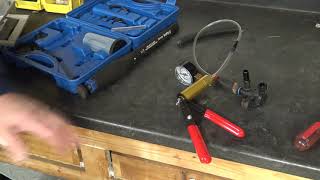
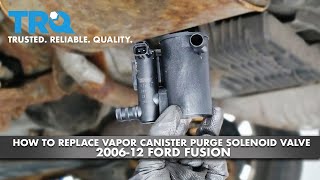
🎬 Watch: A 2010 Fusion owner explains this P1450 errorSymptoms You May Notice
- Check Engine Light is on.
- Difficulty starting the engine, or stalling, especially right after refueling.
- Loud 'whoosh' or hiss of air rushing INTO the tank when opening the fuel filler cap/door.
- Rough or unstable idle.
- Engine stalling at low speeds or when coming to a stop.
- Slightly reduced fuel economy.
- Replacing the gas cap. While a loose gas cap can cause other EVAP codes (like P0455 or P0457), it is not a typical cause for P1450, which indicates excessive vacuum, not a leak.
Most Likely Causes
- Vapor Canister Purge Valve Stuck Open 🔴 High Probability → Shop Vapor Canister This specific part is known to fail and was the subject of a manufacturer safety recall (NHTSA #15V793000) for the 2010-2011 Milan. It is the most common cause by a wide margin, with many mechanics stating it's the culprit over 90% of the time for this code on Fords. A 2009 redesign of the part is often blamed for its high failure rate.
How to confirm: Locate the purge valve in the engine bay, mounted on the intake manifold. With the engine running, disconnect the EVAP hose coming from the rear of the car. If you can feel suction from the valve's port with your finger, it is stuck open and needs to be replaced. A properly functioning valve should be closed at idle with no vacuum present.
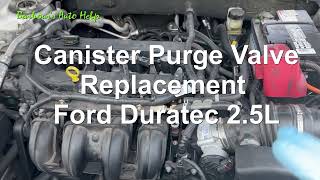
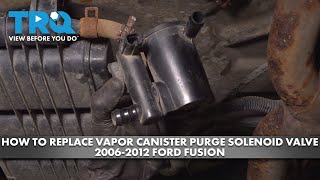
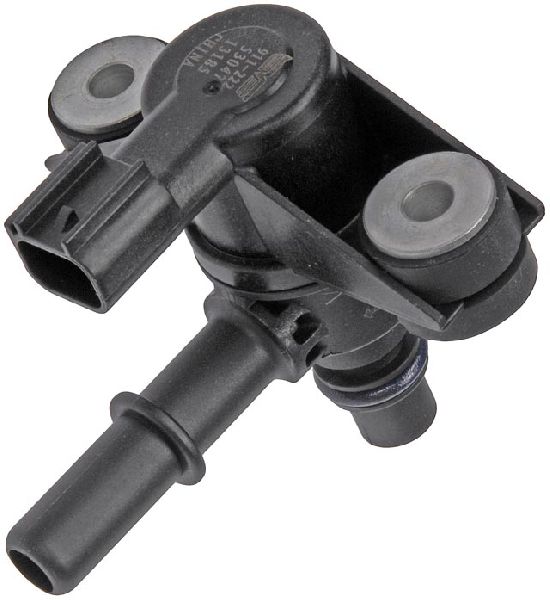
Typical fix: Replace the vapor canister purge valve. It is typically mounted on the engine's intake manifold with two 8mm bolts, making it a very simple DIY replacement that often takes less than 15 minutes. 🎬 See this 2.5L Duratec purge valve replacement walkthrough
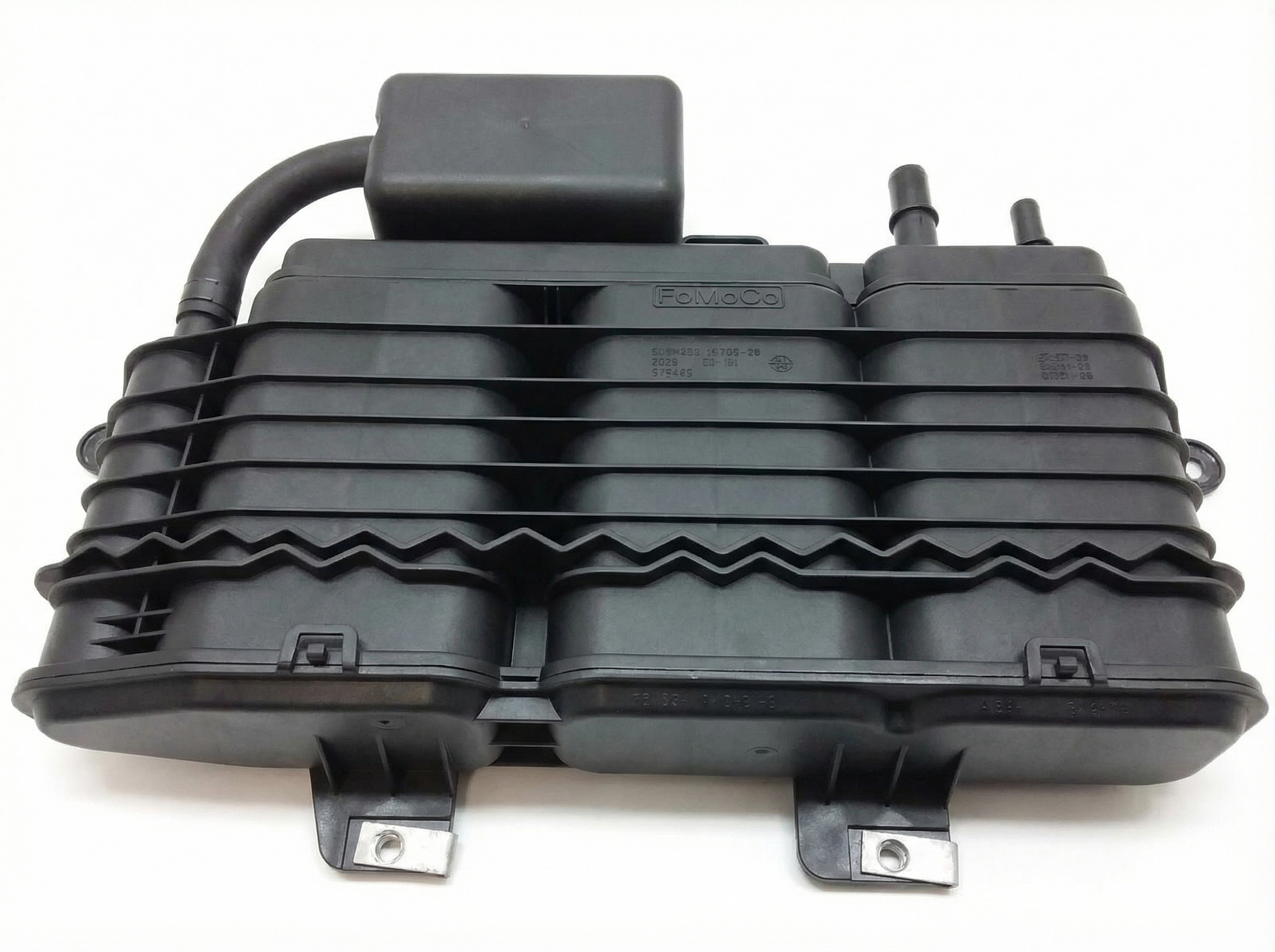
Est. part cost: $30-$70 - Blocked Canister Vent Solenoid or Hose 🟡 Medium Probability → Shop Vapor Canister The vent solenoid allows fresh air into the system to relieve vacuum. It is located near the charcoal canister by the fuel tank and its filter can become clogged with dirt, debris, or even spider webs, preventing the tank from venting.
How to confirm: Locate the vent solenoid near the charcoal canister by the fuel tank. Inspect the solenoid and its associated hoses for blockages, dirt, or insect nests. A scan tool with bidirectional controls can command the valve open to test its function. If the purge valve has been replaced and the code returns, this is the next most likely component to check.
Typical fix: Clean or replace the canister vent solenoid and any clogged hoses. The solenoid is typically located near the fuel tank.
Est. part cost: $40-$80 - Kinked or Collapsed EVAP Hose ⚪ Low Probability
How to confirm: Visually inspect all accessible EVAP system hoses, especially the lines running from the fuel tank to the charcoal canister and up to the purge valve in the engine bay. Look for any sharp bends, kinks, or soft, collapsed sections that could restrict airflow.
Typical fix: Replace the damaged section of hose.
Est. part cost: $10-$30
Rare But Worth Checking
- Faulty Fuel Tank Pressure (FTP) Sensor: → Shop Fuel Tank This sensor tells the computer the pressure/vacuum level in the tank. While less common, if it provides incorrect readings, it can trick the computer into setting the P1450 code. Diagnosis often requires a scan tool to view live data or a multimeter and vacuum pump to test the sensor's output.
- Fuel-Saturated Charcoal Canister: → Shop Vapor Canister Repeatedly 'topping off' the fuel tank after the pump clicks off can force liquid fuel into the charcoal canister, which is only designed for vapor. This can saturate the canister and block airflow, leading to this code.
Diagnosis Steps
- Check for Recalls: First, verify if your vehicle's VIN was included in NHTSA Safety Recall #15V793000 (Ford #15S34) and if the repair was performed. The dealer action was to update software and inspect/replace the purge valve and potentially the fuel tank.
- Scan for Codes: Confirm P1450 is the primary code present. If other codes exist, address them first.
- Test the Purge Valve: This is the most likely culprit. Locate the purge valve on the engine. Start the engine. Disconnect the hose running from the valve towards the rear of the car. Place your finger over the port on the valve. If you feel vacuum, the valve is stuck open and must be replaced.
- Inspect the Vent System: If the purge valve is good, move to the rear of the vehicle. Locate the EVAP canister and vent solenoid near the fuel tank. Inspect the vent hose and filter for clogs from dirt, debris, or insects.
- Test the Vent Solenoid: If the vent path seems clear, the solenoid itself may be stuck closed. This can be tested with a bidirectional scan tool or by applying 12V to its terminals 🎬 Watch: How to diagnose and fix the vacuum bleed issue to see if it clicks open.
- Inspect EVAP Hoses: Visually trace the EVAP lines for any obvious kinks, collapses, or damage.
- Test the Fuel Tank Pressure (FTP) Sensor: If all else fails, the FTP sensor may be providing faulty data. This requires a scan tool to monitor its readings or manual testing with a multimeter.
Parts You'll Likely Need
- Vapor Canister Purge Valve / Solenoid
(OEM #9U5Z-9C915-H (Superseded by 9U5Z-9C915-J))— This is the most frequent failure item for code P1450 on this vehicle and was subject to a safety recall. It gets stuck open, causing constant engine vacuum to be applied to the fuel tank. The original part number 9U5Z-9C915-H has been superseded by 9U5Z-9C915-J.
Trusted brands: Motorcraft, Dorman, Standard Motor Products
OEM price range: $50-$70
Aftermarket price range: $30-$50 - Canister Vent Solenoid
(OEM #Standard Motor Products CVS83 (Common Aftermarket))— This is the second most likely cause if the purge valve is confirmed to be good. It can get stuck closed or its filter can become clogged, preventing the system from venting.
Trusted brands: Standard Motor Products, Dorman, SKP
OEM price range: $60-$90
Aftermarket price range: $40-$60
Related Codes That Often Appear With This One
- P0456 (EVAP System Small Leak Detected) - Sometimes a failing purge valve can cause other related EVAP codes to appear.
Technical Service Bulletins (TSBs) & Recalls
- NHTSA Safety Recall #15V793000 / Ford Recall #15S34 - Canister Purge Valve Failure
Platform-Specific Known Issues
- Safety Recall NHTSA #15V793000: Ford issued a recall for the 2010-2011 Mercury Milan (and Ford Fusion) for a canister purge valve (CPV) that may not close properly. This can cause excessive vacuum in the fuel system that may deform or crack the fuel tank, cause a fuel leak, or lead to an engine stall, increasing the risk of a crash or fire. The dealer remedy involved updating the powertrain control module software and, if necessary, replacing the CPV and/or fuel tank.
Mechanic-Grade Diagnostic Values
- Fuel Tank Pressure (FTP) Sensor Voltage PID (FTP V) — expected: 2.40 to 2.80 Volts. Failure: A voltage reading outside of this range with the key on and engine off indicates a potential bias or fault in the FTP sensor or its circuit. A reading below 2.4V at rest could suggest the system thinks it's under vacuum when it is not.
Hidden / Shadow Codes Worth Checking
- P1450 00 EC: This is an extended code format that may be displayed on some advanced scan tools. The '00' is a failure type code. For this DTC, the diagnostic path remains the same, focusing on the purge valve and vent system. (see via Ford-specific scan tools like IDS or high-end professional scanners.)
Scan Tool Commands That Help
- Ford IDS (Integrated Diagnostic System): PCM Reprogramming (Calibration Update) — As part of recall 15S34, Ford issued a PCM software update (using IDS release 99.05 or later) to change the EVAP monitor strategy and help prevent the excessive vacuum condition. This should be checked to see if it was performed.
- Bidirectional Scan Tool (e.g., Ford IDS): EVAP System Test / Purge and Vent Solenoid Command — This function allows the technician to manually command the purge valve and vent valve to open or close. This is used to verify if the solenoids are responding to commands and to check the integrity of the system by monitoring the FTP sensor's response.
- Ford IDS (Integrated Diagnostic System): Manual EVAP Test — To initiate a forced system test, a technician can navigate to the datalogger within the powertrain menu to manually run the EVAP monitor and observe live data from the FTP sensor and solenoids.
Wiring & Ground Locations
- G102 — Located on the left rear of the engine compartment.. This is a primary engine bay ground point. A corroded or loose G102 ground could cause erratic behavior or failure of engine-mounted electronic components, including the Vapor Canister Purge Valve which is controlled by the PCM.
- Purge Valve Connector — On the Vapor Canister Purge Valve, mounted to the intake manifold.. This is a 2-pin connector. Checking for voltage, ground, and continuity at these pins is a key step if the valve itself is good but not functioning, pointing to a wiring issue.
Real Owner Repair Stories
- Reddit user on r/FordFocus (Ford Focus (similar platform and issue)) — P1450 code was present.
❌ Tried (didn't work) Took vehicle to dealer for the related fuel tank deformation recall (15S34).
✅ What actually fixed it The dealer only performed the PCM software update and claimed the purge valve passed their test, then closed the recall. The P1450 code returned days later. The dealer then refused to replace the valve under the recall and wanted to charge a new diagnostic fee. The owner was forced to replace the known-faulty purge valve themselves to resolve the code. This highlights that the PCM update alone may not fix the root cause. - Ford Edge Forum user (2017 Ford Edge 2.0 Ecoboost, 75,000 miles) — P1450 Check Engine Light.
❌ Tried (didn't work) Replacing the vapor canister purge valve.
✅ What actually fixed it The code returned one month after replacing the purge valve. This is a classic example of the secondary diagnostic path. While the user's thread did not post a final resolution, the next step advised by the community is always to inspect and test the canister vent solenoid at the rear of the vehicle, as it is the next most likely component to fail and cause the same code. - NHTSA ODI #11074537 — An owner reported that their vehicle displayed the traction light and codes C1277, C1963, P1450, and P0456 were found during a diagnostic scan.
OEM Part Supersession History
9U5Z-9C915-H→9U5Z-9C915-J— The original -H part is the failure-prone design that was the subject of Safety Recall 15S34. The -J version is the updated, more reliable replacement.
Heads up: While the old part will physically fit, it should never be used as a replacement. Many aftermarket parts cross-reference both numbers, but ensure you are buying from a reputable brand that has incorporated the updated design. Common cross-reference numbers include Motorcraft CX-2626, Dorman 911-222, and others like AU5Z9C915B.
Model Year Variations Within This Range
- 2010-2011: The primary variation is not by model year, but whether the vehicle has had the 15S34 safety recall performed. A post-recall vehicle will have updated PCM software designed to alter the EVAP monitor thresholds. This can change how the system reacts to a failing purge valve, but it does not fix the underlying mechanical vulnerability of the original part if it was not replaced.
Diagnostic Flowchart
Used vs. New Parts: Buying Guide for This Vehicle
When a used part is the smart pick: For this specific P1450 repair, sourcing a USED vapor canister purge valve from a junkyard is NEVER a smart choice. The failure is due to a known design defect in the original part, not simple wear and tear. The probability of a used part being faulty or failing soon is extremely high. A used part should only be considered for larger, more expensive, and typically more robust components of the EVAP system like the charcoal canister itself, and only if it was damaged physically.
Donor-vehicle mileage cap: roughly under 10000 miles for the part to have meaningful remaining life.
What to inspect on the donor part:
- For a purge valve: Do not buy used.
- For a charcoal canister: Inspect for any physical cracks in the plastic housing.
- For a charcoal canister: Check for signs of liquid fuel saturation (wetness or strong fuel smell from the ports), which indicates it's compromised and should be avoided.
OEM-only on this vehicle (don't cheap out):
- None for this repair. The primary failure part (purge valve) is a simple solenoid that reputable aftermarket companies manufacture reliably.
Aftermarket brands forum-validated for this vehicle:
- Motorcraft (OEM)
- Dorman
- Standard Motor Products (SMP)
- Duralast
Brands owners have reported issues with on this vehicle:
- No-name, unbranded parts from online marketplaces. Given the low cost of a quality aftermarket part ($30-$50), the savings are not worth the risk of a repeat failure.
Real Owner Stories
Aggregated from forums and TSBs cited above. Mileages and costs reflect what owners reported in those sources.
2011 Ford Fusion SE, 2.5L 4 Cylinder
Symptoms: The car set a P1450 code and would stall after refueling. It also stalled at a red light, causing the steering to lock up. The check engine light would turn on and off intermittently.
What fixed it: The owner first replaced the engine-bay-mounted purge valve, but the problem persisted. The suggested next step was to inspect the canister vent valve located near the fuel tank.
Source hint: Reddit r/Ford thread titled 'P1450 - 2011 Ford Fusion SE'
2010 Mercury Milan — 119000 miles
Symptoms: The primary complaint was 'service the advance track' and 'service the power steering' warnings along with a loss of power steering. A diagnostic scan revealed codes P1450 and P0456, in addition to stability control codes C1277 and C1963.
What fixed it: The report does not specify the final repair.
Source hint: CarComplaints.com / NHTSA
2010 Mercury Milan — 117,000 miles
Symptoms: An owner reported a traction light coming on and a diagnostic scan showed codes C1277, C1963, P1450, and P0456.
What fixed it: The report does not specify the final repair.
Source hint: NHTSA ODI #11074537
Related OBD-II Codes
Frequently Asked Questions
Is there a recall for the P1450 code on my 2010-2011 Mercury Milan?
What is the most common fix for P1450 on the 2.5L Milan?
How difficult is it to replace the purge valve myself?
What happens if I ignore the P1450 code?
I replaced the purge valve on the engine, but the code came back. What's next?
My friend's Ford Fusion has the same stalling issue after refueling. Is it related?
Helpful Videos

Used OEM Parts in Stock
New Aftermarket Parts Available


The information in this article is provided for general reference and educational purposes only. Vehicle specifications, procedures, and part compatibility can vary by production date, trim level, and region. Always consult your vehicle's factory service manual and verify part numbers before purchasing or performing repairs. Safety-critical components such as airbags, seat belts, and braking systems should be installed by a qualified professional.
- Mercury Milan:
- 🧭 Diagnostic Flowchart
- 🎬 Helpful Videos
- 🛍️ Shop This Part
- What's Unique About the 2010-2011 Mercury Milan
- Symptoms You May Notice
- Most Likely Causes
- Rare But Worth Checking
- Diagnosis Steps
- Parts You'll Likely Need
- Related Codes That Often Appear With This One
- Technical Service Bulletins (TSBs) & Recalls
- Platform-Specific Known Issues
- Mechanic-Grade Diagnostic Values
- Hidden / Shadow Codes Worth Checking
- Scan Tool Commands That Help
- Wiring & Ground Locations
- Real Owner Repair Stories
- OEM Part Supersession History
- Model Year Variations Within This Range
- Used vs. New Parts: Buying Guide for This Vehicle
- Real Owner Stories
- 2011 Ford Fusion SE, 2.5L 4 Cylinder
- 2010 Mercury Milan — 119000 miles
- 2010 Mercury Milan — 117,000 miles
- Related OBD-II Codes
- Frequently Asked Questions
- 🎟️ Get 5% Off