

P1450 on 2008-2010 Saturn Vue: Understanding a Confusing Code
P1450 is not a standard trouble code for a 2008-2010 Saturn Vue. This code is almost exclusively used by Ford. The equivalent problem on a GM vehicle like your Vue is code P0496, which most often points to a faulty EVAP purge valve causing hard starting after refueling.
- P1450 is the wrong code for your Saturn Vue; the correct code for this problem is almost certainly P0496.
- Do not buy parts based on a P1450 diagnosis for this vehicle.
- The most likely cause of your symptoms (and a P0496 code) is a bad EVAP purge valve, which is an inexpensive and easy part to replace.
- The classic symptom is difficulty starting the engine immediately after refueling.
- Confirm the purge valve is faulty by checking for vacuum at its inlet port while the engine is idling. There should be none.
- Ignoring this issue can lead to failed emissions tests, poor idle, and difficulty starting after refueling.
What's Unique About the 2008-2010 Saturn Vue
The 2008-2010 Saturn Vue is a General Motors (GM) platform, a rebadged Opel Antara. GM did not use the P1450 code designation for EVAP system faults. Instead, for a fault where the EVAP system has undesired flow (often from a stuck-open purge valve), GM uses the standard SAE code P0496. Therefore, seeing a P1450 code on a Vue is an anomaly, and all diagnostic efforts should be redirected toward the symptoms and causes of a P0496 code.
Symptoms You May Notice
- Check Engine Light is on
- Difficulty starting the engine, especially right after getting gas. The engine may crank for a long time or require you to press the gas pedal to start.
- Rough or erratic idle that may smooth out after a few moments.
- Slightly reduced fuel economy
- A 'whoosh' sound when opening the gas cap is noticeably absent, as vacuum is not being held correctly
- A strong smell of fuel from the exhaust on startup.
- Replacing parts based on the Ford-specific definition of P1450, such as the vent valve or fuel tank pressure sensor, without first confirming the actual fault code is P0496.
Most Likely Causes
- Incorrect Code Interpretation (Actual Code is likely P0496) 🔴 High Probability The P1450 code is not used by GM for this model year. The symptoms align perfectly with the GM code P0496. This is a common issue on GM vehicles where a generic scanner misinterprets the manufacturer-specific data.
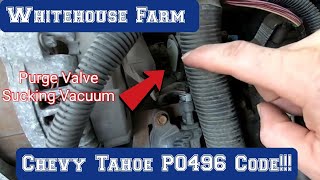
How to confirm: Rescan the vehicle with a high-quality, GM-compatible OBD-II scanner to verify the correct trouble code. If P0496 is present, proceed with diagnosing that code. 🎬 See this quick 3-minute guide to diagnosing the P0496 code.
Typical fix: Address the root cause of the actual code stored, which is most commonly a faulty EVAP Purge Valve for a P0496.
Est. part cost: $0 (for re-diagnosis) - Faulty EVAP Canister Purge Valve (for the equivalent P0496 code) 🔴 High Probability → Shop Vapor Canister This is the most common failure point for the GM EVAP system that causes flow during a non-purge condition. The valve gets stuck open, allowing un-commanded fuel vapors into the intake manifold, which floods the engine during startup after refueling.
How to confirm: With the engine running at idle, disconnect the EVAP line from the purge valve. If you can feel suction from the valve's port with your finger, it is stuck open and has failed. You can also remove the valve and try to blow through it; if air passes, it is stuck open and faulty.
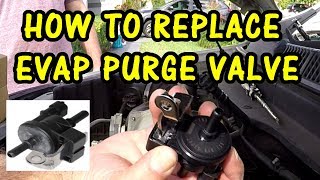
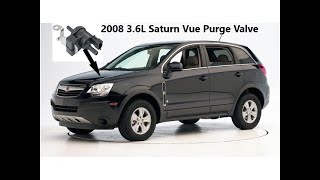
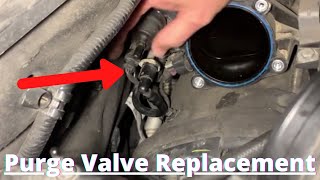
Typical fix: Replace the EVAP canister purge valve/solenoid. This is a common DIY repair. 🎬 Watch: Step-by-step purge valve replacement on a 3.6L Vue.
Est. part cost: $25-$60
Rare But Worth Checking
- Faulty Scanner: Some generic or older OBD-II code readers may incorrectly interpret manufacturer-specific codes. If the code persists as P1450 across multiple high-quality scanners, it could indicate a very rare ECU software glitch, but this is extremely unlikely.
- Leaking or Damaged EVAP Hoses: Cracked or disconnected hoses in the EVAP system can cause leaks that trigger a P0496 code. A visual inspection of all lines running from the engine bay to the charcoal canister is recommended.
- Faulty Fuel Tank Pressure (FTP) Sensor: → Shop Fuel Tank The FTP sensor tells the computer the pressure or vacuum level in the fuel tank. If it provides an incorrect reading, the computer may falsely believe there is a non-purge flow. This is much less common than a purge valve failure.
Diagnosis Steps
- Confirm the Code: Your first and most important step is to re-scan the vehicle's computer, preferably with a professional-grade scanner, to confirm if the code is truly P1450 or if it is actually P0496. Do not proceed until this is verified.
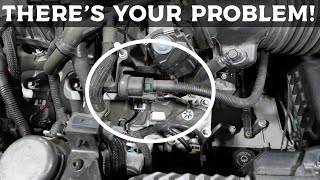
- Assume P0496 and Locate the Purge Valve: The location depends on your engine. For the 3.6L V6, remove the plastic engine cover; the valve is mounted between the engine and the firewall. For the 2.4L I4, it is also typically on the engine near the intake manifold.
- Test the Purge Valve: Start the engine and let it idle. Disconnect the electrical connector from the purge valve. Disconnect the vapor line that runs from the charcoal canister to the purge valve. Place your finger over the port on the valve itself. There should be NO vacuum at idle. If you feel suction (your glove may get sucked in), the valve is stuck open and must be replaced.
- Inspect Hoses: If the purge valve is not stuck open, carefully inspect all EVAP hoses between the intake manifold, the purge valve, and the charcoal canister for cracks, splits, or loose connections.
- Check the Gas Cap: Ensure the gas cap is the correct one for the vehicle and that its seal is intact and not cracked or hardened. A loose or faulty gas cap can cause EVAP codes, though it usually triggers a different code for a small/large leak.
Parts You'll Likely Need
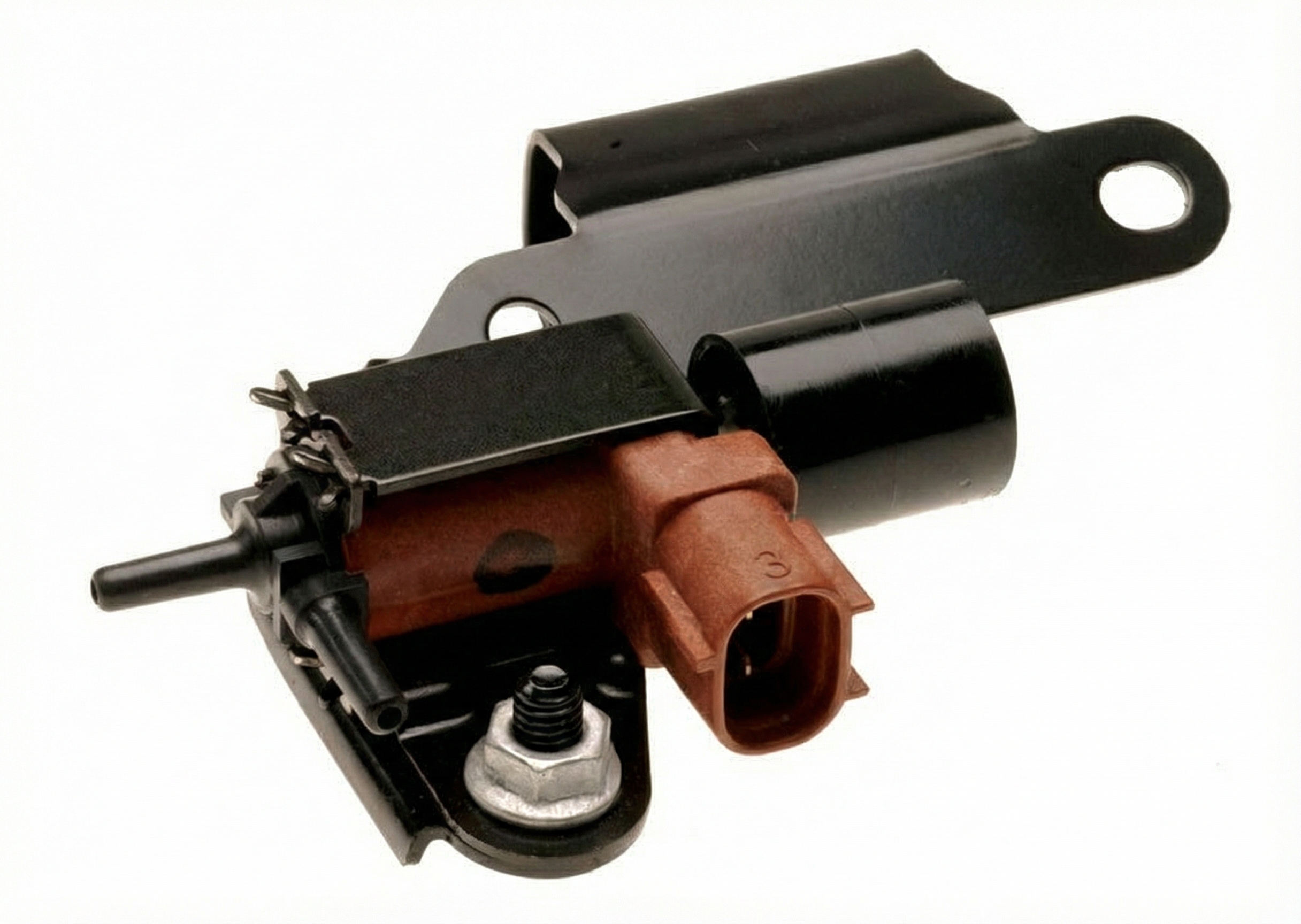
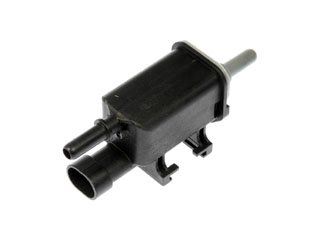
- EVAP Canister Purge Valve / Solenoid
(OEM #ACDelco 214-1685 (For 3.5L & 3.6L V6) or ACDelco 214-1680 (For 2.4L I4))— This is the most frequent cause of the equivalent and correct GM code, P0496, which involves EVAP flow when none is commanded.
Trusted brands: ACDelco, Delphi, Dorman
OEM price range: $40-$70
Aftermarket price range: $25-$60
Related Codes That Often Appear With This One
- P0496 — This is the correct General Motors code for the symptoms and fault condition that P1450 represents on other makes like Ford.
Technical Service Bulletins (TSBs) & Recalls
- PIP5284A: While not for the Vue specifically, a related GM TSB for other models with P0496 notes that if the code persists after replacing parts, the customer's driving habits could be a factor, though this is an extreme edge case.
Platform-Specific Known Issues
- Engine-Specific Part Locations: The 2008-2010 Vue was offered with a 2.4L I4, a 3.5L V6, and a 3.6L V6. The EVAP purge valve is in a different location depending on the engine. On the 3.6L V6, it is easily accessible on the back of the engine near the firewall after removing the engine cover. On the 2.4L, it is also on the engine but may be in a slightly different position.
- Don't Top Off The Gas Tank: A common contributor to premature purge valve failure is repeatedly overfilling the fuel tank. When the pump clicks off, stop filling. Forcing more fuel in can push raw gasoline into the charcoal canister and EVAP lines, which can damage the sensitive purge valve solenoid.
Mechanic-Grade Diagnostic Values
- EVAP Canister Purge Valve Solenoid Resistance — expected: Typically 20-40 Ohms for many GM designs of this era. Some service data suggests a range of 30-38 Ohms.. Failure: A reading of infinite resistance (open circuit) or very low resistance (short circuit) indicates a failed solenoid coil.
- Voltage at Purge Valve Connector (Ignition ON, Engine OFF) — expected: Battery voltage (approx. 12V) on the power supply wire (typically Pink/Black on GM vehicles).. Failure: No voltage suggests a problem with the fuse (e.g., ECM/TCM fuse) or wiring from the underhood fuse block.
- Control Signal at Purge Valve Connector (Engine Running) — expected: A pulse-width modulated (PWM) ground signal from the ECM. Using a multimeter, this may show as a fluctuating voltage. An oscilloscope is required to see the actual duty cycle waveform.. Failure: A constant ground or no ground signal when the valve should be operating (commanded ON with a scan tool) points to a wiring or ECM driver issue.
Scan Tool Commands That Help
- Tech2 / GDS2 (GM Scanners): EVAP Purge/Seal or EVAP Purge Solenoid Control — This bidirectional control is crucial for diagnosis. It allows the technician to command the purge valve open and closed manually while the engine is running. You can command the valve closed (0% duty cycle) and check for vacuum at the valve's port; any vacuum confirms it's stuck open. You can then command it open (e.g., 50% duty cycle) to verify the ECM driver and wiring are functioning and that the valve clicks.
Wiring & Ground Locations
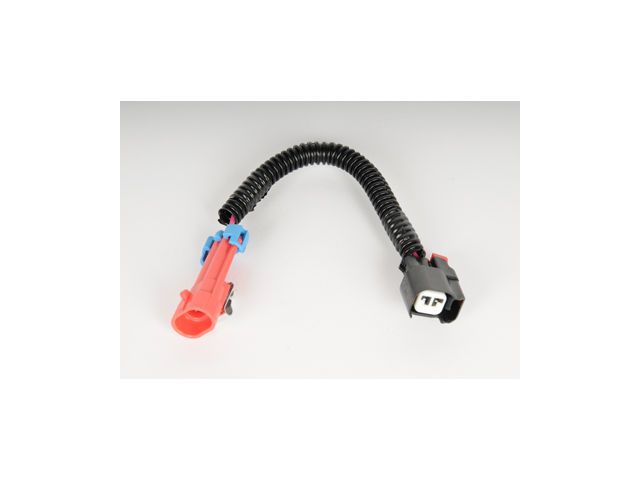
- EVAP Purge Solenoid Connector — On the EVAP purge solenoid itself, located on the engine.. This 2-pin connector provides power and control to the valve. Pin A (typically Pink/Black wire) is ignition voltage from the underhood fuse block. Pin B (wire color varies by engine) is the ground-side control from the ECM. A poor connection here will prevent the valve from operating correctly.
- G103 — On the cowl at the left rear of the engine compartment, above the brake booster.. This is a major ground point for the Body Control Module (BCM) and other interior modules. While not a direct cause for P0496, a poor ground here can cause bizarre communication issues that could potentially be misinterpreted by a generic scanner.
- G105 / G106 — G105 is at the left rear of the engine. G106 is on the engine at the left front top corner.. These are primary engine grounds. The Engine Control Module (ECM) relies on a solid ground connection to accurately control outputs like the purge solenoid. A corroded or loose engine ground can cause erratic behavior in many engine components, including EVAP solenoids.
- ECM Connector X1, Pin 56 — On the Engine Control Module (ECM), which is located in the left front of the engine compartment.. For the 3.6L V6 engine, Pin 56 (White wire) on the X1 connector is the control circuit for the EVAP Canister Vent Solenoid. While P0496 is for the purge valve, a malfunctioning vent valve circuit can sometimes cause the system to fail its diagnostic tests, leading to confusion. The purge valve control is on a different pin, but checking related circuits is key in tough diagnoses.
Real Owner Repair Stories
- YouTube channel 'Watch Wes Work' (2017 Buick Envision with 3.6L V6 (platform-mate with similar engine/EVAP design)) — Check Engine Light with code P0496.
❌ Tried (didn't work) The video proceeds directly to the most likely cause.
✅ What actually fixed it The EVAP purge valve was stuck open. This was confirmed by starting the engine, disconnecting the EVAP line from the valve, and feeling for vacuum with a finger while the valve's electrical connector was unplugged. Suction was present, indicating a mechanical failure. Replacing the purge valve resolved the issue. - RepairPal Q&A Forum (2008 Saturn Vue with 3.6L V6) — Check Engine Light on with code P0496. Vehicle was running fine otherwise.
❌ Tried (didn't work) The owner first sought advice before attempting repairs.
✅ What actually fixed it The accepted answer identified the faulty EVAP canister purge valve as the most likely cause among a list of possibilities, confirming the common failure pattern for this code on this vehicle.
"I Checked Everything" — The Actual Cause
- In cases of P0496, a smoke test of the EVAP system will often come back clean (no leaks). This is because the code indicates unwanted *flow*, not necessarily a *leak* to the atmosphere. The most common cause is the purge valve being mechanically stuck open, which allows vacuum from the intake manifold to constantly pull on the fuel tank. A smoke test pressurizes the system but may not reveal a valve that is stuck open internally, leading technicians to mistakenly rule out the EVAP system. The definitive test is checking for vacuum at the valve's inlet port with the engine running and the valve de-energized.
OEM Part Supersession History
12597567→ACDelco 214-1680— Standard part evolution and supplier changes.
Heads up: This part is for the 2.4L I4 engine. It is a widely used GM part across many models.12611801→ACDelco 214-1685— Standard part evolution and supplier changes.
Heads up: This part is for the 3.5L and 3.6L V6 engines. It is physically different from the 2.4L part and they are not interchangeable.
Diagnostic Flowchart
Used vs. New Parts: Buying Guide for This Vehicle
When a used part is the smart pick: Buying a used EVAP purge valve is generally not recommended. It is an inexpensive part and the failure is often due to internal wear or contamination from the fuel system, which is impossible to see. A used part carries a high risk of having the same issue or failing shortly after installation.
Donor-vehicle mileage cap: roughly under 60000 miles for the part to have meaningful remaining life.
What to inspect on the donor part:
- If buying used is the only option, source it from a vehicle with the lowest possible mileage.
- Ensure the donor vehicle was not in a front-end collision that could have damaged the engine-mounted valve.
- Visually inspect the plastic housing for cracks and the electrical connector pins for corrosion.
Aftermarket brands forum-validated for this vehicle:
- ACDelco (OEM)
- Delphi
- Standard Motor Products (SMP)
- TRQ
Brands owners have reported issues with on this vehicle:
- No-name, unbranded parts from online marketplaces should be avoided as their internal components may not meet OEM flow rate and durability specifications, leading to a quick return of the P0496 code.
Real Owner Stories
Aggregated from forums and TSBs cited above. Mileages and costs reflect what owners reported in those sources.
Saturn Vue (year/engine not specified)
Symptoms: After filling up the fuel tank, the initial engine start fails. The owner has to rev the car immediately to keep the engine from turning off. The P1450 check engine code appears 48 hours later.
What fixed it: A commenter with a similar issue reported that replacing the EVAP purge canister resolved the rough idling and hard start after refueling.
Source hint: Reddit r/Saturn_Vue - "Have any of you had to replace the fuel sensor (check engine code : P1450)"
2008 Saturn Vue 3.6L
Symptoms: The owner received a P0496 trouble code.
What fixed it: The owner was asking for the location of the EVAP purge solenoid, with the implied fix being its replacement.
Source hint: RepairPal.com question '2008-saturn-vue-evap-purge-solenoid-code-p0496-is-the-poblem-how-to-fix-it-q626241'
Chevrolet Tahoe/Suburban
Symptoms: The owner experienced a recurring P0496 failure even after replacing the purge valve.
What fixed it: The owner's creative solution was to add an inline fuel filter before the new purge valve to prevent debris from causing the new part to stick open.
Source hint: ChevroletForum.com thread titled 'My P0496 solution-79354/'
Related OBD-II Codes
Frequently Asked Questions
My generic scanner shows P1450 on my 2009 Saturn Vue. Is this correct?
Why is my Saturn Vue so hard to start right after I get gas?
Where is the EVAP purge valve located on my Vue with the 3.6L V6 engine?
How can I test the purge valve myself to see if it's bad?
Can overfilling my gas tank cause this P1450/P0496 code?
Does this same EVAP problem affect the Chevrolet Equinox or Captiva?
Helpful Videos
Used OEM Parts in Stock
New Aftermarket Parts Available


The information in this article is provided for general reference and educational purposes only. Vehicle specifications, procedures, and part compatibility can vary by production date, trim level, and region. Always consult your vehicle's factory service manual and verify part numbers before purchasing or performing repairs. Safety-critical components such as airbags, seat belts, and braking systems should be installed by a qualified professional.
- Saturn Vue:
- 🧭 Diagnostic Flowchart
- 🎬 Helpful Videos
- 🛍️ Shop This Part
- What's Unique About the 2008-2010 Saturn Vue
- Symptoms You May Notice
- Most Likely Causes
- Rare But Worth Checking
- Diagnosis Steps
- Parts You'll Likely Need
- Related Codes That Often Appear With This One
- Technical Service Bulletins (TSBs) & Recalls
- Platform-Specific Known Issues
- Mechanic-Grade Diagnostic Values
- Scan Tool Commands That Help
- Wiring & Ground Locations
- Real Owner Repair Stories
- "I Checked Everything" — The Actual Cause
- OEM Part Supersession History
- Used vs. New Parts: Buying Guide for This Vehicle
- Real Owner Stories
- Saturn Vue (year/engine not specified)
- 2008 Saturn Vue 3.6L
- Chevrolet Tahoe/Suburban
- Related OBD-II Codes
- Frequently Asked Questions
- 🎟️ Get 5% Off