

P1451 on 1995-2000 Ford Contour 2.0L: EVAP Vent Solenoid Circuit Fault Causes and Fixes
This code points to an electrical fault with the EVAP Canister Vent Solenoid, not an EVAP leak. The most common fix is replacing the vent solenoid located near the charcoal canister at the rear of the car. Expect the part to cost between $50 and $150 for a standalone solenoid, or more if it's integrated with the canister.
- P1451 is an electrical circuit problem, not a gas cap or vacuum leak issue.
- The part you need to inspect is the Canister Vent Solenoid, located at the REAR of the car with the charcoal canister, under the spare tire area.
- Do NOT confuse the vent solenoid with the purge valve, which is located in the engine bay on the firewall.
- The most likely cause is a failed solenoid, followed by damaged wiring near the solenoid.
- This is a DIY-friendly repair for those comfortable working under the car and using a multimeter.
What's Unique About the 1995-2000 Ford Contour
For the Ford Contour, the P1451 code almost always traces back to the canister vent solenoid located at the rear of the vehicle, under the spare tire well area. A common point of confusion for this vehicle is mixing up the canister vent solenoid (at the back) with the EVAP purge valve located on the firewall in the engine bay (which typically sets codes like P0443 or P1450). Owners often mistakenly replace the wrong part. The vent solenoid's location under the car makes its wiring and connector susceptible to corrosion and physical damage over time, a very common failure point on Ford vehicles of this era.
Symptoms You May Notice
- Check Engine Light is on.
- Failing a state emissions inspection.
- In rare cases, a fuel odor may be noticeable near the rear of the vehicle.
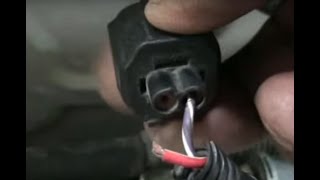
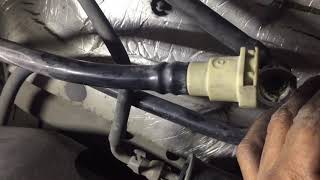
- Replacing the EVAP Purge Valve/Solenoid on the firewall. The purge valve is in the engine bay and relates to different codes (like P0443 or P1450). P1451 specifically refers to the vent solenoid circuit at the rear of the vehicle. 🎬 Watch: Understanding the Ford P1451 code and its causes
- Replacing the gas cap. A bad gas cap typically causes leak-related codes (like P0442 or P0455), not an electrical circuit code like P1451.
Most Likely Causes
- Failed Canister Vent (CV) Solenoid 🔴 High Probability → Shop Vapor Canister The solenoid is an electro-mechanical part that can fail electrically over time. Its location under the vehicle exposes it to the elements, especially road salt and moisture, which can cause internal corrosion and coil failure.
How to confirm: Disconnect the solenoid's electrical connector. Use a multimeter to measure the resistance across the two pins on the solenoid itself. A good solenoid for this platform should have a resistance between 48 and 65 ohms. An open circuit (infinite resistance) or a short circuit (near zero resistance) confirms the solenoid has failed.
Typical fix: Replace the canister vent solenoid. The solenoid is often available separately from the canister.
Est. part cost: $50-$150 - Damaged Wiring or Connector 🟡 Medium Probability The wiring harness to the vent solenoid is routed under the car near the spare tire well, making it vulnerable to road debris, moisture, and corrosion. This can cause wires to break (open circuit) or short to the frame (short to ground). Early model Contours (1995-1997) were also known for having wiring insulation that would degrade and flake off over time, increasing the risk of shorts.
How to confirm: Visually inspect the entire length of the wiring harness leading to the vent solenoid for breaks, chafing, or corrosion. With the key on, engine off, check for battery voltage at the power wire (often a Red wire on Fords) in the solenoid's connector. A lack of voltage points to a break in the power feed wire. 🎬 Watch: How to diagnose and fix a Ford EVAP vent circuit fault
Typical fix: Repair the damaged section of the wiring harness. If the connector is corroded, it may need to be replaced with a new pigtail.
Est. part cost: $10-$40
Rare But Worth Checking
- Faulty Powertrain Control Module (PCM): → Shop Engine Control Module (ECM) This is extremely rare. Before condemning the PCM, all other possibilities, including wiring and the solenoid itself, must be exhaustively checked. A PCM failure is a last-resort diagnosis.
Diagnosis Steps
- Confirm the P1451 code is present using an OBD-II scanner.
- Locate the EVAP charcoal canister and the attached canister vent (CV) solenoid. On the Contour, this is typically located underneath the vehicle, mounted to the bottom of the spare tire well.
- Visually inspect the electrical connector and wiring harness going to the CV solenoid. Look for any signs of corrosion, damage, or loose connections. Pay close attention to where the wires enter the connector body, as internal wire breaks are common.
- Disconnect the connector. With the ignition in the 'ON' position, use a multimeter to verify that one of the pins in the connector is receiving battery voltage (VPWR). This is typically a Red wire.
- With the connector still unplugged, measure the resistance between the two pins on the CV solenoid itself. A good solenoid should read between 48 and 65 ohms. If the reading is infinite (Open Loop) or near zero (shorted), the solenoid is faulty and must be replaced.
- If the solenoid resistance is within spec, test the control wire (often Purple/White). With the connector unplugged and key on, check the control wire for voltage; it should read battery voltage passed through the PCM's monitoring circuit. If you have a bidirectional scanner, command the vent solenoid ON (closed). The voltage on the control wire should drop to near zero as the PCM provides ground. If it doesn't, there is an open in the control wire back to the PCM or a faulty PCM driver.
- If the solenoid and wiring test good, the issue may be an intermittent open or short in the harness that requires more detailed circuit tracing back to the PCM.
Parts You'll Likely Need
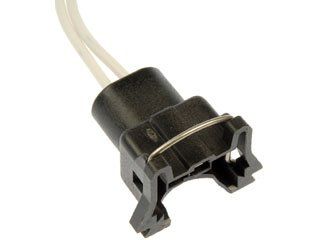
- EVAP Canister Vent Solenoid
(OEM #F75Z-9F945-CA)— This is the component that most commonly fails electrically, triggering the P1451 circuit code.
Trusted brands: Motorcraft, Dorman (911-218)
OEM price range: $80-$180
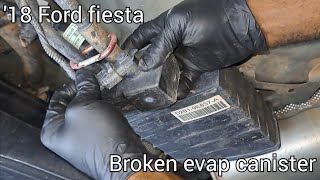
Aftermarket price range: $50-$120 - EVAP Charcoal Canister Assembly — On some models or as a repair choice, the vent solenoid is integrated with the charcoal canister and must be replaced as a single unit. This is also necessary if the canister itself is physically damaged or saturated with fuel. 🎬 Watch: Replacing a broken Ford charcoal canister
Trusted brands: Motorcraft
OEM price range: $270-$380
Aftermarket price range: $200-$290
Platform-Specific Known Issues
- The plastic components of the EVAP system, including the canister and solenoid housing, can become brittle with age and break during removal or installation.
Mechanic-Grade Diagnostic Values
- Canister Vent (CV) Solenoid Resistance — expected: 48 to 65 ohms. Failure: A reading of infinite ohms (OL) indicates an open coil, while a reading near zero ohms indicates a shorted coil.
- Voltage at CV Solenoid Connector (Power Wire) — expected: Battery Voltage (approx. 12V) with Key On, Engine Off.. Failure: 0V or significantly low voltage indicates an open in the power feed (VPWR) circuit or a blown fuse.
- Voltage at CV Solenoid Connector (Control Wire) — expected: Approximately battery voltage with key on, connector unplugged. Should drop to near 0V when the solenoid is commanded ON (closed) by a scan tool.. Failure: No voltage suggests an open wire to the PCM. Voltage that does not drop when commanded indicates a faulty PCM driver or an open in the control wire.
Scan Tool Commands That Help
- Ford IDS (or equivalent professional scanner): Output Test Mode - Command CV (Canister Vent) Valve ON/OFF — This command is used to functionally test the entire circuit. By commanding the valve closed (ON), you can check if the PCM driver is capable of grounding the circuit and if the solenoid responds. The voltage on the control wire should drop from battery voltage to near zero. This is the definitive way to test the control side of the circuit after verifying power supply and solenoid resistance.
Wiring & Ground Locations
- CV Solenoid Power Wire — In the 2-wire connector at the canister vent solenoid, under the rear of the car.. This wire, typically Red, supplies battery voltage (VPWR) to the solenoid. A lack of voltage here is a common cause of P1451 and points to a broken wire or blown fuse.
- CV Solenoid Control Wire — In the 2-wire connector at the canister vent solenoid, running back to the PCM.. This wire, typically Purple/White, is what the PCM uses to ground (and thus activate) the solenoid. The PCM also monitors voltage on this wire to confirm operation. An open or short on this wire will directly cause a P1451 code.
- G100 — Left front of the engine compartment.. This is a primary engine compartment ground. While not directly for the CV solenoid (which is grounded through the PCM), a poor connection at a major ground point like this can cause unpredictable electrical issues and voltage drops in various systems controlled by the PCM.
- PCM Location — Right rear of the engine compartment, often behind the power steering reservoir.. This is the location of the Powertrain Control Module. All circuit tests for the CV solenoid ultimately lead back to the PCM connector, which is necessary for final continuity checks if the wiring is suspected to be broken somewhere between the front and rear of the car.
Real Owner Repair Stories
- Ford Contour Enthusiasts Group Forums (contour.org) (Ford Contour (year not specified)) — Check Engine Light, something dangling from the rear of the car.
❌ Tried (didn't work) Initial inspection was confusing, user was unsure of part location.
✅ What actually fixed it The user discovered the nipple on the EVAP canister itself had broken off, leaving the hose dangling. The ultimate fix required replacing the entire EVAP canister because the solenoid's connection point was compromised.
OEM Part Supersession History
F75Z-9F945-BA→F75Z-9F945-CA— Standard part revision by Ford.
Heads up: The parts are interchangeable. F75Z-9F945-CA is the current and correct service part.
Model Year Variations Within This Range
- 1995-1997: Models from these years were known for engine wiring harness insulation that could become brittle and flake off, particularly in the engine bay. While P1451 relates to wiring at the rear of the car, this general issue with early model wiring quality increases the probability of insulation failure and shorts throughout the vehicle compared to later 1998-2000 models.
Diagnostic Flowchart
Other Known Issues on This Vehicle
Issues unrelated to this code that are worth knowing about as an owner of this generation:
- Engine Wiring Harness Degradation 🔴 High — Very common on 1995-1997 models, but can occur on later years. The insulation on wires, particularly in the engine bay, becomes brittle, cracks, and flakes off, leading to shorts and various electrical failures. (Ref: Recall 99M03 was issued for 1995-1997 models, but the problem is known to affect later years as well.)
- Water Pump Failure 🟠 Medium — Common across all years. The original water pumps often used a plastic impeller that could crack or shatter, leading to a sudden loss of coolant circulation and engine overheating. Replacement with a metal impeller pump is the standard fix. (Ref: TSB #12304 and others were issued regarding leaking or broken water pumps on 2.0L engines.)
- Automatic Transmission (CD4E) Failure 🔴 High — The CD4E automatic transmission used in many Contours had a reputation for premature failure, including harsh shifting and complete loss of drive. (Ref: Multiple TSBs, such as 01-12-01, were released to address harsh shifting and other drivability issues related to the CD4E transaxle.)
- Door Locks Freezing/Sticking 🟡 Low — A common annoyance where door lock mechanisms freeze in cold weather, preventing doors from being opened or latched properly.
Used vs. New Parts: Buying Guide for This Vehicle
When a used part is the smart pick: A used EVAP charcoal canister assembly from a junkyard is a reasonable choice if your original canister is physically broken (e.g., a broken nipple) but the donor part is intact. The vent solenoid itself is an electro-mechanical part with a finite lifespan, so buying a new solenoid is strongly recommended over a used one.
Donor-vehicle mileage cap: roughly under 120000 miles for the part to have meaningful remaining life.
What to inspect on the donor part:
- Inspect the plastic housing of the canister for any cracks, especially around the hose ports and mounting tabs.
- Check that the electrical connector pins on the vent solenoid are clean, straight, and free of corrosion.
- If possible, test the resistance of the used solenoid before purchase; it should be between 48-65 ohms.
- Avoid parts from vehicles that show heavy rust or undercarriage damage, as the EVAP components are exposed to the elements.
Aftermarket brands forum-validated for this vehicle:
- Motorcraft (OEM)
- Dorman (for the solenoid and connector pigtails)
Brands owners have reported issues with on this vehicle:
- No-name, unbranded solenoids sold on marketplaces can have high failure rates and incorrect resistance values, causing the code to return.
Real Owner Stories
Aggregated from forums and TSBs cited above. Mileages and costs reflect what owners reported in those sources.
1998 Ford Contour SVT
Symptoms: Multiple codes including P1451, P1518, P0102. O2 sensors were not hooked up. Car would not crank, or would crank for a half-second and then die when given gas. Also mentioned smoking from under the hood.
What fixed it: The owner reported the car started after adding gas; however, the broader electrical issues suggested a new wiring harness was needed due to multiple circuit failures.
Source hint: Ford Contour Enthusiasts Group Forums thread '98 svt contour having major problems'
1997 Ford Contour 2.0L
Symptoms: Check Engine Light is on and failing a state emissions inspection.
What fixed it: Repair of the wiring harness near the spare tire well where the insulation had degraded and flaked off, causing an open circuit.
Source hint: Vehicle-specific issues and common causes regarding Recall 99M03 and wiring degradation.
Related OBD-II Codes
Frequently Asked Questions
Where is the canister vent (CV) solenoid located on my Ford Contour?
Is there a recall for the wiring issues causing electrical codes on my 1996 Contour?
What is the correct resistance for a replacement vent solenoid on this platform?
Can I use parts from a Mercury Mystique to fix my P1451 code?
Why does my 2.0L Contour have a P1451 code after driving through road salt?
I'm confused between the purge valve and the vent valve; which one causes P1451?
Helpful Videos

We Have This Part in Stock

The information in this article is provided for general reference and educational purposes only. Vehicle specifications, procedures, and part compatibility can vary by production date, trim level, and region. Always consult your vehicle's factory service manual and verify part numbers before purchasing or performing repairs. Safety-critical components such as airbags, seat belts, and braking systems should be installed by a qualified professional.
- Ford Contour:
- 🧭 Diagnostic Flowchart
- 🎬 Helpful Videos
- 🛍️ Shop This Part
- What's Unique About the 1995-2000 Ford Contour
- Symptoms You May Notice
- Most Likely Causes
- Rare But Worth Checking
- Diagnosis Steps
- Parts You'll Likely Need
- Platform-Specific Known Issues
- Mechanic-Grade Diagnostic Values
- Scan Tool Commands That Help
- Wiring & Ground Locations
- Real Owner Repair Stories
- OEM Part Supersession History
- Model Year Variations Within This Range
- Other Known Issues on This Vehicle
- Used vs. New Parts: Buying Guide for This Vehicle
- Real Owner Stories
- 1998 Ford Contour SVT
- 1997 Ford Contour 2.0L
- Related OBD-II Codes
- Frequently Asked Questions
- 🎟️ Get 5% Off