

P1451 on 2007-2010 Ford Edge 3.5L: EVAP Vent Solenoid Circuit Causes and Fixes
This code points to an electrical problem with the EVAP Canister Vent Solenoid, not a leak. The most likely cause is a failed solenoid or damaged wiring near it. The solenoid is located under the vehicle, near the center, attached to the charcoal canister.
- P1451 is an electrical fault with the EVAP Canister Vent Solenoid, not a gas cap or leak issue.
- The correct part is located under the car, near the center, attached to the charcoal canister.
- The most common causes are a failed solenoid or a break in the wiring harness leading to it.
- Always test the solenoid's resistance (should be 48-65 ohms) and check for 12V power at the connector before replacing parts.
What's Unique About the 2007-2010 Ford Edge
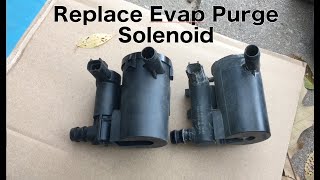
For the first-generation Ford Edge, the P1451 code almost always follows the typical Ford pattern: an issue with the vent solenoid or its wiring. The key challenge for this specific vehicle is correctly identifying the part. Many owners and even parts catalogs confuse the vent solenoid (under the car) with the purge valve 🎬 Watch: Understanding the P1451 code and how to fix it (in the engine bay). Ensuring you are diagnosing the correct component, located near the center of the underbody on or near the charcoal canister, is the most critical step.
Symptoms You May Notice
- Check Engine Light is on.
- Failing a state emissions inspection.
- Possible 'whoosh' sound when opening the gas cap due to pressure or vacuum buildup.
- In rare cases, difficulty starting immediately after refueling.
- Potential for a faint fuel odor, although this is less common with a circuit fault than a system leak.
- Replacing the EVAP Purge Valve/Solenoid. This is the most common mistake. The P1451 code refers to the VENT solenoid circuit near the fuel tank, not the PURGE valve circuit in the engine bay.
- Replacing the gas cap. A bad gas cap typically causes an EVAP leak code (like P0455 or P0457), not a circuit code like P1451.
- Performing a smoke test first. P1451 is an electrical fault code, not a leak code. A smoke test is used to find physical leaks and will not identify a circuit malfunction.
Most Likely Causes
- Failed EVAP Canister Vent Solenoid 🔴 High Probability → Shop Vapor Canister The solenoid is exposed to road grime, salt, and moisture under the vehicle, which can lead to internal corrosion and electrical failure of the coil over time.
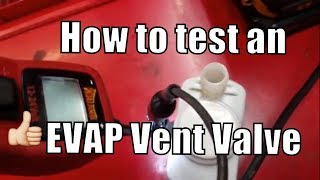
How to confirm: Locate the solenoid on the EVAP canister under the vehicle. Disconnect the electrical connector and measure the resistance across the two pins on the solenoid using a multimeter. A reading between 48 and 65 ohms is the correct specification for a good Ford solenoid; a reading of infinity (open) or near zero (short) indicates a bad solenoid. 🎬 See this guide on how to test a vent valve
Typical fix: Replace the canister vent solenoid.
Est. part cost: $40-$90 - Damaged Wiring or Connector 🟡 Medium Probability The wiring harness leading to the vent solenoid is routed underneath the car and is susceptible to damage from road debris, corrosion from salt and water, or chafing against chassis components. Corrosion can build up inside the connector itself, causing a poor connection.
How to confirm: Visually inspect the entire length of the wiring harness leading to the vent solenoid connector for any breaks, chafing, or corrosion. Pay close attention to the pigtail right at the connector. With the key on, engine off, check for battery voltage at the power wire in the connector. If no voltage is present, trace the wire back to check for breaks or a blown fuse.
Typical fix: Repair the damaged section of wire or replace the connector pigtail. The pigtail is a common replacement part.
Est. part cost: $15-$30
Rare But Worth Checking
- Clogged EVAP Canister or Vent Tube: → Shop Vapor Canister Sometimes, a physical blockage from insects, mud, or debris in the vent tube can prevent the system from venting. This lack of airflow can be misinterpreted by the PCM as a circuit fault. A visual inspection of the canister's vent port and any attached hoses is worthwhile.
- Failed Powertrain Control Module (PCM): → Shop Engine Control Module (ECM) This is extremely rare, but the driver circuit within the PCM that controls the solenoid can fail. This should only be considered after all other possibilities have been exhaustively ruled out. On this platform, PCM failure is more commonly associated with ignition coil faults (P035x codes).
Diagnosis Steps
- Confirm the code with an OBD-II scanner.
- Locate the EVAP canister and the attached vent solenoid. On the 2007-2010 Edge, this is under the vehicle, roughly in the middle, and may be covered by a plastic shield. 🎬 Watch: Step-by-step walkthrough for replacing the vent solenoid
- Visually inspect the electrical connector and wiring harness going to the vent solenoid. Look for green corrosion, broken wires, or chafed insulation. A broken wire right at the connector is a common failure point.
- If wiring looks good, disconnect the solenoid. Test the solenoid's resistance with a multimeter. If it's not within the 48-65 ohm range, the solenoid is bad and needs replacement.
- If the solenoid tests good, check for power at the connector. With the key on (engine off), one of the pins in the connector should have battery voltage (~12V). If not, there is a break in the power wire leading to the solenoid or a blown fuse.
- If power is present and the solenoid is good, the issue may be in the ground-side control wire running back to the PCM. A bidirectional scan tool can be used to command the solenoid on and off to verify the PCM's control.
- Before replacing any parts, ensure the canister's vent port and any attached hoses are not clogged with debris or an insect nest.
Parts You'll Likely Need
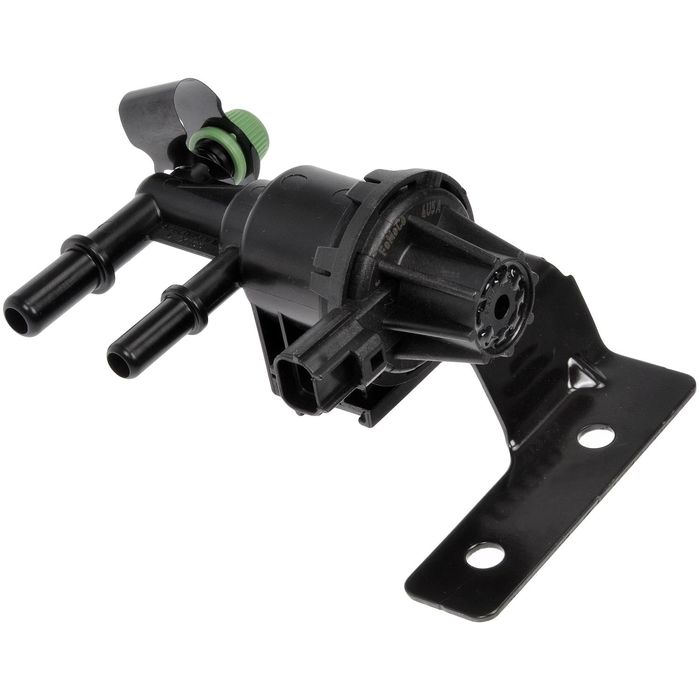
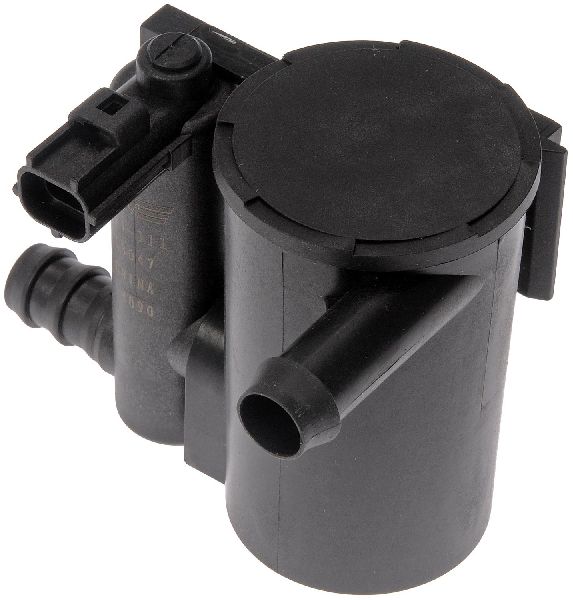
- EVAP Canister Vent Solenoid
(OEM #9U5Z-9F945-A (Motorcraft CX2239))— This solenoid is the component whose electrical circuit is monitored. It is the most common part to fail, triggering the P1451 code.
Trusted brands: Motorcraft, Dorman, Standard Motor Products (SMP), SKP
OEM price range: $60-$100
Aftermarket price range: $40-$90 - EVAP Canister Vent Solenoid Connector Pigtail
(OEM #WPT-905 (Motorcraft))— The connector itself is a frequent failure point due to corrosion or wires breaking at the back of the connector. Replacing the pigtail is often necessary when wiring damage is found.
Trusted brands: Motorcraft, Dorman
OEM price range: $25-$40
Aftermarket price range: $15-$25
Related Codes That Often Appear With This One
- P1450 — P1450 indicates the system is 'Unable to Bleed Up Fuel Tank Vacuum.' A faulty vent solenoid circuit (P1451) can directly cause the condition that sets P1450, as the valve cannot be commanded open to vent the tank.
- P0446 — This is a generic code for 'EVAP System Vent Control Circuit Malfunction,' which is essentially the same fault as the Ford-specific P1451.
Platform-Specific Known Issues
- Real-World Repair Story: Wiring Failure: A user on Ranger-Forums with a P1451 code on their Ford truck (which uses a similar EVAP system) replaced the solenoid and even the PCM with no success. The final fix was discovering a corroded and broken wire in the harness near a frame connector, highlighting the importance of thoroughly checking wiring before replacing expensive components.
- Video Confirmation of Location: A YouTube video for a 2007 Ford Edge specifically addresses the common confusion between the purge valve and the vent solenoid. The creator shows the correct vent solenoid location under the car, between the front and back doors, attached to the charcoal canister, confirming this is the part related to P1451.
Mechanic-Grade Diagnostic Values
- EVAP Canister Vent Solenoid Resistance — expected: 48 to 65 Ohms. Failure: A reading of infinity (OL) indicates an open coil; a reading near zero indicates a shorted coil.
- Voltage at Vent Solenoid Connector (Power Wire) — expected: Battery Voltage (~12V) with Key On, Engine Off (KOEO). Failure: 0V indicates a broken power wire or blown fuse.
- Ford Mode $06, Test ID $82 — expected: The reported test value should be within the MIN and MAX limits shown on the scan tool.. Failure: A test value outside the specified range indicates a failure of the canister vent solenoid circuit monitor, directly corresponding to P1451.
- Fuel Tank Pressure (FTP) Sensor Voltage — expected: ~2.6V with the gas cap removed and the system at atmospheric pressure.. Failure: A significantly different voltage can indicate a biased sensor, which may confuse EVAP system diagnostics, though it typically sets other codes.
Hidden / Shadow Codes Worth Checking
- Mode $06, Test ID $82: This is not a separate trouble code but a specific onboard diagnostic monitor for the 'EVAP Vapor Blocking Valve' (Canister Vent Solenoid) circuit. It directly tests the electrical integrity that, when failed, sets P1451. (see via A scan tool capable of reading Mode $06 data. This is available on many professional and high-end DIY scanners.)
Scan Tool Commands That Help
- Ford IDS, FORScan, or other capable bidirectional scanner: Output State Control / Active Command: EVAPCV (EVAP Canister Vent) — This command allows you to manually toggle the vent solenoid on and off. With the solenoid disconnected, you can verify the PCM is sending the command. With it connected, you should hear an audible 'click' from the solenoid each time it's activated, confirming both the PCM driver and the solenoid coil are functional.
- Ford IDS: EVAP System Test — This is a comprehensive, automated test that runs the entire EVAP monitor sequence. It will command the vent and purge solenoids as needed to seal the system, pull a vacuum, and monitor for leaks or blockages. A failure during this test can help confirm the fault lies within the EVAP system.
Wiring & Ground Locations
- Canister Vent Solenoid Connector (C435) — On the EVAP canister vent solenoid, located under the vehicle near the center.. This is the direct connection to the component. Pin 1 (typically a Violet/Orange wire) should have battery voltage with KOEO. Pin 2 (typically a White/Brown wire) is the control circuit that is grounded by the PCM to activate the solenoid.
- Fuse F13 (Battery Junction Box) — In the underhood fuse box (Battery Junction Box).. This fuse often supplies power to the canister vent solenoid. If there is no voltage at the solenoid connector, this fuse should be checked before tracing wires.
- PCM Connector C175B — At the Powertrain Control Module (PCM), located in the engine bay, typically near the firewall on the passenger side.. The control wire (White/Brown) from the vent solenoid runs to a pin on this connector (often Pin 50). A continuity test from the solenoid connector to this pin can verify if the control wire is intact.
- G104 — On the left front of the engine compartment, grounding to the chassis.. This is a primary ground for the PCM. While not a direct part of the vent solenoid circuit, a poor PCM ground can cause a host of erratic electrical issues and incorrect sensor readings, potentially including false circuit codes. It's a critical point to check if multiple, seemingly unrelated electrical faults are present.
Real Owner Repair Stories
- Ford Truck Enthusiasts Forum User (2000 Ford Navigator 5.4L (similar EVAP system design)) — P1451 code returned immediately after replacing the canister vent solenoid.
❌ Tried (didn't work) Replacing the EVAP canister vent solenoid.
✅ What actually fixed it The user discovered there was no voltage on the power wire at the solenoid connector with the key on. The final fix was tracing and repairing a break in this power wire, restoring voltage to the new solenoid. - YouTube video by 'Gabriel's Auto Tech' (2001 Lincoln Town Car 4.6L (similar EVAP system design)) — P1451 code.
❌ Tried (didn't work) Initial inspection did not reveal the fault.
✅ What actually fixed it The problem was a corroded electrical terminal inside the vent solenoid connector. The final fix was to remove the affected wire and terminal from the connector and solder it directly to establish a solid connection.
"I Checked Everything" — The Actual Cause
- P1451 is an electrical circuit code, so a smoke test is not the correct initial diagnostic step and will not reveal the fault. If a technician performs a smoke test and finds no leaks, it simply confirms the problem is electrical as the code implies. The actual cause will be a failed solenoid coil, a broken/corroded wire, a bad connector, or in rare cases, a faulty PCM driver.
OEM Part Supersession History
9U5Z-9F945-A→CX2239 (Motorcraft Service Number)— Standard part number transition to service number. No design change noted.
Diagnostic Flowchart
Other Known Issues on This Vehicle
Issues unrelated to this code that are worth knowing about as an owner of this generation:
- Internal Water Pump Failure 🔴 High — A notorious issue for this engine. The timing chain-driven water pump is internal. When its seal fails, it leaks coolant directly into the engine oil, leading to catastrophic engine damage if not caught immediately. Often presents with a P0016 code due to timing chain slack from the failed pump bearing.
- Transmission Faults (6F50) 🟠 Medium — Early models (2007-2008) are particularly prone to issues like harsh shifting, shuddering, and sensor failures (TSS/OSS). Problems can include hard downshifts, delayed engagement, and in some cases, complete transmission failure. (Ref: TSB #07311 addresses some early transmission DTCs and harsh engagements.)
- AWD Power Transfer Unit (PTU) Leaks 🟠 Medium — On All-Wheel Drive models, the PTU is known to develop fluid leaks from its seals. If the fluid runs low, the unit can overheat and fail, resulting in a costly repair. (Ref: TSB #ASI-44649 is a job aid for diagnosing PTU leaks.)
- Brake Booster Failure 🔴 High — Owners report a hard brake pedal and a hissing noise, indicating a tear in the booster diaphragm. This increases stopping distance and effort. While recalls exist for later models, this generation is also affected. (Ref: Customer Satisfaction Program 13N02 extended the warranty on the brake booster for 2010 models to 10 years/150,000 miles.)
- PCM Failure due to Ignition Coils 🟡 Low — A failing ignition coil can short and damage the driver circuit within the Powertrain Control Module (PCM). This typically sets P035x codes. It's recommended to replace all coils and plugs if a PCM is replaced for this reason.
Used vs. New Parts: Buying Guide for This Vehicle
When a used part is the smart pick: A used part is a reasonable choice for the connector pigtail if the wiring is clean and flexible. For the solenoid itself, new is strongly recommended due to the low cost and high exposure to road elements.
Donor-vehicle mileage cap: roughly under 80000 miles for the part to have meaningful remaining life.
What to inspect on the donor part:
- For a pigtail: check for brittle insulation, cracks at the back of the connector, and green or white corrosion on the pins.
- For a solenoid: look for excessive rust on the housing and ensure the plastic is not cracked or brittle. Test resistance with a multimeter before purchase (must be 48-65 ohms).
OEM-only on this vehicle (don't cheap out):
- No parts for this specific repair are strictly OEM-only, but OEM is preferred for longevity.
Aftermarket brands forum-validated for this vehicle:
- Motorcraft (OEM)
- Standard Motor Products (SMP)
Brands owners have reported issues with on this vehicle:
- Dorman: While widely available and sometimes offering design improvements, forum discussions and mechanic reviews frequently mention a higher failure rate for their electronic components compared to OEM. It may work, but is often considered a gamble for long-term reliability.
Real Owner Stories
Aggregated from forums and TSBs cited above. Mileages and costs reflect what owners reported in those sources.
2007 Ford Edge 3.5L V6
Symptoms: The owner was confused about the difference between the purge valve and the vent solenoid while trying to address EVAP codes.
What fixed it: Located the correct vent solenoid under the car, between the front and back doors, attached to the charcoal canister.
Source hint: YouTube video for a 2007 Ford Edge specifically addresses the common confusion between the purge valve and the vent solenoid
2015 Ford Edge (Related Platform)
Symptoms: The vehicle originally had a P1450 code repaired, but immediately followed it with a P1451 code.
What fixed it: Replacement of the faulty vent solenoid, which was triggering both circuit and system performance codes.
Source hint: FordEdgeForum.com - '2015 Edge P1450 code repaired, now P1451 code showing'
Ford Truck (Similar EVAP System)
Symptoms: P1451 code would not clear even after the owner replaced the solenoid and the PCM.
What fixed it: Discovered a corroded and broken wire in the harness near a frame connector.
Source hint: Ranger-Forums.com - 'P1451 wont go away'
Related OBD-II Codes
Frequently Asked Questions
I'm hearing a 'whoosh' sound when I open my gas cap; is this related to P1451 on my 2007 Ford Edge?
Where is the vent solenoid located on the 2007-2010 Ford Edge?
What is the correct resistance specification for the Ford Edge vent solenoid?
Is there a TSB or warranty extension for the brake booster on my 2010 Ford Edge?
Could my P1451 code be caused by the purge valve instead of the vent solenoid?
Can I use a used vent solenoid from a salvage yard?
Helpful Videos


Used OEM Parts in Stock
New Aftermarket Parts Available


The information in this article is provided for general reference and educational purposes only. Vehicle specifications, procedures, and part compatibility can vary by production date, trim level, and region. Always consult your vehicle's factory service manual and verify part numbers before purchasing or performing repairs. Safety-critical components such as airbags, seat belts, and braking systems should be installed by a qualified professional.
- Ford Edge:
- 🧭 Diagnostic Flowchart
- 🎬 Helpful Videos
- 🛍️ Shop This Part
- What's Unique About the 2007-2010 Ford Edge
- Symptoms You May Notice
- Most Likely Causes
- Rare But Worth Checking
- Diagnosis Steps
- Parts You'll Likely Need
- Related Codes That Often Appear With This One
- Platform-Specific Known Issues
- Mechanic-Grade Diagnostic Values
- Hidden / Shadow Codes Worth Checking
- Scan Tool Commands That Help
- Wiring & Ground Locations
- Real Owner Repair Stories
- "I Checked Everything" — The Actual Cause
- OEM Part Supersession History
- Other Known Issues on This Vehicle
- Used vs. New Parts: Buying Guide for This Vehicle
- Real Owner Stories
- 2007 Ford Edge 3.5L V6
- 2015 Ford Edge (Related Platform)
- Ford Truck (Similar EVAP System)
- Related OBD-II Codes
- Frequently Asked Questions
- 🎟️ Get 5% Off