

P1451 on 2011-2014 Ford Edge: EVAP Vent Solenoid Circuit Fault Causes and Fixes
P1451 on a 2011-2014 Ford Edge indicates an electrical fault with the EVAP canister vent solenoid, not an EVAP leak. The most likely causes are a failed solenoid located under the vehicle near the fuel tank or damaged wiring to it. Expect to pay $40-$95 for the part.
- P1451 is an electrical circuit problem, not an EVAP leak. Do not start by replacing the gas cap.
- The faulty part is the 'canister vent solenoid' located under the vehicle near the fuel tank, NOT the 'purge valve' in the engine bay.
- Before buying parts, inspect the wiring and connector for the vent solenoid, as a simple wiring repair is a common fix.
- You can test the solenoid with a multimeter before replacing it; it should read between 48 and 65 ohms.
- The correct OEM part number is Motorcraft 9U5Z-9F945-C and the connector pigtail is WPT-905.
What's Unique About the 2011-2014 Ford Edge
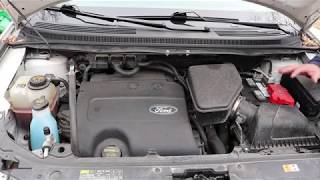
On the Ford Edge, the P1451 code almost exclusively points to the vent solenoid located under the vehicle, near the charcoal canister and fuel tank. This component's exposed location makes its wiring susceptible to corrosion and physical damage from road debris. A significant point of confusion for this platform is mistaking the vent solenoid (near the tank) for the much more accessible purge valve located in the engine bay; replacing the purge valve will not fix a P1451 code. 🎬 Watch: How to replace the engine bay purge valve instead This issue is common across many Ford trucks and SUVs of the era for the same reason.
Symptoms You May Notice
- Check Engine Light is on.
- The vehicle will fail an emissions inspection.
- In rare cases, a faint fuel odor may be noticeable near the rear of the vehicle.
- A 'whoosh' sound of trapped pressure or vacuum may be heard when removing the gas cap.
- Replacing the EVAP Purge Valve/Solenoid in the engine bay. P1451 specifically refers to the vent solenoid circuit, which is located near the fuel tank. The purge valve is associated with different codes (like P1450 or P0443). Many part stores and online guides incorrectly label the purge valve, leading to confusion.
- Replacing the gas cap. A bad gas cap typically causes a leak-related code (like P0455 or P0457), not a circuit code like P1451.
Most Likely Causes
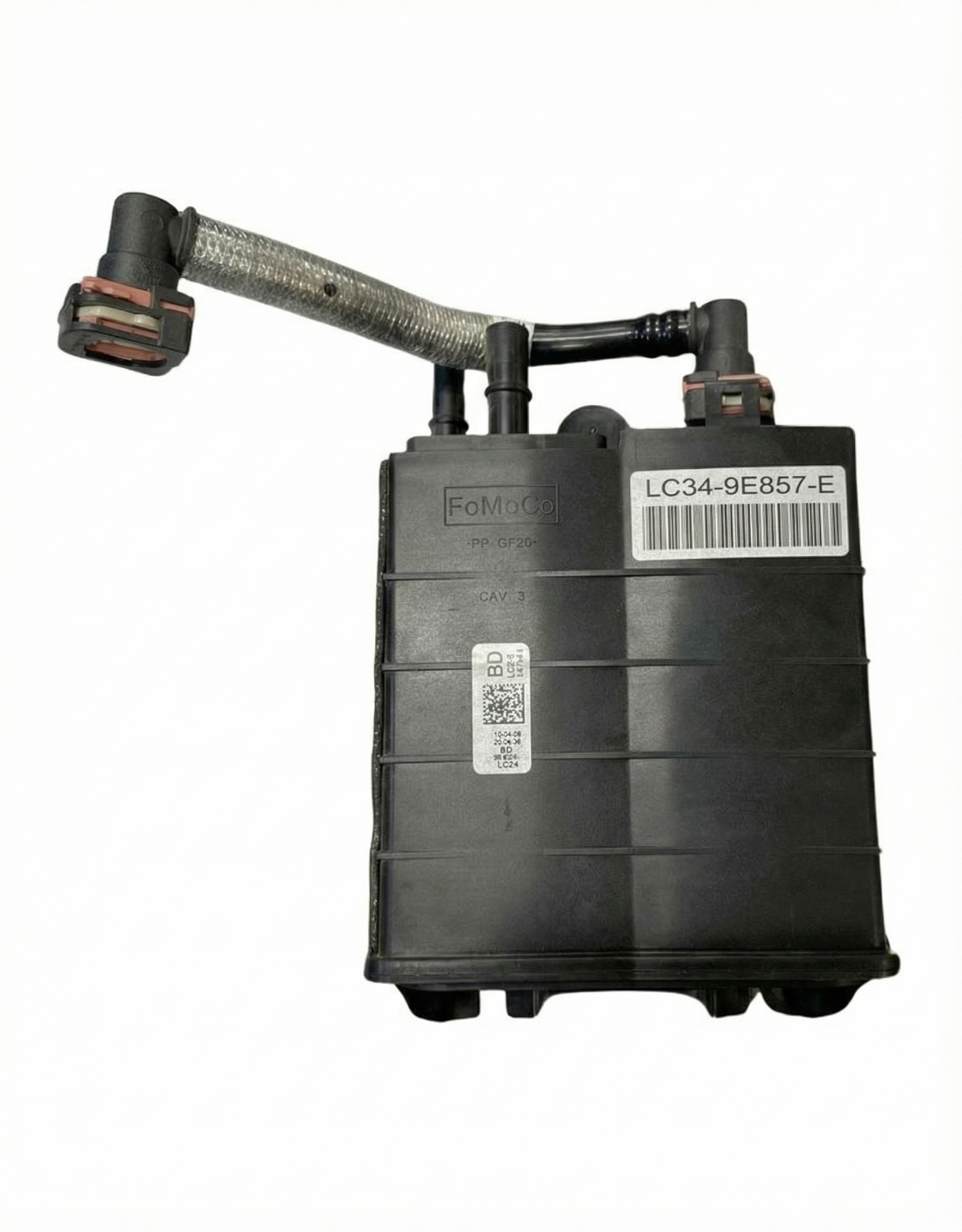
- Failed Canister Vent Solenoid 🔴 High Probability → Shop Vapor Canister The solenoid is located under the vehicle, making it susceptible to road salt, moisture, and debris, which can lead to internal corrosion and electrical failure of the coil.
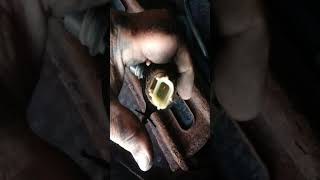
How to confirm: Locate the solenoid on or near the charcoal canister under the vehicle. Disconnect the electrical connector and measure the resistance across the two pins on the solenoid with a multimeter. 🎬 Watch: How to test and replace a Ford vent solenoid A good solenoid should measure between 48 and 65 ohms. A reading of infinity (open) or near zero (short) indicates a failed solenoid.
Typical fix: Replace the canister vent solenoid. The part is typically mounted to the charcoal canister or a nearby bracket.
Est. part cost: $40 - $95 - Damaged Wiring or Connector 🟡 Medium Probability The wiring harness leading to the vent solenoid is routed under the chassis and is vulnerable to being snagged, chafed by the frame, or corroded from road spray. On many Ford vehicles, the wires break right at the connector due to moisture and stress.
How to confirm: Visually inspect the entire length of the wiring harness from the PCM to the vent solenoid connector. Look for any breaks, chafing, or green/white corrosion. With the key on, engine off, check for battery voltage (approx. 12V) at the power wire on the solenoid connector. Lack of voltage points to an open circuit in the power feed. Wiggle the harness while checking voltage to identify intermittent breaks.
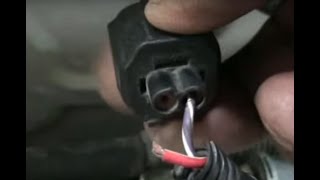
Typical fix: Repair the damaged section of wire. If the connector is corroded or damaged, replace the connector pigtail. The Motorcraft pigtail is WPT-905. 🎬 See how to find and repair broken vent valve wiring
Est. part cost: $5 - $35 - Clogged EVAP Canister or Vent Tube ⚪ Low Probability → Shop Vapor Canister The vent tube opening, which is often integrated with the solenoid or canister, can be clogged by insects (especially spiders), mud, or road debris, preventing airflow. This can sometimes trick the PCM into flagging a circuit code, although it's less common than a direct electrical fault.
How to confirm: Disconnect the vent hose from the solenoid and inspect it and the charcoal canister's vent port for any physical blockages like spider webs or mud.
Typical fix: Clear the obstruction from the hose or canister port. In severe cases of fuel saturation, the entire charcoal canister may need replacement.
Est. part cost: $0 - $500+
Rare But Worth Checking
- Faulty Powertrain Control Module (PCM): → Shop Engine Control Module (ECM) This is extremely rare. The PCM should only be considered after all other possibilities, including the solenoid and the entire circuit wiring, have been thoroughly tested and ruled out.
Diagnosis Steps
- Verify the code with a scanner. Confirm P1451 is present and check for any other related codes.
- Locate the EVAP canister vent solenoid under the vehicle, near the center, attached to or next to the charcoal canister. It is often above the spare tire area.
- Visually inspect the electrical connector and wiring harness going to the solenoid. Look for obvious signs of damage, corrosion, or breaks. Pay close attention to the wires right at the connector body.
- Disconnect the connector. Test the solenoid's resistance with a multimeter. A reading between 48-65 ohms is good; infinity or zero ohms means the solenoid is bad and needs replacement.
- If the solenoid tests good, check for power at the connector. With the key on, one wire should have battery voltage (~12V). If not, trace the wire back to find the open circuit or check the related fuse in the power distribution box.
- If power is present, the other wire is the control wire from the PCM. Check it for continuity back to the PCM to rule out a break in the wire.
- If the solenoid and wiring all test good, inspect the canister and vent hoses for any physical blockages from debris or insects.
- A bi-directional scan tool can be used to command the vent solenoid on and off; an audible click should be heard from the solenoid if it is functioning.
- If all tests pass, the fault may lie within the PCM, but this is highly unlikely.
Parts You'll Likely Need
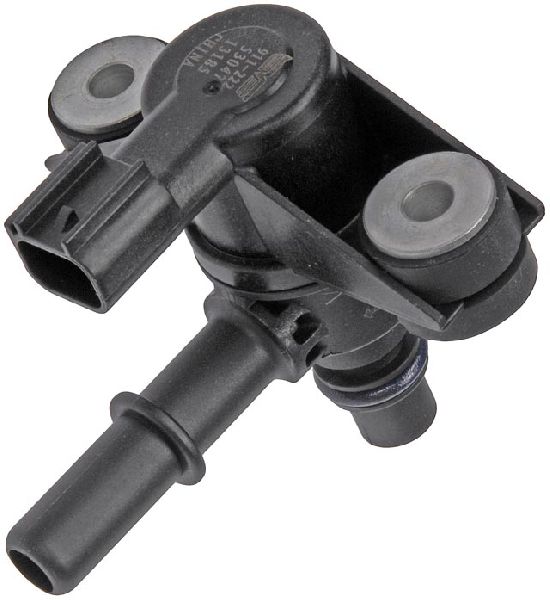
- EVAP Canister Vent Solenoid
(OEM #9U5Z-9F945-C)— This solenoid is the most common point of failure for a P1451 code due to its location and function. It either fails electrically or gets stuck.
Trusted brands: Motorcraft, Dorman, Standard Motor Products
OEM price range: $60-$95
Aftermarket price range: $40-$75 - EVAP Vent Solenoid Connector Pigtail
(OEM #WPT-905)— The connector itself is a frequent failure point, with wires breaking or corroding at the connection to the solenoid.
Trusted brands: Motorcraft, Dorman (645-211), Standard Motor Products (S1080)
OEM price range: $25-$35
Aftermarket price range: $15-$25
Related Codes That Often Appear With This One
- P1450 (Unable to Bleed Up Fuel Tank Vacuum): This code is a close relative and often points to the same set of components, but is triggered during a different phase of the EVAP self-test.
- P0455 (EVAP System Large Leak Detected): If the P1451 circuit fault causes the vent solenoid to be stuck open, the system cannot seal itself to run a leak test, which can log a P0455 code as a secondary fault.
Mechanic-Grade Diagnostic Values
- EVAP Canister Vent Solenoid Coil Resistance — expected: 48 - 65 Ohms. Failure: A reading of infinity (OL) indicates an open coil, while a reading near zero indicates a shorted coil.
- Voltage at Solenoid Connector Power Wire (KOEO) — expected: ~12V (Battery Voltage). Failure: A reading of 0V or significantly low voltage indicates an open circuit or high resistance in the power feed wire (VPWR circuit).
- Scan Tool PID: EVAPCV (Duty Cycle) — expected: 0% when valve is commanded open (de-energized); 100% when commanded closed (energized).. Failure: The PCM flags P1451 if the measured circuit voltage does not match the expected voltage for the commanded duty cycle.
- Scan Tool PID: EVAPCV (Voltage) — expected: Approximates battery voltage when open (0% duty cycle). Shows a minimum voltage drop of 4 volts when commanded fully closed (100% duty cycle).. Failure: If the voltage does not drop as expected when the solenoid is commanded closed, it indicates a fault in the control circuit or the solenoid itself.
Scan Tool Commands That Help
- Bi-directional Scan Tool (e.g., Ford IDS, iCarsoft, Autel): EVAP System Test / Output State Control (OSC) — This command allows the technician to manually cycle the canister vent solenoid on and off. A functioning solenoid should produce an audible 'click'. This directly tests the solenoid's mechanical and electrical response to a command, helping to isolate the fault between the solenoid, wiring, and PCM.
Wiring & Ground Locations
- G401 — Located at the left 'D' pillar on a 2012 Ford Edge Sport.. This is a major chassis ground point for components at the rear of the vehicle. While the vent solenoid is controlled by a PCM ground, a poor chassis ground in the area can cause intermittent and difficult-to-diagnose electrical faults in related circuits.
- S314 — A splice located in the body main wiring harness, near the breakout to the EVAP canister vent solenoid.. Factory splices that are exposed to the elements under the vehicle can corrode over time, creating high resistance or an open circuit. If voltage checks at the connector fail, this splice is a potential failure point to investigate before tracing the wire all the way to the front of the vehicle.
- Canister Vent Solenoid Connector — Under the vehicle, connected to the vent solenoid on or near the charcoal canister.. This is the most common location for wiring failure. The pins inside the connector can corrode, and the wires can break right at the back of the connector body due to stress and moisture.
Real Owner Repair Stories
- YouTube user 'Gabriel's Auto Tech' (2001 Lincoln Town Car 4.6L (Platform-mate with similar EVAP system design)) — Check Engine Light with code P1451.
❌ Tried (didn't work) Replacing the vent solenoid was not necessary as it tested good.
✅ What actually fixed it The vent solenoid tested good (correct resistance). The problem was a corroded terminal pin inside the electrical connector. The final fix was to remove the bad terminal from the connector and solder the wire directly to the pin to restore a solid connection. - Ford Truck Enthusiasts Forums user 'splatee' (Ford Truck (model/year not specified, but common Ford issue)) — Persistent P1451 code, even after trying two different new vent solenoids.
❌ Tried (didn't work) Replacing the canister vent solenoid (twice)., Cleaning the canister filter pads.
✅ What actually fixed it After the code returned intermittently, the user traced the wiring harness from the rear of the truck forward. The fault was found under the air filter box in the engine bay, where the harness had rubbed against a metal bracket, exposing the copper wire and causing an intermittent short/open. Repairing the chafed wire resolved the code permanently.
OEM Part Supersession History
7U5Z-9F945-D, 7U5Z-9F945-E→9U5Z-9F945-C— Part has been updated by Ford over time for improved reliability or manufacturing changes.
Model Year Variations Within This Range
- 2011-2014 with 2.0L GTDI (EcoBoost) Engine: The 2.0L Turbo engine uses a slightly different EVAP system that includes a dual check valve and a vapor ejector to manage vapors when the intake manifold is pressurized by the turbo. While P1451 still points to the vent solenoid circuit, diagnosing related EVAP codes may involve these additional components not found on the 3.5L/3.7L V6 models.
Diagnostic Flowchart
Other Known Issues on This Vehicle
Issues unrelated to this code that are worth knowing about as an owner of this generation:
- Internal Water Pump Failure (3.5L V6) 🔴 High — Can occur without warning, typically after 80,000 miles. Failure allows coolant to mix with engine oil, leading to catastrophic engine damage. (Ref: No recall, but it is a widely documented failure. Repair is extremely labor-intensive and expensive ($2000+).)
- Power Transfer Unit (PTU) Failure (AWD Models) 🔴 High — Commonly occurs due to overheating of the 'lifetime' fluid, caused by proximity to the exhaust. Symptoms include a burning oil smell and fluid leaks from the passenger side. (Ref: Ford issued TSB 19-2017 for fluid leaks on some models. Preventative fluid changes every 30k miles are recommended.)
- Persistent 'Door Ajar' Warning Light 🟡 Low — Very common on 2011-2013 models. A faulty switch inside the door latch causes the warning light to stay on, which can drain the battery. (Ref: Ford TSB 14-0011 and 18-2013 address this issue. The common fix is cleaning or replacing the door latch assembly.)
- Failing Brake Booster 🟠 Medium — Owners report a hard brake pedal and a hissing noise when braking. A tear in the booster diaphragm is the usual cause. (Ref: Ford issued Customer Satisfaction Program 13N02, extending the warranty on the brake booster to 10 years/150,000 miles for affected vehicles.)
- Malfunctioning MyFord Touch Infotainment System 🟡 Low — Common on 2011-2014 models, symptoms include a frozen/unresponsive screen and system crashes, which can prevent access to climate controls. (Ref: Ford issued Customer Satisfaction Program 12M02 to provide a software update and extended warranty for the APIM module.)
Used vs. New Parts: Buying Guide for This Vehicle
When a used part is the smart pick: For this specific repair, buying a used canister vent solenoid is generally not recommended. The part is an electrical solenoid located in an area exposed to significant road spray, salt, and debris. The failure modes are typically internal electrical failure (open/shorted coil) or physical damage, both of which are risks with a used part of unknown history.
Donor-vehicle mileage cap: roughly under 50000 miles for the part to have meaningful remaining life.
What to inspect on the donor part:
- If considering a used part, source it from a vehicle in a dry, non-salt-belt climate.
- Visually inspect the part for any cracks in the plastic housing or heavy corrosion on the electrical pins.
- Test the resistance with a multimeter before purchase; it must be within the 48-65 ohm specification.
- Ask for the donor vehicle's mileage; lower is always better for a wear-and-tear component like this.
Aftermarket brands forum-validated for this vehicle:
- Motorcraft (OEM)
- Standard Motor Products (SMP)
Brands owners have reported issues with on this vehicle:
- No specific brands have widespread negative reports on forums for this part, but ultra-low-cost, unbranded parts from online marketplaces carry a higher risk of premature failure.
Real Owner Stories
Aggregated from forums and TSBs cited above. Mileages and costs reflect what owners reported in those sources.
2015 Ford Edge
Symptoms: Check Engine Light with code P1451 appeared shortly after the dealer had already replaced the EVAP vent solenoid twice for a P1450 code.
What fixed it: The context indicates the dealer changed the EVAP vent solenoid, though the P1451 appeared as a subsequent fault after those repairs.
Source hint: Ford Edge Forum
2000 Ford Explorer
Symptoms: Code P1451 present; diagnostic process focused on the vent solenoid located above the spare tire.
What fixed it: Repairing wires that had broken off right at the electrical connector.
Source hint: Ford Truck Enthusiasts Forums - A user with a 2000 Explorer and code P1451 detailed their diagnostic process
Related OBD-II Codes
Frequently Asked Questions
Where is the EVAP canister vent solenoid located on my 2011-2014 Ford Edge?
Is there a specific replacement connector pigtail for the vent solenoid wiring on this model?
What resistance should I see when testing the vent solenoid on my Edge?
Could my P1451 code be related to the 'Door Ajar' warning light or the brake booster issues common on this vehicle?
Why is the vent solenoid so prone to failure on the Ford Edge and its platform mates like the MKX?
Can a clogged vent tube cause this code even if the solenoid is electrically sound?
Helpful Videos
Used OEM Parts in Stock

New Aftermarket Parts Available


The information in this article is provided for general reference and educational purposes only. Vehicle specifications, procedures, and part compatibility can vary by production date, trim level, and region. Always consult your vehicle's factory service manual and verify part numbers before purchasing or performing repairs. Safety-critical components such as airbags, seat belts, and braking systems should be installed by a qualified professional.
- Ford Edge:
- 🧭 Diagnostic Flowchart
- 🎬 Helpful Videos
- 🛍️ Shop This Part
- What's Unique About the 2011-2014 Ford Edge
- Symptoms You May Notice
- Most Likely Causes
- Rare But Worth Checking
- Diagnosis Steps
- Parts You'll Likely Need
- Related Codes That Often Appear With This One
- Mechanic-Grade Diagnostic Values
- Scan Tool Commands That Help
- Wiring & Ground Locations
- Real Owner Repair Stories
- OEM Part Supersession History
- Model Year Variations Within This Range
- Other Known Issues on This Vehicle
- Used vs. New Parts: Buying Guide for This Vehicle
- Real Owner Stories
- 2015 Ford Edge
- 2000 Ford Explorer
- Related OBD-II Codes
- Frequently Asked Questions
- 🎟️ Get 5% Off