

P1451 on 2015-2024 Ford Edge: EVAP Vent Solenoid Circuit Malfunction Causes and Fixes
P1451 on a 2015-2024 Ford Edge indicates an electrical fault with the EVAP canister vent solenoid circuit, located near the rear differential. The most likely causes are a failed vent solenoid or a wiring issue. Do not confuse this with the more common P1450 code, which points to the purge valve in the engine bay.
- P1451 is an electrical circuit code for the EVAP vent solenoid, not a leak code.
- The vent solenoid is located at the rear of the Edge, above the differential, not in the engine bay.
- Before replacing the solenoid, test its resistance (should be 48-65 ohms) and check for 12V power at the connector with the key on.
- Do not confuse P1451 with the much more common P1450 code, which points to a different part (the purge valve).
- The most likely fixes are replacing the vent solenoid itself (OEM Part # 9U5Z-9F945-C) or repairing a damaged wire/connector leading to it.
What's Unique About the 2015-2024 Ford Edge
On the second-generation Ford Edge (2015-2024), the canister vent solenoid that triggers P1451 is located above the rear differential, making it more difficult to access than on older Ford trucks where it was often near the spare tire. Access often requires lowering the rear subframe slightly or carefully working in a tight space. This code is far less common on the Edge than the P1450 code, which is frequently caused by a failed EVAP purge valve in the engine bay. It is critical to differentiate between these two codes, as P1451 points to a component at the rear of the vehicle, not the front.
Symptoms You May Notice
- Check Engine Light is on.
- Failing a state emissions inspection.
- Audible 'whoosh' of air when opening the fuel filler cap (or a complete lack of the normal slight pressure release), indicating the tank is not venting properly.
- In rare cases, a faint fuel odor may be present.
- Replacing the EVAP Purge Valve: 🎬 See how to test and replace the purge valve for P1450 The purge valve (or purge solenoid) is located in the engine bay and typically causes code P1450. P1451 is for the vent solenoid circuit at the rear of the vehicle.
- Replacing the Gas Cap: A faulty gas cap or capless filler seal typically causes leak-related codes (like P0455 or P0456), not an electrical circuit code like P1451.
Most Likely Causes
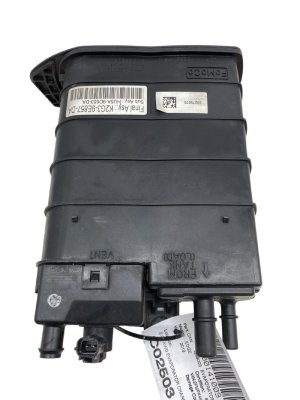
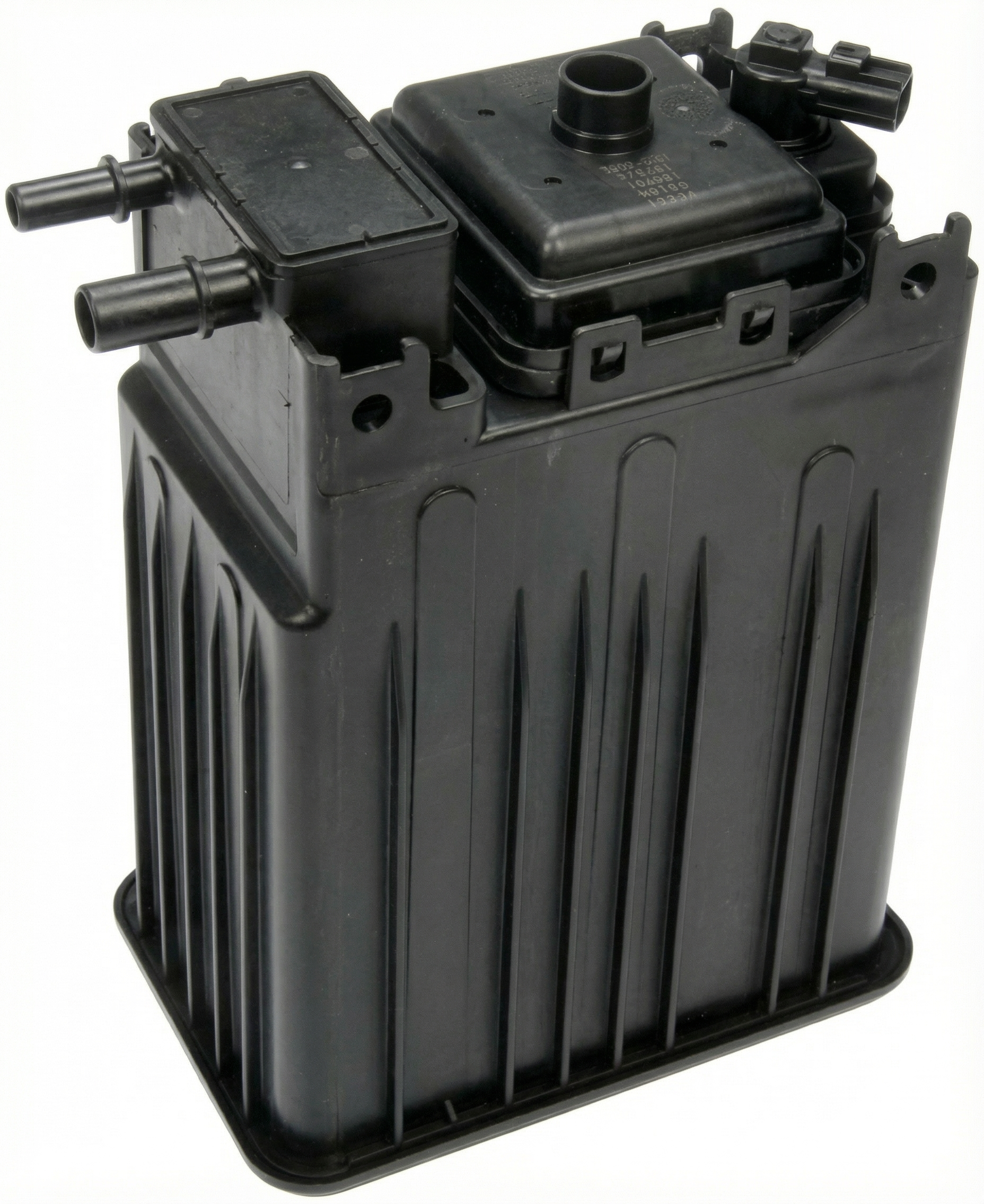
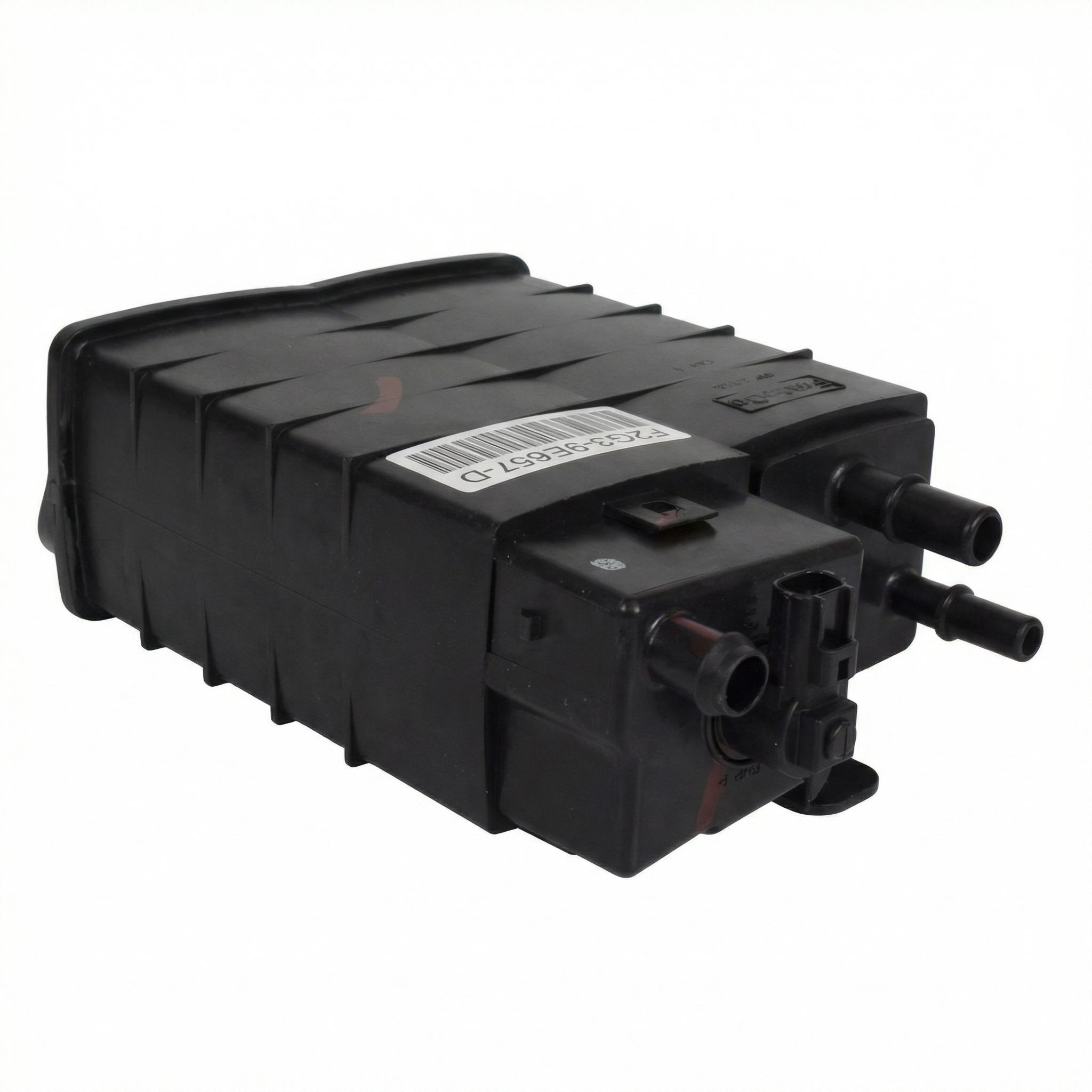
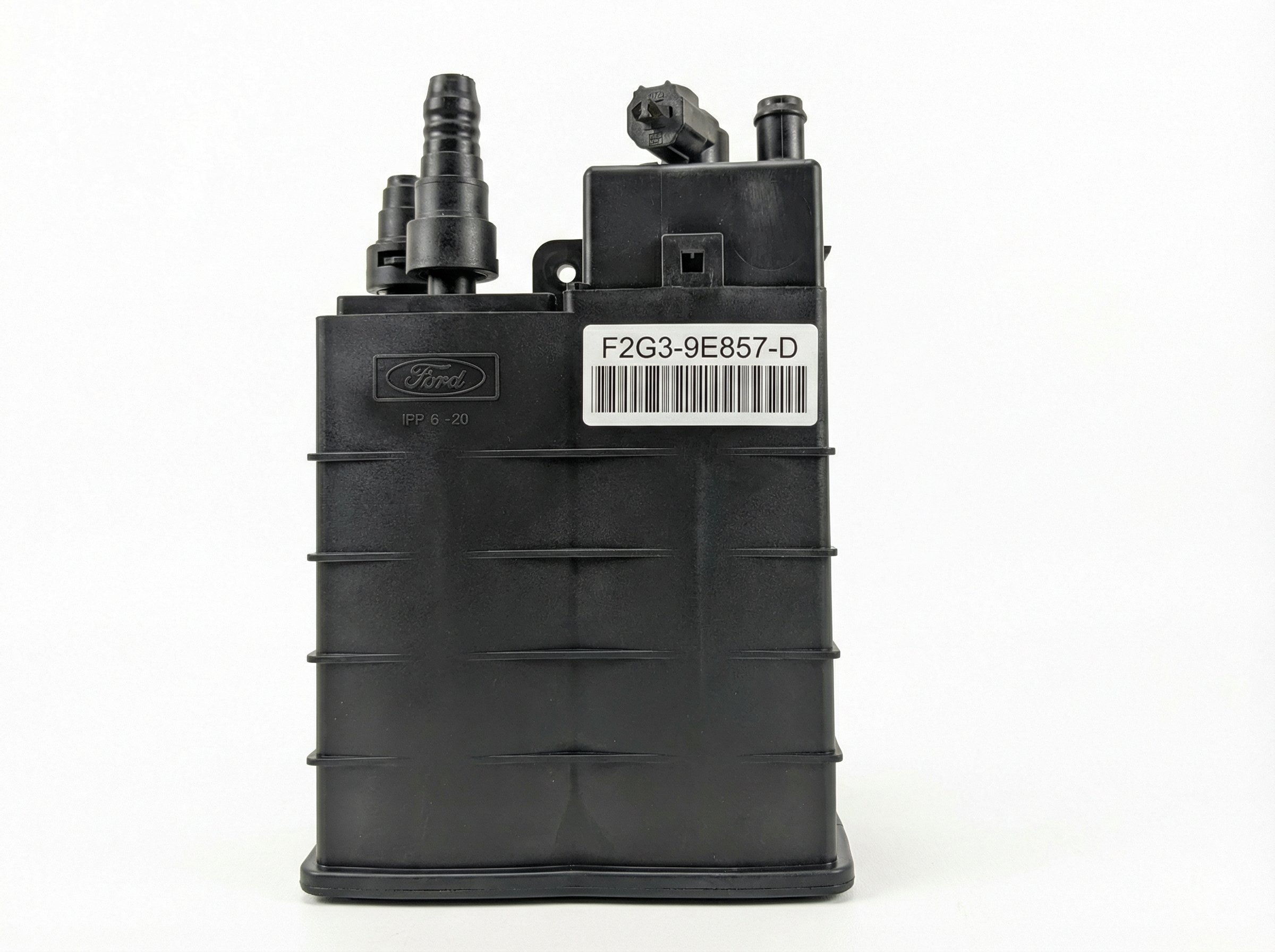
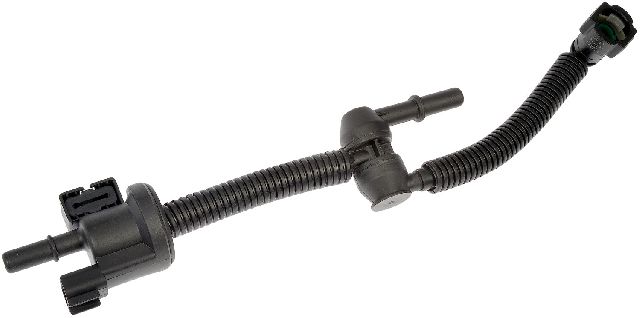
- Failed EVAP Canister Vent Solenoid 🔴 High Probability → Shop Vapor Canister The solenoid is exposed to the elements underneath the vehicle, making it susceptible to moisture intrusion and corrosion over time, which can lead to internal coil failure.
How to confirm: With the solenoid disconnected, measure the resistance between its two pins using a multimeter. A reading significantly different from the typical Ford spec of 48-65 ohms (or showing an open [OL] or short [near 0] circuit) indicates a failed solenoid. You can also try to activate it with a 12V power source to see if it clicks audibly.
Typical fix: Replace the canister vent solenoid. The solenoid is located on or near the charcoal canister above the rear differential.
Est. part cost: $20-$60 - Damaged Wiring or Connector 🟡 Medium Probability The wiring harness runs underneath the vehicle and is exposed to road debris, moisture, and potential chafing against the subframe or suspension components, leading to opens or shorts.
How to confirm: Visually inspect the wiring harness leading to the vent solenoid for any signs of breaks, corrosion (especially green crust at the connector pins), or chafing. With the key on, engine off, check for battery voltage (approx. 12V) at the power wire (often Yellow/Red on Fords) in the connector. Check the other wire (control wire) for continuity back to the PCM.
Typical fix: Repair the damaged section of wiring. If the connector is corroded or damaged, replace it with a new pigtail connector (e.g., Motorcraft WPT-1080).
Est. part cost: $10-$30
Rare But Worth Checking
- Failed Powertrain Control Module (PCM): → Shop Engine Control Module (ECM) This is extremely rare. The PCM should only be considered after all other possibilities, including the solenoid and its entire circuit, have been exhaustively tested and proven to be in good condition.
- Blocked Canister Vent Hose or Filter: → Shop Vapor Canister While this typically causes performance-related EVAP codes like P1450 or P0446, a severe blockage from mud or debris could theoretically cause the PCM to flag a circuit fault if pressure readings are implausible during the test cycle. This is less likely for P1451.
Diagnosis Steps
- Scan for Codes: Confirm P1451 is the primary code. If other codes exist, address them in order of priority.
- Locate the Vent Solenoid: Find the EVAP canister and vent solenoid located above the rear differential. You may need to remove a plastic shield for access.
- Inspect Wiring: Visually inspect the connector and wiring harness going to the solenoid for any obvious damage, corrosion, chafing, or breaks. Pay close attention to where the harness may rub against the subframe.
- Check for Power: Disconnect the solenoid. With the ignition key in the 'ON' position (engine off), use a multimeter to check for battery voltage (around 12V) at the power supply pin in the harness connector (often a Yellow/Red wire on Fords). If no voltage is present, check for a blown fuse or a break in the power wire.
- Test the Solenoid: Measure the resistance across the two pins of the solenoid itself. A typical reading for Ford solenoids is between 48 and 65 ohms. A reading of infinity (open) or near zero (short) means the solenoid is bad.
- Command Solenoid Activation: If you have a bi-directional scan tool, command the vent solenoid circuit (often labeled EVAPCV) on and off. You should hear or feel it click. If it doesn't click but has power and good resistance, the control (ground) wire from the PCM may be the issue.
- Check Control Circuit: If the solenoid and power are good, check the control wire for continuity back to the PCM. A break in this wire will prevent the PCM from grounding the circuit to activate the solenoid.
- Replace the Faulty Component: Based on your findings, replace the faulty vent solenoid or repair the damaged wiring/connector.
Parts You'll Likely Need
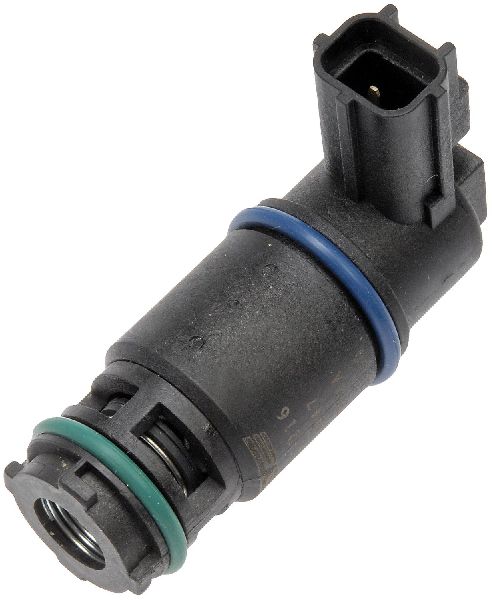
- Vapor Canister Vent Solenoid
(OEM #9U5Z-9F945-C)— This solenoid is the most common point of failure for a P1451 code, either due to internal electrical failure or being stuck. This part number is widely used across many Ford vehicles and supersedes older numbers like 7U5Z-9F945-D and 7U5Z-9F945-E.
Trusted brands: Motorcraft, Dorman, Standard Motor Products
OEM price range: $40-$70
Aftermarket price range: $20-$50 - Canister Vent Solenoid Connector Pigtail
(OEM #WPT-1080 (example, verify match))— If the connector is corroded or damaged, or if wires are broken at the connector, a new pigtail is needed for a solid repair. Corrosion is a common issue for under-vehicle connectors.
Trusted brands: Dorman, Motorcraft
OEM price range: $25-$40
Aftermarket price range: $10-$25
Related Codes That Often Appear With This One
- P1450 — A P1450 code (Unable to Bleed Up Fuel Tank Vacuum) is very common on the Edge. A user may get a P1451 after a faulty repair attempt for P1450, potentially from damaging the vent solenoid wiring while working on the EVAP system. One forum user reported this exact scenario.
Platform-Specific Known Issues
- Repair-Induced Fault: A user on fordedgeforum.com reported that after a dealer replaced the EVAP vent solenoid twice to fix a P1450 code, a P1451 code appeared six days later. This suggests that work performed on the EVAP system, even by professionals, can sometimes inadvertently damage the wiring or connector for the vent solenoid, leading to the P1451 circuit fault.
Mechanic-Grade Diagnostic Values
- EVAP Canister Vent Solenoid Resistance — expected: 48 to 65 Ohms. Failure: A reading of infinity (OL) indicates an open coil, while a reading near 0 Ohms indicates a shorted coil. Both necessitate replacement.
- Voltage at Vent Solenoid Connector (Power Wire) — expected: Approximately 12V (Battery Voltage) with Key On, Engine Off (KOEO).. Failure: A reading of 0V or significantly low voltage (e.g., 2.6V) points to a break in the power supply wire or a blown fuse.
- Voltage at Vent Solenoid Connector (Control Wire, Backprobed & Connected) — expected: Approximately 12V (Battery Voltage) with KOEO and solenoid not commanded on. The PCM supplies voltage, and it passes through the solenoid's coil.. Failure: A reading of 0V when not commanded suggests a short to ground in the control wire. If voltage remains at 12V when commanded ON by a scan tool, it indicates an open in the control wire or a failed PCM driver.
Scan Tool Commands That Help
- Ford IDS, FORScan, or other professional bidirectional scanner: EVAPCV (Output Control) — This command allows you to manually open and close the canister vent solenoid. With the circuit connected, you should hear an audible click from the solenoid. You can also monitor the voltage on the control wire with a multimeter; it should drop to near 0V when the solenoid is commanded closed (grounded by the PCM) and return to 12V when open.
Wiring & Ground Locations
- Vent Solenoid Power Wire — At the 2-pin connector for the EVAP Canister Vent Solenoid, located above the rear differential.. This wire, often Yellow/Red (YE-RD) on many Fords, supplies battery voltage to the solenoid. A break in this wire is a direct cause of P1451.
- Chassis Ground Stud — On the firewall, on the driver's side to the right of the battery.. While not the direct ground for the solenoid (which is controlled by the PCM), ensuring the main chassis and PCM grounds are clean and tight is a critical step in diagnosing any electrical fault. A poor main ground can cause floating voltages and erratic behavior in multiple systems.
OEM Part Supersession History
7U5Z-9F945-D, 7U5Z-9F945-E→9U5Z-9F945-C— Standard part revision and consolidation by Ford.
Diagnostic Flowchart
Other Known Issues on This Vehicle
Issues unrelated to this code that are worth knowing about as an owner of this generation:
- 2.0L EcoBoost Coolant Intrusion 🔴 High — Common on 2015-2018 Edge models. A revised engine block was introduced for 2019/2020 models to address the flaw. The issue can appear from 30,000 to over 100,000 miles. (Ref: TSB 19-2346 confirms the issue and recommends a long block engine replacement as the fix for affected vehicles.)
- Power Transfer Unit (PTU) Failure (AWD Models) 🔴 High — Widespread issue due to the 'lifetime' fluid being cooked by the adjacent exhaust, leading to lubrication breakdown. Preventative fluid changes every 30,000 miles are recommended. Symptoms like a burning smell or grinding noises can appear.
- SYNC 2 / SYNC 3 Screen Delamination or Failure 🟠 Medium — The infotainment screen can experience bubbling, delamination, or become unresponsive. This is a common complaint across many Ford models of this era.
- Water Leaks into Cabin 🟠 Medium — Leaks from the A-pillar area or panoramic sunroof drains are reported by some owners, which can lead to wet carpets and potential electrical issues.
- Harsh Shifting (6F35/8F35 Transmissions) 🟡 Low — Some owners report harsh or jerky shifting, particularly in earlier models (2015-2018) with the 6-speed automatic. Software updates or, in some cases, mechanical repairs may be needed. (Ref: TSB 16-0111 was issued for some 2015-2016 models with harsh engagement after an auto start/stop event.)
Used vs. New Parts: Buying Guide for This Vehicle
When a used part is the smart pick: A used vent solenoid from a junkyard is a reasonable budget-friendly option for this repair. The part is not a complex electronic module and its function is straightforward (on/off). It is a good candidate for a used part if sourced carefully.
Donor-vehicle mileage cap: roughly under 80000 miles for the part to have meaningful remaining life.
What to inspect on the donor part:
- Source from a vehicle in a dry, non-salt-belt region to minimize corrosion risk.
- Inspect the electrical connector pins on the donor solenoid; they should be clean, straight, and free of green or white corrosion.
- Check the plastic housing for cracks or brittleness.
- If possible, test the resistance with a multimeter before purchase; it should be between 48-65 ohms.
OEM-only on this vehicle (don't cheap out):
- For this specific P1451 repair, no parts are strictly 'OEM-only'. The solenoid is a common component.
Aftermarket brands forum-validated for this vehicle:
- Motorcraft (OEM)
- Standard Motor Products (SMP)
Brands owners have reported issues with on this vehicle:
- While Dorman is a common aftermarket brand, forum discussions frequently describe their quality as 'hit or miss' for electronic components and solenoids. For a part that is labor-intensive to access on the Edge, it may be worth avoiding the cheapest unbranded options to prevent a repeat repair.
Real Owner Stories
Aggregated from forums and TSBs cited above. Mileages and costs reflect what owners reported in those sources.
2015 Ford Edge
Symptoms: Check Engine Light with code P1451 appeared shortly after the dealer replaced the EVAP vent solenoid twice to address a previous P1450 code.
What fixed it: The source indicates this was a repair-induced fault where the wiring or connector was likely damaged during the previous solenoid replacements, though the final specific wire repair was not detailed.
Source hint: fordedgeforum.com: '2015 Edge P1450 code repaired, now P1451 code showing'
Related OBD-II Codes
Frequently Asked Questions
Where is the EVAP canister vent solenoid located on my 2015-2024 Ford Edge?
I just had a P1450 fixed and now P1451 appeared. Is this common?
What electrical readings should I see when testing the vent solenoid on my Edge?
Can I use a used part to fix this code on my Ford Edge?
Is there a specific replacement connector if my wiring is corroded?
Does the 2.0L EcoBoost coolant intrusion issue relate to P1451?
Helpful Videos


Used OEM Parts in Stock

New Aftermarket Parts Available


The information in this article is provided for general reference and educational purposes only. Vehicle specifications, procedures, and part compatibility can vary by production date, trim level, and region. Always consult your vehicle's factory service manual and verify part numbers before purchasing or performing repairs. Safety-critical components such as airbags, seat belts, and braking systems should be installed by a qualified professional.
- Ford Edge:
- 🧭 Diagnostic Flowchart
- 🎬 Helpful Videos
- 🛍️ Shop This Part
- What's Unique About the 2015-2024 Ford Edge
- Symptoms You May Notice
- Most Likely Causes
- Rare But Worth Checking
- Diagnosis Steps
- Parts You'll Likely Need
- Related Codes That Often Appear With This One
- Platform-Specific Known Issues
- Mechanic-Grade Diagnostic Values
- Scan Tool Commands That Help
- Wiring & Ground Locations
- OEM Part Supersession History
- Other Known Issues on This Vehicle
- Used vs. New Parts: Buying Guide for This Vehicle
- Real Owner Stories
- 2015 Ford Edge
- Related OBD-II Codes
- Frequently Asked Questions
- 🎟️ Get 5% Off