

P1451 on 2001-2007 Ford Escape: EVAP Vent Solenoid Circuit Fault Explained
P1451 on a first-generation Ford Escape indicates an electrical problem with the EVAP canister vent solenoid circuit, not a system leak. The most common fix is replacing the vent solenoid itself, located under the vehicle near the fuel tank. A wiring issue, often corrosion or a break in the harness near the solenoid, is the next most likely cause.
- P1451 is an electrical circuit code, not a leak code. Do not start by replacing the gas cap.
- The faulty part is the 'canister vent solenoid' located under the vehicle near the fuel tank, NOT the 'purge valve' in the engine bay.
- Before buying parts, inspect the wiring and connector for the vent solenoid, as a simple wiring repair is a common fix.
- You can test the solenoid with a multimeter before replacing it; it should read between 48 and 65 ohms.
What's Unique About the 2001-2007 Ford Escape
For the 2001-2007 Ford Escape, the P1451 code is a straightforward emissions system fault. The key challenge for owners is correctly identifying the part. Many confuse the canister vent solenoid (located under the vehicle, near the fuel tank and charcoal canister) with the purge valve/solenoid (located in the engine bay). Replacing the wrong part is a common mistake that will not fix this specific code. The under-vehicle location of the correct part and its wiring makes them highly susceptible to corrosion from road salt and moisture in rust-belt states.
Symptoms You May Notice
- Check Engine Light is on
- Vehicle will fail an emissions test
- A 'whoosh' sound of trapped pressure or vacuum may be heard when removing the gas cap
- Difficulty refueling, with the gas pump nozzle clicking off prematurely
- In rare cases, a faint fuel odor near the rear of the vehicle
- Replacing the gas cap. A bad gas cap typically causes an EVAP leak code (like P0455 or P0457), not a circuit code like P1451.
- Replacing the EVAP purge valve/solenoid. This part is located in the engine bay and is associated with different trouble codes (like P0443). 🎬 Watch: How to replace the engine bay purge valve P1451 specifically points to the vent solenoid circuit near the fuel tank.
Most Likely Causes
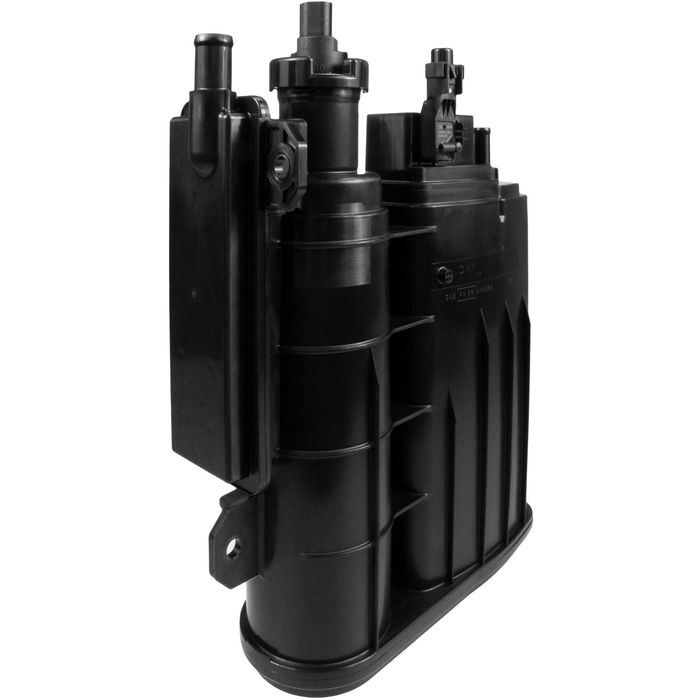
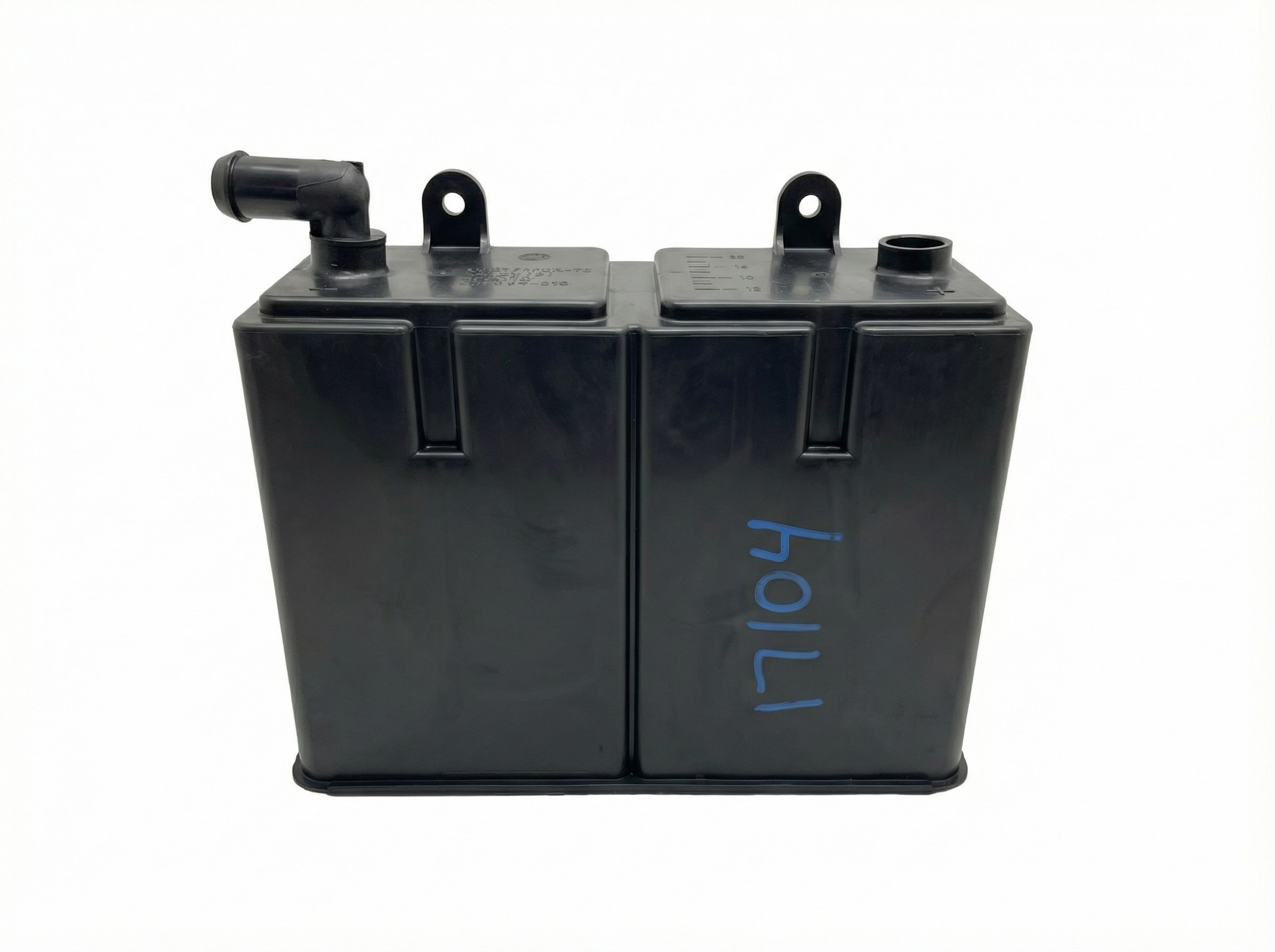
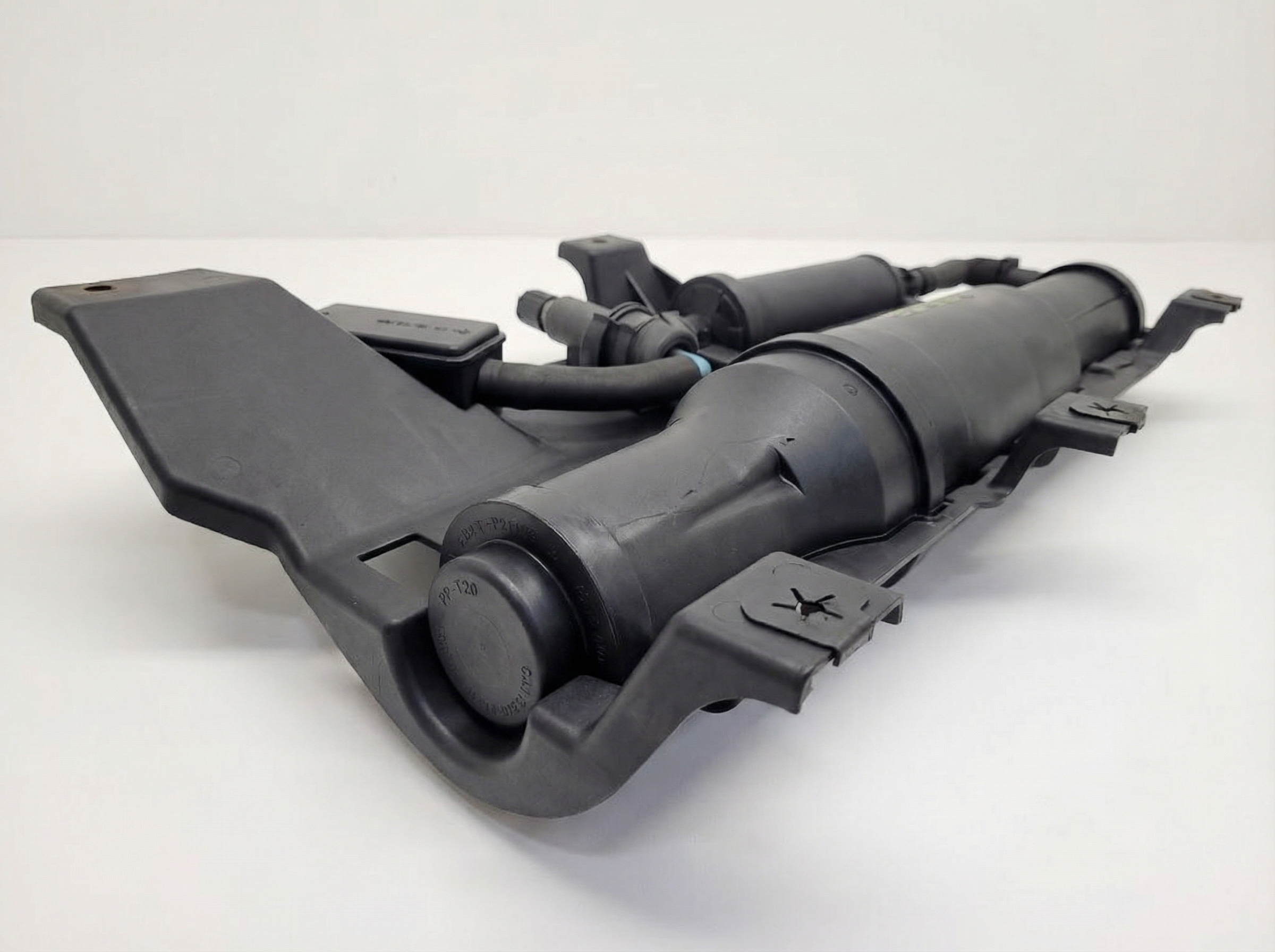
- Failed Canister Vent Solenoid 🔴 High Probability → Shop Vapor Canister The solenoid is exposed to the elements under the vehicle, making it susceptible to moisture intrusion and internal corrosion over time, especially from road salt.
How to confirm: Locate the solenoid on the charcoal canister under the vehicle. Unplug it and measure the resistance across its two electrical pins with a multimeter. A good Ford solenoid should read between 48 and 65 ohms. A reading of infinity (OL) or near-zero indicates a failed solenoid.
Typical fix: Replace the canister vent solenoid. This part typically twists into the charcoal canister assembly.
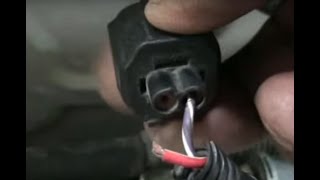
Est. part cost: $30-$80 - Damaged Wiring or Connector 🟡 Medium Probability The wiring harness to the vent solenoid is routed underneath the vehicle and is vulnerable to corrosion from road salt and moisture, or physical damage from road debris. Wires often break or corrode right at the connector.
How to confirm: Visually inspect the wiring harness leading to the vent solenoid connector. Look for cracked insulation, green or white corrosion on the connector pins, or broken wires. With the key on and engine off, use a multimeter to check for battery voltage (greater than 10.5V) at the power wire in the connector. A forum user with a similar Ford platform found the wire had chafed and exposed itself on a metal bracket under the air filter box, causing an intermittent short.
Typical fix: Repair the broken or corroded section of wire. If the connector itself is damaged, it can be replaced with a new pigtail connector.
Est. part cost: $5-$25
Rare But Worth Checking
- Clogged EVAP Canister or Vent Tube: → Shop Vapor Canister While less common for a circuit code, a severe blockage from mud, debris, or insects (spider nests are common) in the vent tube can sometimes prevent the system from venting properly, which may be misinterpreted by the PCM as a circuit fault.
- Faulty Powertrain Control Module (PCM): → Shop Engine Control Module (ECM) This is extremely rare. The PCM should only be considered a potential cause after all other possibilities, including the solenoid and the entire wiring circuit, have been thoroughly tested and confirmed to be good.
Diagnosis Steps
- Retrieve the P1451 code using an OBD-II scanner and confirm it is the only code present.
- Visually inspect the wiring harness and connector for the canister vent solenoid, located under the vehicle on or near the charcoal canister. Look for obvious signs of damage, corrosion, or loose connections. Pay close attention to the wires right at the connector body.
- If the wiring appears intact, disconnect the solenoid's electrical connector.
- Test the solenoid's resistance using a multimeter. The reading should be between 48 and 65 ohms. If it is outside this range, the solenoid is faulty and needs replacement.
- If the solenoid tests good, check for power at the connector. Turn the ignition to the 'On' position (engine off). Use a multimeter to check for battery voltage at the power wire in the harness connector. It should be above 10.5 volts.
- If there is no voltage, trace the power wire (VPWR circuit) back towards the fuse box, checking for breaks or opens. On some Fords, this circuit is protected by a fuse in the engine bay fuse box.
- If voltage is present, the issue may be in the ground side of the circuit which is controlled by the PCM. Check for continuity on this wire between the connector and the PCM.
- If possible, use a bi-directional scan tool to command the vent solenoid on and off to verify circuit operation and listen for a 'click' from the solenoid.
Parts You'll Likely Need
- EVAP Canister Vent Solenoid
(OEM #9U5Z-9F945-C (Note: This is a later part number, verify VIN for exact fitment))— This is the most common component to fail, either due to an internal short/open circuit or by getting stuck.
Trusted brands: Motorcraft, Dorman, Standard Motor Products, API
OEM price range: $50-$90
Aftermarket price range: $30-$60 - EVAP Vent Solenoid Connector Pigtail
(OEM #Motorcraft WPT-1080 (Note: Verify connector style before ordering))— The connector itself or the wires directly attached to it often corrode and fail, requiring a new pigtail to be spliced in.
Trusted brands: Motorcraft, Dorman
OEM price range: $20-$40
Aftermarket price range: $10-$25
Platform-Specific Known Issues
- Owner Repair Story: Broken Wires at Connector: An owner of a 2000 Ford Explorer (a platform with a similar EVAP system) with a P1451 code found that both wires had broken off right at the vent solenoid connector due to rust. After confirming the solenoid itself was good (measuring ~55 ohms), re-terminating the wires and reconnecting them solved the problem. This highlights the importance of checking the wiring integrity right at the connector.
- Owner Repair Story: Chafed Wire: On a Ford Expedition, an owner chased an intermittent P1451 code. After replacing the solenoid didn't work, they traced the wiring harness from the rear of the vehicle forward. They discovered that underneath the air filter box in the engine bay, one of the wires for the vent solenoid circuit had rubbed against a metal bracket, exposing the copper and causing an intermittent short.
Mechanic-Grade Diagnostic Values
- EVAP Canister Vent Solenoid Resistance — expected: 48 to 65 Ohms. Failure: A reading of infinity (OL) indicates an open coil; near-zero Ohms indicates a shorted coil.
- Voltage at Vent Solenoid Connector (Power Wire, KOEO) — expected: ~12V (Battery Voltage). Failure: 0V or significantly low voltage indicates an open in the VPWR (Vehicle Power) circuit or a blown fuse.
- Voltage at Vent Solenoid Connector (Control Wire, Solenoid Commanded OFF/Open) — expected: ~12V (Battery Voltage). Failure: A low voltage reading (e.g., 2-4V) or 0V suggests a partial or full short to ground in the control wire or a faulty PCM driver.
- Voltage at Vent Solenoid Connector (Control Wire, Solenoid Commanded ON/Closed) — expected: Near 0V (Indicates a good ground from the PCM). Failure: Voltage remains high, indicating the PCM is not providing ground, or there is an open in the control wire.
- Ford Mode $06, Test ID $82 — expected: The reported test value should be within the MIN and MAX limits shown on the scan tool.. Failure: A test value outside the specified range indicates a failure of the canister vent solenoid circuit monitor, directly corresponding to P1451.
Hidden / Shadow Codes Worth Checking
- Mode $06, Test ID $82: This is not a standard DTC but a specific onboard diagnostic monitor for the 'EVAP Vapor Blocking Valve' (Canister Vent Solenoid) circuit. It directly tests the electrical integrity of the circuit that, when failed, sets P1451. (see via A professional or high-end DIY scan tool capable of reading Mode $06 data.)
Scan Tool Commands That Help
- Ford IDS (or equivalent): Output Test Mode / Active Command for Canister Vent Solenoid (PID: EVAPCV) — This bidirectional command allows a technician to manually cycle the vent solenoid on (100% duty cycle) and off (0% duty cycle). It is used to confirm the PCM driver, wiring, and solenoid are all functional in one test by listening for a 'click' and measuring voltage changes on the control wire simultaneously.
Wiring & Ground Locations
- PCM Connector Pin 13 — At the main Powertrain Control Module connector, located on the firewall.. This is the specific pin for the EVAP canister vent solenoid control wire. For a 2007 Escape 2.3L, this is a Violet/White wire. Testing for continuity between this pin and the connector at the solenoid confirms the wire is not broken.
- Canister Vent Solenoid Connector — Under the vehicle, plugged into the vent solenoid on the charcoal canister assembly.. This is the primary failure point for the circuit due to its exposure to road salt, moisture, and debris, which causes corrosion on the pins and wires.
Real Owner Repair Stories
- RepairPal Forum (2002 Mazda Tribute 4-cylinder (Ford Escape platform mate)) — Check Engine Light with code P1451.
❌ Tried (didn't work) Initial diagnosis pointed to the solenoid.
✅ What actually fixed it The owner had run over an animal which tore off the protective black cover for the EVAP components under the driver's side. The canister and solenoid were hanging loose, likely damaging the wiring or connector. The fix was to secure the components and repair any damaged connections. - Go-Parts Repair Database (Mazda (unspecified model, but common issue)) — P1451, Check Engine Light.
❌ Tried (didn't work) Replacing the vent solenoid, Smoke testing the system (found no leaks)
✅ What actually fixed it The root cause was a spider's nest completely blocking the EVAP vent hose outlet where it terminates inside a frame rail. Cleaning out the nest permanently fixed the code, as the physical blockage was being misinterpreted by the PCM as a circuit fault.
Diagnostic Flowchart
Other Known Issues on This Vehicle
Issues unrelated to this code that are worth knowing about as an owner of this generation:
- Subframe/Control Arm Rust 🔴 High — Very common in 'salt belt' regions, affecting 2001-2004 models most severely. (Ref: Ford Recall 14S02 was issued for 2001-2004 models to install a reinforcement crossbrace due to risk of the lower control arm separating from the rusted subframe.)
- Automatic Transmission Failure 🔴 High — Common across the generation, particularly noted in 2005-2007 models. Failures can occur before 100,000 miles.
- Ignition Coil Failure 🟠 Medium — Common issue, often caused by moisture intrusion into the spark plug wells, leading to misfires.
- Alternator Failure 🟠 Medium — Failures are frequently reported, leading to a dead battery, dimming lights, and potential stalling.
- DPFE Sensor Failure (V6 Models) 🟡 Low — The Differential Pressure Feedback EGR sensor on 3.0L V6 models is prone to clogging from carbon buildup, causing poor engine performance and Check Engine Lights.
Used vs. New Parts: Buying Guide for This Vehicle
When a used part is the smart pick: A used EVAP canister vent solenoid from a junkyard is a reasonable choice, especially if it's a complete canister assembly from a low-mileage, non-rust-belt donor vehicle. A used connector pigtail is also a good option if the original is corroded.
Donor-vehicle mileage cap: roughly under 100000 miles for the part to have meaningful remaining life.
What to inspect on the donor part:
- Check the electrical pins on the solenoid for any signs of green or white corrosion.
- Inspect the plastic housing for cracks or brittleness.
- Ensure the connector locking tab is intact and not broken.
- If buying a pigtail, ensure there are several inches of clean, flexible wire to work with.
Aftermarket brands forum-validated for this vehicle:
- Motorcraft (OEM)
- Standard Motor Products (SMP)
- Dorman
Brands owners have reported issues with on this vehicle:
- No specific brands are consistently reported as problematic, but ultra-low-cost, unbranded parts from online marketplaces may have lower quality control.
Real Owner Stories
Aggregated from forums and TSBs cited above. Mileages and costs reflect what owners reported in those sources.
2001 Ford Escape — 170000 miles
Symptoms: Check engine light is on, the vehicle stays a little accelerated, and suddenly makes rough transmission shifts.
What fixed it: The user was advised the issue is with the evaporation system, though a definitive repair was not reported by the owner.
Source hint: Opinautos forum report
2000 Ford Explorer
Symptoms: P1451 code present.
What fixed it: Re-terminating and reconnecting both wires that had broken off right at the vent solenoid connector due to rust.
Source hint: Owner Repair Story: Broken Wires at Connector
Ford Expedition
Symptoms: Intermittent P1451 code.
What fixed it: Repairing a wire in the harness underneath the air filter box that had rubbed against a metal bracket, exposing the copper and causing a short.
Source hint: Ford Truck Enthusiasts Forums - 'p1451 driving me crazy'
1997 Ford F-150
Symptoms: Code 1451 Evap System Failure.
What fixed it: Troubleshooting revealed only 8.75V at the CV solenoid connector, indicating a fault in the power supply circuit (VPWR).
Source hint: Ford Truck Enthusiasts Forums - 'Code 1451 Evap System Failure'
2002 Mazda Tribute
Symptoms: P1451 canister vent solenoid circuit system code.
What fixed it: Diagnosis of the canister vent solenoid circuit, which is shared with the Ford Escape platform.
Source hint: RepairPal - '2002 Mazda Tribute P1451 canister vent solenoid circuit system'
Related OBD-II Codes
Frequently Asked Questions
Is there a recall for the rust issues on my 2001-2004 Ford Escape?
I have a 2002 Mazda Tribute with P1451; is the fix the same as the Ford Escape?
Could a gas cap issue cause P1451 on my Ford truck?
What resistance should I look for when testing the vent solenoid on my Escape?
Where is the most common place for wiring to fail on the Ford platform for this code?
What voltage should I see at the vent solenoid connector with the key on?
Helpful Videos

Used OEM Parts in Stock
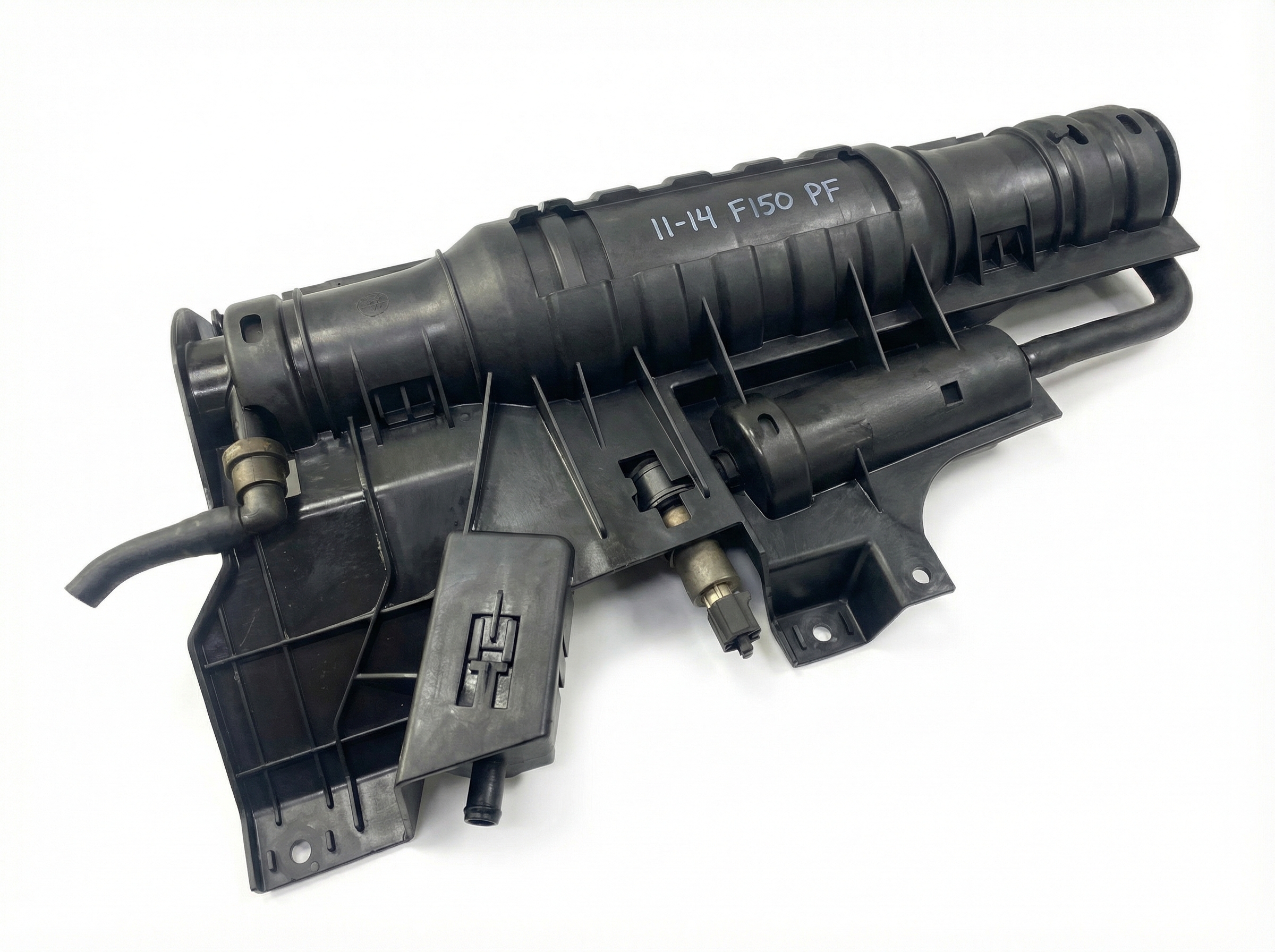
New Aftermarket Parts Available


The information in this article is provided for general reference and educational purposes only. Vehicle specifications, procedures, and part compatibility can vary by production date, trim level, and region. Always consult your vehicle's factory service manual and verify part numbers before purchasing or performing repairs. Safety-critical components such as airbags, seat belts, and braking systems should be installed by a qualified professional.
- Ford Escape:
- 🧭 Diagnostic Flowchart
- 🎬 Helpful Videos
- 🛍️ Shop This Part
- What's Unique About the 2001-2007 Ford Escape
- Symptoms You May Notice
- Most Likely Causes
- Rare But Worth Checking
- Diagnosis Steps
- Parts You'll Likely Need
- Platform-Specific Known Issues
- Mechanic-Grade Diagnostic Values
- Hidden / Shadow Codes Worth Checking
- Scan Tool Commands That Help
- Wiring & Ground Locations
- Real Owner Repair Stories
- Other Known Issues on This Vehicle
- Used vs. New Parts: Buying Guide for This Vehicle
- Real Owner Stories
- 2001 Ford Escape — 170000 miles
- 2000 Ford Explorer
- Ford Expedition
- 1997 Ford F-150
- 2002 Mazda Tribute
- Related OBD-II Codes
- Frequently Asked Questions
- 🎟️ Get 5% Off