

P1451 on 1997-2002 Ford Escort: EVAP Vent Solenoid Circuit Fault Causes and Fixes
This code indicates an electrical problem with the EVAP canister vent solenoid circuit, not a gas cap leak. The most common fix is repairing a corroded or broken wire leading to the solenoid, or replacing the solenoid itself. Expect the part to cost between $25 and $75.
- P1451 is an electrical circuit code, not a leak code. Do not start by replacing the gas cap.
- The most common cause is a simple wiring issue (corrosion or a break) near the vent solenoid's connector.
- Before buying parts, you must correctly locate the EVAP canister and vent solenoid, which could be in the engine bay (wagons) or at the rear of the car (sedans/coupes) depending on the model.
- Test the solenoid with a multimeter before replacing it; a good one should have a resistance of 48-65 ohms.
What's Unique About the 1997-2002 Ford Escort
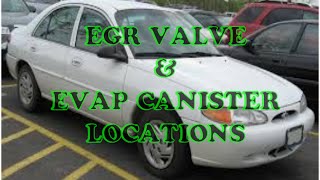
On the 1997-2002 Ford Escort, the location of the EVAP canister and the associated vent solenoid can vary. Some models, particularly wagons, may have the canister located in the engine bay on the driver's side. Other models, including the ZX2 coupe and sedans, typically have the canister and vent solenoid located at the rear of the vehicle, under the car near the driver's side rear wheel and fuel tank. It is crucial to identify the correct location before starting diagnosis or repairs.
🎬 Watch: How to find the EVAP canister on your EscortSymptoms You May Notice
- Check Engine Light is on
- Failed emissions test
- Possible faint fuel odor (rare)
- Possible 'whoosh' sound when opening the gas cap if the vent is stuck closed
- Replacing the gas cap. A bad gas cap typically causes leak-related codes (like P0442 or P0455), not a circuit code like P1451.
- Replacing the EVAP Purge Valve/Solenoid. The purge valve is located in the engine bay and has its own diagnostic code (P0443). P1451 specifically refers to the vent solenoid circuit, which is located near the charcoal canister.
Most Likely Causes
- Damaged, Corroded, or Broken Wiring/Connector 🔴 High Probability The wiring to the vent solenoid, especially if located at the rear of the car, is exposed to road salt, moisture, and debris, leading to corrosion and breaks in the wires or at the connector pins. This is the most common failure point for this code across many Ford models.
How to confirm: Visually inspect the entire length of the wiring harness leading to the canister vent solenoid. Check for cracks, breaks, or green/white corrosion on the wires and inside the electrical connector. Gently tug on the wires at the connector to ensure they are secure. A common failure point is right at the connector where moisture collects.
Typical fix: Repair the broken or corroded section of wire using a weatherproof butt connector. If the connector is damaged or a pin is broken, it will need to be replaced by splicing in a new pigtail connector. In some cases, soldering the wire directly to the terminal is required for a lasting repair.
Est. part cost: $5-$25 - Faulty Canister Vent Solenoid 🟡 Medium Probability → Shop Vapor Canister The solenoid is an electro-mechanical valve that can fail internally over time due to age and exposure to the elements, causing the internal coil to break (open circuit) or short out.
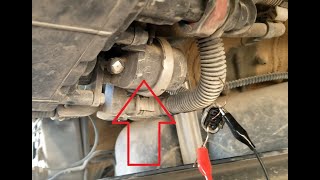
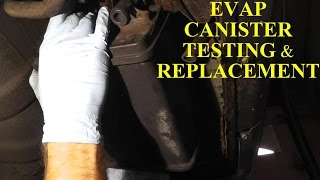
How to confirm: Use a multimeter to test the resistance of the solenoid's coil. A functional Ford solenoid should typically measure between 48 and 65 ohms. A reading of infinity (OL) indicates an open circuit, while a reading near zero indicates a short. 🎬 Watch: How to test the vent valve and its wiring You can also apply 12V power and a ground to the solenoid terminals; a good solenoid will make an audible click as it opens or closes.
Typical fix: Replace the canister vent solenoid.
Est. part cost: $25-$75
Rare But Worth Checking
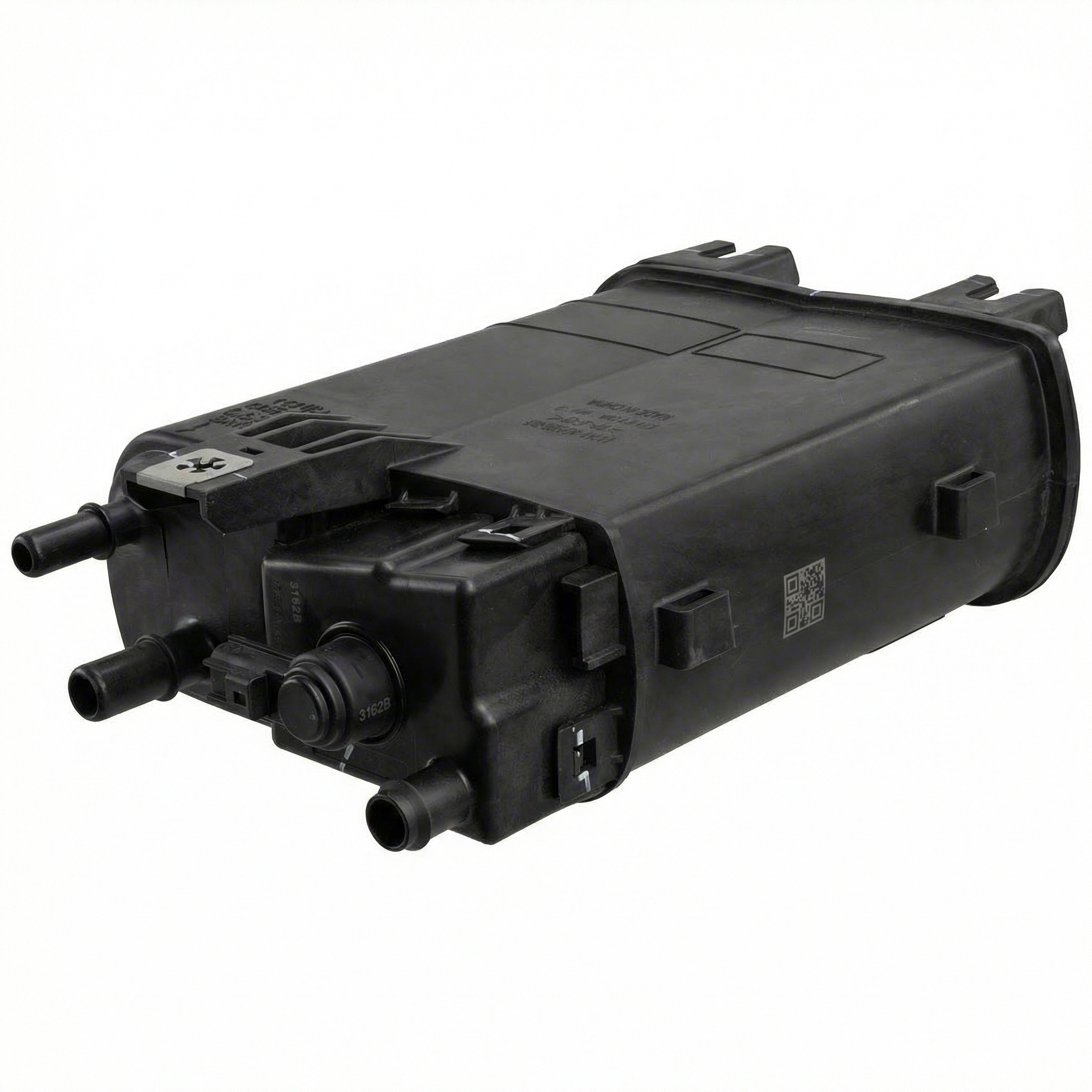
- Clogged EVAP Canister or Vent Tube: → Shop Vapor Canister While P1451 is an electrical code, a physical blockage in the vent tube or canister (from insects, mud, or debris) can sometimes prevent the system from venting properly, which the PCM might misinterpret as a circuit fault.
- Faulty Powertrain Control Module (PCM): → Shop Engine Control Module (ECM) This is very rare, and all other possibilities should be exhausted before considering a faulty PCM. This should only be considered after verifying the wiring harness has perfect continuity back to the PCM connector.
Diagnosis Steps
- Confirm the Code: Use an OBD-II scanner to confirm that P1451 is the only code present. If other codes exist, address them first.
- Locate the Canister Vent Solenoid: First, check the engine bay on the driver's side for a black plastic box with several hoses (the EVAP canister), common on wagon models. If it's not there, raise the rear of the vehicle and check underneath, near the driver's side rear wheel and fuel tank. The vent solenoid will be attached to or located very near the charcoal canister.
- Inspect the Wiring and Connector: Thoroughly inspect the wires leading to the vent solenoid for any signs of damage, corrosion, or breaks. Pay close attention to the electrical connector. Disconnect it and check for corroded or bent pins. This is the most common point of failure.
- Test for Power: With the ignition key in the 'On' position, use a multimeter to check for battery voltage at the power wire on the solenoid's connector (often a red or red/yellow wire). If there is no voltage, trace that wire back towards the fuse box to find the break.
- Test the Solenoid: If power is present, test the solenoid itself. Disconnect the connector and measure the resistance across the two pins on the solenoid. A typical reading for a Ford solenoid is between 48 and 65 ohms. If the reading is out of spec or shows an open circuit (OL), the solenoid is bad.
- Test the Control Circuit: If the solenoid and power supply are good, the issue may be in the ground-side control wire running back to the PCM. Check this wire for continuity between the solenoid connector and the PCM connector (requires a wiring diagram). Also check for a short to ground on this wire.
- Check for Blockages: While less likely for this code, inspect the vent hose attached to the canister for any blockages from dirt, debris, or insects.
- Repair and Clear: Once the fault is found and repaired, clear the code with the scanner and perform a drive cycle to ensure the fix was successful.
Parts You'll Likely Need
- Vapor Canister Vent Solenoid
(OEM #F7DZ9F945AB)— This solenoid is the component that the P1451 code directly monitors. It can fail electrically, causing the circuit fault.
Trusted brands: Motorcraft, Dorman (911-231, though this is often listed as a purge valve, cross-reference is needed), Standard Motor Products
OEM price range: $50-$90
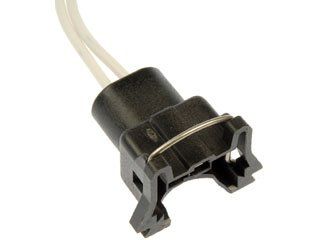
Aftermarket price range: $25-$75 - Connector Pigtail — The electrical connector is a common failure point due to corrosion, and often needs to be replaced along with or instead of the solenoid.
Trusted brands: Dorman, Motorcraft
OEM price range: $20-$40
Aftermarket price range: $10-$25
Platform-Specific Known Issues
- A user on FordForums.com with a 2002 Taurus (which shares EVAP components) reported chasing the P1451 code by replacing both the purge and vent solenoids, only to find the issue persisted, highlighting the importance of testing the circuit and PCM connections before replacing parts.
- Forum discussions on Ford Truck Enthusiasts repeatedly confirm that P1451 is an electrical circuit fault and that corroded wires near the solenoid are the most frequent cause, advising against starting with a gas cap replacement. 🎬 Watch: Causes and fixes for the Ford P1451 code
Mechanic-Grade Diagnostic Values
- Canister Vent Solenoid Coil Resistance — expected: 48 - 65 Ohms. Failure: A reading of infinity (OL) indicates an open coil; a reading near zero ohms indicates a shorted coil.
- Voltage at Solenoid Connector Power Wire — expected: 12V+ (Battery Voltage) with Key On, Engine Off. Failure: 0V indicates an open in the power supply circuit (VPWR), potentially a broken wire or blown fuse.
- Scan Tool Live Data: EVAPCV PID (Solenoid Commanded Open/De-energized) — expected: 0% duty cycle; voltage on PCM control side of circuit should be approximately battery voltage.. Failure: Low or no voltage when the solenoid is commanded open points to a short to ground or an open in the control wire.
- Scan Tool Live Data: EVAPCV PID (Solenoid Commanded Closed/Energized) — expected: 100% duty cycle; voltage on PCM control side should drop by a minimum of 4 volts.. Failure: Voltage does not drop when commanded closed, indicating the PCM is not grounding the circuit or the solenoid coil is open.
Scan Tool Commands That Help
- Ford IDS (or equivalent professional scanner): Output Test Mode / Manual EVAP Test — This bidirectional command allows the technician to manually toggle the canister vent solenoid on and off. This is used to listen for an audible 'click' from the solenoid to confirm it is mechanically functioning and to observe the voltage changes on the control circuit as described in the diagnostic values.
Wiring & Ground Locations
- Vent Solenoid Power Wire — At the 2-pin connector for the EVAP Canister Vent Solenoid.. This wire provides battery voltage to the solenoid. On similar Ford platforms, this wire is often Red or Red/Yellow. A lack of 12V here is a primary cause of P1451.
- Vent Solenoid Control Wire — At the 2-pin connector for the EVAP Canister Vent Solenoid, running back to the PCM.. The PCM applies a ground to this wire to energize (close) the solenoid. On similar Fords, this wire may be Purple/White or Green. An open or short on this wire will prevent the PCM from controlling the solenoid.
- G133 / G112 — Near the starter motor.. This is a major engine harness ground point listed for the 1997 Escort. A poor connection here can cause a variety of seemingly unrelated electrical issues, including problems with PCM-controlled components.
- G104 / G106 — Mentioned in a 2003 Escort wiring diagram, likely in the engine compartment.. These are chassis ground points. While not directly for the vent solenoid circuit, ensuring all main grounds are clean and tight is a crucial step when diagnosing any persistent electrical fault code.
Real Owner Repair Stories
- Ford Truck Enthusiasts Forum User (1999 Ford Explorer (uses similar EVAP components and logic)) — P1451 code
❌ Tried (didn't work) Initial confusion locating the part, mistaking the purge solenoid in the engine bay for the vent solenoid at the rear.
✅ What actually fixed it Upon locating the correct vent solenoid near the spare tire, the owner discovered that both wires had corroded and broken off right at the electrical connector. Repairing the wires and re-securing the connection resolved the code. - YouTube video by GabrielAutoTech (2001 Lincoln Town Car (uses similar Ford EVAP components and logic)) — P1451 code
❌ Tried (didn't work) Initial inspection showed a corroded electrical terminal at the vent solenoid connector.
✅ What actually fixed it Cleaning the terminal was not sufficient for a reliable connection. The final, successful repair required removing the corroded terminal from the connector and soldering the wire directly to the pin to ensure a permanent, low-resistance connection.
OEM Part Supersession History
F7DZ-9F945-AA→F7DZ-9F945-AB— Standard part revision by the manufacturer.
Heads up: The new part number is a direct replacement. Note that the part itself may be stamped with the engineering number F7DE-9F945-AB, while the official Ford retail box will be labeled with the F7DZ-9F945-AB part number. This is normal and not a sign of an incorrect part.
Diagnostic Flowchart
Other Known Issues on This Vehicle
Issues unrelated to this code that are worth knowing about as an owner of this generation:
- Dropped Valve Seats (2.0L SOHC SPI Engine) 🔴 High — A very common and well-documented issue, particularly as mileage exceeds 100,000. The steel valve seats can loosen and fall out of the aluminum cylinder head, causing catastrophic engine damage.
- Automatic Transmission Failure (F4E-III / 4EAT-F) 🔴 High — The automatic transmission is a known weak point, with failures including slipping, harsh shifting between 1st and 2nd gear, and complete loss of forward motion. Issues with the internal pump or pressure control solenoids are common.
- Constant Control Relay Module (CCRM) Failure 🟠 Medium — Failure of the CCRM is a common problem that can cause a variety of issues, including a rough idle, stalling, or a no-start condition.
- Rough Idle 🟡 Low — A rough or vibrating idle is a signature characteristic of this platform, often considered 'normal' by owners. It can sometimes be exacerbated by a failing CCRM or a dirty Idle Air Control (IAC) valve.
- Rear Strut Tower Rust 🟠 Medium — The rear strut towers are prone to severe rust, which can compromise the structural integrity of the suspension mounting points. This is especially common in regions that use road salt.
Used vs. New Parts: Buying Guide for This Vehicle
When a used part is the smart pick: For the electrical connector pigtail. If the original connector is cracked or severely corroded, a used pigtail from a junkyard vehicle (especially from a dry, non-salt-belt region) is an excellent and cost-effective repair option. The solenoid itself is best purchased new.
Donor-vehicle mileage cap: roughly under 120000 miles for the part to have meaningful remaining life.
What to inspect on the donor part:
- For a pigtail: Inspect for any signs of green or white corrosion on the pins.
- Check that the plastic is not brittle or cracked.
- Ensure the wire insulation is flexible and not hardened or split.
- Verify the locking tab on the connector is intact.
Aftermarket brands forum-validated for this vehicle:
- Motorcraft (OEM)
- Standard Motor Products (SMP)
- Dorman
- Wells
Brands owners have reported issues with on this vehicle:
- No-name, unbranded parts sold on marketplace sites should be avoided, as their internal coil windings may not meet the specific resistance requirements, leading to a quick return of the code.
Real Owner Stories
Aggregated from forums and TSBs cited above. Mileages and costs reflect what owners reported in those sources.
2002 Ford Taurus
Symptoms: The owner was chasing a P1451 code and replaced both the purge and vent solenoids, but the Check Engine Light and the code persisted.
What fixed it: The source emphasizes that the issue required electrical circuit and PCM connection testing rather than just part replacement, as replacing the solenoids alone did not fix the fault.
Source hint: Ford Forum (2002 Taurus P1451): https://www.fordforum.com/forum/ford-taurus-15/2002-taurus-ses-getting-p1451-error-26015/
Related OBD-II Codes
Frequently Asked Questions
I have a 1998 Mercury Tracer; is the P1451 fix the same as the Ford Escort?
Should I replace my gas cap to fix P1451 on my Escort?
Where is the canister vent solenoid located on my Escort wagon?
What resistance should I look for when testing the vent solenoid with a multimeter?
Can I use a used part to fix the P1451 wiring issue?
Is the P1451 code related to the common 'dropped valve seat' issue on the 2.0L SOHC engine?
Helpful Videos

Used OEM Parts in Stock
New Aftermarket Parts Available


The information in this article is provided for general reference and educational purposes only. Vehicle specifications, procedures, and part compatibility can vary by production date, trim level, and region. Always consult your vehicle's factory service manual and verify part numbers before purchasing or performing repairs. Safety-critical components such as airbags, seat belts, and braking systems should be installed by a qualified professional.
- Ford Escort:
- 🧭 Diagnostic Flowchart
- 🎬 Helpful Videos
- 🛍️ Shop This Part
- What's Unique About the 1997-2002 Ford Escort
- Symptoms You May Notice
- Most Likely Causes
- Rare But Worth Checking
- Diagnosis Steps
- Parts You'll Likely Need
- Platform-Specific Known Issues
- Mechanic-Grade Diagnostic Values
- Scan Tool Commands That Help
- Wiring & Ground Locations
- Real Owner Repair Stories
- OEM Part Supersession History
- Other Known Issues on This Vehicle
- Used vs. New Parts: Buying Guide for This Vehicle
- Real Owner Stories
- 2002 Ford Taurus
- Related OBD-II Codes
- Frequently Asked Questions
- 🎟️ Get 5% Off