

P1451 on 2006-2012 Ford Fusion: EVAP Vent Solenoid Circuit Malfunction Causes and Fixes
This code indicates an electrical fault in the EVAP canister vent solenoid circuit, not a fuel vapor leak. The most common fix is replacing the canister vent solenoid (OEM Part #6E5Z9F945AA) located near the fuel tank, or repairing its damaged wiring. The solenoid coil should measure 48-65 ohms. Expect the part to cost between $40 and $80.
- P1451 is an electrical circuit code, not a leak code. Do not start by looking for leaks or replacing the gas cap.
- The problem is with the EVAP Canister VENT Solenoid circuit, located at the rear of the car by the fuel tank, NOT the PURGE Valve in the engine bay.
- Before buying a new solenoid, test the old one's resistance (should be 48-65 ohms) and check for 12V power at its connector to avoid misdiagnosis.
- Thoroughly inspect the wiring harness near the solenoid for corrosion or breaks, as a simple wiring repair is a common and inexpensive fix.
What's Unique About the 2006-2012 Ford Fusion
The first-generation Ford Fusion (2006-2012) and its platform mates (Mercury Milan, Lincoln MKZ) are generally reliable, but their EVAP components are exposed to the elements under the car. The P1451 code on this platform almost always points to a problem at the rear of the vehicle near the fuel tank, not under the hood. Owners frequently find that either the vent solenoid itself has failed or the wiring leading to it has become corroded or damaged over time, a common issue on many Ford vehicles of this era.
Generation note: The 2006-2012 Ford Fusion covers the first generation and its 2010 facelift. The diagnosis and common parts for this specific P1451 code are consistent across this entire year range and its platform mates.
Symptoms You May Notice
- Check Engine Light is on (the most common and often only symptom).
- Vehicle will fail an emissions inspection.
- In rare cases, difficulty refueling where the gas pump nozzle clicks off repeatedly if the valve is stuck closed.
- A 'whoosh' sound when opening the gas cap if the valve is stuck closed, causing pressure or vacuum buildup.
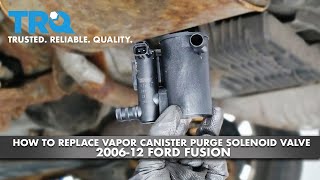
- Replacing the EVAP Purge Valve/Solenoid. 🎬 Watch: How to replace the purge valve The P1451 code specifically refers to the VENT solenoid circuit (by the fuel tank), not the PURGE valve located in the engine bay.
- Replacing the Gas Cap. This code is for an electrical circuit fault, not a system leak. The 2010-2012 Fusion models also use a capless system, making this irrelevant for those years.
Most Likely Causes
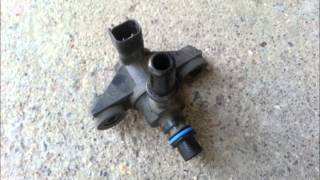
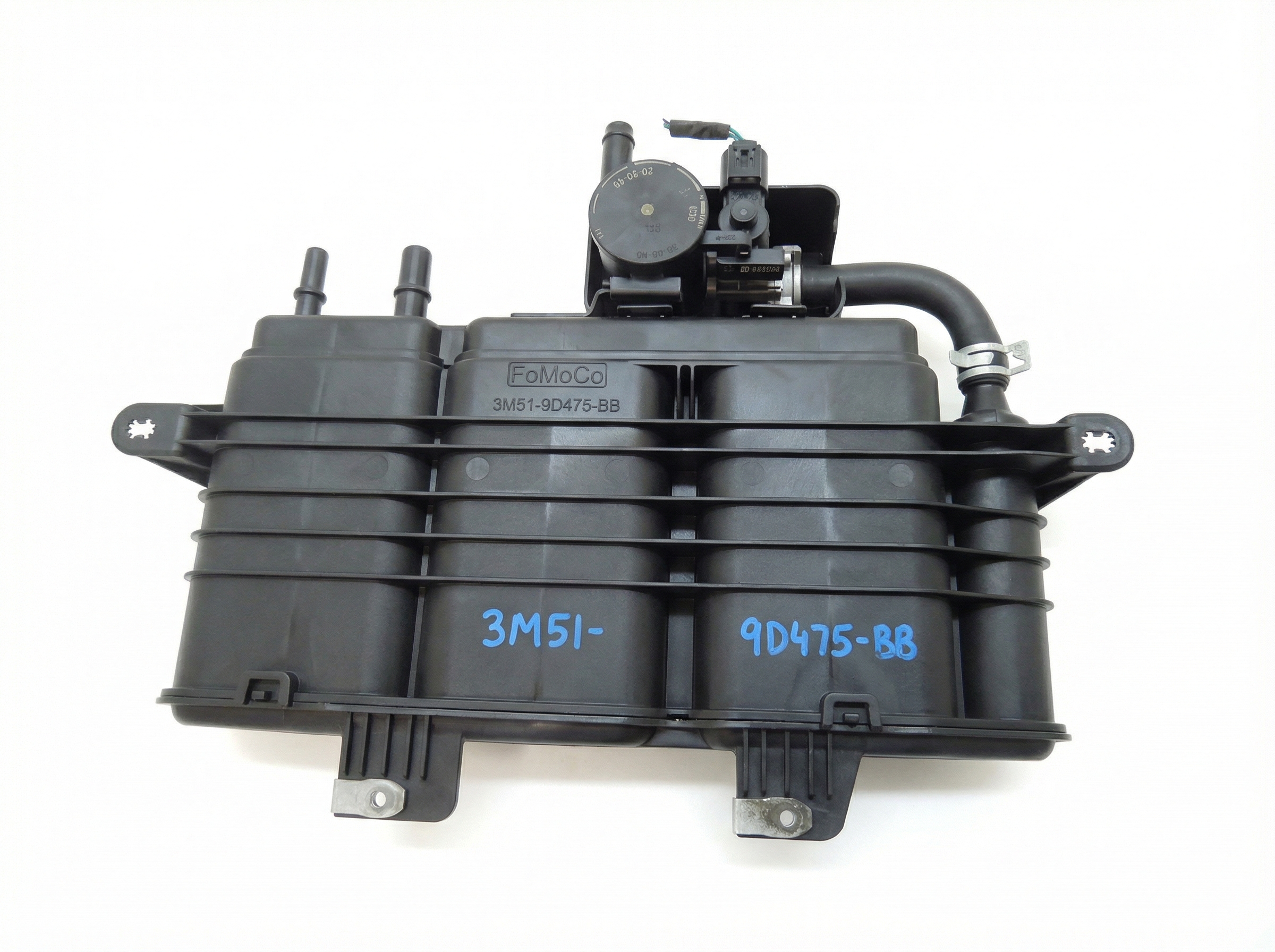
- Failed EVAP Canister Vent Solenoid 🔴 High Probability → Shop Vapor Canister The solenoid is located under the vehicle where it is exposed to moisture, road salt, and debris, leading to internal coil failure or corrosion of its electrical pins over time.
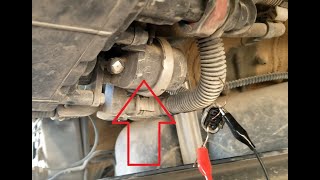
How to confirm: Disconnect the solenoid and measure the resistance across its two pins with a multimeter. A functional Ford solenoid should measure between 48 and 65 ohms. 🎬 Watch: How to test the vent valve and its wiring A reading of infinity (OL) means an open coil, and near zero means a shorted coil; either indicates a bad solenoid.
Typical fix: Replace the EVAP canister vent solenoid.
Est. part cost: $40 - $80 - Damaged Wiring or Electrical Connector 🟡 Medium Probability The wiring harness leading to the vent solenoid runs along the vehicle's undercarriage and is susceptible to corrosion, chafing against the frame, or damage from road debris. The pins inside the connector are also a common failure point.
How to confirm: Visually inspect the entire length of the wiring harness from the solenoid for any breaks, chafing, or corrosion. With the key on, engine off, use a multimeter or test light to check for battery voltage (around 12V) at the power wire (often Red or Red/Yellow) on the solenoid connector. A low or zero voltage reading points to a wiring issue upstream.
Typical fix: Repair the broken or corroded section of wire or replace the damaged connector pigtail.
Est. part cost: $5 - $25 - Clogged EVAP Vent Tube or Canister ⚪ Low Probability Insects (like spiders), mud, or road debris can clog the vent tube or the filter box attached to the solenoid, preventing airflow. This is less likely to cause a circuit code but can happen.
How to confirm: Remove the vent hose from the solenoid and canister assembly and check for any physical blockages. Attempt to blow through the hose and canister vent port.
Typical fix: Clean out the obstruction from the hose or replace the charcoal canister if it is saturated or internally blocked.
Est. part cost: $0 - $150
Rare But Worth Checking
- Faulty Powertrain Control Module (PCM): → Shop Engine Control Module (ECM) This is extremely rare. The PCM's internal driver for the solenoid circuit can fail, but this should only be considered after all other possibilities, including the solenoid and the entire wiring harness, have been exhaustively tested and ruled out.
Diagnosis Steps
- Verify the code with an OBD-II scanner. Note any other codes present.
- Locate the EVAP canister and vent solenoid. On the Fusion, this is typically mounted on or near the charcoal canister, under the rear of the vehicle, often near the center.
- Visually inspect the vent solenoid, its connector, and the wiring harness for any obvious signs of damage, corrosion, or loose connections. Pay close attention to where the harness may rub against the frame.
- Disconnect the electrical connector. With the key in the 'ON' position (engine off), use a multimeter to check for battery voltage at the power wire (often Red or Red/Yellow) in the connector. If voltage is missing, trace the wire back to find the open circuit or a blown fuse.
- If voltage is present, test the solenoid itself. Measure the resistance between the two pins on the solenoid. A good solenoid should read between 48-65 ohms. If it's out of spec (Open/OL or near 0), the solenoid is bad.
- If the solenoid and wiring appear good, check the vent hoses connected to the canister and solenoid for any blockages from dirt, debris, or insects.
- If a scan tool with bidirectional control is available, command the vent solenoid to open and close. You should hear an audible click from the solenoid. If it doesn't click, and power/ground are confirmed good, the solenoid is faulty.
- If all other tests pass, the fault may lie within the PCM, but this is highly unlikely.
Parts You'll Likely Need
- EVAP Canister Vent Solenoid
(OEM #6E5Z9F945AA)— This solenoid is the most common failure point for a P1451 code, either due to an internal electrical fault (open or shorted coil) or being mechanically stuck.
Trusted brands: Motorcraft, Dorman, Standard Motor Products (SMP)
OEM price range: $60-$90
Aftermarket price range: $40-$70
Related Codes That Often Appear With This One
- P0446 — This code also relates to the vent control circuit performance. They often appear together as they both point to the same component's function and electrical circuit.
- P0455 — Indicates a large EVAP leak. If the circuit fault from P1451 causes the vent solenoid to be stuck open, the system cannot seal properly for a leak test, which the PCM interprets as a large leak.
- P0135, P0155 — These are O2 sensor heater circuit codes. On many Fords, the vent solenoid shares a power fuse with the O2 sensor heaters. A short in the vent solenoid circuit can blow the shared fuse, triggering P1451 and O2 heater codes simultaneously.
Platform-Specific Known Issues
- source_type: forum_anecdote | relevance: On related Ford platforms like the F-150, a common failure point for the vent solenoid power wire is where the harness rubs against a metal bracket under the air filter housing in the engine bay. While the solenoid is at the rear, the fault can be far upstream.
Mechanic-Grade Diagnostic Values
- EVAP Canister Vent Solenoid Coil Resistance — expected: 48 - 65 Ohms. Failure: A reading of infinity (OL) indicates an open coil; a reading near zero indicates a shorted coil.
- Voltage at Vent Solenoid Power Wire (Key On, Engine Off) — expected: ~12 Volts (Battery Voltage). Failure: Zero or low voltage indicates an open circuit, likely a broken wire or blown fuse.
- Voltage at Vent Solenoid Control Wire (plugged in, Key On, Engine Off, solenoid not commanded) — expected: ~12 Volts (Battery Voltage). Failure: Zero volts could indicate a short to ground in the control wire or a faulty PCM driver (rare).
- Voltage at Vent Solenoid Control Wire (solenoid commanded closed via scan tool) — expected: Near 0 Volts. Failure: Voltage stays high, indicating the PCM is not grounding the circuit or there is an open in the control wire.
Scan Tool Commands That Help
- FORScan, Launch, Ford IDS, or other professional bidirectional scanner: EVAP Test / Canister Vent Valve (CVV) Active Command / Output Test Mode — Use this to command the vent solenoid to change state (open/close). A healthy solenoid will produce an audible click. If it clicks, the solenoid and its immediate wiring are likely good, pointing the diagnosis toward intermittent connection issues or a problem with the PCM's monitoring circuit. If it doesn't click despite having power, the solenoid is bad.
Wiring & Ground Locations
- Vent Solenoid Power Wire — At the two-pin connector for the EVAP canister vent solenoid, under the rear of the vehicle.. This wire, often Red or Red/Yellow, supplies battery voltage to the solenoid. No voltage here is a definitive sign of an open circuit upstream, such as a broken wire or blown fuse.
- Vent Solenoid Control Wire — At the two-pin connector for the EVAP canister vent solenoid, running back to the Powertrain Control Module (PCM).. The PCM grounds this wire to close the normally-open vent valve. A break in this wire or a short to ground will prevent the PCM from controlling the valve, directly causing a P1451.
- Shared Power Fuse — In the under-hood fuse box (Battery Junction Box). The exact fuse number varies by Ford model (e.g., #3 on an F-150, #13 on an Explorer).. The vent solenoid often shares a fuse with other components like O2 sensor heaters. A short in a different component's circuit can blow the fuse, cutting power to the vent solenoid and setting P1451. This can lead to misdiagnosis if other codes (like P0135) are ignored.
Real Owner Repair Stories
- FordFusion.net forum user (2011 Ford Fusion Sport) — Check Engine Light with code P1451.
❌ Tried (didn't work) Replaced the Vapor Canister Vent Solenoid.
✅ What actually fixed it The code returned three days after replacing the solenoid, indicating the actual fault was in the wiring or connector, not the part itself. The final fix was not posted, but the story is a classic example of why testing the circuit is critical before replacing parts. - Go-Parts owner story compilation (1999 Mercury Grand Marquis (similar platform/system)) — P1451 code, followed by hard starting, flooding, and stalling after the vent valve was replaced.
❌ Tried (didn't work) Replacing the EVAP canister vent valve.
✅ What actually fixed it The root cause was found to be loose and corroded pins inside a junction box. Cleaning the electrical connections in the junction box resolved the P1451 code and all associated drivability issues.
"I Checked Everything" — The Actual Cause
- A smoke test is the wrong procedure for a P1451 code. This is an electrical circuit malfunction code, not a system leak code. A technician performing a smoke test for P1451 is already on the wrong diagnostic path. The system will almost certainly pass a smoke test (show no leaks), while the actual cause is an open or shorted wire, a corroded connector, or a failed solenoid coil.
When the Usual Fixes Don't Work
- Multiple owner accounts confirm that simply replacing the vent solenoid is not a guaranteed fix. In a 2011 Fusion Sport, the P1451 code returned days after part replacement, pointing to a wiring issue. On a similar Ford platform, the final fix was not the solenoid but corroded pins in a junction box that was upstream in the circuit. These cases prove that a full circuit diagnosis—testing for power, checking resistance, and inspecting all related connectors and wiring harnesses—is essential to avoid repeat repairs.
OEM Part Supersession History
6E5Z-9F945-AA→9U5Z-9F945-E— Manufacturer part revision/update.
Heads up: None. 9U5Z-9F945-E is a direct replacement for 6E5Z-9F945-AA.
Model Year Variations Within This Range
- 2010-2012: These facelift models feature the 'Easy Fuel' capless fuel filler system. While P1451 is a vent circuit code, a common misdiagnosis on these specific years is to blame the capless filler neck for EVAP issues. Debris or wear in the filler neck typically causes leak codes (like P0442 or a 'Check Fuel Fill Inlet' message), not the P1451 electrical fault. Technicians must resist the temptation to focus on the filler neck and instead diagnose the vent solenoid circuit correctly.
Diagnostic Flowchart
Other Known Issues on This Vehicle
Issues unrelated to this code that are worth knowing about as an owner of this generation:
- Harsh/Delayed Shifting (Automatic Transmission) 🔴 High — Commonly reported, especially in 2006-2009 models, sometimes appearing at relatively low mileage (80,000-120,000 km). Can be caused by PCM/TCM faults or internal valve body/component wear. (Ref: Software updates (PCM/TCM) were issued for some models, but mechanical failure often requires valve body or transmission replacement.)
- Takata Airbag Recall 🔴 High — Affects all model years from 2006-2012. This is a critical safety recall involving airbag inflators that can rupture and expel metal fragments. (Ref: Multiple major recalls issued by NHTSA.)
- Power Steering System Leaks/Failure 🟠 Medium — Leaks from the power steering pump, lines, or rack are a known issue, particularly on earlier models (2006-2009). Some 2010-2012 models with electric power steering were also subject to a recall for loss of power steering assist. (Ref: Recalls were issued for the electric power steering assist failure.)
- Interior Door Handle Breakage 🟡 Low — The chrome plating on the interior door handles is known to peel and crack, creating sharp edges that can cut hands. This is a very common cosmetic and minor safety issue.
- Swollen Lug Nuts 🟡 Low — A very common annoyance where the chrome-capped factory lug nuts swell and delaminate due to moisture intrusion, making them difficult or impossible to remove with the factory-supplied wrench.
Used vs. New Parts: Buying Guide for This Vehicle
When a used part is the smart pick: A used part is a smart choice for the electrical connector pigtail if the original is corroded or damaged. Sourcing a pigtail from a junkyard vehicle is inexpensive and effective.
Donor-vehicle mileage cap: roughly under 150000 miles for the part to have meaningful remaining life.
What to inspect on the donor part:
- For a connector pigtail, inspect for intact locking tabs and clips.
- Ensure the plastic is not brittle or cracked.
- Check that the internal pins are clean, straight, and free of green or white corrosion.
- Verify there is at least 4-6 inches of wire attached to make splicing easy.
OEM-only on this vehicle (don't cheap out):
- None for this specific repair. The vent solenoid is a common part where reputable aftermarket brands are a viable alternative to OEM.
Aftermarket brands forum-validated for this vehicle:
- Motorcraft (OEM)
- Dorman
- Standard Motor Products (SMP)
Real Owner Stories
Aggregated from forums and TSBs cited above. Mileages and costs reflect what owners reported in those sources.
Ford F-150 (Related Platform)
Symptoms: P1451 code; owner confirmed 12V power at the solenoid and that the part's resistance was in spec, but the code persisted.
What fixed it: Found a wire that had rubbed through its insulation on a bracket under the air filter box.
Source hint: Ford Truck Enthusiasts Forums - 'p1451 driving me crazy'
1997 Ford F-150 5.4L (Related Platform)
Symptoms: P1451 vent valve code.
What fixed it: Replaced the electrical connector pigtail because a pin inside the connector was completely corroded and broken, even though the solenoid itself was functional.
Source hint: YouTube - 'P1451 vent valve code 1997 f150 5.4' by SpanishGuyGarage
2011 Ford Fusion
Symptoms: EVAP system codes; owner had already replaced the purge valve and the canister vent solenoid.
What fixed it: Used scan tools like Forscan to command EVAP components for diagnosis.
Source hint: Ford Forum - '2011 Fusion Evap P0451'
Related OBD-II Codes
Frequently Asked Questions
Where is the EVAP canister vent solenoid located on my 2006-2012 Ford Fusion?
What is the correct resistance for a functional Ford Fusion vent solenoid?
Is there a specific wiring issue I should look for on my Fusion that causes P1451?
Why does the vent solenoid fail so often on this vehicle?
Are there any safety recalls for the 2006-2012 Ford Fusion I should be aware of while fixing this?
Can I use a scan tool to test the solenoid without removing it?
Helpful Videos

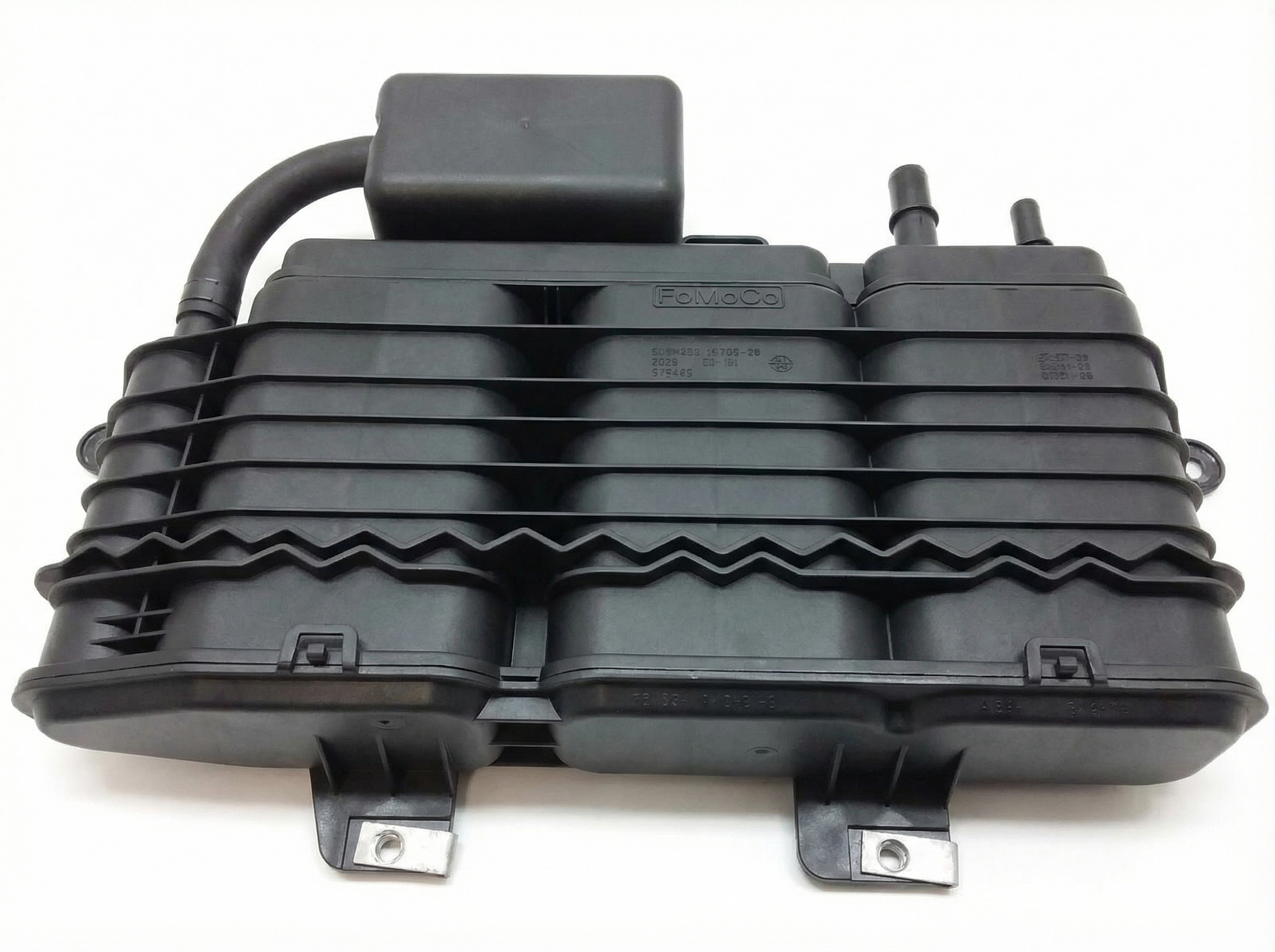
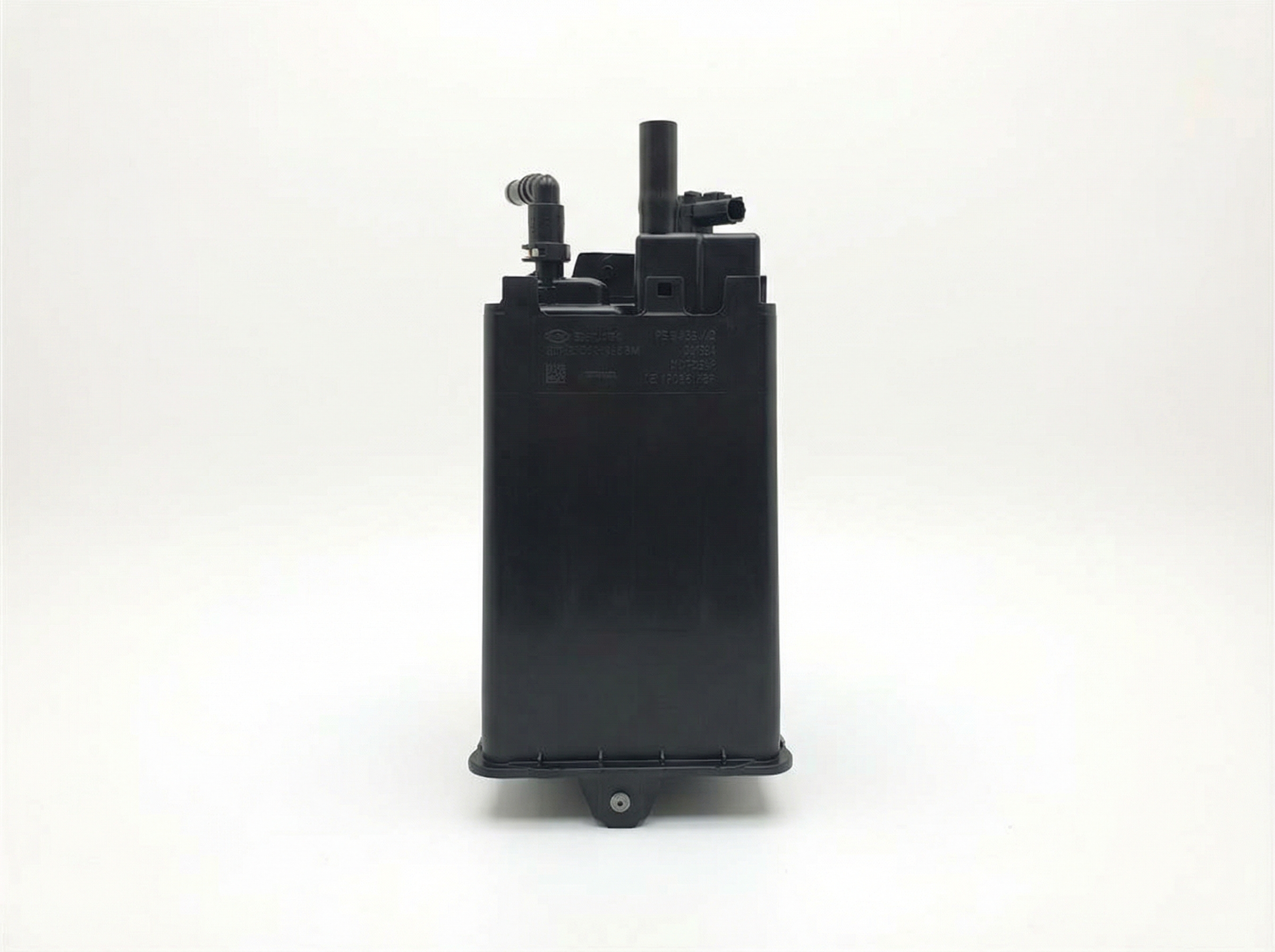
Used OEM Parts in Stock
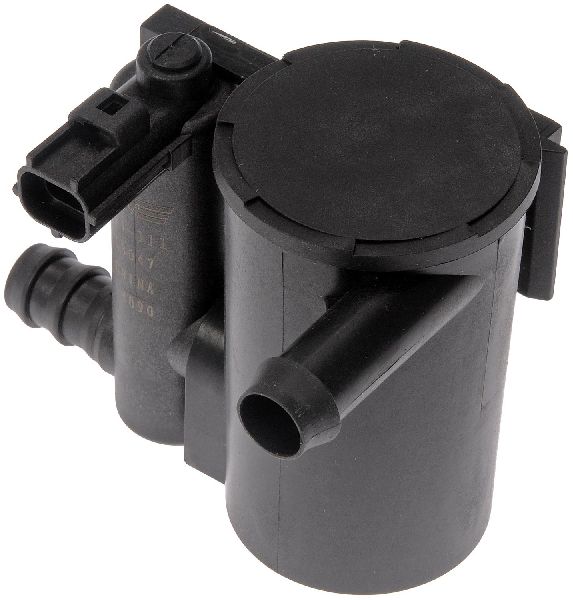
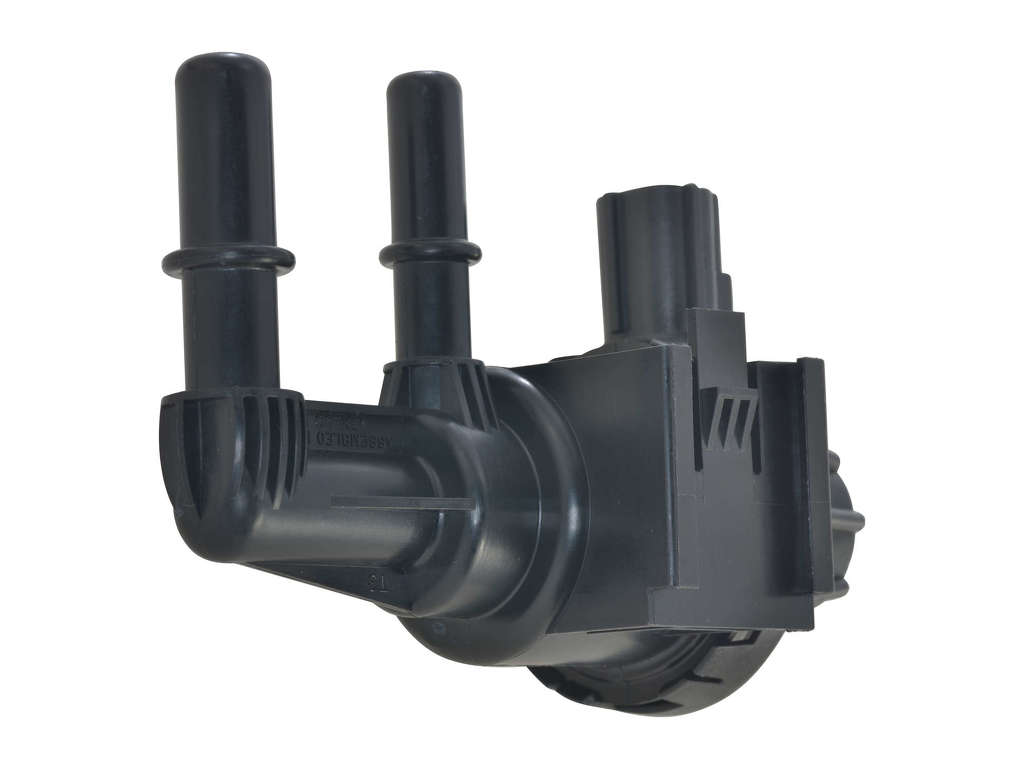
New Aftermarket Parts Available


The information in this article is provided for general reference and educational purposes only. Vehicle specifications, procedures, and part compatibility can vary by production date, trim level, and region. Always consult your vehicle's factory service manual and verify part numbers before purchasing or performing repairs. Safety-critical components such as airbags, seat belts, and braking systems should be installed by a qualified professional.
- Ford Fusion:
- 🧭 Diagnostic Flowchart
- 🎬 Helpful Videos
- 🛍️ Shop This Part
- What's Unique About the 2006-2012 Ford Fusion
- Symptoms You May Notice
- Most Likely Causes
- Rare But Worth Checking
- Diagnosis Steps
- Parts You'll Likely Need
- Related Codes That Often Appear With This One
- Platform-Specific Known Issues
- Mechanic-Grade Diagnostic Values
- Scan Tool Commands That Help
- Wiring & Ground Locations
- Real Owner Repair Stories
- "I Checked Everything" — The Actual Cause
- When the Usual Fixes Don't Work
- OEM Part Supersession History
- Model Year Variations Within This Range
- Other Known Issues on This Vehicle
- Used vs. New Parts: Buying Guide for This Vehicle
- Real Owner Stories
- Ford F-150 (Related Platform)
- 1997 Ford F-150 5.4L (Related Platform)
- 2011 Ford Fusion
- Related OBD-II Codes
- Frequently Asked Questions
- 🎟️ Get 5% Off