

P1451 on 1998-2011 Ford Ranger: EVAP Vent Control Circuit Malfunction Causes and Fixes
On a 1998-2011 Ford Ranger, P1451 is almost always caused by a broken or corroded wire leading to the EVAP canister vent solenoid located near the spare tire. The most common failure points are the pigtail connector at the solenoid itself or a larger harness connector on the frame rail near the fuel filter. Before replacing the solenoid, thoroughly inspect the wiring harness for damage, as a simple wire repair often fixes the problem for a few dollars.
- P1451 is an electrical circuit code, not a leak code. Do not start by replacing the gas cap.
- The most likely cause on a Ford Ranger is a broken or corroded wire in the harness leading to the vent solenoid near the spare tire.
- Check two main spots for wiring failure: the pigtail at the solenoid and the large harness connector on the frame near the fuel filter.
- Always inspect the wiring thoroughly before spending money on a new vent solenoid.
- The repair is DIY-friendly and often costs very little if it's just a broken wire.
- This code will not affect how the truck drives but will cause an automatic emissions test failure.
What's Unique About the 1998-2011 Ford Ranger
On the Ford Ranger, the wiring for the EVAP canister vent solenoid is routed along the driver's side frame rail, often near the spare tire. Due to its exposed location, this wiring harness is highly susceptible to damage from road debris, moisture, and chafing against the frame or spare tire. A particularly notorious failure point is a large multi-wire connector located on the frame just above the fuel filter, which is prone to corrosion breaking the internal pins. As a result, a broken wire or a corroded connector is a significantly more common cause for P1451 on these trucks than the failure of the solenoid itself, a fact widely documented by owners in enthusiast forums.
Symptoms You May Notice
- Check Engine Light is on.
- Failing a state emissions inspection.
- A faint fuel odor may be present near the rear of the truck in some cases.
- Replacing the gas cap. A bad gas cap typically causes leak-related codes (like P0455 or P0457), not an electrical circuit code like P1451.
- Replacing the EVAP Purge Valve/Solenoid under the hood. P1451 specifically refers to the vent solenoid circuit at the rear of the vehicle by the canister, not the purge valve (Vapor Management Valve) in the engine bay, which is often on the firewall.
Most Likely Causes
- Damaged or Corroded Wiring / Connector 🔴 High Probability The wiring harness for the vent solenoid is located under the truck near the spare tire, making it vulnerable to chafing on the frame and corrosion from water and road salt. A specific weak point is a large harness connector on the driver's side frame rail near the fuel filter, which can corrode and cause pins to break off.
How to confirm: Visually inspect the entire length of the wiring from the main harness to the vent solenoid. Pay close attention to the connector at the solenoid and the larger harness connector above the fuel filter area. Look for green corrosion, chafed insulation, or completely broken wires. With the key on, check for ~12V power on the power wire (often Red or Lt Blue/Orange). The other wire (often Violet/White) is the ground signal from the PCM.
Typical fix: Repair the broken section of wire using solder and heat-shrink tubing. If the connector itself is corroded beyond cleaning, replace it with a new pigtail connector. In one documented case, a user found the loom had worn through and corroded three wires right after the rear harness plug by the fuel filter, which fixed the issue.
Est. part cost: $5-$30 - Faulty EVAP Canister Vent Solenoid 🟡 Medium Probability → Shop Vapor Canister
How to confirm: After confirming the wiring is intact and has power, test the solenoid. Disconnect it and check the resistance across its two pins with a multimeter; a good solenoid should read between 48 and 65 ohms. An infinite reading (open) or zero reading (short) means it's bad. You can also apply 12V and ground directly to the pins to see if it makes an audible click.
Typical fix: Replace the canister vent solenoid. It is typically mounted on or near the charcoal canister above the spare tire.
Est. part cost: $40-$100
Rare But Worth Checking
- Blown Fuse: While a '98 Ranger forum indicated Fuse #13, other Ford fuse panels show the Canister Vent solenoid powered by Fuse #3 (20A) in the under-hood Power Distribution Box, which also powers the heated oxygen sensors. Always verify the correct fuse for your specific model year in the owner's manual.
- Faulty Powertrain Control Module (PCM): → Shop Engine Control Module (ECM) This is extremely rare. The internal driver circuit for the vent solenoid can fail, but this should only be considered after exhaustively proving the wiring and solenoid are good. One forum user replaced the PCM, but the issue persisted until they found the broken wire.
Diagnosis Steps
- Retrieve the P1451 code with an OBD-II scanner. 🎬 Watch: A quick overview of P1451 causes and common fixes.
- Locate the EVAP canister and vent solenoid. On a Ranger, this is mounted to a bracket above the spare tire.
- Perform a thorough visual inspection of the wiring harness leading to the vent solenoid. Look for any signs of chafing, breaks, or corrosion, especially where the harness might rub against the frame or spare tire carrier.
- Inspect the electrical connector at the solenoid for corrosion or broken pins. Also, trace the harness forward to the larger multi-pin connector on the frame rail near the fuel filter and inspect it for corrosion.
- If wiring looks good, disconnect the connector. With the ignition on, use a multimeter to verify that the power wire (often Red or Lt Blue/Orange) has battery voltage (approx. 12V).
- Test the solenoid itself. Measure the resistance between the two pins on the solenoid. A reading between 48 and 65 ohms is expected. A reading of OL (open) or 0 ohms (short) indicates a failed solenoid.
- If you have a bi-directional scanner, command the vent solenoid (EVAPCV) to close and listen for an audible click.
- If wiring is confirmed good and the solenoid tests bad, replace the vent solenoid.
- If the solenoid is good but the wiring is damaged, repair the wiring. If a connector is the issue, splice in a new pigtail connector.
- Clear the code. Note that EVAP monitors can take several drive cycles (engine warm-up and cool-down) with the fuel tank between 1/4 and 3/4 full to run and confirm the fix.
Parts You'll Likely Need
- EVAP Canister Vent Solenoid Wiring Pigtail
(OEM #WPT-905)— The original connector is prone to corrosion and damage, often being the root cause of the P1451 circuit fault. The wires can also break right at the connector.
Trusted brands: Motorcraft WPT-905, Dorman 645-211, Standard Motor Products S1080
OEM price range: $25-$45
Aftermarket price range: $15-$30 - EVAP Canister Vent Solenoid / Valve
(OEM #F87Z-9F945-BA (superseded by F75Z-9F945-CA and others like 6L2Z-9F945-AA depending on year))— This is the component controlled by the circuit. It can fail electrically (open or shorted coil), causing the P1451 code, but should only be replaced after checking the wiring.
Trusted brands: Motorcraft, Dorman (e.g., 911-216, 911-217), Standard Motor Products
OEM price range: $70-$120
Aftermarket price range: $40-$80
Platform-Specific Known Issues
- The wiring harness for the vent solenoid is frequently found to be chafed through or corroded at a point along the driver's side frame rail.
- A very common point of failure is a large, multi-wire harness connector located on the frame rail, just above the fuel filter. This connector is exposed to the elements, and corrosion can destroy the pins inside, leading to an open circuit for the vent solenoid.
Mechanic-Grade Diagnostic Values
- EVAP Canister Vent Solenoid (EVAPCV) Signal Voltage — expected: With the valve open (de-energized), voltage should be approximately battery voltage. When commanded closed (energized), there should be a minimum voltage drop of 4 volts.. Failure: Low voltage (e.g., 0.4-0.5V) on the power feed wire with key on indicates an open circuit or high resistance upstream. No voltage drop when the solenoid is commanded closed indicates a faulty PCM driver or an open in the control wire.
- EVAP Canister Vent Solenoid (EVAPCV) PID Duty Cycle — expected: When the valve is open (default state), the EVAPCV PID should read 0%. When commanded closed for a system test, it should read 100%.. Failure: If the scan tool commands 100% but the voltage doesn't drop, it points to a circuit or solenoid failure.
- EVAP Canister Vent Solenoid Current Draw — expected: Around 200-250 mA when activated. This is derived from Ohm's law (I=V/R) using a typical 12V system and the known resistance of 48-65 ohms.. Failure: Significantly higher current indicates a short in the solenoid coil. Zero current indicates an open in the coil or the circuit.
Scan Tool Commands That Help
- Ford IDS (Integrated Diagnostic System): Output Test Mode / EVAP System Test — This function allows a technician to manually command the EVAP Canister Vent (EVAPCV) solenoid on and off to verify its mechanical and electrical operation. You can monitor the EVAPCV PID and circuit voltage simultaneously to confirm the PCM, wiring, and solenoid are all functioning correctly.
Wiring & Ground Locations
- Main Harness Connector (Frame) — On the driver's side frame rail, typically located just above or near the fuel filter, under the driver's seat area.. This is a notorious failure point. It's a large multi-pin connector that is exposed to road spray and salt, causing severe corrosion that can break the pins for the vent solenoid circuit, creating an open circuit and triggering P1451.
- Main Body/Chassis Grounds — Key grounds include a strap from the negative battery terminal to the radiator core support, a strap from the engine block to the firewall, and a main ground to the frame rail below the battery.. While the vent solenoid has a dedicated power feed and a PCM-controlled ground, a poor main chassis or body ground can cause floating voltages and intermittent electrical issues across multiple systems, potentially affecting the PCM's ability to accurately control and monitor the EVAP circuit.
- Vent Solenoid Wire Colors (1998) — At the vent solenoid connector by the spare tire.. For a 1998 model, the power wire is Light Blue/Orange, and the PCM control wire is Purple/White. Knowing these colors is critical for accurately testing for power and continuity back to the PCM.
- Vent Solenoid Wire Colors (2000+) — At the vent solenoid connector by the spare tire.. On many later models, the power wire is Red/Yellow and the control wire is Violet/White. Always verify with a vehicle-specific diagram if possible, but these are commonly reported colors.
Real Owner Repair Stories
- Ranger-Forums.com user 'fieroaddict' (1998 Ford Ranger XLT, 2.5L, 5-speed, 175,000 miles) — Persistent P1451 code since purchasing the truck.
❌ Tried (didn't work) Replaced purge solenoid, Replaced canister vent valve, Verified parts were good via resistance and voltage checks, Replaced the PCM (computer)
✅ What actually fixed it The user found that the wiring loom had chafed through right after the large harness connector by the fuel filter. Three wires were completely corroded and broken. Repairing these wires finally resolved the code. - Ranger-Forums.com user 'Rangerboy95' (Ford Ranger (year not specified)) — P1451 code after replacing O2 sensor.
❌ Tried (didn't work) Replacing the vent solenoid
✅ What actually fixed it The user traced the wires from the vent solenoid and found that the large harness connector on the frame rail near the fuel filter was heavily corroded. Multiple pins had broken off inside the connector, causing the open circuit. Replacing the connector fixed the issue. - Ford Truck Enthusiasts Forums user (Ford Ranger (year not specified)) — P1451 code that returned after two weeks.
❌ Tried (didn't work) Initial wire checks seemed okay.
✅ What actually fixed it The problem was a wire that had rubbed through on a metal bracket underneath the air filter box in the engine bay. Moving the wires while changing the air filter had temporarily fixed the connection, but the wire eventually grounded out again. Repairing the chafed wire provided a permanent fix.
When the Usual Fixes Don't Work
- In one detailed forum thread, a Ranger owner with P1451 replaced both the purge and vent solenoids, tested them, and found they were good. Suspecting the computer, he replaced the PCM, but the code immediately returned. The ultimate cause was not the PCM, but corroded and broken wires inside the harness loom near the frame-rail connector by the fuel filter. This is a powerful counter-example to assuming a PCM failure, even when direct component and initial wiring checks seem okay.
OEM Part Supersession History
YL2Z-9F945-BA→5U5Z-9F945-GA, which was then superseded by 6L2Z-9F945-AA.— Standard part evolution and consolidation for use across multiple Ford platforms like the Explorer and E-Series vans.
Model Year Variations Within This Range
- 1998-2001.5: The base four-cylinder engine was the 2.5L Lima ('LL25').
- 2001.5-2011: The base four-cylinder engine was changed to the 2.3L Duratec (a Mazda L engine), which is a more modern DOHC design. The V6 options also saw changes, with the 4.0L OHV V6 being replaced by a more powerful 4.0L SOHC V6 in 2001. While the EVAP system's function and the P1451 fault remained consistent, specific harness routing and connector details may have minor differences between these engine configurations.
Diagnostic Flowchart
Used vs. New Parts: Buying Guide for This Vehicle
When a used part is the smart pick: A used part is a very smart choice for the wiring connectors. Sourcing a clean, corrosion-free main harness connector or solenoid pigtail from a junkyard vehicle (especially from a dry, salt-free climate) can provide an OEM-quality repair for a fraction of the cost of a new harness section. A used vent solenoid is also a reasonable option if you can test it for resistance and actuation before purchase.
Donor-vehicle mileage cap: roughly under 150000 miles for the part to have meaningful remaining life.
What to inspect on the donor part:
- For wiring/connectors: Inspect for any signs of green or white corrosion on the pins or plastic housing. Ensure the locking tabs are intact. The wires should be flexible, not brittle or cracked.
- For solenoids: Look for a component that isn't heavily rusted. If possible, bring a 9V or 12V power source to test if the solenoid clicks when power is applied.
- Prioritize donor vehicles from southern or western states with no road salt usage.
Aftermarket brands forum-validated for this vehicle:
- Dorman is a widely available and generally trusted aftermarket brand for both the vent solenoid (e.g., 911-217) and the pigtail connector.
- Standard Motor Products (SMP) is another reputable brand for electrical components like solenoids and connectors.
Brands owners have reported issues with on this vehicle:
- Avoid unbranded, no-name parts from online marketplaces, as quality control can be highly inconsistent.
Real Owner Stories
Aggregated from forums and TSBs cited above. Mileages and costs reflect what owners reported in those sources.
1998 Ford Ranger XLT 2.5L — 175000 miles
Symptoms: Check Engine Light with P1451 code.
What fixed it: Repaired 3 corroded and broken wires in the wiring loom right after the rear harness plug located by the fuel filter.
Source hint: Ranger-Forums.com - 'P1451 wont go away'
Ford Ranger
Symptoms: Check engine light on.
What fixed it: Replaced a corroded harness connector located above the fuel filter where several prongs had broken off due to corrosion.
Cost: $80
Source hint: Ranger-Forums.com - 'P1451/Purge Valve Solenoid Issue'
2002 Ford Ranger
Symptoms: Check Engine Light with P1451 code.
What fixed it: Replaced the electrical clip/connector right at the canister vent solenoid because the wires were broken at the clip.
Source hint: 2CarPros
Related OBD-II Codes
Frequently Asked Questions
Where is the EVAP canister vent solenoid located on my 1998-2011 Ford Ranger?
I'm getting code P1451. What's the most likely problem on my truck besides the solenoid itself?
How can I test the vent solenoid to see if it's bad?
I checked the wiring right at the solenoid and it looks fine. Where is the next most common failure point?
What are the wire colors for the vent solenoid on a '98 Ranger?
I fixed the broken wire but the Check Engine Light is still on. Why?
Does this P1451 wiring issue also affect the Mazda B-Series trucks?
Helpful Videos

Used OEM Parts in Stock
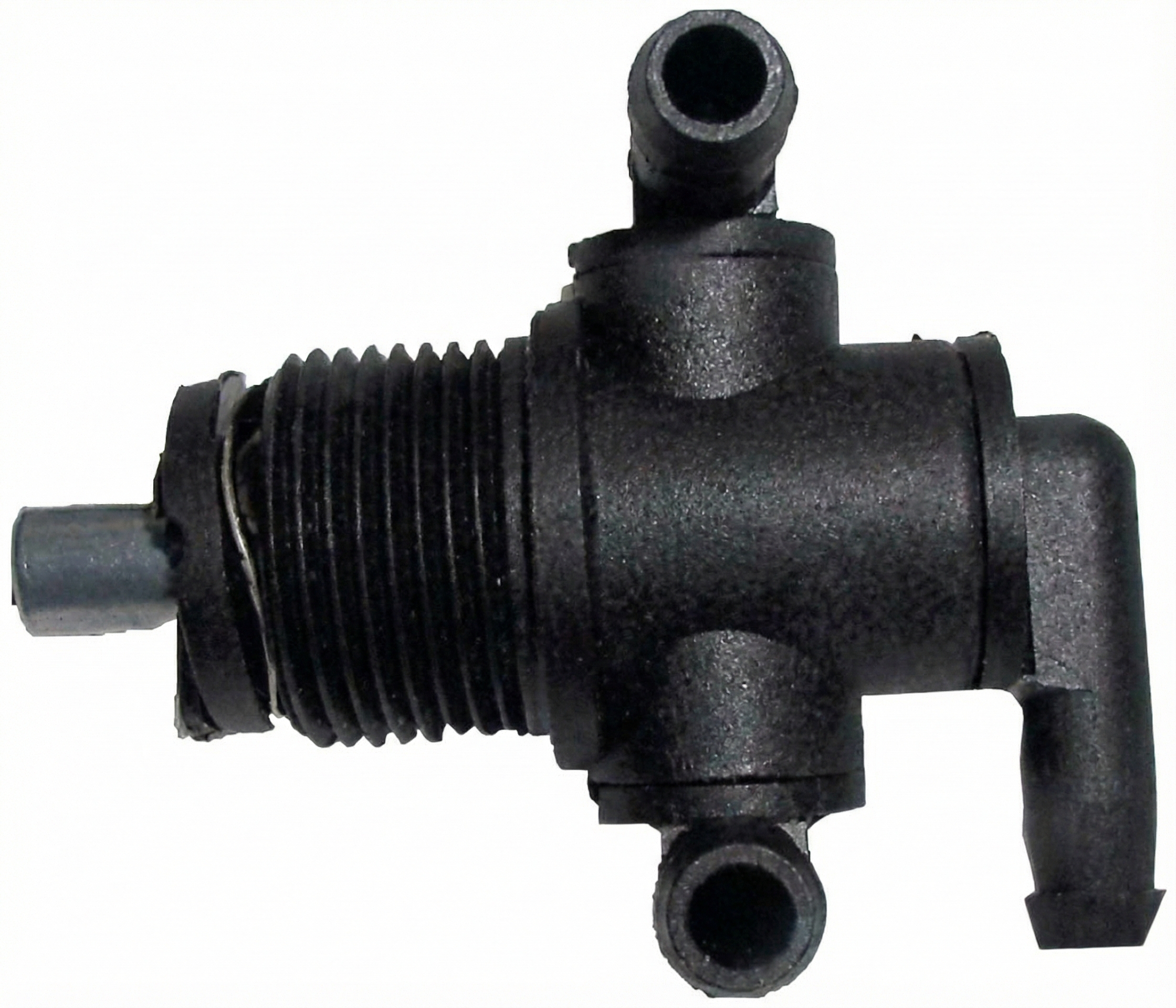
New Aftermarket Parts Available


The information in this article is provided for general reference and educational purposes only. Vehicle specifications, procedures, and part compatibility can vary by production date, trim level, and region. Always consult your vehicle's factory service manual and verify part numbers before purchasing or performing repairs. Safety-critical components such as airbags, seat belts, and braking systems should be installed by a qualified professional.
- Ford Ranger:
- 🧭 Diagnostic Flowchart
- 🎬 Helpful Videos
- 🛍️ Shop This Part
- What's Unique About the 1998-2011 Ford Ranger
- Symptoms You May Notice
- Most Likely Causes
- Rare But Worth Checking
- Diagnosis Steps
- Parts You'll Likely Need
- Platform-Specific Known Issues
- Mechanic-Grade Diagnostic Values
- Scan Tool Commands That Help
- Wiring & Ground Locations
- Real Owner Repair Stories
- When the Usual Fixes Don't Work
- OEM Part Supersession History
- Model Year Variations Within This Range
- Used vs. New Parts: Buying Guide for This Vehicle
- Real Owner Stories
- 1998 Ford Ranger XLT 2.5L — 175000 miles
- Ford Ranger
- 2002 Ford Ranger
- Related OBD-II Codes
- Frequently Asked Questions
- 🎟️ Get 5% Off