

P1451 on 2015-2016 Jeep Renegade Diesel: DPF Efficiency Fault Guide
For 2015-2016 Renegades with the 1.6L or 2.0L diesel engine (built on or before October 2, 2015), code P1451 is almost always caused by outdated Engine Control Module (ECM) software. The fix is a dealer-installed software update covered by Technical Service Bulletins #18-065-14 and #18-083-15, a process which typically takes very little time.
- P1451 on a 2015-2016 Jeep Renegade refers to the Diesel Particulate Filter (DPF) system, not the EVAP system.
- The most likely cause is a software bug on models built before October 2, 2015. Before replacing any parts, have a dealer check if your vehicle needs the ECM update specified in TSB #18-083-15.
- This code applies specifically to models with the 1.6L or 2.0L diesel engines, which were primarily sold outside of North America (in the EMEA region).
- Do not replace the expensive DPF assembly unless all other possibilities, especially the software update and the DPF pressure sensor, have been ruled out.
What's Unique About the 2015-2016 Jeep RENEGADE
While P1451 means an EVAP system fault on many other manufacturers like Ford, on the diesel Jeep Renegade it is exclusively for the Diesel Particulate Filter (DPF) system. Critically, for this specific vehicle and year range (primarily affecting the EMEA market), the code is most often triggered by a software glitch in the engine's computer, not an actual hardware failure. Jeep released official service bulletins to correct this false trigger with a software update.
Diagnostic Flowchart
Tap your situation to follow the diagnostic path that matches what you're seeing on this vehicle.
Symptoms You May Notice
- Check Engine Light (MIL) illuminated
- Vehicle may enter a reduced power or 'limp' mode, where acceleration is severely limited.
- More frequent DPF regeneration cycles than normal
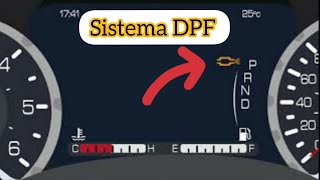
- Message on the driver information display regarding the DPF or requiring service
- Replacing the DPF assembly before checking for software updates. This is an extremely expensive mistake, as the issue is very often just a software bug for this specific model and year range.
- Confusing the code with an EVAP system fault, which is the correct definition for other manufacturers (like Ford) but incorrect for a diesel Jeep.
Most Likely Causes
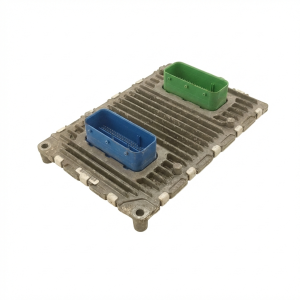
- Outdated Engine Control Module (ECM) Software 🔴 High Probability → Shop Engine Control Module (ECM) Jeep issued TSBs #18-065-14 and #18-083-15 specifically to address this code being falsely triggered by a software bug on vehicles built on or before October 2, 2015.
How to confirm: A Jeep dealer or a shop with access to OEM service information can check the vehicle's software version against the latest available version mentioned in the TSBs. The update is performed with the wiTECH diagnostic tool.
Typical fix: Reprogramming the ECM with the updated software. The official labor time for this operation is just 0.2 hours.
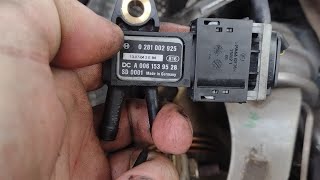
Est. part cost: $0 - Failed DPF Differential Pressure Sensor 🟡 Medium Probability This sensor and its connecting hoses are exposed to high heat and can degrade or fail over time, providing incorrect pressure readings to the ECM.
How to confirm: After confirming the ECM software is up to date, a technician can monitor the sensor's readings with a scan tool. With the Key On, Engine Off (KOEO), the reading should be 0. At idle, it should be a very low value (e.g., 0.5-0.7V). Erratic, stuck, or illogical readings that don't increase smoothly with engine RPM 🎬 Watch: How to test the DPF differential pressure sensor indicate a bad sensor.
Typical fix: Replace the DPF differential pressure sensor and its connecting hoses.
Est. part cost: $50-$150 - Clogged or Saturated Diesel Particulate Filter (DPF) ⚪ Low Probability → Shop Diesel Particulate Filter (DPF) This usually happens only if the warning light is ignored for an extended period or if the vehicle is only used for short trips, preventing the DPF from completing its cleaning cycles (regeneration).
How to confirm: If a software update and sensor replacement don't fix the issue, a technician will measure the backpressure before the DPF. High backpressure indicates a blockage. A forced regeneration may be attempted first. Some scan tools may require a DPF 'reset' function to be performed before a forced regen can be initiated if the code is persistent.
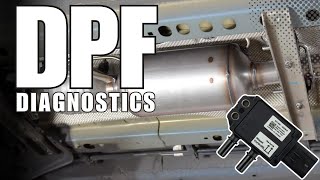
Typical fix: Attempt a forced regeneration with a diagnostic tool. If that fails, the DPF must be professionally cleaned or, in severe cases, 🎬 Watch: How to perform a DPF cleaning to protect your engine replaced.
Est. part cost: $1500-$3000+
Rare But Worth Checking
- Exhaust Leak: A leak in the exhaust system between the engine and the DPF can alter pressure and temperature readings, fooling the ECM into setting this code.
- Faulty Exhaust Gas Temperature Sensor: The DPF regeneration process relies on accurate temperature readings. A faulty sensor can prevent proper regeneration, leading to efficiency codes.
- Cracked or Blocked Sensor Hoses: The rubber hoses connecting the exhaust pipes to the differential pressure sensor can become brittle, cracked, or clogged with soot, leading to inaccurate readings even if the sensor itself is functional.
Diagnosis Steps
- Connect a scan tool and confirm P1451 is present. Check for any other codes, especially P112C-00.
- Verify the vehicle's build date and market (TSB 18-083-15 applies to international models built on or before Oct 2, 2015).
- Verify the vehicle's ECM software version. This is the most critical first step. Compare it to the latest version available from Jeep, as specified in TSBs #18-065-14 and #18-083-15.
- If the software is outdated, perform the ECM update using a wiTECH tool. NOTE: A battery charger must be used, and voltage must be maintained between 13.2 and 13.5 volts during the flash process to prevent module failure.
- If the software is up to date, use a scan tool to monitor the DPF differential pressure sensor data. Check for 0 psi/kPa at KOEO and a very low, stable reading at idle that increases smoothly with RPM.
- Inspect the rubber hoses going to the differential pressure sensor for cracks, blockages, melting, or deterioration.
- Inspect the exhaust system for any leaks between the turbocharger and the DPF assembly.
- If all other components are functioning correctly, evaluate the DPF soot level via the scan tool. A forced regeneration may be necessary. If it fails or the code returns quickly, the DPF may require professional cleaning or replacement.
Parts You'll Likely Need
- ECM Software Update — This is not a physical part, but a service. It is the most common fix documented by the manufacturer in TSBs #18-065-14 and #18-083-15.
Trusted brands: Mopar (Dealer Service)
OEM price range: $150-$250
Aftermarket price range: N/A - DPF Differential Pressure Sensor
(OEM #51855119 (Example, verify with VIN))— If the software is up-to-date, this sensor is the next most likely failure point, providing incorrect data to the ECM.
Trusted brands: Bosch, Mopar, MTE-Thomson
OEM price range: $100-$180
Aftermarket price range: $40-$90
Related Codes That Often Appear With This One
- P112C-00 — This code for 'Lambda Sensor Downstream Signal Plausibility Check' is listed alongside P1451 in Jeep's Technical Service Bulletin #18-083-15 as being resolved by the same ECM software update.
Technical Service Bulletins (TSBs) & Recalls
- 18-083-15: Supersedes the earlier bulletin. It applies to 2015-2016 (BU) Renegade models in international markets (EMEA) with 1.6L/2.0L diesel engines, built on or before Oct 2, 2015. It fixes MIL illumination for DTCs P1451 and P112C via an ECM software update using the wiTECH tool.
- 18-065-14: An earlier bulletin, now superseded by 18-083-15, which also identified an ECM software update as the fix for P1451.
Platform-Specific Known Issues
- The 2015-2016 diesel models (primarily in the EMEA market) built on or before October 2, 2015, are known to falsely trigger the P1451 code due to a bug in the original ECM software, as acknowledged by Jeep in official service bulletins.
Mechanic-Grade Diagnostic Values
- DPF Differential Pressure Sensor Signal Voltage at Idle — expected: ~0.5V - 0.7V. Failure: Voltage is stuck, does not change with RPM, or is significantly higher at idle.
- DPF Differential Pressure Sensor Signal Voltage at ~2000 RPM — expected: ~1.6V. Failure: Voltage does not increase with RPM or reads excessively high (e.g., up to 4.0V), indicating a restriction.
- DPF Differential Pressure Sensor 5V Reference Supply (KOEO) — expected: 4.5V - 5.0V. Failure: Voltage is below 4.5V, indicating a wiring issue or problem with the ECM.
- Exhaust Gas Temperature (EGT) Sensor Resistance (PTC Type) — expected: ~220Ω at room temperature (20°C). Failure: Resistance is significantly different or does not increase smoothly as the sensor is heated.
- Exhaust Gas Temperature (EGT) Sensor Resistance (NTC 'E-Type') — expected: ~20kΩ at room temperature (20°C). Failure: Resistance is significantly different or does not decrease smoothly as the sensor is heated.
Scan Tool Commands That Help
- wiTECH: Reprogram the Engine Control Module (ECM) — This is the primary fix for P1451 on vehicles built on or before Oct 2, 2015, as per TSBs #18-065-14 and #18-083-15.
- wiTECH: Clear All DTCs — Used after the ECM flash is complete. An ignition cycle (off/on) may be required for the command to be successful.
- wiTECH or equivalent professional scan tool: Forced Regeneration — To manually initiate a DPF cleaning cycle when the vehicle has been unable to do so automatically. This is used after confirming the software is updated and all related sensors are functioning correctly.
- wiTECH: Update DCU and BCM Software — Some service bulletins for similar models recommend updating the Dosing Control Unit and Body Control Module after a PCM flash to ensure full system compatibility.
Wiring & Ground Locations
- DPF Pressure Sensor Circuits — In the wiring harness between the DPF differential pressure sensor and the Engine Control Module (ECM).. Diagnostic documents for similar platforms identify specific circuits: (K355) for the signal, (K354) for the 5V supply, and (K951) for the ground. Testing for continuity, shorts to ground, or high resistance on these specific circuits is a key step if a sensor replacement doesn't fix the issue.
- Engine Bay Ground Points (e.g., G103, G108) — Bolted to the engine block and inner fenders. For example, on other Jeeps, G103 is a primary engine block ground and G108 is a key ground for the BCM and TCM.. A corroded or loose ground point for the ECM or related modules can cause erratic sensor readings and false codes. While specific Renegade locations are not detailed, checking all major chassis and engine grounds is a crucial step in diagnosing persistent electrical faults.
Real Owner Repair Stories
- O'Rileys Autos YouTube Diagnosis (Mercedes E-Class (demonstrating a universally applicable DPF diagnostic principle)) — DPF light on, code for DPF efficiency/blockage.
❌ Tried (didn't work) Multiple professional DPF cleanings. The code would return within a day.
✅ What actually fixed it The DPF differential pressure sensor was faulty and not sending a signal. Live data showed the pressure value was stuck and did not change when external pressure was applied to the sensor. Replacing the sensor and verifying the new one sent a variable signal on the scan tool resolved the issue permanently.
"I Checked Everything" — The Actual Cause
- A common pattern for this code is not a failed smoke test, but a failed 'Forced Regeneration'. A technician may successfully force a DPF regeneration cycle and clean the filter, only for the P1451 code to return shortly after. This often happens when the root cause is a faulty DPF differential pressure sensor. Even though the filter is clean, the sensor provides no (or incorrect) data to the ECM, so the computer still believes the filter is inefficient and cannot properly manage the self-regeneration process, causing the fault to reappear quickly.
When the Usual Fixes Don't Work
- While the primary fix for P1451 on this platform is a software update, it is not a universal solution. If the code returns after the ECM has been updated to the latest software version, the root cause is almost certainly a hardware failure. The most common counter-evidence points to a failed DPF differential pressure sensor. In these cases, the sensor fails to report pressure changes to the ECM, making the system believe the DPF is inefficient even if it has been recently cleaned or regenerated. Replacing the sensor itself is the correct fix in this scenario.
Model Year Variations Within This Range
- 2015: The applicability of the software update TSBs varies by build date. The initial TSB (#18-065-14) only applied to vehicles built between August 25, 2014, and October 20, 2014. The superseding TSB (#18-083-15) expanded the range to all affected models built on or before October 2, 2015, covering a much larger portion of the 2015 model year production.
Helpful Videos
![[EN] How to replace a DPF sensor | Masters of Motion](https://img.youtube.com/vi/rX9WGUP7p7c/mqdefault.jpg)
We Have This Part in Stock

The information in this article is provided for general reference and educational purposes only. Vehicle specifications, procedures, and part compatibility can vary by production date, trim level, and region. Always consult your vehicle's factory service manual and verify part numbers before purchasing or performing repairs. Safety-critical components such as airbags, seat belts, and braking systems should be installed by a qualified professional.
- Jeep RENEGADE:
- 🧭 Diagnostic Flowchart
- 🎬 Helpful Videos
- 🛍️ Shop This Part
- What's Unique About the 2015-2016 Jeep RENEGADE
- Symptoms You May Notice
- Most Likely Causes
- Rare But Worth Checking
- Diagnosis Steps
- Parts You'll Likely Need
- Related Codes That Often Appear With This One
- Technical Service Bulletins (TSBs) & Recalls
- Platform-Specific Known Issues
- Mechanic-Grade Diagnostic Values
- Scan Tool Commands That Help
- Wiring & Ground Locations
- Real Owner Repair Stories
- "I Checked Everything" — The Actual Cause
- When the Usual Fixes Don't Work
- Model Year Variations Within This Range
- 🎟️ Get 5% Off